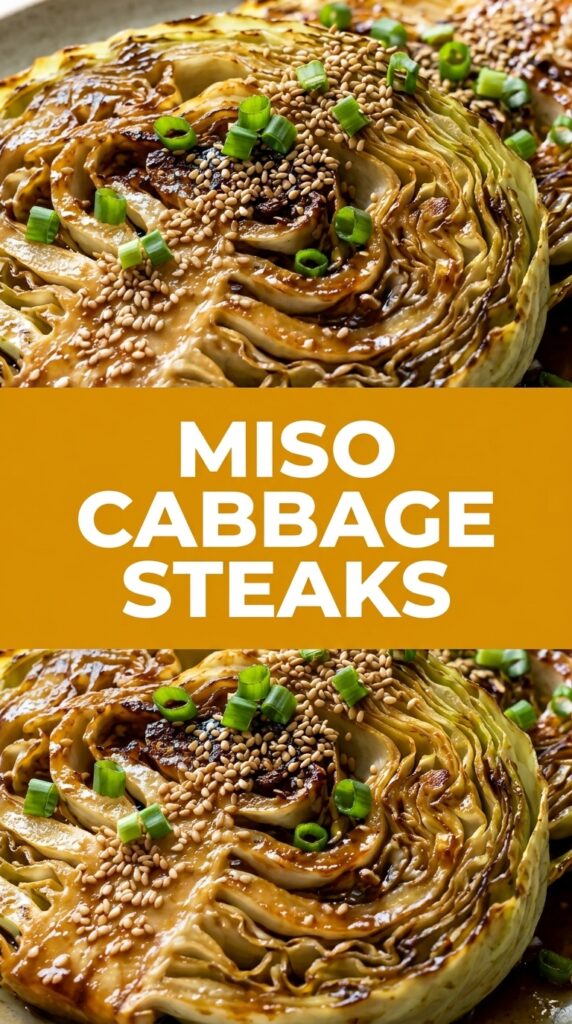
Miso cabbage steaks are thick-cut slices of cabbage roasted until golden and crispy on the outside while remaining tender within, then glazed with a savory miso-based sauce that adds incredible umami depth and complexity. These miso cabbage steaks transform humble cabbage into an elegant, restaurant-quality vegetable side dish that works beautifully for weeknight dinners, meal prep, or special gatherings. The combination of caramelized cabbage with the rich, fermented flavor of miso creates a sophisticated taste profile that even meat-focused eaters will appreciate. Miso cabbage steaks are naturally vegan, gluten-free when using tamari, and remarkably simple to prepare with minimal ingredients and effort. Once you master this technique, miso cabbage steaks become your go-to vegetable recipe for impressing family and friends.
| Prep Time | Cook Time | Total Time | Servings | Difficulty | Cuisine |
|---|---|---|---|---|---|
| 10 minutes | 30 minutes | 40 minutes | 4 servings | Easy | Japanese-inspired |
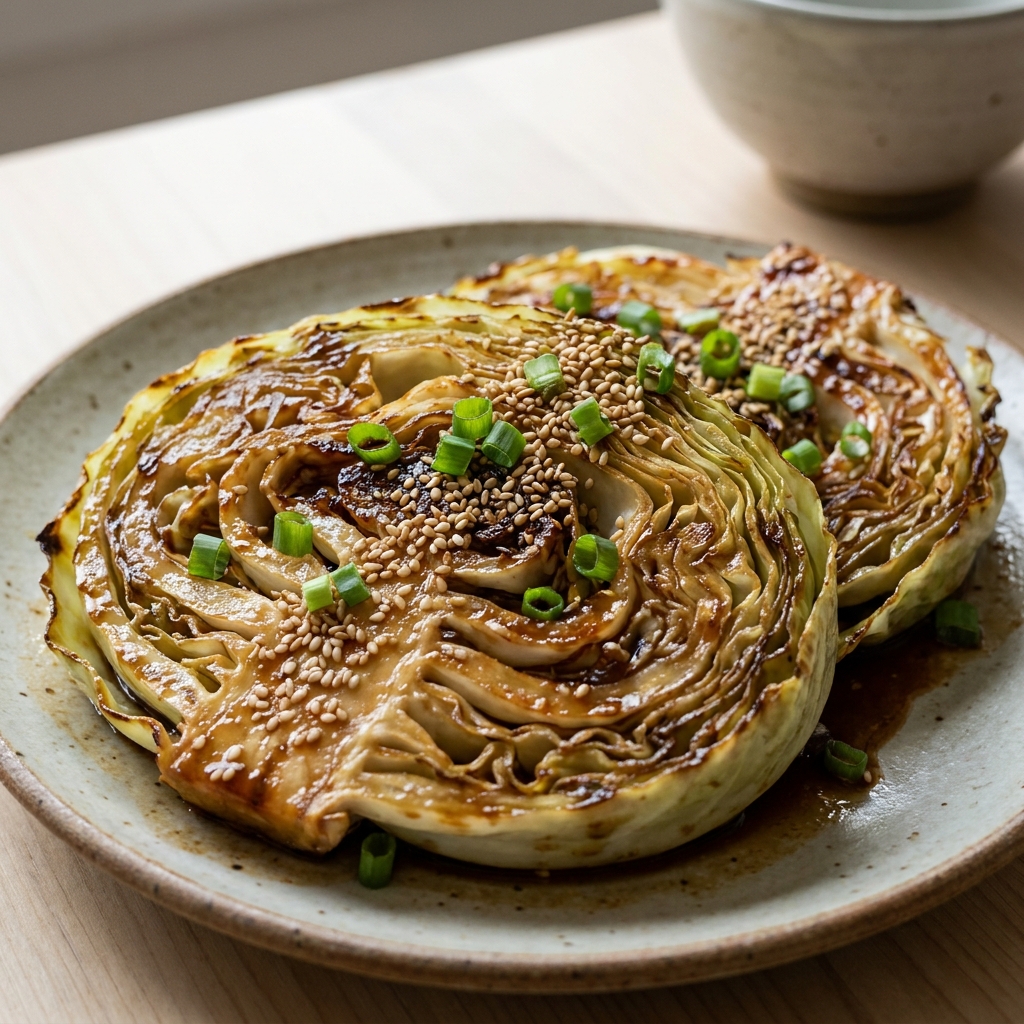
Table of Contents
Table of Contents
Why This Miso Cabbage Steaks Recipe Works
Miso cabbage steaks work because roasting cabbage brings out its natural sweetness while creating crispy, caramelized edges that provide textural contrast to the tender interior. I discovered this technique while experimenting with Japanese-inspired vegetable dishes, and the results consistently impress everyone at my table. The miso paste acts as a flavor multiplier, adding saltiness, umami, and fermented complexity that transforms simple cabbage into something special. Miso cabbage steaks are forgiving enough for beginners yet elegant enough to serve at dinner parties.
The beauty of miso cabbage steaks lies in their versatility and nutritional profile. Cabbage is packed with vitamin C, fiber, and antioxidants, making these miso cabbage steaks a genuinely healthy choice that doesn’t taste healthy. The miso glaze adds probiotics and enzymes from the fermented soybean base, creating a nutritionally dense side dish. Unlike many vegetable recipes that require constant monitoring, miso cabbage steaks practically cook themselves in the oven, leaving you free to prepare other components of your meal.
What makes miso cabbage steaks particularly appealing is how they complement nearly any protein or cuisine. Serve them alongside grilled fish, roasted chicken, tofu, or as a standalone vegetable-forward meal. The umami-rich miso sauce creates depth that elevates the humble cabbage beyond simple steamed or sautéed versions. Every time I prepare miso cabbage steaks, I’m reminded that the best recipes emerge from combining quality ingredients with proper technique, and this dish exemplifies that principle perfectly.
The cooking method for miso cabbage steaks is deliberately simple, relying on oven heat rather than stovetop attention. High-heat roasting creates the Maillard reaction, the chemical process responsible for browning and developing complex flavors. This same reaction is why miso cabbage steaks develop such appealing caramelization and flavor concentration. The miso glaze, applied halfway through cooking, melds into the cabbage’s surface, creating a cohesive dish rather than a mere topping.
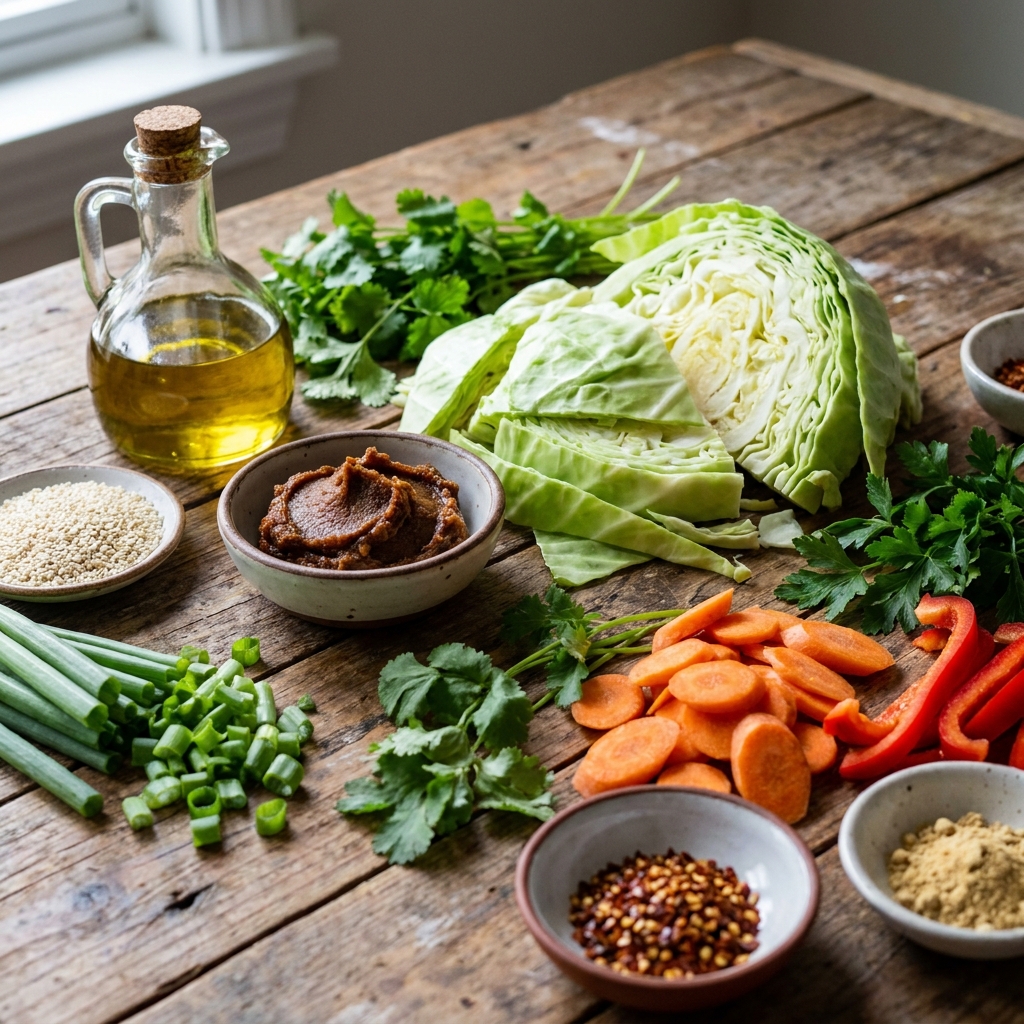
Miso Cabbage Steaks Ingredients
Gathering the right ingredients ensures your miso cabbage steaks achieve perfect balance between savory, sweet, and umami flavors.
| Ingredient | Quantity | Notes with Alternatives |
|---|---|---|
| Green or napa cabbage | 1 large head (about 2 pounds) | Napa cabbage creates thinner, more delicate steaks; green cabbage provides sturdy, thicker cuts. Choose heads that feel heavy and dense. |
| Miso paste (white or red) | 3 tablespoons | White miso is milder and slightly sweet; red miso is more robust and salty. Mix both for balanced flavor. Chickpea miso works for soy-free versions. |
| Olive oil | 3 tablespoons | Use extra virgin for better flavor, or substitute with avocado oil or sesame oil for variation. |
| Water | 2 tablespoons | Helps thin the miso paste to glaze consistency. Use room temperature water for easier mixing. |
| Maple syrup or honey | 1 tablespoon | Maple syrup provides subtle earthiness; honey adds floral notes. Agave or brown sugar work as alternatives. Omit for lower-sugar versions. |
| Rice vinegar or apple cider vinegar | 1 tablespoon | Rice vinegar is milder; apple cider brings stronger tang. Both brighten the overall flavor profile. |
| Sesame seeds (white and/or black) | 2 tablespoons | Optional but recommended for garnish and extra nuttiness. Toast before using to enhance flavor. |
| Green onions or scallions | 2 stalks, sliced | Fresh garnish adds brightness and color. Use chives if green onions are unavailable. |
| Sea salt and black pepper | To taste | Season before roasting and after glazing. Adjust according to your miso paste’s saltiness level. |
These ingredients create the foundation for exceptional miso cabbage steaks, with the miso paste serving as the star ingredient that brings everything together.
How to Make Miso Cabbage Steaks
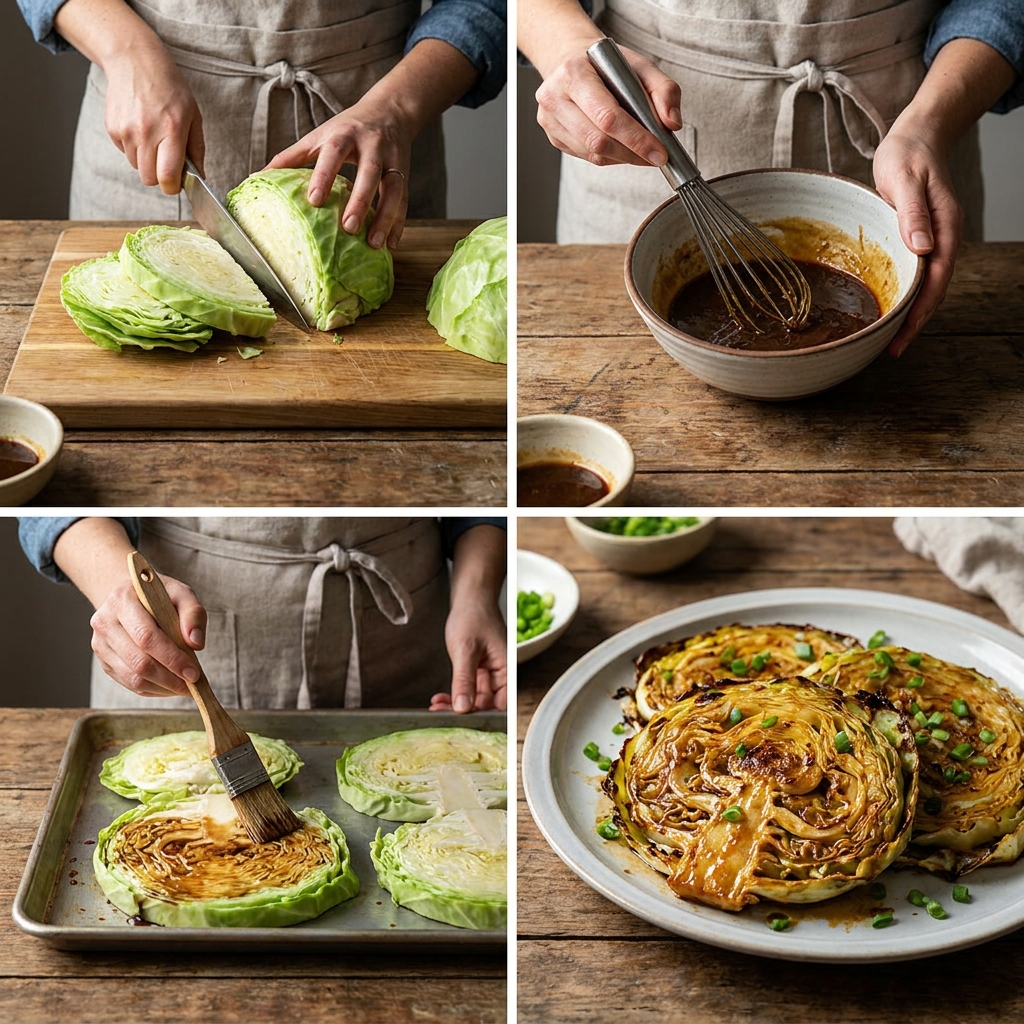
The process for making miso cabbage steaks involves careful slicing, seasoning, roasting, and glazing to achieve perfectly caramelized results.
Preparing Your Cabbage
- Preheat your oven to 425 degrees Fahrenheit to ensure even heat distribution throughout cooking.
- Rinse the cabbage head under cool water and pat completely dry with paper towels, removing excess moisture.
- Slice the cabbage head vertically into one-and-a-half-inch-thick steaks, keeping the core intact to hold each steak together.
- Arrange the miso cabbage steaks on a large rimmed baking sheet lined with parchment paper in a single layer.
- Brush both sides of each cabbage steak lightly with olive oil, using about two tablespoons total for initial coating.
- Season the miso cabbage steaks generously with sea salt and freshly cracked black pepper on both sides.
Initial Roasting Phase
- Place the baking sheet in the preheated 425-degree oven on the middle rack position for optimal air circulation around the miso cabbage steaks.
- Roast for fifteen minutes until the cabbage edges begin showing light golden-brown color and the cut surfaces appear slightly caramelized.
- Remove the baking sheet from the oven using heat-resistant gloves or oven mitts to prevent burns.
Creating and Applying the Miso Glaze
- Combine miso paste, one tablespoon of olive oil, water, maple syrup, and rice vinegar in a small mixing bowl.
- Whisk these ingredients together until completely smooth, breaking up any stubborn miso lumps with the back of a spoon.
- Brush the miso cabbage steaks generously on the top-facing side with the prepared glaze, coating evenly.
- Return the glazed miso cabbage steaks to the oven for ten to twelve additional minutes until the glaze caramelizes and darkens slightly.
- Carefully flip each miso cabbage steak using a thin spatula or bench scraper, taking care not to break them.
- Brush the second side of each miso cabbage steak with any remaining glaze, coating thoroughly.
- Continue roasting for an additional five to eight minutes until both sides develop deep golden-brown caramelization and crispy edges.
Finishing and Serving
- Remove the baking sheet from the oven and transfer each miso cabbage steak carefully to a serving platter.
- Sprinkle toasted sesame seeds evenly across the miso cabbage steaks while they’re still warm from the oven.
- Garnish with fresh sliced green onions or scallions for bright color and fresh onion flavor.
- Serve the miso cabbage steaks immediately while they retain maximum crispness and warmth.
Chef Tips for Perfect Miso Cabbage Steaks
These professional tips transform good miso cabbage steaks into exceptional ones worthy of restaurant praise.
- Ensure your oven reaches 425 degrees at least five minutes before adding the miso cabbage steaks, as proper preheating creates the initial caramelization that sets the flavor foundation. A calibrated oven temperature is crucial because ten degrees cooler or warmer significantly affects browning speed and texture.
- Slice your miso cabbage steaks to exactly one-and-a-half inches thick because thinner slices dry out during roasting while thicker slices don’t achieve proper caramelization. Use a sharp chef’s knife and cut with confident, smooth strokes rather than sawing motions to minimize cell damage.
- Pat your cabbage completely dry after rinsing because residual moisture prevents effective browning and creates steamed rather than roasted results in your miso cabbage steaks. Water is the enemy of crispy caramelization.
- Apply the miso glaze only after the initial fifteen-minute roast so the glaze caramelizes properly without burning. Applying it too early results in burnt, bitter flavors rather than the desired deep caramelization on your miso cabbage steaks.
- For miso cabbage steaks with maximum caramelization, flip them at the midpoint rather than cooking through on one side completely. This ensures even browning and prevents over-charring of one surface.
- Consider toasting your sesame seeds briefly in a dry pan before garnishing your miso cabbage steaks, which intensifies their nutty flavor and adds complexity to each bite.
Common Miso Cabbage Steaks Mistakes to Avoid
Understanding what goes wrong helps you troubleshoot and perfect your miso cabbage steaks on the first attempt.
Overly Wet Cabbage: Many home cooks forget to thoroughly dry cabbage after washing, resulting in steamed miso cabbage steaks rather than properly roasted ones. The moisture creates steam that prevents the Maillard reaction responsible for caramelization. Fix this by patting your cabbage with paper towels until completely dry, or even air-drying it on a clean kitchen towel for ten minutes before slicing and cooking your miso cabbage steaks.
Oven Temperature Too Low: Setting your oven to 375 degrees instead of 425 degrees means your miso cabbage steaks won’t develop crispy edges or proper caramelization within thirty minutes. The result is soft, pale steaks that taste steamed rather than roasted. Always use an oven thermometer to verify actual temperature since many ovens run significantly cooler than the dial indicates, and preheat for at least five minutes before adding your miso cabbage steaks.
Miso Paste Applied Too Early: Brushing miso paste on your cabbage steaks before the initial roast causes the glaze to burn and become bitter rather than caramelizing beautifully. The high heat needed for browning is too intense for delicate miso compounds at the start. Apply your miso glaze only after the first fifteen minutes of roasting when the cabbage has already begun browning and can handle the remaining cooking time without burning.
Thick Slicing Resulting in Raw Centers: Cutting miso cabbage steaks more than two inches thick means the exterior caramelizes perfectly while the interior remains tough and undercooked. The ideal thickness of one-and-a-half inches allows heat to penetrate thoroughly while maintaining some structural integrity. If you must use thicker cabbage pieces, reduce your oven temperature to 400 degrees and extend cooking time to forty-five minutes.
Insufficient Oil for Roasting: Using too little oil prevents proper browning and causes sticking, compromising both texture and presentation of your miso cabbage steaks. Each steak needs enough oil to create a non-stick surface during roasting. Use approximately three tablespoons of oil for an entire head of cabbage, or about one-half teaspoon per side of each miso cabbage steak.
Crowded Baking Sheet: Arranging your miso cabbage steaks too close together prevents air circulation around each steak, resulting in uneven cooking and steaming instead of roasting. Space them at least one inch apart on your baking sheet, and consider using two sheets if necessary to maintain proper spacing for your miso cabbage steaks.
Best Miso Cabbage Steaks Variations and Substitutions
These creative variations keep miso cabbage steaks interesting while accommodating different flavor preferences and dietary requirements.
| Ingredient | Substitution | Impact on Flavor |
|---|---|---|
| White miso paste | Red or brown miso paste | Creates deeper, more assertive umami with increased saltiness and slight funkiness that adds complexity to your miso cabbage steaks. |
| Maple syrup | Honey, agave nectar, or brown sugar | Honey adds floral sweetness; agave provides cleaner sweetness; brown sugar creates molasses undertones in your miso cabbage steaks. |
| Rice vinegar | Apple cider vinegar, white wine vinegar, or umeboshi plum vinegar | Apple cider brings stronger tanginess; white wine provides subtle acidity; umeboshi adds Japanese authenticity to your miso cabbage steaks. |
| Green cabbage | Napa cabbage, red cabbage, or Savoy cabbage | Napa creates tender, delicate miso cabbage steaks; red cabbage develops earthier sweetness; Savoy offers crinkled texture. |
| Olive oil | Sesame oil, avocado oil, or coconut oil | Sesame oil intensifies Asian flavor profile of your miso cabbage steaks; avocado oil adds mild richness; coconut oil creates subtle tropical notes. |
| Green onions garnish | Chives, cilantro, parsley, or nori strips | Chives provide mild onion flavor; cilantro adds brightness; parsley brings earthiness; nori strips enhance umami on your miso cabbage steaks. |
| Sesame seeds | Sunflower seeds, pumpkin seeds, or furikake seasoning | Sunflower seeds add milder nuttiness; pumpkin seeds create earthier crunch; furikake amplifies Japanese flavors in your miso cabbage steaks. |
| Standard miso paste | Chickpea miso, adzuki bean miso, or coconut aminos plus miso-style seasoning | Creates soy-free versions of miso cabbage steaks while maintaining umami depth through alternative fermented bases. |
The versatility of miso cabbage steaks means you can adapt the recipe to your pantry contents and flavor preferences without compromising quality or taste.
Serving Suggestions for Miso Cabbage Steaks
Miso cabbage steaks complement an impressive range of proteins and cuisine styles, making them ideal for diverse meal planning.
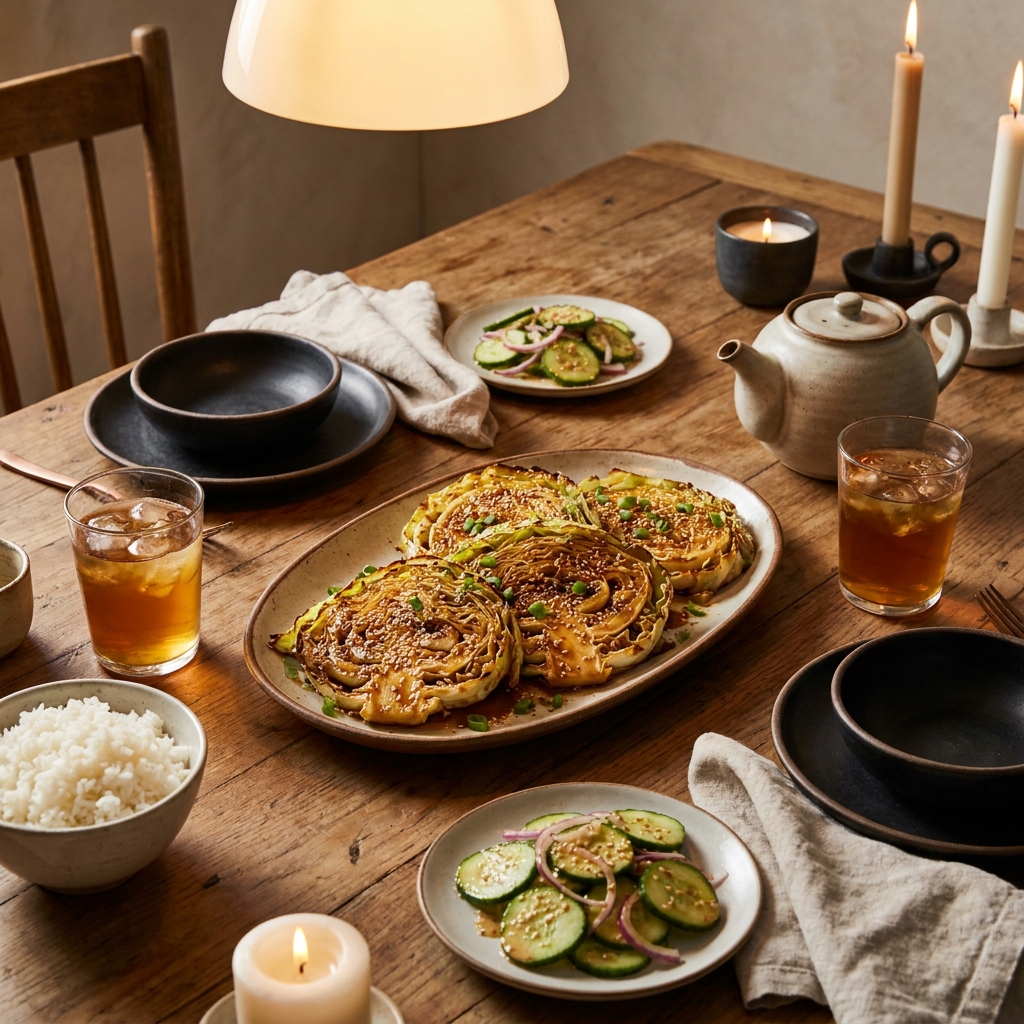
For weeknight dinners, pair miso cabbage steaks with simple roasted proteins like chicken breast, salmon fillets, or tofu steaks. The umami-rich miso glaze creates cohesion across the plate without requiring additional sauce. Serve alongside jasmine rice, quinoa, or cauliflower rice to create a complete balanced meal. Add a simple Asian cucumber salad with rice vinegar dressing for refreshing contrast to the rich cabbage.
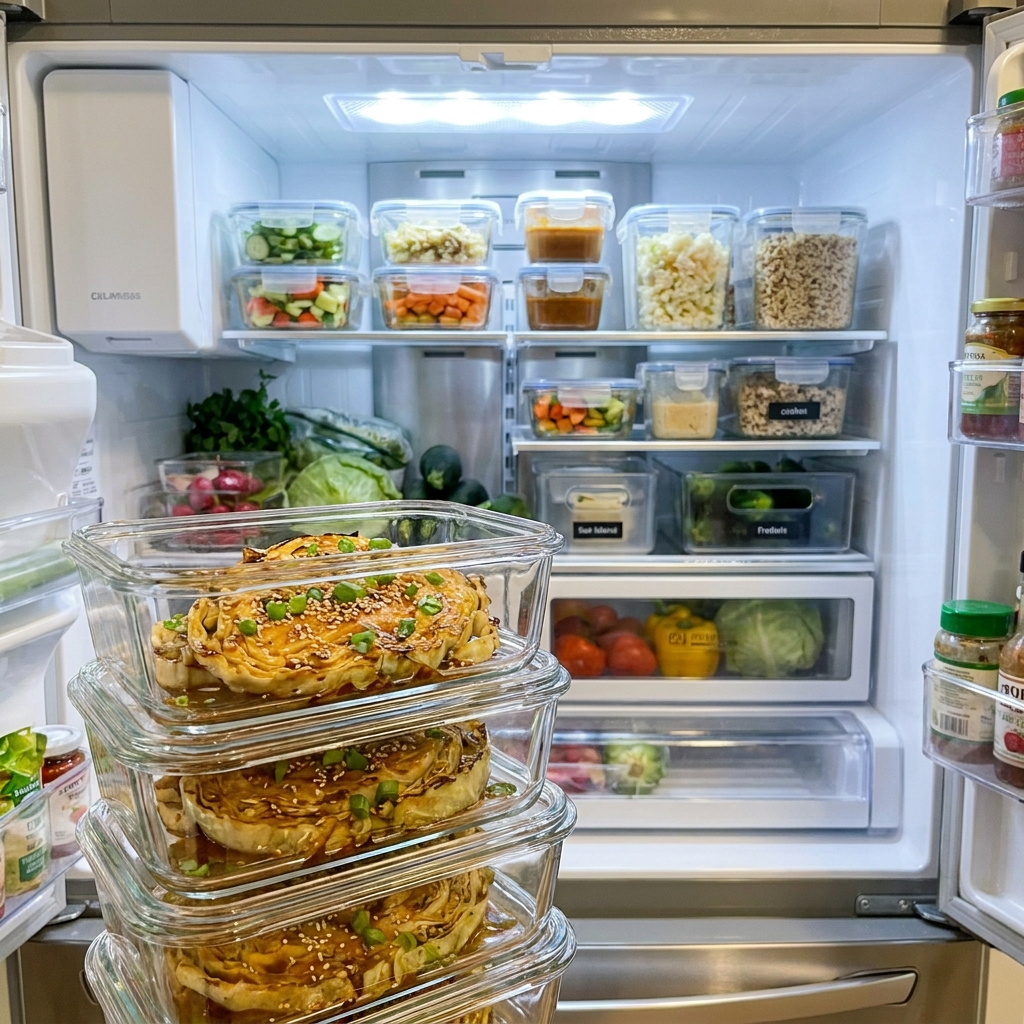
For meal prep applications, miso cabbage steaks store beautifully in containers and reheat perfectly, making them ideal for lunch boxes throughout the week. Pack them alongside grains and proteins for grab-and-go meals, or enjoy them cold in salads composed of mixed greens, shredded cabbage, and your favorite dressing. The miso cabbage steaks actually develop deeper flavor as they cool, making them excellent for next-day consumption.
For special gatherings and dinner parties, arrange miso cabbage steaks on a beautiful platter as an elegant side dish that impresses vegetable-skeptics and food enthusiasts alike. The dramatic presentation of whole steaks garnished with sesame seeds creates visual interest on the table. Pair with sophisticated mains like seared scallops, herb-crusted lamb, or miso-glazed fish to create a cohesive Asian-inspired menu.
For holiday meals and family celebrations, miso cabbage steaks provide a vegetable option that feels special without requiring hours of preparation. They work beautifully alongside traditional holiday proteins while adding contemporary Asian-inspired elements to the menu. Consider serving them as part of a diverse vegetable medley during Thanksgiving or other festive occasions.
For casual entertaining, serve miso cabbage steaks as an appetizer by cutting them into smaller pieces and arranging on a charcuterie board alongside various cheeses, nuts, and crackers. The umami richness of miso cabbage steaks complements both mild and assertive cheese flavors.
Storage and Reheating for Miso Cabbage Steaks
Proper storage and reheating techniques preserve the quality and flavor of miso cabbage steaks for days after cooking.
| Method | Duration | Instructions |
|---|---|---|
| Refrigerator Storage | 3-4 days | Place cooled miso cabbage steaks in an airtight container on a paper towel-lined base to absorb excess moisture. Store on a middle refrigerator shelf away from strong-smelling items. The steaks develop deeper flavor as they sit. |
| Freezer Storage | 2-3 months | Arrange cooled miso cabbage steaks on a baking sheet and freeze for two hours until solid, then transfer to freezer bags with all air removed. Alternatively, wrap individual steaks tightly in plastic wrap before bagging to prevent freezer burn. |
| Oven Reheating | Not applicable (method description only) | Preheat oven to 375 degrees. Place refrigerated miso cabbage steaks on a baking sheet and cover loosely with foil to prevent drying. Reheat for ten minutes until warmed through and edges begin re-crisping. Remove foil for final two minutes to restore surface crispness. |
| Microwave Reheating | Not applicable (method description only) | Place a refrigerated miso cabbage steak on a microwave-safe plate and cover with a damp paper towel. Microwave on medium power for one to two minutes until warmed through. This method produces softer steaks than oven reheating. |
| Skillet Reheating | Not applicable (method description only) | Heat a large skillet over medium heat with a light coating of oil. Place refrigerated miso cabbage steaks in the pan and cook for two to three minutes per side until heated through and edges crisp. This method restores surface texture best. |
| Make-Ahead Preparation | Up to 8 hours | Prepare miso cabbage steaks completely and store in an airtight container at room temperature for up to two hours, or refrigerate for up to eight hours. Reheat using preferred method before serving. |
| Thawing Frozen Steaks | Overnight in refrigerator | Transfer frozen miso cabbage steaks to the refrigerator the night before serving. Thaw completely before reheating using your preferred method to ensure even warming throughout. |
Miso cabbage steaks maintain excellent quality through proper storage, making them practical for meal planning and batch cooking throughout the week.
Nutritional Information for Miso Cabbage Steaks
Understanding the nutritional profile of miso cabbage steaks helps you incorporate them meaningfully into balanced meals.
| Nutrient | Amount per Serving |
|---|---|
| Calories | 95 calories |
| Protein | 3 grams |
| Total Fat | 6 grams |
| Saturated Fat | 1 gram |
| Carbohydrates | 8 grams |
| Dietary Fiber | 2 grams |
| Sugars | 3 grams |
| Sodium | 380 milligrams |
| Vitamin C | 25% of daily value |
| Vitamin K | 50% of daily value |
| Folate | 8% of daily value |
| Potassium | 240 milligrams |
Approximate values based on USDA nutrition database and standard serving sizes of one miso cabbage steak per serving. Actual nutritional content varies based on specific miso paste brands, oil type, and preparation methods used in your miso cabbage steaks.
Frequently Asked Questions About Miso Cabbage Steaks
Can I Use Red Cabbage Instead of Green Cabbage for Miso Cabbage Steaks?
Yes, red cabbage works beautifully for miso cabbage steaks and creates stunning visual contrast with the dark glaze. Red cabbage requires approximately five minutes additional cooking time because it’s slightly denser than green varieties. The natural earthiness of red cabbage pairs wonderfully with miso’s umami depth, creating exceptionally flavorful miso cabbage steaks.
What’s the Best Way to Tell When Miso Cabbage Steaks Are Properly Cooked?
Properly cooked miso cabbage steaks display deep golden-brown caramelization on both cut surfaces and crispy, charred outer leaves while maintaining tender interiors. A fork should pierce the thickest part with minimal resistance, indicating thorough cooking. The miso glaze should appear darker and slightly caramelized, never wet or glossy, which indicates more cooking is needed.
How Do I Make Miso Cabbage Steaks Without Fresh Sesame Seeds?
Omit sesame seeds entirely for equally delicious miso cabbage steaks, using fresh green onions and additional nori strips as garnish for umami flavor. Toast pumpkin seeds, sunflower seeds, or chopped nuts like almonds as alternatives providing similar textural contrast and nutritional benefits. Furikake seasoning creates authentic Asian flavor complexity when sprinkled over finished miso cabbage steaks.
Can I Prepare Miso Cabbage Steaks a Day in Advance?
Absolutely, miso cabbage steaks can be completely prepared and refrigerated up to eight hours ahead of serving. Store cooled steaks in an airtight container and reheat in a 375-degree oven for ten minutes before serving. The flavor actually deepens as miso cabbage steaks rest, making them excellent for entertaining or meal planning.
What Proteins Pair Best with Miso Cabbage Steaks?
Miso cabbage steaks complement any protein, though Asian-inspired options like miso-glazed fish, sesame-crusted chicken, or ginger-soy tofu create especially cohesive plates. Western proteins like roasted chicken breast, grilled steak, or baked salmon pair beautifully when served alongside miso cabbage steaks and Asian rice or grains.
How Long Can I Freeze Miso Cabbage Steaks Safely?
Properly stored miso cabbage steaks maintain quality in the freezer for two to three months when wrapped individually and stored in freezer bags with air removed. Longer storage results in deteriorated texture and potential freezer burn affecting the quality of your miso cabbage steaks.
Can I Make Miso Cabbage Steaks on a Stovetop Instead of in the Oven?
Yes, you can create stovetop miso cabbage steaks by heating oil in a large skillet over medium-high heat and cooking slices for four to five minutes per side until golden, then glazing with miso mixture. Stovetop cooking requires more attention and careful heat management to prevent burning compared to oven-roasted miso cabbage steaks.
Is It Possible to Make Soy-Free Miso Cabbage Steaks?
Yes, substitute traditional miso paste with chickpea miso, adzuki bean miso, or coconut aminos combined with additional umami elements like nutritional yeast for soy-free miso cabbage steaks. These alternatives provide similar fermented depth and umami complexity while accommodating dietary restrictions.
What Should I Do If My Miso Cabbage Steaks Taste Too Salty?
Reduce miso paste by one tablespoon in future batches, as saltiness varies significantly between miso brands and varieties. Serve miso cabbage steaks alongside unseasoned rice or grains to balance saltiness, or increase sweet and sour components like maple syrup and vinegar in the glaze.
Can Beginners Successfully Make Miso Cabbage Steaks?
Absolutely, miso cabbage steaks are beginner-friendly requiring minimal knife skills and straightforward oven cooking with no flipping or constant monitoring required. Start with green cabbage, which is more forgiving than delicate napa varieties, and follow the recipe exactly for reliable results.
Conclusion
Miso cabbage steaks represent the perfect intersection of simplicity and sophistication, transforming humble cabbage into an elegant vegetable that deserves the main stage on any dinner table. The combination of high-heat roasting and savory miso glazing creates caramelized exteriors and tender interiors with umami complexity that surprises even the most experienced home cooks. Whether you’re preparing a casual weeknight meal or impressing guests at a dinner party, miso cabbage steaks deliver consistent results with minimal effort and ingredient investment. These miso cabbage steaks prove that exceptional cooking doesn’t require complicated techniques or extensive ingredient lists, just quality components and proper execution. Make a batch this week and discover why miso cabbage steaks have become a permanent fixture in my cooking rotation.
Related Recipes You’ll Love
Addictive cabbage recipe
Chili crisp carrot ribbon salad recipe
baking soda shot for weight loss
Eggplant parmesan soup recipe
Whipped beef tallow recipe
Protein Dill Pickle Dip
Savory Greek yogurt dip
Expert Resources and Food Safety
For detailed information on miso paste varieties and their culinary applications, consult Food & Wine’s comprehensive guide to miso paste selection. Additionally, Healthline’s nutritional information on vegetables provides evidence-based information about cabbage health benefits and preparation methods.
Print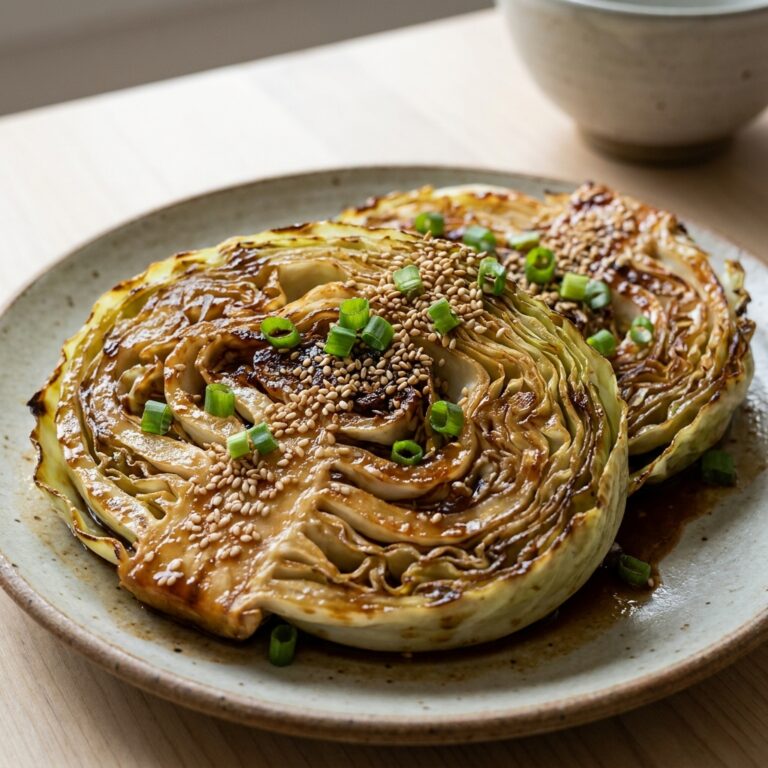
Viral Miso Cabbage Steaks 2026
Thick-cut cabbage steaks roasted until golden and tender, then glazed with a savory miso sauce for a simple, elegant, umami-rich vegetable side dish.
- Total Time: 40 minutes
- Yield: 4 servings 1x
Ingredients
- 1 large head green or napa cabbage, about 2 pounds
- 3 tablespoons miso paste, white or red
- 3 tablespoons olive oil
- 2 tablespoons water
- 1 tablespoon maple syrup or honey
- 1 tablespoon rice vinegar or apple cider vinegar
- 2 tablespoons sesame seeds
- 2 green onions or scallions, sliced
- Sea salt, to taste
- Black pepper, to taste
Instructions
- Preheat the oven to 425 degrees Fahrenheit.
- Rinse the cabbage head under cool water.
- Pat the cabbage completely dry with paper towels.
- Slice the cabbage vertically into 1 1/2-inch-thick steaks, keeping the core intact to hold each steak together.
- Arrange the cabbage steaks on a large rimmed baking sheet lined with parchment paper in a single layer.
- Brush both sides of each cabbage steak lightly with about 2 tablespoons olive oil.
- Season both sides with sea salt and freshly cracked black pepper.
- Place the baking sheet on the middle rack of the oven.
- Roast for 15 minutes, until the edges begin to turn lightly golden brown.
- Combine the miso paste, remaining 1 tablespoon olive oil, water, maple syrup, and rice vinegar in a small mixing bowl.
- Whisk until completely smooth, breaking up any miso lumps.
- Remove the baking sheet from the oven.
- Brush the top-facing side of each cabbage steak generously with the miso glaze.
- Return the cabbage steaks to the oven.
- Roast for 10 to 12 minutes, until the glaze caramelizes and darkens slightly.
- Carefully flip each cabbage steak with a thin spatula.
- Brush the second side with the remaining miso glaze.
- Continue roasting for 5 to 8 minutes, until both sides are deeply golden with crispy edges.
- Transfer the miso cabbage steaks to a serving platter.
- Sprinkle with sesame seeds while warm.
- Garnish with sliced green onions or scallions.
- Serve immediately while warm and crisp.
Notes
Pat the cabbage completely dry before roasting for the crispiest edges. Apply the miso glaze after the first roast so it caramelizes without burning. Use tamari-friendly miso options if preparing this as a gluten-free dish.
- Prep Time: 10 minutes
- Cook Time: 30 minutes
- Category: Side Dish
- Method: Roasted
- Cuisine: Japanese-Inspired
- Diet: Vegan
Nutrition
- Serving Size: 1 cabbage steak
- Calories: 95
- Sugar: 3g
- Sodium: 380mg
- Fat: 6g
- Saturated Fat: 1g
- Unsaturated Fat: 5g
- Trans Fat: 0g
- Carbohydrates: 8g
- Fiber: 2g
- Protein: 3g
- Cholesterol: 0mg