Mango sago pudding recipe is a beloved Filipino dessert that combines the natural sweetness of fresh mangoes with the delicate texture of sago pearls suspended in a silky pudding base. This chilled treat is perfect for hot tropical weather and stands as a testament to the simplicity and elegance of Southeast Asian cooking. The mango sago pudding recipe has been passed down through generations of Filipino families and is now enjoyed worldwide by dessert enthusiasts who appreciate light, fruity, and refreshing sweets. Made with just a few basic ingredients, this mango sago pudding recipe delivers a restaurant-quality dessert that you can easily recreate at home. The combination of creamy pudding, chewy sago pearls, and vibrant mango pieces creates an unforgettable eating experience that tastes just as good as it looks.
| Prep Time | Cook Time | Total Time | Servings | Difficulty | Cuisine |
|---|---|---|---|---|---|
| 20 minutes | 15 minutes | 4 hours 35 minutes | 6 servings | Easy | Filipino |
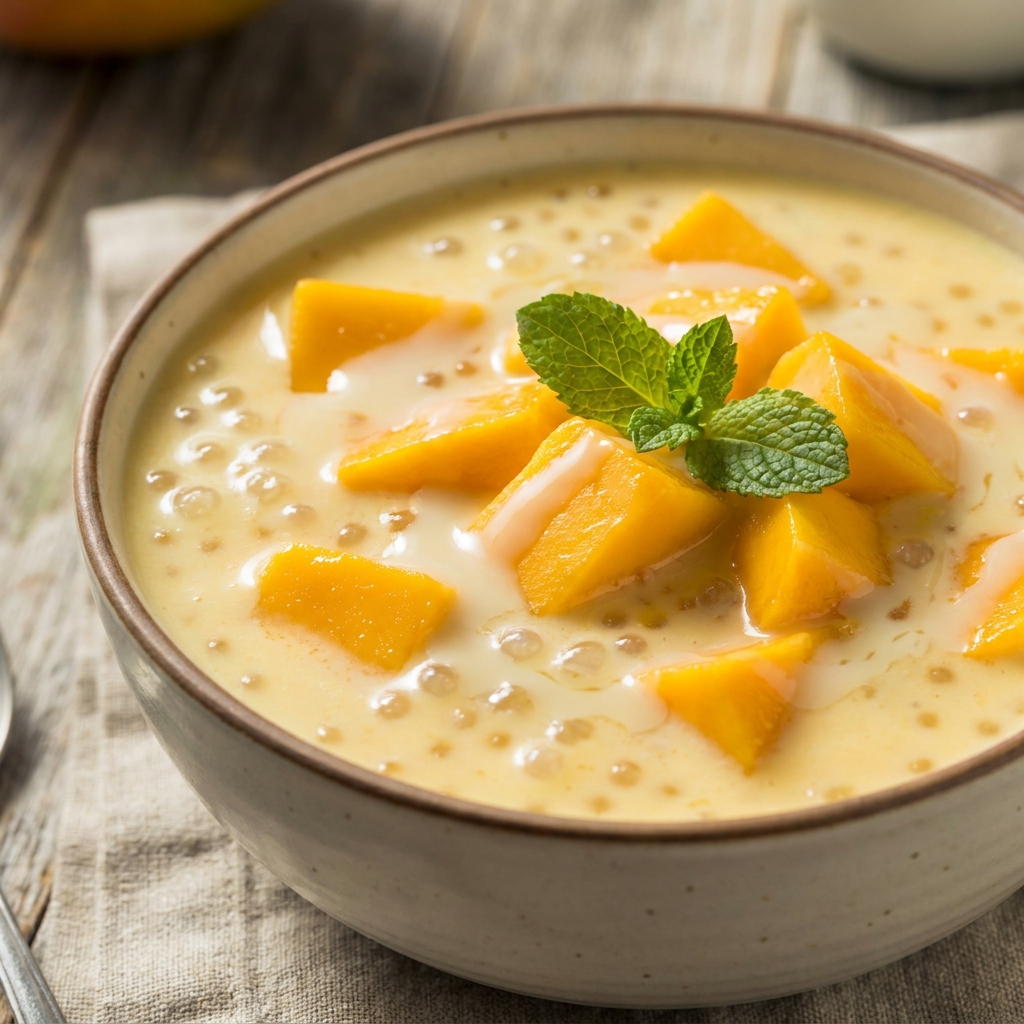
Table of Contents
Table of Contents
Why This Mango Sago Pudding Recipe Works
This mango sago pudding recipe works because it balances simplicity with sophisticated flavors and textures in a way that appeals to every palate. I have made this mango sago pudding recipe hundreds of times, and it never fails to impress family and guests alike. The creamy pudding base made from condensed milk and coconut milk provides richness without heaviness, while the sago pearls add an interesting chewy element that keeps each spoonful exciting. What makes this mango sago pudding recipe truly special is how it celebrates the natural sweetness of ripe mangoes without needing excessive sugar or artificial flavoring.
The texture profile of this mango sago pudding recipe is one of its greatest strengths, combining smoothness, chewiness, and juicy fruit pieces in perfect harmony. The mango sago pudding recipe is naturally refreshing and light, making it ideal for serving after heavy meals or on scorching summer days when you need something cooling and satisfying. From a practical standpoint, this mango sago pudding recipe requires minimal cooking skills and uses ingredients that are readily available in most supermarkets. The make-ahead nature of this mango sago pudding recipe means you can prepare it the night before, giving you more time to spend with family on the day you serve it.
Home cooks love this mango sago pudding recipe because it delivers impressive results without demanding hours in the kitchen or expensive specialty ingredients. The flavor profile remains authentic to traditional Filipino desserts while being accessible to modern cooks of all experience levels. This mango sago pudding recipe proves that you don’t need complicated techniques or rare ingredients to create a dessert that tastes like it came from a professional pastry kitchen.
Mango Sago Pudding Recipe Ingredients
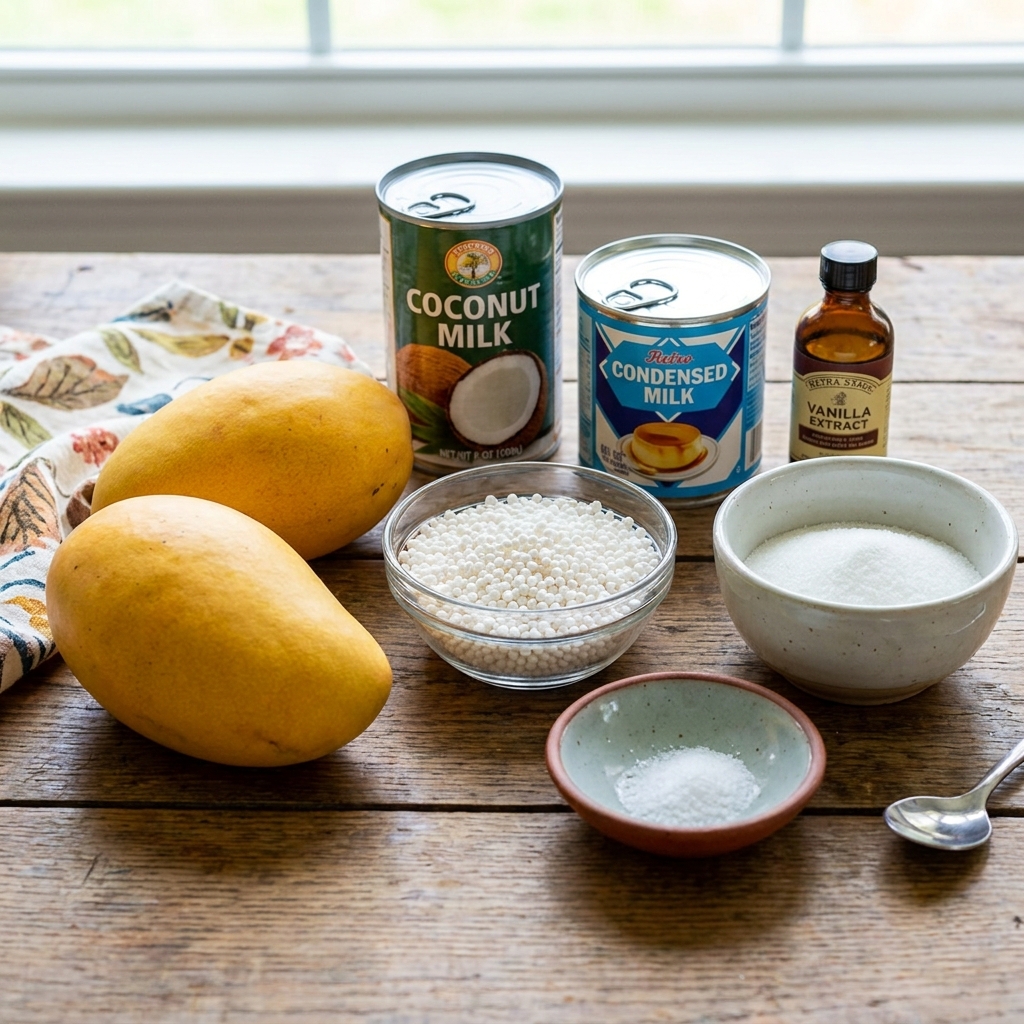
Gathering quality ingredients is the foundation for making exceptional mango sago pudding recipe at home, and understanding what each component contributes helps you make informed substitutions when needed.
| Ingredient | Quantity | Notes with Alternatives |
|---|---|---|
| Sago pearls | 1 cup | Small tapioca pearls; use medium pearl sago for chewier texture or opt for tapioca starch if sago is unavailable |
| Fresh mangoes | 4 large ripe mangoes | Choose Philippine mango varieties like Carabao or Ataulfo when possible; ensure mangoes are ripe but still firm; substitute with frozen mango puree if fresh is unavailable |
| Condensed milk | 1 can (14 oz) | Sweetened condensed milk is essential; do not substitute with evaporated milk as texture will be compromised |
| Coconut milk | 2 cans (13.5 oz each) | Full-fat coconut milk provides the best creamy texture; light coconut milk can be used but will result in a thinner pudding |
| Water | 6 cups | Use filtered or purified water for boiling sago; tap water is acceptable |
| Sugar | 1/4 cup | Granulated white sugar; reduce if using very sweet mangoes or condensed milk that is particularly sweet |
| Salt | 1/4 teaspoon | Enhances sweetness and balances flavors; kosher or sea salt works equally well |
| Vanilla extract | 1 teaspoon | Adds depth; use pure vanilla extract for best results; omit if unavailable |
Making excellent mango sago pudding recipe at home starts with selecting the ripest, sweetest mangoes available at your local market or specialty produce store. The quality of your mangoes directly impacts the final flavor of your mango sago pudding recipe, so invest in premium fruit when possible.
How to Make Mango Sago Pudding Recipe
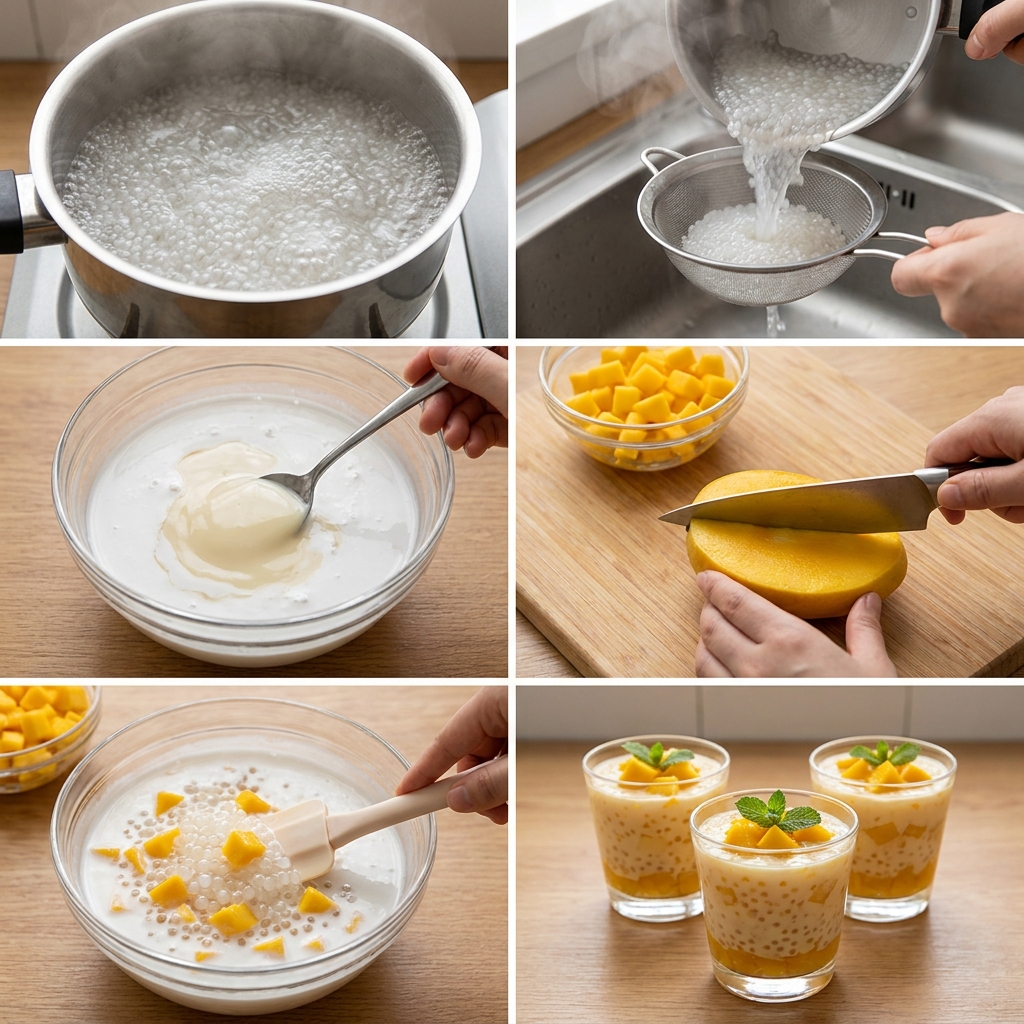
Creating mango sago pudding recipe involves boiling sago pearls, preparing the pudding base, and layering everything with fresh mango pieces, all requiring about thirty minutes of active cooking time plus several hours of chilling.
Preparing the Sago Pearls
- Boil six cups of water in a large pot over medium-high heat, then add one cup of sago pearls gradually while stirring to prevent clumping.
- Continue stirring the sago pearls frequently for approximately twelve to fifteen minutes until they become translucent and the white center disappears completely.
- Drain the cooked sago pearls through a fine mesh strainer and immediately rinse them under cold running water to stop the cooking process and prevent sticking.
- Set the cooled sago pearls aside in a clean bowl until ready to assemble your mango sago pudding recipe.
Making the Pudding Base for Your Mango Sago Pudding Recipe
- Pour both cans of coconut milk into a large mixing bowl and whisk in one can of sweetened condensed milk until completely combined.
- Add one-quarter teaspoon of salt and one teaspoon of vanilla extract, then whisk vigorously for one minute to incorporate air and ensure uniform consistency throughout the pudding base.
- Fold the cooled sago pearls gently into the pudding mixture using a rubber spatula, distributing them evenly without breaking them.
- Taste the pudding base and adjust sweetness by adding more condensed milk if desired, keeping in mind that the fresh mango will provide natural sweetness to your mango sago pudding recipe.
Preparing Fresh Mango for Your Mango Sago Pudding Recipe
- Peel and pit all four ripe mangoes, then cut the flesh into bite-sized cubes or thin slices depending on your preference for your mango sago pudding recipe.
- Divide the fresh mango pieces into two portions: one for layering and one for garnish on top of your finished mango sago pudding recipe.
- Reserve the mango juice that accumulates during cutting and stir it into the pudding base for enhanced mango flavor in every spoonful of your mango sago pudding recipe.
Assembling and Chilling Your Mango Sago Pudding Recipe
- Fold most of the fresh mango cubes into the sago pudding mixture, reserving some choice pieces for decorating the top of your mango sago pudding recipe.
- Divide the mango sago pudding recipe evenly among serving glasses or a large serving bowl, then refrigerate for at least four hours or until thoroughly chilled.
- Just before serving your mango sago pudding recipe, arrange the reserved mango pieces on top as garnish and serve in chilled bowls to maintain the perfect texture.
Chef Tips for Perfect Mango Sago Pudding Recipe
Mastering these expert tips will elevate your mango sago pudding recipe from good to exceptional, ensuring consistent results every time you make it.
- Cook sago pearls until completely translucent with no white center remaining; undercooked pearls will taste starchy and ruin the texture of your mango sago pudding recipe, while overcooked ones become mushy and fall apart during mixing.
- Chill your mango sago pudding recipe for a minimum of four hours before serving, preferably overnight, as this allows the flavors to meld completely and creates a silkier mouthfeel.
- Use the ripest, sweetest mangoes available for your mango sago pudding recipe; unripe mangoes will make the dessert taste less refined and may require you to add significantly more sugar.
- Reserve some fresh mango pieces before mixing them into the pudding base so you can arrange them attractively on top of your finished mango sago pudding recipe for visual appeal.
- Stir the mango sago pudding recipe gently with a rubber spatula rather than beating it with an electric mixer, as this prevents breaking the delicate sago pearls and incorporates just the right amount of air.
- Serve your mango sago pudding recipe in chilled bowls taken directly from the refrigerator to maintain the refreshing temperature and ideal consistency that makes this dessert so special.
Common Mango Sago Pudding Recipe Mistakes to Avoid
Understanding what typically goes wrong helps you navigate the preparation of mango sago pudding recipe with confidence and avoid disappointing results.
Overcooking the sago pearls: Many home cooks leave sago pearls in boiling water too long, resulting in mushy, broken pearls that make your mango sago pudding recipe have an unpleasant texture. Watch the sago carefully and remove it from heat immediately when the pearls turn translucent; the white center should just barely disappear.
Using unripe mangoes: Selecting unripe mangoes dramatically compromises the flavor profile of your mango sago pudding recipe because they lack the natural sweetness and complex fruity notes that make this dessert special. Ensure mangoes yield slightly to pressure and smell fragrant before adding them to your mango sago pudding recipe.
Skipping the chilling time: Rushing to serve your mango sago pudding recipe before it has properly chilled means you miss the smooth, creamy texture that develops as the pudding sets. The mango sago pudding recipe tastes substantially better after at least four hours of refrigeration, and overnight chilling yields optimal flavor development.
Adding too much sugar: Over-sweetening masks the delicate flavor of fresh mangoes and makes your mango sago pudding recipe cloying rather than refreshing. Start with the recommended amount of sugar and taste the pudding base before the final assembly of your mango sago pudding recipe, adjusting only if necessary.
Not rinsing cooked sago thoroughly: Failing to rinse the cooked sago pearls under cold water causes them to clump together and stick, compromising the texture of your finished mango sago pudding recipe. Rinse until the water runs clear and the pearls flow freely.
Best Mango Sago Pudding Recipe Variations and Substitutions
Exploring variations keeps your mango sago pudding recipe exciting while allowing you to customize it based on ingredient availability, dietary preferences, and personal taste preferences.
| Ingredient | Substitution | Impact on Flavor |
|---|---|---|
| Condensed milk | Sweetened condensed almond or oat milk | Creates a lighter, slightly nuttier version while maintaining sweetness; ideal for dairy-free mango sago pudding recipe |
| Coconut milk | Heavy cream mixed with whole milk in equal parts | Produces a creamier, richer mango sago pudding recipe but loses the coconut background flavor |
| Fresh mangoes | Frozen mango puree or high-quality frozen mango chunks | Maintains fruity flavor while extending availability of mango sago pudding recipe year-round |
| Sago pearls | Small tapioca pearls or chia seeds soaked in water | Tapioca provides similar texture; chia seeds add nutritional benefits to mango sago pudding recipe |
| Vanilla extract | Fresh pandan extract or almond extract | Creates an exotic twist on traditional mango sago pudding recipe; pandan adds distinctive vanilla-like flavor |
| Sugar | Honey, agave nectar, or maple syrup | Adds subtle complexity to mango sago pudding recipe while reducing crystalline sweetness |
One popular variation of the classic mango sago pudding recipe involves adding a thin layer of caramel sauce at the bottom of serving glasses before adding the pudding, which creates an elegant presentation and adds depth to the dessert. Another enjoyable twist on traditional mango sago pudding recipe includes infusing the pudding base with a small amount of pandan or rose water for a sophisticated Southeast Asian flair.
For those seeking a lighter version of mango sago pudding recipe, you can substitute full-fat coconut milk with light coconut milk and reduce the condensed milk slightly, though this will result in a less creamy but still delicious dessert. The basic mango sago pudding recipe remains flexible enough to accommodate various dietary needs while preserving the essential character that makes this dessert beloved.
Serving Suggestions for Mango Sago Pudding Recipe
Presenting mango sago pudding recipe thoughtfully transforms it from a simple dessert into an elegant finale to any meal or a memorable treat at gatherings and celebrations.
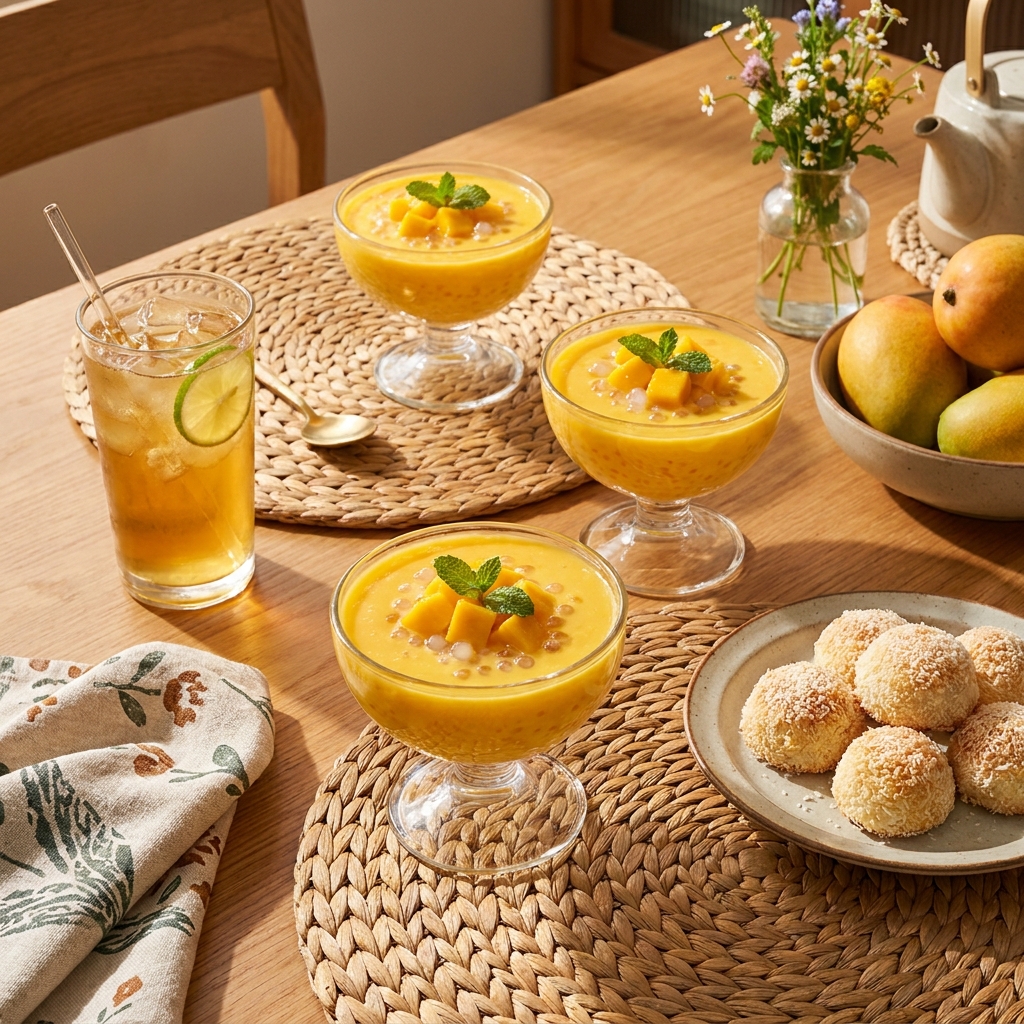
Serve your mango sago pudding recipe as the perfect conclusion to Filipino, Thai, or Vietnamese meals where it complements spicy, savory dishes beautifully. The refreshing nature of mango sago pudding recipe makes it ideal for buffet-style entertaining since it can be prepared completely ahead of time and served directly from the refrigerator. During summer gatherings and garden parties, mango sago pudding recipe serves as a crowd-pleasing dessert that appeals to both children and adults alike. For family dinners, spoon mango sago pudding recipe into individual serving glasses and garnish with a few pristine mango pieces and a mint leaf for an impressive presentation.
When serving mango sago pudding recipe at casual weeknight meals, pair it with warm Filipino pastries or coconut macaroons for textural contrast. At special occasions and holidays, mango sago pudding recipe can be prepared in large batch quantities and served in a beautiful glass bowl so guests can see the beautiful layers of pudding and mango. Consider serving mango sago pudding recipe with a small glass of iced green tea or jasmine tea, which complements the fruity sweetness perfectly. The versatile nature of mango sago pudding recipe means you can serve it warm by reducing chilling time slightly, or prepare it days in advance for busy event planning.
Storage and Reheating for Mango Sago Pudding Recipe
Proper storage ensures your mango sago pudding recipe remains safe to eat and maintains optimal quality for several days after preparation.
| Method | Duration | Instructions |
|---|---|---|
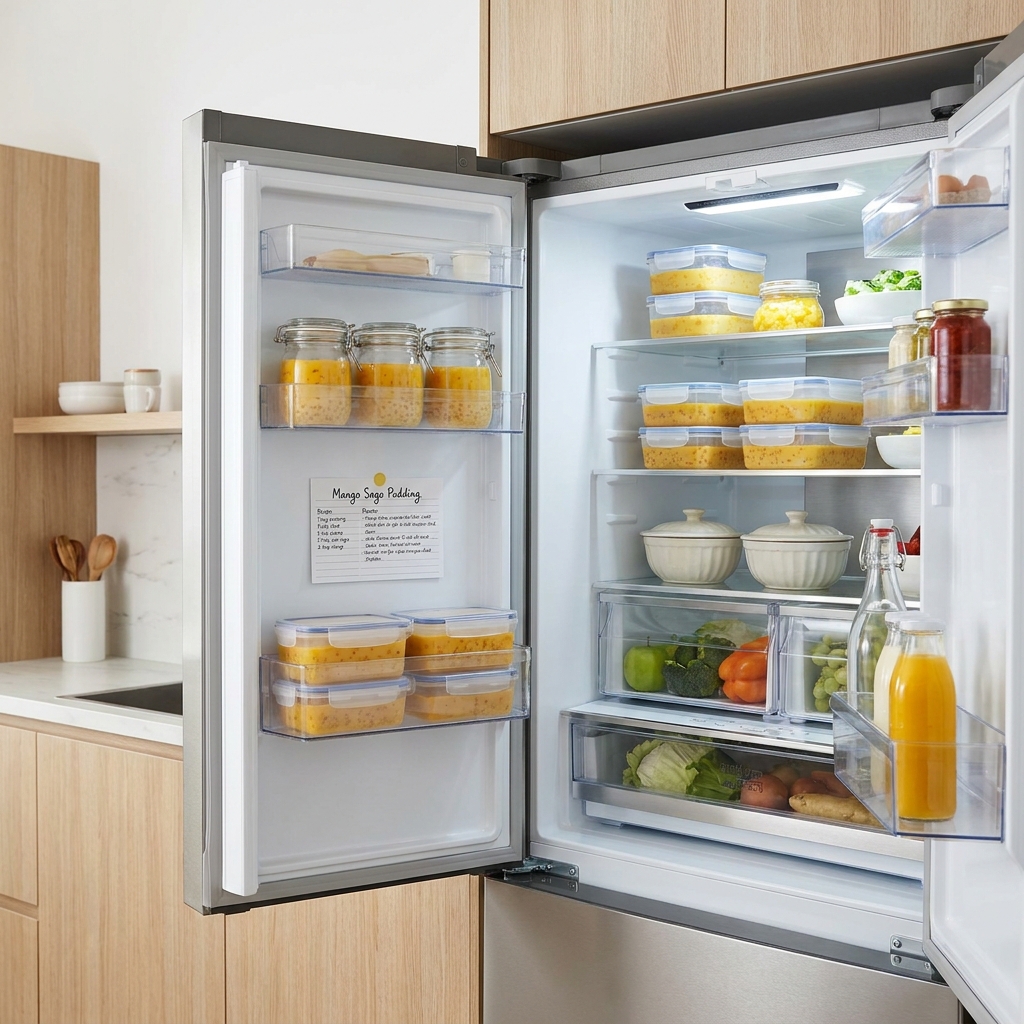
| Refrigerator Storage | Up to 5 days | Cover the mango sago pudding recipe with plastic wrap or transfer to an airtight container; store on a shelf rather than the door for consistent temperature; stir gently before serving |
| Freezer Storage | Up to 3 months | Freeze mango sago pudding recipe in individual portions in freezer-safe containers with space for expansion; thaw overnight in the refrigerator before consuming for best texture |
| Make-Ahead Preparation | Up to 2 days | Prepare the pudding base and cooked sago separately; store pudding base and sago in separate airtight containers; combine and add fresh mango no more than 6 hours before serving to prevent sogginess |
| Serving from Frozen | Not recommended | Freezing can compromise the delicate texture of the sago pearls and separate the creamy pudding; thaw completely in the refrigerator for 8-10 hours |
| Food Safety | See note | The mango sago pudding recipe contains milk products and should never sit at room temperature for more than 2 hours; discard if left out overnight |
Storing mango sago pudding recipe correctly preserves both food safety and the delightful creamy texture that makes this dessert special. Covered properly in the refrigerator, your mango sago pudding recipe will maintain quality for up to five days, though the sago pearls gradually absorb liquid and become softer over time. For best results, add fresh mango pieces to the mango sago pudding recipe no more than six hours before serving, as the fruit releases liquid that can make the pudding slightly watery if allowed to sit too long.
Nutritional Information for Mango Sago Pudding Recipe
Understanding the nutritional profile of mango sago pudding recipe helps you make informed dietary decisions and appreciate the balance of nutrients in this indulgent yet relatively light dessert.
| Nutrient | Amount per Serving |
|---|---|
| Calories | 285 |
| Total Fat | 12 grams |
| Saturated Fat | 10 grams |
| Cholesterol | 35 milligrams |
| Sodium | 95 milligrams |
| Total Carbohydrates | 42 grams |
| Dietary Fiber | 2 grams |
| Total Sugars | 38 grams |
| Protein | 2 grams |
| Vitamin A | 18% Daily Value |
| Vitamin C | 45% Daily Value |
| Calcium | 12% Daily Value |
Approximate nutritional values are based on standard ingredient amounts used in traditional mango sago pudding recipe; actual values may vary based on specific brands and portion sizes. The mango sago pudding recipe provides significant amounts of vitamin C from fresh mangoes, making it not just delicious but also nutritionally beneficial when enjoyed in appropriate portions.
Frequently Asked Questions About Mango Sago Pudding Recipe
Can I make mango sago pudding recipe without condensed milk?
Yes, you can substitute regular sugar dissolved in warm milk or use sweetened condensed coconut milk as an alternative to traditional condensed milk in your mango sago pudding recipe. However, the flavor and texture will be slightly different, as condensed milk provides a specific richness and sweetness that is difficult to replicate exactly. Adjust the sweetness gradually and taste frequently when modifying the mango sago pudding recipe to ensure you achieve your desired results.
How do I know when sago pearls are fully cooked for mango sago pudding recipe?
Properly cooked sago pearls for mango sago pudding recipe will be completely translucent with no white or opaque center remaining visible. Each pearl should feel soft and slightly chewy when bitten but should hold its shape rather than falling apart or becoming mushy. If you notice any white centers remaining in your sago pearls, continue boiling for another minute or two before testing again for your mango sago pudding recipe.
What is the best way to select ripe mangoes for mango sago pudding recipe?
Choose mangoes for your mango sago pudding recipe that feel slightly soft when gently squeezed, yield slightly to pressure, and have a fragrant aroma near the stem end. Avoid mangoes that are rock hard or those that have soft spots, bruises, or blemishes on the skin. The skin color should be predominantly golden or reddish depending on the variety, indicating ripeness for optimal flavor in your mango sago pudding recipe.
Can I prepare mango sago pudding recipe several days in advance?
You can prepare the pudding base and cooked sago several days in advance and store them separately in airtight containers in the refrigerator for up to five days. However, it is best to add fresh mango pieces no more than six hours before serving your mango sago pudding recipe to prevent the fruit from releasing excess liquid that can thin the pudding. Combine all components just before serving for the best texture and flavor.
Is mango sago pudding recipe suitable for people with dairy allergies?
Traditional mango sago pudding recipe contains condensed milk and coconut milk, both of which may contain traces of dairy depending on the brand, though pure coconut milk is naturally dairy-free. You can make a dairy-free version of mango sago pudding recipe by substituting condensed milk with sweetened condensed almond or oat milk and using full-fat coconut milk, which is naturally dairy-free. Always check product labels carefully to ensure your ingredients are certified dairy-free if you are preparing mango sago pudding recipe for someone with a dairy allergy.
How should I serve mango sago pudding recipe to guests at a dinner party?
Prepare your mango sago pudding recipe completely and chill it for at least four hours before your guests arrive, then spoon it into individual serving glasses and garnish with fresh mango pieces and a small mint leaf just before serving. Alternatively, present mango sago pudding recipe in a large glass bowl so guests can admire the beautiful layers of pudding and fruit before serving themselves. Keep the mango sago pudding recipe chilled in the refrigerator until the moment of serving to ensure it maintains its refreshing temperature and perfect consistency.
What causes my mango sago pudding recipe to become watery or separated?
Watery or separated mango sago pudding recipe usually results from either overcooking the sago pearls, which causes them to break down and release starch into the pudding, or from letting fresh mango pieces sit in the pudding for too long before serving. Additionally, not chilling the pudding base adequately before mixing in other components can result in a thinner consistency. Use proper cooking times for sago, chill thoroughly before assembly, and add fresh mango no more than six hours before serving to prevent this issue.
Can I add other fruits to mango sago pudding recipe besides mangoes?
Yes, you can create variations of mango sago pudding recipe by adding other tropical fruits such as pineapple, papaya, or strawberries alongside the mangoes. Layer different fruits in serving glasses for visual interest, or blend different fruits together to create a mixed-fruit version of mango sago pudding recipe. The pudding base and sago remain the same, making the mango sago pudding recipe adaptable to whatever fruits are fresh and available at your local market.
What is the ideal serving temperature for mango sago pudding recipe?
Mango sago pudding recipe is best served ice-cold directly from the refrigerator, having been chilled for a minimum of four hours and preferably overnight. The cold temperature enhances the refreshing nature of the dessert and maintains the firm, creamy texture of the pudding and the pleasant chewiness of the sago pearls. If you prefer mango sago pudding recipe slightly less cold, remove it from the refrigerator about fifteen minutes before serving, but do not allow it to sit at room temperature for extended periods.
Can I use canned mango in place of fresh mango for mango sago pudding recipe?
Canned mango in syrup can be used for mango sago pudding recipe if fresh mangoes are unavailable, though the flavor will be less vibrant and the texture slightly softer than with fresh fruit. Drain the canned mango thoroughly and rinse it to remove excess syrup, then use it in place of fresh mango at the same quantity called for in the recipe. The resulting mango sago pudding recipe will still be delicious but will have a slightly more muted mango flavor compared to versions made with premium fresh fruit.
How many servings does one batch of mango sago pudding recipe make?
The standard mango sago pudding recipe recipe provided yields six generous servings when portioned into typical dessert-sized servings of approximately six ounces each. The mango sago pudding recipe can be divided into eight smaller portions if serving as part of a multi-course meal or into four large portions for those who prefer generous dessert servings. Adjust the ingredient quantities proportionally if you need to make more or fewer servings of mango sago pudding recipe.
Conclusion
This mango sago pudding recipe stands as a testament to how simple, quality ingredients and straightforward techniques create truly memorable desserts that delight across cultures and generations. The beauty of mango sago pudding recipe lies in its ability to celebrate the natural sweetness of ripe mangoes while creating a luxuriously creamy texture that feels indulgent yet refreshingly light. Once you master the basic mango sago pudding recipe, you’ll find yourself making it repeatedly for family gatherings, dinner parties, and those moments when you crave something special but don’t want to spend hours cooking. The combination of silky pudding, chewy sago pearls, and bright golden mango pieces creates an experience that tastes like summer on a spoon, and the fact that mango sago pudding recipe can be prepared completely ahead of time makes it an ideal choice for any occasion. Whether you’re exploring Filipino desserts for the first time or you’re already familiar with this classic treat, this mango sago pudding recipe will become a trusted favorite that you return to year after year.
Related Recipes You’ll Love
instant mango ice cream with cool whip curry
chana masala instant pot zero oil
homemade mounds bars 3 ingredients
berry cottage cheese breakfast bowl
healthy chocolate coconut snack cake gluten free
chocolate chip cookie dough brownie bites
bariatric gelatin recipe for weight loss
silken tofu miso dressing recipe
pink gelatin trick recipe for weight loss
caribbean curry bowl homemade recipe
tiktok ramen noodles recipe
tiktok tomato feta pasta recipe
no butter single serve chocolate chip recipe
Expert Resources and Food SafetyExternal Resources
Nutrition.gov for nutritional information and dietary guidelines
Foodsafety.gov for food storage and safety guidelines
Print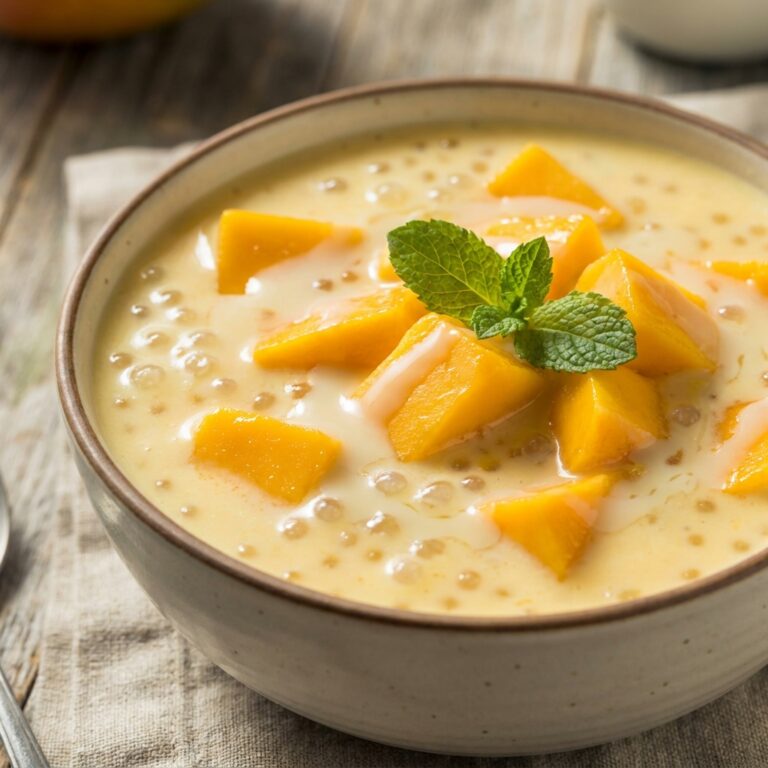
Viral Mango Sago Pudding Recipe 2026
Mango sago pudding recipe is a beloved Filipino dessert that combines the natural sweetness of fresh mangoes with the delicate texture of sago pearls suspended in a silky pudding base. This chilled treat is perfect for hot tropical weather and stands as a testament to the simplicity and elegance of Southeast Asian cooking.
- Total Time: 4 hours 35 minutes
- Yield: 6 servings 1x
Ingredients
- 1 cup sago pearls
- 4 large ripe mangoes
- 1 can sweetened condensed milk, 14 ounces
- 2 cans full-fat coconut milk, 13.5 ounces each
- 6 cups water
- 1/4 cup granulated sugar
- 1/4 teaspoon salt
- 1 teaspoon vanilla extract
Instructions
- Boil 6 cups of water in a large pot over medium-high heat.
- Add 1 cup of sago pearls gradually while stirring to prevent clumping.
- Continue stirring the sago pearls frequently for 12 to 15 minutes until they become translucent and the white center disappears completely.
- Drain the cooked sago pearls through a fine mesh strainer.
- Immediately rinse the sago pearls under cold running water to stop the cooking process and prevent sticking.
- Set the cooled sago pearls aside in a clean bowl.
- Pour both cans of coconut milk into a large mixing bowl.
- Whisk in 1 can of sweetened condensed milk until completely combined.
- Add 1/4 teaspoon salt and 1 teaspoon vanilla extract.
- Whisk vigorously for 1 minute to incorporate air and ensure uniform consistency throughout the pudding base.
- Fold the cooled sago pearls gently into the pudding mixture using a rubber spatula.
- Distribute the sago pearls evenly without breaking them.
- Taste the pudding base and adjust sweetness if desired.
- Peel and pit all 4 ripe mangoes.
- Cut the mango flesh into bite-sized cubes or thin slices.
- Divide the fresh mango pieces into 2 portions, one for layering and one for garnish.
- Reserve any mango juice that accumulates during cutting.
- Stir the reserved mango juice into the pudding base for enhanced mango flavor.
- Fold most of the fresh mango cubes into the sago pudding mixture.
- Reserve some choice mango pieces for decorating the top.
- Divide the mango sago pudding recipe evenly among serving glasses or a large serving bowl.
- Refrigerate for at least 4 hours or until thoroughly chilled.
- Just before serving, arrange the reserved mango pieces on top as garnish.
- Serve in chilled bowls to maintain the perfect texture.
Notes
Cook the sago pearls until completely translucent with no white center remaining. Use ripe, fragrant mangoes for the best flavor, and chill the pudding for at least 4 hours so the texture becomes silky and refreshing.
- Prep Time: 20 minutes
- Cook Time: 15 minutes
- Category: Dessert
- Method: Chilling
- Cuisine: Filipino
- Diet: Vegetarian
Nutrition
- Serving Size: 1 serving
- Calories: 285
- Sugar: 38g
- Sodium: 95mg
- Fat: 12g
- Saturated Fat: 10g
- Unsaturated Fat: 2g
- Trans Fat: 0g
- Carbohydrates: 42g
- Fiber: 2g
- Protein: 2g
- Cholesterol: 35mg