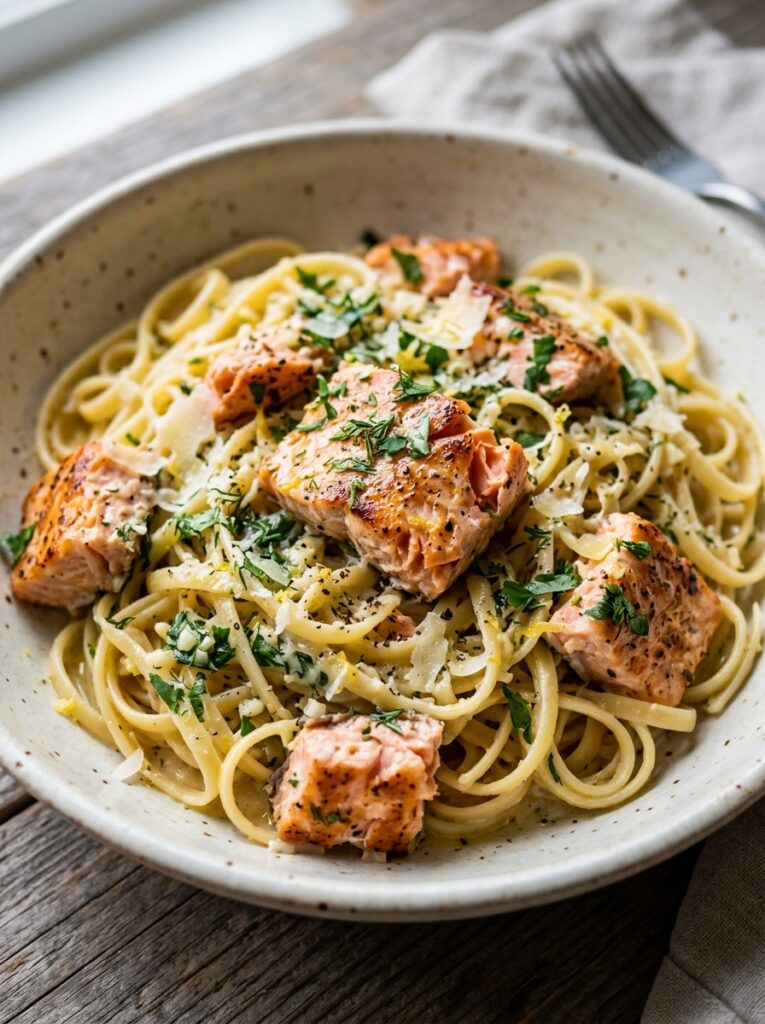
This high protein salmon pasta recipe delivers tender salmon, creamy sauce, and al dente noodles for a satisfying weeknight dinner that refuels your body and delights your taste buds. This high protein salmon pasta recipe combines heart-healthy omega-3 fatty acids with complete protein and complex carbs for a balanced, high protein salmon pasta recipe that feels indulgent but fuels performance.
| Prep Time | Cook Time | Total Time | Servings | Difficulty | Cuisine |
|---|---|---|---|---|---|
| 15 minutes | 20 minutes | 35 minutes | 4 | Easy | Italian-American |
Why This high protein salmon pasta recipe Works
I developed this high protein salmon pasta recipe to hit the sweet spot of flavor, texture, and speed. The salmon stays moist while the garlic and olive oil form a savory base that clings to every strand of pasta. Fresh lemon brightens the sauce, and a sprinkle of parmesan adds umami without overwhelming the fish. I rely on this method for busy weeknights because it scales easily and delivers consistent results every time.
This high protein salmon pasta recipe leans on simple techniques that anyone can master. You will sear the salmon for a lightly crisped crust, then deglaze the pan to capture the golden fond for maximum depth. Gentle heat keeps the cream stable, while the pasta water thickens the sauce without extra fat. The entire dish comes together in one pan, which makes cleanup easy and the flavors more cohesive.
Home cooks love this high protein salmon pasta recipe because it feels restaurant-quality without fuss. The textures balance tender fish, silky sauce, and springy pasta, and the aroma is deeply inviting. It is flexible enough for meal prep, yet elegant enough for guests. Most importantly, the protein content supports satiety and energy, so you can enjoy a satisfying meal without post-dinner cravings.
From a nutrition perspective, this high protein salmon pasta recipe focuses on clean, real-food ingredients. Salmon provides high-quality protein and omega-3s, pasta fuels your day, and olive oil contributes heart-healthy fats. Fresh herbs add antioxidants, while lemon brings vitamin C and brightness. By keeping the ingredient list short, you can easily swap components for dietary needs without losing the core flavor you expect.
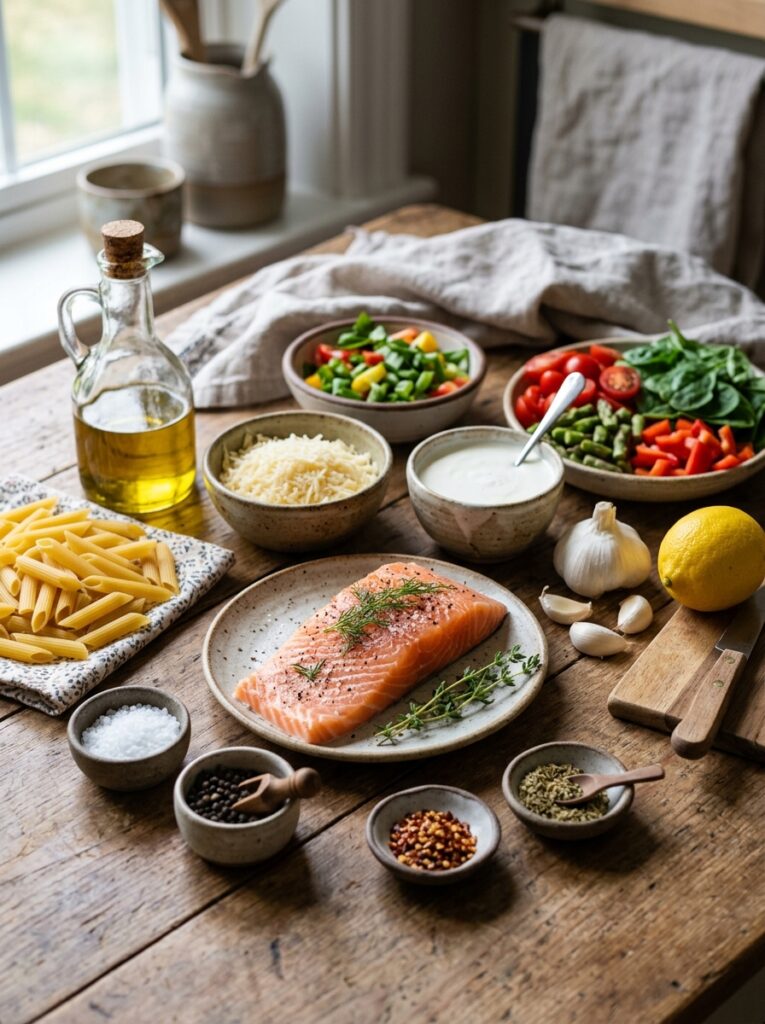
high protein salmon pasta recipe Ingredients
These are the exact ingredients you need for this high protein salmon pasta recipe, with simple notes and alternatives in case you want to customize.
| Ingredient | Quantity | Notes with alternatives |
|---|---|---|
| Salmon fillets, skinless or skin-on | 1.5 pounds | Wild-caught offers better flavor and firmness; cod or trout can substitute if needed |
| Pasta, spaghetti or linguine | 12 ounces | Use high-protein chickpea pasta for more protein; gluten-free pasta works well |
| Olive oil | 3 tablespoons | Extra virgin is best; avocado oil is a neutral alternative |
| Garlic, minced | 4 cloves | Adjust to taste; garlic powder works in a pinch |
| Shallot or onion, finely chopped | 1 small | Shallot is milder; yellow onion is fine |
| Heavy cream | 1 cup | For lighter version, use half-and-half or evaporated milk |
| Lemon, zest and juice | 1 large | More for brighter sauce; keep some zest for garnish |
| Chicken or vegetable broth | ½ cup | Use low sodium; mushroom broth adds savory depth |
| Parmesan cheese, grated | ½ cup | Pecorino Romano is a saltier swap; omit for dairy-free |
| Fresh herbs, dill or parsley | ¼ cup chopped | Dill pairs with salmon; parsley adds fresh aroma |
| Sea salt and black pepper | To taste | Season in layers while cooking |
| Red pepper flakes | Pinch, optional | Add gentle heat without overpowering fish |
How to Make high protein salmon pasta recipe
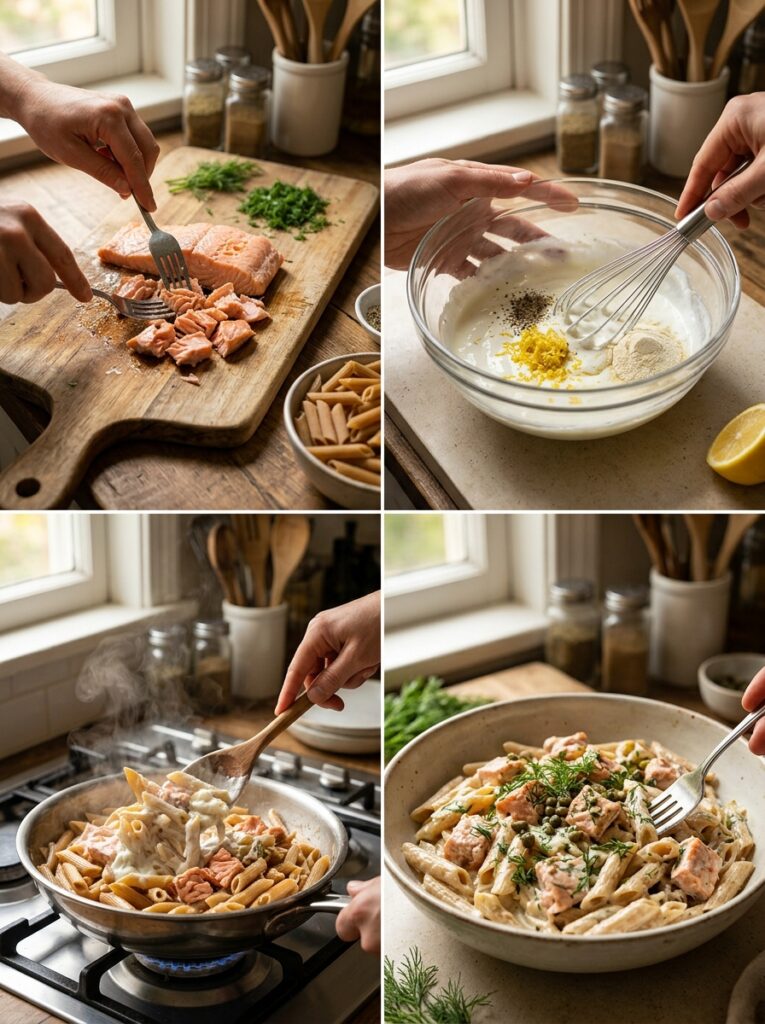
Follow these steps to make this high protein salmon pasta recipe with confidence, using clear actions and beginner-friendly cues.
Prep
- Bring a large pot of salted water to a boil for the pasta.
- Pat the salmon dry and season with salt and pepper on both sides.
- Minced garlic, chop shallot, zest and juice the lemon, and measure cream and broth.
- Grate the parmesan and chop the herbs so everything is ready near the stove.
Sear Salmon
- Heat olive oil in a large skillet over medium-high heat until shimmering.
- Place salmon in the pan, leaving space between pieces for even browning.
- Sear without moving for 3 to 4 minutes until a golden crust forms.
- Flip and cook 2 to 3 minutes more, then transfer to a plate and tent loosely with foil.
Start Sauce
- Reduce heat to medium and add shallot to the same pan, stirring for 1 minute.
- Add garlic and cook 30 seconds until fragrant without browning.
- Pour in broth to deglaze, scraping up browned bits for flavor.
- Stir in cream, then add lemon zest and a pinch of salt and pepper.
Cook Pasta
- Cook pasta in the boiling water until just al dente, reserving 1 cup of pasta water.
- Add parmesan to the sauce and stir until smooth and slightly thickened.
- Flake the cooked salmon into bite-size pieces with a fork.
- Transfer pasta to the skillet and toss to coat, adding pasta water as needed.
Finish And Serve
- Fold in salmon pieces gently so they stay in large flakes.
- Squeeze in lemon juice and sprinkle with fresh herbs and red pepper flakes.
- Taste and adjust seasoning with salt, pepper, or extra lemon.
- Serve immediately with additional parmesan and a drizzle of olive oil.
Chef Tips for Perfect high protein salmon pasta recipe
Use these precise tips to ensure your high protein salmon pasta recipe comes out flawless every time.
- Use room-temperature salmon: Let fillets sit 10 minutes before searing for even cooking and a crisp crust.
- Season in layers: Salt the salmon and the pasta water, then season the sauce so every component tastes balanced.
- Don’t overcrowd the pan: Sear salmon in two batches if needed to maintain high heat and avoid steaming.
- Reserve pasta water: The starchy water thickens the sauce and helps it cling to noodles without extra fat.
- Moderate the heat: Keep the cream at a gentle simmer to prevent curdling and maintain a silky texture.
- Build acidity at the end: Add lemon juice off the heat so the brightness stays fresh and lively.
Common high protein salmon pasta recipe Mistakes to Avoid
Avoid these common mistakes so your high protein salmon pasta recipe delivers perfect texture and flavor every time.
- Overcooking the salmon: This happens when heat is too high or the fish sits too long; remove salmon once it flakes and finish by tenting with foil.
- Skipping the deglaze: The fond at the pan bottom is pure flavor; deglazing with broth lifts it into the sauce.
- Adding lemon too early: Acid can break down the cream if added at a boil; add lemon juice off heat for stability.
- Using dry pasta water: Starchy water is essential for texture; reserve at least a cup before draining pasta.
- Overloading garlic: Too much garlic can overpower the salmon; stick to 3 to 4 cloves for balance.
- Stirring the salmon aggressively: Rough handling flakes it too small; fold gently for beautiful pieces.
Best high protein salmon pasta recipe Variations and Substitutions
Use this table to customize the high protein salmon pasta recipe to suit dietary needs and flavor preferences.
| Ingredient | Substitution | Impact on Flavor |
|---|---|---|
| Heavy cream | Half-and-half or coconut milk | Lighter body; coconut adds subtle sweetness |
| Parmesan cheese | Nutritional yeast or omit | Umami boost or cleaner dairy-free finish |
| Salmon | Trout or cod | Buttery trout or milder cod flavor |
| Pasta | High-protein chickpea pasta | More protein and firmer bite |
| Herbs | Basil or chives | Sweet basil or delicate chive notes |
| Broth | Mushroom broth | Earthy depth without fish stock |
Serving Suggestions for high protein salmon pasta recipe
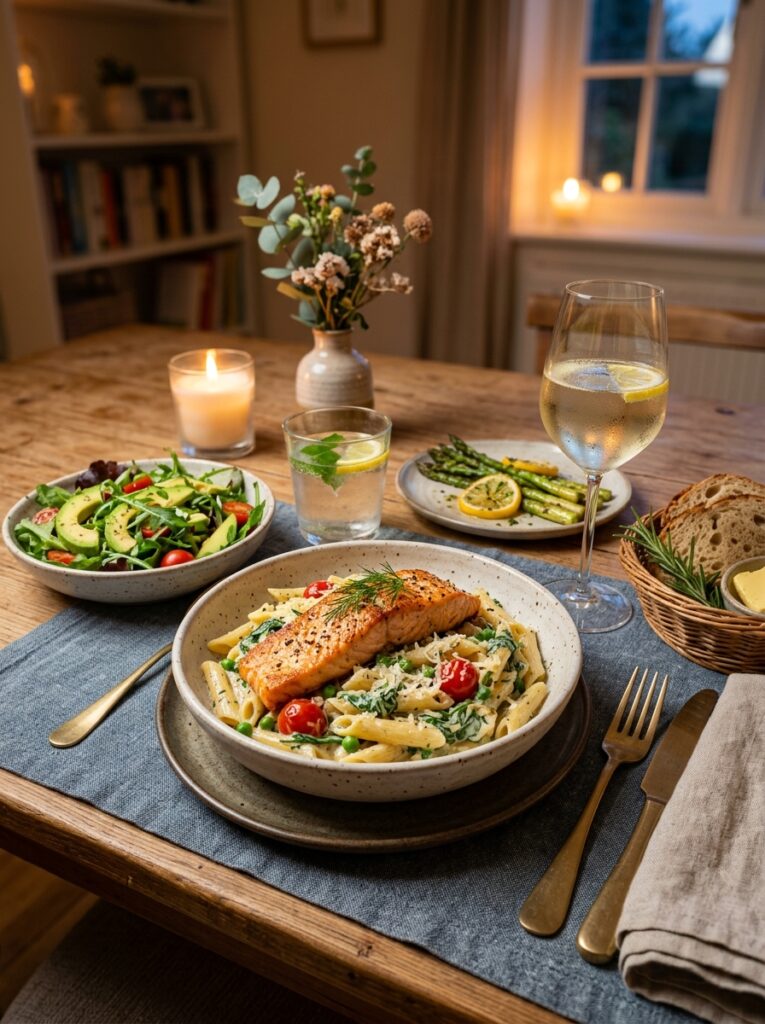
Serve the high protein salmon pasta recipe with bright sides and drinks to create a balanced, crowd-pleasing meal.
Pair with a crisp arugula salad tossed in lemon vinaigrette to add peppery notes and a refreshing crunch. Roasted broccoli or asparagus complements the creamy sauce, while garlic bread helps scoop up every bit. For beverages, choose sparkling water with lemon or an iced herbal tea to keep the palate lively. This high protein salmon pasta recipe shines at weeknight dinners, casual gatherings, and celebratory meals alike.
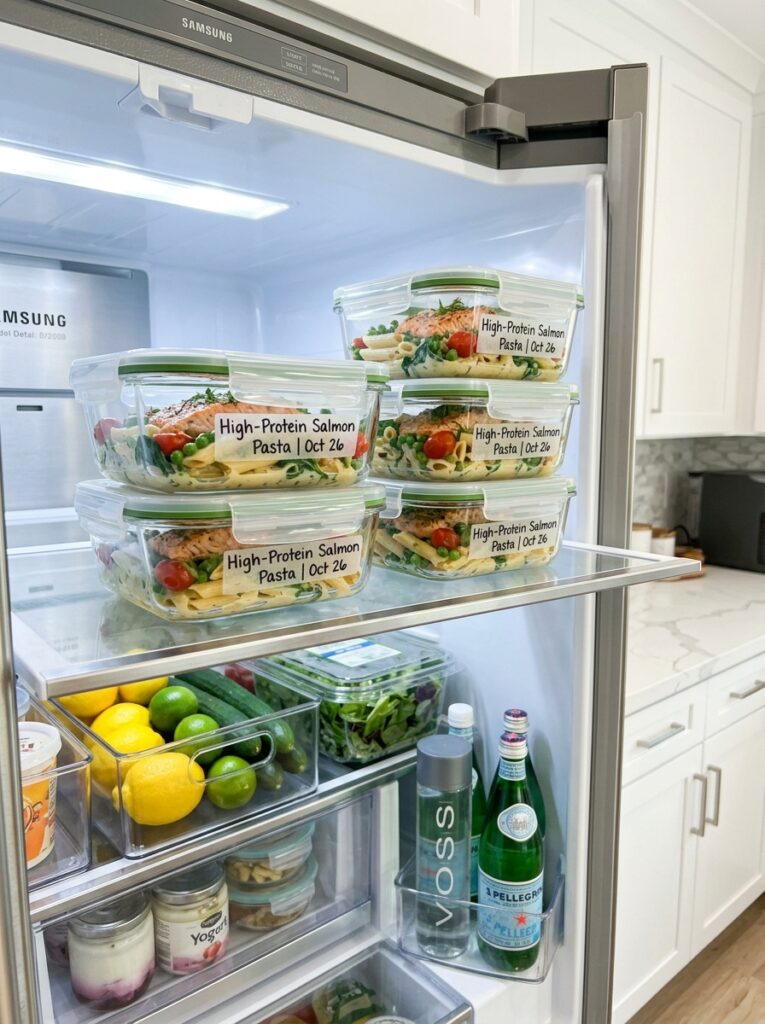
For meal prep, portion the pasta into containers and add fresh herbs just before serving. Garnish with extra lemon zest and parmesan for a welcoming aroma. If you want a heartier plate, add a side of roasted chickpeas for extra crunch and protein. The dish is naturally festive, making it a smart choice for holiday tables and family feasts.
Storage and Reheating for high protein salmon pasta recipe
Store and reheat the high protein salmon pasta recipe safely to protect texture and flavor.
| Method | Duration | Instructions |
|---|---|---|
| Refrigerator | 3 to 4 days | Cool completely, then store in airtight containers to maintain moisture and prevent odors. |
| Freezer | 1 to 2 months | Freeze salmon and sauce separately from pasta for best texture; label with date. |
| Reheating | 5 to 8 minutes | Warm in a skillet over medium-low with a splash of cream or broth to loosen the sauce. |
| Make-ahead | Up to 2 days | Cook pasta al dente, store separately, and toss with sauce when ready to serve. |
| Food safety | Always | Keep salmon at 145°F internal temperature and avoid leaving the dish out for more than 2 hours. |
Nutritional Information for high protein salmon pasta recipe
The following table provides approximate nutrition values per serving for the high protein salmon pasta recipe.
| Nutrient | Amount per Serving |
|---|---|
| Calories | 620 |
| Protein | 42 g |
| Fat | 28 g |
| Carbohydrates | 55 g |
| Fiber | 3 g |
| Sugar | 3 g |
| Sodium | 580 mg |
Approximate values.
Frequently Asked Questions About high protein salmon pasta recipe
What is the best pasta for a high protein salmon pasta recipe?
The best pasta for a high protein salmon pasta recipe is spaghetti or linguine because they hold sauce well. For extra protein, use chickpea pasta, which pairs nicely with salmon and cream.
How do I know when the salmon in a high protein salmon pasta recipe is done?
The salmon in a high protein salmon pasta recipe is done when it flakes easily and reaches 145°F internally. Remove it from heat promptly and tent with foil to keep it moist.
My sauce broke in my high protein salmon pasta recipe—how do I fix it?
To fix a broken sauce in a high protein salmon pasta recipe, whisk in a splash of pasta water or cream off the heat until smooth and silky again.
Can I make a high protein salmon pasta recipe ahead of time?
Yes, you can make a high protein salmon pasta recipe ahead by storing components separately and reheating gently with extra cream or broth.
What sides pair well with a high protein salmon pasta recipe?
Arugula salad, roasted broccoli, and garlic bread pair well with a high protein salmon pasta recipe. Sparkling water or herbal tea complements the creamy flavors.
How should I store a high protein salmon pasta recipe for best results?
Store a high protein salmon pasta recipe in airtight containers in the refrigerator for up to four days or freeze the salmon and sauce separately for up to two months.
What is the best way to reheat a high protein salmon pasta recipe?
The best way to reheat a high protein salmon pasta recipe is in a skillet over medium-low heat with a splash of cream or broth to restore the sauce.
Can I freeze a high protein salmon pasta recipe without losing texture?
You can freeze a high protein salmon pasta recipe if you freeze the salmon and sauce separately from the pasta, then recombine after thawing.
What flavor variations work for a high protein salmon pasta recipe?
Flavor variations for a high protein salmon pasta recipe include adding dill, basil, or red pepper flakes; using mushroom broth; or swapping lemon for lime for a different citrus profile.
Is a high protein salmon pasta recipe suitable for beginners?
A high protein salmon pasta recipe is suitable for beginners because it uses straightforward steps, one pan, and clear cues for doneness and seasoning.
For food safety guidance, consult the Food Safety website. For nutrition research on omega-3 fatty acids, see Harvard Nutrition Source on Omega-3s.
Make this creamy salmon pasta recipe for a quick, high protein meal. If you want another seafood twist, try our garlic shrimp pasta or the lemon herb chicken pasta. For an easy appetizer, see our roasted tomato bruschetta, and for dessert inspiration, browse fruit-forward dessert ideas.
Conclusion
This high protein salmon pasta recipe delivers big flavor with practical steps and reliable results for any cook. By searing the fish, building a bright, creamy sauce, and finishing with fresh herbs, you get a balanced meal that satisfies and fuels your day. Try this high protein salmon pasta recipe soon and enjoy the tender salmon, silky sauce, and perfectly coated pasta that make every bite memorable.
Print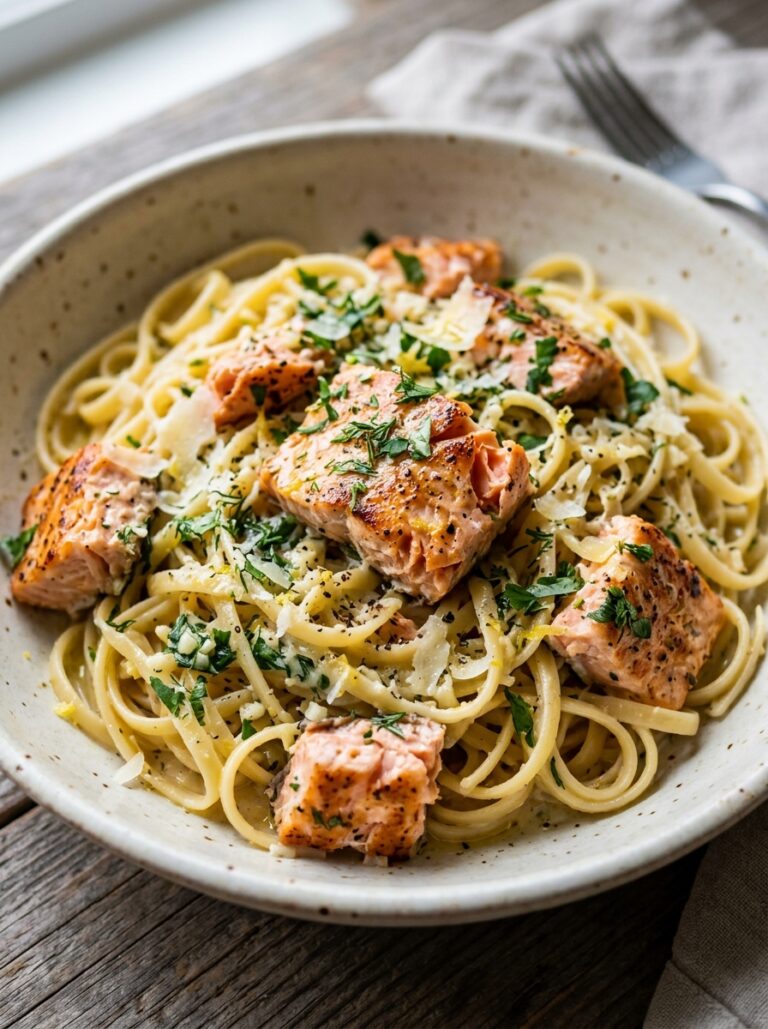
High Protein Salmon Pasta
Indulgent yet nutritious dish featuring tender salmon with a creamy herb-and-lemon sauce, served over al dente pasta for balanced protein and omega-3s.
- Total Time: 35
- Yield: 4 servings 1x
Ingredients
4 oz salmon fillet (2 portions)
8 oz penne pasta
2 tbsp olive oil
2 cloves garlic, minced
1 lime, juiced (2 tbsp)
1/4 cup light cream
1 tbsp olive oil
2 tbsp minced parsley
1/4 cup Parmesan (grated)
Salt and pepper
1 tsp lemon zest
Instructions
Boil pasta in salted water until al dente
Pat salmon dry, season with salt/pepper
Heat 1 tbsp oil in pan, sear salmon skin side until crispy
Pour 2 tbsp, deglaze pan with garlic and lime juice
Stir in cream, simmer into a thick sauce
Combine pasta in pan, coat with 1 tbsp oil
Add herb-garlic-cream sauce to pasta
Sprinkle with parsley, zest, and Parmesan
Serve immediately
Notes
Use any firm white fish
Adjust acid levels with extra lime
Reserve pan drippings for extra flavor
Perfect for meal prep
- Prep Time: 15
- Cook Time: 20
- Category: High Protein Meals
- Method: Stovetop
- Cuisine: Italian-American
- Diet: Non-Vegetarian
Nutrition
- Serving Size: 1 bowl
- Calories: 420
- Sugar: 3g
- Sodium: 450mg
- Fat: 18g
- Saturated Fat: 5g
- Carbohydrates: 35g
- Fiber: 2g
- Protein: 30g
- Cholesterol: 140mg