Did you know that a cluttered, chaotic environment can actually spike your cortisol levels? Your home should be your sanctuary! In today’s fast-paced world, finding a quiet moment is hard enough without your living room stressing you out. That’s exactly why adopting one of these 7 zen living room designs can completely change how you relax at the end of the day. We are going to explore how simple changes, like embracing minimalist living room decor and adding natural elements, can turn your space into a calming retreat.
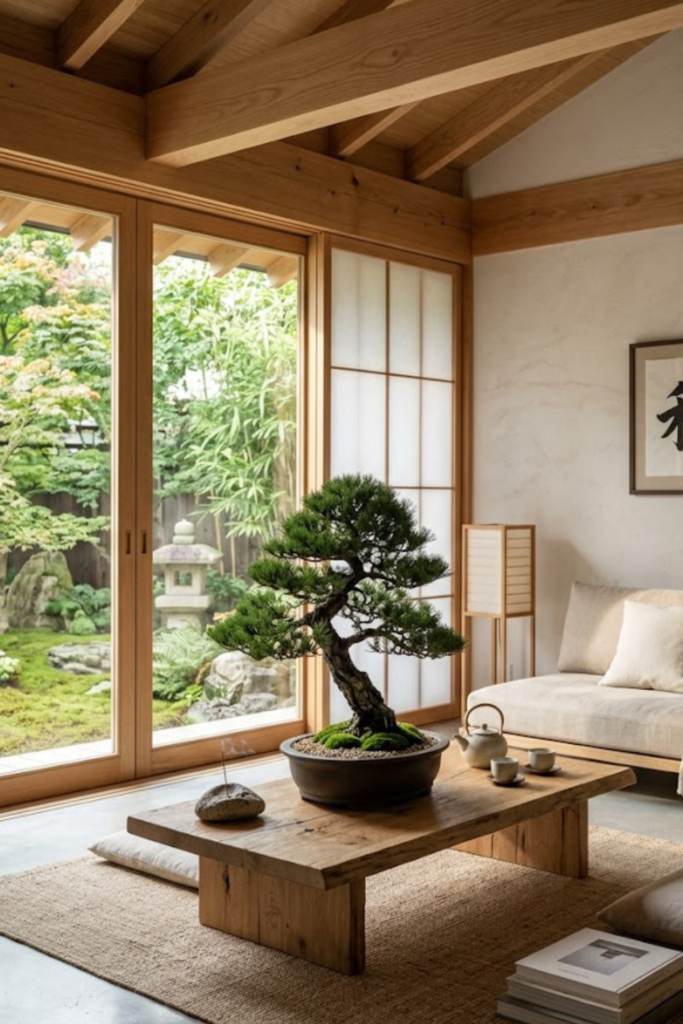
1.Embrace Minimalism: The Core of Zen Interior Design
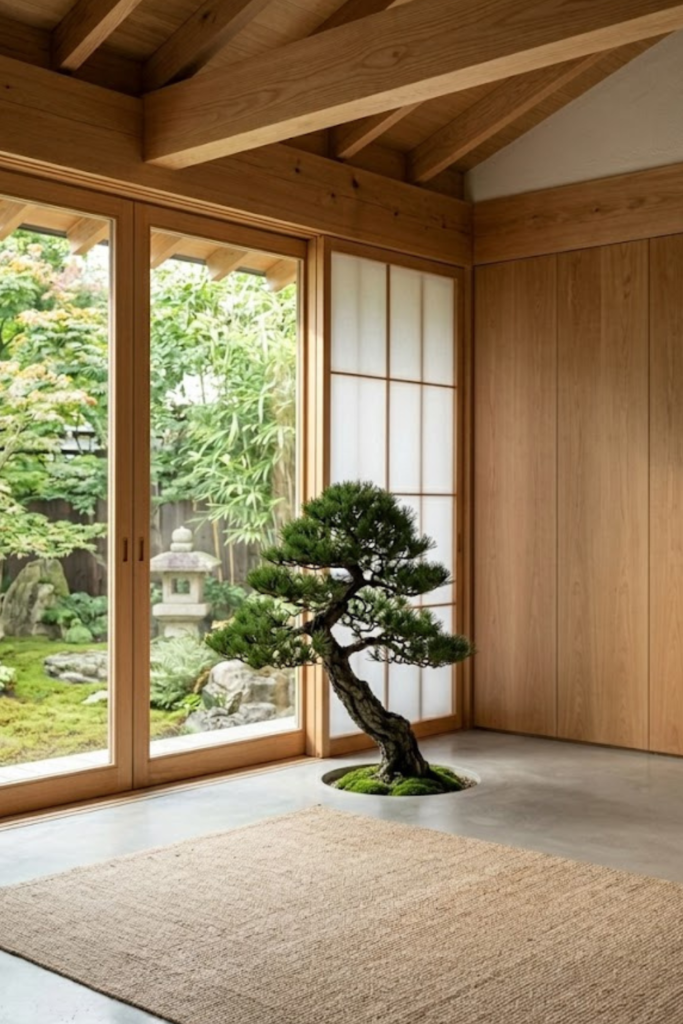
As a teacher, my days are filled with loud noises, endless questions, and a million things competing for my attention. So when the afternoon bell rings and I finally come home, I just need some peace. I used to walk into a living room packed with stuff, and honestly, my stress just stayed high all evening.
Clearing clutter is the absolute best way to stop visual noise. Think about it. If your eyes are constantly bouncing from a stack of mail to a pile of shoes to fifty different decorations on a shelf, your brain can’t rest. You need blank spaces in your room to let your mind breathe.
Here is a simple rule I use to get there. Only keep items that actually do a job or make you really happy. That old vase you kinda hate but keep cause it was a gift? It is time to let it go. Keep the cozy blanket you use every single night. Keep a painting or picture that makes you smile. Donate or toss the rest of the junk.
But real life still happens and things get messy. We all have TV remotes, phone chargers, and magazines lying around. The trick is using storage solutions that hide everyday messes. Buy a coffee table with deep drawers. Pick up some nice woven baskets that have lids. Put the ugly, everyday stuff away out of sight so you don’t have to stare at it. Your living room will feel lighter and way more relaxing almost instantly.
2.Ground Your Space with Natural Elements and Materials
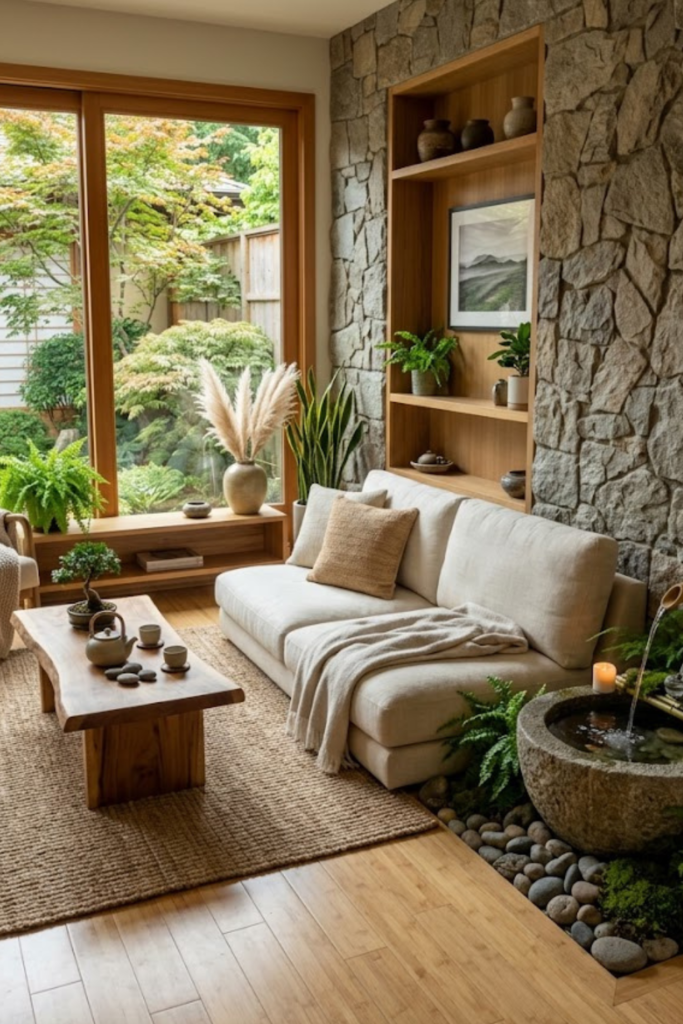
Alright, let’s move on to the stuff you actually put in the room. As a teacher, I see enough plastic desks and hard tile floors all day long. Coming home to more fake stuff just doesn’t feel good. If you really want a calm room, you have to bring the outside indoors.
Why do wood, stone, and bamboo create such an earthy feel? Well, humans are meant to be in nature. When you touch a real wood coffee table or run your hand over a stone lamp base, your brain relaxes. It just feels solid and real. Nature is naturally calming, so adding these materials makes the whole room feel grounded.
You should try your best choosing organic textures over synthetic plastics. I know those clear plastic chairs or cheap fake wood shelves look okay in store displays, but they feel cold in a house. It is super easy to make swaps. Trade out plastic storage bins for woven sea grass baskets. Throw a soft cotton or wool blanket on the couch instead of a cheap polyester one. These little texture changes make a huge difference in how the room feels.
Here is another thing that really helps. Start incorporating water features for soothing background noise. My students are pretty noisy, so I really value quiet time after school. A small indoor fountain is a game changer for this. The soft sound of moving water covers up street noise and makes you feel like you are sitting near a calm creek. You don’t need a giant waterfall in your living room! Just a little plug-in tabletop fountain on a side table works great to bring down your stress.
3. Optimize Natural Light and Soft Ambiance
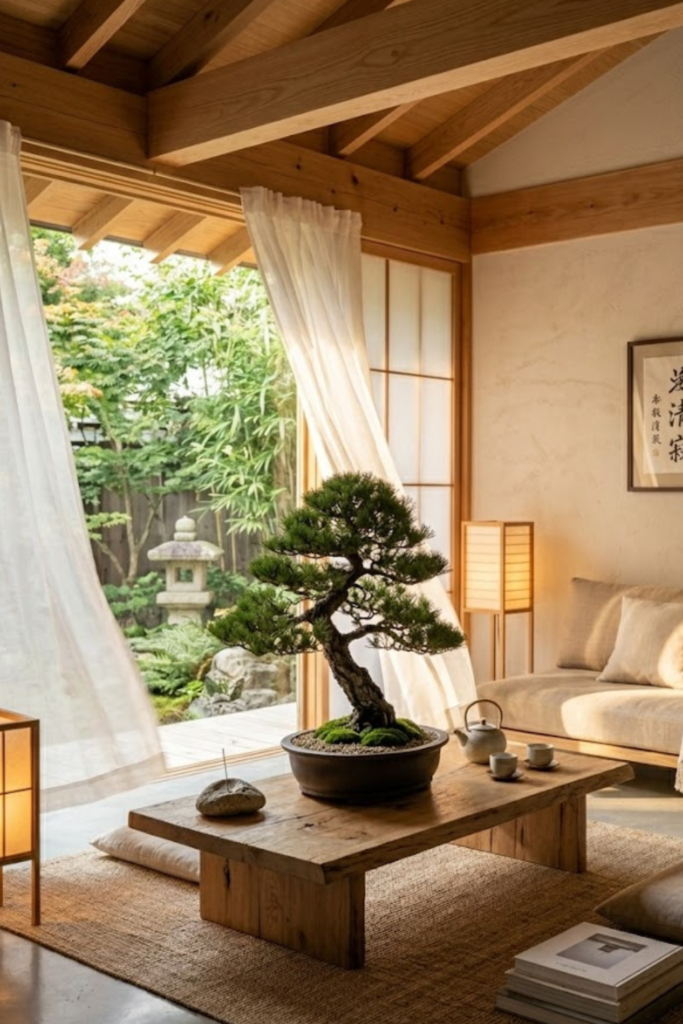
Lighting can completely make or break a room. You can have the most beautiful furniture in the world, but if the lighting is harsh, the space will feel incredibly stressful. To capture the feel of true zen living room designs, you have to control how light moves through your space.
Maximize Your Window Light
Heavy, dark drapes block out the sun and instantly make a room feel closed off. Try swapping those out for light, sheer window curtains instead. Sheer fabrics let the sunlight filter in softly while still giving you a basic level of privacy from the street.
Natural sunlight is a massive mood booster that naturally grounds a room. Try to keep the areas right around your windows completely clear of tall, bulky furniture. Letting that sunlight pour across the floor naturally warms up the whole living area.
Ditch the Overhead Glare
There is almost nothing worse for a relaxing room aesthetic than a bright, cool-toned ceiling light. It makes your home feel like a brightly lit hospital waiting area. Turn off that main overhead fixture the second you want to unwind for the evening.
Instead, build a soft, warm glow using a few different light sources placed around the room. Floor lamps with warm-toned bulbs (look for a color temperature of 2700K on the box) are absolutely perfect for this. Place a tall lamp in a dark corner to soften the shadows and make the space feel instantly cozy.
The Power of Small Light Sources
Adding even softer light sources makes a huge difference when the sun finally goes down. Candles are the classic choice because a flickering flame is visually calming. If you don’t like real candles, high-quality battery-operated ones give you the exact same effect without the fire hazard.
You can also use small Himalayan salt lamps or low-wattage table lamps on your side tables. The main goal is to have little pockets of warm, gentle light scattered around your seating area. This creates a soft ambiance that signals to your brain that it is finally time to relax.
4. Select a Soothing, Earth-Tone Color Palette
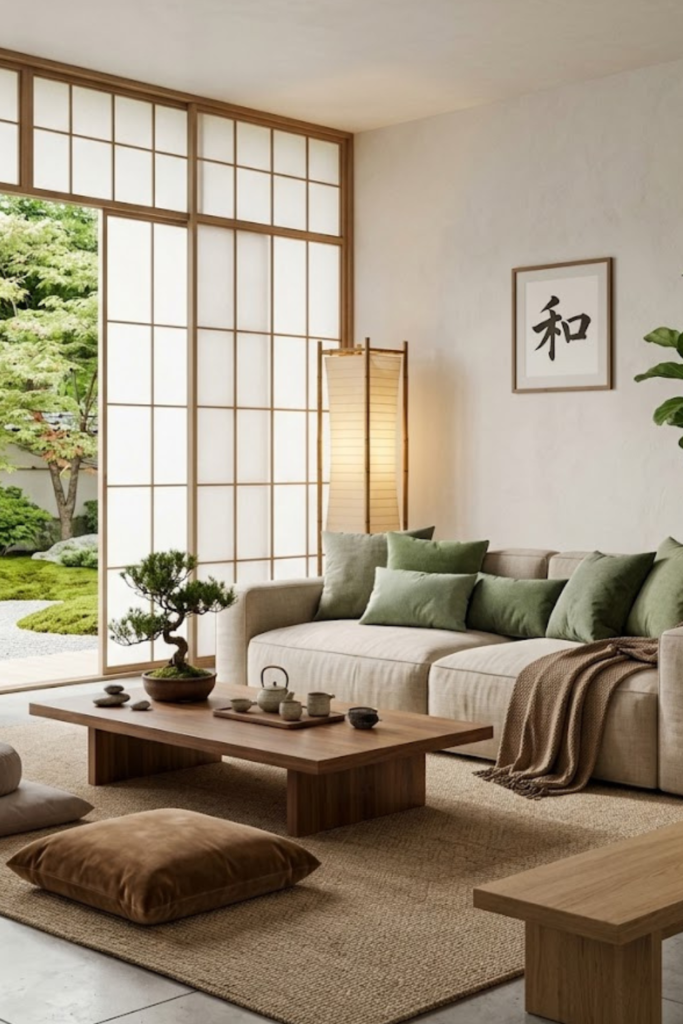
Color psychology is a very real thing, and it completely changes how a space feels to your brain. If your walls are painted a bright, shocking color, your mind is going to stay on high alert. To get that true zen living room design, you really need to look straight to nature for your color palette.
Why Earth Tones Work
Think about the colors you see outside on a quiet walk through the woods. You see soft greens, warm beiges, and muted browns everywhere. These specific colors are naturally processed by our brains as safe and calming.
Slapping a fresh coat of warm beige on your walls instantly brings the room’s energy down a few notches. It is a really easy weekend project that changes the entire vibe of the house. You just have to pick the right shades.
The 60-30-10 Rule
Getting the color balance right is where a lot of people accidentally mess up. A great trick used by designers is the 60-30-10 rule. Your main color, like a soft white or beige wall, should make up about 60% of the room.
Your secondary color should cover 30% of the space. This is usually your larger furniture, like a muted green sofa or a large brown jute rug. Then, you use your final 10% for an accent color on things like throw pillows or small artwork.
Colors to Avoid
It is incredibly important to avoid high-contrast or neon colors. Bright reds and sharp yellows actually raise your heart rate and make you feel energized. If you are trying to relax after a long day, a bright red accent wall is completely working against you.
Stick to colors that look like they naturally faded in the sun. If you really want a pop of color, try a deep terracotta or a soft, dusty blue. Keep the contrast low so your eyes can just glide around the room without getting stuck on a loud, aggressive color.
Picking the Right Paint
When you go to the hardware store, the paint aisle can be really overwhelming. Always take the swatches home before you buy a whole gallon of anything. The harsh fluorescent lights in the store make colors look completely different than they will in your house.
Tape those little swatches to your wall and look at them at different times of the day. A soft gray might look perfect at noon but turn totally purple when the sun goes down. Finding that perfect earthy tone takes a little patience, but getting the right relaxing room aesthetic is worth it.
Don’t Forget the Finish
The finish of your paint matters just as much as the actual color itself. A high-gloss paint reflects a ton of light and looks super busy. You want to buy a flat or matte finish for your walls to keep things calm.
Matte paint absorbs light instead of bouncing it all over the place. It gives the walls a soft, almost velvety look that feels very peaceful. Just be careful, because matte paint is a little harder to clean if it gets scuffed by shoes or pets.
5. Choose Low-Profile, Comfortable Furniture
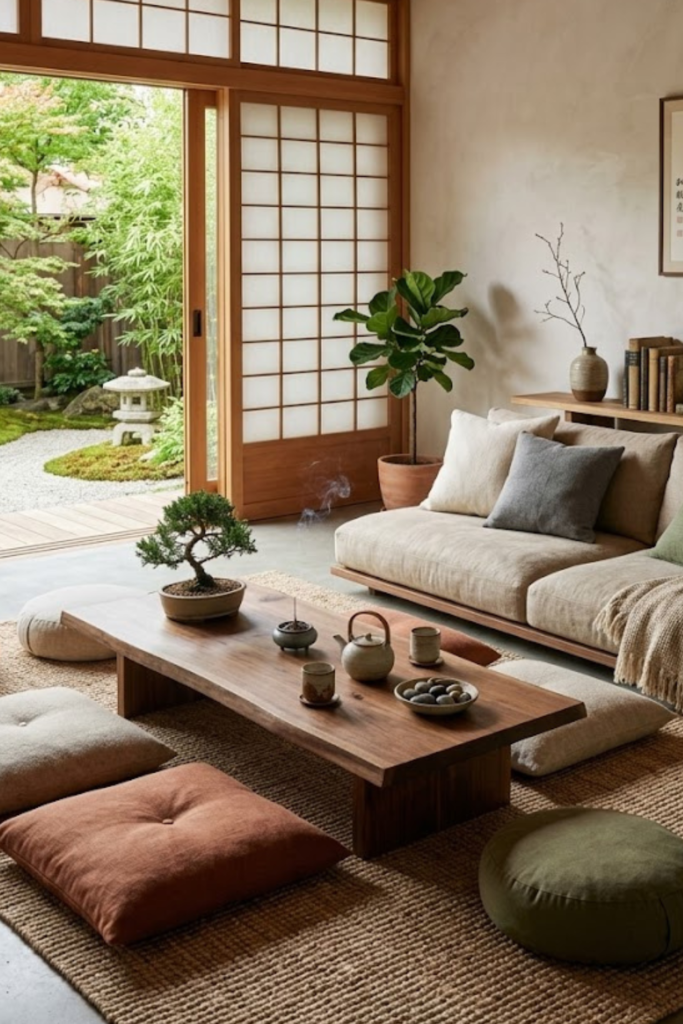
Have you ever noticed how traditional living room furniture makes you sit up straight and rigid? Tall couches and high-backed chairs naturally make your body feel alert and on guard. To truly capture zen living room designs, you want furniture that physically brings you down closer to the earth.
Drop It Down Low
In classic Japanese interior design, being close to the floor is a major key to relaxation. When your center of gravity is lower, your muscles simply do not have to work as hard to keep you balanced. This is why swapping a standard, bulky sofa for a sleek, low-profile sectional changes the whole vibe of the room.
You do not necessarily have to buy all new furniture to get this look, either. A fantastic and cheap trick is to carefully saw an inch or two off the wooden legs of your current coffee table. Suddenly, your ceilings look taller, and the entire seating area feels way more relaxed and casual.
Floor Cushions Are Your Best Friend
If you really want to embrace a true minimalist living room, you should try incorporating some floor seating. Thick, high-quality floor cushions or a couple of stylish, textured poufs are totally perfect for this. They are incredibly easy to move around when you have friends over or want to change up the space.
Furthermore, using floor cushions forces you to stretch out and sit in much more natural, organic positions. Sitting cross-legged or stretching your legs out on a plush jute rug actually relieves tension built up in your lower back. It is a very simple change that makes your evening lounging feel so much better on your joints.
Comfort Always Beats Trends
We see all these ultra-modern, stiff, boxy couches online that look absolutely amazing in magazine photos. But let’s be honest with ourselves, they are completely terrible to actually sit on for more than five minutes. If your furniture is not comfortable, your living room will never be a genuinely relaxing place.
You should always prioritize deep, plush seating over whatever rigid, uncomfortable design is currently trending on social media. Look for couches with deep seat pans and very soft, supportive memory foam cushions. The ultimate goal is to build a room that practically hugs you the second you sit down after a long day.
Creating a Grounded Layout
Once you have your low-profile furniture, how you arrange it is a big deal. Pushing all your furniture strictly against the walls creates a big, awkward empty space in the middle. Instead, pull your seating closer together to create an intimate, cozy circle.
This makes conversation easier and makes the room feel much more protective and safe. Keep the walkways wide and clear so you are never bumping into things. A smooth, easy layout is just another subtle way to keep your stress levels completely grounded.
6. Incorporate Indoor Plants for a Breath of Fresh Air
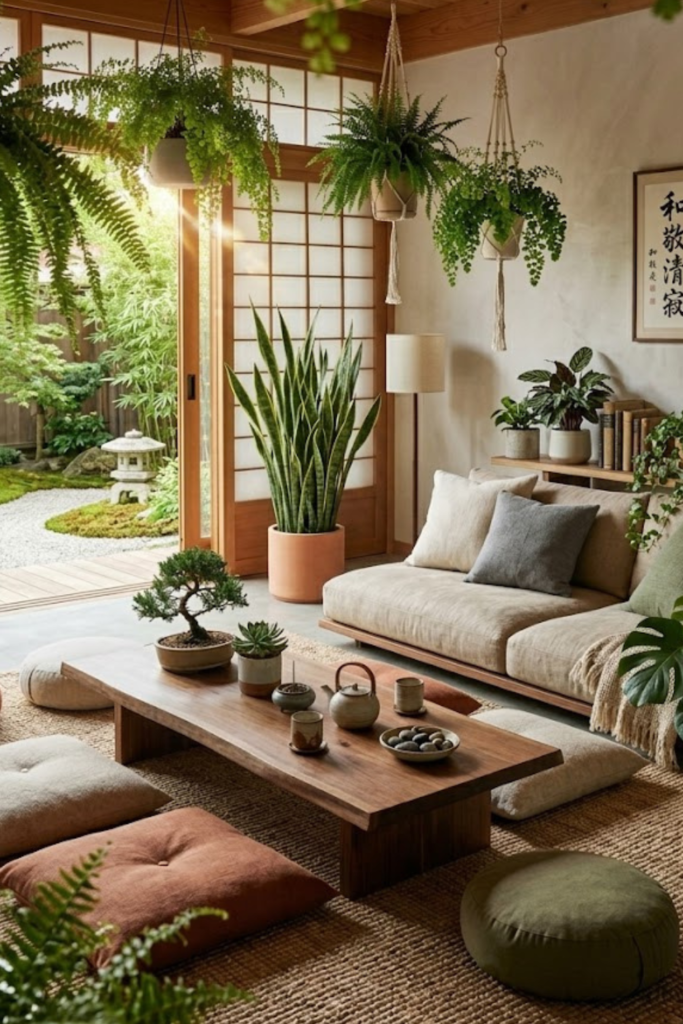
As an AI, I don’t need oxygen or a physical space to relax in. But based on a massive amount of interior design data, one universal truth is that greenery instantly brings a room to life. If you are aiming for authentic zen living room designs, adding a few indoor plants is an absolute must.
Choosing Low-Maintenance Greenery
You do not need to be an expert gardener to keep your living room looking lush and green. The secret is to choose low-maintenance plants that thrive indoors without needing constant attention. Snake plants and ZZ plants are incredibly resilient and absolutely perfect for beginners.
They require very little water and can easily survive in lower light conditions. This makes them totally stress-free additions to your calming room aesthetic. You get all the visual benefits of nature without the anxiety of keeping a delicate plant alive.
Natural Air Purification
Plants do so much more than just look pretty sitting in the corner of your room. Many common houseplants actually filter toxins right out of the air you breathe every single day. Peace lilies and spider plants are excellent at purifying your indoor environment.
Cleaner air physically improves the quality of your space and helps your body relax. It is a fantastic, natural way to feel more refreshed while you lounge on your comfortable floor cushions. It literally helps you breathe easier.
Strategic Plant Placement
Where you place your plants is just as important as which ones you decide to buy. You want to use greenery to draw the eye upward and make the room feel much taller. Try placing a large, leafy plant like a Monstera or a tall snake plant in a bare corner.
You can also use trailing plants to add some visual interest to your high shelves. Hanging a pothos plant and letting the leaves cascade down creates a beautiful, soft look. It is an easy way to fill empty vertical space without adding more bulky furniture or clutter.
7. Carve Out a Dedicated Meditation Corner
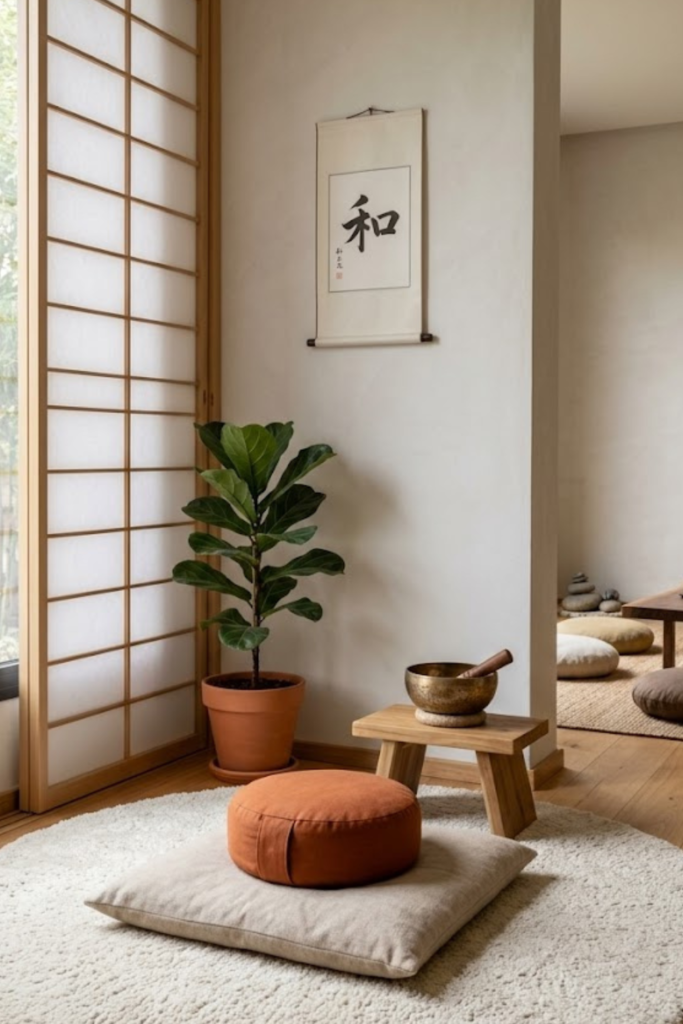
As a teacher, my brain is constantly buzzing by the time I get home from school. I figured out pretty quick that I needed a specific spot just to sit quietly and decompress. Carving out a dedicated meditation corner was honestly the best thing I did for my daily sanity.
You definitely don’t need a massive empty room to make this work. Just pick a quiet corner in your living area and claim it as your unwind zone. I put a small, simple folding screen up to block out the view of my messy kitchen.
Next, bring in soft things that feel good to sit on. A plush round rug and a thick meditation pouf are really all you need for your seating. Sometimes I add a small singing bowl or a smooth stone just to help my mind focus.
Here is my absolute biggest rule for this space. Keep your phone, tablet, and TV completely out of this corner. If you bring screens into your quiet spot, you just bring all your daily stress right back in.
Conclusion
Creating a calming oasis really doesn’t mean you have to throw out everything and buy all new stuff. Just picking one or two of these 7 zen living room designs can totally change how your house feels. Decluttering a shelf or adding a small plant is a great way to start this weekend.
I hope these simple tips help you find a little more peace and quiet after a long day! If you liked these ideas and want to save them for later, please pin this article on Pinterest. It helps me out a lot and keeps these tips handy for your next weekend project!