I used to think a “zen” room was just a room with nothing in it, but boy, was I wrong! After years of living in what I call “organized chaos,” I finally realized that my living room was actually making me feel more stressed. Did you know that according to some interior psychology studies, a cluttered environment can literally raise your cortisol levels? It’s true!
So, I went on this huge journey to find peace through design, and honestly, it changed my life. I’ve tried everything from floor cushions that made my legs fall asleep to lighting that was way too dim. Now, I want to share the best 7 zen living room designs that actually work for real people like us!
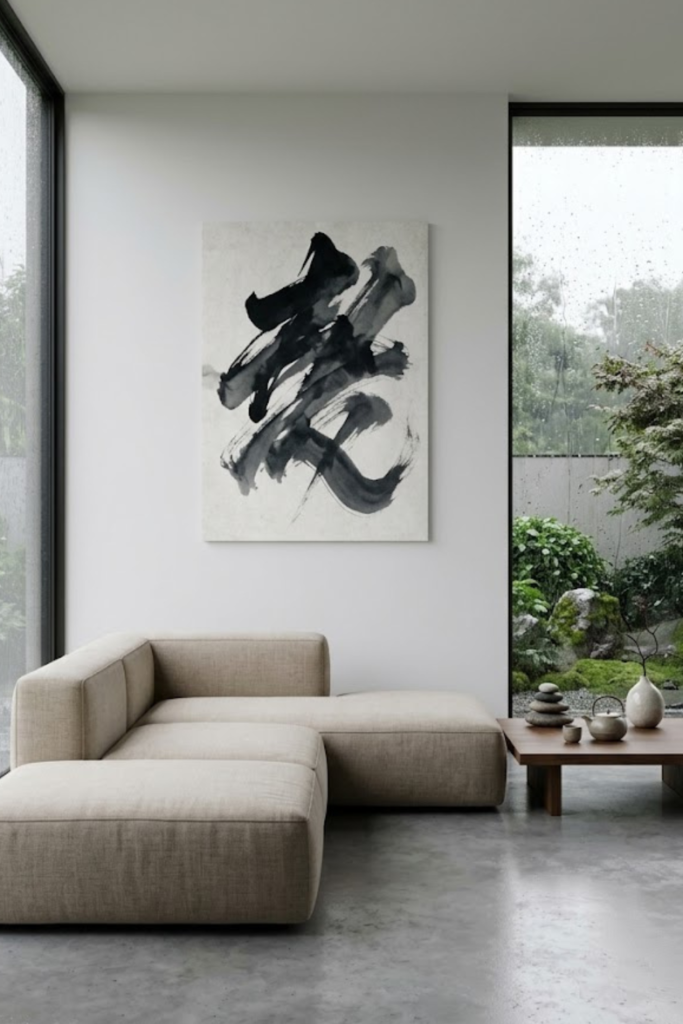
1. The Modern Minimalist Sanctuary
I’m going to be real with you—my living room used to look like a yard sale exploded in it. I had three different coffee tables at one point because I thought “more is better” for my zen living room designs. One day, I actually tripped over a fake decorative giraffe and sent my tea flying across the room. That was my “aha” moment. I realized I wasn’t relaxing; I was just surviving my own decor.
Picking Furniture That Actually Works
When you’re trying to build a minimalist sanctuary, you have to be picky. I used to buy things just because they looked “cute” in the store. Now, I follow the “one-in, one-out” rule. If I want a new lamp, the old one has to go to the thrift shop.
You should look for pieces that have multiple uses. A storage ottoman is a total lifesaver for hiding remote controls and magazines. It keeps the surface of your tables clear so your brain doesn’t feel cluttered. I once read that people spend over 50 hours a year just looking for lost stuff in their houses. Going minimalist with your zen living room designs can give you that time back!
The Magic of Empty Space
Some people call it “negative space,” but I just call it breathing room. It’s totally okay to have a wall with nothing on it. In fact, it’s great! When I first cleared out my extra bookshelves, I felt a little weird, like the room was naked or something.
But after a week, I noticed I was breathing deeper. You don’t need to fill every corner to make a house a home. Try to keep about 20% of your floor space open and clear. It makes the whole area feel bigger and way more peaceful. Its a game changer for real.
Why Low-Profile is the Way to Go
I’m a huge fan of low-profile sofas for zen living room designs. If the furniture is lower to the ground, it makes the ceilings feel higher. It creates this sleek, clean line that doesn’t block your view of the rest of the house.
I bought a “standard” bulky sofa once and it felt like a giant elephant was sitting in my lounge. Swapping it for a low, gray sectional made the whole room feel like a spa. Just make sure the legs are simple and the fabric is a solid, neutral color. Keeping it simple helps you focus on relaxing instead of worrying about matching crazy patterns.
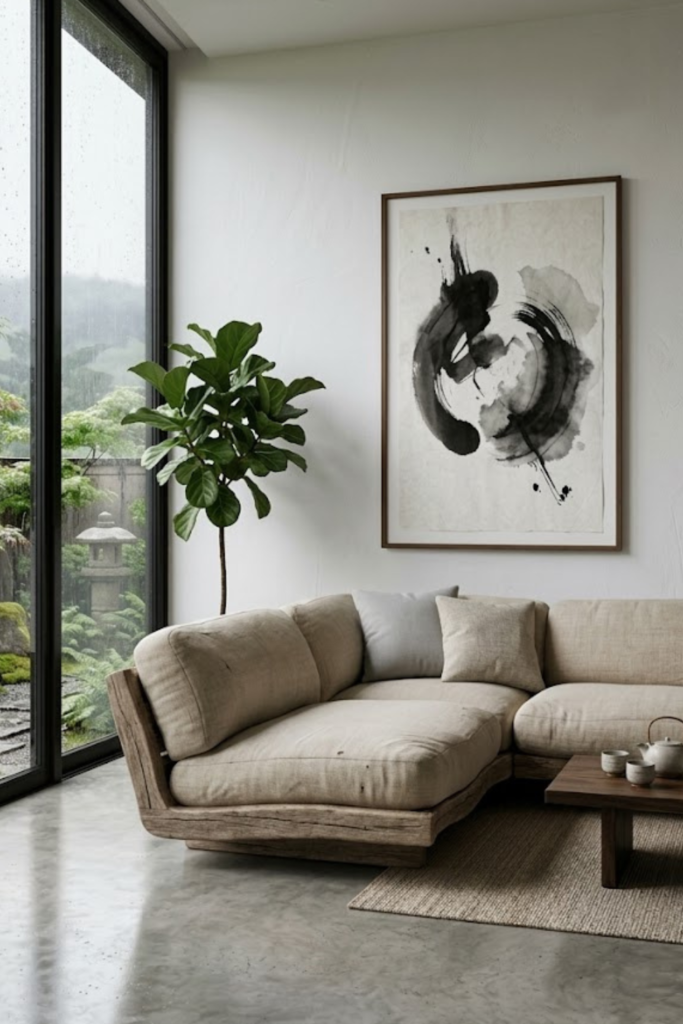
2. Nature-Inspired Organic Haven
I really think humans aren’t meant to be stuck inside boxes all day. A few years ago, my living room felt like a cold doctor’s office. It was all white walls and metal legs. I decided to bring a bit of the woods inside to help my zen living room designs feel more alive. I started with a giant Fiddle Leaf Fig tree. Well, I killed that one pretty fast because I watered it way too much (classic mistake!), but I didn’t give up.
Let the Plants Do the Work
Adding greenery is probably the easiest way to make a room feel peaceful. After my “tree incident,” I switched to snake plants and pothos because they are almost impossible to kill. They also clean the air, which makes the room smell fresh without using those fake spray cans. When you see something green growing in the corner, it just reminds you to slow down. Just try not to turn it into a total jungle; two or three big plants are plenty for a calm look.
Using Real Materials
I used to have a lot of plastic and shiny metal stuff. It felt cheap and loud to me. I swapped my old coffee table for one made of reclaimed wood. You can still see the knots and the grain in the wood, and it feels warm when you touch it. I also added a few smooth river stones in a wooden bowl on the shelf. It’s funny how a few rocks can make you feel more grounded. Natural materials have a way of making a space feel “real” instead of like a store display.
Get the Right Textures
If you want a cozy but zen vibe, you gotta look at your fabrics. I took down those heavy, dark curtains and put up some light linen ones instead. They let the light filter in beautifully. I also got a chunky wool rug for the floor. It’s a bit scratchy if you’re barefoot, but it looks so organic and earthy. Mixing these textures makes the room feel layered and interesting. You get a nice style without needing a bunch of bright colors or extra “stuff” everywhere.
3. The Soft Japandi Fusion
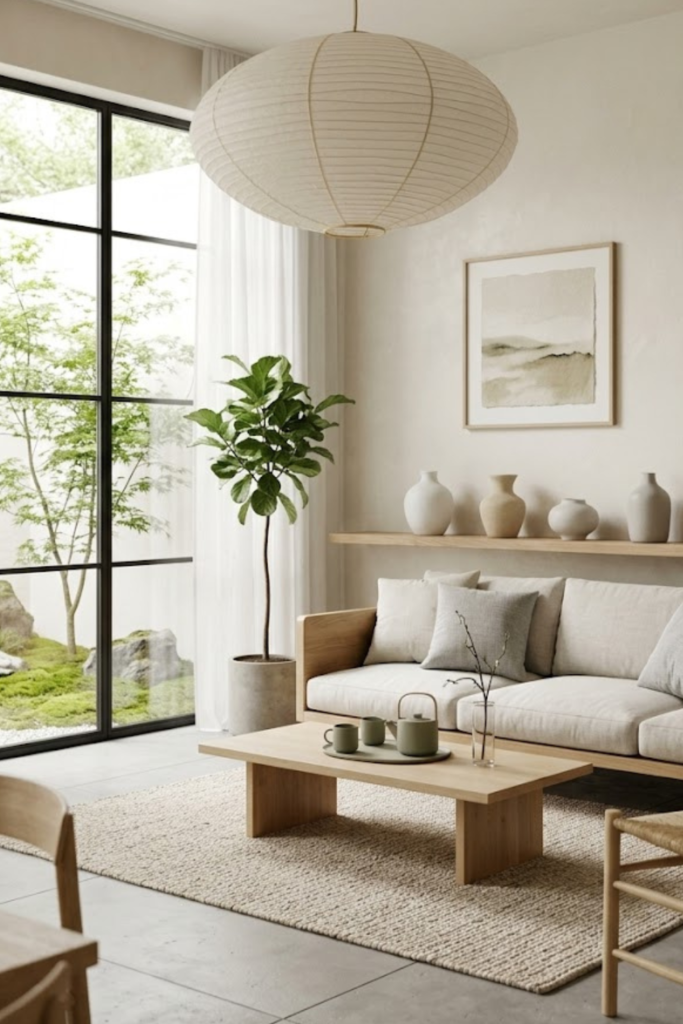
I’ve always loved the look of Japan and Scandinavia, so when I first heard about Japandi, I was totally hooked. It’s like the perfect mix of “cozy” and “clean.” In my own house, I used to have a lot of stuff that was just… okay. Not great, just okay. Japandi taught me how to love things that aren’t perfect, and that really changed how I look at zen living room designs.
Loving the Imperfect (Wabi-Sabi)
Wabi-Sabi is a big part of this style. It’s a Japanese idea about finding beauty in things that are a bit broken or old. I have this ceramic bowl on my shelf that has a tiny crack in it. Instead of throwing it away, I kept it. It adds so much character to my room. It makes the space feel like it has a real story instead of just looking like a catalog. When you stop trying to make everything look brand new, your home starts to feel a lot more relaxed.
Switching to Warm Neutrals
For a long time, I thought “minimalist” meant everything had to be stark white. But that can feel a bit cold, like a hospital. I started moving to warm neutrals like oatmeal, tan, and soft cream. It makes the room feel like a giant, warm hug. These colors are great for zen living room designs because they don’t jump out at you. They just sit quietly in the background and let you rest your eyes.
Smart Ways to Hide the Mess
I really hate seeing messy wires or stacks of mail on the counter. It makes my brain feel itchy! For this look, I found some wooden cabinets with slat doors. You can hide all your “junk” inside them, but they still look beautiful on the outside. It’s a great way to keep the room looking neat without it being boring. Making a space like this is all about balance. Make sure you have enough storage so your surfaces stay clear. It makes a huge difference in how you feel when you sit down at the end of the day.
4. Light-Filled Serenity Space
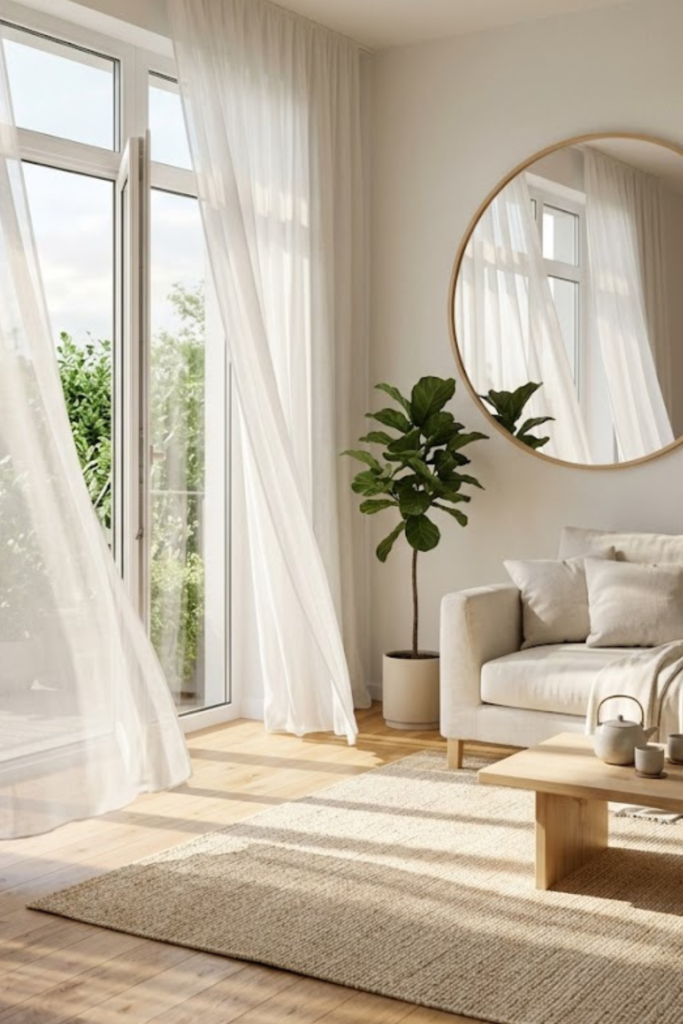
I’ve always been a bit of a “sun seeker.” My first apartment was so dark I actually felt like I was living in a cave most of the time. It really messed with my mood and made me feel tired all day. When I started looking into zen living room designs, I found out that light is one of the most important things for feeling calm. If you can get the light right, the rest of the room almost takes care of itself.
Let the Sun Shine In
The biggest mistake I ever made was buying these thick, heavy velvet curtains. They looked fancy in the store, but they blocked out all the good vibes. Now, I use very thin, sheer curtains. They’re great because they give you a little bit of privacy but still let the sunlight pour in. It makes the whole room glow in the morning. If you have big windows, please don’t hide them! Let that natural light be the main star of your space.
Using Mirrors to Help Out
If your room is a bit small or doesn’t have many windows, mirrors are your best friend. I put a large, simple mirror right across from my main window. It’s like having a second window for free! It bounces the light into the dark corners and makes the whole place feel way more open. Just keep the frame simple so it doesn’t get too distracting. You want the light to move around the room without hitting a bunch of clutter. It’s a cheap way to make a huge difference.
Keeping the Layout Airy
I used to push all my furniture right against the walls because I thought it made the room look bigger. Turns out, that’s not really true. For a real zen feel, you want the air—and the energy—to flow around things. I moved my sofa just a few inches away from the wall and suddenly the room felt lighter. Don’t block the paths where people walk. When you can move easily through a room without bumping into things, your mind feels more at ease too. It’s a simple trick that really changes the feel of your zen living room designs.
5. The Cozy Monochromatic Retreat
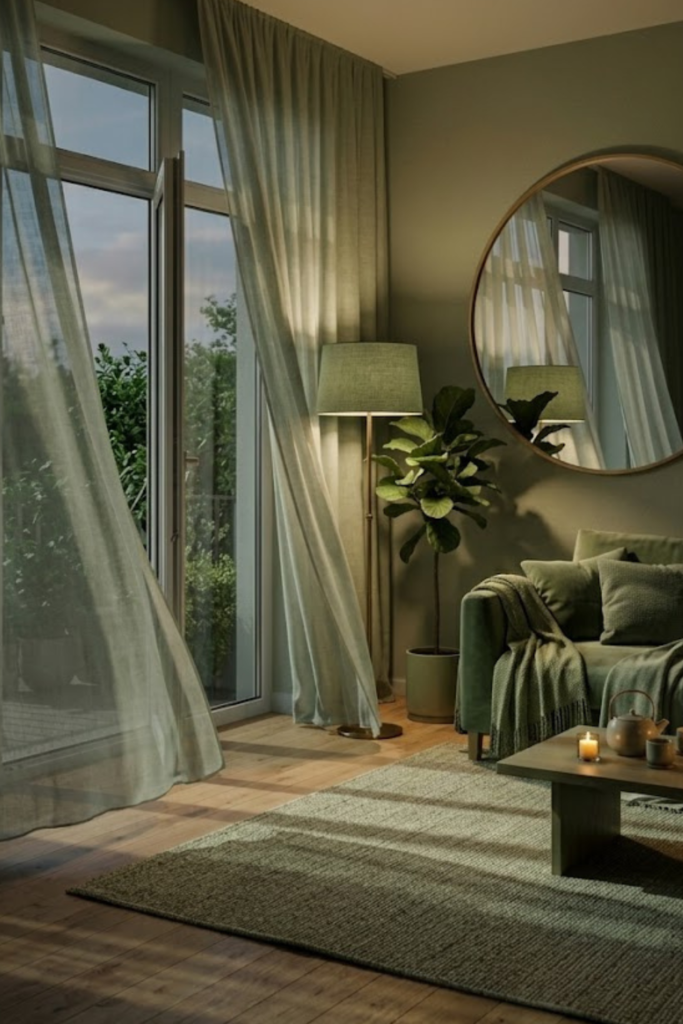
I used to think my living room had to have every color of the rainbow to look “happy.” I had blue pillows, a red rug, and yellow curtains. But honestly? It just made my head hurt after a long day at work. I felt like I was sitting in a bowl of cereal! When I started looking at zen living room designs, I found out that sticking to just one color can actually be really soothing.
The Power of One Color (Tone-on-Tone)
This doesn’t mean your whole room has to be exactly the same shade. That would be boring! Instead, pick one color you love—like a soft sage green or a warm sand color—and use different versions of it. I did this with different shades of gray. I have a dark gray sofa, a light gray rug, and some charcoal pillows. It makes the room feel very “put together” without being too much for your eyes. It’s one of my favorite tricks for zen living room designs because it’s so easy to do.
Adding Lots of Comfort
Since you aren’t using a lot of different colors, you can go big on comfort. I’m talking about pillows, blankets, and more pillows. I bought a weighted blanket last year, and it’s the best thing ever. Sitting on the couch feels like getting a giant hug. When you layer these textures, it makes the room feel cozy and safe. You want your living room to be a place where you can just melt into the furniture and forget about the rest of the world for a while.
Ditch the “Big Light”
I have a rule in my house now: no “big light” after 6 PM. Those overhead lights are usually way too bright and harsh. They make me feel like I’m under a microscope! Instead, I use floor lamps with warm bulbs and a few candles here and there. It creates this soft, golden glow that is perfect for relaxing. If you want your zen living room designs to feel like a real retreat, you have to get the lighting right. It’s amazing how much better you feel when the lights are low and warm.
6. Zen Floor-Seating Lounge
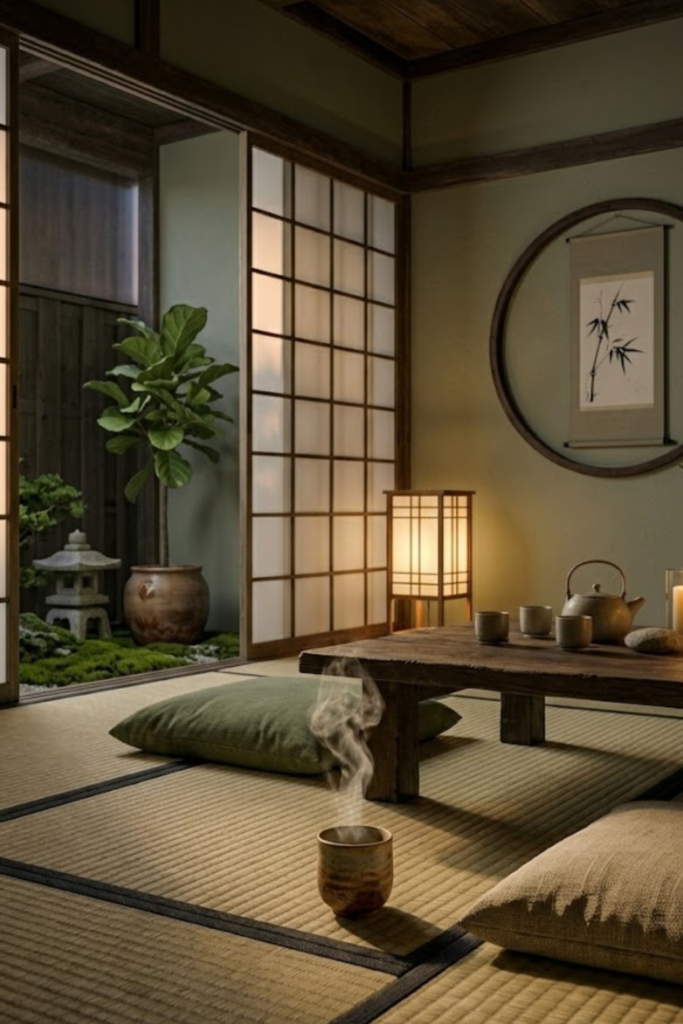
I’ll admit, when I first told my husband I wanted to get rid of our big armchairs for floor cushions, he thought I’d finally lost my marbles. “Samah,” he said, “my knees aren’t what they used to be!” But after a few weeks of trying out a lower setup, even he started to love it. There’s something about sitting closer to the ground that just makes you feel… well, grounded. It’s a classic move for zen living room designs that really changes the energy of the whole house.
Traditional Tatami Vibes
You don’t need to rip up your floors to get that Japanese tatami look. I just used a really large, flat-weave jute rug to define the space. It gives that natural, straw-like feel under your feet without the big renovation bill. Creating a specific “zone” for sitting on the floor makes the room feel intentional instead of just empty. If you have a corner that feels a bit lonely, try putting down a nice mat and see how it instantly becomes a spot where you actually want to hang out.
Picking the Right Cushions (Zabuton)
If you’re going to sit on the floor, you can’t just use those thin little pillows from the bargain bin. Your back will hate you! I invested in some proper Zabuton cushions. They are thick, square, and firm enough that you don’t just sink through to the hard floor. We use them for drinking tea or just chatting. It’s much more intimate than everyone sitting far apart on a giant couch. Plus, when guests come over, these cushions are super easy to stack in a corner so they don’t take up any room at all.
A New Perspective
It sounds a bit “woo-woo,” I know, but sitting lower really does change how you see your home. From down there, the windows look bigger, the ceiling feels miles away, and you notice the small details you usually walk right past. It forces you to slow down. In our busy lives, we’re always rushing around at eye-level. Dropping down a few feet for your zen living room designs is like a shortcut to a quieter mind. It’s hard to feel stressed about your to-do list when you’re relaxed on a comfy floor pillow with a hot cup of tea.
7. The Indoor-Outdoor Transition Room
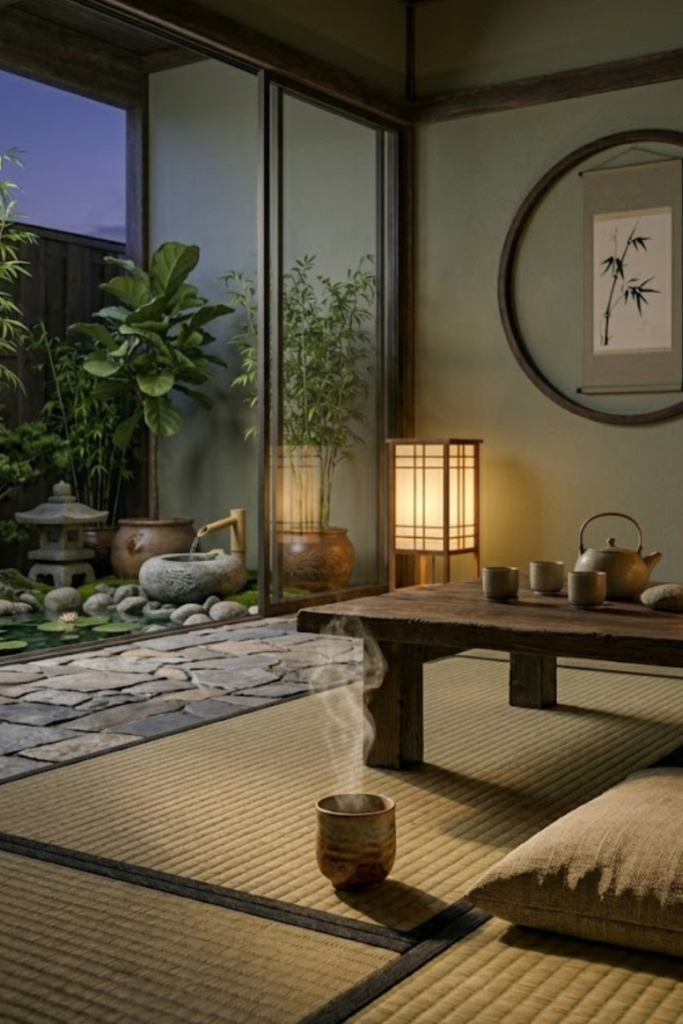
My favorite thing about my house now is how it doesn’t really feel like a house anymore. It feels like a part of the garden. I used to have this tiny little door that led to the backyard, and I almost never went out there. It felt like two different worlds! When I was looking for zen living room designs, I saw how important it is to connect with nature. So, we made some changes to let the outside in.
Making a Seamless Flow
If you can do it, big sliding glass doors are amazing. They turn your whole wall into a giant picture of the outdoors. Even when the doors are closed, you still get to see the trees and the sky. It makes the room feel ten times bigger. I used to feel cramped in the winter, but now I just watch the snow or the rain from my sofa. It’s very calming. It’s like the walls just disappeared.
Keeping the Floor the Same
Here is a little secret I learned: if you use the same kind of flooring inside and out on the patio, your eyes don’t see a “stop” point. It looks like one big room. I used a simple light stone tile. It’s easy to clean (which is good because I’m a bit messy sometimes!) and it looks so smooth. This is a great way to make your zen living room designs feel like they go on forever. You don’t even notice where the house ends and the yard starts.
Adding Peaceful Sounds
Since we live near a somewhat busy street, I used to hear cars all the time. It’s hard to be zen when a truck is honking! I put a small water fountain right by the door. The sound of the water trickling is so much better than traffic. It masks the noise from the street and makes me feel like I’m at a spa. It’s a small thing, but it really helps you relax. Plus, birds come to visit the water which is always fun to watch while I’m grading papers or reading.
Conclusion
Finding the right zen living room designs isn’t about following strict rules; it’s about finding what makes your soul feel quiet. Whether you love the “less is more” vibe of minimalism or the earthy feel of organic materials, your home should be your safe spot. I hope these ideas help you build a space that lets you breathe a little easier!
I’ve learned that life is way too busy to live in a house that makes you feel more stressed. It takes some time to clear out the clutter and find the right plants, but it is so worth it. Your living room should be the place where you can finally let go of the day. If you found these ideas helpful, please share this post on Pinterest so others can find their peace too!