Did you know that in 2026, the “New Nordic” movement is ditching the stark, hospital-white aesthetic for something much warmer and far more inviting? It’s true! I used to think Scandinavian design meant living in a cold, white box, but boy, was I wrong. The latest trends are all about “Hygge” with a soul—think honey-toned woods, tactile textures, and a cozy functionality that actually feels lived-in.If you’re ready to ditch the clutter and embrace a style that breathes, you’ve come to the right place. We are going to explore seven distinct Scandinavian living room designs that blend timeless minimalism with the fresh, earthy warmth of 2026. Whether you are in a tiny apartment or a sprawling house, these ideas will help you create a sanctuary that feels as good as it looks. Let’s dive in!
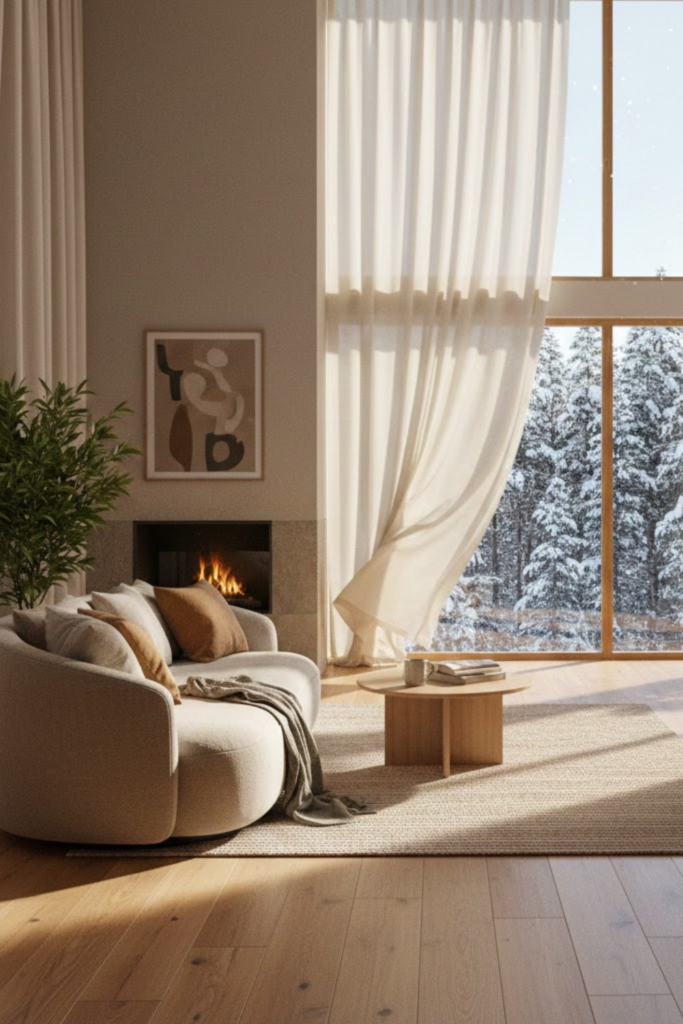
1. The “New Nordic” Palette: Warming Up the White
You know, I used to think I was the queen of Scandinavian design. Back in 2018, I painted my entire living room in a shade called “Brilliant White.” I’m talking baseboards, walls, even the ceiling. I thought it would look clean and airy. Instead? It felt like I was living inside a refrigerator.
Every time I sat down to grade papers, I had to wrap myself in a blanket just to feel cozy. It was stark. It was cold. And honestly, it was a huge mistake.
That is why I am so relieved that Scandinavian living room designs for 2026 are finally ditching the hospital look. We are moving toward what I like to call “creamy comfort.”
Ditching the Sterile White
If you are still holding onto that stark, blue-toned white, it might be time to let it go. The trend now is all about “New Nordic,” which swaps the cold stuff for warmer neutrals. Think oatmeal, soft sand, and barely-there terracotta.
I recently helped my sister repaint her place. We swapped her stark white walls for a color that looked like unbleached linen. The difference was night and day. The room kept that bright, spacious feeling we all love about Nordic style, but it suddenly felt like a warm hug instead of a cold shoulder.
Here is the trick:
- Test your paint: Don’t just buy a gallon. Get a sample pot.
- Watch the light: Paint a big square on the wall. A color that looks like warm cream at 10 AM might look like mud at 8 PM. You gotta see it in all lights!
Walnut is the New Pine
For the longest time, light blonde wood (like pine or birch) was the only way to go. But let me tell you, it can sometimes look a bit… cheap? Or maybe just too youthful.
In 2026, we are seeing a massive comeback of darker woods. I picked up a vintage walnut coffee table at a flea market last month, and it completely changed the vibe of my room. It grounded the space.
- Mix it up: You don’t have to get rid of your light wood floors. Just add a darker wood accent chair or side table.
- Contrast is key: The dark wood pops against those creamy walls in a way that light pine just doesn’t.
Mastering Tone-on-Tone
This is where people get scared, but it is actually super easy. The secret to a warm minimalist look isn’t less stuff; it’s layering the same colors.
I used to think everything had to match perfectly. Wrong. Now, I mix a beige sofa with a cream rug and toss on some tan pillows. Because they are all in the same color family, it doesn’t look messy. It looks intentional.
It adds depth without adding clutter. And for someone like me who hates clutter but loves cozy, it is a lifesaver.
So, if you are looking to update your space, start by warming up that palette. You don’t need a total renovation. Just a fresh coat of paint and maybe swapping out a few accessories can make your home feel brand new. Trust me, your eyes (and your shivering shoulders) will thank you.
2. Japandi Fusion: Where Wabi-Sabi Meets Hygge
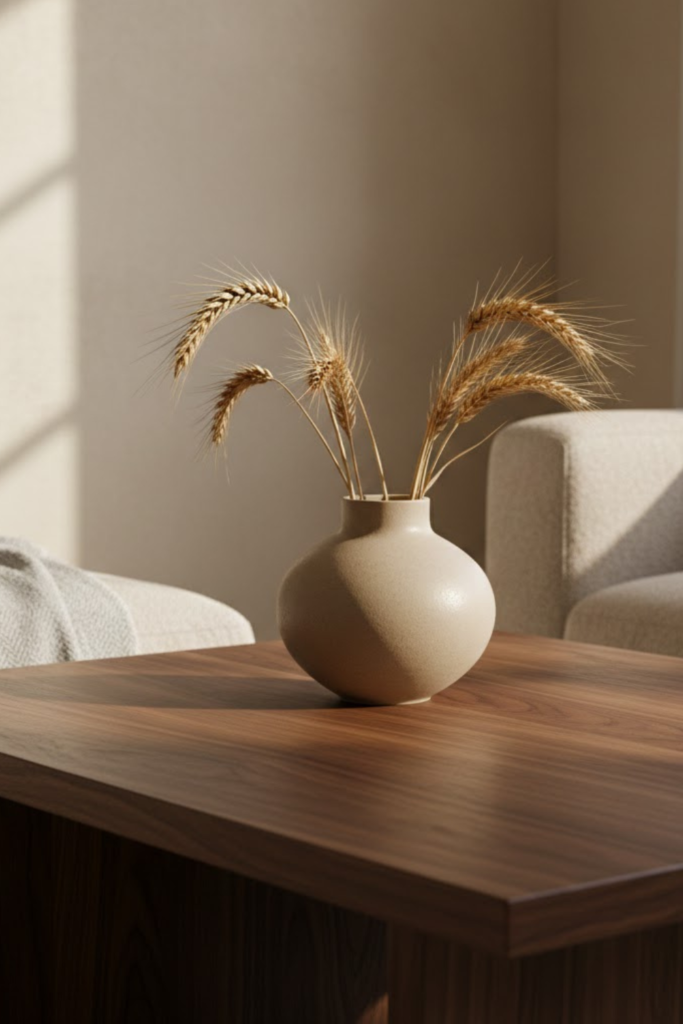
Have you ever looked at a room and thought, “That’s beautiful, but I’d be terrified to spill coffee there”? That was my exact feeling about minimalism for years. I loved the clean lines, but it felt a little too… perfect. Too untouchable.
That is why I fell head over heels for the “Japandi” trend. It is basically the design baby of Japanese rustic minimalism (Wabi-Sabi) and Scandinavian functionality (Hygge). And let me tell you, it is a match made in heaven for 2026 living rooms.
I tried this in my own den last year. I had this urge to clear out all the clutter, but I didn’t want the room to feel empty. So, I started mixing things up.
Finding Balance with Low Profiles
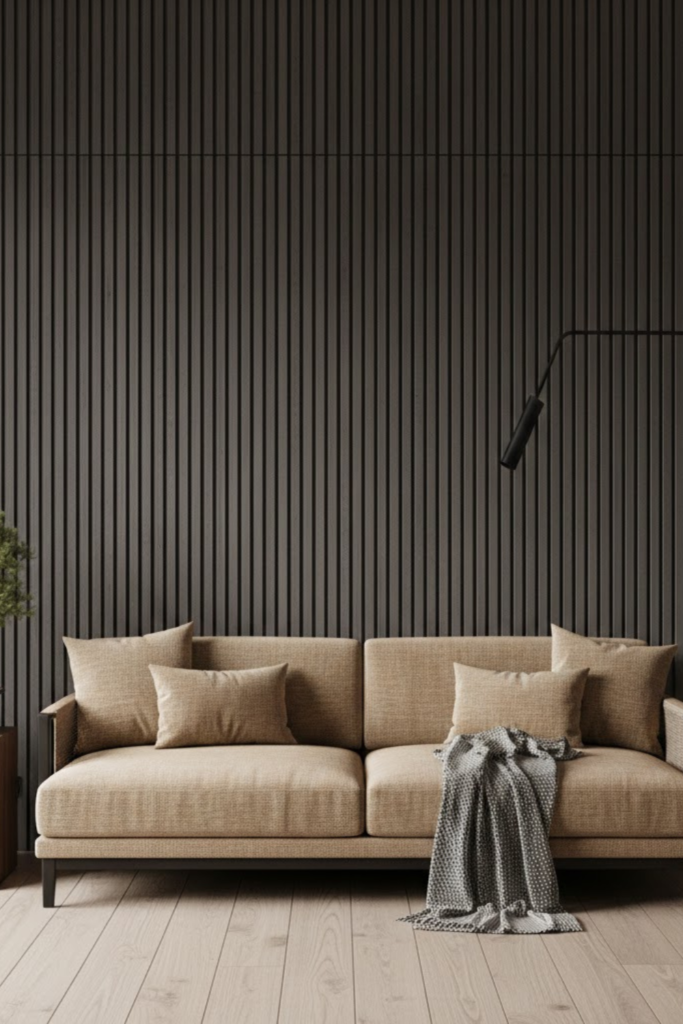
One of the biggest game-changers for me was switching to lower furniture. I swapped my bulky, high-back sofa for a lower, sleeker one. It instantly made my ceilings look higher and the whole room feel more grounded.
- Why it works: Low furniture invites you to sit down and relax. It says, “Hey, take a load off,” rather than “Stand at attention.”
- My tip: If you can’t buy a new sofa, try a low coffee table. It changes the perspective of the room without breaking the bank.
The Power of Black Accents
Okay, I know I just said we are warming things up, but hear me out. In a room full of beige and cream, you need a little “punctuation.”
I added a thin, matte black floor lamp next to my reading chair. It’s subtle, but it gives the eye something to land on. It’s like eyeliner for your room—it just defines everything.
- Don’t overdo it: You don’t want a black theme. Just a lamp here, a picture frame there. Thin lines are best.
Embracing “Wabi-Sabi” (Imperfection)
This is my favorite part. Wabi-Sabi is all about finding beauty in imperfection.
I used to hide a ceramic bowl I made in a pottery class because it was a bit lopsided. Now? It sits proudly on my coffee table.
- The lesson: Your home should look lived-in. A slightly wrinkled linen throw or a handmade mug adds more character than a perfect, factory-made vase ever could.
If you are someone who gets stressed about keeping everything perfect, Japandi is for you. It gives you permission to have a clean home that still feels real. It is not about hiding your life; it is about making space for it.
3. Texture-Driven Comfort: The “Hygge” 2.0
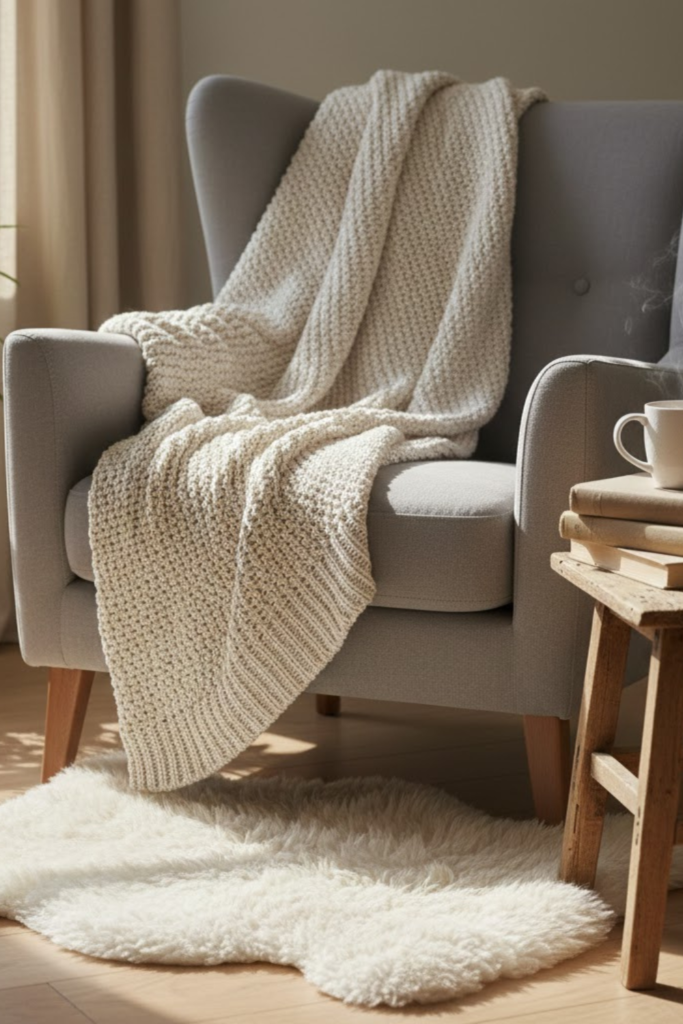
You know how some rooms look great in photos but feel cold when you actually sit in them? I used to have a chair like that. It was this sleek, plastic molded thing I bought because I saw it in a magazine. It looked cool, but nobody ever sat in it for more than five minutes. It was just… hard.
That’s where the new version of “Hygge” comes in for 2026. It’s not just about lighting a candle anymore; it’s about how things feel against your skin. We call it “Texture-Driven Comfort,” and honestly, it’s the best thing to happen to living rooms in years.
I decided to fix my “cold chair” problem last winter. I didn’t toss the chair (it was expensive!), but I draped a chunky knit wool blanket over it and tossed on a sheepskin pillow. Suddenly, my cat wouldn’t leave it alone, and neither would I.
Touchable Fabrics are Everything
If you want your Scandi room to feel cozy, you have to think about touch.
- Bouclé is still big: That nubby, loopy fabric is everywhere, and for good reason. It hides stains better than smooth cotton and feels like a teddy bear.
- Mix your knits: I love mixing a smooth velvet pillow with a rough, chunky knit throw. The contrast makes both of them stand out more.
Layering Rugs (Yes, Two Rugs!)
This was a weird concept to me at first. Why put a rug on top of a rug? But then I tried it.
I have a large, flat woven jute rug that covers most of the floor. It’s durable but a bit scratchy. So, I layered a smaller, softer wool rug right under the coffee table where my feet go.
- The result: It defined the seating area perfectly and gave my toes a soft place to land. plus, it looks super high-end for very little effort.
Soft vs. Hard
The magic happens when you mix opposites.
My coffee table is a heavy slab of concrete. On its own, it looks industrial. But next to a soft, crushed linen sofa? It looks amazing. The rough texture of the concrete makes the softness of the sofa pop.
So, don’t be afraid to mix it up. If you have a sleek wooden floor, you need a fluffy rug. If you have a glass table, pair it with soft fabric chairs. It’s all about balance. Your living room should be a place where you can kick off your shoes and feel comfortable, not like you’re in a museum exhibit.
4. Biophilic Scandi: Bringing the Outdoors In
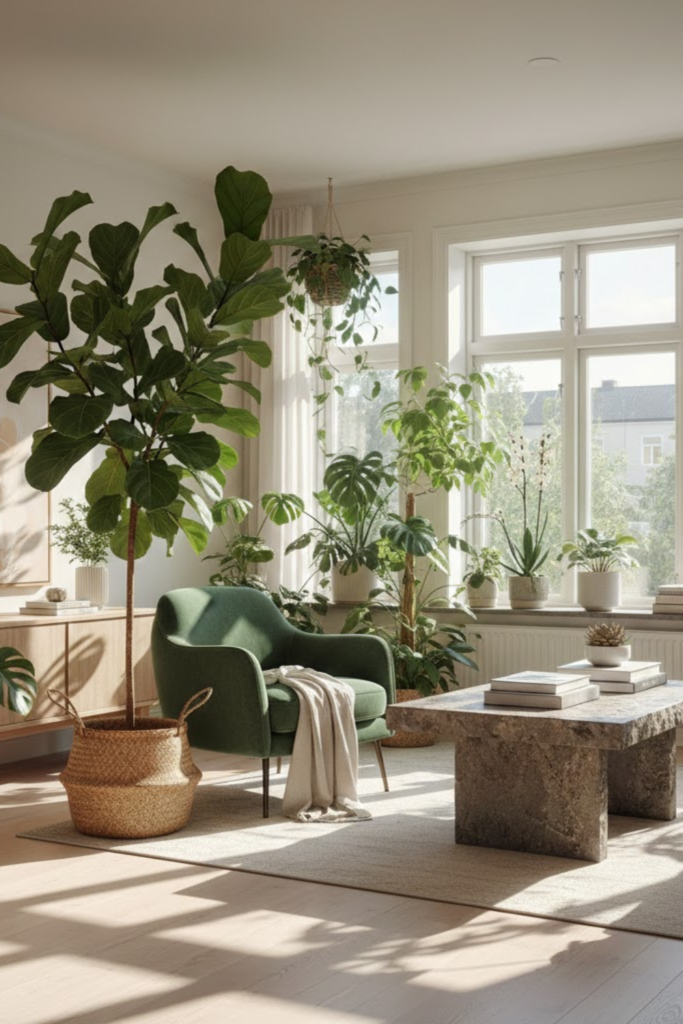
I have to admit, I used to be a notorious plant killer. My friends would joke that my apartment was where ferns went to die. But a couple of years ago, I realized something important: Scandinavian design isn’t just about furniture; it’s about connecting with nature. And in a place where winters are long and dark, you need that green life inside.
This trend, called “Biophilic Scandi,” is huge for 2026. It sounds fancy, but it really just means bringing the outdoors in. And trust me, if I can keep a plant alive, so can you.
Let the Light In
The first step is actually the easiest (and cheapest). Stop blocking your windows!
I used to have these heavy, dark curtains because I thought they looked “expensive.” But they made my living room feel like a cave.
- The fix: I switched to sheer, white linen curtains. Now, even on cloudy days, the room feels bright and happy. It changed the whole mood of the house.
- Pro tip: If you have privacy, try leaving a window completely bare. It frames the outside view like a painting.
Greenery that Pops
You don’t need a jungle. In fact, too many plants can look messy. Scandi style is about picking a few “statement” plants.
I bought a big Snake Plant (Sansevieria) for the corner. Why? Because it’s practically unkillable. Its tall, architectural leaves look amazing against a plain white wall.
- Go for height: A Ficus tree or a large Monstera in a woven basket adds life to a dead corner instantly.
- Benefits: Besides looking good, they clean the air. It’s a win-win.
Wood Slats are Everywhere
Have you seen those wooden slat walls on Pinterest? They are everywhere right now.
I added a small section of vertical wood slats behind my TV. It wasn’t hard—just some pine strips I stained myself.
- Why do it? The vertical lines draw your eye up, making the ceiling feel higher. Plus, the wood warmth balances out all the green from the plants. It feels like a little forest right in my living room.
Bringing nature inside makes your home feel alive. It stops it from feeling like a showroom and makes it a place where you can actually breathe.
5. The Soft-Curved Sanctuary: Breaking the Grid
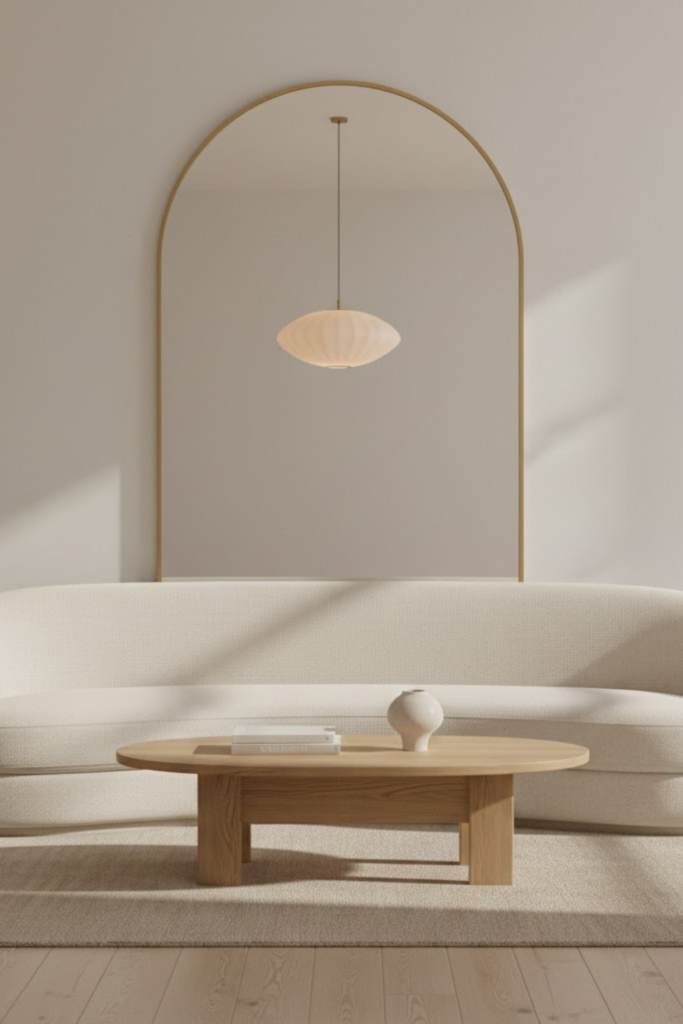
I used to think “modern” meant squares. Square tables, square rugs, square everything. My living room looked like a geometry test. And you know what? It hurt. I literally still have a bruise on my shin from bumping into the sharp corner of my old coffee table.
But in 2026, the sharp edges are out. We are embracing the “Squircle”—and yes, that is a real word! It’s all about soft curves and rounded shapes that make a room feel safer and more relaxing.
I decided to try this out after my niece started walking. I was terrified she’d hit her head on my sharp furniture. So, I swapped my rectangular coffee table for an oval one.
Why Curves Work
It wasn’t just safer; it changed the flow of the room.
- Better Traffic Flow: In a small room, you don’t have to walk around sharp corners. You can just glide around an oval table. It makes the space feel bigger.
- It Feels More Organic: Nature doesn’t really do straight lines. Trees are round, rocks are round. Adding curves makes your home feel more natural and less like a factory.
Easy Ways to Add Curves
You don’t need to buy a new curved sofa (though they are gorgeous).
- Mirrors and Art: I hung a large arched mirror over my mantle. It broke up all the straight lines of the fireplace and windows.
- Rug Magic: I put a round rug under my reading chair. It created a little “zone” that felt separate from the rest of the room.
If your room feels too stiff or boxy, try adding just one round thing. A round pillow, a circular tray, or even a curvy lamp. It softens the whole look instantly.
6. Modular Flexibility: Smart Design for Small Spaces
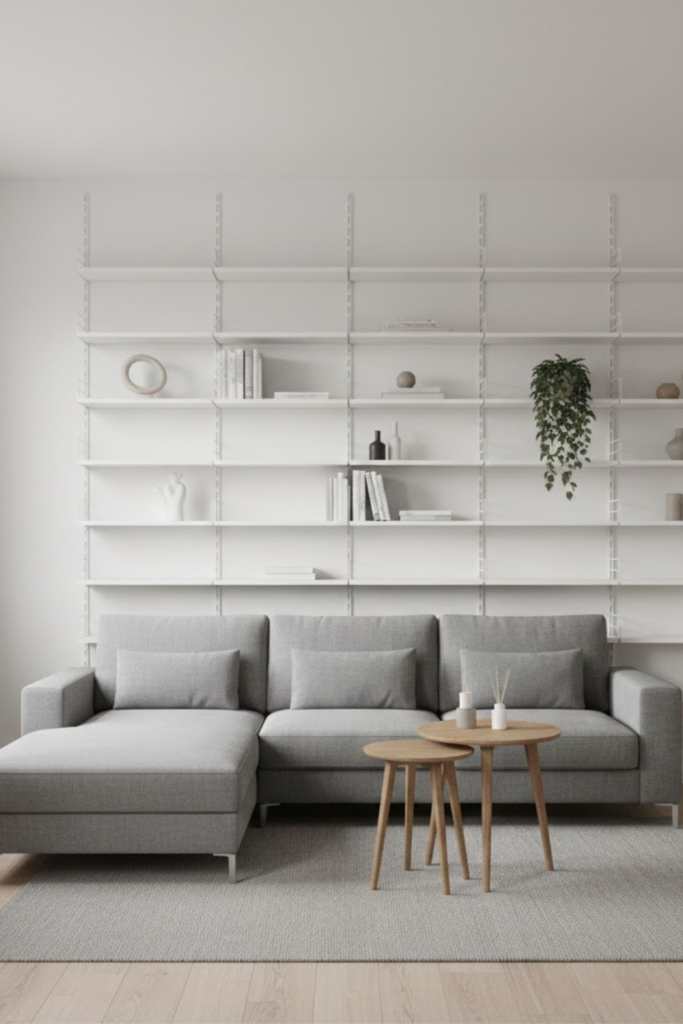
I remember my first apartment after college. It was a “cozy” studio—which is just real estate talk for “your bed is also your dining table.” I had so much stuff and nowhere to put it. It felt cluttered and stressful.
If you are living in a smaller space, you know the struggle. But Scandinavian design is famous for solving this. In 2026, it is all about “Modular Flexibility.” This just means furniture that can change as your life changes.
Furniture that Multitasks
In a small room, every single piece of furniture needs to earn its keep.
- The Ottoman Trick: I stopped buying regular coffee tables for small rooms. Instead, I get a firm ottoman. You can put a tray on it for drinks, use it as a footrest, or use it as an extra seat when friends come over. Plus, many of them open up for storage inside.
- Nesting Tables: These are a lifesaver. You have three tables stacked in the footprint of one. Pull them out when you have guests, tuck them away when you need floor space for yoga.
The Magic of Modular Sofas
A giant sectional sofa is great, but it locks you into one layout.
I recently bought a modular sofa for my den. It comes in separate square pieces.
- Why it helps: I can push them together for a movie night bed, or pull them apart to make separate chairs for a game night. It adapts to whatever I’m doing that day.
Keep the Floor Clear
The biggest mistake I see in small rooms is heavy bookshelves. They eat up floor space and make the room feel tight.
- Go Vertical: I installed a wall-mounted shelving system (like the classic String shelves). Because they float on the wall, you can see the floor underneath. It tricks your eye into thinking the room is bigger than it actually is.
Living small doesn’t mean you have to sacrifice style. You just have to be a little smarter about it. When your furniture works hard for you, your home feels twice as big.
7. Atmospheric Lighting: The Secret to Nordic Evenings
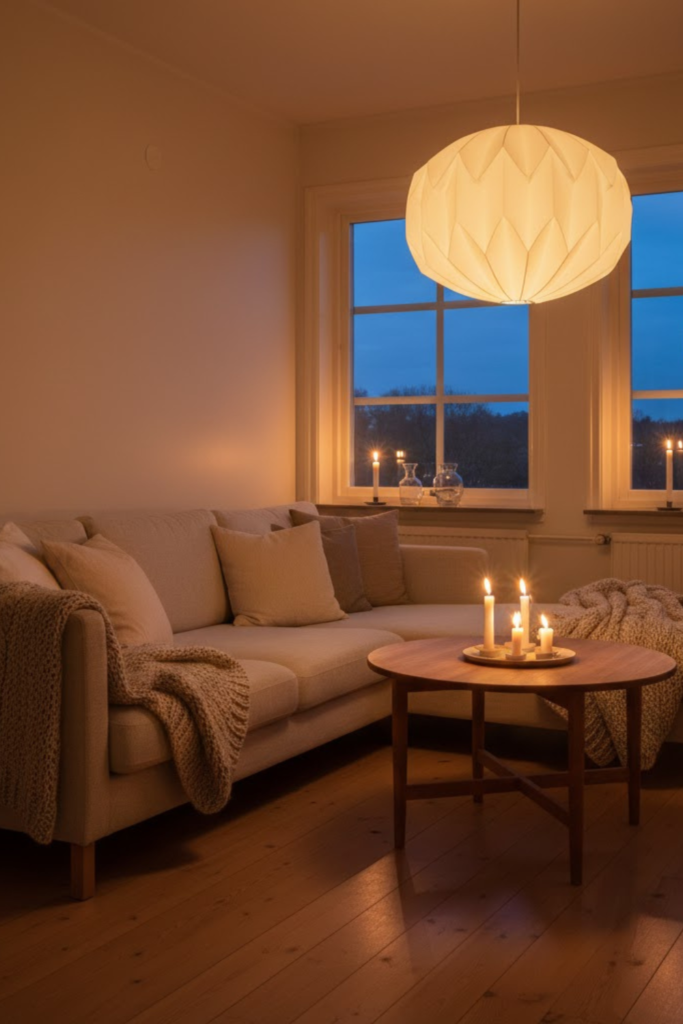
When I lived in a regular apartment, I had one big light fixture in the middle of the ceiling. It was either “ON” (interrogation room bright) or “OFF” (pitch black). I hated it. It made relaxing impossible.
Then I learned the Scandinavian secret: Lighting is everything. In the Nordics, where it’s dark for half the year, they don’t just use lights to see; they use them to feel good.
The Rule of Three
You need three layers of light. If you only have one, your room will feel flat.
- Ambient: This is your main light, but put it on a dimmer!
- Task: A lamp by your chair for reading.
- Accent: This is the mood maker. Think candles or a small lamp on a shelf.
Why Warm Bulbs Matter
I once bought “Daylight” bulbs by mistake. They were blue and cold, and they made my skin look grey.
- The Fix: Always look for “Warm White” or 2700K on the box. It mimics the glow of firelight. It makes everything—and everyone—look better.
Don’t Forget the Candles
You can’t have “Hygge” without candles. I light them almost every night, even if I’m just watching TV. The flicker of a real flame (or a good LED one) instantly tells your brain to calm down.
Lighting isn’t just about utility. It’s about creating a little pocket of warmth against the dark. It turns a house into a home.
Conclusion
Creating a Scandinavian living room in 2026 isn’t just about painting everything white and buying a meatball-shop sofa. It’s about curating a space that feels warm, functional, and deeply personal. From the grounding nature of Japandi to the soft embrace of curved furniture, these designs offer a roadmap to a home that actually recharges you.
So, which of these seven styles resonates most with your vibe? I’d love to see how you interpret these trends!
Don’t forget to save this article to your “Home Decor 2026” board on Pinterest so you can come back to these ideas whenever you need a fresh dose of inspiration!