Did you know that 78% of homeowners now prioritize “emotional comfort” over pure aesthetics in their living spaces? I used to think rustic meant dark cabins and dusty antlers, but wow, was I wrong! In 2026, the rustic vibe has evolved into something designers are calling “Material Honesty”—a celebration of raw, imperfect textures that feel genuinely grounding. It’s not just about looking good; it’s about that deep exhale you take when you walk through the door. Whether you’re in a city apartment or a country house, these 7 rustic living room designs will show you how to blend cozy nostalgia with modern life. Let’s dive in!
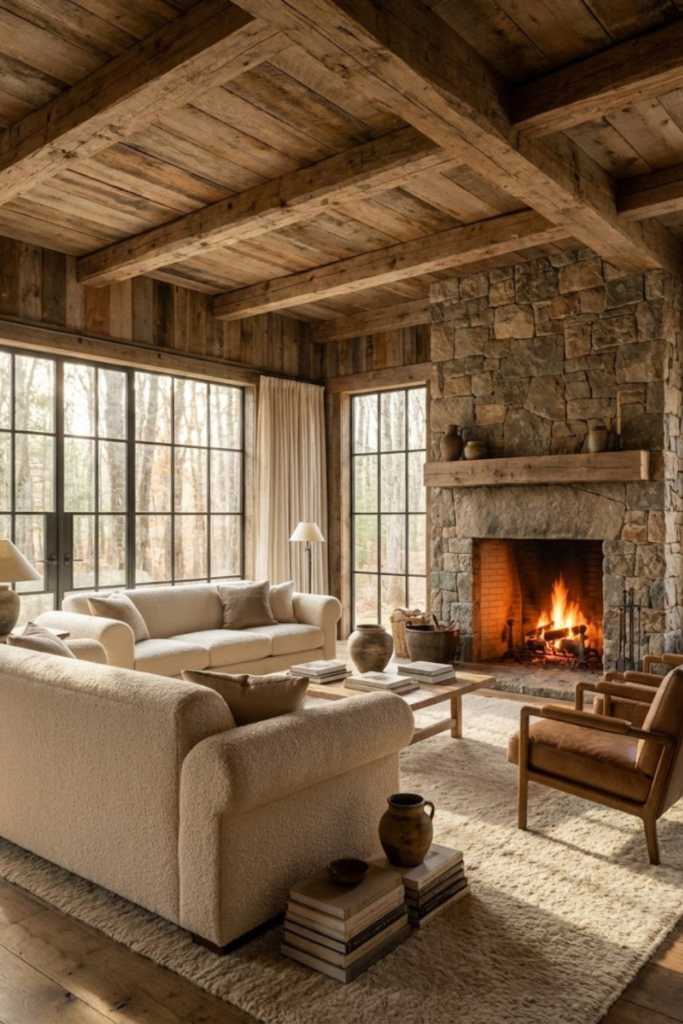
1. The “Rustic Vogue” Aesthetic
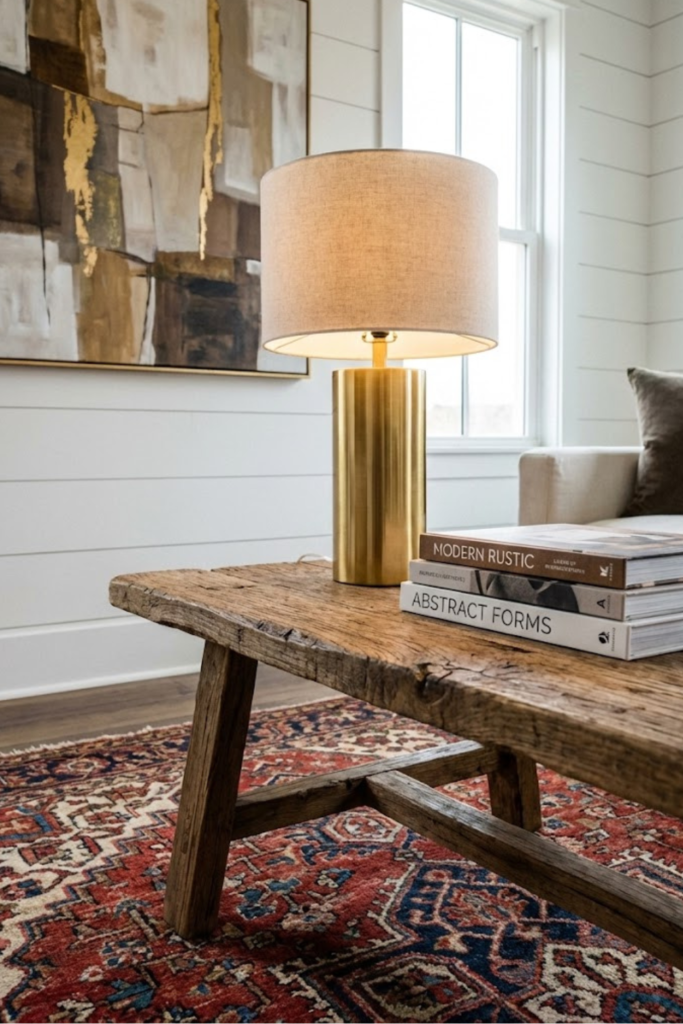
You know, for the longest time, I thought “rustic” just meant living like you were in a log cabin with no Wi-Fi. But Rustic Vogue? That is a whole different ballgame. It is basically what happens when you take those rough, tough country elements and introduce them to city living. I remember walking into my friend’s apartment last month—she lives right downtown—and seeing this beat-up, old wooden ladder leaning against a perfectly smooth, white wall. It looked amazing. That is the vibe we are going for here. It’s sophisticated but still feels like home.
Finding the Balance
The trick here is not to go overboard. If everything is wood and stone, you just have a cave. You have to mix it up. Think about pairing things that shouldn’t go together but somehow do. I love seeing big, exposed timber beams on the ceiling paired with something shiny, like brass light fixtures or even a glass coffee table.
It’s about contrast. When you put a rough texture next to a smooth one, both of them pop. I tried this in my own living room by keeping my grandmother’s scratched-up oak side table but putting a sleek, modern lamp on top of it. Suddenly, the table didn’t look “old” anymore; it looked intentional. It had character.
Why It Works for Families
As a teacher, I see a lot of trends that just aren’t practical for real people. But Rustic Vogue is great because it is forgiving. Since the style embraces imperfections, you don’t have to worry if the dog scratches the floor or if the kids dent the coffee table. It just adds to the “look.”
I always tell people to start small. You don’t need to tear down walls to expose brick (unless you want to!). Just swap out some hardware. Take those standard cabinet knobs and replace them with something that looks hand-forged or slightly worn.
Simple Ways to Start
- Layer your lighting: Don’t just use the big overhead light. Get some lamps with linen shades to soften the room.
- Mix your woods: Don’t worry if your floor doesn’t match your shelves. In this style, mixing wood tones actually makes the room feel warmer and more collected.
- Add soft touches: Throw a really soft, chunky blanket on a leather chair. That mix of soft and tough is exactly what Rustic Vogue is all about.
It really is one of the easiest styles to pull off because it doesn’t have to be perfect. In fact, it’s better if it isn’t.
2. Biophilic Living Walls
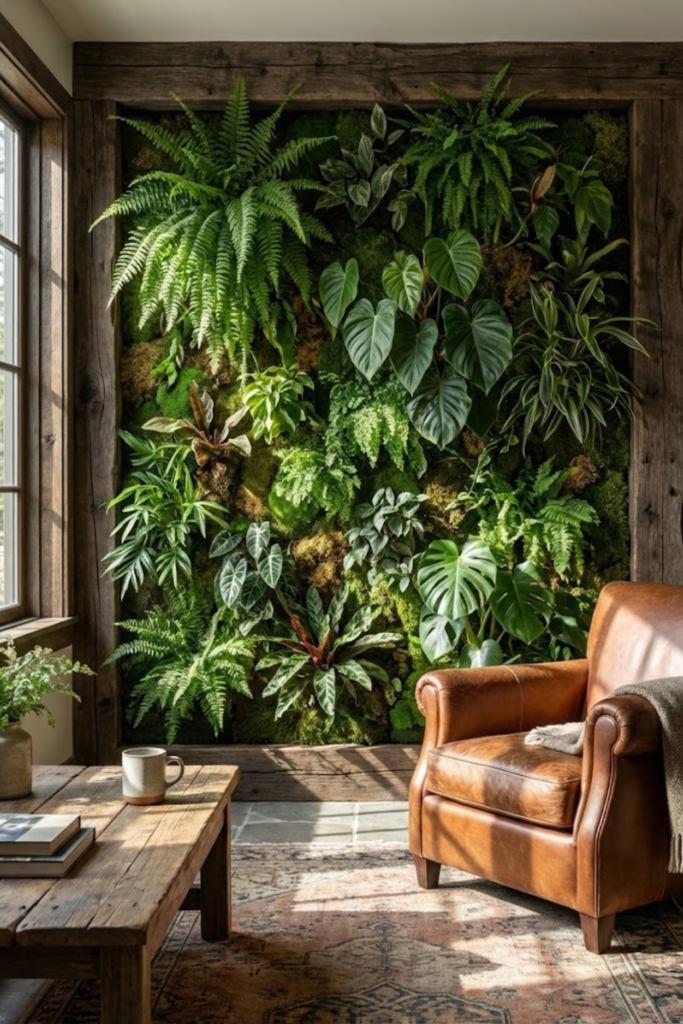
I have to admit something embarrassing: for years, I could not keep a cactus alive. I mean, they are supposed to be impossible to kill, right? But lately, I’ve been seeing this trend everywhere, and I finally decided to give it a try. Biophilic design is a big fancy word, but it really just means bringing the outdoors inside. In 2026, we aren’t just talking about a spider plant in the corner anymore. We are talking about full “living walls” or vertical gardens that act as a focal point in the room.
Why Green Goes with Wood
If you think about it, trees and leaves go together in nature, so they obviously look good together in a living room. When you have those rustic brown tones—maybe from a reclaimed wood coffee table or exposed beams—adding a splash of vibrant green wakes the whole room up.
I visited a local cafe recently that had this huge wall covered in preserved moss. It looked soft and textured, almost like a piece of art. Against the brick wall, it softened the whole space. You can do the same thing at home. It breaks up the heaviness that rustic furniture sometimes has.
It’s Good for Your Head (and Lungs)
As a teacher, my days are loud. Between the school bell and 30 kids asking questions at once, I need quiet when I get home. There is actual science that says looking at plants lowers your blood pressure. I don’t know the exact numbers, but I feel it.
Having a “living wall”—even a small section—cleans the air, too. It makes the room feel fresher. It’s like taking a deep breath in the forest without actually leaving your couch.
Cheating the System
Now, if you are like me and worry about watering a vertical garden without ruining your drywall, there are easier ways to do this. You don’t need a complicated irrigation system.
- The Shelf Method: Just install three or four floating wood shelves one above the other. Fill them with trailing plants like Pothos or Ivy. As they grow down, they cover the wall and create that “living wall” look for way less money.
- Preserved Moss: This is my favorite cheat. You can buy panels of moss that are technically real but preserved, so they don’t need water or light. They stay green forever.
- Zone It: Don’t try to cover the whole room. Just pick one strip of wall, maybe behind a reading chair, and focus there.
It really changes the energy of the room. It feels less like a showroom and more like a sanctuary. Plus, if I can keep a few ferns alive now, anyone can.
3. Sensory Comfort & Textural Layering
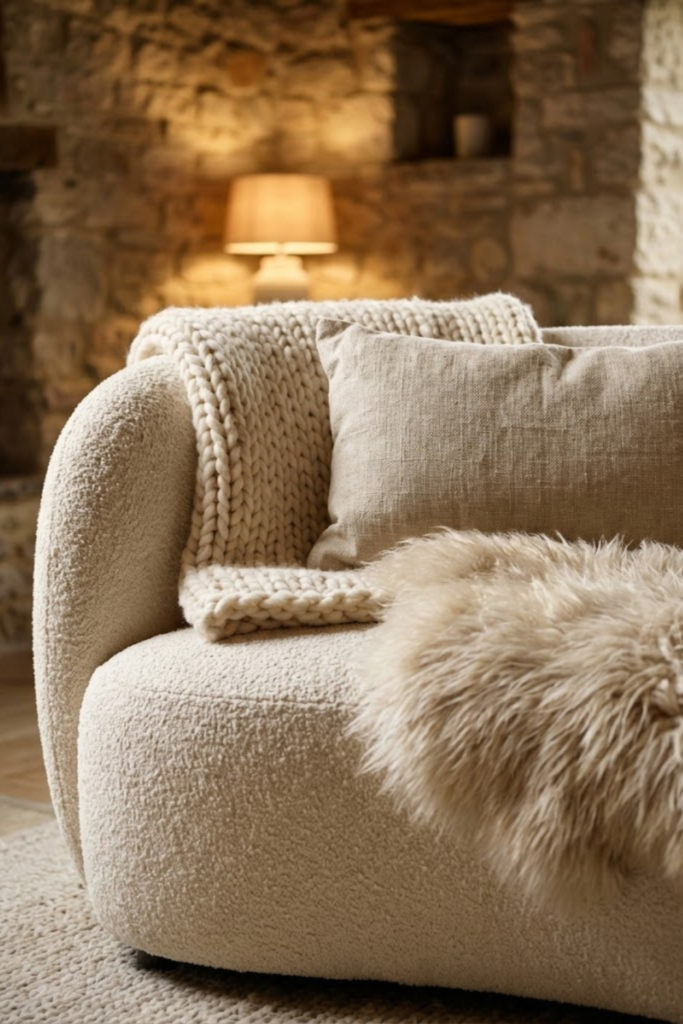
I have to tell you, I made a huge mistake with my first sofa. It was this sleek, stiff thing that looked great in pictures, but sitting on it was like sitting on a park bench. I hated it. Now that I’m a bit older (and tired from chasing middle schoolers all day), I realized that a living room has to actually be livable. That is where this idea of “Sensory Comfort” comes in. It sounds a bit technical, but it really just means filling your home with things that feel as good as they look.
The “Touch Test”
In 2026, we are seeing a big shift away from furniture that is just for show. If you can’t curl up on it for a nap, it doesn’t belong in the living room. For a rustic space, this is super important because rustic materials—like stone, brick, and raw wood—are naturally hard and cold. You have to balance that out.
I have a rule now: I don’t buy anything unless I touch it first. If it’s scratchy, it stays at the store. We are looking for things that “hug” you. Think about big, deep cushions and fabrics that are soft against your skin. It stops the room from feeling like a cold barn and turns it into a cozy den.
Mastering the Art of Layering
This style is often called “Balanced Maximalism.” That means having a lot of stuff, but keeping it organized so it doesn’t look messy. The key is layering different textures.
I love the trick of layering rugs. It is an easy way to make a room look expensive. Start with a large jute or sisal rug on the bottom. These are great because they are durable and give you that earthy, natural vibe. But they aren’t great to walk on barefoot. So, you put a smaller, softer wool or vintage rug right on top of it. It adds color and makes the floor soft where you actually walk.
My Go-To Materials
If you are wondering what to shop for, keep an eye out for these:
- Bouclé: This is that nubby, loopy fabric that looks a bit like a sheep. It hides stains pretty well, which is a bonus if you have kids or pets.
- Washed Linen: I use this for curtains and pillows. It has a crinkled look, so you never have to iron it.
- Sheepskin: A real or fake sheepskin throw over a leather armchair is a game changer. It softens up the leather immediately.
It’s all about creating a space where you can exhale. When I finish grading papers on a Friday night, I want to sink into my chair, not perch on it. Layering these soft textures makes your home feel safe and grounded.
4. Distressed Color as Structure
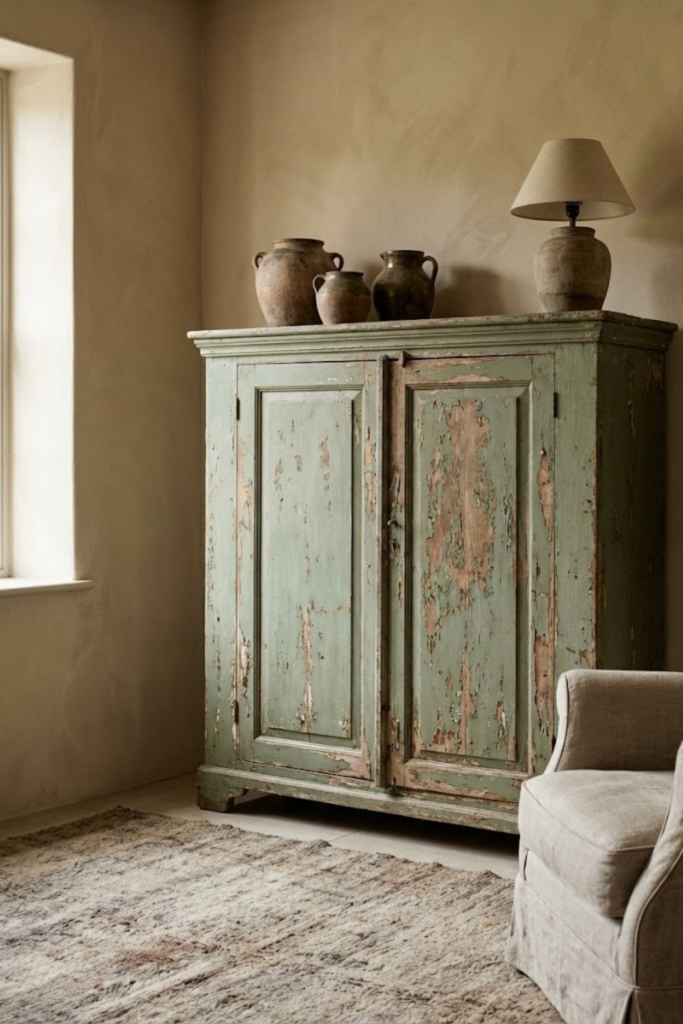
I used to think rustic style meant brown, brown, and more brown. I remember looking at my living room a few years ago and thinking it looked like a mud puddle. It was just too much wood. The floor was oak, the table was pine, and the walls were beige. It was boring. That is where “Distressed Color” comes in to save the day. In 2026, we aren’t scared of color anymore, but we are using it in a very specific way. We use color to give the room “structure” or a backbone, so it doesn’t just look like a pile of lumber.
Breaking Up the Sea of Brown
The problem with having too many wood tones is that everything blends together. You lose the definition of the room. By adding a piece of furniture in a strong, muted color, you create a stopping point for the eye.
It isn’t about painting the whole room bright red. It is about using what I call “muddy” colors. Think of colors that look like they have been mixed with a little bit of gray or brown. My favorite right now is a deep, dusty sage green. I painted my side console this color, and suddenly, the whole room felt anchored. It wasn’t just floating in a sea of beige anymore.
My Weekend DIY Project
You don’t need to buy expensive antiques to get this look. I am on a teacher’s budget, so I do a lot of things myself. I found an ugly, orange-varnished cabinet at a yard sale for twenty bucks. I took it home and painted it a slate blue color.
But here is the trick: I didn’t want it to look perfect. After the paint dried, I took a piece of sandpaper and roughed up the edges. I sanded down the spots where hands would naturally touch it—around the knobs and on the corners. It revealed a little bit of the wood underneath. Now, it looks like it has been in the family for 100 years. It adds that sense of history that new furniture just doesn’t have.
Colors That Don’t Scream
If you are nervous about adding color, stick to earth tones. These always look good with wood.
- Terracotta: This is like a burnt orange or clay color. It adds warmth without being too bright.
- Olive or Sage: Green is nature’s neutral. It goes with absolutely everything.
- Slate Blue or Charcoal: These act almost like black but are a little softer.
Using these colors on big pieces—like a bookshelf or a buffet—gives the room weight. It makes the space feel solid and put-together, rather than just a collection of random things. It’s an easy fix that makes a massive difference.
5. Statement Stone (Honed, Not Glossy)
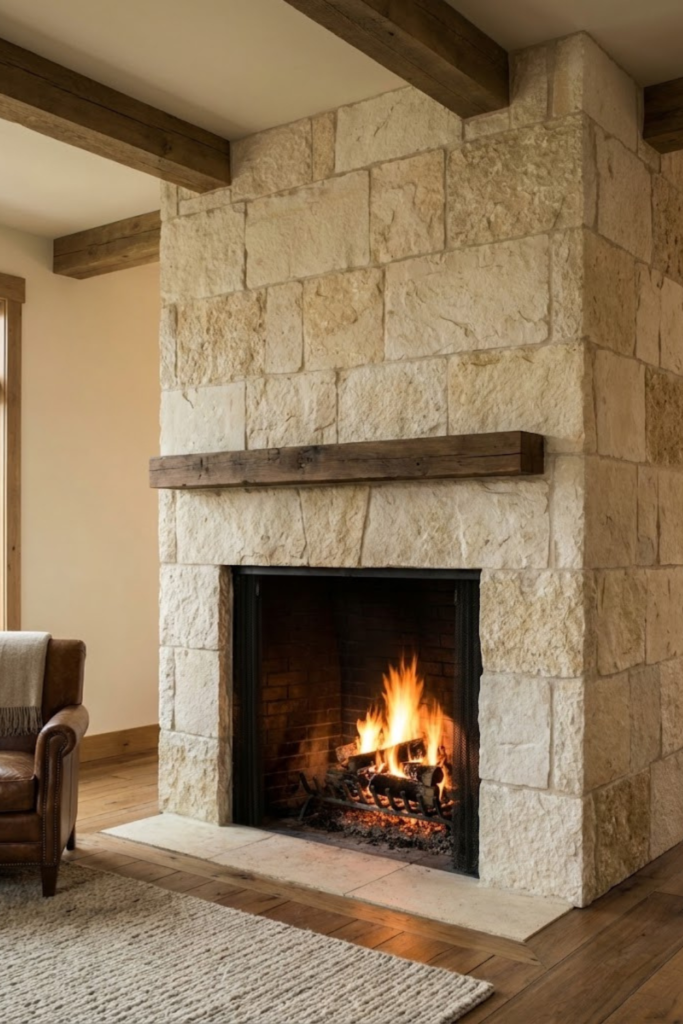
Back in the day, I thought “luxury” meant everything had to sparkle. I remember saving up for these shiny granite countertops in my first kitchen. I was so proud of them until I realized I had to wipe them down ten times a day just to get rid of fingerprints. It drove me crazy. Thankfully, in 2026, we have moved past that. The trend now is “honed” stone. It sounds fancy, but it just means the stone has a matte finish. It doesn’t reflect light; it absorbs it. For a rustic living room, this is exactly what you want.
Keeping It Real
Think about it this way: when you go for a hike in the woods, the rocks aren’t shiny. They are dusty, rough, and textured. If we are trying to bring that natural, rustic vibe indoors, why would we use stone that looks like plastic?
Glossy surfaces can make a room feel cold and a bit stiff. Honed stone, like limestone or slate, feels softer to the touch. It has a warmth to it that makes you want to run your hand over it. It fits right in with the “Material Honesty” idea we talked about earlier. It isn’t trying to be something it’s not. Plus, from a practical standpoint, it hides dust and smudges way better than polished stone.
The Heart of the Room
If you are lucky enough to have a fireplace, this is your moment. A floor-to-ceiling stone fireplace is the ultimate anchor for a living room. It grounds the space.
I saw a renovation recently where they used big, chunky blocks of rough-cut stone for the fireplace. It looked like it had been there for a hundred years. It wasn’t perfectly flat, and the grout lines were deep. It was beautiful. That kind of heavy texture balances out the soft things in the room, like your sofa and rugs. It creates that perfect mix of hard and soft that makes a room feel complete.
You Don’t Have to Renovate
Now, I know not everyone can just build a new stone fireplace. I certainly can’t on my salary. But you can still get this look.
- Accent Decor: Look for heavy stone bowls or trays made of matte marble. Put one on your coffee table to hold your remote controls. It adds that earthy weight without the construction mess.
- The “Veneer” Cheat: There are some really good stone veneers out there now. They are thin slices of real stone that you can stick onto an existing wall. You could do the wall behind your TV or even just update the front of a boring brick fireplace.
- Window Sills: This is a small detail, but swapping a plain wood sill for a piece of honed slate looks incredibly high-end.
It’s about adding elements that feel permanent. In a world where everything moves so fast, having something heavy and solid in your home just feels good.
6. Curated “Material Honesty”
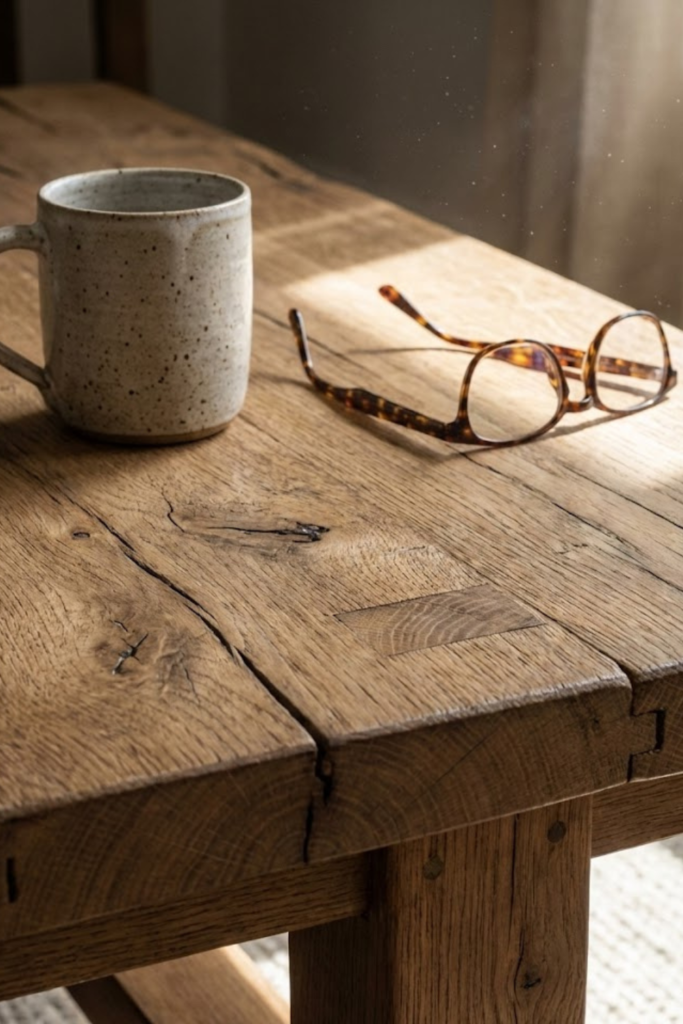
I have this old solid oak coffee table that I bought years ago. For the longest time, I tried to cover it up with coasters and placemats because it had a big knot right in the middle and a few scratches from when my nephew drove his toy trucks across it. I thought it looked messy. But in 2026, designers are talking about “Material Honesty,” and it turns out, I was hiding the best part. This trend is all about letting materials look exactly like what they are. If it’s wood, let it have knots. If it’s metal, let it show a little rust or patina.
Perfection is Overrated
As a teacher, I tell my students all the time that mistakes are part of learning. It is the same with our homes. We are done with furniture that looks like it rolled out of a factory without a single blemish. That stuff feels fake.
“Material Honesty” means we stop trying to paint over wood to make it look like plastic, or buying vinyl flooring that pretends to be stone. We want the real deal. It’s an anti-perfectionist attitude. When you walk into a room with “honest” materials, you don’t feel like you have to tiptoe around. You can actually relax because the furniture already has character. It’s not precious.
The Beauty of Defects
When you are shopping or looking at what you already own, look for the “flaws.”
- Knots and Cracks: In the past, carpenters would cut these out. Now, we highlight them. A dining table with a visible crack (stabilized with a butterfly joint) is a conversation starter. It shows the life of the tree.
- Visible Joinery: I love seeing how things are put together. Don’t hide the screws or the dovetail joints on a drawer. Seeing the craftsmanship makes the piece feel solid and handmade.
- Patina: This is just a fancy word for the tarnish that forms on metal over time. If you have a copper pot or a brass lamp, don’t polish it until it blinds you. Let it get that dark, aged look. It adds warmth.
Creating a Story
I think the reason this is so popular right now is that we are all craving something real. We spend so much time looking at screens that are perfect and high-definition. We need our physical space to feel grounded.
I recently stripped the white paint off an old chair I found. Underneath, the wood was different colors and had some water marks. I just put a clear wax on it and left it. It looks amazing. It tells a story. When you fill your living room with pieces like that—pieces that aren’t trying to hide anything—the whole room feels more authentic. It feels like a home, not a hotel lobby.
7. Invisible Tech & Modern Lighting
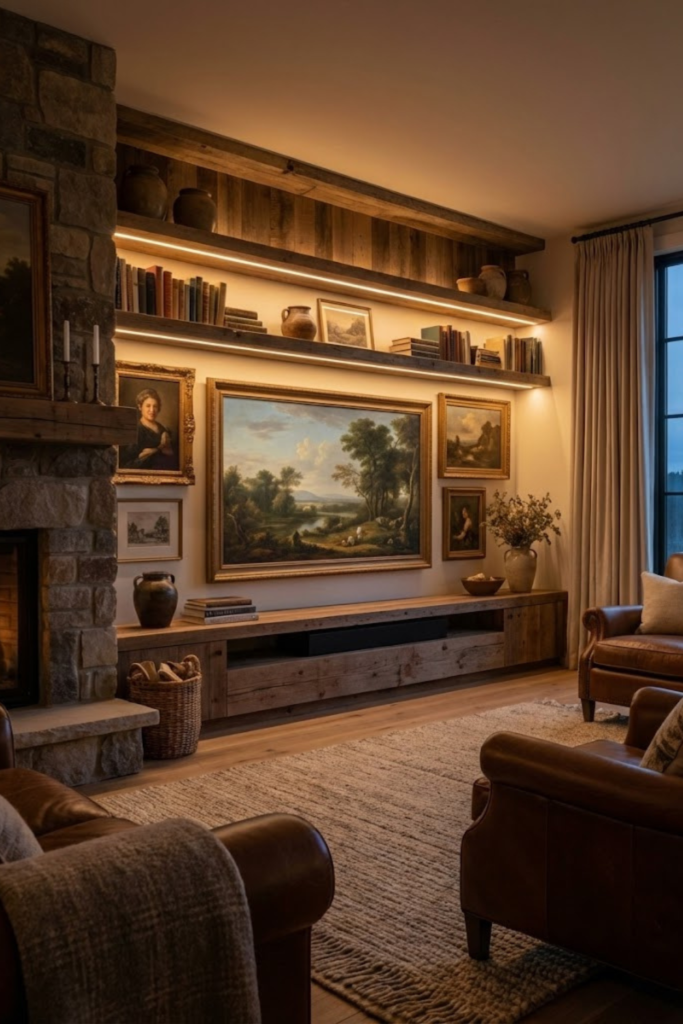
I have a confession. As much as I love the “log cabin” look with all its old-world charm, I am completely glued to my phone, and I binge-watch shows every Friday night after a long week of teaching. The tricky part about rustic design is that it usually doesn’t mix well with technology. There is nothing worse than looking at a beautiful, rough-hewn beam and then seeing a tangle of ugly black wires running down the wall. It just kills the mood. But in 2026, we have finally figured out how to have both. We call it “Invisible Tech.” It means the gadgets are there, but you don’t see them until you need them.
The Disappearing Screen
For years, the TV was the enemy of the living room. It was this giant black hole that sucked all the attention away from the fireplace or the view. I actually tried hiding mine in a cabinet once, but I always forgot to close the doors, so it didn’t really work.
Now, the trend is using TVs that turn into art when they are off. You have probably seen them. When I’m not watching a movie, my screen looks like a vintage oil painting of a landscape. It blends right in with my gallery wall. If you can’t afford a new TV, there is a cheaper trick: there are channels that play “ambient art” or a crackling fire for hours. I put that on when guests come over, and it changes the whole vibe. It stops the room from feeling like a media center and keeps it feeling like a home.
The Warmth of “Smart” Fire
Lighting is everything. In a rustic room, you want the light to feel warm, like a campfire or a candle. You do not want that bright blue-white light that reminds you of the school cafeteria or a dentist’s office.
I switched all my bulbs to “smart” warm bulbs. I specifically look for 2700K on the box (that is the number for warm white). In the evenings, I can use my phone to dim them way down. It makes the wood furniture look rich and cozy. If you have exposed beams, try running a hidden LED strip along the top. You can’t see the strip, but it casts a soft glow up toward the ceiling. It highlights the texture of the wood without being in your face. Plus, being able to turn off the lights by voice when I’m too tired to get off the couch is a lifesaver.
Hiding the Spaghetti
The worst part of modern life is the cords. They are everywhere. I finally got fed up with the charger cables falling behind the couch. I bought a wooden side table that has a wireless charger built right into the top. You just set your phone down on the wood, and it charges. No wires visible.
For the rest of the cords, I use baskets. A nice woven wicker basket under a console table can hide a whole power strip and all the messy cables. It looks like rustic decor, but it’s actually just a hiding spot for my tech mess. It allows you to keep all your modern comforts without ruining the rustic aesthetic.
Conclusion: Making It Your Own
Well, we made it to the end. It is kind of funny to think about how much “rustic” has changed. I remember when I thought it just meant hanging a deer antler on the wall and calling it a day. But looking at these trends for 2026, it is clear that it has become something much deeper. It is about creating a space where you feel safe, comfortable, and actually at home.
It’s Not About the Budget
I know looking at pictures online can be discouraging sometimes. You see these massive stone fireplaces or giant windows overlooking a forest, and you look at your own living room and sigh. I do it too. But remember, you don’t need a millionaire’s budget to get this feeling.
The best changes I made in my house were the cheap ones. Swapping out those cold, bright light bulbs for warm ones cost me maybe twenty dollars, but it completely changed the mood of my evenings. Putting a rough, wooden tray on my coffee table didn’t cost much either, but it added that texture I was craving. It is the small choices that add up. You are building a feeling, not just a showroom.
Start Small
If you are feeling a little overwhelmed by all the options, just pick one thing from this list. You don’t have to redo the whole house this weekend.
- Maybe you start with “Rustic Vogue” by mixing something old you already have with something new.
- Maybe you try the “Sensory Comfort” idea and just buy a really high-quality, soft blanket for the sofa.
- Or maybe you are brave enough to paint a piece of furniture a distressed color like that sage green I love.
Don’t worry about “getting it right” or following the rules perfectly. The whole point of this style is that it loves imperfections. A scratch on the floor or a chipped vase just adds to the story. It makes the house feel lived-in.
Let’s Keep in Touch
I really hope this list gave you some ideas you can actually use. I had fun putting it together (and it honestly gave me a few ideas for my own weekend projects—I think I need more plants).
If you want to save these ideas for later, please Pin this article to your “Home Decor 2026” board on Pinterest. It helps me out, and it makes sure you don’t lose that paint color idea when you finally get around to decorating.
Thanks for reading, and happy decorating!