Did you know that nearly 40% of older homes feature “bowling alley” layouts that leave homeowners completely stumped? I remember standing in my first apartment’s hallway-like living room years ago, just scratching my head! It felt way more like a tunnel than a cozy space to hang out. But don’t worry, decorating long, thin rooms doesn’t have to be a total nightmare. Over the years of teaching design basics, I’ve figured out the best 7 room ideas for narrow spaces to help you maximize your home. We’re going to dive into smart layout tricks, paint optical illusions, and furniture hacks that truly work. Let’s jump right into it!
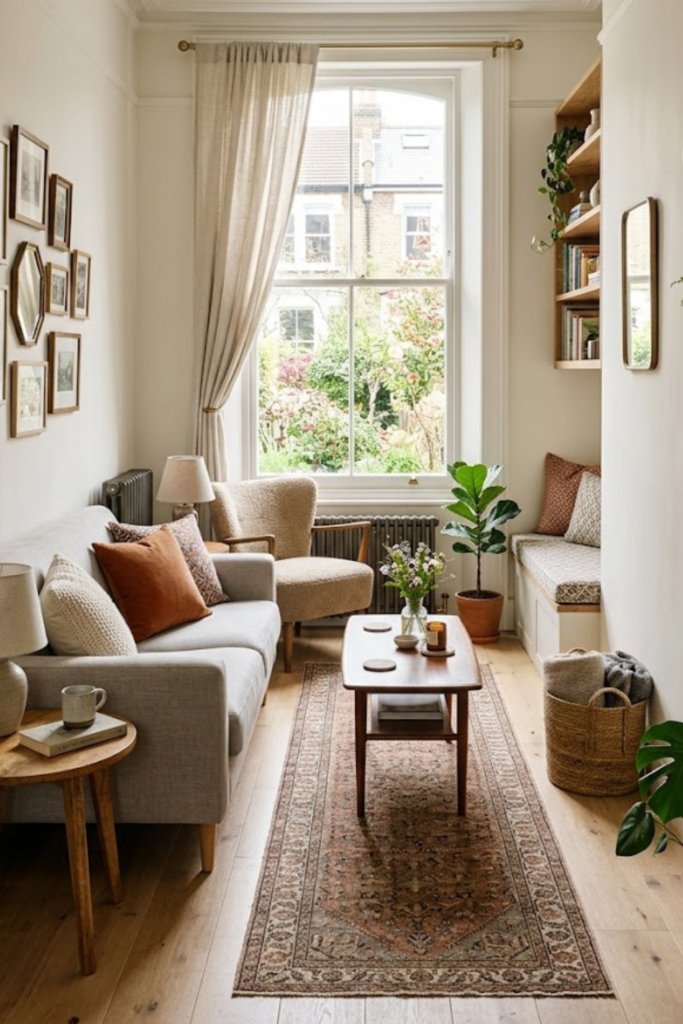
1. Break the Space into Distinct Functional Zones
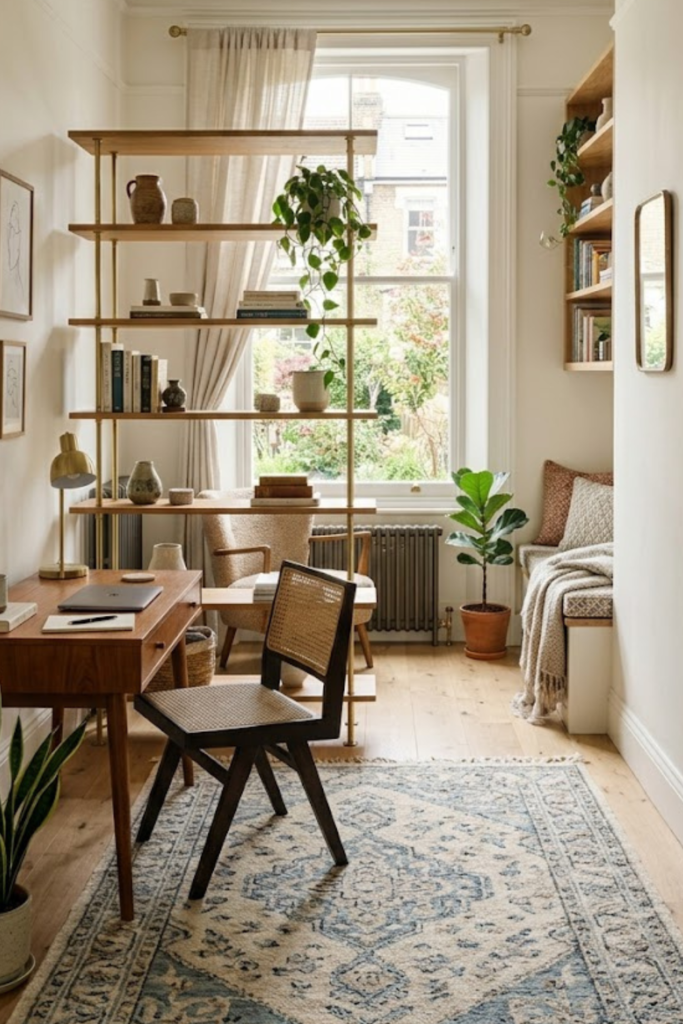
If you’ve ever looked at a long, skinny room and thought it looked more like a bowling alley than a living space, you aren’t alone! One of the biggest mistakes people make is trying to treat the whole room as one giant area. Instead, you want to “break” the length by creating mini-rooms within the room.
I remember helping a friend with a narrow studio apartment last year. We used two different area rugs to separate her “bedroom” from her “office.” It’s like magic—suddenly, your eyes stop looking at the long walls and start looking at the cozy little pockets you’ve built.
- Use Area Rugs: Place different rugs to define where the lounging area ends and the dining or workspace begins. This creates a visual “wall” without actually blocking any light.
- Group Your Furniture: Instead of spreading everything out, pull chairs and tables closer together in their specific zones to make them feel intentional.
- Create Pathways: Make sure there is a clear walking path that flows naturally between your zones so you aren’t bumping into corners as you move through the room.
2. Utilize Vertical Space with Tall Bookshelves
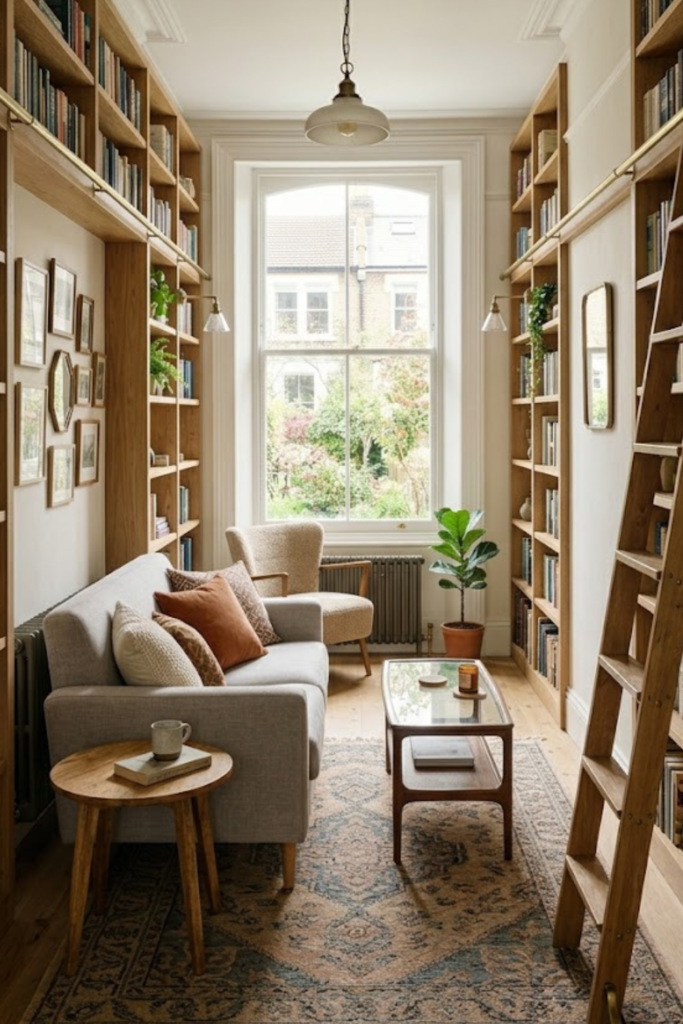
When you don’t have much width to work with, you have to start looking up! I’ve seen so many people focus only on what’s happening on the floor, but the walls are where the real magic happens in a narrow room. If you keep everything low to the ground, the room can feel a bit “squashed.”
In my old house, we had a hallway that we tried to turn into a library. By adding floor-to-ceiling shelves, it actually made the ceiling look higher. It’s a great trick because it draws your eyes upward, making you notice the height of the home instead of how close the walls are to each other. Plus, it gives you a place to put all your stuff without cluttering up the narrow walkway.
- Draw the Eye Upward: Use tall furniture or vertical art to make the ceiling feel higher and the room feel less cramped.
- Floating Shelves are Your Friend: These are great because they don’t have “legs” taking up floor space, which keeps the ground area looking open and clean.
- Keep it Tidy: Try to leave some open space on your shelves. If you pack them too tight, it can make the room feel heavy and crowded.
3. Choose Low-Profile and Leggy Furniture
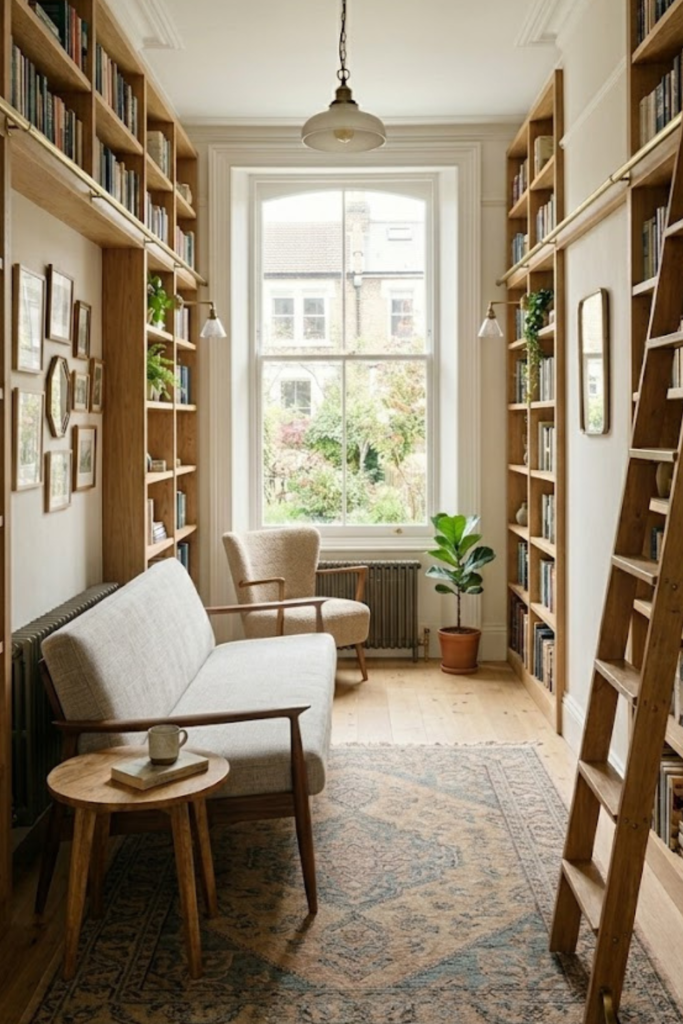
When you’re working with a tight squeeze, the “weight” of your furniture matters just as much as the size. I learned this the hard way with a chunky, overstuffed leather sofa that basically ate my entire first apartment. It made the room feel like a cave!
Now, I always tell people to look for “leggy” furniture. If you can see the floor underneath your sofa or your chairs, the room feels much more open. It’s a simple trick that lets light move through the space instead of hitting a solid wall of fabric. It really keeps things from feeling cramped.
- Look for Exposed Legs: Choose sofas and chairs with wooden or metal legs. Being able to see the floor underneath makes the room feel like it has more breathing room.
- Go Low: Lower furniture keeps the middle of the room open, which stops the space from feeling like a narrow tunnel.
- Use See-Through Pieces: Glass or acrylic (clear) coffee tables are amazing for narrow spaces because they do their job without taking up any “visual space.”
4. Create Optical Illusions with Mirrors and Lighting
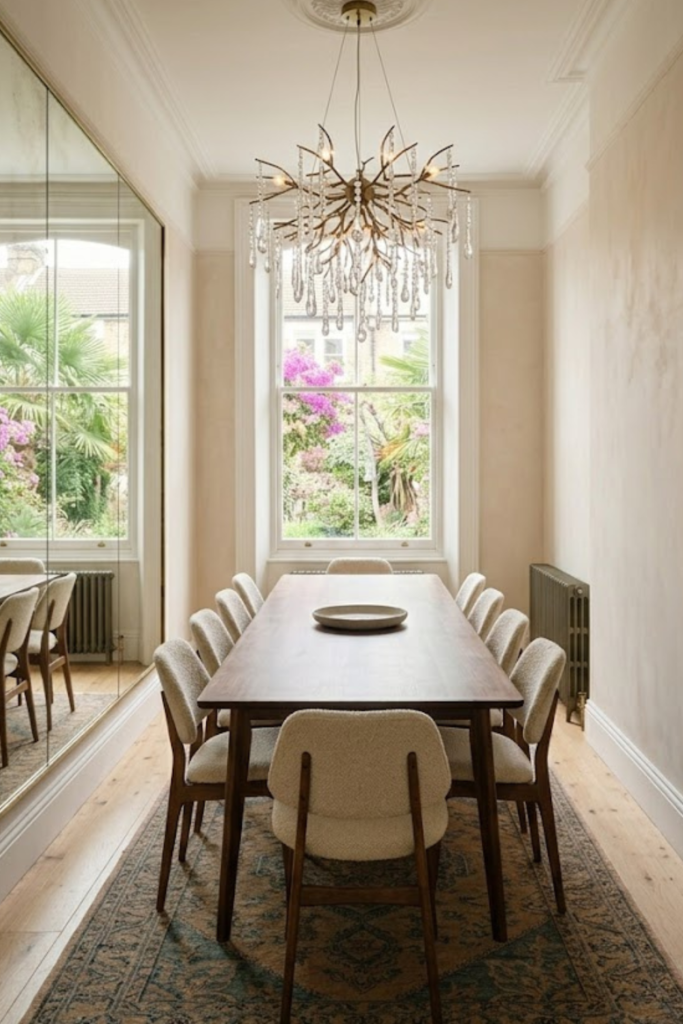
I’ll be the first to admit that I used to think mirrors were just for checking my hair before heading out. Boy, was I wrong! A few years back, I tried to decorate a rectangular room that felt more like a hallway than a living space, and it was driving me absolutely nuts. After a lot of trial and error (and a few broken frames), I discovered that mirrors are basically a “cheat code” for narrow room ideas.
If you hang a massive mirror on one of those long, annoying walls, it literally tricks your brain into thinking the room is twice as wide as it actually is. I once bought this huge, thrifted floor mirror and leaned it against the wall—the change was instant! It’s like the walls just pushed themselves back a few feet.
Brighten the Corners
Lighting is your other best friend here, and most people totally blow it by using just one big light in the middle. That usually creates weird shadows that make the ends of the room feel like a cave. I learned to layer my lights—using floor lamps, wall sconces, and maybe a small lamp on a side table.
When you have light coming from different heights and corners, it draws the eye around the space rather than just down the middle. It’s a total game-changer for making a cramped space feel airy and welcoming.
- Use Statement Mirrors: Place a large mirror on the longest wall to reflect the rest of the room and create the illusion of width.
- Layer Your Lighting: Avoid harsh overhead lights; instead, use a mix of lamps and sconces to brighten every corner.
- Highlight Short Walls: Put a lamp or a bright piece of art on the far, short walls to draw the eye all the way into the room.
- Reflect Natural Light: If you can, hang your mirror opposite a window so it bounces that sunshine all over the place.
5. Paint Shorter Walls with Darker Accent Colors
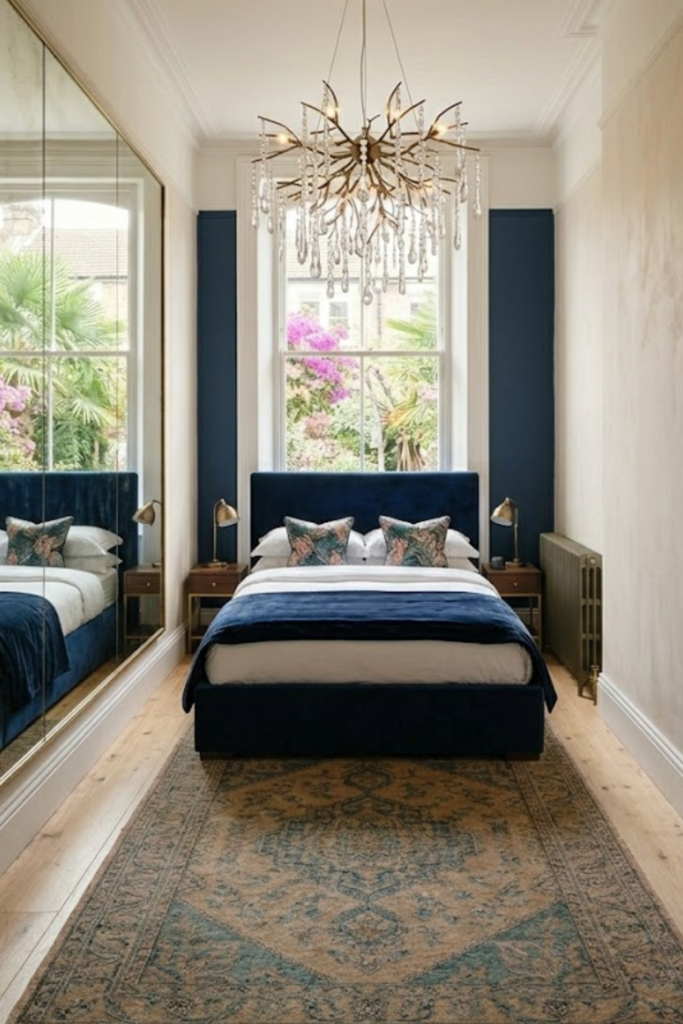
One of the coolest tricks I ever learned about “room ideas for narrow spaces” has to do with how our eyes perceive color. When you have a room that feels like a never-ending tunnel, you can actually use paint to change the shape of the room—well, at least make it look like you did!
I once helped a neighbor with a bedroom that was so long and thin it felt like sleeping in a hallway. We decided to take a risk and painted the far back wall a deep, moody forest green, while keeping the long side walls a soft, creamy white. It was incredible! The dark color made that far wall feel like it was stepping forward to meet us. It “squared off” the room and made the whole space feel much more balanced and cozy instead of stretched out.
- Pull the Walls In: Use a darker or bolder color on the short end walls. This makes them feel closer and helps the room look less like a corridor.
- Keep the Sides Light: Use bright, cool whites or very light greys on the long walls. This helps them “recede” or stay in the background, making the room feel wider.
- Try Horizontal Stripes: If you’re feeling brave, painting horizontal stripes on a short wall can visually stretch the width of the room.
- Don’t Forget the Ceiling: If your ceilings are extra high, painting them a slightly darker shade can also help the room feel more proportionate and less “well-like.”
6. Pull Furniture Away from the Walls
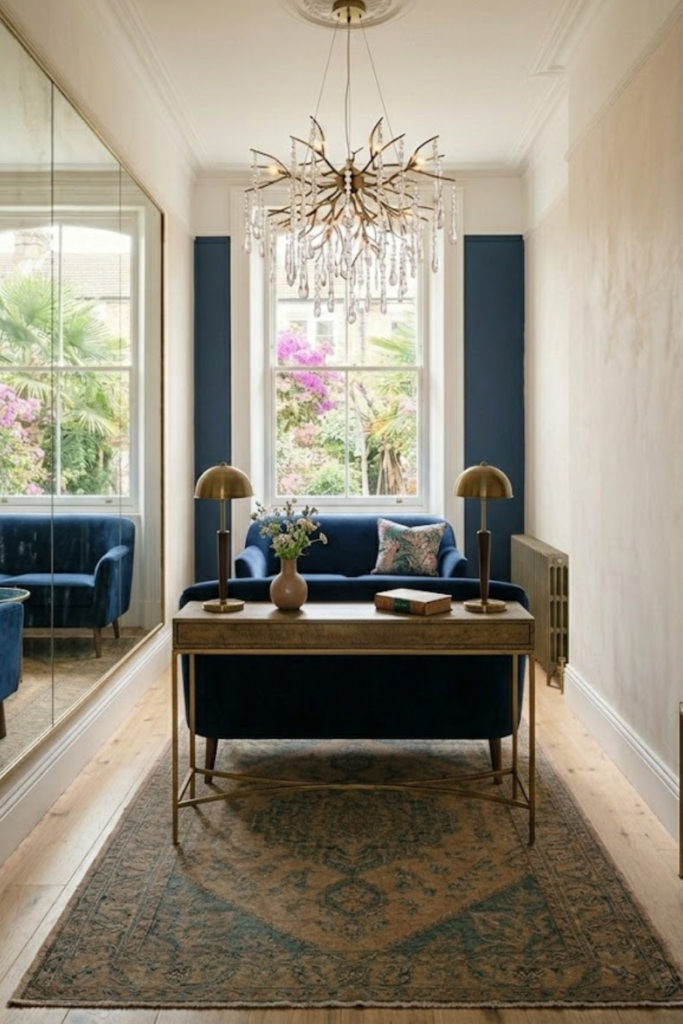
It’s almost a reflex, isn’t it? When we see a narrow room, our first instinct is to shove every single piece of furniture right up against the wall to “save space.” I did this for years! But honestly, all that does is create a big, empty runway in the middle that makes the room feel even longer and skinnier. It’s like you’re living in a bowling alley.
I remember helping my sister with her narrow townhouse. We decided to try something that felt totally wrong at first—we pulled her sofa about a foot away from the long wall and “floated” it in the room. It felt so weird while we were moving it, but once we stepped back, the room suddenly looked wider! It creates these little pockets of air and makes the walls feel like they aren’t closing in on you.
- Float Your Sofa: Don’t be afraid to put your main seating area in the middle of the room. It creates a much more intimate feel for conversation.
- Add a Console Table: If you pull your sofa away from the wall, you can tuck a slim table behind it. It’s a great spot for a lamp or a plant without taking up precious floor space.
- Angle Your Chairs: Instead of lining up chairs in a straight row, turn them slightly toward each other. This breaks up those long, straight lines that make a room feel like a tunnel.
- Leave Room to Breathe: Giving your furniture a little space from the baseboards makes the layout feel intentional and high-end rather than just “squeezed in.”
7. Implement Smart, Multi-Functional Storage Solutions
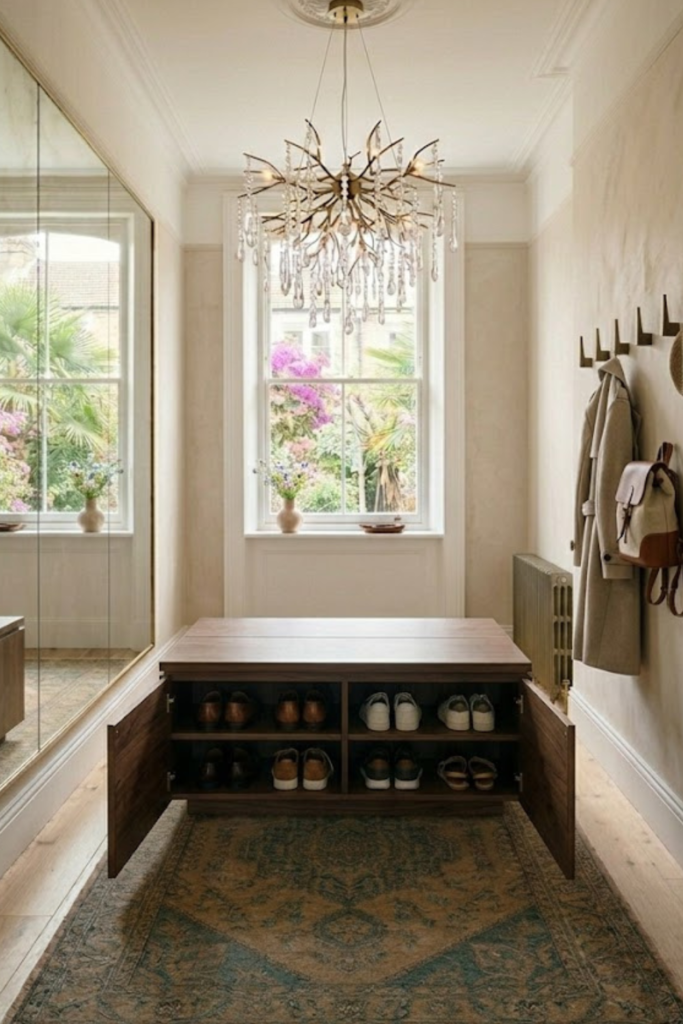
One thing I’ve learned from living in a few “character-filled” (that’s code for tiny!) houses is that clutter is the absolute enemy of a narrow room. The second you have shoes on the floor or mail piling up on a table, the walls feel like they’re closing in. My secret weapon for keeping things tidy without losing style is finding furniture that works twice as hard.
I remember buying this beautiful wooden bench for my narrow entryway. It looked great, but the best part was that the seat flipped up to hide all my winter gear. Keeping the floor clear makes the room feel wider because your eyes can travel all the way to the baseboards. When you have a narrow space, every piece of furniture should really earn its keep!
- Ottomans with Secrets: Use storage ottomans instead of a standard coffee table. They give you a place to kick up your feet and a spot to hide blankets or toys.
- Go for Wall-Mounted Desks: If you need an office but don’t have the width, a “floating” desk that folds up against the wall can save you so much grief.
- Keep the Floor Clear: The more floor you can see, the bigger the room feels. Use wall hooks for bags and floating consoles for your TV electronics.
- Use Drop-Leaf Tables: In a narrow dining area, a table with leaves that fold down lets you have a full meal when you need it, but keeps the walkway open the rest of the time.
Conclusion
Dealing with an awkward, “bowling-alley” layout can definitely feel overwhelming at first. I’ve spent many afternoons pushing furniture around myself! But by breaking up the space into zones, using your vertical height, and playing around with light and mirrors, you can easily turn that tunnel into your favorite spot in the house.
I really hope these 7 room ideas for narrow spaces help you see the awesome potential in your own home. It’s all about working with what you have and using a few clever tricks to open things up. If you found these tips helpful, please be sure to pin this post on Pinterest to save it for your next room makeover!