Hey there! I’ve been teaching interior design for nearly two decades now, and I’ve seen trends come and go like bad haircuts. But let me tell you, the open concept living room designs we’re seeing for 2026 are a whole different ball game. Did you know that over 70% of modern homeowners now prefer a “great room” over traditional boxed-in layouts? It makes sense, right? We want to see our kids or chat with friends while we’re flipping pancakes in the kitchen.
I remember my first apartment—it had walls so thick I felt like I was living in a game of Tetris. It was frustrating! Moving to an open layout was a total triumph for my sanity. In this guide, I’m going to walk you through some killer ways to make these big spaces feel cozy rather than like a cold gymnasium. We’ll look at “Quiet Luxury,” the “Japandi” vibe, and even some “Industrial Futurist” looks that are totally blowing up right now. Let’s dive in!
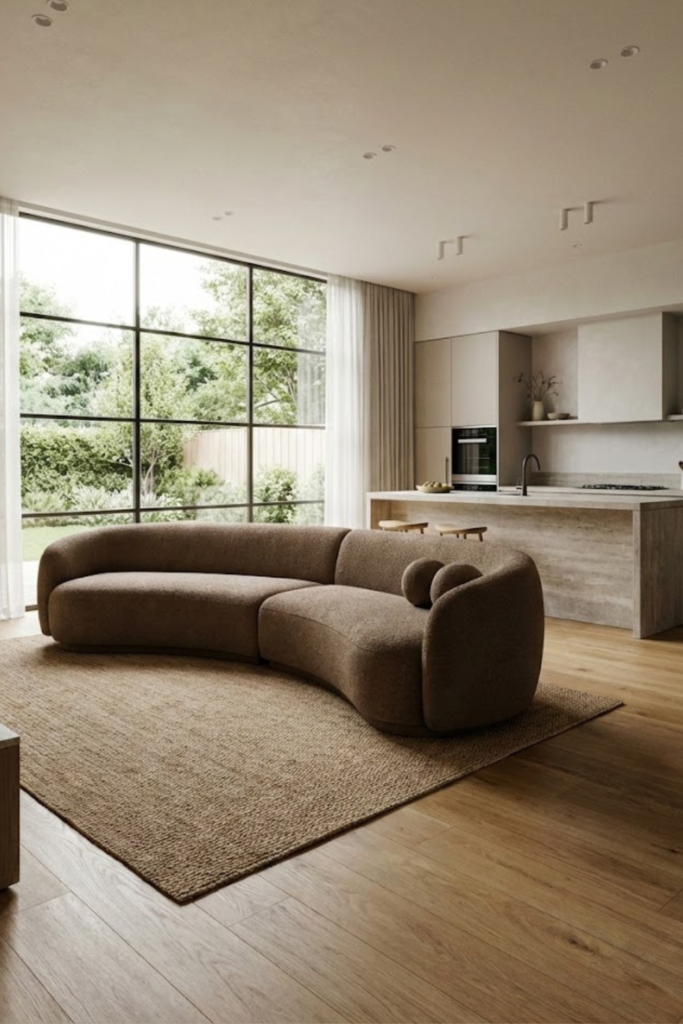
1. The Warm Minimalist “Quiet Luxury” Aesthetic
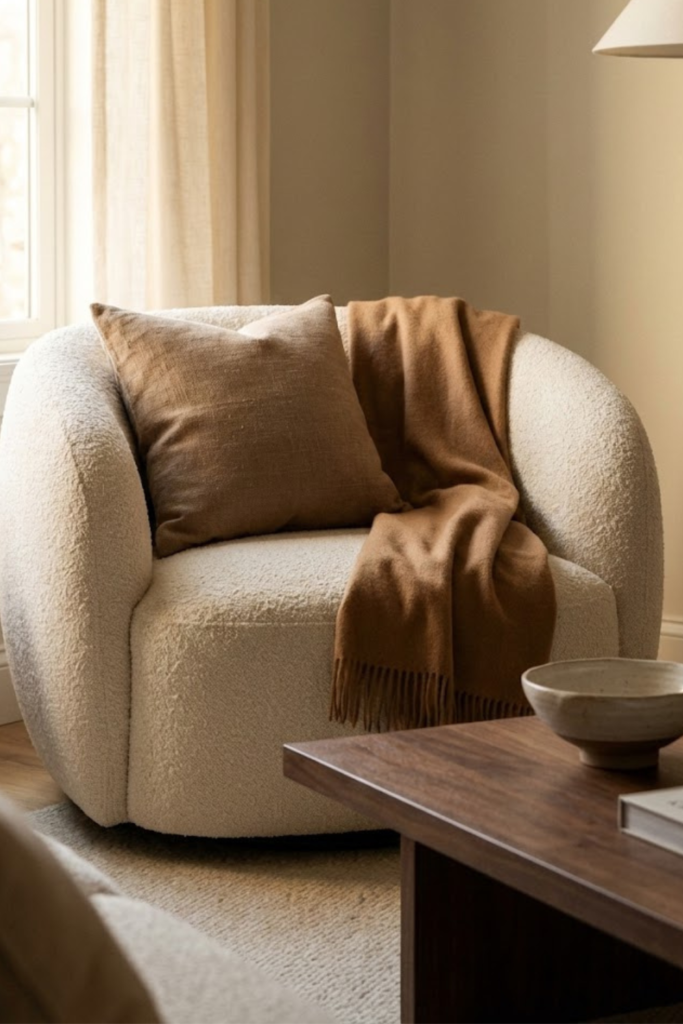
Let’s talk about the “Quiet Luxury” look. It’s a huge trend for 2026, and honestly, it’s one of my favorites to teach. I remember when I first heard the term—I thought it sounded like a fancy hotel I couldn’t afford! But really, it’s just about making a big open room feel soft and high-quality without being flashy or loud.
In an open concept space, things can feel cold because there are so many hard surfaces. To fix this, I love using tactile fabrics. Think about a big bouclé sofa or some washed linen pillows. These materials add what I call “visual softness” to all those hard floors and walls. It makes you want to actually sit down and stay a while.
One trick I’ve learned over the years is to use low-profile furniture. If you have a huge sofa with a tall back, it acts like a wall and blocks your view of the kitchen or dining area. That ruins the whole point of an open plan! Low pieces keep the sightlines clear and make the room feel airy.
Colors matter a lot for this vibe. For 2026, we’re moving away from stark, cold whites. I’m seeing a lot of mocha mousse, caramel, and soft clay colors. It’s like being inside a warm hug. And for the hard surfaces? Try smoked oak or honed marble. These finishes look much better than the super shiny, fake-looking stones from years ago. They help the space feel grounded and cozy instead of like a museum.
When you pick out your pieces, try to find things that feel handmade. It doesn’t have to be perfect. In fact, a little bit of texture in the wood or a slightly uneven stone surface makes the “Quiet Luxury” look feel real. It’s all about comfort that looks expensive but feels like home.
2. Industrial Futurist: Blending Raw Structure with Softness
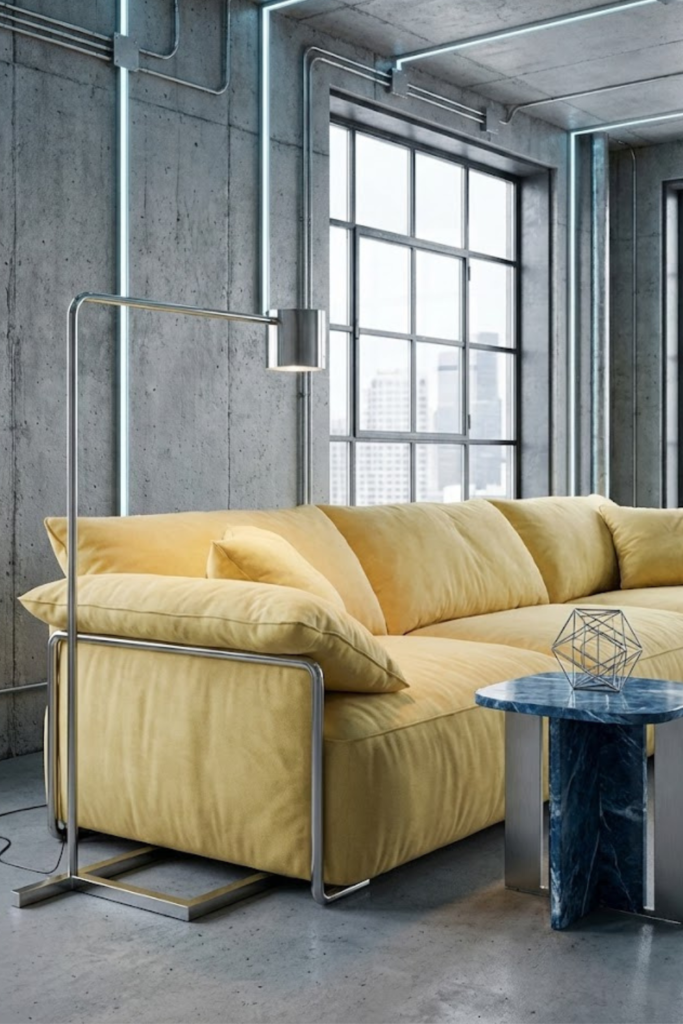
Now, if “Quiet Luxury” is a bit too soft for you, you might like what I call Industrial Futurist. This style is getting really popular for 2026. I saw this look at a design show last year and at first, I thought it looked a bit cold, like a garage. But then I sat on one of the chairs and I changed my mind completely.
The trick with this design is mixing hard things with soft things. You take stuff like tubular steel or concrete floors and you put them next to really fluffy, round sofas. It’s that contrast that makes it work. If you have an open floor plan, this style is great because it makes the room look strong but still comfortable.
For 2026, we’re seeing some cool new colors for this. Instead of just gray and black, people are using “marine marble” (which is like a deep sea blue) and stainless steel. But here is the secret: you have to balance those cold colors with warm ones like butter or biscotti. It keeps the room from feeling like a spaceship.
Another thing I suggest is picking furniture with open bases. You know, chairs or tables that have skinny metal legs instead of big solid blocks. In a big open room, this helps the air and light move around better. It keeps things from feeling too heavy. I used to have a big boxy coffee table that just sat there like a rock, but switching to one with a metal frame made my whole living area feel five feet wider. It’s a simple change that makes a huge difference!
3. Scandinavian Japandi Fusion for Serene Flow
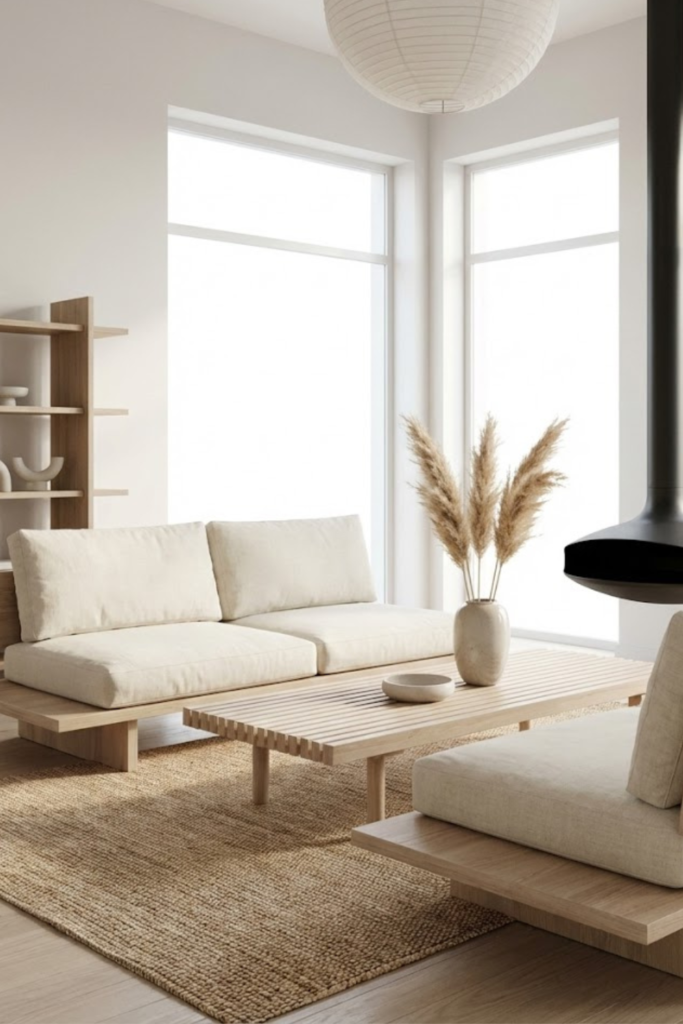
Okay, let’s move on to Japandi. This is basically what happens when Scandinavia and Japan have a baby. I actually tried this in my guest room last year and I loved how calm it felt. In an open living room, it’s all about flow. You want things to look clean but not empty, you know? It’s that mix of functional Japanese style and the light, airy feel from the North.
One big part of this is using natural light as your main decoration. If you have big windows, don’t go covering them up with heavy, dark curtains. In 2026, we want that light to hit every corner. I tell my students all the time: light is basically free furniture! It makes the whole space feel bigger.
For the furniture, we use a lot of light-colored woods like oak or ash. It brings a bit of nature inside which is really nice. And instead of big, clunky pieces, look for things with clean geometry. I’m talking about simple shapes that don’t take up too much “visual space.”
One of my favorite tricks for this style is adding a floating fireplace. If you hang it from the ceiling instead of building a big brick wall, you can see right under it. This keeps the floor open and makes the room feel like it’s breathing. It’s a great way to have a cozy fire without making the room feel chopped up into small pieces.
4. Modern Farmhouse Barndominium Great Rooms
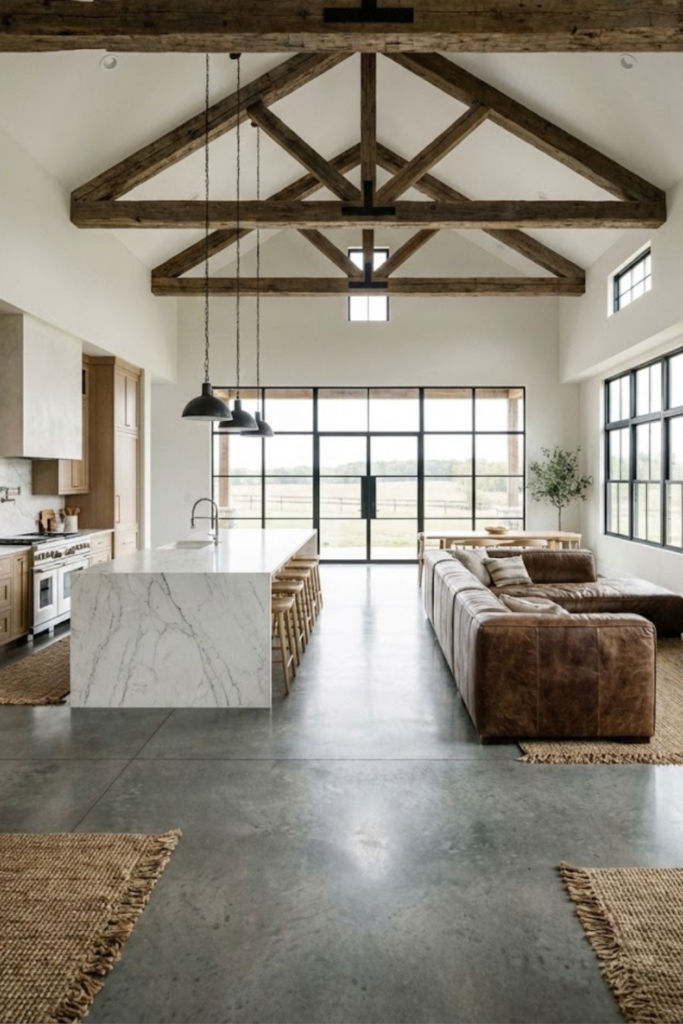
If you haven’t heard of “barndominiums” yet, you must be living under a rock! Just kidding. But seriously, these are huge right now. I visited a friend’s new place last month and her living room had ceilings that were like 20 feet high. It felt so big I thought I could fly a kite in there! That’s the heart of a “great room” design.
In these big open spaces, you really need something to ground the room so it doesn’t feel like a giant empty box. Exposed wood beams are perfect for this. They add a bit of that “farm” feel but still look modern and clean. Pair that with polished concrete floors, and you’ve got a look that’s really popular for 2026.
One thing I always tell people is to use their kitchen island as a natural border. You don’t need a wall to show where the kitchen ends and the living room starts. A big, beautiful island does the job perfectly. It’s where everyone hangs out anyway, right? Usually, that’s where the snacks are, so it’s a natural meeting spot.
Also, try to connect your indoor space to the outside. My friend had these massive sliding doors that opened up to a big porch. It made the living room feel even bigger because your eyes just keep going outside. It’s a great way to make a home feel connected to nature without actually having to go sit in the grass. Plus, it makes the whole place feel super airy.
5. Mid-Century Modern Revitalized with Earth Tones
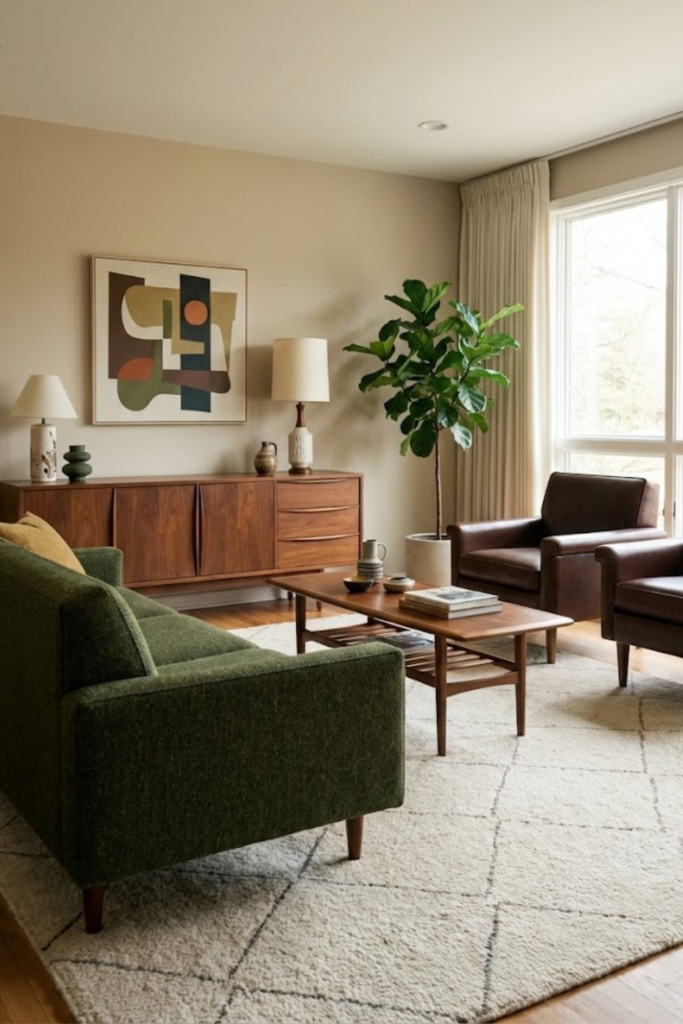
I’ve always had a soft spot for Mid-Century Modern style. It’s those skinny legs on the chairs and the funky shapes that really catch my eye. But for a while, people were doing it in really bright, almost neon colors that felt a bit too much like a cartoon. For 2026, we are seeing a much more grown-up version. We’re taking those classic shapes and using “delicious browns,” deep blues, and mossy greens instead.
In an open concept room, Mid-Century pieces are like a secret weapon. Because so many of the chairs and sofas have tapered legs, you can see the floor underneath them. This makes the room feel much more spacious. I remember helping a neighbor with her living room—she had this huge, heavy sofa that sat flat on the floor. It looked like a giant boulder! We swapped it for a sofa with skinny wooden legs, and suddenly, the whole room felt like it could breathe.
I also suggest looking for sustainable materials to go with this look. People are really loving reclaimed wood and eco-friendly fabrics like corduroy or soft velvet right now. It adds a bit of history to a modern open home, which I think is really nice.
If you are building or doing a big remodel, you might even think about a split-level floor. I’ve seen some great homes where the living area is just one or two steps lower than the kitchen. It is a smart way to separate the spaces without putting up any walls. It keeps that open feel but gives the living room its own little spot for relaxing.
6. The Zoned Multi-Functional Layout Strategy
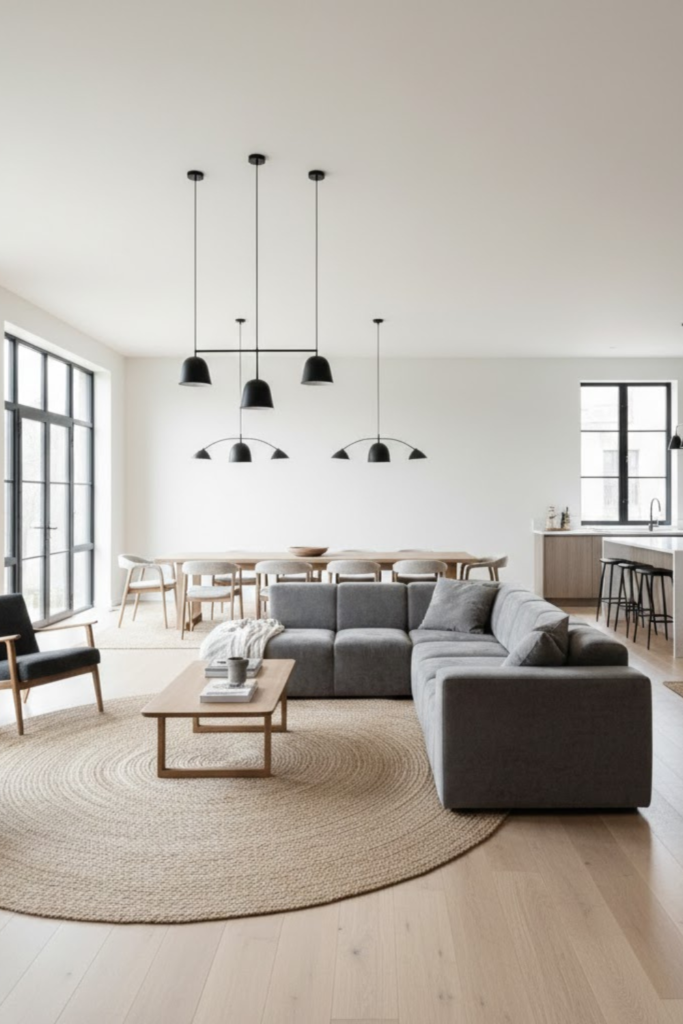
Let’s get into the nitty-gritty of how to actually organize all your stuff. One of the biggest problems with an open layout is that it can look like a giant mess if you don’t “zone” it. Zoning sounds like a boring city planning word, but in your house, it just means making sure your sofa knows where it belongs!
I always tell people to use their furniture like walls. Instead of pushing your couch against a wall, try putting it right in the middle of the room. If the back of the sofa faces the dining table, it tells everyone, “Hey, the relaxing starts here!” It’s like an invisible fence that keeps the room organized.
Rugs are another secret weapon. I learned this the hard way when I bought a tiny rug for my first house. It looked like a little island in the middle of the ocean! Now, I use big rugs to “anchor” each area. If all your living room furniture sits on one rug, it feels like its own little room. It makes the space feel settled instead of like the furniture is just floating around.
For 2026, I am seeing a lot of modular sofas. These are great because you can move the pieces around whenever you want. If you’re having a big movie night, you can push them all together. If you want to have a coffee and chat with a friend, you can move a section to make a little conversation corner. And don’t forget the lights! If you use matching pendant lights in the kitchen and the living area, it helps the whole big space feel like it belongs together.
7. Nature-Integrated “Indoor-Outdoor” Flow
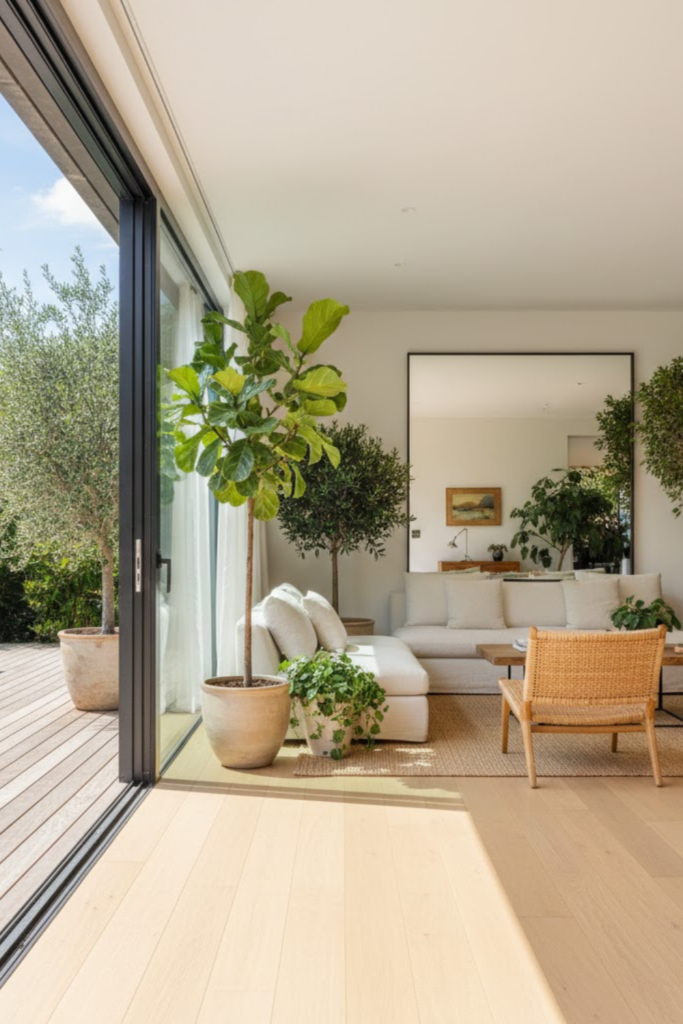
Last but not least, let’s talk about bringing the outside in. This is called “biophilic design”—a fancy word I tell my students just means “we like plants.” In an open concept living room, adding some green life is like giving the room a soul. I have this huge Fiddle Leaf Fig in my own living area. I almost killed it twice, but now that it’s healthy, it makes the whole corner look so much better.
One of the coolest tricks for 2026 is using the same flooring inside and outside. If you have a deck or a patio, try to use a similar wood or tile that matches your living room floor. When you open those big doors, your brain thinks the room just keeps going forever. It really helps make a small open plan feel like a palace.
I also love using wall colors that look like things you’d find in the woods or on a mountain. Think about stone grays or sandy beiges. These nature-inspired neutrals help the inside of your home feel connected to the world outside your window.
And here’s a tip if your room feels a bit dark in the middle: mirrors! I always tell people to put a large mirror right across from a window. It catches the sunlight and throws it deep into the house. It’s like having an extra lamp that doesn’t cost any electricity. Plus, seeing the reflection of your trees or garden inside the house just makes the whole place feel more peaceful.
Conclusion
Wrapping this all up, I really hope these seven open concept designs give you some good ideas for your own home. Moving into 2026, we are seeing so much more warmth and personality in these big rooms. Whether you love that soft “Quiet Luxury” feel or the strong look of a “Barndominium,” the most important thing is that the space works for you and your family.
I’ve made plenty of mistakes over the years—like that tiny rug I mentioned earlier! Don’t let the fear of making a wrong choice stop you from trying something new. Take your time, think about how you move through your house, and pick the pieces that make you feel happy when you walk through the door.
If you found this guide helpful, please share it on Pinterest! It’s a great way to keep your favorite ideas in one place so you can find them later when you’re at the store. Plus, it helps other people find these tips too. Happy decorating!