You know that feeling when you walk in the door and just wanna flop on the couch, but the clutter stresses you out? Yeah, I’ve been there too. In 2026, our living rooms gotta be our safe spots, not just another room to clean. I used to think minimalism meant boring white boxes, but its actually way better now. We’re talking warm colors and soft curves that make you wanna curl up with a good book. I put together these 7 designs that mix that clean look with real comfort. Lets get your home feeling cozy and calm, just how it should be.
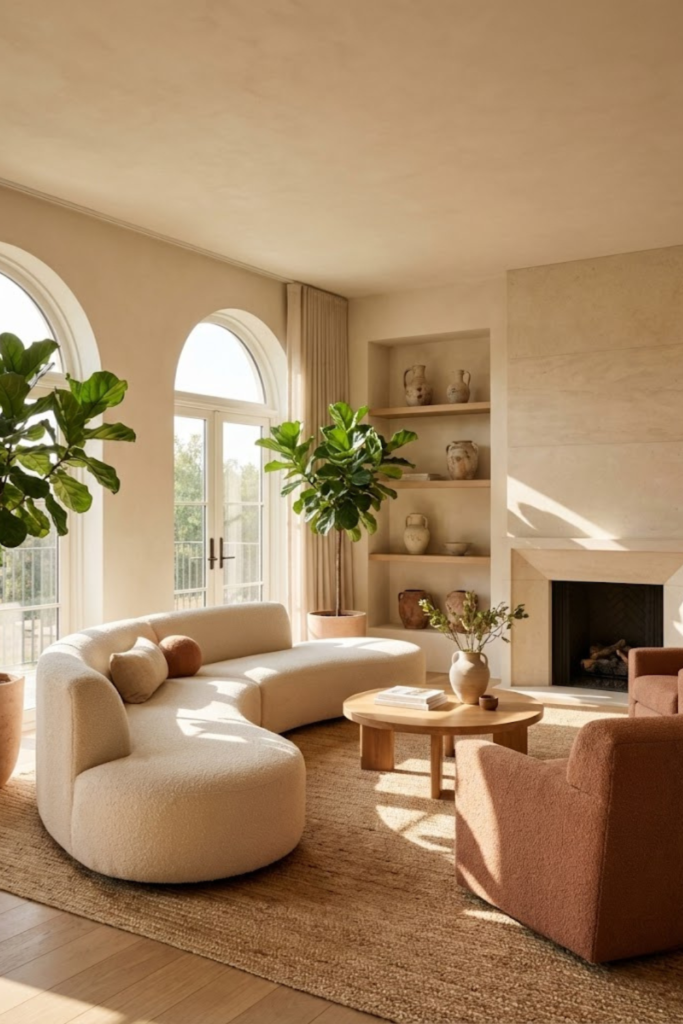
1. Embrace “Sensory Comfort” with Soft Curves
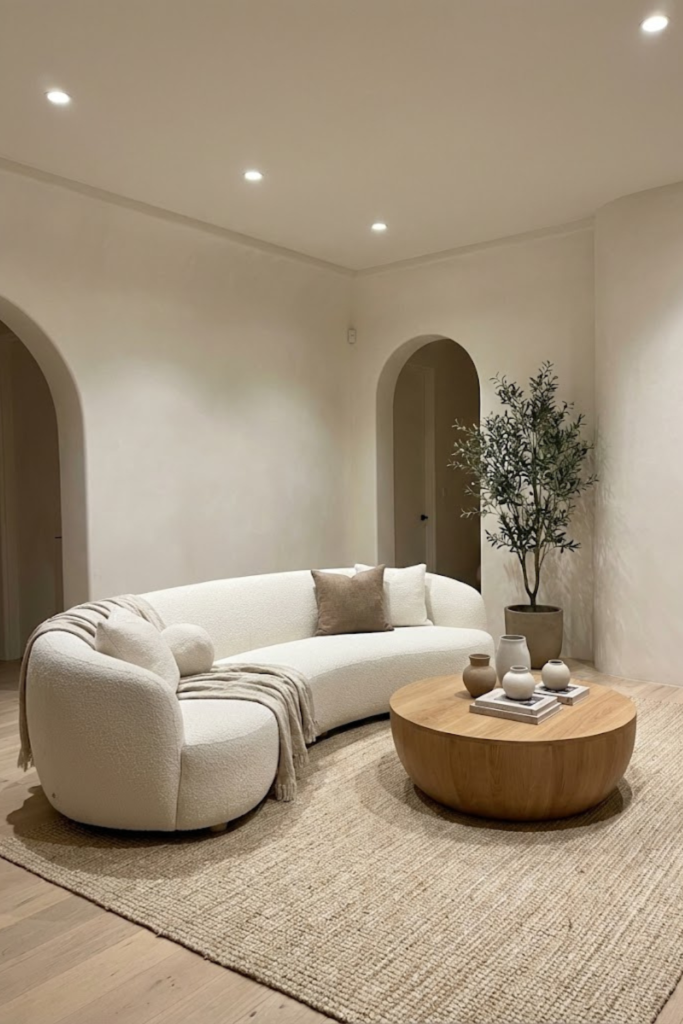
I used to think “modern” meant sharp edges and stiff lines. You know, the kind of furniture that looks great in a picture but hurts to sit on? Well, I am so glad those days are behind us. In 2026, the biggest shift I’m seeing in living rooms is something called “sensory comfort.” It is basically a fancy way of saying your home should feel as good as it looks. We are moving away from those rigid, boxy shapes and embracing curves that soften the whole vibe of the room.
Why Your Living Room Needs a Hug
Think about how you feel when you see a sharp corner versus a round pillow. Sharp lines can actually make our brains feel a little more alert or on edge, while curves signal safety and relaxation. It’s like the furniture is giving you a hug. This year, we are seeing sofas that are curved like a crescent moon or kidney bean. It breaks up all the straight lines of your walls and windows. I replaced my old rectangular coffee table with a round, pebble-shaped one last month, and honestly, the room just feels friendlier. Plus, no more banging my shins on sharp corners, which is a huge bonus if you have kids or pets running around!
Fabrics You Just Want to Touch
The curve trend isn’t just about the shape of the sofa; it is also about the stuff covering it. You want fabrics that beg to be touched. We call this tactile texture. Avoid cold, slick leather or scratchy synthetics. Instead, look for bouclé (that knobby, looped fabric), soft chenille, or even a heavy washed linen.
When I’m grading papers on the couch, I want to sink into something that feels cozy, not stiff. These textured fabrics catch the light in a really pretty way, too. Because they aren’t perfectly smooth, they create tiny little shadows that add depth to the room without adding clutter. It keeps the minimalist look interesting without needing a ton of decor on the shelves.
How to Add Curves Without Buying New Furniture
Now, don’t panic. You don’t have to throw out your sectional tomorrow. You can bring this look in with smaller stuff. Try adding a round rug to break up a square room. Or, swap out square throw pillows for round cushions or even spherical lamps. I found a great rounded vase at a thrift store the other day, and just sitting it on my straight-edged mantel softened the whole look. It’s about balance. If you have a very square sofa, put a round ottoman in front of it. It’s these little tweaks that make your minimalist space feel human and lived-in, rather than like a museum display.
2. Warm Up with Earth-Derived Palettes
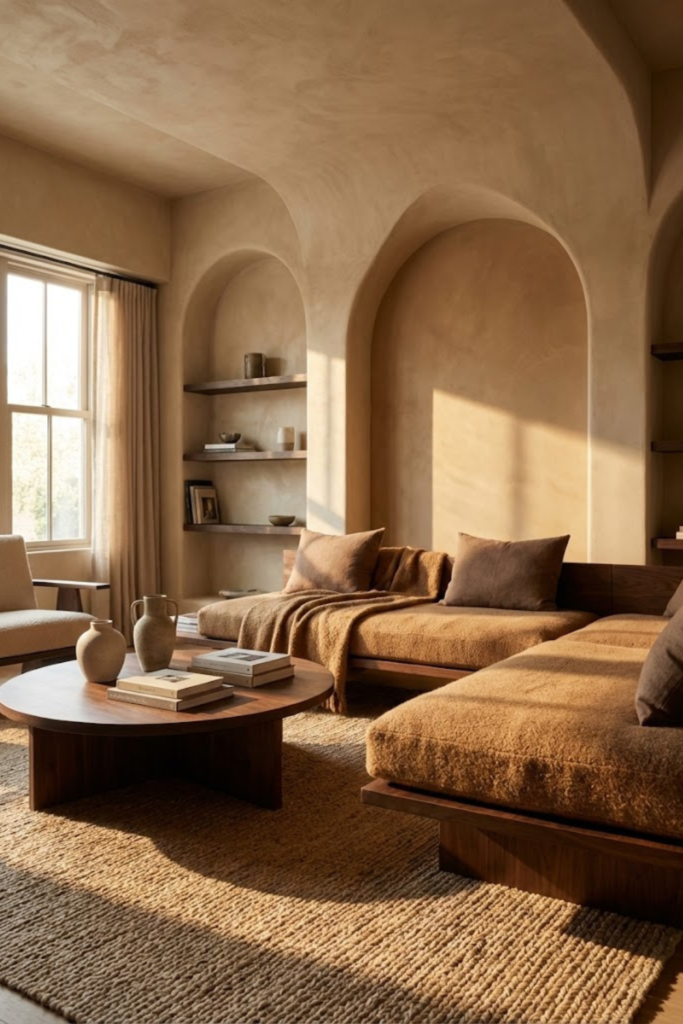
I remember when I painted my entire living room stark white a few years ago. I thought it would look clean and modern, but honestly? It just felt cold. It was like sitting in a dentist’s waiting room. Plus, keeping it clean was a total nightmare. In 2026, we are finally saying goodbye to that sterile, hospital look. We are moving to “warm minimalism.” It is still simple and uncluttered, but the colors are rich and cozy. We are talking about shades that come straight from the ground—think warm clay, sandy beige, and soft caramel.
Why Brown is the New White
For a long time, magazines told us that grey and white were the only “modern” colors. But those can feel really flat and lifeless. Earth tones have a heartbeat. When you use colors like mocha, terracotta, or a deep olive-gray, it makes the room feel like it is hugging you. We call this a “cocooning” effect. I recently swapped my bright white curtains for a pair in a “toasted almond” color, and the difference was instant. The light coming through looks warmer, and the whole room feels safer. It’s the kind of space where you can actually relax after a chaotic day at work, which is exactly what we need. You want your home to lower your blood pressure, not spike it with glaring bright walls.
Layering Colors the Easy Way
You don’t need to be an art teacher to get this right. The secret is something called tonal layering. It sounds fancy, but its really simple. Just pick one earth tone you like and use different versions of it. If you like brown, mix a dark chocolate sofa with a tan rug and cream walls. By staying in the same color family, your eyes don’t get overwhelmed. It creates a smooth, visual flow that is super calming. I tried this with beige in my den, layering it with some darker wood furniture, and it looks so polished but totally effortless. It stops your eye from bouncing around the room, helping your brain switch off.
Nature Does it Best
The best way to get these colors is to use natural materials. Instead of painted plastic or shiny metal, look for raw wood, leather, or stone. I have a simple unvarnished oak coffee table that adds this beautiful golden warmth to the room. It’s sturdy and honest. Natural materials have texture and slight imperfections that make a space feel lived-in and welcoming. It’s about creating a home that feels grounded. You aren’t just looking at the room; you’re feeling the warmth of it. Plus, let’s be real—earth tones are way more forgiving when you spill a little coffee than a stark white rug ever was!
3. Master the Art of Japandi Maximalism
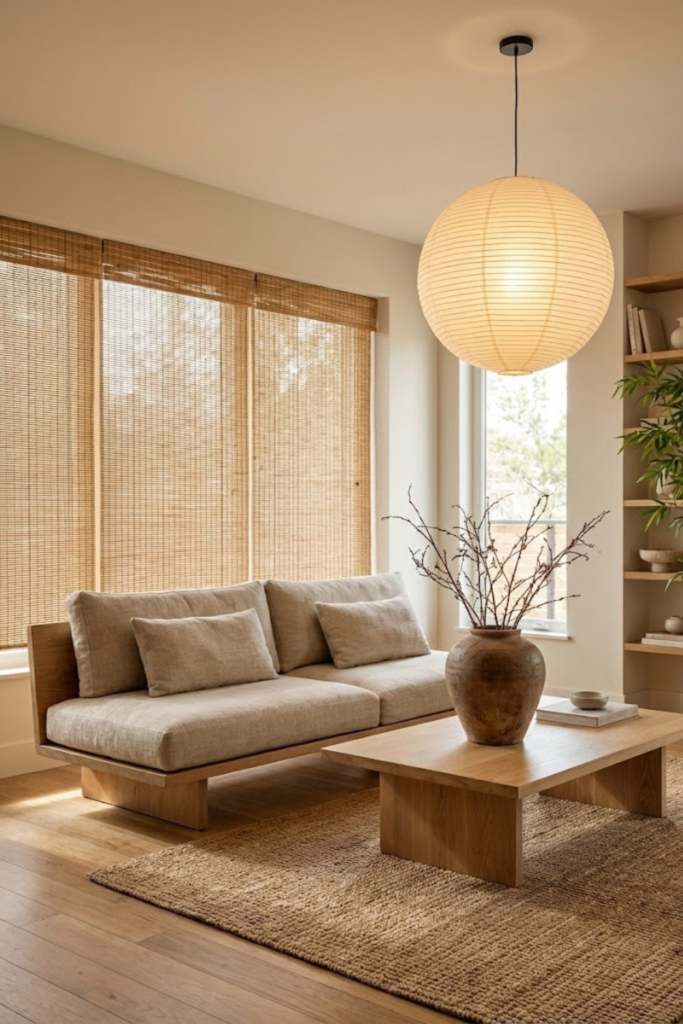
I know what you are thinking. “Youssef, you just said we are talking about minimalism. How can we have ‘maximalism’ too?” It sounds like a contradiction, right? But stick with me. Japandi style—that mix of Japanese rustic vibes and Scandinavian function—has been popular for a while. But in 2026, it is evolving into something really special. We call it “Japandi Maximalism.” It doesn’t mean filling your room with junk. It means maximizing the feeling and the quality, rather than the number of things you own.
Curated Abundance: Make Every Piece Count
Think of it like this: instead of having twenty cheap knick-knacks collecting dust on a shelf, you have three really amazing pieces that you truly love. It is about “curated abundance.” You are filling the space with meaning rather than clutter. I used to buy a lot of cheap decor just to fill empty corners because I was afraid of blank space. But now, I’ve learned to wait. If I find a hand-turned wooden bowl or a beautiful ceramic vase that really speaks to me, I get it. If not, I leave the space empty.
This style focuses on craftsmanship. You want things that show the human hand. In a Japandi living room, a single, large statement piece—like a rough-hewn wooden table or a large clay pot—does the work of ten smaller items. It draws your eye and makes the room feel full and complete without being messy. It creates a sense of “quiet luxury” where the value is in the material and the maker, not the brand name.
Using Light as a Decoration
Another huge part of this style is how you use light. In Japandi design, light isn’t just to help you see; it is a design tool. We are moving away from harsh overhead lights. Instead, think about paper lanterns or lamps made from rice paper. They diffuse the light, making it soft and hazy.
I swapped out my metal floor lamp for a paper one recently. The difference is crazy. It gives the room this soft, glowing atmosphere that feels very calm and “Zen.” It creates shadows that highlight the textures of your walls and furniture. So, you aren’t using paint or posters to decorate the walls; you are using shadows and light. It creates a mood that shifts throughout the day.
Embracing Imperfection
Finally, don’t be afraid of scratches or dents. There is a Japanese concept called wabi-sabi, which finds beauty in imperfection. A scuffed leather chair or a wooden table with a water ring tells a story. It means the home is lived in. In 2026, we stopped trying to keep everything looking brand new. A little bit of wear and tear adds warmth and character that you just can’t buy at a big box store. It makes the minimalist space feel welcoming, not like a showroom you are afraid to touch.
4. Integrate Intelligent Modularity
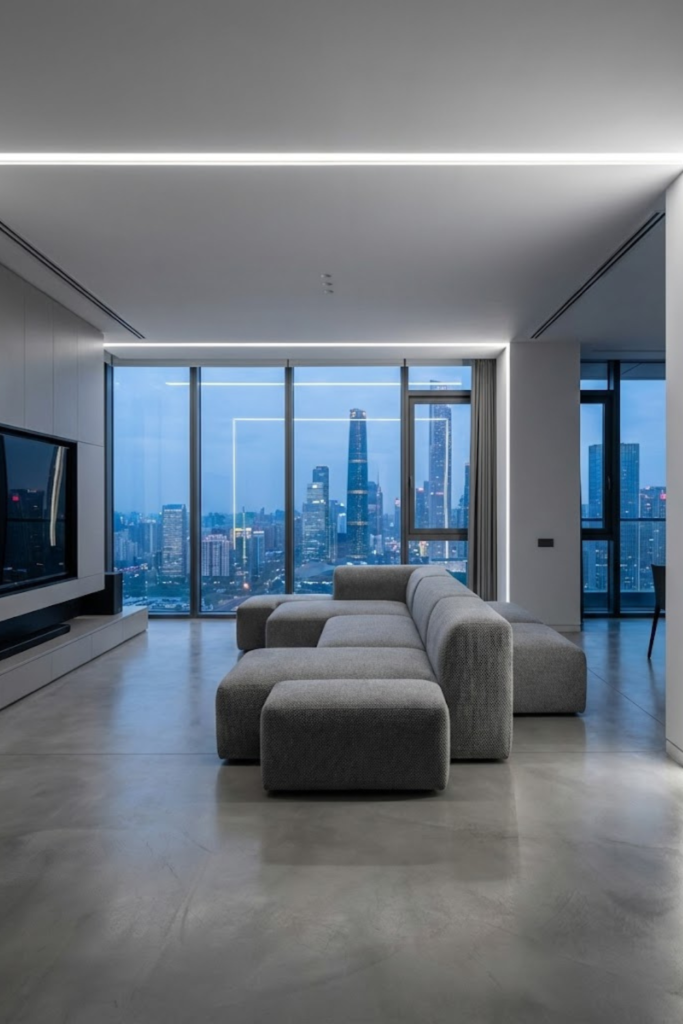
I used to think that once you bought a sofa, you were stuck with it in one spot forever. I remember wrestling with a huge L-shaped couch in my old apartment, trying to make it fit, and it just ended up blocking the hallway. It was frustrating! But 2026 is all about furniture that adapts to your life, not the other way around. We call this “Intelligent Modularity.” It sounds high-tech, but it’s basically just grown-up building blocks.
Furniture That Changes with You
The coolest thing about this trend is flexibility. Modular sofas are made of separate pieces that you can move around. One day, you might want a giant movie-night pit where everyone can sprawl out. The next day, you are hosting a game night and need separate seats so people can face each other. I switched to a modular setup last year, and it is a game changer. If I want to do yoga in the living room, I just slide an ottoman out of the way. You aren’t locked into one layout anymore. It is perfect for open floor plans or smaller spaces where every inch counts. You get to be the architect of your own living room every single day.
Low Profile, High Impact
Another big part of this look is keeping things low to the ground. You will see a lot of “low-profile” furniture this year. These are sofas and chairs that sit closer to the floor. Why does this matter? Well, when your furniture is lower, your ceilings look higher. It makes the whole room feel airier and more spacious. It also has this “grounding” effect. When you sit lower, you feel more relaxed and connected to the space. It forces you to slow down a bit. I got rid of my high-backed armchair for a low, wide lounge chair, and it completely changed the vibe. The room feels less stuffed and more open, which is exactly what a minimalist wants.
Sculpture or Sofa?
We are also looking for “architectural purity.” That’s just a fancy way of saying the furniture looks good even when no one is sitting on it. It looks like a piece of art or a sculpture. Since we are having fewer items in the room, the ones we do have need to look amazing from every angle. Look for clean lines and interesting shapes. A modular sofa shouldn’t just be a blob; it should have a defined shape that adds character to the room. It creates a space that feels intentional and smart, without needing a bunch of extra decorations to make it look “finished.”
5. Curate a “Quiet Luxury” Material Palette
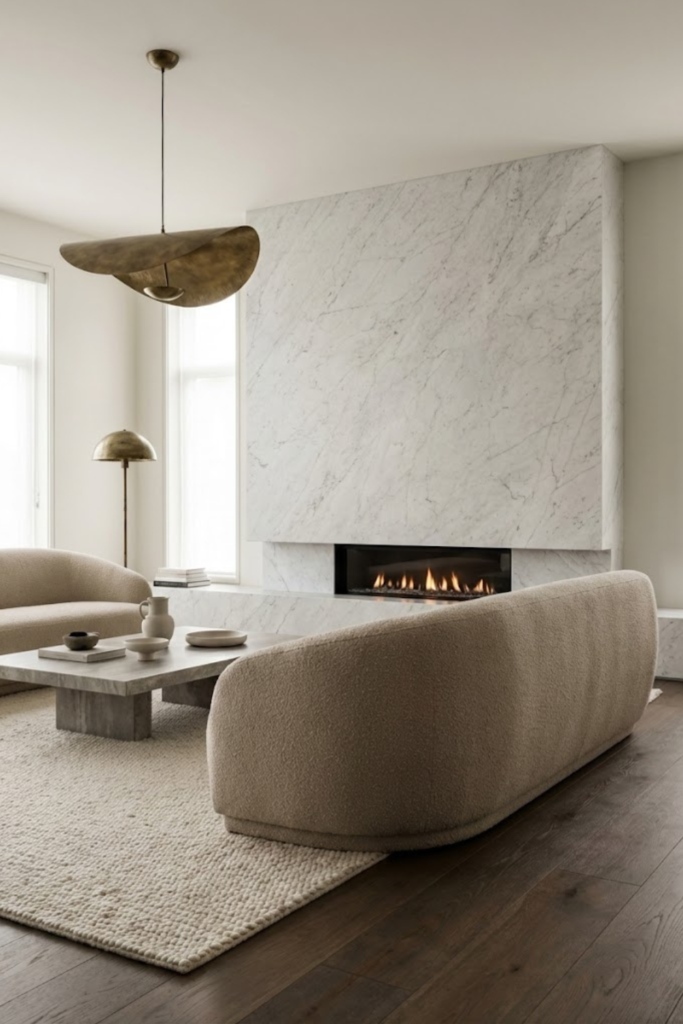
I remember walking into fancy showrooms years ago and seeing everything covered in high-gloss lacquer and shiny chrome. It felt like I couldn’t touch anything without leaving a fingerprint. It was stressful! But in 2026, the definition of luxury has totally flipped. We are seeing a trend called “Quiet Luxury.” It isn’t about showing off big brand names or flashy gold accents. It is about the materials themselves. We are stripping back the layers to reveal the real beauty of the stuff our homes are built from.
Let Materials Be Honest
There is a concept architects love called “material honesty.” It sounds serious, but it just means letting wood look like wood and stone look like stone. For a long time, we tried to cover up imperfections. We would paint over wood grain or buy fake marble that looked too perfect. Now, we want to see the knots in the oak. We want to see the veins in the stone.
I recently helped a friend pick out a coffee table, and we went with a smoked oak piece. It had these little variations in the grain that made it feel so special. It wasn’t perfect, and that was the point. When you fill your minimalist living room with these honest materials, the room feels grounded. You don’t need to add a bunch of paintings or statues because the floor and the furniture are the art.
Matte Finishes Are the New Gloss
If you want to update your living room instantly, get rid of the shine. Glossy surfaces reflect light and can make a room feel cold and hard. Matte finishes, on the other hand, absorb light. They make the room feel softer and quieter. I’m seeing a huge rise in “honed” marble. This is marble that has been sanded down to a smooth, matte finish instead of being polished to a high shine. It feels almost like velvet to the touch.
Try swapping out shiny brass light fixtures for “patinated” metals—metals that look a little aged or darkened. It adds a sense of history to the room. I painted my walls with a matte, lime-wash paint last summer, and it gave the walls this chalky, soft texture that feels so much cozier than standard satin paint.
Quality Over Flashiness
This style is really about investing in things that last. Instead of buying three cheap particle-board side tables, quiet luxury says buy one solid stone or wood table that you will keep for twenty years. It might cost a bit more upfront, but you buy less overall. It is the core of minimalism: fewer things, but better things. When you walk into a room with these heavy, real materials, you can feel the difference. It feels solid and permanent, like a real sanctuary should. It’s about creating a space that feels expensive because it is well-made, not because it is sparkly.
6. Design for Invisible Technology
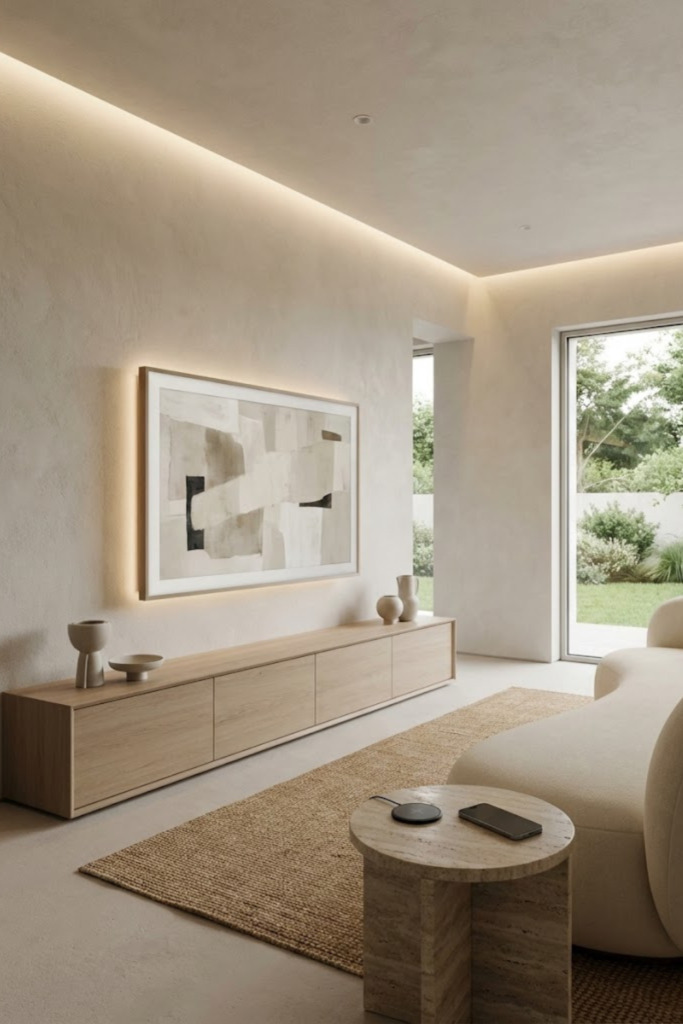
I love watching a good movie on a Friday night as much as anyone. But let’s be honest, technology can be really ugly. Nothing ruins a calm, beautiful living room faster than a giant black rectangle on the wall or a tangled mess of cords on the floor. For a long time, we just accepted that living rooms had to look a bit like electronics stores. But in 2026, the goal is “Invisible Technology.” We want all the convenience of a smart home without seeing any of the gadgets. It’s about creating a space where you can disconnect from the digital world, even if the tech is hiding right in plain sight.
The Black Hole Problem
The biggest eyesore in most living rooms is the TV. When it is off, it is just a big, dark void that sucks the energy out of the room. I used to try hiding mine in a cabinet, but that was a hassle. Now, the trend is using TVs that act like chameleons. You have probably seen “Frame” TVs that display art when they aren’t being used. They have matte screens so they don’t reflect the windows, and they look exactly like a framed painting.
I finally got one last year, and it changed everything. Instead of staring at a black screen, I have a rotating gallery of vintage landscapes. It makes the TV blend into the gallery wall rather than dominating it. If you don’t want a screen at all, ultra-short-throw projectors are huge right now. They sit just inches from the wall on a credenza and project a huge image, but when you turn them off, the wall is just a blank, clean surface again.
The War on Wires
If there is one thing that drives me crazy, it is cord clutter. You can have the most beautiful minimalist furniture, but if there is a spaghetti mess of wires behind it, the whole look falls apart. We are getting smarter about this. I stopped buying standard side tables and started looking for ones with wireless charging built right into the stone or wood top. You just set your phone down, and it charges. No white cables snaking across the floor.
For the cords you can’t avoid, like lamp cords, you have to get sneaky. I use simple cord clips to run wires down the back of furniture legs so they are invisible. It takes ten minutes, but it makes the room feel so much cleaner.
Smart Lighting, Simple Switches
Lighting is another place where tech is getting quieter. We used to have banks of dimmer switches on the wall that looked like a cockpit. Now, smart bulbs handle all that work. You can program your lights to slowly get warmer and dimmer as the sun goes down, mimicking the natural day. I have mine set up so that by 8 PM, the living room is a soft, warm glow that helps me get ready for sleep. And the best part? No bulky switches. You can control it with your voice or a simple, hidden button. The tech is working hard to make your life easier, but visually, it takes a backseat.
7. Invite Nature with Biophilic Minimalism
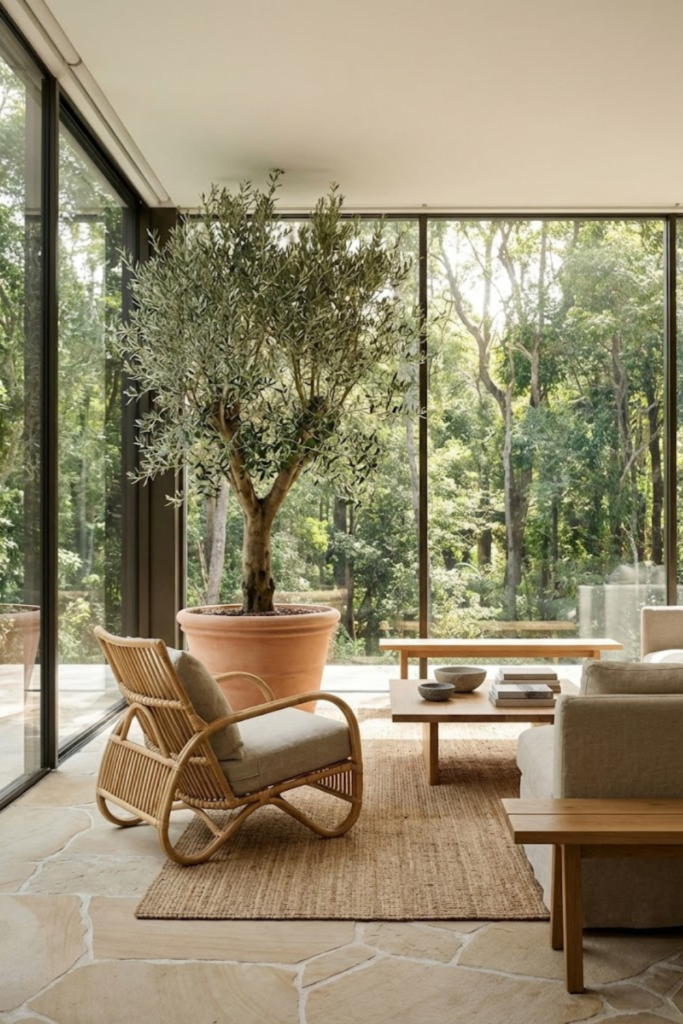
I used to be terrible with plants. I mean, really bad. I thought a plastic fern was good enough because it didn’t need water. But “Biophilic Minimalism” is a huge deal in 2026, and for a good reason. It’s a fancy science word, but it just means humans need nature to feel happy. Since we spend so much time indoors, we have to bring the outside in. This isn’t just about sticking a pot on a shelf; it’s about making nature a main part of the room’s design. It softens all those clean, modern lines and makes the space feel alive.
Go Big or Go Home
Here is a mistake I see a lot: people buy tiny little succulents and scatter them everywhere. It just looks like clutter. In a minimalist living room, you want one or two big statements. Think of a large indoor tree. I finally splurged on a black olive tree for my corner, and it completely transformed the space. It adds height and drama without taking up much floor space.
If a tree feels like too much work, try a large Fiddle Leaf Fig or a Rubber Plant. These plants have big, sculptural leaves that look like art. When you put a living thing in a room full of furniture, it changes the energy. It cleans the air and gives your eyes something soft to rest on. Plus, taking care of it becomes a nice little morning ritual.
Windows Are the New Art
If you are lucky enough to have good windows, stop covering them up! I used to have these heavy, thick drapes that blocked everything out. I took them down and switched to sheer linen shades that disappear when they are rolled up. Now, the view of the trees outside is the “painting” on my wall. It connects the room to the seasons.
If you don’t have a great view, you can still use light. Place a mirror opposite a window. It bounces the natural light around and tricks your brain into thinking there is more nature outside than there actually is. It makes the room feel twice as big and way more airy.
Natural Textures Ground You
Biophilic design isn’t just about green leaves. It’s also about using materials that come from the earth. We talked about wood and stone earlier, but think about accents like jute, rattan, or woven grass. I added a woven jute rug under my coffee table, and it brought this gritty, earthy texture that balances out the smooth walls. These materials have an imperfect, organic feel that synthetic fabrics just can’t copy. It triggers something in our brains that says, “this is natural, this is safe.” It stops the room from feeling like a spaceship and keeps it grounded on Earth. It’s a simple way to make your minimalist home feel warm and human.
Conclusion
We made it through all seven designs! I know looking at all these new trends can feel like a big homework assignment sometimes. You might be looking around your living room right now thinking, “Where do I even start?” But take a deep breath. The most important thing I have learned over the years is that you don’t need to change everything overnight. Creating a home you love is a slow process, not a race.
It’s About How You Feel
If you take away just one thing from this article, I hope it is this: minimalism in 2026 isn’t about punishing yourself with an empty room. It isn’t about living with less just for the sake of it. It is about making space for the things that actually help you rest and recharge. Whether you fell in love with the idea of a curved sofa that hugs you, or you just want to hide your TV cables to stop the visual noise, the goal is the same. You are building a sanctuary. You are creating a spot where you can shut out the noise of the world and just be yourself.
Start Small, Dream Big
You don’t have to hire a contractor or spend a fortune to get this vibe. Maybe you start by swapping a stark white rug for a warm, earthy jute one. Maybe you finally buy that one nice piece of ceramic art and clear off the rest of the shelf. Or maybe you just move your chair to face the window instead of the wall. These little shifts add up. Trust your gut. If a material feels good to touch and a color makes you smile, then it belongs in your home.
Save These Ideas for Later
If you are planning a remodel or just want to save these tips for a rainy day, I would love for you to keep this handy. Pin this article to your “Dream Home 2026” board on Pinterest. It’s a great way to keep your inspiration organized so you can look back at it when you are ready to make a change. Thanks for hanging out with me and talking design—now go enjoy your living room!