The living room is the heartbeat of your home! It’s where life happens, where we unwind after a long week, and where we make memories with the people we love. If you’re feeling like your space is stuck in the past, you aren’t alone. Did you know that homeowner remodeling spending is projected to hit a record $524 billion in early 2026? That is a massive amount of people upgrading their sanctuaries!
As we move into 2026, luxury isn’t just about expensive price tags anymore; it’s about “sensory comfort” and spaces that feel deeply personal. I’ve seen a shift away from cold, showroom-style perfection toward homes that actually hug you back. Whether you love the grounded earth tones of the new “Quiet Luxury” or the bold drama of color drenching, this year is all about intentionality. Let’s dive into the seven design philosophies that will rule high-end interiors this year.
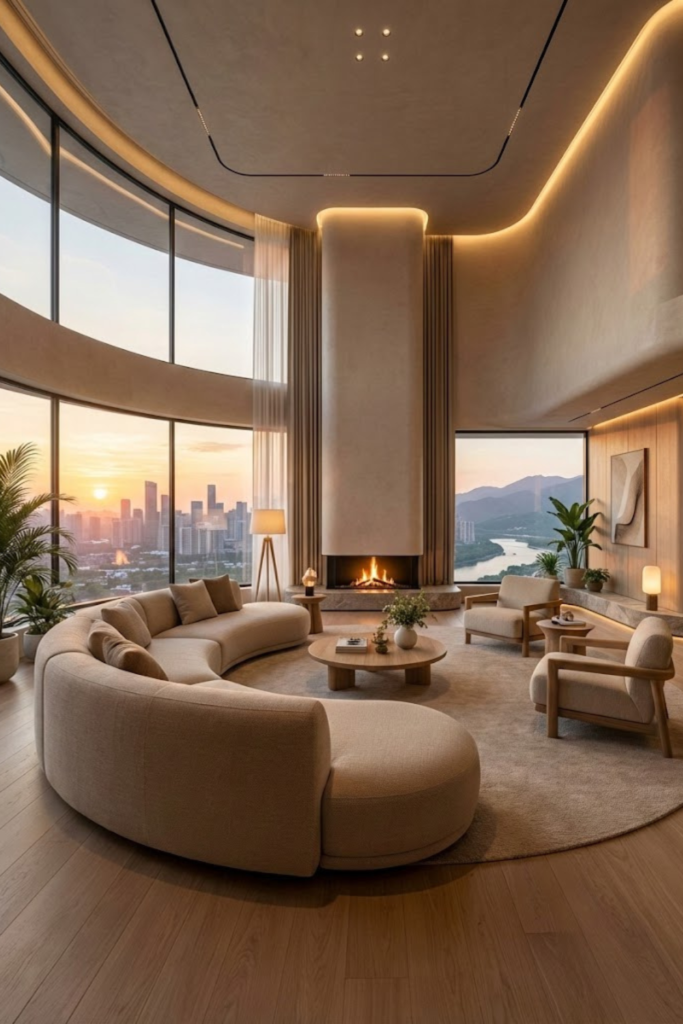
1. The “Quiet Luxury” Sanctuary (Midimalism)
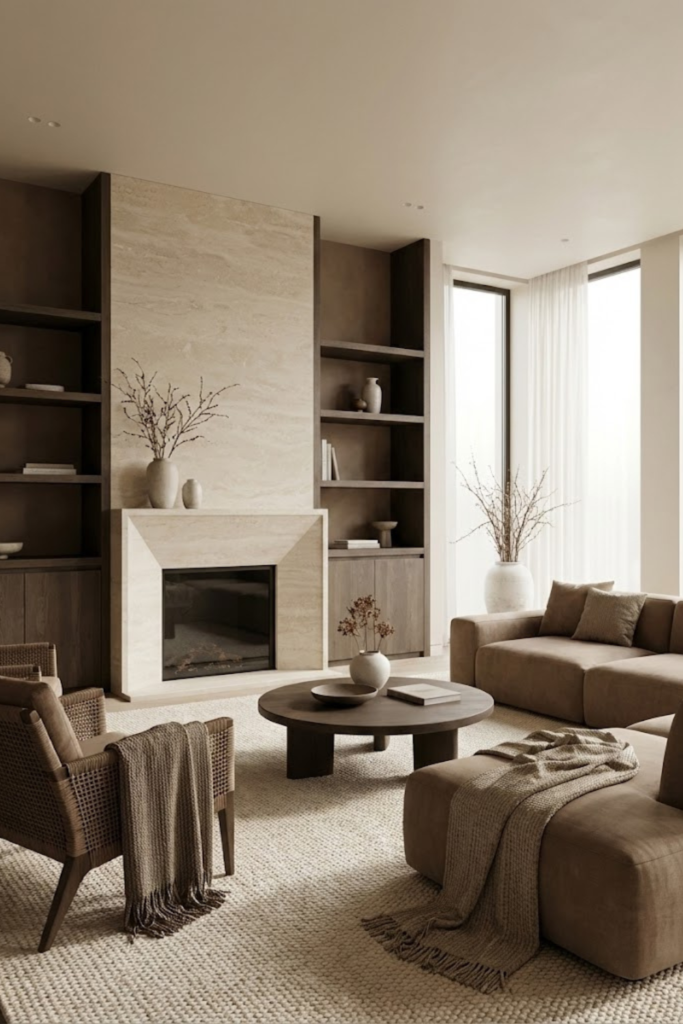
If you have been looking at magazines lately, you might have noticed a shift. For a long time, “luxury” meant flashy gold accents and shiny surfaces that screamed for attention. But in 2026, things are different. We are moving into what I call the “Quiet Luxury” phase, or as some folks online are calling it, “Midimalism.” Honestly, it’s my favorite trend because it just makes sense for real people living real lives.
It isn’t about having an empty room with one chair (that’s too stark), and it isn’t about cluttering every shelf (that’s too messy). It is the sweet spot right in the middle. It’s about creating a space that feels expensive because it is calm, not because it is loud.
Warm Up the Palette
I remember when everyone wanted their living rooms to look like an art gallery—bright white walls, white couches, white rugs. It looked nice in photos, but I always felt scared to drink coffee in there! This year, we are saying goodbye to that hospital-sterile look. The new luxury is all about warmth.
Think about the colors of your morning routine. We are seeing a lot of “coffee and cappuccino” tones. I’m talking about soft mocha, creamy lattes, and caramelized browns. These colors hug you when you walk in. They make the room feel grounded. If you are painting, try swapping that stark white for a soft beige or a warm taupe. It changes the whole vibe from “look at me” to “sit with me.”
Real Materials Over Shiny Ones
Another big change is the textures we use. In the past, we saw a lot of glossy, shiny marble and lacquered wood. It looked perfect, almost too perfect. Now, we want materials that look like they came from the earth.
I tell my friends to look for “honed” marble—that’s the kind with a matte finish, not the shiny stuff. You can see the rock’s real personality. Same with wood. Instead of super polished surfaces, look for smoked oak where you can actually see the grain. It feels more authentic. When you run your hand over your furniture, you want to feel something real, not just cold plastic or glass.
Curated, Not Cluttered
Finally, let’s talk about “Midimalism.” This is the balance. You don’t have to throw away all your stuff to be luxurious. The goal is to have things out that actually mean something to you.
Instead of buying a bunch of cheap decorations just to fill a shelf, wait and buy one thing that you really love. Maybe it’s a heavy ceramic vase or a stack of books you actually read. The space should feel lived-in, but with room to breathe. It’s about being picky with what you bring into your home. When everything has a purpose, the whole room feels more valuable.
2. Biophilic Opulence & Verdant Living
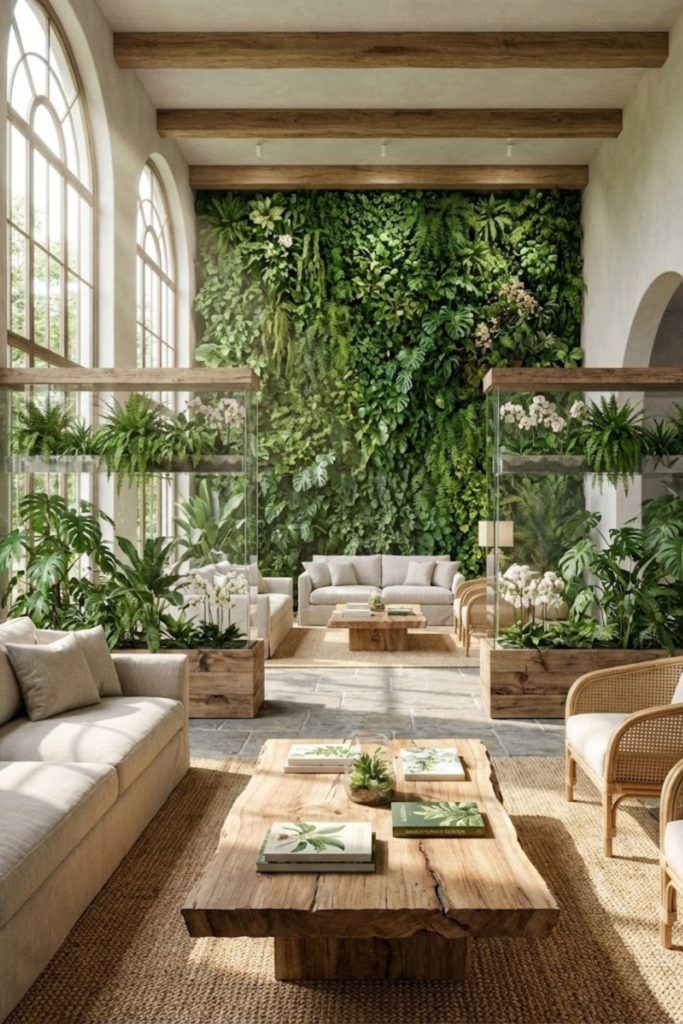
I remember a few years ago when having a “green thumb” just meant keeping a single spider plant alive on the windowsill. Things have certainly changed. As we head into 2026, nature isn’t just an accessory in the living room; it is becoming the main event. We call this “Biophilic Opulence.” It sounds fancy, but it really just means combining high-end luxury with the raw, calming feeling of a garden.
Living in a city, I often feel a bit disconnected from the outdoors. This design style fixes that. It creates a space that breathes. It is less about putting a plant in a room and more about building the room around the nature inside it.
Living Walls and Green Dividers
The biggest shift I have seen is how we use plants to shape the room. We aren’t just shoving a pot in the corner anymore. Now, we are seeing “living walls.” These are vertical gardens that are built right into the structure of the room.
Imagine a wall covered in ferns and lush green leaves that have their own watering system (hydroponics) hidden behind them. It looks incredible, but it also serves a purpose. I have seen beautiful living rooms where tall rows of plants are used as dividers. Instead of building a hard, drywall partition to separate your reading nook from the TV area, you use a wall of greenery. It keeps the sightlines open so the room feels big, but it still gives you that cozy privacy. Plus, the air quality in a room like that is amazing.
Textures That Mimic the Outdoors
Even if you aren’t ready to install a watering system in your wall, you can get this look through texture. The goal is to trick your fingertips. We are moving away from perfectly smooth, manufactured surfaces.
Look for plaster wall finishes that are etched or rough, almost like the bark of a tree. It catches the light in a really interesting way. For the floor, think about rugs that mimic nature. I recently saw a rug that was woven to look like windblown grass—it wasn’t green, but the texture felt organic and wild. When you pair these rough, natural textures with a soft velvet sofa, the contrast is beautiful. It makes the room feel grounded and safe, like a little cave.
Luxury with a Conscience
Finally, this look relies heavily on sustainable materials. Luxury in 2026 is about making choices that feel good ethically, too. Cork flooring is making a massive comeback. If you haven’t walked on cork lately, you are missing out. It is soft, warm under your feet, and it absorbs sound, which makes the living room quieter.
Reclaimed wood is another staple here. Using wood that has a past life adds instant history to a brand-new house. It brings a warmth that you just can’t get from fresh lumber. By using recycled steel, cork, or bamboo, you are creating a space that looks expensive but respects the earth. It is a win-win situation.
3. Moody “Color Drenching”
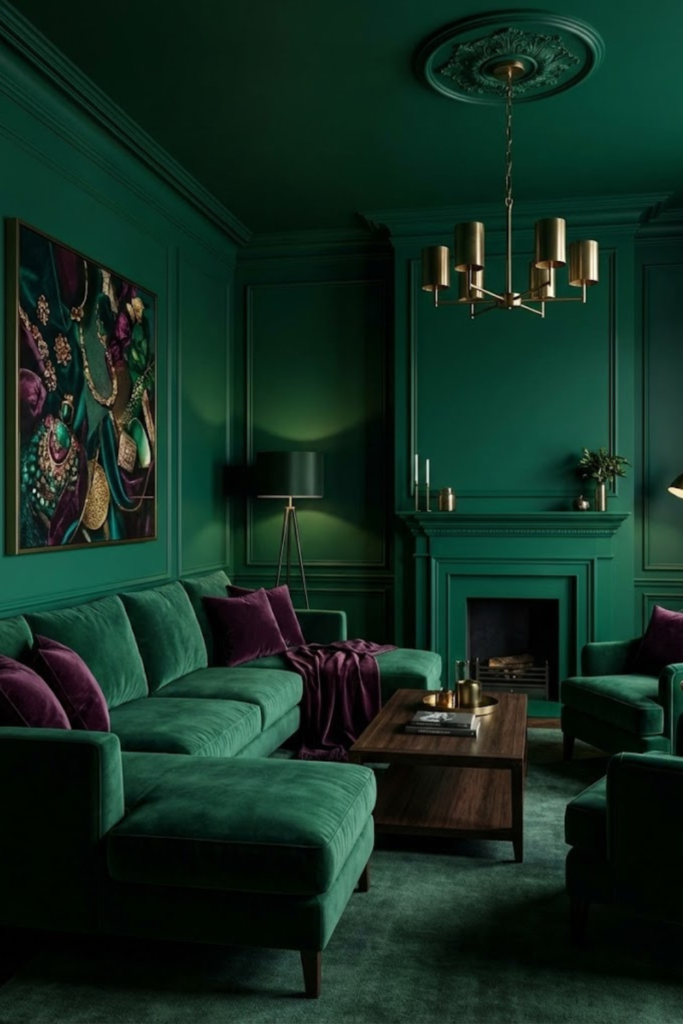
For years, I told my friends to just paint one “accent wall” if they wanted a pop of color. It was the safe advice. You keep three walls white and paint the one behind the sofa blue. But in 2026? We are totally breaking that rule. The biggest trend right now is something called “Color Drenching.”
It basically means you take one strong, deep color and you paint everything. I am talking about the walls, the window frames, the baseboards, the doors, and yes, even the radiators. It sounds a little intense at first, but the result is incredible. It creates this cozy, cocoon-like feeling that white walls just can’t give you. It stops your eye from getting distracted by white trim or contrasting lines.
Don’t Forget the Fifth Wall
The most important part of this look is the ceiling. Designers like to call the ceiling the “fifth wall,” but most of us just leave it white and forget about it. If you want that true luxury feel this year, you have to paint the ceiling the same color as the walls.
When the color continues up and over your head, it wraps the room in warmth. I know some people worry it will make the room feel small or like a cave. But honestly, it often does the opposite. Because you can’t see exactly where the wall stops and the ceiling starts, the boundaries get blurry. The room feels endless, almost like a magic trick with paint. It creates a seamless background that lets you relax.
Picking the Right “Moody” Shades
We aren’t really doing this with bright neon colors. This trend works best with what we call “moody” tones. Think about deep forest greens, dark aubergine (which is just a fancy word for eggplant purple), or warm burnt orange spices.
I walked into a living room last week that was painted entirely in a deep, dark navy. It felt cinematic, like being in a movie theater. It takes a little bit of bravery to dip your brush into such dark paint, but the payoff is huge. It instantly makes your furniture look more expensive because the backdrop is so dramatic. Everything pops against a dark wall.
Why It Works for Small Spaces
You might be thinking, “Youssef, my living room is way too small for dark paint.” Actually, color drenching is perfect for smaller homes. When you have white trim, white ceilings, and colored walls, it chops up the space. Your eye catches all those edges and lines, which makes the room feel busy.
When everything is dipped in one color, those distracting edges disappear. It quiets down the visual noise. It creates a smooth, cohesive look that feels very high-end. It turns a cramped apartment living room into a jewel box. Just make sure you add some soft lamps in the corners, and the space will feel cozy, not closed in.
4. Soft Geometry & Low-Profile Silhouettes
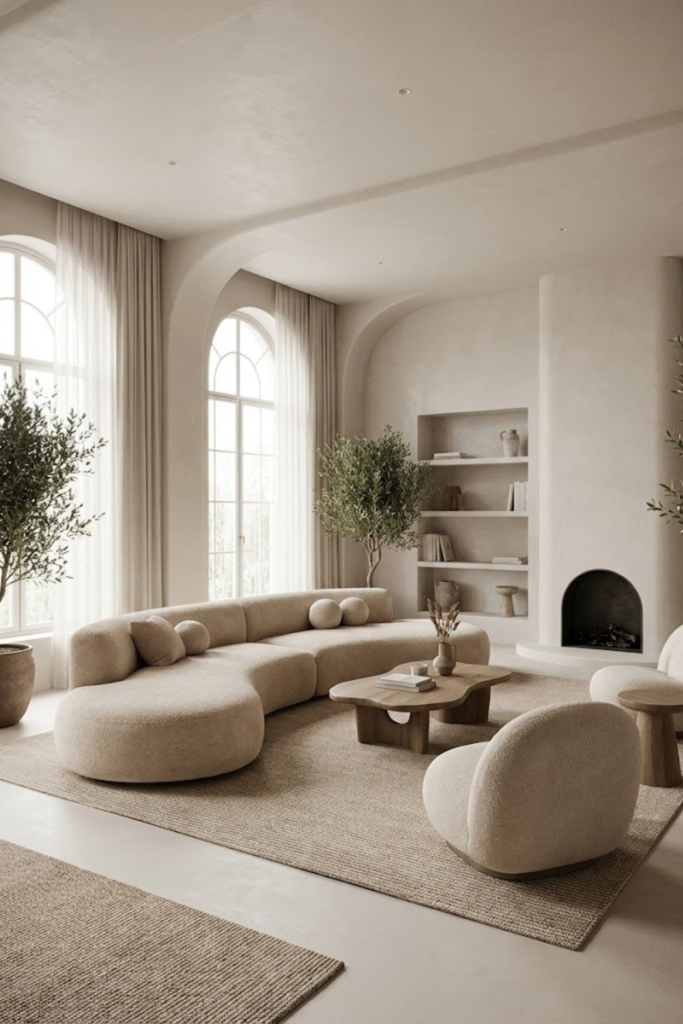
I used to think a couch was just a rectangle with cushions. For decades, that was pretty much the only option we had. Sharp corners, straight lines, and boxy shapes. But if you have walked through a furniture store lately, you know that the hard edges are disappearing. In 2026, comfort is king, and the furniture is literally reshaping itself to “hug” us. We call this trend “Soft Geometry.”
It is all about making the room feel gentler. When you come home after a hard day, you don’t want to sit on something stiff. You want furniture that looks like a cloud.
Curves Are the New Corners
The biggest change I’m telling everyone about is the curved sofa. It used to feel very 1980s, but it has come back in a really elegant way. Instead of a rigid L-shape sectional that forces everyone to sit in a line, these new curved sofas create a circle. It makes talking to your family easier because you are actually facing each other.
Visually, curves do something great for a square room. Most of our living rooms are boxes—square walls, square windows. If you put boxy furniture in a boxy room, it feels stiff. Adding a round coffee table or a sofa with a curved back softens the whole look. It breaks up the grid. It makes the traffic flow better, too; you aren’t bumping your shin on sharp corners anymore.
The “Grounding” Effect of Low Furniture
Another thing catching on is “low-profile” furniture. This basically means the furniture sits closer to the floor. I was skeptical at first—I didn’t want to feel like I was sitting on the ground! But once you try it, you see why it works.
When your sofa and chairs are lower, it tricks your eye. It creates more empty space between the furniture and the ceiling. This makes your ceilings look way higher than they actually are. It gives the room a grand, open feeling. It also creates a “grounding” effect. It feels more relaxed, more bohemian. It signals to your brain that this is a lounge space, not a formal waiting room.
Fabrics You Have to Touch
Since we are getting closer to our furniture, the fabric matters more than ever. We aren’t using that scratchy polyester anymore. In 2026, it is all about “tactile” fabrics—stuff you can’t help but touch.
Bouclé is still very popular (that knobby, wooly fabric), but we are also seeing a lot of chenille and washed linen. These fabrics have a bumpy, soft texture that catches the light. It adds depth to the room. If you buy a low, curved sofa in a soft, white bouclé, it looks like a piece of art. Just make sure you aren’t eating spaghetti on it! Prioritizing these soft textures makes the living room feel like a true sanctuary where you can finally let your guard down.
5. Invisible Tech & Smart Integration
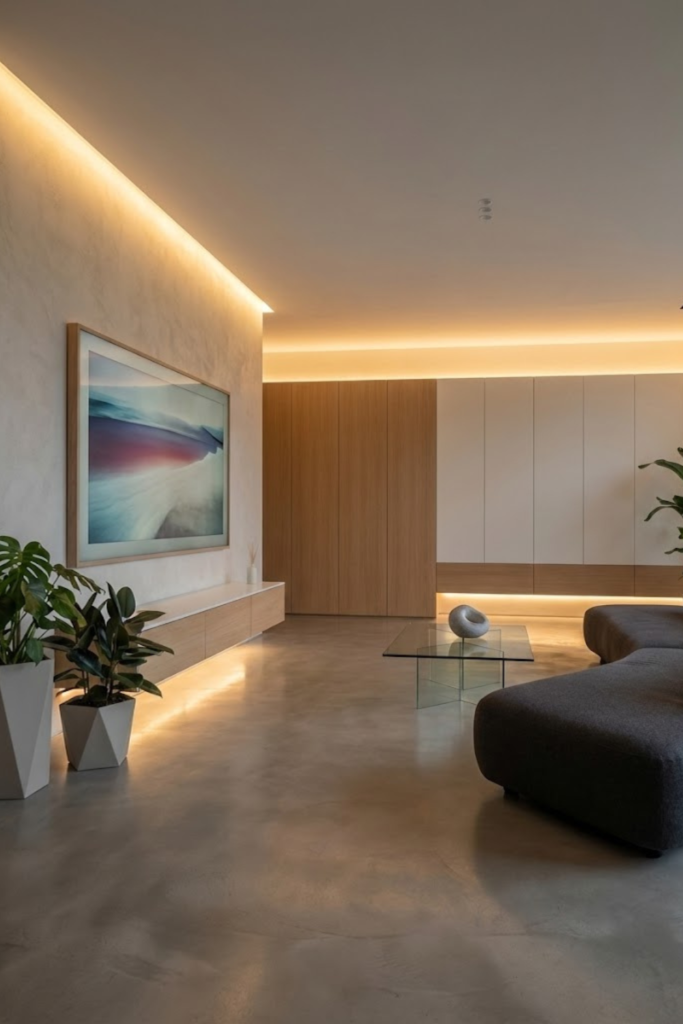
I love gadgets as much as anyone else. I have a smartphone, a tablet, and a smart speaker in almost every room. But here is the problem I always ran into: technology is usually ugly. Nothing ruins a beautiful, calming living room faster than a tangled mess of black wires or a giant, cold television screen staring at you. In 2026, luxury is about having all the technology you need, without actually seeing any of it. We call this “Invisible Tech.”
It is the idea that your home should serve you, but it shouldn’t look like a spaceship. The best smart home is the one where you don’t even notice the “smart” part until you need it.
The Disappearing Television
The TV has always been the enemy of interior design. For years, we arranged all our furniture to point at a big black rectangle. It felt a bit sad, honestly. Now, that is changing. We are seeing screens that know how to hide.
I recently helped a friend set up a living room where the TV looks exactly like a framed painting when it is off. It displays art with a matte finish, so it doesn’t have that glossy reflection. You wouldn’t know it was a TV until she turned on a movie. Other designs let the screen slide behind a panel or rise out of a cabinet only when you want to watch it. It gives you your wall back. You can finally center the room around a fireplace or a beautiful window instead of the television.
No More “Spaghetti” Wires
Is there anything more frustrating than crawling behind a sofa to find an outlet? Or looking at that pile of cords—I call it “spaghetti junction”—behind your media console? It just makes the room feel messy and stressful.
The new wave of luxury furniture solves this with “wireless surfaces.” Imagine putting your phone down on your coffee table, and it just starts charging. No cables, no plugs. The charging pads are built right into the stone or wood. I have seen side tables where the power source is completely hidden inside the leg. It keeps the surfaces clean and clear. It seems like a small detail, but getting rid of visual clutter like cords makes a huge difference in how calm the room feels.
Lighting That Thinks for You
Finally, let’s talk about the “big light.” You know, that bright overhead switch that makes everyone look tired? We are done with that. Modern luxury relies on smart lighting that mimics the sun.
Instead of one switch, the room senses the time of day. In the morning, the light is crisp and bright to wake you up. As the sun goes down, the living room lights automatically shift to a warm, golden glow. It happens slowly, so you barely notice it, but your body relaxes. It uses hidden LED strips in the ceiling coves or behind curtains, so you never look directly at a bulb. It creates a mood without you having to fiddle with a dimmer switch every evening.
6. Artisanal Texture-Maxxing
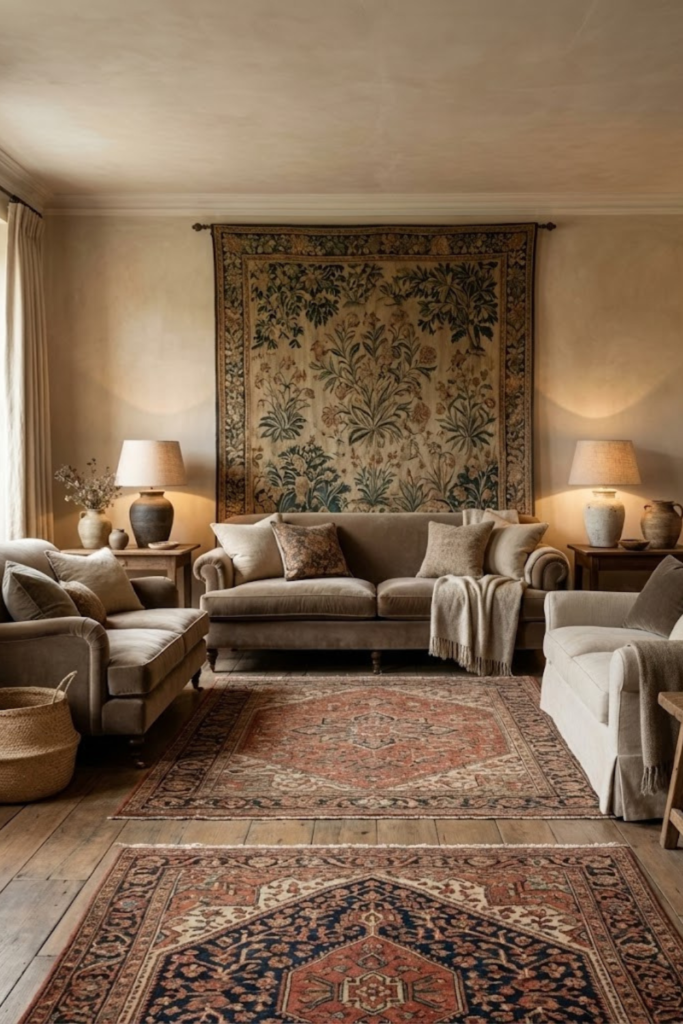
We spent a long time in the design world loving things that were perfectly smooth and shiny. Everything looked like it came out of a factory—flawless, identical, and honestly, a little bit cold. But now, I am seeing a huge swing in the other direction. In 2026, we are craving the “human touch.” We call this trend “Artisanal Texture-Maxxing.”
It sounds like a mouthful, but it just means layering different materials to make a room feel rich and deep. It is the antidote to that flat, “showroom” look. We want to see the brushstrokes. We want to feel the bumps in the fabric. We want our homes to look like a person made them, not a machine.
The Walls Have Character Again
For the longest time, walls were just flat color. You painted them, and you hoped they looked smooth. Now, we are doing the opposite. I have been using a lot of limewash paint lately. If you haven’t seen it, it dries with a cloudy, chalky texture that looks incredible. It gives the wall movement.
Venetian plaster is another big winner this year. It is a thick paste that you trowel on, and when it dries, it has this beautiful, stony depth. When the sunlight hits a limewashed or plastered wall, it creates shadows and highlights that flat paint just can’t match. It makes the room feel older and more established, even if the house was built yesterday. It brings a soul to the space that was missing before.
Tapestry and Vintage Vibes
We are also seeing a return to patterns that feel historical. I call it the “cool granny” look. Tapestry prints are everywhere right now. I am talking about those thick, woven fabrics with verdant, garden-scene patterns.
A few years ago, people would have laughed at a tapestry armchair. Now, it is the coolest thing you can have in your living room. A vintage-inspired ottoman covered in a heavy floral weave adds so much character. It tells a story. It contrasts perfectly with modern shapes. If you have a sleek, modern sofa, putting a vintage tapestry pillow on it instantly warms it up. It stops the room from feeling too serious.
Layering Rugs for warmth
Finally, let’s talk about the floor. One rug is good, but two rugs are better. This is a trick I use all the time to make a room feel cozy. We call it “layering.”
Start with a big, neutral base rug—maybe a chunky jute or sisal that covers most of the floor. Then, place a smaller, softer rug on top of it. Maybe an antique Persian rug or a hand-woven wool piece. It frames the seating area beautifully. It adds extra cushion under your feet, which is always nice. But mostly, it adds visual interest. It breaks up the floor space and makes the whole room look curated and collected, rather than just bought in a single trip to the store.
7. Social-First Modularity
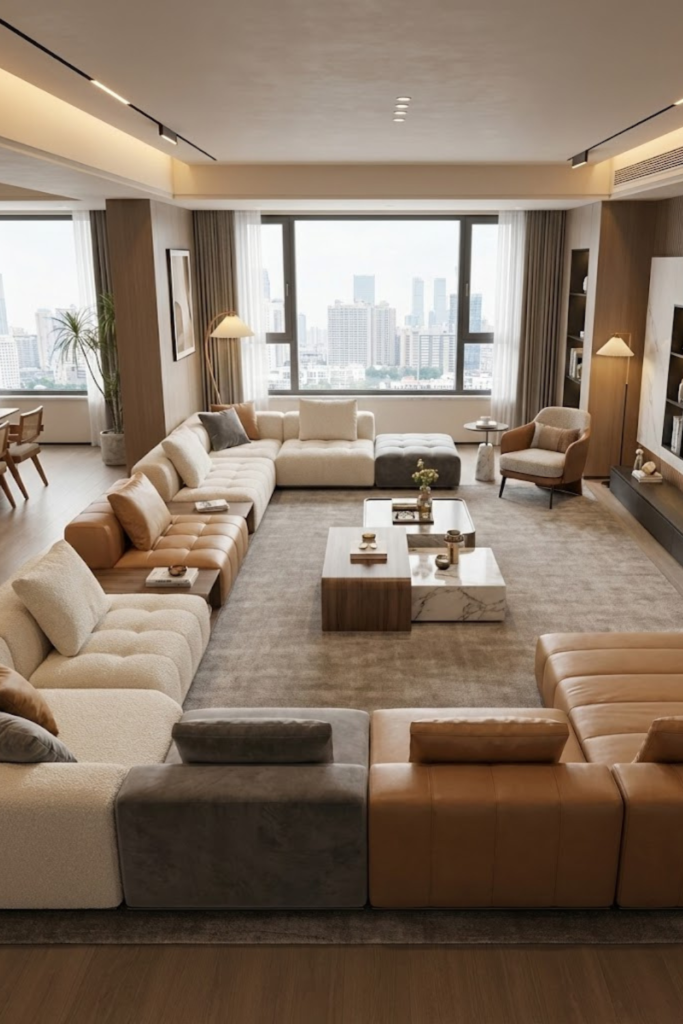
For a long time, the living room had one job: it was the place where we watched TV. All the furniture pointed in one direction, like rows in a movie theater. But I have noticed a really nice shift lately. People are craving connection again. In 2026, the living room is going back to its roots as a place to actually talk to people. We call this “Social-First” design.
It doesn’t mean you can’t have a TV, but it means the room isn’t ruled by it. The furniture needs to be flexible. It needs to work for a quiet Tuesday night reading a book, but also for a Saturday night party with ten friends. That is where modularity comes in.
Changing the Layout Instantly
The old way of buying a sofa was to pick a shape—usually an L-shape or a long straight line—and stick with it forever. But life changes day to day. Modular furniture allows your room to change with it.
I recently saw a sofa system that was made of separate square blocks. You could push them all together to make a giant “bed” for movie night. But when guests came over, the owners pulled the blocks apart to create little conversation groups. Some even had backrests that you could move. You could sit facing the window to look at the view, then flip the backrest to face the center of the room to talk to your partner. It’s brilliant. It feels like you have three living rooms in one.
The Modern Conversation Pit
Do you remember those sunken conversation pits from the 70s? They were huge, carpeted holes in the floor filled with pillows. Well, the vibe is back, but without the construction work.
We are seeing furniture arrangements that mimic that “pit” feeling. It’s about creating a closed circle. You place two large sofas facing each other, with armchairs closing the gaps. It creates a cozy, enclosed zone. It forces you to make eye contact. It feels intimate. Unlike the open-concept plans of the past where everyone felt miles apart, this layout brings people together. It says, “Come sit here and tell me about your day.”
Seating That Lets You Relax
Finally, the scale of the furniture is changing. We are done with those stiff, formal chairs that look nice but feel terrible. If you want people to stay and hang out, they need to be comfortable.
We are seeing “deep seating” everywhere. These are sofas that are wider than usual. They give you permission to curl up your legs, sprawl out, or even take a nap. They signal that this is a “no-judgment” zone. I always tell clients: if you want a house where friends linger after dinner, get a sofa that feels like a hug. When the seating is generous and plush, the conversation just flows better because everyone is actually relaxed.
Conclusion: Making Your Living Room Yours
We have covered a huge amount of ground today. From the calm, grounding vibes of “Midimalism” to the deep, dramatic mood of color drenching, the trends for 2026 are all over the map. But if you look closely, they all have one thing in common: they are about how the room feels, not just how it looks.
It can be tempting to look at these lists and feel like you have to change everything. Please don’t do that. I have seen too many people stress themselves out trying to keep up with every single shift in design. The best advice I can give you, as someone who watches these trends for a living, is to listen to your gut. Your home is your sanctuary. If the idea of a dark, purple ceiling makes you feel claustrophobic, skip it! If you love the idea of a living wall but know you will forget to water it, stick to a nice, low-maintenance rug instead.
Start Small
If you want to refresh your space without a full renovation, try picking just one of these ideas. Maybe you swap out your stiff coffee table for something with soft curves. Or perhaps you paint just the ceiling and walls of a small reading nook to try out the color drenching look. You don’t need a huge budget to make your home feel more current. Often, it is just about clearing out the clutter and bringing in a few textures that make you want to touch them.
Create a Space for Connection
At the end of the day, a living room is for living. Whether you are building a conversation pit for parties or just setting up a cozy corner with smart lighting for reading, the goal is connection. Connect with your family, connect with your friends, and connect with yourself. The most luxurious thing you can have in 2026 is a home that makes you feel happy the moment you walk through the door.
Ready to start your transformation? Pin these ideas to your “Dream Home 2026” board on Pinterest and start planning your renovation today!