Have you ever stood in the middle of your apartment, looked around, and felt like the walls were slowly closing in on you? I know I have! It’s a common struggle. In fact, urban planners predict that as cities grow, our living spaces are only going to get cozier (read: smaller). But here is the secret I’ve learned over years of decorating: a small footprint doesn’t mean small style.
Welcome to 2026, where the trends are all about making your home feel like a warm hug rather than a storage unit. We are seeing a massive shift away from cold, clinical minimalism and moving toward what designers call “warm comfort” with organic shapes and rich textures. Whether you are renting a tiny studio or trying to maximize a one-bedroom, this guide is for you. I’m going to walk you through seven game-changing ideas that blend functionality with the hottest design trends of the year. Let’s turn that cramped feeling into cozy confidence!
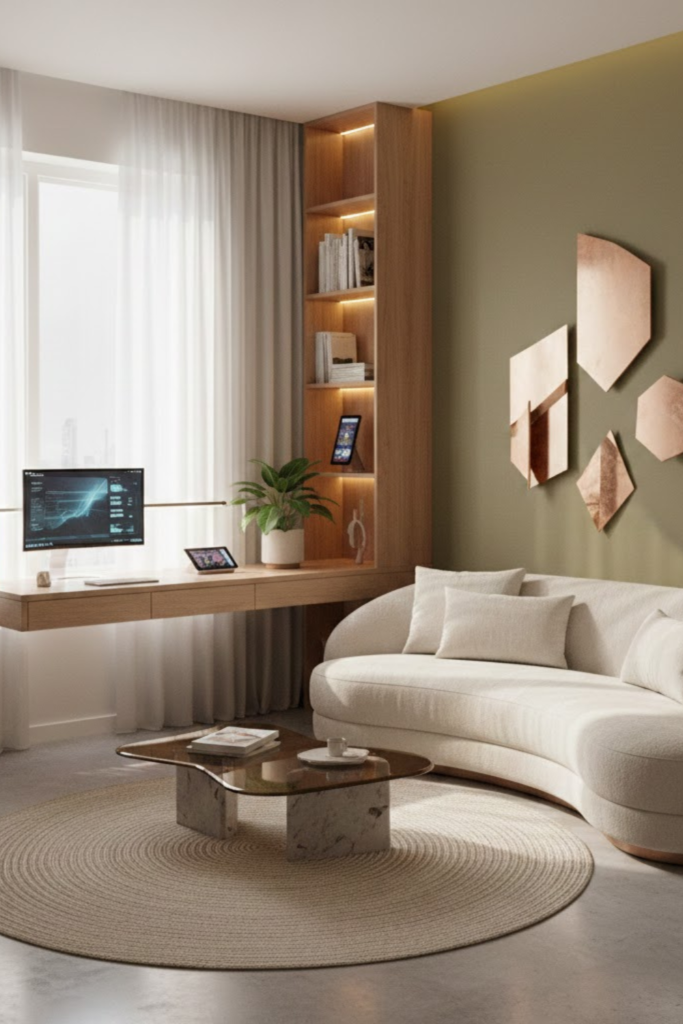
1. Embrace “Japandi Maximalism” for Clutter-Free Warmth
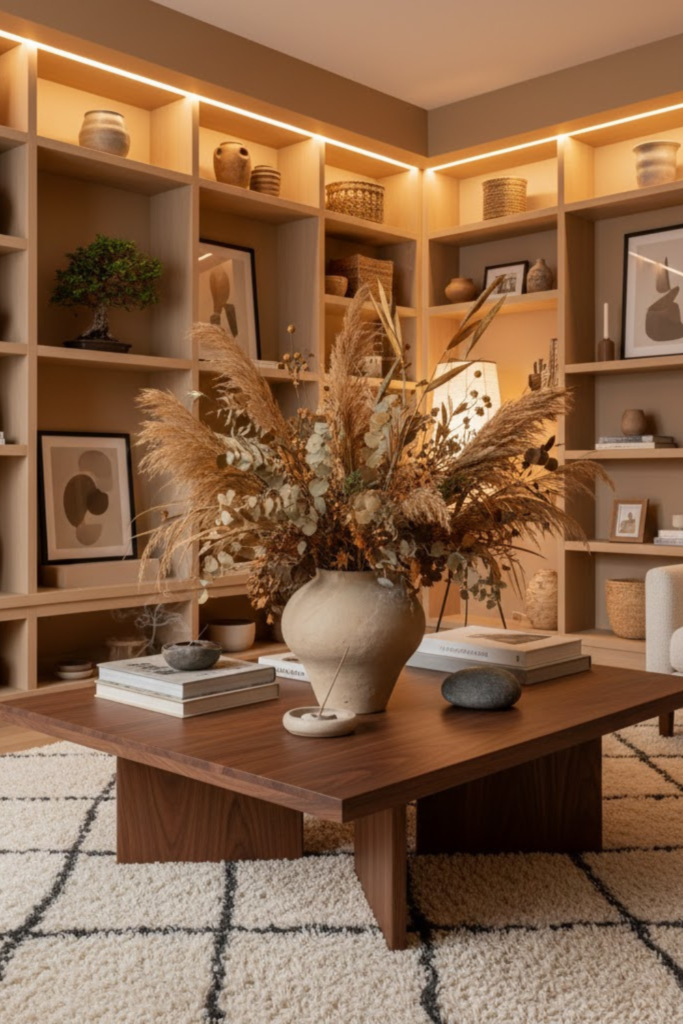
I have to be honest with you. A few years ago, I tried the whole extreme minimalism thing. I read the books, I thanked my socks before throwing them away, and I painted everything Stark White. And you know what? I hated it. My apartment felt like a dentist’s waiting room. It was cold, echoing, and frankly, a little depressing. I learned the hard way that while less might be more, “empty” is just… empty.
That is why I am obsessed with Japandi Maximalism right now. It sounds like a mouthful, doesn’t it? But it’s actually the perfect middle ground for us folks living in small apartments who want peace but also want to feel like a human lives there. It blends that clean, functional Japanese rustic vibe with Scandinavian coziness, but—and here is the kicker—it allows you to actually own stuff.
Why “Stuff” Isn’t the Enemy
The biggest mistake I made was thinking that “decor” equaled “clutter.” It doesn’t. In a small room, if you strip everything away, you notice the lack of space even more. Japandi Maximalism uses objects to create warmth.
I started adding things back in, but with a plan. instead of a hundred tiny plastic trinkets (we all have that one junk drawer, right?), I switched to larger, more meaningful pieces. I bought this massive, rough-hewn wooden bowl that takes up half my coffee table. It looks heavy and substantial. It anchors the room. Suddenly, my tiny living room didn’t feel small; it felt deliberate.
texture is Your Best Friend
If you can’t paint your walls because of a strict landlord, listen up. Texture is how you win. I stopped buying smooth, shiny things. They just bounce light around and look cheap.
I started layering diverse fabrics. I’m talking about a nubby wool rug layered over a flat jute mat. I threw a chunky knit blanket on my sofa. When you mix these textures—wood, stone, wool, linen—you create visual interest without screaming for attention with bright neon colors. It’s quiet, but it’s rich.
My “Rule of Three” for Styling
I used to just line things up on a shelf like soldiers. Boring! Now, I use the rule of three, and it works every time.
- Height: Something tall (like a branch in a vase).
- Bulk: Something heavy (like a stone bookend).
- Life: Something organic (a small plant or a piece of drift wood).
Group them together in a little cluster. This creates a “vignette” (fancy word for a scene) that draws the eye. It stops your eye from scanning the whole room and seeing how small it is.
Don’t Stress the Perfection
Here is a secret: Wabi-sabi is the Japanese concept of finding beauty in imperfection. My favorite ceramic vase has a crack in the rim. I didn’t hide it; I turned it so you can see it. It gives the room character.
If your apartment is too perfect, people are afraid to sit down. You want a space that says, “Come in, grab a coffee, and put your feet up.” That is the heart of Japandi Maximalism. It’s messy enough to be real, but clean enough to keep you sane. It was a game-changer for my studio, and I think you’ll love it too.
2. Utilize Biomorphic Furniture to Soften Sharp Corners
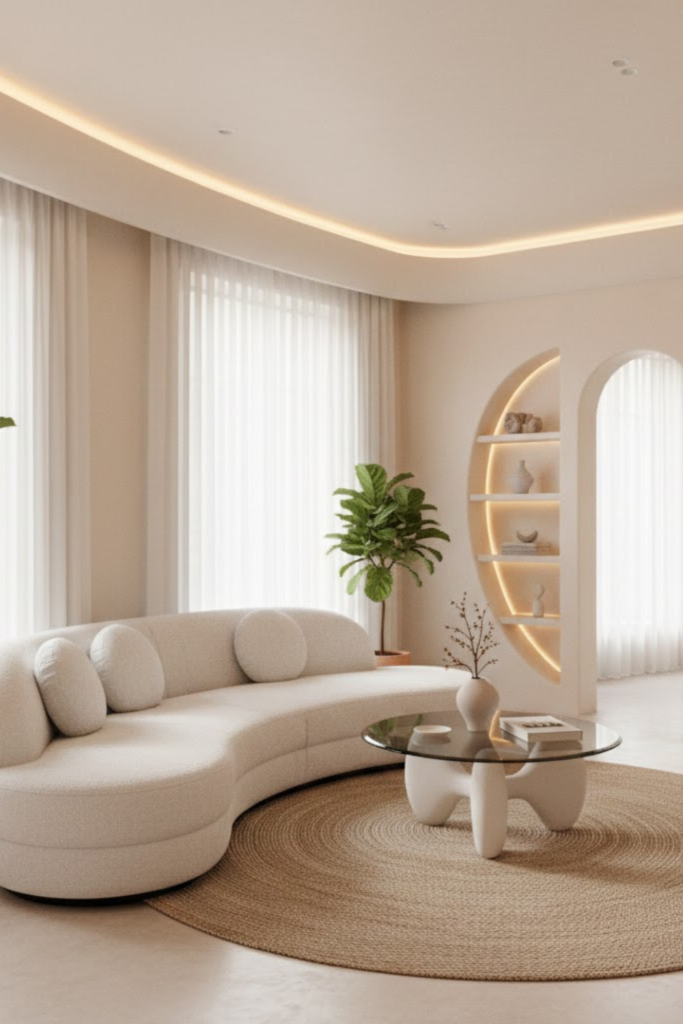
I have a confession to make. For years, I had this jagged, square coffee table in the middle of my living room. I can’t tell you how many times I banged my shin on the corner while trying to squeeze past it with a basket of laundry. It was a nightmare! My legs were always bruised. That is why I am so happy that 2026 is the year of curved furniture.
Designers call this style “biomorphic.” It sounds like something from a science class, right? But it just means the furniture has shapes that look like they grew in nature, like a kidney bean, a mushroom, or a smooth river rock. For those of us living in small apartments, this trend is a total lifesaver.
Why Curves Work Better in Small Spaces
When you put a big square table or a blocky sofa in a tight room, it creates a grid. It feels rigid and stiff. It stops your eye. If you swap that square for a round table or a curved sofa, the room suddenly feels softer. Your eye just glides right over the edges without stopping.
It helps the traffic flow. This is the biggest practical benefit. In a small room, you don’t have wide hallways. You are usually walking in tight paths between furniture.
- With square furniture: You have to do that awkward sideways shuffle to get past the corners.
- With curved furniture: You can walk naturally around the bend. There are no sharp points jutting out to hurt you.
Start Small
You don’t need to go out and buy a weirdly shaped couch that looks like a cloud (unless you want to!). I started small. I swapped that shin-destroying square table for a round nesting set last month. It was such a simple change, but the room feels twice as big now.
If you are on a budget, look for a round ottoman. You can use it as a footrest, or put a tray on it to use it as a table. It adds that soft, organic look without costing a fortune. It makes your home feel gentle, and after a long day at work, that is exactly what we need.
3. Master Verticality with Floating Shelves and Wall Desks
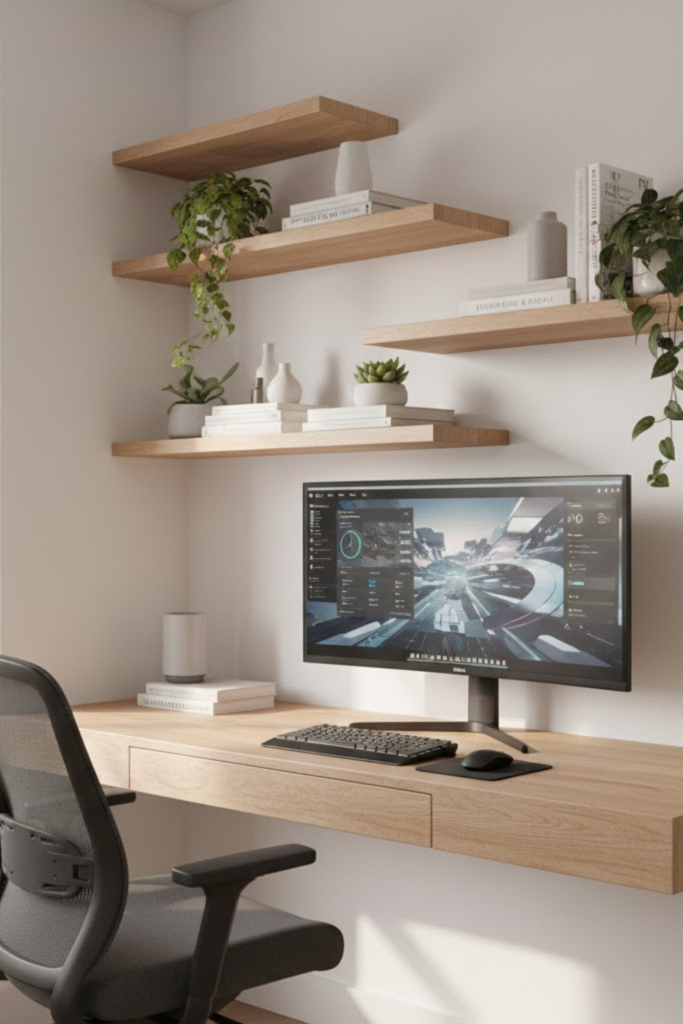
I always tell my friends that when you live in a small apartment, floor space is like gold dust. You have to hoard it! When I first moved into my one-bedroom, I tried to shove a big, traditional oak desk into the corner. Big mistake. It ate up half the room and made the whole place feel cramped. I felt like I was working in a closet.
That is when I learned the most important lesson of apartment living: stop looking down at the floor and start looking up at the walls.
The “Invisible” Office
If you work from home like many of us do now, you need a desk. But you don’t need it 24/7. I switched to a wall-mounted drop-leaf desk. It sounds fancy, but it’s basically a shelf on hinges.
When I am working, I flip it up, and I have plenty of space for my laptop and a coffee. When I am done, I fold it flat against the wall. It disappears! It gave me back about four feet of floor space. It’s perfect for multipurpose rooms. Your living room can be an office by day and a movie theater by night without a bulky desk blocking the view.
Don’t Ignore the “Dead Zones”
Look around your room right now. Look above your door frame. Look above your window. That is what I call the “dead zone.” Nobody uses it!
I went to the hardware store, got a simple wood plank and some brackets, and put a shelf right above my bedroom door. It is the perfect spot for things you don’t need every day, like old photo albums or that bread maker you promised you would use (we all have one). It gets the clutter off your dresser and puts it somewhere useful.
The Curtain Trick
This is an old teacher’s trick, but it works like magic. Most people hang their curtain rod right above the window frame. Don’t do that.
Move the rod all the way up to the ceiling line. When you hang long curtains from the very top, it draws your eye upward. It tricks your brain into thinking the ceiling is higher than it actually is. My apartment has standard ceilings, but everyone asks if they are vaulted just because of where I put the curtains. It adds a sense of grandeur without costing a dime extra.
So, grab a step ladder and start claiming that vertical space. Your floor will thank you!
4. Create Zones with Tonal Decorating (Color Drenching)
I have to admit, I was the queen of the “accent wall” for a long time. You know the look—paint three walls stark white and one wall a bright, shocking blue? I thought it made my apartment look modern. But looking back, it actually just made the room feel choppy. It sliced the room up.
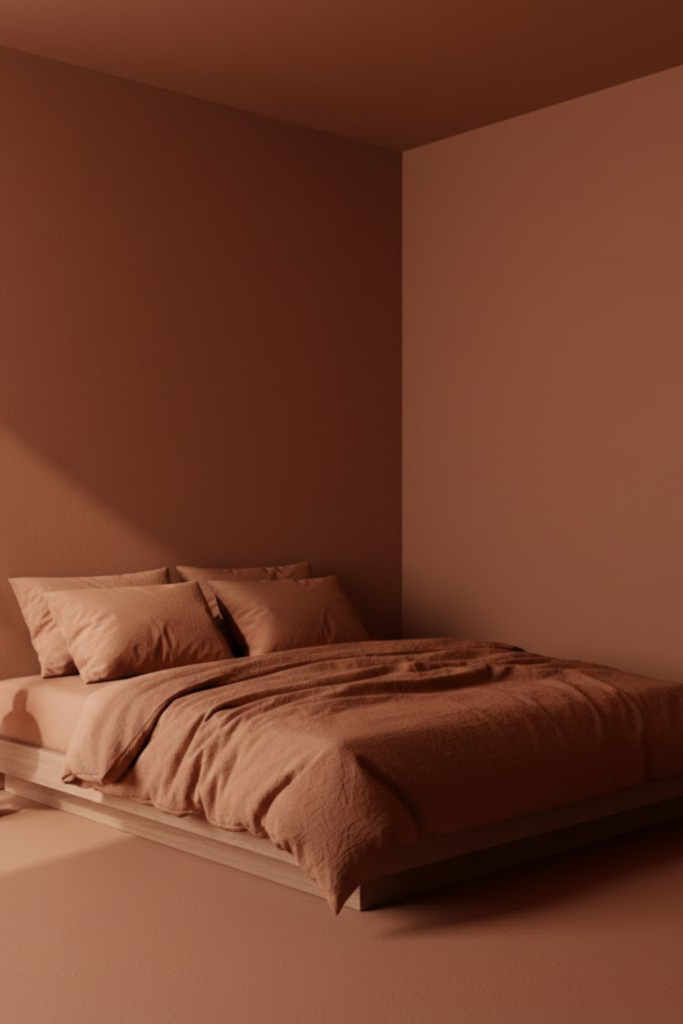
In 2026, we are doing something way better called “Color Drenching.” It sounds intense, right? But it is actually super calming. It means painting everything—the walls, the baseboards, the door frames, and sometimes even the ceiling—in the exact same color.
Why It Makes Small Rooms Feel Bigger
This sounds backward. We are taught that white walls make a room feel big and dark colors make it feel small. That isn’t always true.
When you paint the trim and the doors the same color as the wall, you hide all the “visual breaks.” If you have white trim and blue walls, your eye stops at every white line. It outlines the room like a box. When everything is one color, those lines disappear. Your eye keeps moving. It blurs the boundaries of the room, so you can’t quite tell where the wall ends and the ceiling begins. It creates this endless, cozy feeling.
Defining Your Space Without Walls
If you live in a studio apartment, this is a game changer. I visited a friend recently who lives in a tiny studio. She painted the corner where her bed is a deep, moody olive green—including the ceiling above it. The rest of the room was a soft cream.
She didn’t put up a divider or a curtain. But just by using that block of color, it felt like a totally separate bedroom. It tricked my brain.
Don’t Be Scared of the Dark
I tried this in my own hallway recently. It’s narrow and has no windows, so I leaned into it. I painted it a dark charcoal gray. I was terrified while I was doing it! I thought it would look like a cave.
But once it was done, it felt like a boutique hotel. It went from being a dark, sad hallway to a dramatic “moment.” If you are nervous, start with a bathroom or a small entry area. Pick a color you love and just go for it—ceiling, trim, and all. It’s only paint, after all! You can always paint over it if you hate it, but I have a feeling you won’t.
5. Integrate “Invisible” Smart Technology and Lighting
I remember my first apartment had exactly one light source: a terrible, yellow overhead fixture in the center of the living room. It was awful. It made the room feel like a cafeteria. I tried to fix it with floor lamps, but then I had cords snaking all over the floor. I tripped on them constantly, and they just made the small space look messy.
We are lucky to be decorating in 2026 because technology has finally figured out how to hide. We don’t have to choose between good lighting and a clutter-free room anymore. We can have both.
Lighting That Does Double Duty
In a small apartment, your living room might also be your office, your dining room, and your yoga studio. You can’t just have one type of light.
- For work: You need bright, cool light so you don’t fall asleep.
- For relaxing: You need warm, dim light.
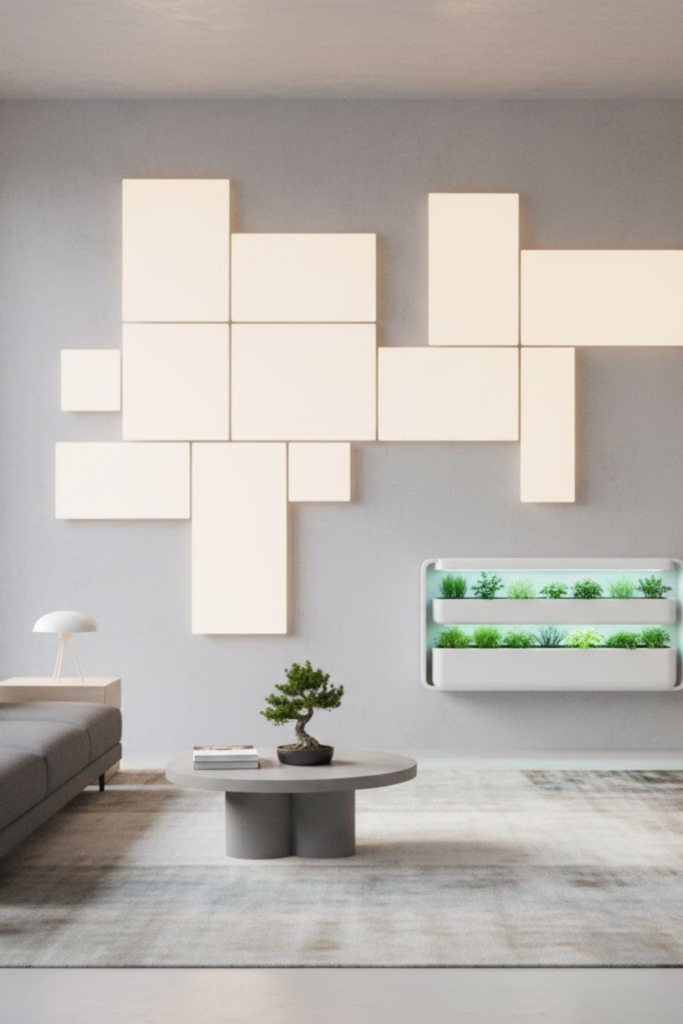
I use smart bulbs that change color and brightness with a tap on my phone. But more importantly, I look for fixtures that don’t take up floor space. I got rid of my clunky floor lamp and put up modular light panels on the wall. They look like a piece of modern art when they are off, but they light up the whole room when they are on. It saves precious floor inches.
The Magic of Battery Sconces
If you rent, you probably think you can’t have wall lights because you can’t drill into the wall or mess with the wiring. That used to be true.
Now, I am obsessed with battery-operated wall sconces. You just stick them to the wall with a strong adhesive strip. No wires, no electrician, no mess. I put two on either side of my bed. It instantly made my bedroom look expensive and “finished.” Plus, it cleared off my tiny nightstand because I didn’t need a table lamp anymore. It is such a simple trick, but it makes a huge difference visually.
AI Greenery (For Those of Us Who Kill Plants)
I love the look of plants, but I don’t always have a sunny window in a city apartment. Plus, I sometimes forget to water them. I found these new wall-mounted planters that have built-in grow lights. The tech is smart enough to know when to turn the light on and off for the plant. It acts as a cool mood light for the room and keeps my basil alive. It’s a great way to get that organic, fresh feeling in a small room without using up any table space.
6. Add Texture-Maxxing with Tapestries and Rug Layering
I remember living in this one apartment where the walls were so thin, I could hear my neighbor sneeze. It was loud, and honestly, the white walls felt kind of cold and empty. Since I was renting, I couldn’t tear down the drywall and add insulation. That is when I discovered “Texture-Maxxing.”
It sounds like a made-up word, but it just means using lots of soft stuff—fabric, wool, yarn—to make a room feel cozy and quiet. It works wonders in a small space where everything can sound echoey.
Wall Hangings Are Better Than Paintings
I used to hang regular picture frames everywhere. But glass and plastic are hard surfaces. Sound bounces right off them.
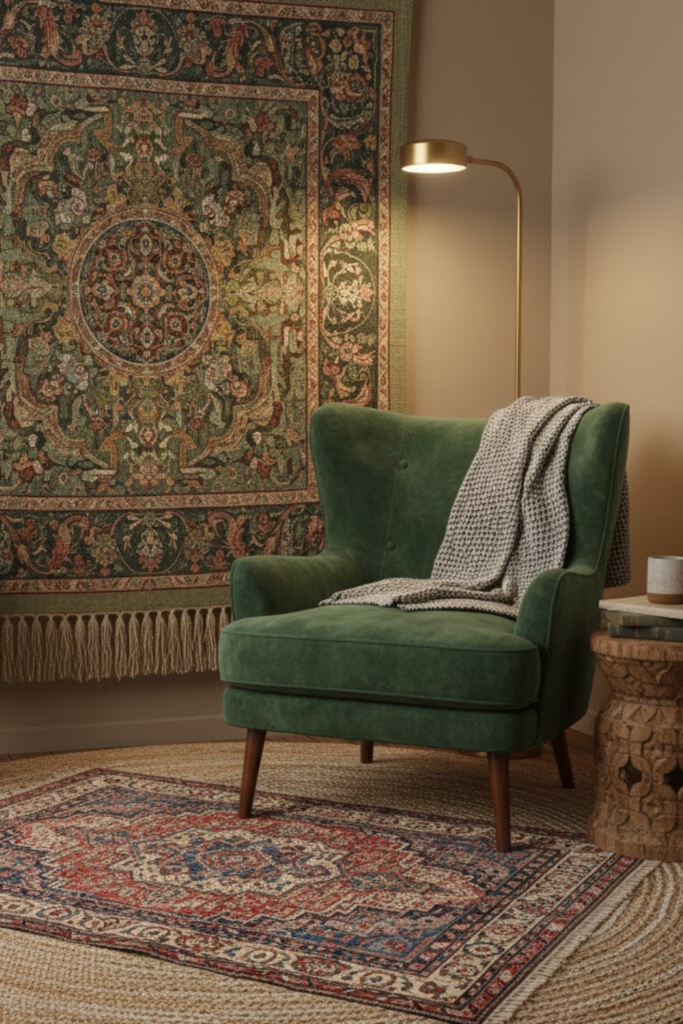
I swapped my gallery wall for a big, woven wall hanging. You can find them at thrift stores or online.
- It creates warmth: A big piece of fabric on the wall makes the room feel hugged.
- It stops the noise: The fabric absorbs sound. It won’t make your room soundproof, but it definitely helps dampen the echo.
The “Rug on Rug” Look
This is my favorite trick for making a room look designed without trying too hard. If you have a boring carpet or a plain floor, don’t rip it up. Just layer on top of it.
I bought a large, plain jute rug because it was cheap and covered a lot of space. But it was scratchy and kind of boring. So, I put a smaller, colorful vintage rug right on top of it, in the center.
It frames the seating area perfectly. It makes the living room feel like its own little island. Plus, it feels super soft on your feet when you are watching TV.
Fabric Isn’t Just for Curtains
If you want your bedroom to feel like a fancy hotel, think about the wall behind your bed. Instead of a wooden headboard, look for upholstered panels. You can even make them yourself with some plywood, batting, and fabric. It acts as a headboard, but it goes all the way up. It stops noise from the next apartment and makes reading in bed so much more comfortable.
7. Invest in Modular, Multifunctional Furniture Pieces
This is the golden rule I live by now: every single piece of furniture in my apartment has to fight for its right to be there. If it only does one thing, it’s probably fired. In a small space, you just don’t have the luxury of having a chair that is just a chair.
I learned this after I bought a beautiful armchair that was enormous. It looked great, but it took up so much room that I couldn’t open my closet door all the way. I had to sell it two months later. Now, I look for “workhorse” furniture.
The Magic Ottoman
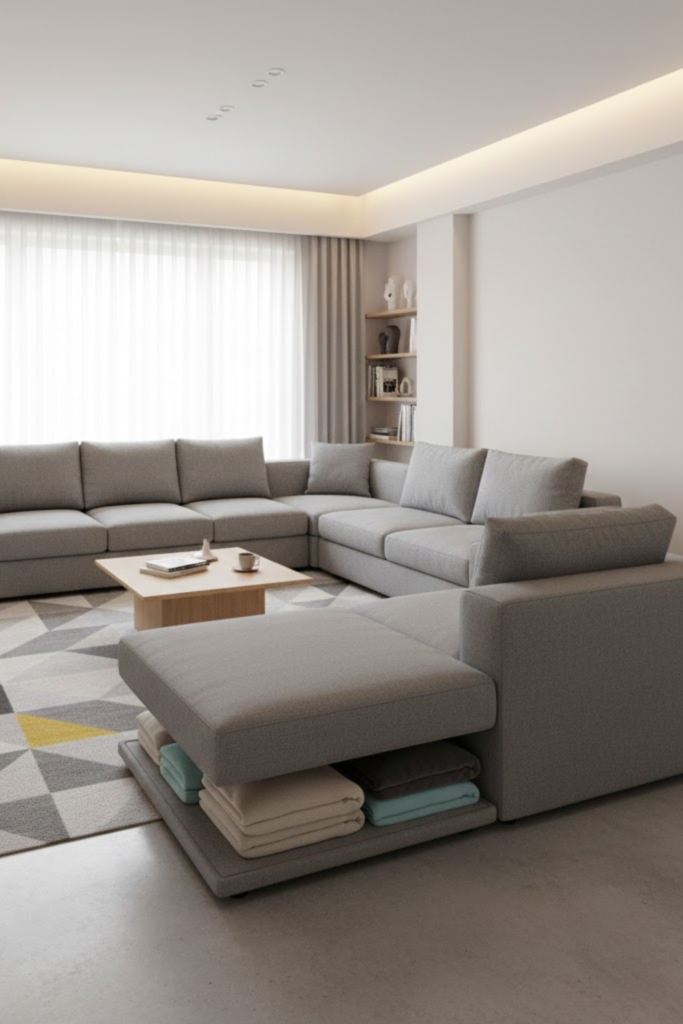
If you buy one thing this year, make it a storage ottoman. It is the MVP (Most Valuable Player) of small apartments. I have one in my living room.
- It’s a footrest when I am watching a movie.
- It’s a coffee table when I put a wooden tray on top of it for drinks.
- It’s a closet inside. I store all my winter blankets and extra pillows in there.
It does three jobs but only takes up two feet of space. That is the kind of math I like!
Modular Sofas Are a Lifesaver
I used to think sectional sofas were only for huge houses in the suburbs. But they make smaller ones now that are “modular.” This means they come in separate blocks that you can clip together or pull apart.
When I have a movie night, I push them all together to make a giant cozy pit. But when I had a birthday party last year, I pulled the pieces apart and scattered them around the room so more people had a place to sit. It’s like having Lego furniture. You can change it to fit whatever is happening that day.
Look for “Apartment Scale”
Be careful when you shop online. A sofa might look normal in the picture, but when it arrives, it’s a monster. Look for the words “apartment scale” or “petite.” These pieces are usually a few inches shallower than standard furniture. A standard sofa might be 40 inches deep, but an apartment one might be 34 inches. You might think, “Who cares about 6 inches?” But in a narrow living room, those 6 inches are the difference between being able to walk past the coffee table comfortably or having to shimmy sideways. Save your shins, get the slimmer furniture!
Conclusion
So, there you have it! We made it through all seven ideas. Decorating a small apartment doesn’t have to be a headache. It is really just a puzzle, and now you have the right pieces to solve it.
Remember, you don’t have to do all of this at once. Maybe this weekend you just move your curtain rod up a few inches to make your ceilings look taller. Or maybe you finally trade that bulky armchair for a sleek modular sofa. Small steps add up. I know my place didn’t come together overnight. It took a lot of trial and error (and a few returned items!) before it felt right.
The goal isn’t to live in a magazine picture. The goal is to create a home that hugs you back when you walk through the door. Whether you try “Color Drenching” your bedroom or just add a few battery lights to a dark corner, I hope you feel a little more confident about your space now.
If you found these tips helpful, please do me a huge favor and save this post to your “Home Decor 2026” board on Pinterest! It helps other people find these ideas too.