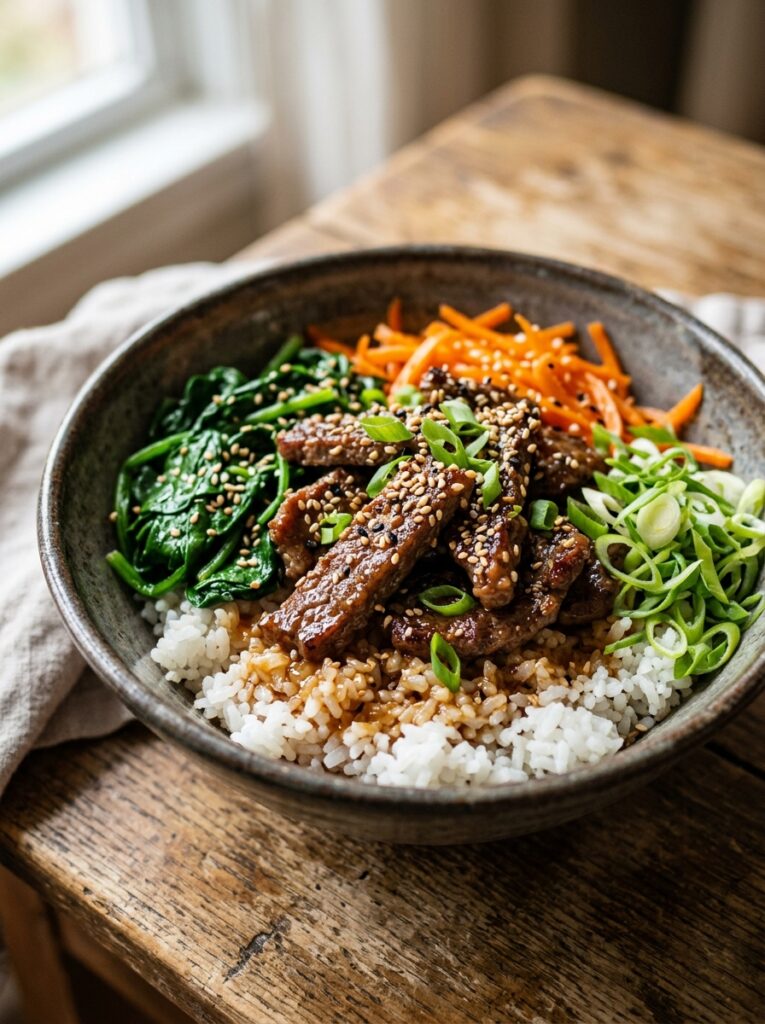
This high protein Korean beef bowl delivers savory, sweet, and spicy flavors with lean beef, nutrient-rich vegetables, and a balanced sauce that fuels active lifestyles. A high protein Korean beef bowl comes together quickly, making it ideal for weeknight dinners, meal prep, and family gatherings. The high protein Korean beef bowl highlights Korean bulgogi-inspired seasoning, garlic, ginger, and sesame, paired with fiber-rich vegetables for a satisfying plate. This high protein Korean beef bowl recipe uses straightforward steps, trusted techniques, and flexible ingredients for reliable results. Prepare this high protein Korean beef bowl at home to enjoy restaurant-quality flavor with better nutrition and cost control.
| Prep Time | Cook Time | Total Time | Servings | Difficulty | Cuisine |
|---|---|---|---|---|---|
| 15 minutes | 12 minutes | 27 minutes | 4 servings | Easy | Korean |
Why This High Protein Korean Beef Bowl Works
This high protein Korean beef bowl works because it balances lean protein, smart sauces, and crisp vegetables for complete nutrition and authentic taste. I rely on this high protein Korean beef bowl for busy days because it is fast, flexible, and consistently flavorful. The high protein Korean beef bowl uses low-sugar bulgogi-style seasoning and sesame oil to achieve a glossy glaze without excessive sweetness. The high protein Korean beef bowl also supports muscle recovery through high-quality protein and glycogen replenishment from rice or grain alternatives. Home cooks will appreciate how the high protein Korean beef bowl simplifies meal planning, cuts takeout costs, and delivers restaurant-style flavor with pantry staples.
The combination of sweet pear, garlic, ginger, and soy sauce creates depth and brightness, while the seared beef provides satisfying texture and caramelization. A high protein Korean beef bowl adapts well to dietary needs, including low-sodium tweaks and gluten-free substitutions, without sacrificing taste. Pairing the high protein Korean beef bowl with roasted or steamed vegetables boosts fiber and micronutrients. For weeknight ease, you can prep the sauce and slice beef ahead, then cook the high protein Korean beef bowl in fifteen minutes. This high protein Korean beef bowl consistently earns compliments for being both healthy and deeply savory.
High Protein Korean Beef Bowl Ingredients
The high protein Korean beef bowl ingredients below yield balanced macros, clean flavors, and flexible options for varying tastes and availability.
| Ingredient | Quantity | Notes with alternatives |
|---|---|---|
| Lean beef sirloin or flank steak | 1.25 pounds | Trim and slice thin; use lean ground beef for faster prep |
| Cooked jasmine or brown rice | 4 cups | Swap with quinoa or cauliflower rice for lower carbs |
| Soy sauce or tamari | 4 tablespoons | Use tamari for gluten-free, coconut aminos for lower sodium |
| Pear puree or grated apple | 3 tablespoons | Natural sweetener for bulgogi-style marinade |
| Brown sugar or honey | 1 tablespoon | Optional, reduces to half for low sugar version |
| Toasted sesame oil | 1 tablespoon | Use only pure sesame oil for authentic aroma |
| Garlic, minced | 4 cloves | Adjust for preference, use roasted garlic for milder taste |
| Ginger, grated | 1 tablespoon | Fresh ginger gives best flavor |
| Green onions, sliced | 4 stalks | Use both whites and greens for layered flavor |
| Carrots, julienned | 1 cup | Swap with zucchini or radish for variety |
| Spinach, fresh | 4 cups | Substitute with kale or bok choy |
| Avocado or cucumber | 1 medium | Slice for creamy or crisp garnish |
| Toasted sesame seeds | 2 teaspoons | Crucial garnish for nutty finish |
| Korean chili flakes (gochugaru) | 1 teaspoon | Optional, adjust heat level to taste |
| Neutral oil for cooking | 1 tablespoon | Avocado or canola oil works well |
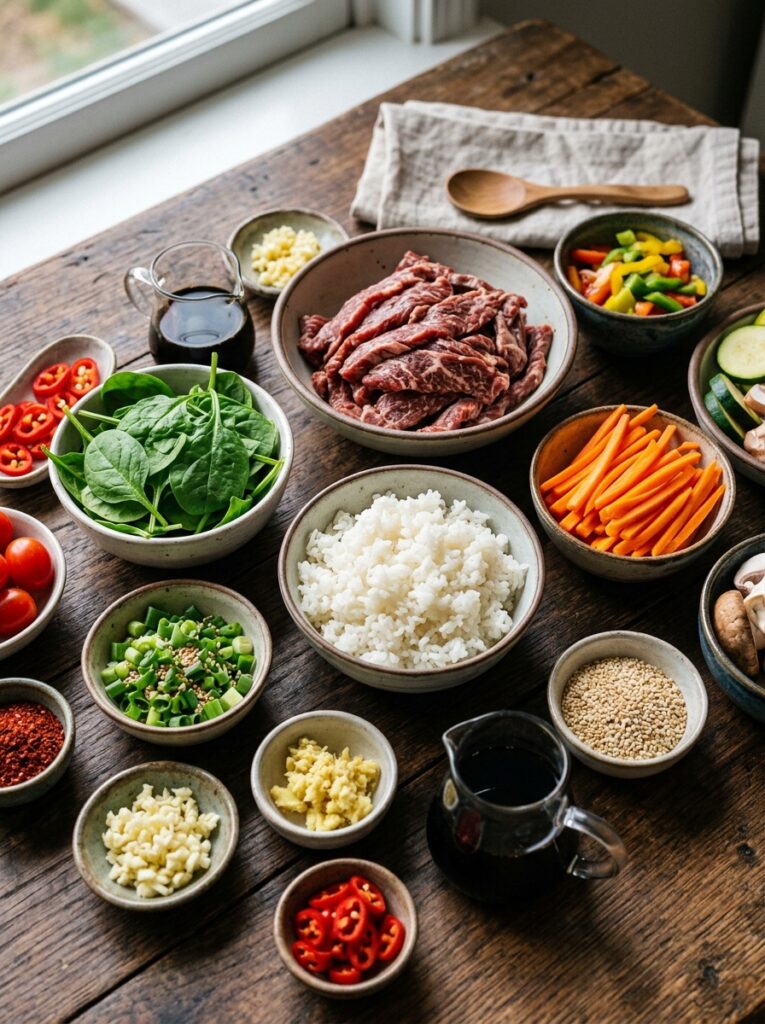
How to Make High Protein Korean Beef Bowl
Follow these steps to build a reliable high protein Korean beef bowl with excellent texture and balanced flavor.
Step 1: Prepare the Beef
- Trim excess fat and slice the beef thinly against the grain for tender bites.
- Set the beef aside while you make the sauce to keep it cold and firm.
Step 2: Make the Bulgogi-Style Sauce
- Whisk soy sauce, pear puree, brown sugar, sesame oil, garlic, ginger, and chili flakes in a bowl.
- Taste and adjust sweetness, salt, and heat to match your preferred balance.
Step 3: Marinate Briefly
- Add beef to the sauce and toss until every strip is evenly coated.
- Marinate 15 to 30 minutes in the refrigerator for quick flavor absorption.
Step 4: Cook Rice and Vegetables
- Warm the rice and keep it fluffy so it can soak up the juices later.
- Blanch or sauté spinach with a pinch of salt and a tiny drizzle of sesame oil.
- Lightly sauté carrots until crisp-tender, or enjoy them raw for crunch.
Step 5: Sear the Beef
- Heat a skillet over high heat and add neutral oil until shimmering.
- Spread beef in a single layer and sear until browned and caramelized.
- Work in batches to avoid steaming and keep the high protein Korean beef bowl texture optimal.
Step 6: Finish the Sauce
- Pour any leftover marinade into the pan and simmer until slightly thickened.
- Stir to coat the beef evenly and create a glossy, clinging glaze.
Step 7: Assemble the Bowl
- Layer rice, spinach, and carrots in a wide bowl for a balanced base.
- Top with seared beef, green onions, and sliced avocado or cucumber.
- Finish with sesame seeds and a drizzle of pan sauce.
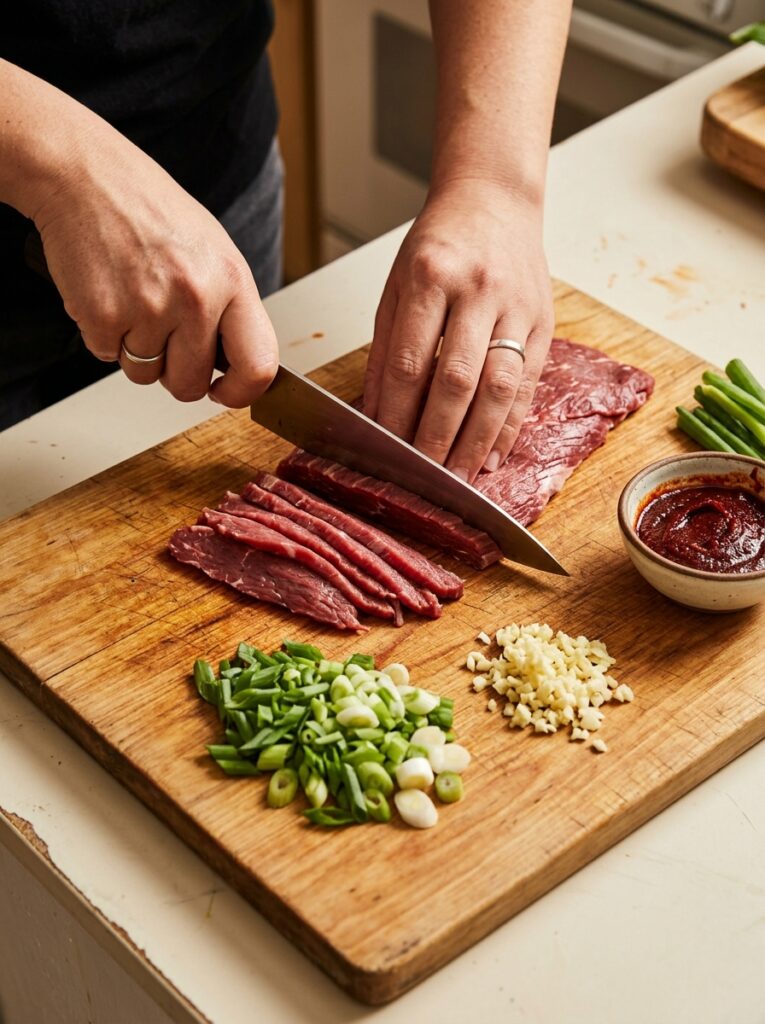
Chef Tips for Perfect High Protein Korean Beef Bowl
These chef tips help you nail the high protein Korean beef bowl every time with better sear, texture, and flavor.
- Use high heat and a dry pan: Preheat the skillet until smoking to achieve caramelization and prevent steaming the beef strips.
- Slice against the grain: Cutting beef across the muscle fibers produces a tender bite and avoids chewiness.
- Balance the sauce early: Taste the high protein Korean beef bowl sauce before marinating and adjust sweetness, salt, and acidity as needed.
- Cook in batches: Avoid overcrowding the pan to maintain high temperature and create a proper sear for the high protein Korean beef bowl.
- Rest the beef briefly: After searing, let the meat rest one minute so juices redistribute, enhancing flavor and juiciness.
- Layer textures: Combine creamy avocado, crisp carrots, and tender spinach for a varied bite in the high protein Korean beef bowl.
Common High Protein Korean Beef Bowl Mistakes to Avoid
Avoid these common mistakes to protect flavor, texture, and nutrition in your high protein Korean beef bowl.
- Over-marinating: Acidic fruit puree can toughen beef if left too long; keep marination under 1 hour or use less acid for this high protein Korean beef bowl.
- Overcrowding the pan: Adding too much beef drops pan temperature and causes steaming; cook in batches to keep searing hot for the high protein Korean beef bowl.
- Sweet sauce overload: Too much sugar mutes savoriness; balance sweetness with soy sauce, sesame oil, and garlic to keep the high protein Korean beef bowl balanced.
- Slicing with the grain: Long muscle fibers make beef chewy; always slice against the grain for a tender high protein Korean beef bowl.
- Undercooked vegetables: Raw carrots can feel harsh; quickly sauté or blanch for a softer texture that complements the high protein Korean beef bowl.
- Skipping sesame seeds: Toasted sesame seeds add aroma and crunch; garnish generously for a polished high protein Korean beef bowl finish.
Best High Protein Korean Beef Bowl Variations and Substitutions
These variations help you customize the high protein Korean beef bowl for dietary needs, flavor changes, and ingredient availability.
| Ingredient | Substitution | Impact on Flavor |
|---|---|---|
| Lean beef sirloin | Ground lean beef or chicken thigh | Slight change in texture, similar savory profile |
| Soy sauce | Coconut aminos or tamari | Milder saltiness, deeper umami with coconut aminos |
| Pear puree | Grated apple or kiwi | Apple is milder, kiwi adds tenderizing enzymes |
| Brown sugar | Honey or maple syrup | Distinct sweetness notes, slightly different glaze |
| Spinach | Kale or bok choy | Hearty texture, slightly more bitter notes |
| Carrots | Zucchini or radish | Crisp or peppery variation, different crunch |
| Avocado | Cucumber or soft egg | Creamy vs cooling, both add pleasant contrast |
| Rice | Quinoa or cauliflower rice | Higher protein or lower carbs, subtle flavor change |
Serving Suggestions for High Protein Korean Beef Bowl
Serve the high protein Korean beef bowl with complementary sides and beverages to create a complete meal for family dinners, meal prep, and casual gatherings.
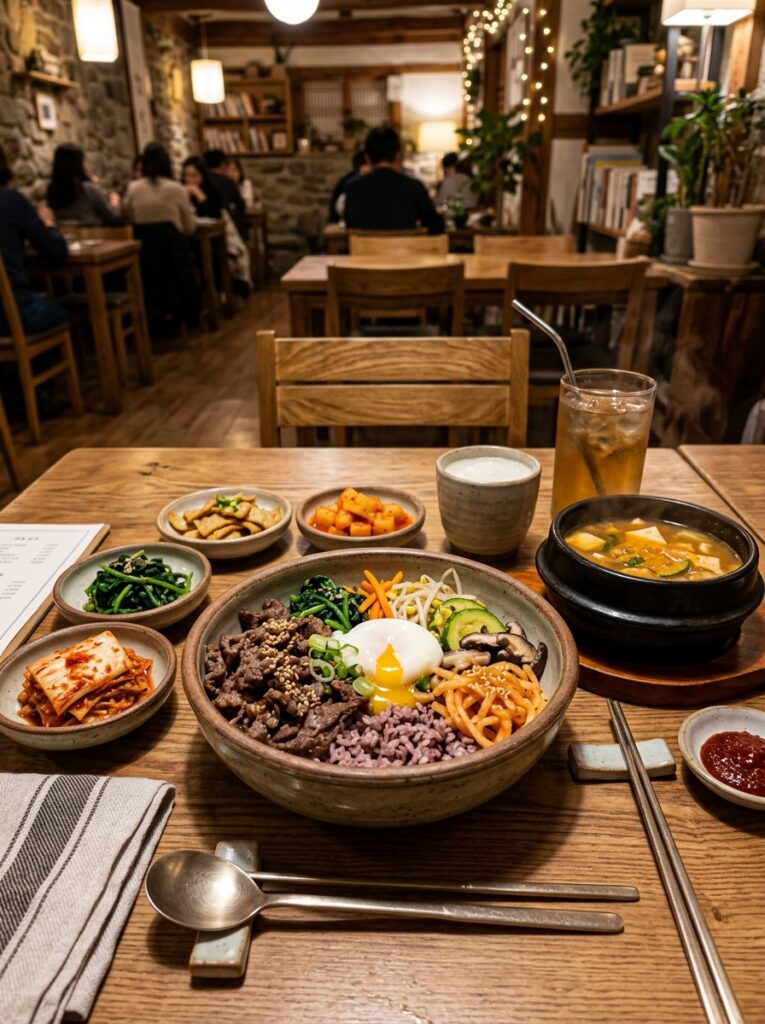
Pair the high protein Korean beef bowl with Korean side dishes like kimchi, pickled radish, and seasoned seaweed for bright contrasts. A refreshing drink such as barley tea, sparkling water with citrus, or a non-alcoholic ginger lemonade complements the savory glaze. For weeknight meals, plate the high protein Korean beef bowl with quick cucumber salad and roasted broccoli. During gatherings, offer extra toppings like soft-boiled eggs, extra scallions, and chili crisp. For holidays, style the high protein Korean beef bowl with a festive spread and multiple vegetable options for variety.
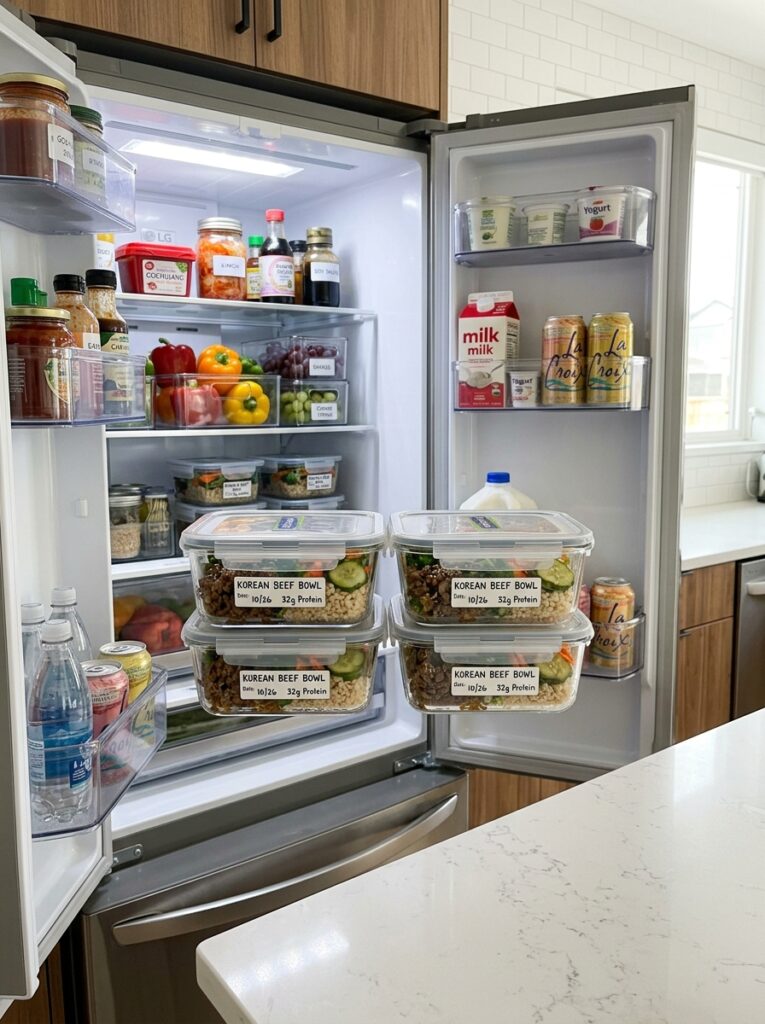
Storage and Reheating for High Protein Korean Beef Bowl
Use these storage and reheating steps to keep the high protein Korean beef bowl safe, tasty, and convenient for meal prep.
| Method | Duration | Instructions |
|---|---|---|
| Refrigerator | 3 to 4 days | Store rice and beef together in airtight containers; keep vegetables and toppings separate. |
| Freezer | 1 to 2 months | Freeze beef and sauce only; avoid freezing vegetables and rice for best texture. |
| Reheating stovetop | 3 to 5 minutes | Warm beef in a skillet over medium heat with a splash of water or extra sauce. |
| Reheating microwave | 1 to 2 minutes | Cover and heat in intervals, stirring to avoid hot spots and drying. |
| Make-ahead | 1 to 2 days | Prep sauce and slice beef ahead; cook fresh for best texture. |
| Food safety | Always | Cool within 2 hours, reheat to 165°F, and avoid cross-contamination. |
Nutritional Information for High Protein Korean Beef Bowl
This high protein Korean beef bowl provides high-quality protein, moderate carbohydrates, and satisfying fats for balanced energy.
| Nutrient | Amount per Serving |
|---|---|
| Calories | 520 |
| Protein | 42 g |
| Fat | 18 g |
| Carbohydrates | 48 g |
| Fiber | 6 g |
| Sugar | 8 g |
| Sodium | 900 mg |
Approximate values. For more guidance, see USDA nutrition resources and safe food handling from FoodSafety.gov.
Frequently Asked Questions About High Protein Korean Beef Bowl
What are the best high protein Korean beef bowl ingredient substitutions?
Swap beef for lean ground turkey, use tamari or coconut aminos for soy sauce, and replace rice with quinoa for extra protein. These changes keep the high protein Korean beef bowl flavorful while meeting dietary needs.
How do I know when the beef is done for a high protein Korean beef bowl?
Cook beef until browned with a slight crust and no visible pink, about 3 to 4 minutes per batch. The high protein Korean beef bowl benefits from a fast sear at high heat to preserve juiciness.
Why is my high protein Korean beef bowl sauce too thin?
Simmer the sauce longer to reduce, or add a teaspoon of honey to thicken. For the high protein Korean beef bowl, the glaze should coat the beef without pooling excessively.
Can I make a high protein Korean beef bowl ahead for meal prep?
Yes, prep sauce and slice beef ahead, then cook fresh when ready. This high protein Korean beef bowl method maximizes texture and flavor for weekday lunches.
What are the best toppings to serve with a high protein Korean beef bowl?
Top with green onions, sesame seeds, avocado, kimchi, and a soft-boiled egg. These toppings add texture and richness to the high protein Korean beef bowl.
How should I store leftovers of a high protein Korean beef bowl?
Store rice and beef in airtight containers and keep vegetables and toppings separate. Refrigerate the high protein Korean beef bowl for three to four days for best quality.
What is the best way to reheat a high protein Korean beef bowl?
Reheat beef and rice in a skillet over medium heat with a splash of water or extra sauce. This keeps the high protein Korean beef bowl moist and prevents drying out.
Can I freeze a high protein Korean beef bowl?
Freeze only the beef and sauce for one to two months; avoid freezing vegetables and rice. Reheat the high protein Korean beef bowl thoroughly before serving.
How can I create flavor variations for a high protein Korean beef bowl?
Add gochujang for spice, swap pear for kiwi for tenderizing, or mix in sesame oil for extra aroma. These tweaks personalize the high protein Korean beef bowl without extra complexity.
What beginner tips help nail a high protein Korean beef bowl?
Use high heat for searing, slice beef thinly against the grain, and taste sauce before marinating. Following these steps ensures your high protein Korean beef bowl turns out tender and flavorful.
This high protein Korean beef bowl works because it blends bold Korean flavors with practical nutrition and fast cooking. Try the recipe this week to experience tender beef, crisp vegetables, and a savory-sweet glaze that keeps you coming back. Serve the high protein Korean beef bowl with your favorite toppings, and savor the signature texture of caramelized beef, fluffy rice, and bright garnishes.
Print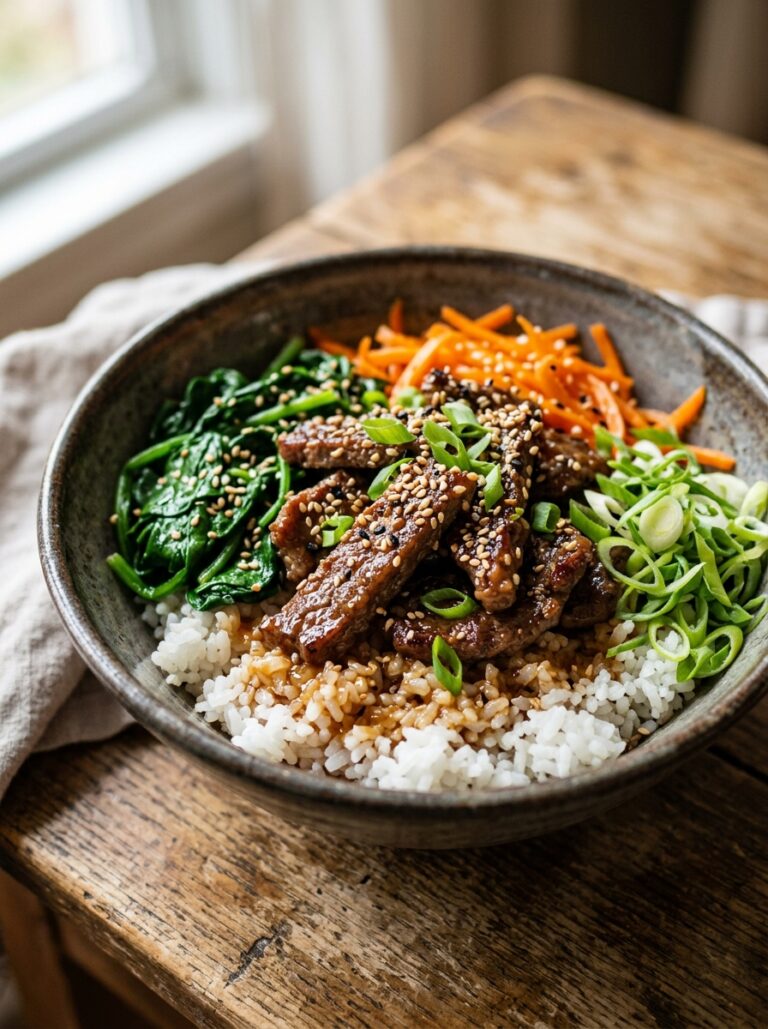
High Protein Korean Beef Bowl
A quick, flavorful Korean-inspired beef bowl with lean soy-marinated beef, crunchy carrots, fresh spinach, and aromatic sesame-scallion toppings, offering 30g protein per serving in under 27 minutes. Perfect for meal prepping or satisfying active lifestyles with balanced nutrition and bold bulgogi flavors.
- Total Time: 27
- Yield: 4 servings 1x
Ingredients
1 lb lean sirloin or flank steak (sliced into thin strips)
1/3 cup low-sodium soy sauce
1/4 cup unsweetened apple juice
3 tbsp brown sugar or pure maple syrup
2 cloves garlic (minced)
1 tbsp grated fresh ginger
1 tbsp toasted sesame oil
1 cup matchstick-cut carrots
2 cups packed spinach (fresh or frozen)
1/2 cup chopped scallions
2 tbsp sesame seeds (optional)
1/2 cup cooked brown rice or cauliflower rice
1 tsp vegetable oil (for pan-searing)
1 tbsp gochujang paste (optional, for heat)
Instructions
Combine soy sauce, apple juice, brown sugar, garlic, ginger, and sesame oil in a bowl for the marinade.
Marinate beef strips for 15 minutes.
Heat a large skillet over high heat and add vegetable oil.
Sauté beef until seared and lightly caramelized (3-4 minutes per side).
Remove beef and deglaze the pan with marinade, cooking until thickened.
In the same pan, stir-fry carrots and spinach until tender.
Assemble bowls with rice, grilled beef, stir-fried veggies, scallions, and sesame seeds.
Notes
Marinate overnight in the fridge for deeper flavor
Use gluten-free soy sauce for GF version
Adjust gochujang to control spiciness
Refrigerate leftovers for up to 3 days
Skip rice for lower-carb option and serve over quinoa
- Prep Time: 15
- Cook Time: 12
- Category: High Protein Meals
- Method: Stir-fry
- Cuisine: Korean
- Diet: High Protein
Nutrition
- Serving Size: 1 bowl
- Calories: 420
- Sugar: 18g
- Sodium: 1000mg
- Fat: 14g
- Saturated Fat: 2g
- Carbohydrates: 30g
- Fiber: 5g
- Protein: 35g
- Cholesterol: 60mg