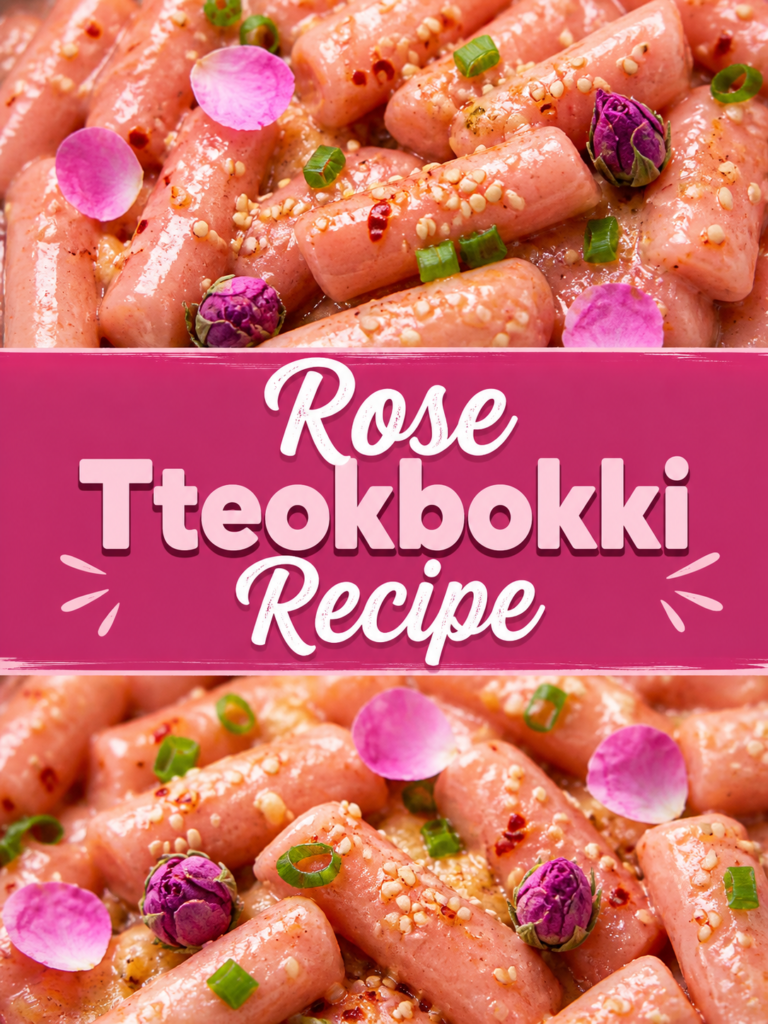
Rose tteokbokki recipe is a beautiful and Instagram-worthy twist on the classic Korean street food that transforms traditional red rice cakes into delicate pink creations using rose-infused sauce. This rose tteokbokki recipe combines sweet, savory, and floral notes to create a unique culinary experience that’s perfect for special occasions, romantic dinners, or anyone seeking an elevated take on comfort food. The rose tteokbokki recipe method is surprisingly straightforward, requiring just basic kitchen equipment and readily available ingredients. Unlike the spicy gochujang version most people know, rose tteokbokki recipe delivers a milder, more refined flavor profile with a subtle floral undertone. This homemade rose tteokbokki recipe serves four to six people and comes together in approximately 25 minutes, making it an impressive dish that doesn’t demand hours of preparation.
| Prep Time | Cook Time | Total Time | Servings | Difficulty | Cuisine |
|---|---|---|---|---|---|
| 10 minutes | 15 minutes | 25 minutes | 4-6 servings | Easy to Intermediate | Korean |
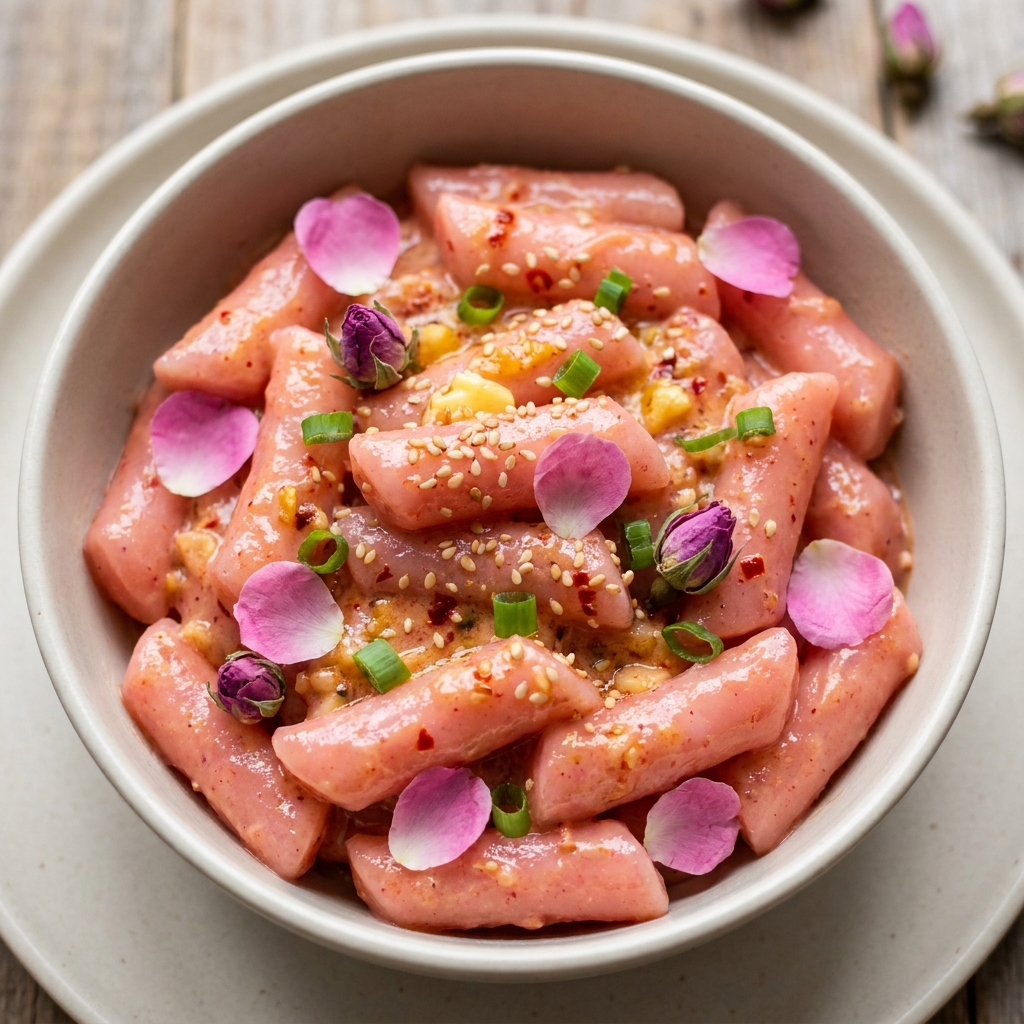
Table of Contents
Table of Contents
Why This Rose Tteokbokki Recipe Works
The rose tteokbokki recipe succeeds because it balances three competing yet complementary flavor profiles into one cohesive dish. I’ve prepared countless versions of this Korean favorite, and the rose tteokbokki recipe distinguishes itself through its sophisticated use of rose water, which adds an unexpected floral elegance without overwhelming the palate. Traditional versions rely heavily on fiery gochujang heat, but this rose tteokbokki recipe takes a different approach by incorporating cream, butter, and rose essence to create a luxurious sauce that clings beautifully to each chewy rice cake. The rose tteokbokki recipe is forgiving with timing, meaning you won’t accidentally overcook your rice cakes if you’re a few minutes off schedule.
What makes this rose tteokbokki recipe particularly appealing is the textural contrast between the soft, pillowy rice cakes and the fresh, crisp components like green onions and sesame seeds. I appreciate how the rose tteokbokki recipe comes together quickly enough for weeknight cooking but looks polished enough to impress dinner guests. The color of rose tteokbokki is naturally beautiful, drawing from the gochujang and rose water combination, so you don’t need food coloring to achieve that stunning pink hue. Home cooks love this rose tteokbokki recipe because it introduces Korean cuisine to new audiences while respecting the traditional foundation of the dish.
The creamy nature of rose tteokbokki recipe makes it less intense than street-vendor versions, which appeals to people who find typical tteokbokki too spicy. This rose tteokbokki recipe also works exceptionally well for meal prep since the components can be prepared separately and assembled just before serving. The rose tteokbokki recipe yields impressive results with minimal technical skill, making it ideal for home cooks of any experience level. Finally, the rose tteokbokki recipe is naturally photo-worthy, which has made it popular on social media and food blogs throughout Asia and beyond.
Rose Tteokbokki Recipe Ingredients
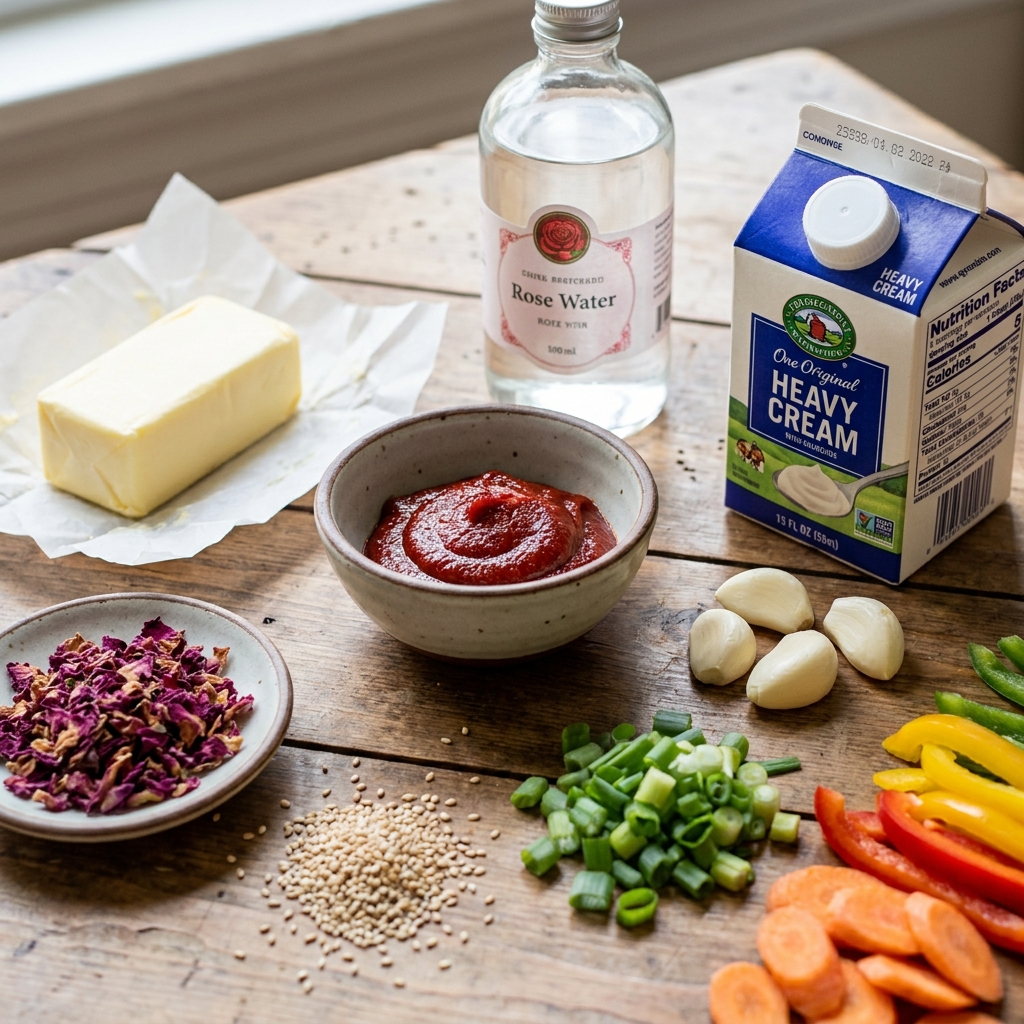
Gathering quality ingredients ensures your rose tteokbokki recipe develops deep, authentic flavors and achieves the correct consistency. The rose tteokbokki recipe relies on a balanced combination of Korean staples and pantry essentials that work together to create the signature sauce.
| Ingredient | Quantity | Notes with Alternatives |
|---|---|---|
| Korean tteokbokki rice cakes | 400g (14 oz) | Use fresh or frozen. Avoid pre-cooked varieties for this rose tteokbokki recipe. Substitute with similar Asian chewy noodles if unavailable. |
| Gochujang (Korean red chili paste) | 3 tablespoons | Essential for rose tteokbokki recipe color and flavor base. Use quality brands like Maeil or CJ. |
| Butter | 4 tablespoons (57g) | Unsalted butter works best for this rose tteokbokki recipe to control sodium levels. Creates the creamy sauce. |
| Heavy cream or coconut milk | ½ cup (120ml) | Heavy cream creates authentic richness in rose tteokbokki recipe. Coconut milk offers dairy-free alternative. |
| Rose water | 1 tablespoon | Critical for rose tteokbokki recipe’s signature floral note. Use food-grade rose water only. Start with ½ tablespoon if sensitive to floral flavors. |
| Garlic cloves | 4 cloves, minced | Freshly minced garlic brightens the rose tteokbokki recipe. Pre-minced garlic loses potency. |
| Sugar or honey | 2 tablespoons | Balances heat and adds sweetness to rose tteokbokki recipe. Honey adds depth. |
| Soy sauce | 1 tablespoon | Adds umami depth to rose tteokbokki recipe. Use reduced-sodium version if preferred. |
| Water | 1 cup (240ml) | For cooking rice cakes in rose tteokbokki recipe. Use filtered water for best taste. |
| Green onions (scallions) | 3-4 stalks, sliced | Fresh garnish for rose tteokbokki recipe. Adds brightness and visual appeal. |
| Sesame seeds | 2 tablespoons, toasted | Garnish for nutty flavor and texture in rose tteokbokki recipe. |
| Fresh rose petals (optional) | 2-3 tablespoons | Edible rose petals enhance presentation of rose tteokbokki recipe. Ensure they’re food-safe and pesticide-free. |
| Salt and white pepper | To taste | Season rose tteokbokki recipe at the end for optimal flavor control. |
Each ingredient in this rose tteokbokki recipe serves a specific purpose, from the gochujang providing color and depth to the rose water delivering that distinctive floral signature.
How to Make Rose Tteokbokki Recipe
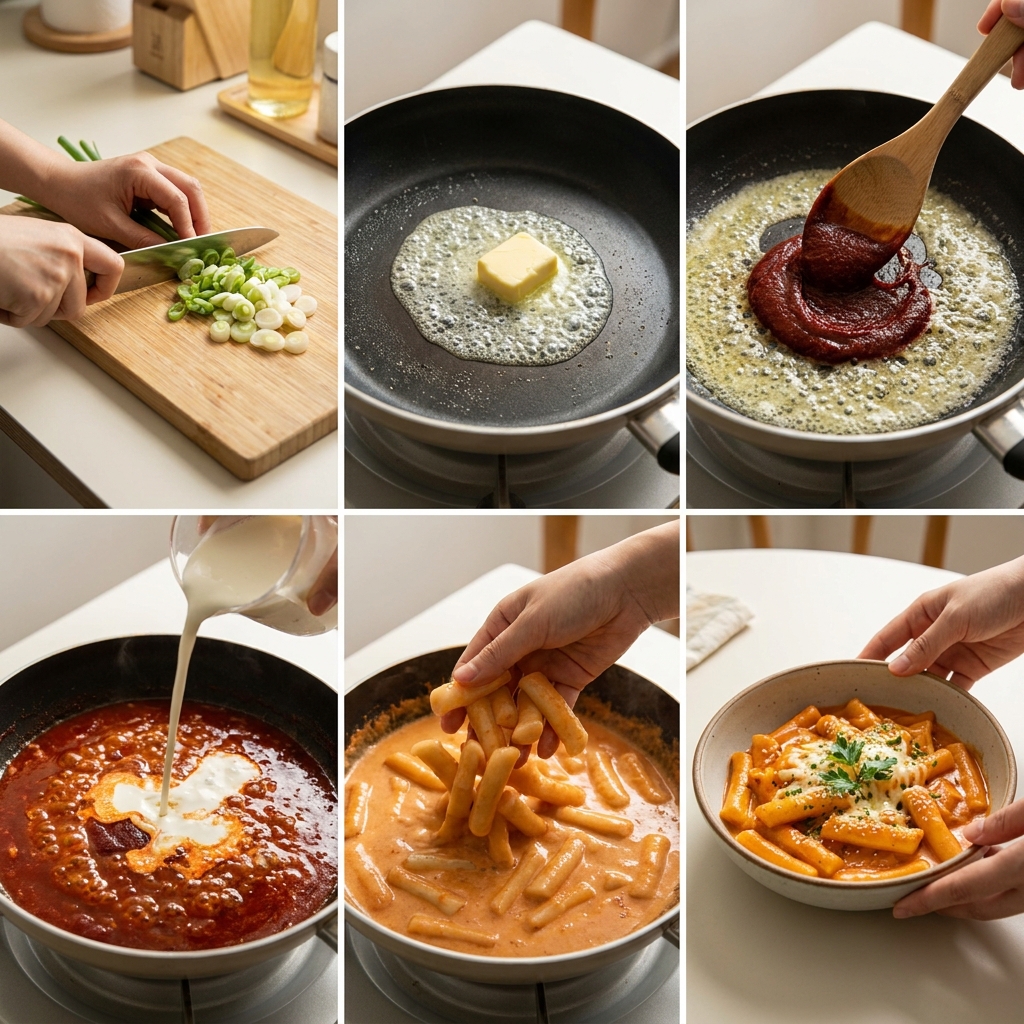
Creating your rose tteokbokki recipe involves preparing the sauce, cooking the rice cakes, and combining everything in a final assembly step. This rose tteokbokki recipe method ensures each component reaches perfect texture and flavor simultaneously.
Preparing the Sauce for Rose Tteokbokki Recipe
- Melt four tablespoons of unsalted butter in a large skillet or wok over medium heat, allowing it to become foamy before proceeding with your rose tteokbokki recipe.
- Add four minced garlic cloves to the melted butter and sauté for approximately one minute until fragrant, being careful not to burn the garlic in your rose tteokbokki recipe.
- Stir in three tablespoons of gochujang paste, mixing thoroughly to combine with the butter and create a smooth paste foundation for rose tteokbokki recipe.
- Pour in one cup of water gradually while stirring constantly to prevent lumps from forming in your rose tteokbokki recipe sauce.
- Add one tablespoon of soy sauce and two tablespoons of sugar to the rose tteokbokki recipe, stirring until the sugar completely dissolves.
- Reduce heat to medium-low and simmer the rose tteokbokki recipe sauce for three to four minutes, allowing flavors to meld together.
- Stir in one-half cup of heavy cream slowly while maintaining gentle heat throughout your rose tteokbokki recipe preparation.
- Add one tablespoon of rose water to the rose tteokbokki recipe sauce, stirring gently to distribute the floral essence evenly.
Cooking the Rice Cakes for Rose Tteokbokki Recipe
- Bring a separate pot of water to a rolling boil while your rose tteokbokki recipe sauce simmers.
- Add 400 grams of tteokbokki rice cakes directly to the boiling water for your rose tteokbokki recipe.
- Stir the rice cakes gently to prevent sticking together during cooking of rose tteokbokki recipe.
- Cook the rice cakes for approximately five to seven minutes until they float to the surface and become tender for your rose tteokbokki recipe.
- Drain the cooked rice cakes thoroughly using a colander before adding them to your rose tteokbokki recipe sauce.
Combining Everything for Final Rose Tteokbokki Recipe
- Pour the drained rice cakes directly into the simmering rose tteokbokki recipe sauce.
- Toss the rice cakes gently but thoroughly to coat every piece evenly with the rose tteokbokki recipe sauce.
- Simmer the rose tteokbokki recipe together for two to three minutes, allowing the rice cakes to absorb flavors from the sauce.
- Taste your rose tteokbokki recipe and adjust seasoning with salt and white pepper as needed.
- Transfer the rose tteokbokki recipe to a serving bowl or plates.
- Garnish your rose tteokbokki recipe generously with sliced green onions, toasted sesame seeds, and edible rose petals if desired.
- Serve the rose tteokbokki recipe immediately while the rice cakes are still warm and the sauce is at optimal temperature.
Chef Tips for Perfect Rose Tteokbokki Recipe
These professional techniques elevate your rose tteokbokki recipe from good to exceptional, ensuring consistent results every time you prepare this Korean specialty.
- Use freshly minced garlic rather than jarred alternatives in your rose tteokbokki recipe, as fresh garlic provides significantly more aromatic potency and prevents the dried, dusty quality that jarred versions introduce to the rose tteokbokki recipe sauce.
- Toast your sesame seeds in a dry skillet for one to two minutes before garnishing your rose tteokbokki recipe, which intensifies their nutty flavor profile and adds an essential textural contrast to the creamy rose tteokbokki recipe.
- Add the heavy cream to your rose tteokbokki recipe sauce slowly over medium-low heat rather than high heat, preventing the cream from curdling and maintaining the silky smooth texture that defines an exceptional rose tteokbokki recipe.
- Taste your rose tteokbokki recipe sauce before adding rice cakes, as this allows you to adjust heat levels and seasoning when making corrections is easier than after combining all elements in your rose tteokbokki recipe.
- Start with one-half tablespoon of rose water in your rose tteokbokki recipe and gradually increase to one full tablespoon, since rose water intensity varies by brand and personal preference dictates how prominent the floral note should be in your rose tteokbokki recipe.
- Keep your rose tteokbokki recipe covered with a lid while simmering to maintain moisture and prevent the sauce from reducing too quickly, which would concentrate flavors beyond the intended balance in your rose tteokbokki recipe.
Common Rose Tteokbokki Recipe Mistakes to Avoid
Understanding frequent pitfalls helps you navigate the rose tteokbokki recipe process confidently and produce restaurant-quality results in your home kitchen.
Overcooked Rice Cakes: This mistake occurs when rice cakes remain in boiling water too long before transfer to your rose tteokbokki recipe, resulting in mushy texture instead of the desired tender-but-chewy consistency. To fix this issue, drain your rice cakes as soon as they float to the surface of the rose tteokbokki recipe cooking water, even if a few still appear slightly firm. The rose tteokbokki recipe sauce will continue softening them through gentle simmering without pushing them past the optimal texture threshold.
Burnt Garlic in Rose Tteokbokki Recipe: Adding garlic to excessively hot butter causes bitter, burnt flavors that ruin the delicate balance of your rose tteokbokki recipe. Prevent this by maintaining medium heat throughout the rose tteokbokki recipe sauce preparation and removing your pan from direct heat momentarily if it becomes too hot. Burnt garlic cannot be salvaged in rose tteokbokki recipe, so this requires starting fresh rather than attempting to mask the off-flavors.
Insufficient Rose Water in Rose Tteokbokki Recipe: Many home cooks become timid with rose water, adding too little and creating rose tteokbokki recipe that lacks its signature floral characteristic. The rose tteokbokki recipe should feature a subtle but noticeable rose note that distinguishes it from regular tteokbokki, so trust the measurement and add the full tablespoon of rose water to your rose tteokbokki recipe unless you have specific taste preferences otherwise.
Uneven Sauce Distribution in Rose Tteokbokki Recipe: Failing to toss the rice cakes thoroughly means some pieces in your rose tteokbokki recipe receive heavy sauce coating while others remain relatively dry. Gently but vigorously toss your rose tteokbokki recipe ingredients for at least thirty seconds after combining them to ensure every rice cake contacts the creamy sauce.
Curdled Cream in Rose Tteokbokki Recipe: This happens when heavy cream meets excessively high temperatures, causing proteins to denature and separate in your rose tteokbokki recipe. Maintain medium-low heat when adding cream to your rose tteokbokki recipe and continue stirring gently throughout the simmering process to prevent curdling.
Best Rose Tteokbokki Recipe Variations and Substitutions
Adapting the rose tteokbokki recipe allows you to customize it for dietary needs, flavor preferences, and ingredient availability while maintaining the essential character of this Korean specialty.
| Ingredient | Substitution | Impact on Rose Tteokbokki Recipe Flavor |
|---|---|---|
| Heavy Cream | Coconut milk or cashew cream | Creates dairy-free rose tteokbokki recipe with similar richness; coconut adds tropical note while cashew offers neutral creaminess. |
| Gochujang | Gochugaru (chili flakes) plus tomato paste | Produces slightly different texture in rose tteokbokki recipe but maintains similar heat level; tomato paste adds acidity. |
| Rose Water | Orange blossom water or lavender water | Transforms rose tteokbokki recipe into floral variation with different aromatic profile; use same quantity. |
| Sugar | Honey, agave, or brown sugar | Rose tteokbokki recipe develops deeper sweetness with honey or brown sugar; agave provides neutral sweetness. |
| Soy Sauce | Tamari or coconut aminos | Gluten-free rose tteokbokki recipe with tamari; coconut aminos adds slight sweetness to rose tteokbokki recipe. |
| Butter | Olive oil or ghee | Rose tteokbokki recipe develops different richness profile; ghee adds nutty depth. |
| Rice Cakes | Sweet potato noodles or regular noodles | Rose tteokbokki recipe gains different texture; chewy quality reduces but rose tteokbokki recipe maintains similar flavor. |
| Garlic | Shallots or garlic powder | Rose tteokbokki recipe becomes milder; use half quantity of garlic powder as it concentrates easily. |
The rose tteokbokki recipe accommodates numerous adaptations without losing its essential identity, making it perfect for home cooks with varied dietary restrictions or flavor preferences.
Serving Suggestions for Rose Tteokbokki Recipe
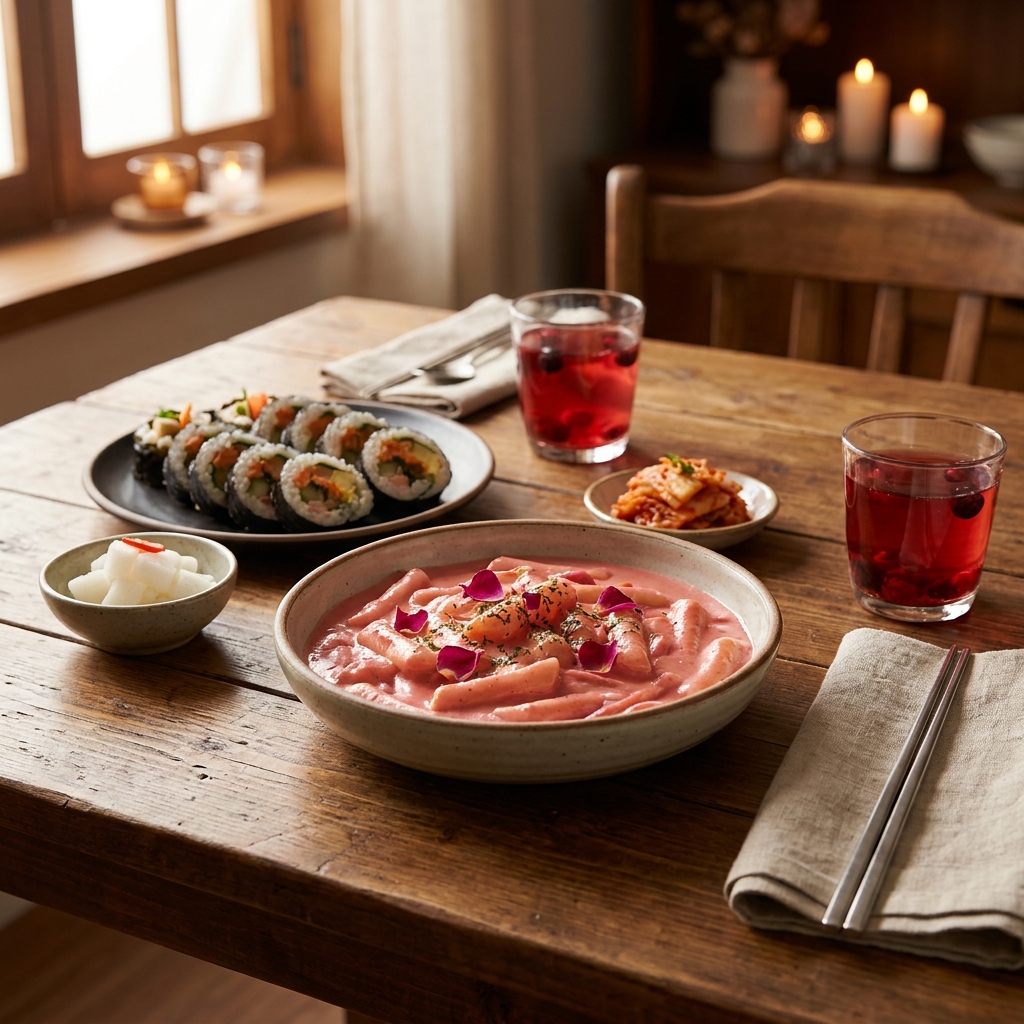
The rose tteokbokki recipe serves beautifully in multiple contexts, from intimate romantic dinners to casual family gatherings and special celebrations. Present your rose tteokbokki recipe in a shallow bowl or on a plated serving to showcase the gorgeous pink sauce and vibrant green garnishes.
Pair your rose tteokbokki recipe with crispy Kimbap (Korean seaweed rolls), steamed dumplings, or vegetable tempura for a complete Korean-inspired meal. Serve rose tteokbokki recipe alongside pickled radish (danmuji) and kimchi to provide sharp, acidic counterbalances to the creamy sauce. The rose tteokbokki recipe pairs exceptionally well with light beverages like lychee juice, rose lemonade, or honey tea rather than heavy drinks.
For romantic occasions, present individual servings of rose tteokbokki recipe on elegant small plates, topped with fresh edible flowers for an Instagram-worthy presentation. The rose tteokbokki recipe works as an appetizer course in multi-course Korean menus or as the main focus of a light dinner. Family weeknight meals benefit from rose tteokbokki recipe served family-style in a central bowl with sides of rice and vegetables. The rose tteokbokki recipe also shines at potlucks and gatherings since it maintains reasonable warmth and presentation quality throughout serving periods.
Storage and Reheating for Rose Tteokbokki Recipe
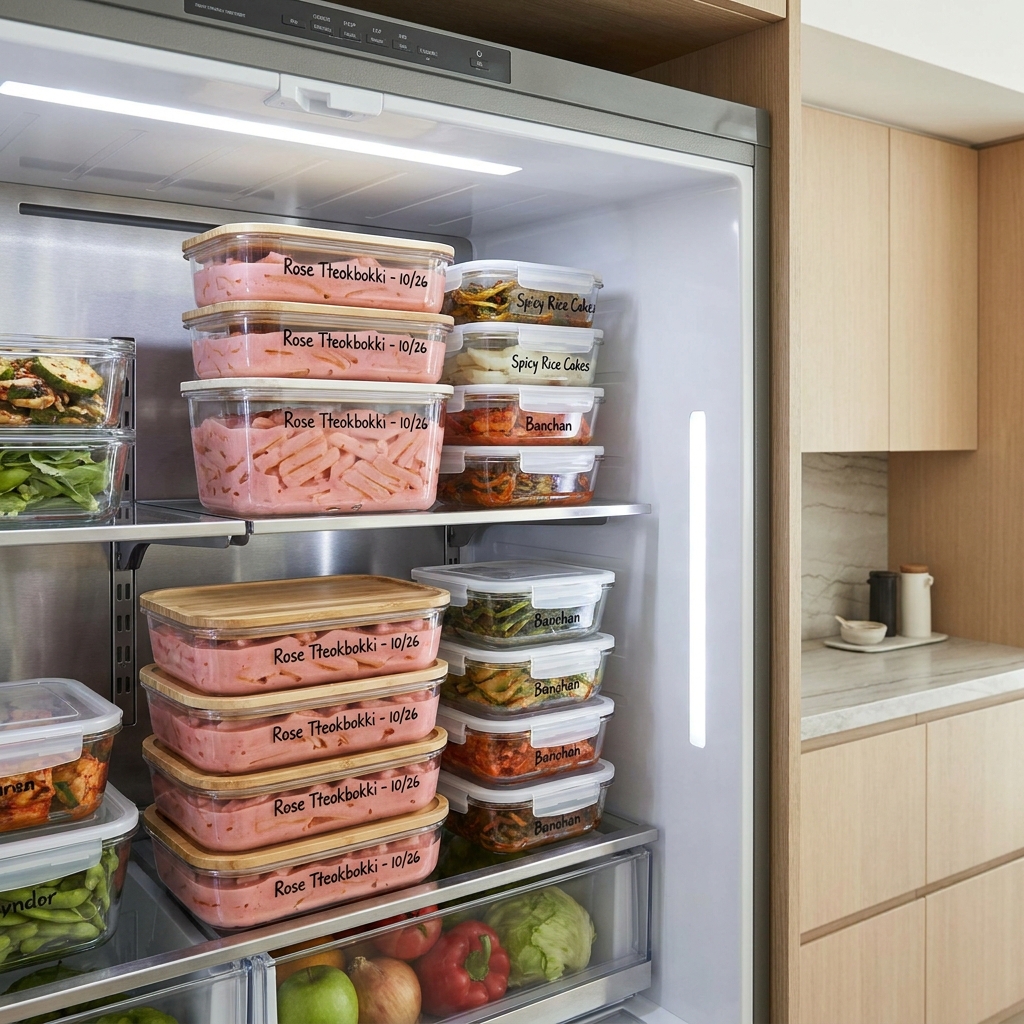
Proper storage techniques preserve the quality of your rose tteokbokki recipe, allowing you to enjoy leftovers or prepare components in advance for efficient meal preparation.
| Method | Duration | Instructions for Rose Tteokbokki Recipe |
|---|---|---|
| Refrigerator Storage | Up to 3 days | Store rose tteokbokki recipe in airtight container; rice cakes continue absorbing sauce gradually. Keep sauce and rice cakes together for best texture. |
| Freezer Storage | Up to 2 months | Freeze rose tteokbokki recipe in freezer-safe container, leaving quarter-inch headspace. Store sauce separately if preferred to extend shelf life. |
| Stovetop Reheating | N/A | Transfer rose tteokbokki recipe to skillet over medium heat, stirring occasionally for five to seven minutes. Add splash of water if sauce has reduced too much in your rose tteokbokki recipe. |
| Microwave Reheating | N/A | Place rose tteokbokki recipe in microwave-safe bowl, cover loosely, heat for two to three minutes at fifty percent power. Stir halfway through reheating rose tteokbokki recipe. |
| Make-Ahead Preparation | Up to 24 hours | Prepare rose tteokbokki recipe sauce completely and refrigerate separately. Cook rice cakes fresh just before serving for optimal texture in rose tteokbokki recipe. |
| Thawing Frozen Rose Tteokbokki Recipe | N/A | Thaw rose tteokbokki recipe in refrigerator overnight, then reheat using stovetop method. Do not thaw at room temperature to prevent food safety issues in rose tteokbokki recipe. |
The rose tteokbokki recipe develops slightly thicker sauce consistency after refrigeration as the rice cakes continue absorbing liquid, so adding water when reheating ensures proper consistency. Frozen rose tteokbokki recipe maintains quality for up to two months if stored properly in an airtight container. Separate the sauce from rice cakes before freezing your rose tteokbokki recipe if you prefer to refresh the components individually.
Nutritional Information for Rose Tteokbokki Recipe
Understanding the nutritional profile of rose tteokbokki recipe helps you incorporate it into balanced meal planning and dietary goals.
| Nutrient | Amount per Serving (Recipe Makes 4 Servings) |
|---|---|
| Calories | 285 kcal |
| Total Fat | 14g |
| Saturated Fat | 9g |
| Cholesterol | 42mg |
| Sodium | 485mg |
| Total Carbohydrates | 38g |
| Dietary Fiber | 1g |
| Sugars | 8g |
| Protein | 5g |
These are approximate values for rose tteokbokki recipe based on standard ingredients and typical preparation methods. The actual nutritional content of rose tteokbokki recipe may vary depending on specific brands used and portion sizes served. Rose tteokbokki recipe derives most calories from carbohydrates provided by rice cakes and fats from butter and cream.
Frequently Asked Questions About Rose Tteokbokki Recipe
Can I Make Rose Tteokbokki Recipe Without Rose Water?
You can prepare rose tteokbokki recipe without rose water, but it transforms from a specialty variation into standard creamy tteokbokki. The rose tteokbokki recipe loses its signature floral character if you omit rose water entirely. Instead of skipping this ingredient in your rose tteokbokki recipe, try reducing to half tablespoon if you’re sensitive to floral notes. Alternative floral waters like orange blossom water can substitute in rose tteokbokki recipe to maintain the specialty designation.
How Do I Know When Rose Tteokbokki Rice Cakes Are Perfectly Cooked?
Perfectly cooked rice cakes in rose tteokbokki recipe float to the surface of boiling water and yield slightly when pressed gently between your fingers, remaining tender but chewy rather than mushy. Test your rose tteokbokki recipe rice cakes by removing one with a spoon and cutting it in half to verify no hard center remains. The rose tteokbokki recipe rice cakes should bend easily without breaking or tearing, indicating proper doneness. Drain your rose tteokbokki recipe rice cakes as soon as they float rather than waiting additional time, as continued boiling quickly transforms tender texture into undesirable mushiness.
What Should I Do If My Rose Tteokbokki Recipe Sauce Is Too Thick?
Thin your rose tteokbokki recipe sauce by stirring in water, one tablespoon at a time, until reaching desired consistency. The rose tteokbokki recipe sauce should coat the rice cakes without creating puddles at the bottom of the dish or appearing overly runny. Continue heating your rose tteokbokki recipe sauce while adding water to maintain proper temperature throughout. If your rose tteokbokki recipe became too thick while refrigerated, adding two tablespoons of water per serving should restore appropriate consistency before reheating.
Can I Prepare Rose Tteokbokki Recipe Components a Day in Advance?
Prepare rose tteokbokki recipe sauce up to twenty-four hours ahead, storing it in an airtight container in the refrigerator. Cook your rose tteokbokki recipe rice cakes fresh on serving day for optimal texture and chewiness. The rose tteokbokki recipe benefits from combining components just before serving rather than allowing rice cakes to soak in sauce overnight. You can also chop garnishes for your rose tteokbokki recipe ahead of time, storing them in separate containers to maintain freshness and visual appeal.
Why Does My Rose Tteokbokki Recipe Taste Bitter?
Bitter flavor in rose tteokbokki recipe typically indicates burnt garlic from excessive heat during sauce preparation. The rose tteokbokki recipe must be discarded if garlic burns, as no adjustment rescues this flavor mistake. Begin your rose tteokbokki recipe over with fresh ingredients, maintaining medium heat and removing the pan from direct heat if it becomes too hot. Ensure your rose tteokbokki recipe garlic never browns beyond golden color, which would ruin the delicate balance of your dish.
How Can I Make Rose Tteokbokki Recipe Less Spicy?
Reduce gochujang quantity in rose tteokbokki recipe from three tablespoons to two tablespoons, then taste and adjust further if needed. The rose tteokbokki recipe will become milder while maintaining characteristic reddish color and flavor. Add more cream or butter to your rose tteokbokki recipe to further temper heat levels and increase richness. The rose tteokbokki recipe tolerates these adjustments well since the floral rose water and creamy sauce balance spice naturally.
What Are Best Dairy-Free Options for Rose Tteokbokki Recipe?
Coconut milk provides the most authentic creamy texture in dairy-free rose tteokbokki recipe, using the same one-half cup quantity as heavy cream. Oat milk or cashew cream also work excellently in rose tteokbokki recipe, offering neutral flavors that don’t compete with other ingredients. Use vegan butter in place of unsalted butter in your rose tteokbokki recipe, maintaining identical quantities and cooking methods. The rose tteokbokki recipe remains delicious and creamy regardless of dairy substitutions you choose.
Can I Freeze Rose Tteokbokki Recipe for Later Consumption?
Freeze rose tteokbokki recipe in airtight freezer-safe containers for up to two months, maintaining quality through proper storage conditions. The rose tteokbokki recipe texture changes slightly after freezing but remains acceptable when properly reheated. Thaw your rose tteokbokki recipe in the refrigerator overnight before reheating on the stovetop for best results. Separate sauce from rice cakes before freezing your rose tteokbokki recipe if you prefer refreshing individual components.
How Do I Prevent Rice Cakes From Sticking Together in Rose Tteokbokki Recipe?
Stir rice cakes gently but thoroughly during the initial boiling stage of rose tteokbokki recipe preparation, separating any that clump together. Once drained and transferred to rose tteokbokki recipe sauce, gentle tossing continues preventing sticking. The rose tteokbokki recipe sauce naturally coats individual rice cakes, preventing adhesion between them. Avoid stirring too vigorously in rose tteokbokki recipe, which breaks delicate rice cakes into unappetizing fragments.
What Makes Rose Tteokbokki Recipe Different From Regular Tteokbokki?
Rose tteokbokki recipe differs through the addition of rose water, which creates distinctive floral notes absent in traditional versions. The rose tteokbokki recipe also incorporates heavy cream rather than simple broth, producing richer, creamier sauce texture. Regular tteokbokki emphasizes fiery heat while rose tteokbokki recipe balances spice with sweetness, creaminess, and subtle floral elegance. The rose tteokbokki recipe naturally produces pink sauce coloring from gochujang combined with cream and rose water, creating visually distinctive presentation.
Conclusion
Rose tteokbokki recipe transforms a beloved Korean street food into an elegant, sophisticated dish perfect for special occasions and everyday indulgence alike. This rose tteokbokki recipe succeeds through harmonious balance of sweet, savory, spicy, and floral elements, creating a memorable eating experience that lingers on the palate. The rose tteokbokki recipe requires minimal technical skill and comes together in under thirty minutes, making it accessible to home cooks of any experience level. Whether you’re seeking an Instagram-worthy meal, a romantic dinner option, or a unique twist on traditional Korean cuisine, rose tteokbokki recipe delivers impressive results that look and taste restaurant-quality. The combination of tender rice cakes enveloped in creamy pink sauce, accented with fresh herbs and toasted sesame seeds, creates the signature appeal that defines exceptional rose tteokbokki recipe.
Hot Honey Cottage Cheese Sweet Potato Beef Bowl
Chili Crisp Carrot Ribbon Salad Recipe
For more information about Korean cuisine and cooking techniques, consult Maangchi’s traditional Korean cooking resources and food safety guidelines from USDA for proper storage and food handling practices.
Print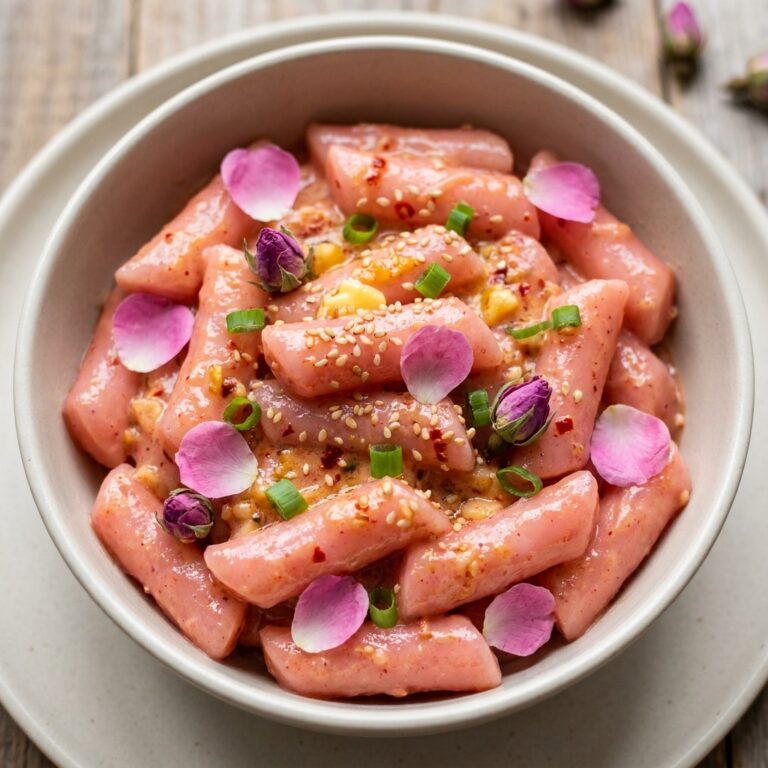
Viral Rose Tteokbokki Recipe
A sophisticated, floral twist on classic Korean tteokbokki using rose-infused sauce. This elegant pink rice cake dish balances sweet, savory, and floral notes, perfect for special occasions or elevated comfort food.
- Total Time: 25
- Yield: 4–6 servings 1x
Ingredients
2 cups rice flour
1 1/4 cups water
2 tbsp soy sauce
2 tbsp unsalted butter
1 tbsp cornstarch
1 tsp rose water
1 tsp sesame seeds
1 tbsp grated garlic
4 green onions, sliced
4 tbsp heavy cream
1 tbsp sugar
Fresh rose petals for garnish
Instructions
Mix rice flour and water in a pot; cook over medium heat for 3-4 minutes until thickened. Knead the dough, then cut into 1cm sticks.
In a saucepan, melt butter, add soy sauce, rose water, cornstarch, sugar, and cream. Simmer until thickened.
Gently simmer rice cakes in the sauce for 8-10 minutes until sticky and coated. Top with green onions, sesame seeds, and rose petals.
Notes
Use store-bought white rice cakes if preferred.
For vegan version, substitute butter with coconut oil.
Fresh rose petals are edible and enhance presentation.
Store leftovers in an airtight container for up to 2 days.
- Prep Time: 10
- Cook Time: 15
- Category: High Protein Meals
- Method: Simmering
- Cuisine: Korean
- Diet: Vegetarian
Nutrition
- Serving Size: 150g
- Calories: 220
- Sugar: 5g
- Sodium: 3500mg
- Fat: 6g
- Saturated Fat: 4g
- Carbohydrates: 32g
- Fiber: 1g
- Protein: 4g
- Cholesterol: 15mg