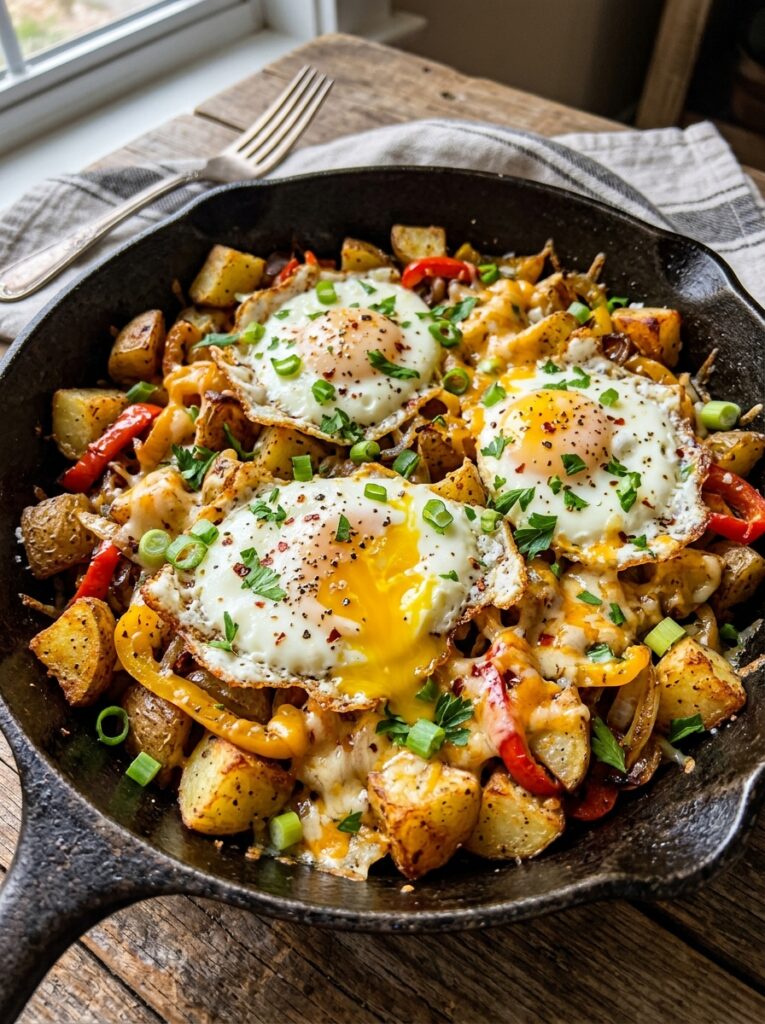
A high protein breakfast potato skillet is a complete, hearty morning meal built around eggs and potatoes. This dish combines diced potatoes with protein-rich ingredients to fuel your entire day. You get savory flavors and balanced nutrition in one pan. The recipe is simple, satisfying, and perfect for busy mornings. Enjoy a hot, nutritious breakfast with minimal cleanup and maximum taste.
Recipe Overview
| Prep Time | Cook Time | Total Time | Servings | Difficulty | Cuisine |
|---|---|---|---|---|---|
| 15 minutes | 25 minutes | 40 minutes | 4 | Easy | American |
Why This Recipe Works
This high protein breakfast potato skillet delivers sustained energy through balanced macronutrients. Potatoes provide complex carbohydrates for steady fuel, while eggs offer premium protein for muscle support. The combination keeps you full for hours. I start my mornings with this skillet when I need lasting power without mid-morning crashes. The texture contrast between crispy potatoes and soft eggs creates a satisfying eating experience.
The seasoning profile builds savory depth that makes vegetables shine. Bell peppers and onions caramelize slightly, adding natural sweetness. Cheese melts into the mixture, creating creamy pockets throughout. This approach transforms simple ingredients into a restaurant-quality breakfast. You get professional results without complicated techniques or expensive equipment.
One-pan cooking minimizes cleanup while maximizing flavor development. Ingredients cook in stages, allowing each component to reach its ideal texture. Potatoes soften while edges crisp, eggs set gently, and vegetables retain some bite. This method ensures nothing becomes soggy or overcooked. The result is a harmonious blend of textures in every bite.
The recipe scales easily for meal prep or feeding a crowd. You can double portions for weekend brunch or portion for quick weekday reheats. Customization options let you adjust protein levels based on your goals. Adding different vegetables or spices keeps the dish interesting throughout the week. This flexibility makes it a staple in my kitchen rotation.
Ingredients
| Ingredient | Quantity | Notes with Alternatives |
|---|---|---|
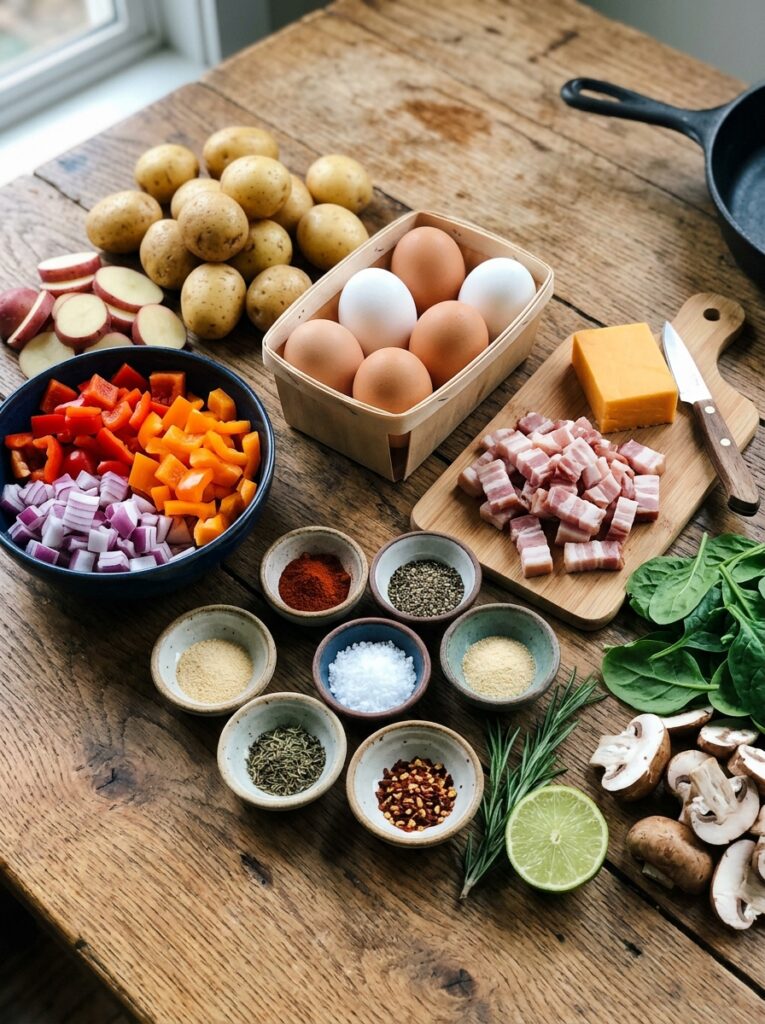
| Potatoes | 4 medium | Yukon gold recommended; use sweet potatoes for lower glycemic option |
| Eggs | 6 large | Whole eggs for protein; add extra for more protein |
| Bell pepper | 1 large | Red, yellow, or orange; green for lower sugar |
| Onion | 1 medium | Yellow onion preferred; shallots for milder flavor |
| Cheddar cheese | 1 cup shredded | Reduced-fat available; nutritional yeast for dairy-free |
| Olive oil | 2 tablespoons | Avocado oil works for higher smoke point |
| Salt | 1 teaspoon | Adjust to taste; sea salt alternative |
| Black pepper | 1/2 teaspoon | Freshly ground recommended |
| Paprika | 1 teaspoon | Smoked paprika for deeper flavor |
| Garlic powder | 1/2 teaspoon | Fresh minced garlic alternative |
| Green onions | 2 stalks | Garnish; parsley or cilantro alternatives |
Step-by-Step Instructions
Phase 1: Prepare Vegetables
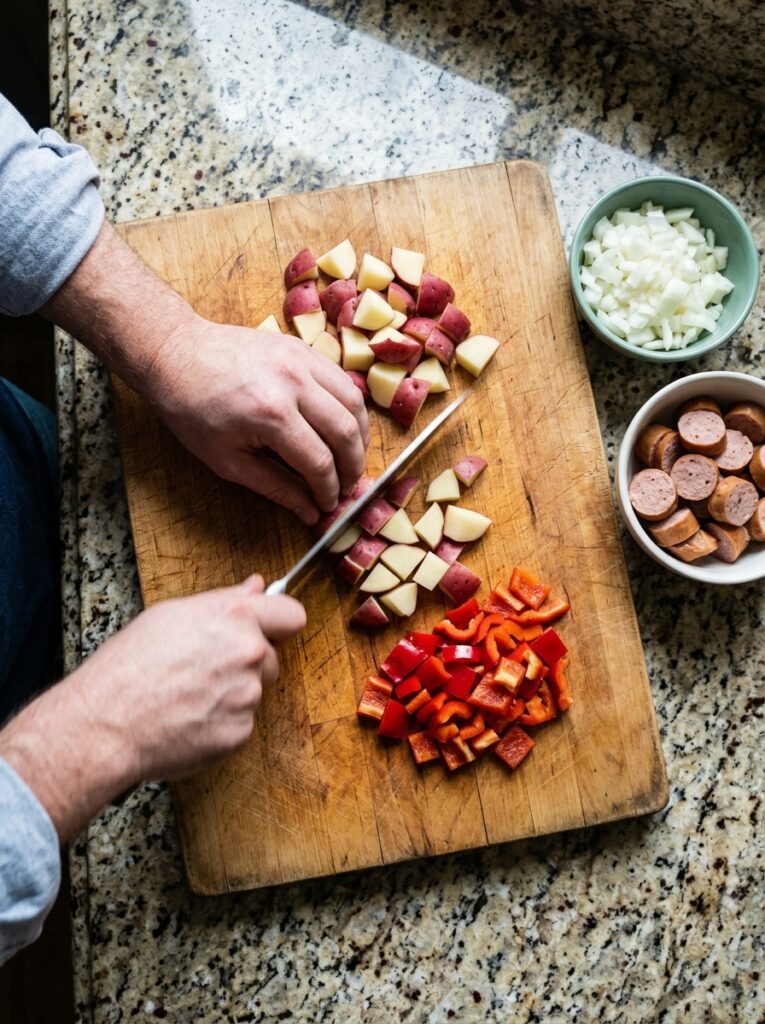
Wash and dice potatoes into 1/2-inch cubes for even cooking. Dice bell pepper and onion into similar-sized pieces for consistent texture. Keep vegetables separated for sequential cooking. This preparation ensures everything finishes at the same time.
Phase 2: Cook Potatoes
Heat olive oil in a large cast-iron skillet over medium-high heat. Add diced potatoes and spread in an even layer. Season with salt, pepper, paprika, and garlic powder. Cook without stirring for 5 minutes to develop a golden crust.
Phase 3: Add Vegetables
Stir potatoes and add diced onion and bell pepper to the skillet. Reduce heat to medium and continue cooking for 8-10 minutes. Stir occasionally until potatoes are tender and vegetables soften. The mixture should be aromatic and slightly caramelized.
Phase 4: Add Eggs
Create small wells in the potato mixture with a spoon. Crack eggs directly into each well. Cover the skillet with a lid and reduce heat to low. Cook for 5-7 minutes until egg whites set but yolks remain slightly runny.
Phase 5: Finish and Serve
Remove from heat and sprinkle shredded cheese over the top. Cover again for 1-2 minutes to melt the cheese. Garnish with sliced green onions. Serve immediately while hot and keep the skillet on the table for family-style eating.
Chef Tips for Perfect Results
- Use day-old potatoes for drier texture; fresh potatoes hold more moisture which can make the skillet soggy. Store peeled potatoes in cold water for up to 24 hours.
- Par-cook potatoes in microwave for 3 minutes before skillet cooking; this reduces stovetop time and ensures even doneness throughout.
- Let eggs sit at room temperature for 15 minutes before cooking; cold eggs cook unevenly and can seize in the pan.
- Use a well-seasoned cast-iron skillet for best heat distribution; non-stick works but won’t achieve the same crispy potato edges.
- Add protein boosters like cooked chickpeas or white beans for extra plant-based protein without changing the flavor profile significantly.
Common Mistakes to Avoid
- Overcrowding the skillet prevents crisping; cook in batches if needed for proper browning and texture development.
- Stirring potatoes too frequently prevents crust formation; allow 4-5 minutes between stirs for optimal browning.
- Adding eggs too early causes rubbery texture; wait until potatoes are nearly done before adding eggs to cook them gently.
- Using high heat throughout burns seasonings; reduce to medium-low after initial browning to develop flavors without scorching.
- Skipping the cover traps steam and makes eggs watery; use lid to cook eggs evenly and retain moisture for creamy yolks.
Variations and Substitutions
| Ingredient | Substitution | Impact on Flavor |
|---|---|---|
| Potatoes | Sweet potatoes | Sweeter taste, lower glycemic index |
| Eggs | Egg whites only | Less rich, reduced fat content |
| Cheddar cheese | Feta cheese | Briny tang, less creamy melt |
| Bell pepper | Zucchini | Milder flavor, softer texture |
| Olive oil | Coconut oil | Slight coconut sweetness |
| Onion | Leeks | Milder, sweeter allium flavor |
Serving Suggestions and Pairings
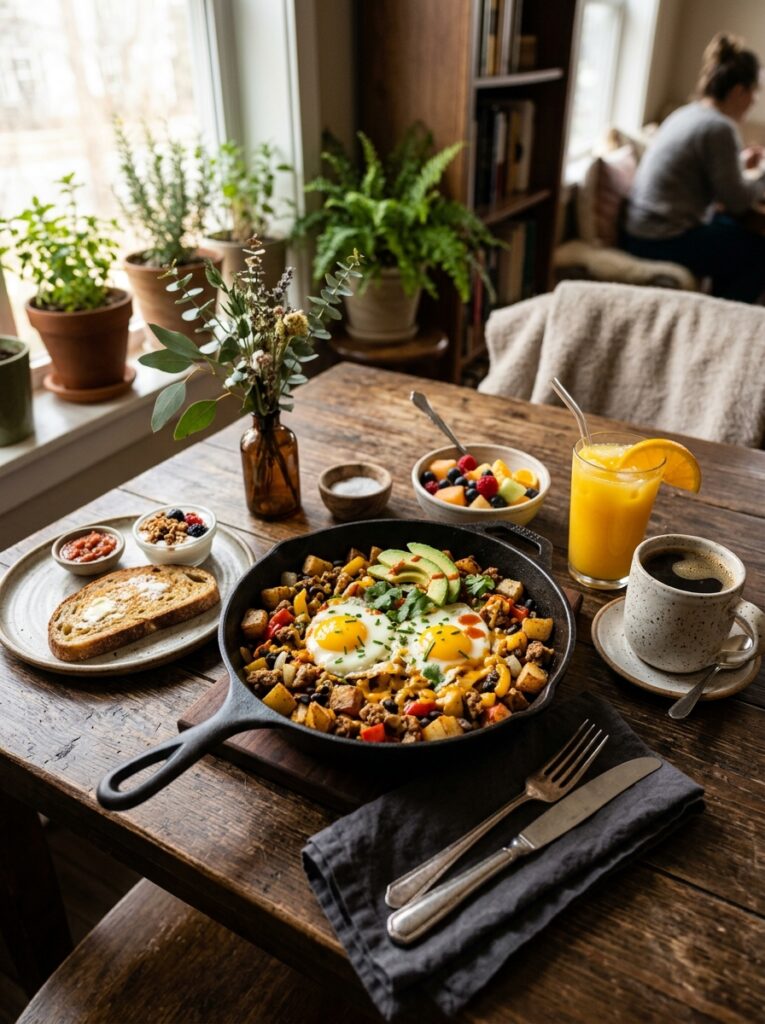
This high protein breakfast potato skillet pairs perfectly with fresh fruit salad for brightness. Serve alongside whole-grain toast for added carbohydrates on active days. A dollop of Greek yogurt adds creaminess and extra protein. For brunch gatherings, offer sliced avocado and hot sauce as toppings.
Occasion-based pairings make this skillet versatile. Weekend family breakfasts benefit from fresh squeezed orange juice and coffee. Meal prep lunches can be packed with a side salad for completeness. Athletic meal prep works well with extra egg whites added before reheating. The dish adapts to casual or slightly elevated dining situations.
Internal link placeholder: Explore more healthy breakfast ideas for complementary recipes. External authority link: Academy of Nutrition and Dietetics for nutrition guidance.
Internal link placeholder: Discover meal prep strategies to streamline your mornings. External authority link: USDA FoodData Central for accurate nutritional information.
Internal link placeholder: Browse vegetable skillet recipes for more one-pan meal inspiration.
Storage and Reheating
| Method | Duration | Instructions |
|---|---|---|
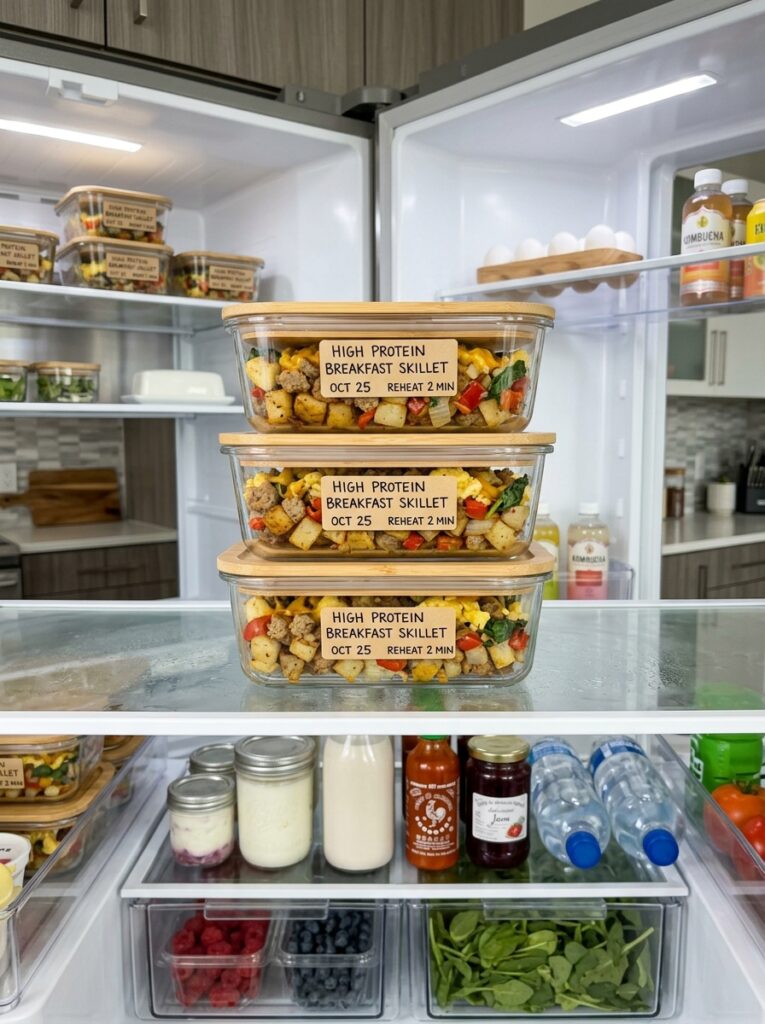
| Refrigerator | 3-4 days | Cool completely, store in airtight container, separate eggs if possible |
| Freezer | 1 month | Flash freeze portions, store in freezer bags, remove air |
| Microwave Reheat | 2-3 minutes | Use medium power, stir halfway, add splash of water |
| Stovetop Reheat | 5-7 minutes | Use medium heat, add oil, stir gently until hot |
| Oven Reheat | 10-12 minutes | 350°F, covered with foil, until center reaches 165°F |
Nutritional Information
| Nutrient | Amount per Serving |
|---|---|
| Calories | Approximately 450 |
| Protein | Approximately 24 grams |
| Fat | Approximately 18 grams |
| Carbohydrates | Approximately 45 grams |
| Fiber | Approximately 6 grams |
| Sugar | Approximately 5 grams |
| Sodium | Approximately 650 milligrams |
Frequently Asked Questions
Can I make this high protein breakfast potato skillet vegetarian?
Yes, this recipe is naturally vegetarian as it contains no meat products. The eggs provide all animal protein present in the dish. You can add extra vegetables like spinach or mushrooms for more nutrition. The vegetarian version remains just as satisfying and flavorful.
How do I know when the potatoes are fully cooked?
Test potatoes with a fork; they should pierce easily without resistance. The edges should be golden brown and slightly crispy. Cooking time varies based on potato size and skillet heat. If needed, cover the skillet to steam-cook through without burning.
What if my eggs are overcooking while potatoes finish?
Remove the skillet from heat immediately and cover for 2 minutes to carryover cook. Lower the heat to the lowest setting if adding eggs early. Next time, cook potatoes further before adding eggs. The yolk should remain slightly runny for best texture.
Can I prepare the high protein breakfast potato skillet ahead for meal prep?
Absolutely, cook the potato and vegetable mixture completely, then store separately from eggs. Reheat the base and add fresh eggs when ready to serve. For fully cooked versions, store for up to 3 days and reheat gently. Quality is best within the first two days.
Which cheese works best for melting?
Cheddar, Monterey Jack, or mozzarella melt beautifully in this skillet. Avoid aged cheeses like Parmesan which don’t melt smoothly. For dairy-free, use nutritional yeast or vegan cheese shreds. The cheese should create a creamy layer without becoming greasy.
Can I use frozen vegetables instead of fresh?
Yes, frozen diced onions and peppers work well in this recipe. Thaw and pat dry before adding to prevent excess moisture. Add them later in the cooking process to avoid mushiness. Fresh vegetables do provide better texture and flavor.
How can I increase the protein content further?
Add more eggs per serving or include cooked chickpeas or white beans. Greek yogurt as a topping adds protein without changing the cooking process. You can also top with extra egg whites. These additions keep the dish high protein while maintaining flavor.
Is this recipe suitable for gluten-free diets?
Yes, this high protein breakfast potato skillet is naturally gluten-free. All listed ingredients contain no gluten. Check spice labels if you have celiac disease to ensure no cross-contamination. The dish fits well in gluten-free meal plans.
What skillet material works best for this recipe?
Cast iron provides superior heat retention and crispy edges. Stainless steel works but requires more attention to prevent sticking. Non-stick is beginner-friendly but may not achieve maximum browning. Choose based on your comfort and equipment availability.
Can children eat this dish?
Yes, this skillet is family-friendly and adaptable for children. Reduce spices if sensitive to seasonings. Cut potatoes smaller for easier eating. The eggs can be fully cooked for kids who prefer firmer yolks. It’s a nutritious option for growing appetites.
Conclusion
This high protein breakfast potato skillet delivers nutrition, flavor, and convenience in one pan. The combination of potatoes, eggs, and vegetables creates a complete meal that satisfies without complexity. You can customize it for your dietary needs and preferences. Make it on weekends or batch cook for busy weekdays ahead. Start your mornings with this power-packed skillet and enjoy sustained energy and delicious taste throughout your day.
Print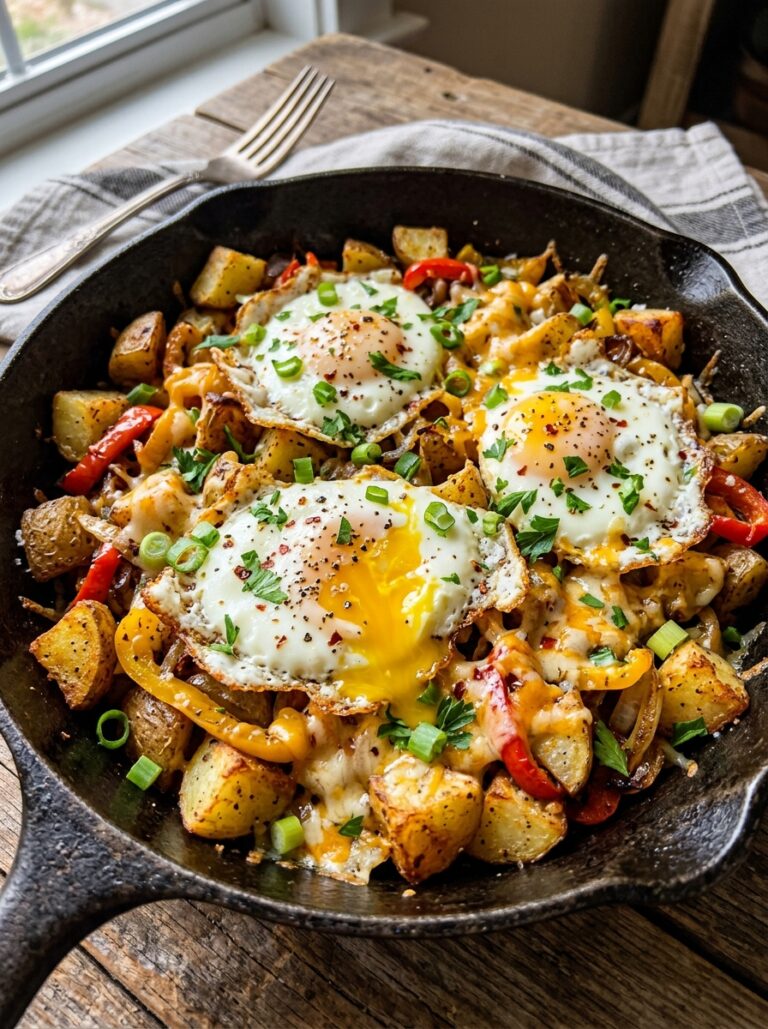
High Protein Breakfast Potato Skillet Recipe
A hearty one-pan breakfast packed with protein from eggs and cheese, plus fiber from potatoes and vegetables. This American-style skillet offers crispy potatoes, tender veggies, and creamy melted cheese, perfect for powering your day with minimal effort and cleanup.
- Total Time: 40
- Yield: 4 servings 1x
Ingredients
4 medium Yukon gold potatoes (or sweet potatoes)
6 large eggs
1 red bell pepper, diced
1 small onion, chopped
1 cup shredded cheddar cheese (or halal-certified cheese)
1 tbsp olive oil (or halal cooking oil)
1 tsp salt
1/2 tsp black pepper
1 tsp smoked paprika (or chili powder)
1/4 tsp garlic powder
1/4 tsp cumin
Fresh cilantro or parsley for garnish (optional)
Instructions
Preheat oven to 275°F (140°C)
Dice potatoes into 1/2-inch cubes and toss with olive oil, salt, pepper, smoked paprika, and garlic powder
Heat a large oven-safe skillet over medium heat, add potatoes and sauté 5 minutes
Transfer skillet to oven, roast potatoes 15 minutes until golden and tender
Meanwhile, chop bell pepper and onion, sauté 3-5 minutes in the same pan until softened
Adjust oven to 350°F (180°C), make a well in the center of the potatoes and vegetables
Crack eggs into the well and gently push eggs into the mixture for even cooking
Sprinkle cheese on top, cover with a cake pan, and continue roasting 10-12 minutes until eggs are set
Remove from oven, garnish with fresh herbs, and serve
Notes
For meal prep, store in airtight containers and reheat at 300°F (150°C) for 10-15 minutes
Use collard greens or spinach as alternative greens
Swap cheese with crumbled halal feta for lower glycemic version
- Prep Time: 15
- Cook Time: 25
- Category: High Protein Breakfasts
- Method: Roasting/Coating
- Cuisine: American
- Diet: Halal option available
Nutrition
- Serving Size: 1 skillet portion
- Calories: 450
- Sugar: 2g
- Sodium: 700mg
- Fat: 20g
- Saturated Fat: 8g
- Carbohydrates: 35g
- Fiber: 4g
- Protein: 22g
- Cholesterol: 300mg