Hey there! I’m Samah, and if you’re anything like me, you’ve probably stared at a corner of your home and thought, “This needs a glow-up,” only to realize your bank account is whispering, “Maybe next year.” Well, I’ve got a secret for you: you don’t need a massive inheritance to make your house look like a million bucks! In fact, did you know that nearly 70% of high-end interior designers swear by mixing “high and low” pieces to create a lived-in, curated feel?
It’s 2026, and the trend is all about personality over price tags. I’ve spent way too many weekends (and way too much coffee) figuring out how to transform a drab bedroom or a boring living room for less than a Benjamin. Stick with me, and I’ll show you how to pull off some serious magic using these 7 room ideas under $100. We’re talking about real-world, “I actually did this” kind of stuff that will have your friends asking for your decorator’s number!
1.The Power of a “Statement Wall” with Peel-and-Stick Magic
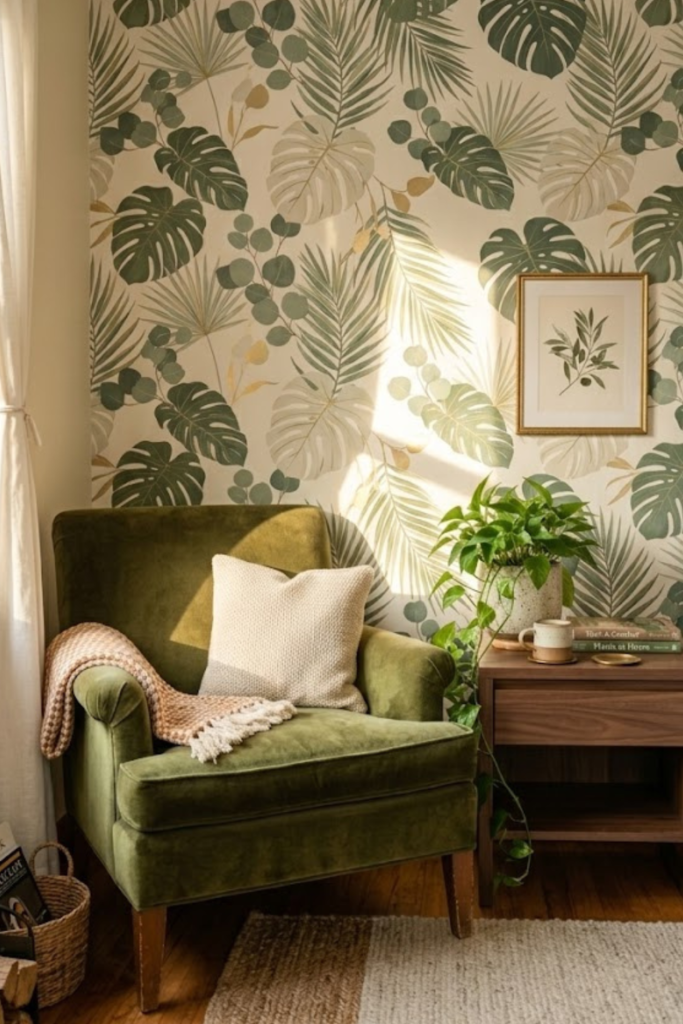
Okay, let’s get into the first big idea. I call this the “peel-and-stick magic” because it really does feel like a magic trick once you finish. I remember the first time I stared at a boring white wall in my home and felt like it was just missing something. I wanted it to look high-end, but I didn’t want to spend hundreds on professional wallpaper or deal with messy glue.
That is when I found removable wallpaper. For about $40, you can get two rolls of this stuff, and it changes the whole feel of the space. In 2026, the trends are shifting to big nature prints—like large green leaves—or simple gold geometric lines. I picked a soft botanical pattern for my bedroom wall last month, and it makes the room feel like a fancy hotel.
How much does a DIY accent wall cost?
A typical DIY peel-and-stick wallpaper wall costs between $35 and $55. Most people need two or three rolls of removable wallpaper (usually $15–$25 each) and a simple utility knife. This project takes about two hours and is safe for apartment walls because you can pull it right off when you move.
Here is a quick guide based on what I’ve learned:
- Clean the surface: I used a damp cloth to wipe the wall. If there is dust, the “sticker” won’t stay up for long.
- Line it up at the top: Start at the ceiling. Don’t worry if it is a bit crooked at first; you can peel it back and try again. That is the best part!
- Smooth the bubbles: I used an old credit card to push the air out as I went down. It is actually very relaxing to do.
A quick tip from my own mistakes: always buy one more roll than you think you need. I once tried to be cheap and ran out right at the end. When I ordered another roll, the color was slightly different because it was from a different batch! It was so annoying to look at. Also, don’t try to do this when you are in a rush. You need a little bit of patience to make the patterns match up perfectly.
For this project, you are spending very little money but getting a huge result. It’s the perfect way to show off your style without making a permanent change.
2. Upcycled “Thrift Store” Furniture Flips
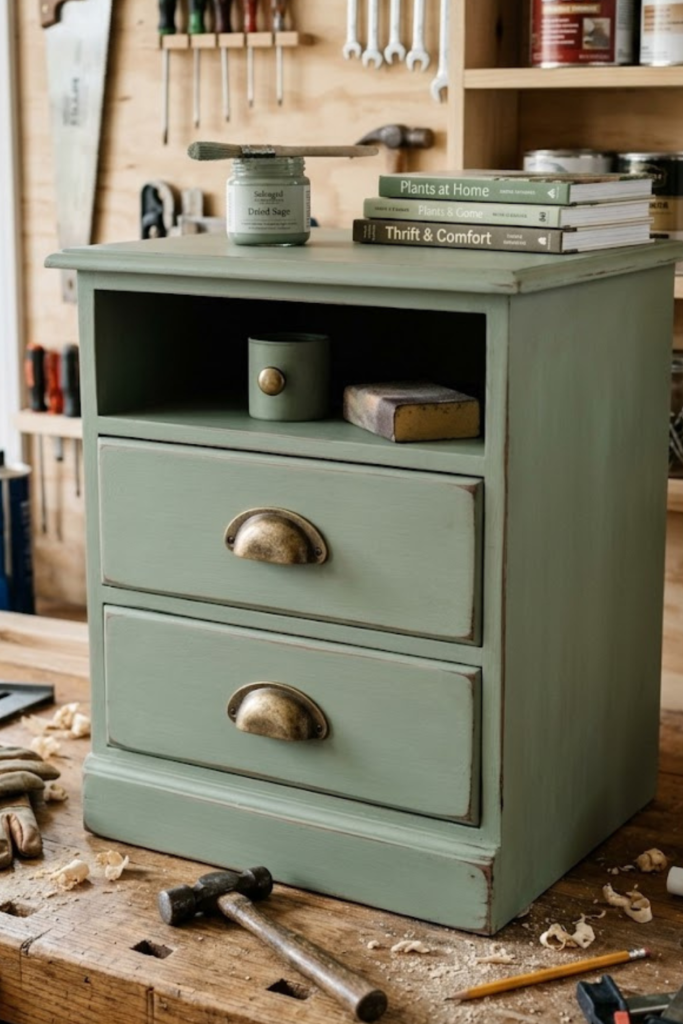
I love a good Saturday morning at the thrift store. It is like a treasure hunt, but for your house! Last summer, I found this old, beat-up wooden side table. It was $20 and looked like it had seen better days, but I knew I could fix it. You don’t need to be a pro woodworker to make something look brand new again.
My favorite trick is using chalk paint. It is great because you don’t usually have to do much prep work, and it leaves a cool, matte finish. For about $15, you can get a small can that lasts for a few projects. I also spent $10 on some shiny brass handles I found online. After a few coats of paint and the new hardware, that $20 table looked like something from a high-end catalog.
How to flip furniture on a budget?
To flip a piece of furniture for under $50, look for solid wood items at garage sales or thrift shops. Spend about $15–$20 on the furniture, $15 on a quart of chalk paint, and $10 on new knobs or handles. Clean the piece well, apply two thin coats of paint, and swap the old hardware for a modern look.
I have to be honest with you—I made a big mistake on my first flip. I thought I could just paint right over a shiny, plastic-like surface without doing anything first. Huge mistake! The paint started peeling off like a bad sunburn just a week later. Now I know that if a surface is really shiny or slick, you have to give it a quick sand with some sandpaper first. It only takes five minutes but it makes sure the paint actually stays on.
Giving old furniture a second life is so rewarding. Plus, you get a piece that fits your style perfectly without spending a fortune. It’s one of the best ways to get that “designer” look for almost nothing.
3. Layers of Light: The “Avenue” of Lamps
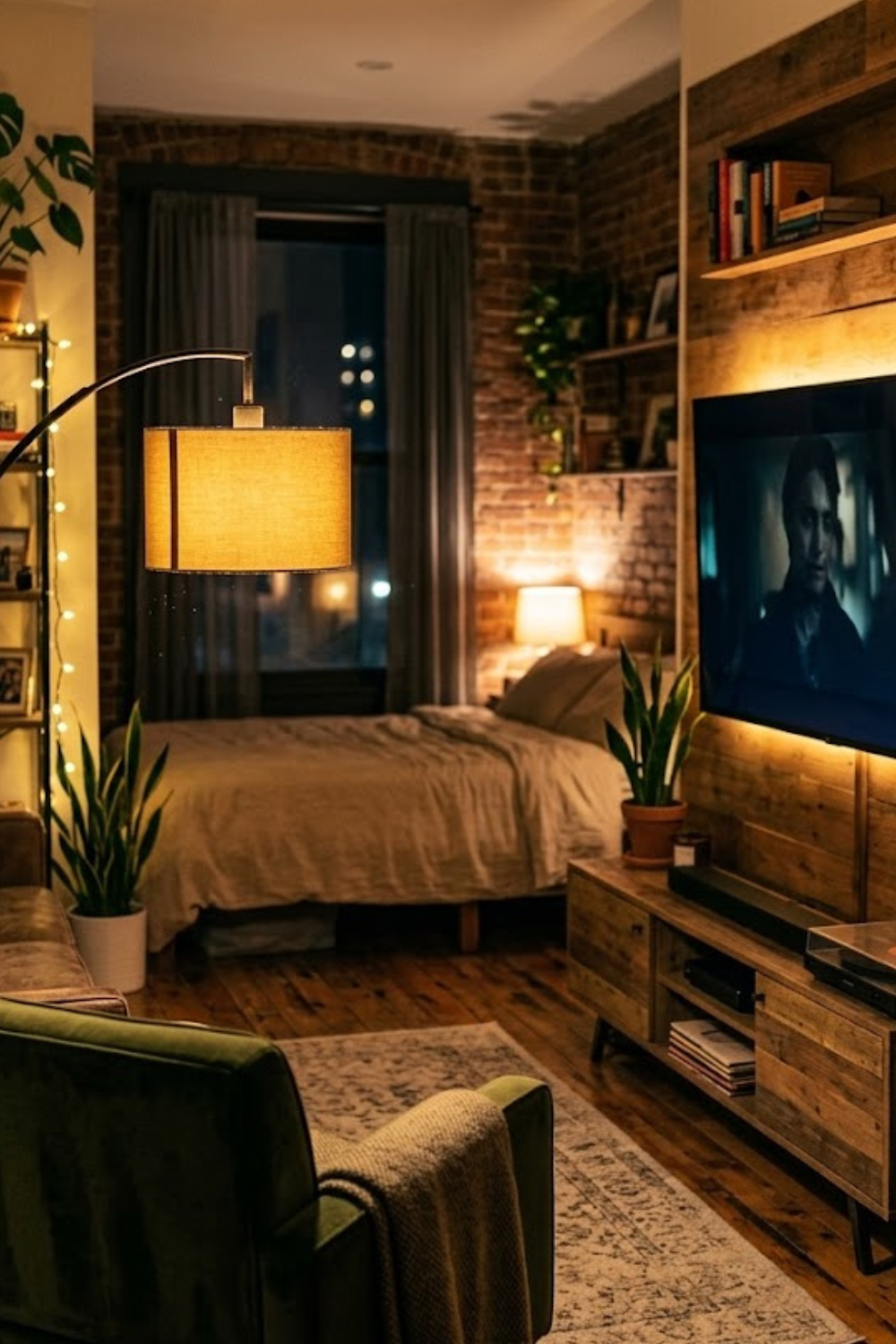
I have a very strict rule in my house: we do not turn on the “big light.” You know exactly which one I mean—that bright, buzzing overhead light that makes your living room look like a hospital waiting room? It is the absolute worst. For years, I couldn’t figure out why my house felt so cold and stiff. Then I realized it was because I only had one light source coming from the ceiling.
Changing your lighting is one of the fastest ways to fix a room, and you can do it for way less than $100. I like to create what I call an “avenue” of lamps. This just means placing small lights at different heights around the room so the glow is soft and spread out.
How to update room lighting for under $50?
To refresh your room’s lighting on a budget, buy two simple floor lamps from a discount store (about $15–$20 each) and a pack of warm-toned LED bulbs ($10). Place the lamps in opposite corners of the room to get rid of dark shadows. You can also add a $10 string of “fairy lights” inside a glass jar or behind a curtain for extra warmth.
I actually found two tall black lamps at a discount shop last year for $18 each. They weren’t anything fancy, but once I put them in the corners of my den, the room felt twice as big. I also bought some cheap LED strips for $12 and stuck them to the back of my TV. Now, when we watch movies, the wall behind the TV glows softly. It looks like a high-end theater but cost me less than a pizza delivery!
Here is a tip from a mistake I made: always check the “color temperature” on the bulb box. I once bought bulbs that said “Daylight,” and they were so blue and harsh that I felt like I was sitting in a grocery store. Look for bulbs that say “Warm White” or “Soft White.” They give off a nice yellow-gold glow that makes even cheap furniture look expensive. Plus, it hides the dust I forgot to clean off the bookshelves!
4. Textural Refresh with “Basket Wall” Art
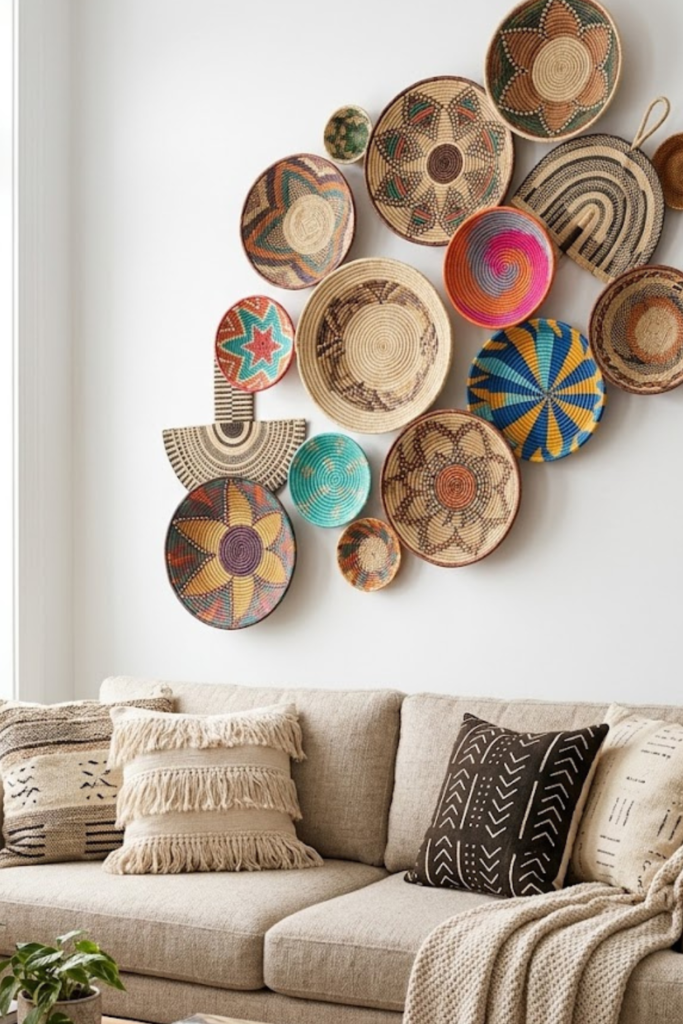
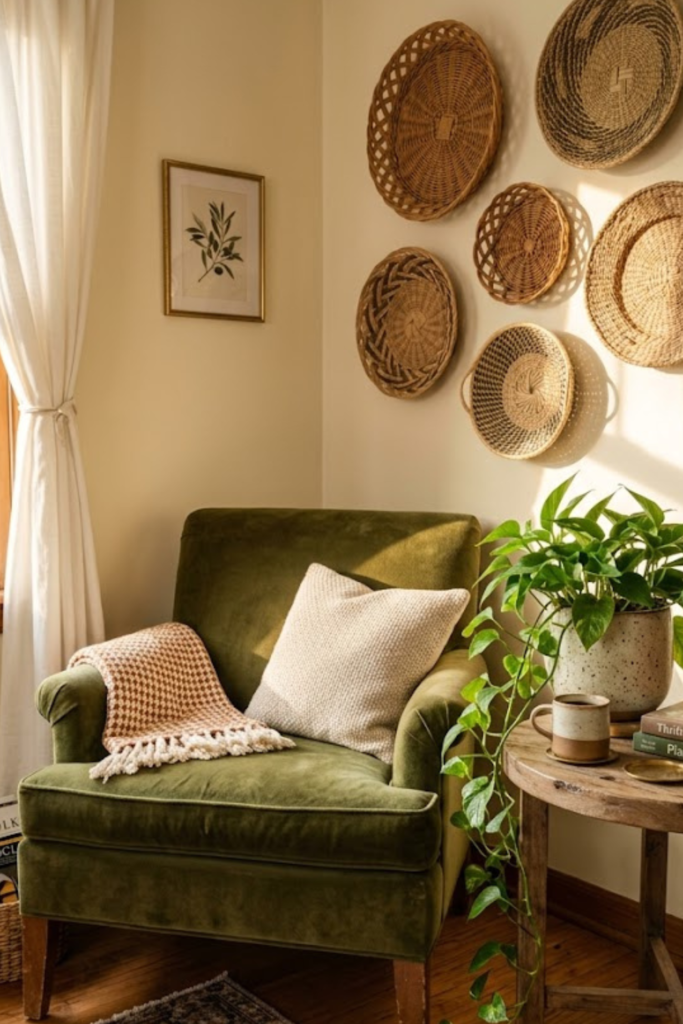
Empty walls can be really scary to decorate. For a long time, I thought I had to buy expensive framed paintings to make my living room look finished. But frames are pricey, and glass breaks easily if you have kids or pets running around. That is when I discovered the magic of “basket walls.” It is basically using woven baskets as art, and it adds so much warmth and texture to a room for almost no money.
Most of the baskets I own came from local charity shops or yard sales. I usually find them for about $3 to $8 each. If you find five or six baskets in different sizes and colors, you have a huge piece of art that covers a lot of space above a sofa or a bed. In 2026, people are loving that natural, handmade look, so this fits right in with the latest styles.
How to make a basket gallery wall for under $40?
To create a basket wall on a budget, collect 5–7 flat woven baskets from thrift stores ($20–$30 total). Lay them out on the floor first to find a shape you like. Once you are happy with the layout, use small finishing nails or even sticky command hooks ($10) to hang them up. Start with the largest basket in the center and build the smaller ones around it for a balanced look.
I remember the first time I tried this. I just started hammering nails into the wall without a plan. It looked like a mess! Halfway through, I realized I had all the dark baskets on one side and the light ones on the other. It looked lopsided. Now, I always tell my friends to lay everything out on the carpet first. Take a picture of the layout on your phone, then follow that picture when you start hanging them. It saves you from making extra holes in your drywall.
This is a great project because it is so easy to change. If you find a new basket you love, you can just add it to the group. It makes the room feel cozy and “lived-in” instead of feeling like a cold museum. Plus, it is a great conversation starter when people ask where you found all those cool patterns!
5. The “Indoor Jungle” Starter Kit
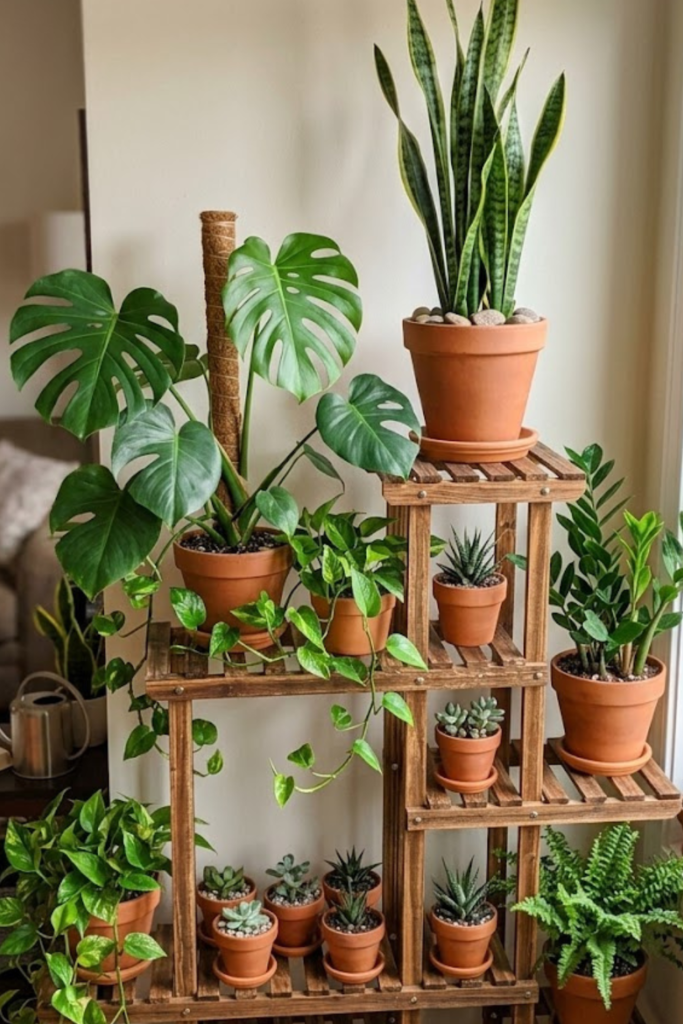
Plants are like the “salt” of home decor—everything just feels better with a little bit added. I used to think I couldn’t have plants because I didn’t have a huge backyard or big sunny windows, but that just isn’t true. You can find “low-light” plants that actually prefer a bit of shade. Plus, they make a room feel alive and fresh in a way that plastic decorations just can’t do.
Bringing nature inside is a huge trend for 2026, and it is very cheap to do if you know where to look. I usually go to the garden section of a big hardware store rather than a fancy boutique. You get the same green leaves for half the price!
How to start an indoor garden for under $50?
To get started, buy 3 or 4 easy-to-grow plants like a Pothos, a Snake Plant, or a ZZ plant. These usually cost $10–$15 each. Spend $10 on a bag of good potting soil and $5 on some basic terra cotta pots. Paint the pots with leftover paint from your furniture flips to make sure they match your room. This gives you a high-end look without the high-end price tag.
I have to admit, I’m a “recovering plant killer.” Seriously. I used to think that the more I watered a plant, the more I was showing it love. I ended up drowning my first three Monsteras because I was over-watering them every single day! It was so sad to see them turn yellow and mushy. Now I know that most plants actually like to dry out a bit between drinks. I use my finger to check the soil first. If it feels dry an inch down, then I give it a soak.
A quick tip to save money: don’t buy those fancy ceramic pots that cost $40 or $50. Buy the cheap orange clay ones for $2 and paint them a solid matte white or tan. They look exactly like the expensive ones from a distance. It’s such an easy way to fill up an empty corner and make your air feel a bit cleaner, too.
6. High-End Vibes with DIY “Luxe” Pillows
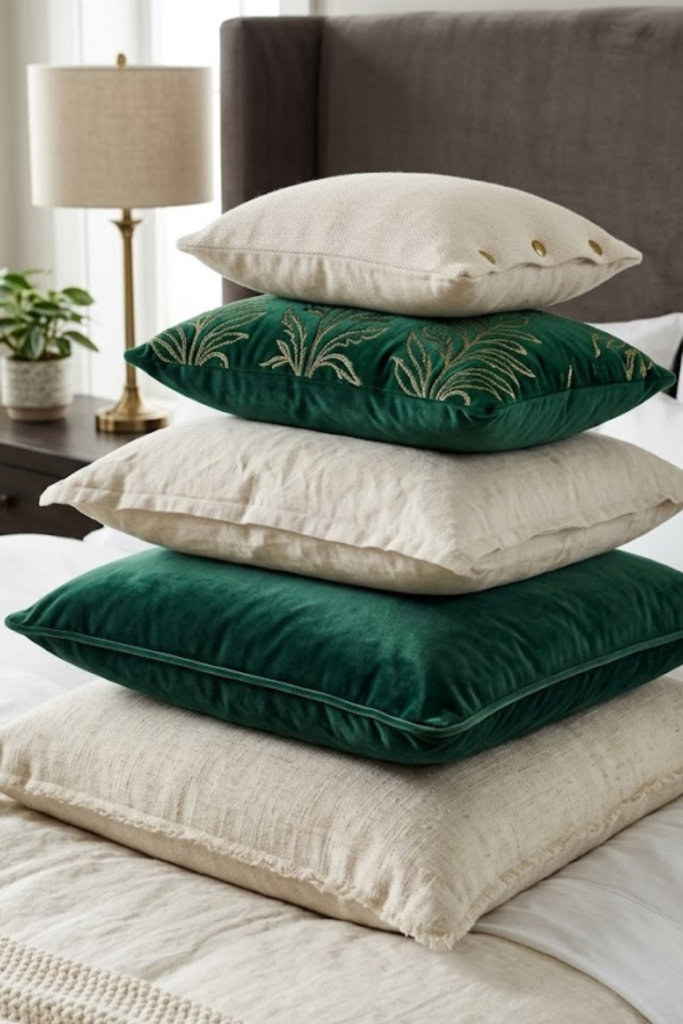
Let’s talk about the couch for a minute. You can have a very nice sofa, but if the pillows are flat and sad, the whole room looks a bit cheap. I used to buy those $5 pillows from the bargain bin at the grocery store. You know the ones—they feel like they are stuffed with old cotton balls? After a month of sitting on them, they get all lumpy and thin, and they just look tired.
Then I learned the secret to that “designer look” you see in magazines. It isn’t about the pattern on the outside; it is about what you put on the inside.
How to get luxury pillows for under $30?
To get a high-end look on a budget, buy feather or down-alternative pillow inserts (usually $15) instead of cheap polyester ones. Then, look for high-quality fabric covers like velvet or heavy linen ($10–$15). Make sure the cover is 2 inches smaller than the insert. For example, use a 20-inch insert inside an 18-inch cover. This makes the pillow look full, plush, and expensive.
I started doing this in my guest room, and it changed everything. I bought these deep green velvet covers for $9 each and stuffed them with feather inserts I found on sale. Now, whenever I walk in, it looks like a professional decorator was there. It is such a small change, but it makes the room feel much more comfortable.
One thing I learned the hard way: always check the zipper before you buy. I once bought a bunch of covers that were so cheap the zippers broke the first time I tried to close them. It was so frustrating to have to sew them shut! Now I look for “invisible” zippers that are hidden in the seam. They look much cleaner and stay closed better.
And here is the fun part—the “karate chop.” Take your hand and hit the top of the pillow right in the middle to make a little dent. It sounds silly, but it makes the pillow look soft and high-quality. My kids think I’m crazy when they see me “chopping” the furniture, but it really works! Mixing different textures like a fuzzy wool pillow next to a smooth velvet one makes your space feel layered and expensive without spending much money at all.
7. Creative Command Center for Entryway Organization
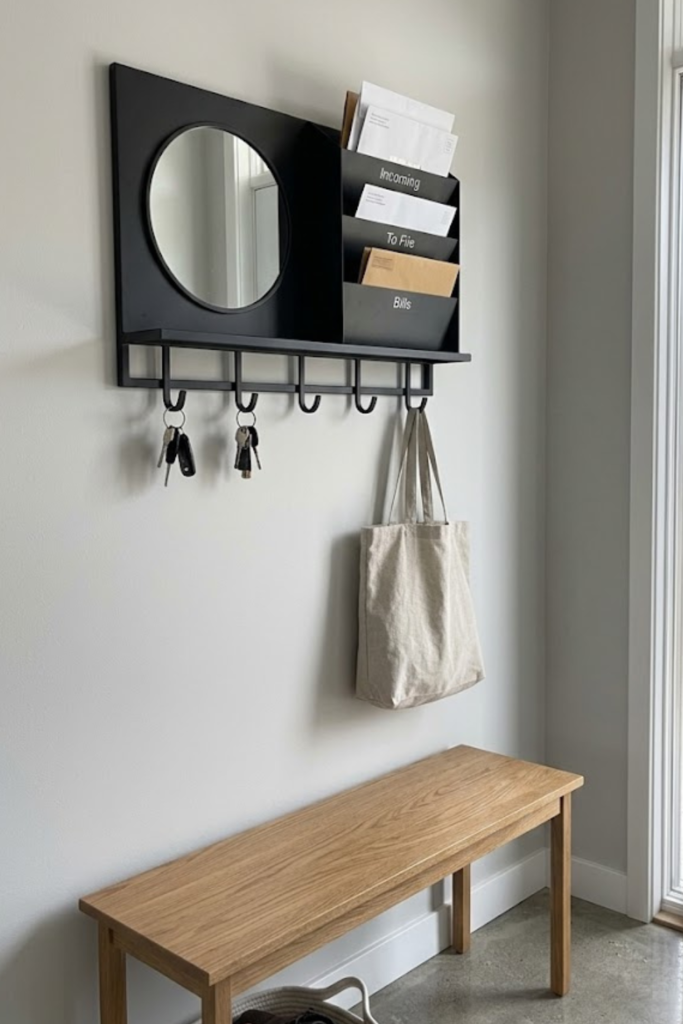
If there is one part of the house that always looks like a tornado hit it, it’s the entryway. In my home, it used to be a disaster zone of keys, mail, and random shoes. I would spend ten minutes every single morning looking for my car keys while I was already late for work. It was so stressful! I realized I didn’t need a huge, expensive mudroom; I just needed a “command center” to keep things in place.
You can build a really cute and functional setup for about $40. It makes the whole house feel more organized the second you walk through the door. Plus, it stops the “clutter creep” from spreading into the living room.
How to build an entryway command center for under $45?
To organize your entryway on a budget, buy a wire wall grid or a small corkboard ($15), a set of four matte black hooks ($10), and a small plastic or wooden mail sorter ($10). Mount the hooks at waist height for bags and keys, and hang the grid above it for notes and mail. Adding a small $10 mirror helps you do a quick check before leaving and makes a small hallway look bigger.
I tried to be fancy at first and bought these heavy, vintage-looking iron hooks. But I didn’t use the right screws, and the first time I hung my heavy winter coat on one, it ripped right out of the wall and left a giant hole. Talk about a “facepalm” moment! Now, I make sure to use wall anchors if I’m not hitting a wooden stud. It takes an extra minute but saves you from having to patch the wall later.
One thing I love doing is painting the hooks and the mail sorter the same color—like a matte black or a soft gold. This makes separate pieces look like they were bought as a matching set. It looks very polished and intentional. Now, when I walk in the door, everything has a “home.” My keys go on the hook, the mail goes in the bin, and I don’t lose my mind every morning trying to find my stuff. It’s a small change that makes a huge difference in how my day starts.
Conclusion
Refreshing your space doesn’t have to be a big financial headache. Whether you’re flipping a thrifted chair or finally adding some life with indoor plants, these 7 room ideas under $100 prove that your creativity is your best currency. Don’t be afraid to make mistakes—that’s how you find your own style! I’ve had plenty of “oops” moments, but they taught me more than any expensive design book ever could.
If you enjoyed these budget tips and want to try them yourself, please share this post on Pinterest so others can save money on their home decor too! I’d love to see what you create. Which of these ideas are you going to try first? Let me know!