Did you know the average person spends about 90% of their time indoors? That is a massive chunk of our lives! I learned early on that if your indoor space feels chaotic, your mind will follow suit. I remember sitting in my living room a few years back, surrounded by bright red pillows and loud, aggressive art. I felt so stressed out. I couldn’t figure out why my own house was making me anxious! Then it hit me. Your environment deeply impacts your mental state. If you are looking for 7 calming room ideas, you are in the right place.
I have spent years teaching people how to make their homes feel better. Let me share a few practical, easy changes that actually work. We will dive into a few simple adjustments to lower your heart rate and make your space feel like a true exhale.
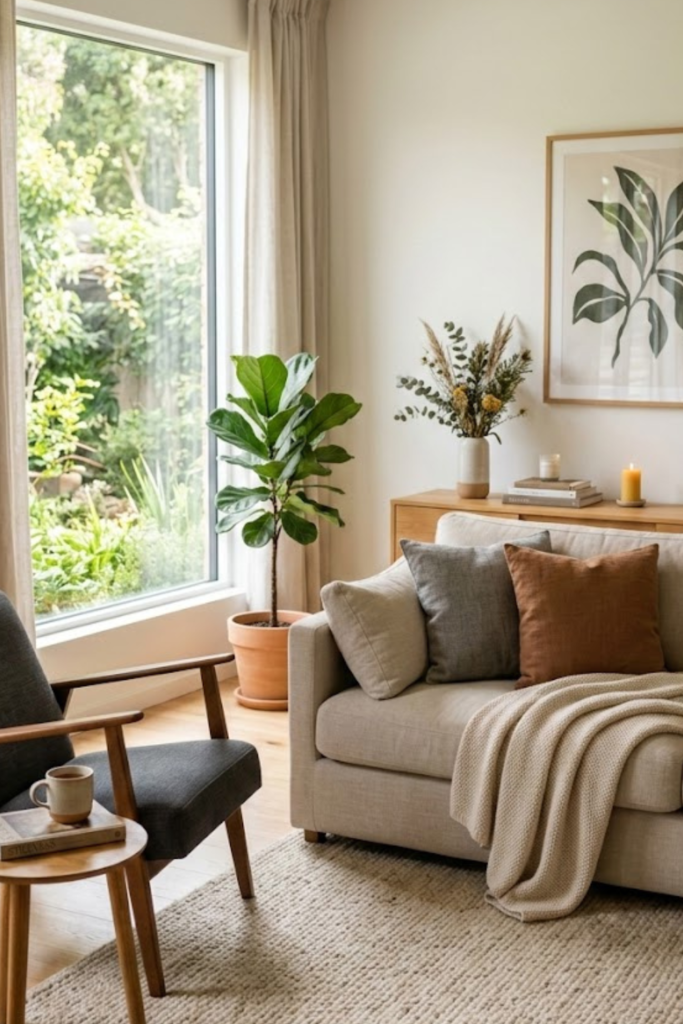
1. Embrace Soft, Neutral Color Palettes
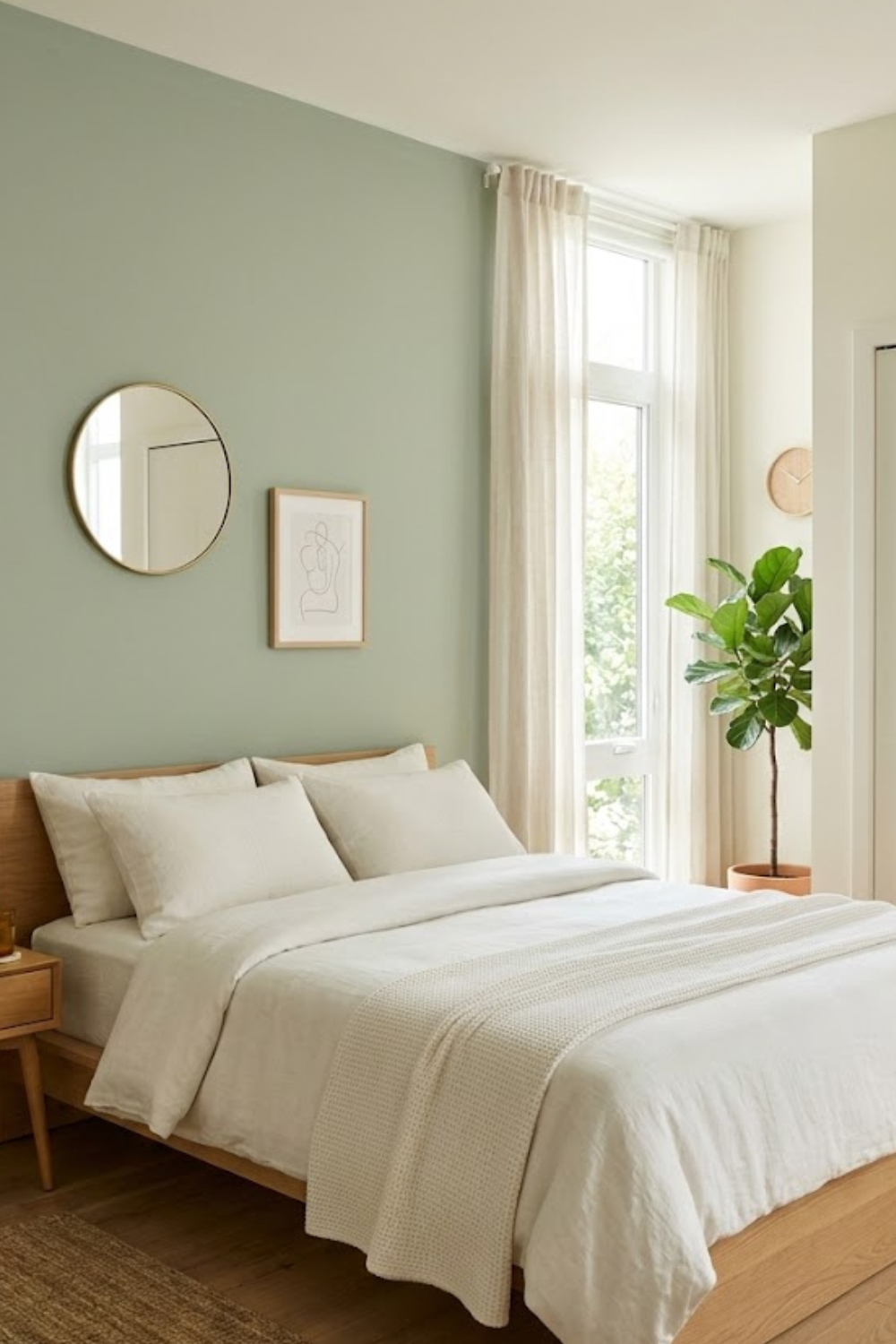
I remember the first time I painted my bedroom. I picked this bright, electric blue because I thought it looked “cool” in the store. Big mistake. I couldn’t sleep for a week! It felt like the walls were shouting at me every time I tried to close my eyes. That is when I learned that colors have a huge impact on how we feel inside a room.
When you are looking for 7 calming room ideas, starting with your walls is the fastest way to change the vibe. Soft, neutral tones like warm off-white, sandy beige, or a very pale sage green act like a big deep breath for your house. These colors don’t grab for your attention. Instead, they let your eyes rest.
In my own house, I switched that loud blue for a soft, creamy white. It was like someone finally turned down the volume. Natural light hits the neutral paint and bounces around softly instead of creating harsh glares.
Tips for picking your palette:
- Stay away from “cool” whites: Some whites have blue or gray undertones that can feel cold or clinical. Look for “warm” whites with a hint of yellow or pink to make the space feel inviting.
- Try Sage Green: Green is naturally soothing because our brains associate it with nature. A muted, dusty green is perfect for a bedroom or a reading nook.
- Test your samples: Paint a small square on the wall and watch it throughout the day. The color will look different in the morning sun than it does under your lamps at night.
If you want a space that feels like a sanctuary, keep the colors quiet. It makes a world of difference for your stress levels.
2. Incorporate Houseplants for Natural Serenity
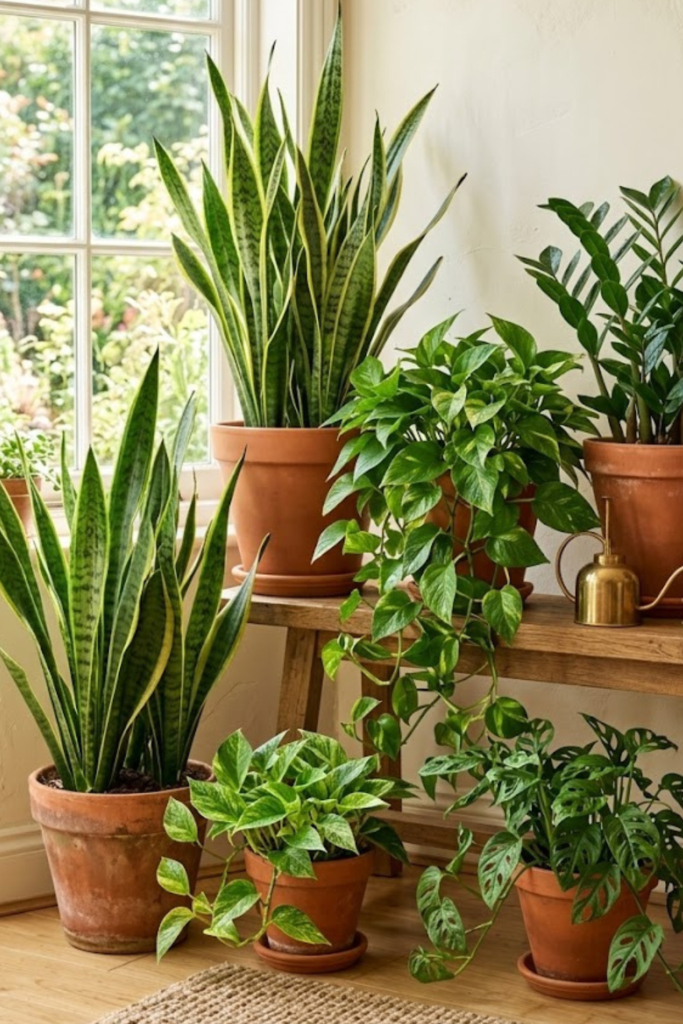
I used to think I didn’t have a “green thumb.” Every plant I bought seemed to shrivel up within a month, and it felt more like a chore than a hobby. But then I realized I was just picking the wrong ones for my skill level. Once I brought a simple snake plant into my office, the whole energy of the room shifted. There is something about having a living thing in the corner that makes a space feel grounded and fresh.
Science actually backs this up, too. Plants don’t just sit there looking pretty; they work hard to clean the air and help lower your heart rate. When you see a bit of green against a neutral wall, your brain relax because it feels a connection to the outdoors. It’s one of the easiest 7 calming room ideas because it adds life without adding noise.
If you are worried about killing your plants, start small. You don’t need an indoor jungle to feel the benefits.
Easy plants for a peaceful vibe:
- Snake Plants: These are almost impossible to kill. They can live in low light and only need water every few weeks. Plus, they look like natural sculptures.
- Pothos: These have lovely trailing vines. I like to put them on top of a bookshelf so the leaves hang down like a green waterfall.
- Peace Lilies: They have beautiful white blooms and are great at filtering indoor toxins, though you have to keep them away from pets.
Whenever I feel a bit overwhelmed, I spend five minutes just trimming dead leaves or checking the soil. It sounds silly, but that tiny bit of “nature time” inside my own house really helps me reset.
3. Maximize Soft, Warm Lighting
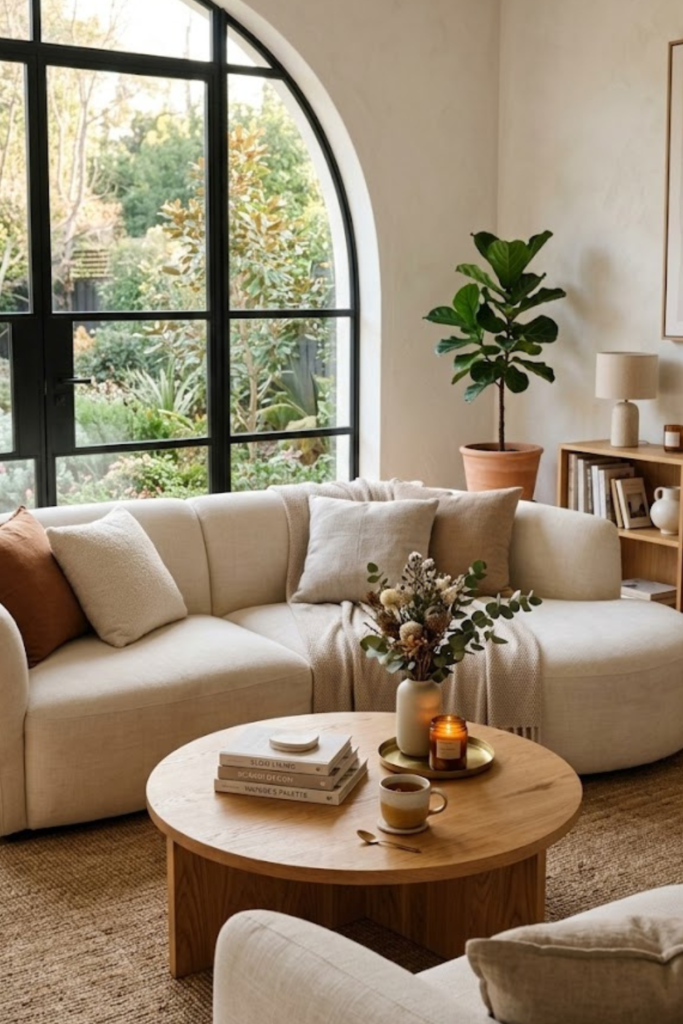
I used to have these huge, bright fluorescent lights in my kitchen. Every time I turned them on at night, I felt like I was standing in a grocery store or a hospital. It was so jarring! I couldn’t understand why I felt so on edge while making tea before bed. Then I realized the light was actually telling my brain to wake up when I wanted to wind down.
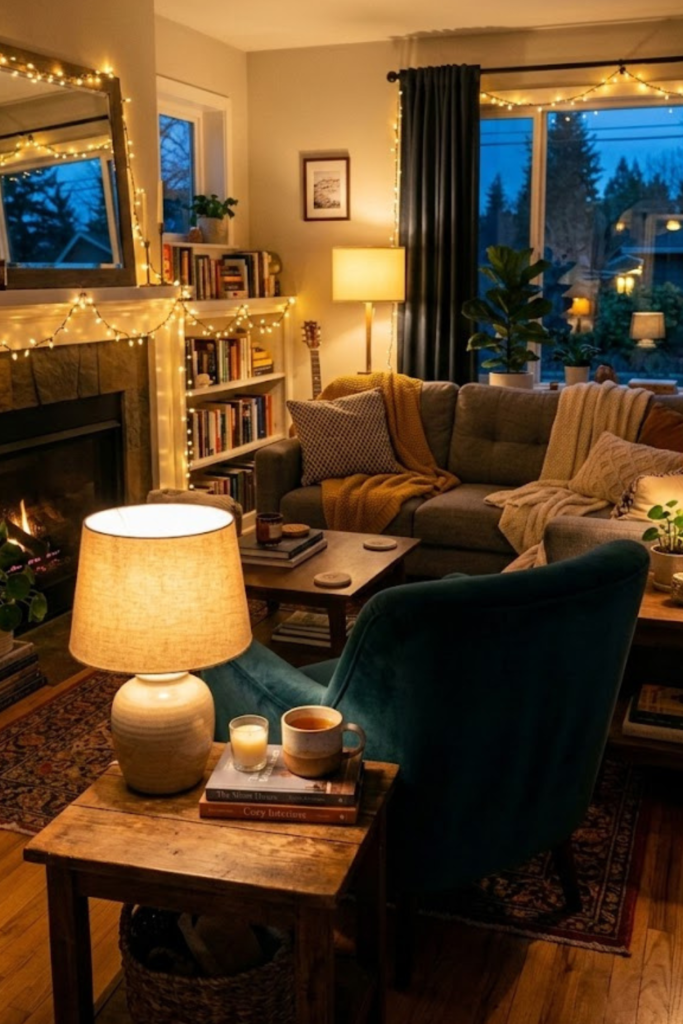
If you want a truly relaxing space, you have to think about your “light layers.” Instead of using one big overhead light that washes everything out, try using several smaller light sources. This creates a soft, cozy glow that helps your body start to relax.
How to fix your lighting:
- Check the Kelvins: When you buy light bulbs, look for “Warm White” or “Soft White” (usually around 2700K). Avoid anything labeled “Daylight” for your relaxing rooms because that blue-ish tint can keep you awake.
- Use Dimmers: If you can, install dimmer switches. Being able to lower the lights as the sun goes down is a game changer for your mood.
- Add Floor and Table Lamps: Place a lamp next to your favorite chair. It creates a little “pool” of light that feels much more private and peaceful than a bright ceiling fixture.
Now, when the sun starts to set, I go around and turn off the big lights and flick on my small lamps. It’s like a signal to my brain that the day is over and it’s finally okay to rest.
4. Choose Curvy, Comfortable Furniture
I used to be obsessed with those super modern, boxy sofas. You know the ones—they look like a set of perfect rectangles. I bought one for my den, but after a few weeks, I noticed I never actually wanted to sit in there. It felt stiff and a bit “sharp.” It turns out, our brains are actually wired to feel a little bit more guarded around sharp edges and points. It’s like a tiny, subconscious survival instinct.
When I started looking into how to make a room feel truly relaxing, I learned that curves are the way to go. Rounder shapes signal safety and comfort to our minds. It’s one of those 7 calming room ideas that sounds a bit “out there” until you actually try it.
I eventually swapped that boxy sofa for one with soft, sloping arms and added a round wooden coffee table. The whole room felt different immediately. It felt like the room was giving me a hug instead of standing at attention.
How to bring in softer lines:
- The Coffee Table: If you have kids or just want a softer flow, swap a rectangular table for a round or oval one. It makes the “traffic” in the room feel less jagged.
- Accent Chairs: Look for chairs with a barrel back or rounded legs.
- Small Details: Even things like a round mirror or a circular rug can break up the harsh lines of a standard square room.
You don’t have to go out and buy all new furniture, either. Just adding a few round pillows to a square couch can help soften those hard angles and make the space feel a lot more inviting.
5. Declutter Surfaces for a Clear Mind
I used to have a “junk mail pile” on my entryway table that drove me crazy. Every time I walked through the door, my eyes would land right on those bills and flyers. Even if I was having a great day, that little pile of clutter would instantly make my chest feel a bit tight. It is hard to feel peaceful when your eyes are constantly “tripping” over random stuff left on the counters.
When I started practicing these 7 calming room ideas, I realized that a clean surface isn’t just about being tidy—it’s about giving your brain a break. When your environment is cluttered, your mind stays “on” because it’s trying to process all those extra objects.
The trick isn’t to get rid of everything you own. It’s about finding a “home” for the messy bits so they aren’t staring at you all day.
Tips for a clearer space:
- The One-In, One-Out Rule: For every new decorative item you bring into a room, try to donate or move one old item. It keeps the “visual noise” from growing over time.
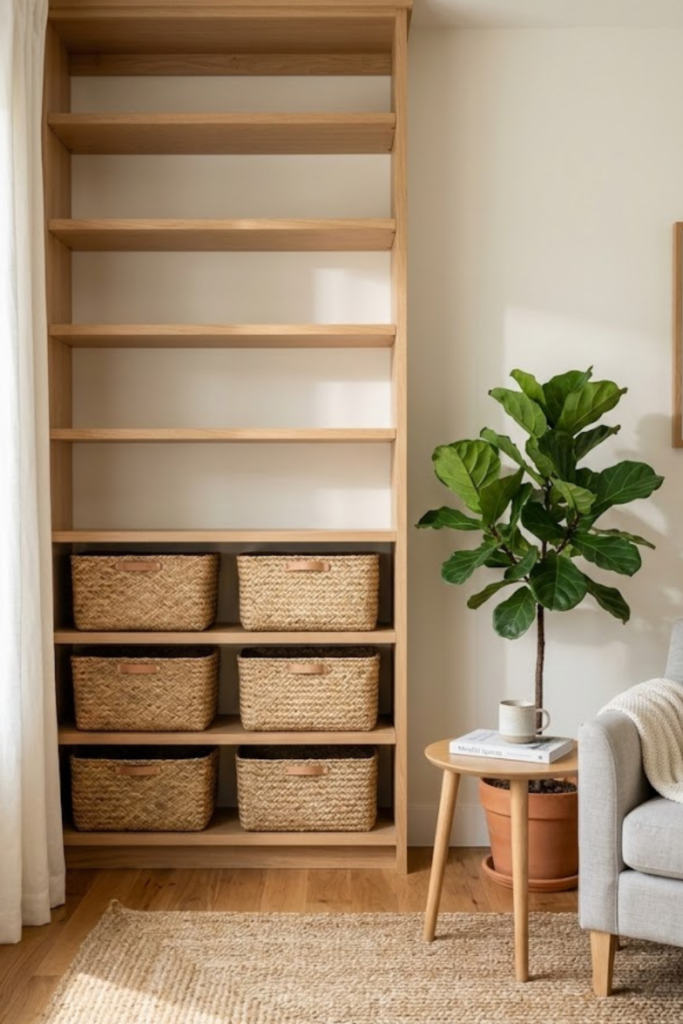
- Use Closed Storage: I’m a big fan of woven baskets or cabinets with solid doors. If you have a bunch of remote controls or charging cables, toss them in a pretty basket. Out of sight, out of mind!
- Clear the “Hot Spots”: Pick one or two surfaces—like the coffee table or your nightstand—and commit to keeping them mostly empty. Having that open space makes the whole room feel bigger and lighter.
Once I cleared off my surfaces, I noticed I could actually sit down and relax without thinking about my “to-do” list. It’s amazing how much more room you have to breathe when the clutter is gone.
6. Layer Soft, Tactile Fabrics
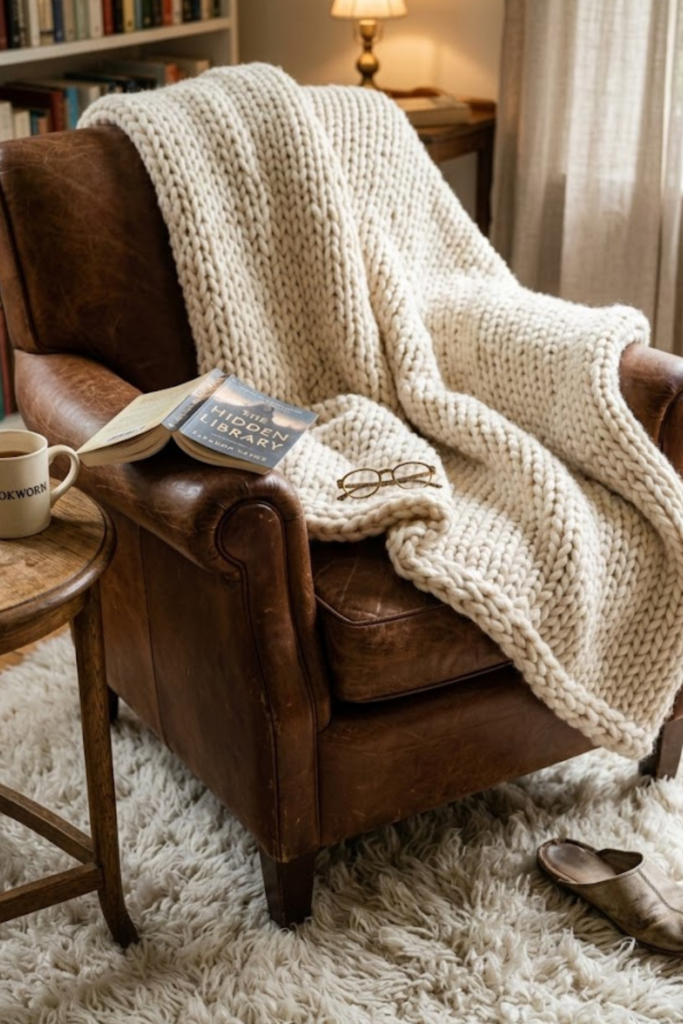
I’ll never forget the first time I stayed at a little bed and breakfast in the mountains. The room wasn’t fancy, but every chair had a thick, woolly blanket draped over it, and the rug was so soft I actually wanted to take my shoes off. It felt like the room was physically slowing me down. Before that, I mostly cared about how my furniture looked, not how it felt.
If you want to turn a regular room into a relaxing retreat, you have to think about touch. When we touch something soft or fuzzy, it sends a signal to our nervous system that we are safe. It’s one of those 7 calming room ideas that you can feel immediately. I started adding layers to my own living room—a linen pillow here, a velvet throw there—and suddenly, the room felt much “thicker” and more private.
How to layer for comfort:
- Mix Your Textures: Don’t just get four of the same pillow. Mix a chunky knit with a smooth cotton or a soft faux-fur. The variety makes the space feel rich and cozy.
- Don’t Forget the Floor: If you have hardwood or tile, a plush area rug is a must. It dampens the sound in the room (which is very calming) and keeps your feet warm.
- The “Weight” Factor: I love a heavy, weighted blanket for the end of the bed. That extra bit of pressure can really help if you’re feeling a little bit anxious after a long day.
Adding these layers is like putting on your favorite oversized sweater. It makes the whole environment feel a lot less “stiff” and a lot more like a place where you can truly let your guard down.
7. Introduce Subtle, Relaxing Scents
I used to be that person who bought the super strong, “ocean breeze” plug-in air fresheners for every single room. I thought a clean house had to smell like a cleaning product! But after a while, I noticed I was getting headaches whenever I spent too much time in the living room. It wasn’t relaxing at all; it was actually a bit overwhelming for my senses.
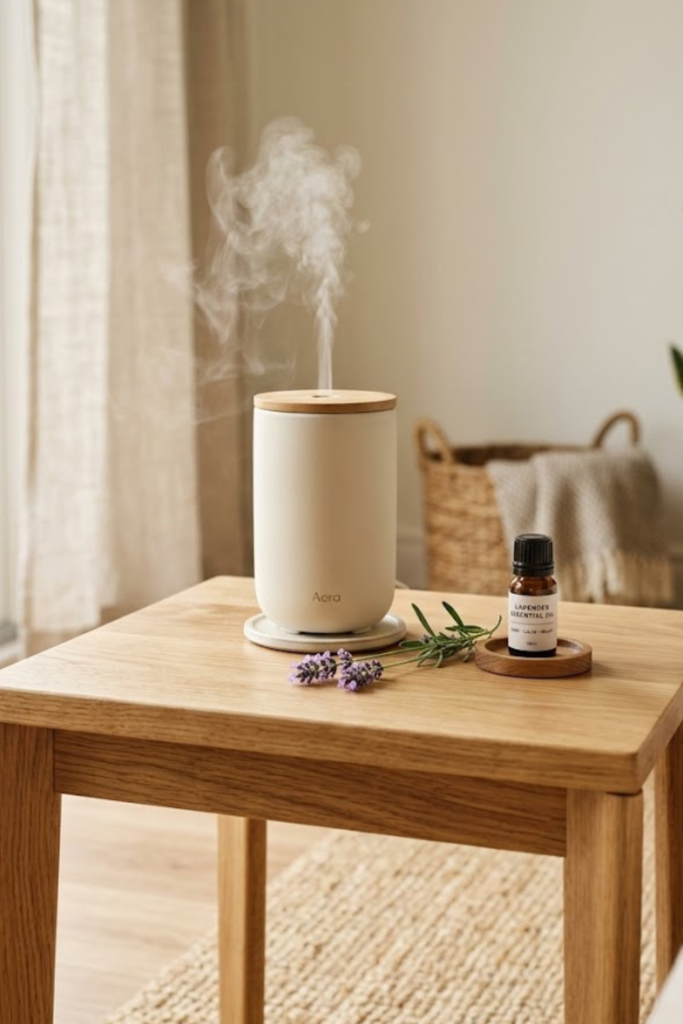
When I started looking into 7 calming room ideas, I realized that scent is one of the fastest ways to tell your brain to “chill out.” But the key is to keep it subtle and natural. Now, instead of those harsh synthetic sprays, I use an essential oil diffuser or a high-quality soy candle. The difference is huge. A faint hint of lavender or cedarwood doesn’t demand your attention—it just sits in the background and helps you drift into a better mood.
How to use scent for a peaceful home:
- Pick the right oils: Lavender is the classic choice for sleep, but I also love bergamot for stress or eucalyptus if I want the room to feel “crisp” and spa-like.
- Go for Reed Diffusers: If you don’t want to worry about turning a machine on and off, reed diffusers are great. They give off a very light, constant scent that isn’t too heavy.
- Open the windows: Sometimes the best “scent” is just fresh air! I try to open my windows for at least ten minutes every morning, even when it’s chilly, just to clear out the stale indoor air.
Now, my house doesn’t smell like a chemical factory. It smells like a quiet garden or a cozy forest, and my brain instantly knows that when I smell that lavender, it is time to stop worrying about work and just be present.
Creating a peaceful space doesn’t have to be expensive or exhausting. By leaning into soft colors, warm lighting, and cozy textures, you can completely change the way your home feels. I hope these 7 calming room ideas help you breathe a little easier the second you walk through your front door. If you found this helpful, pin this post to your favorite Home Decor board on Pinterest so you can reference it during your next weekend project!