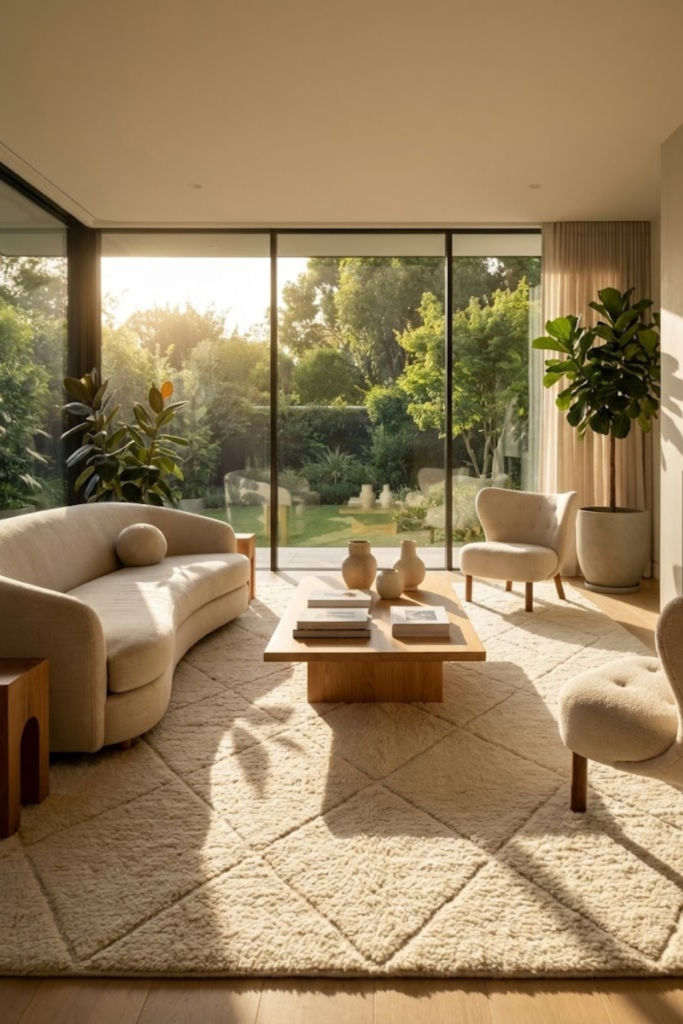
Did you know that according to interior design experts, a rug that’s too small is the #1 most common decorating mistake? It’s true!. I’ve been there myself, staring at a “postage stamp” rug that made my sofa look like a giant. Choosing the right living room rug design ideas isn’t just about color; it’s about scale, texture, and how it feels under your toes during a late-night snack run. Let’s dive into how you can ground your room and give it that “magazine look” without losing the cozy feel.
1. The Art of Layering: Jute Meets Vintage
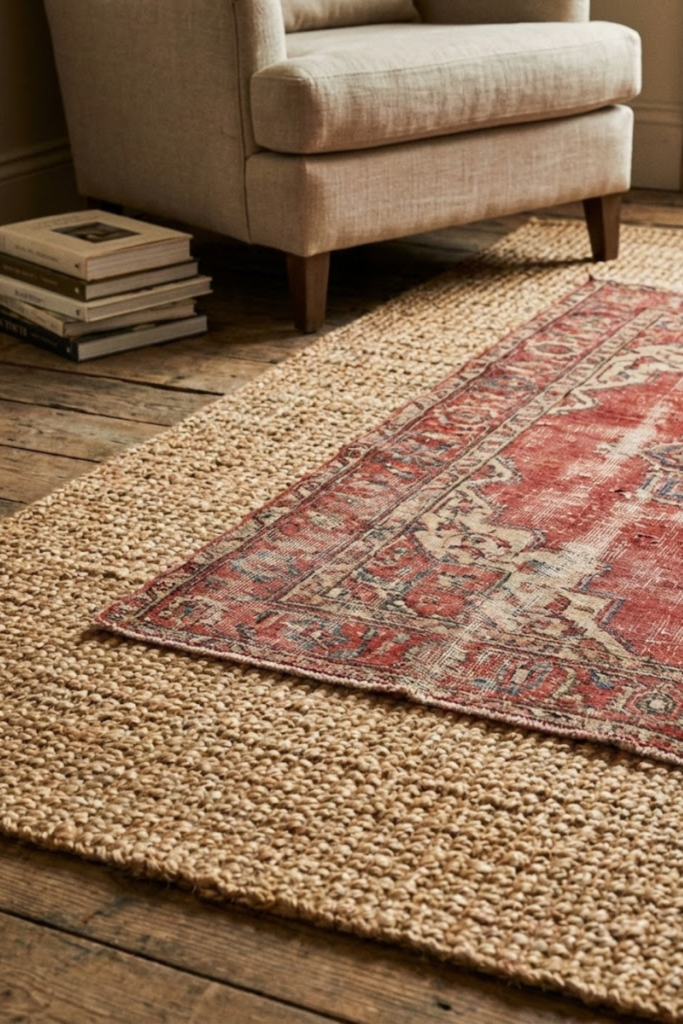
I’ve spent a lot of time thinking about how to make a room feel finished. One trick I always tell my students is that your floor needs layers just like your bed does. I remember the first time I tried this in my own house. I had a giant jute rug that was a bit too plain, and the room felt kind of empty. I found a smaller, colorful rug at a thrift store and tossed it right on top. Suddenly, the whole room felt warm and put together. Layering is just placing a smaller rug over a bigger one. It gives your home a “collected” look, which makes it feel like you’ve lived there for years instead of just buying everything from a store yesterday.
Why Jute Works as a Base
Natural fiber rugs like jute or sisal are the best starting point. These rugs are usually tan or beige, so they match everything. The best part is that they are pretty cheap compared to wool rugs. This means you can buy a really big one that fits your whole seating area. A common mistake is buying a rug that is too small, which makes your sofa look like it’s floating. By using a large jute rug, you make the room look bigger. The texture is also very interesting. It feels organic and earthy, which helps ground all the other stuff you have in the room.
Choosing Your Top Layer
This is where you get to show off your style. I usually look for a vintage Persian rug or maybe a Turkish rug with a lot of patterns. You want something with deep reds, blues, or even soft pinks. Because the jute rug underneath is neutral, the colors on the top rug will really pop. This top rug acts like a frame for your coffee table. It draws everyone’s eyes to the center of the room. I like using older rugs because they have a story, and the faded colors look very classy against the rough texture of the jute.
Getting the Sizes Just Right
You have to be careful about the proportions. If the top rug is almost as big as the bottom one, it just looks like you made a mistake. I like to leave about 12 to 18 inches of the jute rug showing on all sides. This creates a nice border that looks intentional. If the top rug is too tiny, it will look like a bath mat, so try to find a middle ground. About the cleaning part, it’s actually pretty easy to vacuum. You just have to be a bit careful when you hit the edges where the rugs overlap. This simple change is one of the fastest ways to make your living room feel like a professional designed it.
2. Bold Geometric Statements for Modern Vibes
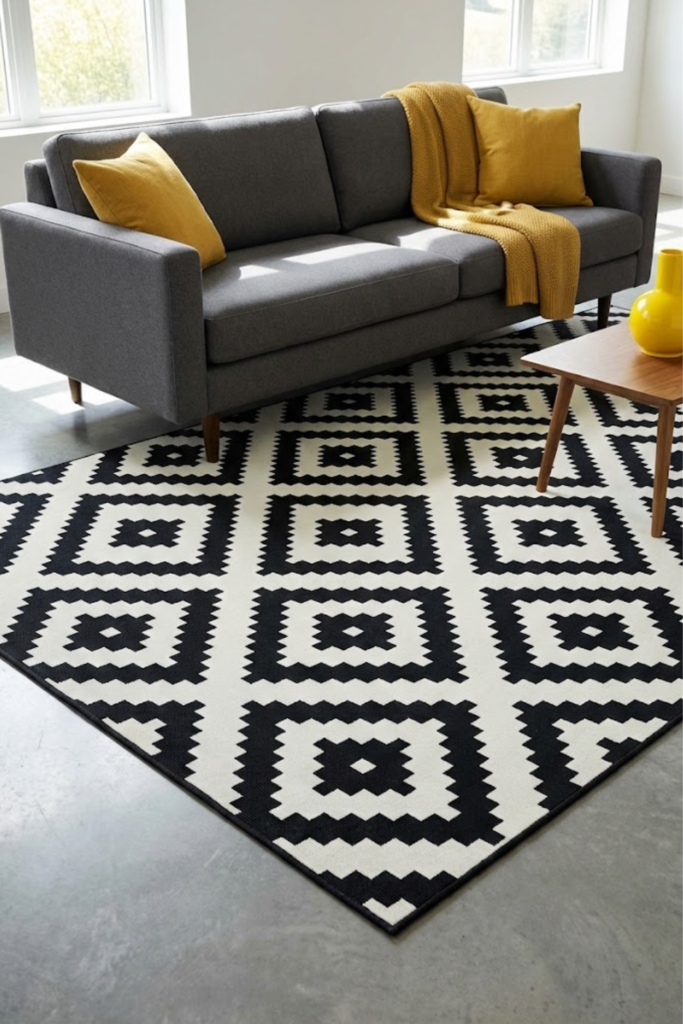
I’ve always felt that some rooms just feel a bit too safe. You know what I mean? Everything is gray, beige, or white. It’s clean, but it’s kind of boring. That’s why I love a bold geometric rug. It’s like adding a giant piece of art to your floor. I remember helping a friend who had a totally white living room. It looked like a hospital. We put down a rug with big, sharp black triangles on it, and the whole energy changed immediately. It wasn’t just a room anymore; it had a real personality. Geometric rugs are great because they give your eyes something fun to look at. They create a “focal point,” which is just a fancy way of saying they are the first thing people notice when they walk in.
Picking the Right Pattern
When you’re looking at these types of living room rug design ideas, you don’t have to go crazy with a hundred colors. High-contrast patterns, like black and white or navy and cream, usually work best. The shapes—circles, squares, or zig-zags—actually help organize the space. If your furniture is very boxy, a rug with soft circles can help soften the look. I usually tell people to think about the lines in their room. If you have a lot of straight edges on your sofa and coffee table, a sharp geometric pattern fits right in. It makes the space feel modern and fresh without you having to buy all new furniture.
Pulling Colors from Your Stuff
To make this look professional, you should pick one color from the rug and repeat it somewhere else in the room. Maybe you have a rug with a splash of mustard yellow or a deep blue in the pattern. You can grab two matching throw pillows or a piece of art for the wall that has that same color. This makes the rug feel like it belongs there. It ties the whole room together so it doesn’t look like you just bought a random rug. If you just throw a colorful rug down without matching anything else, it might look like a mistake. You want people to think you planned it that way, even if you just found the pillows on a clearance rack.
Keeping the Balance in the Room
If your rug is “loud” or has a very busy pattern, you need to keep the rest of the room pretty quiet. This means your sofa and your chairs should probably be a solid color, like gray, tan, or white. If you have a busy rug and a flowery or plaid sofa, the room will feel messy and a bit stressful to sit in. I like to let the rug be the star of the show. If the rug is doing all the heavy lifting, the rest of the decor can be simple and easy. Just one bold rug does the job for you. I make sure to tell my students that you don’t need a lot of stuff to make a big impact. One good rug is often enough.
3. High-Traffic Heroes: Stylish Washable Rugs
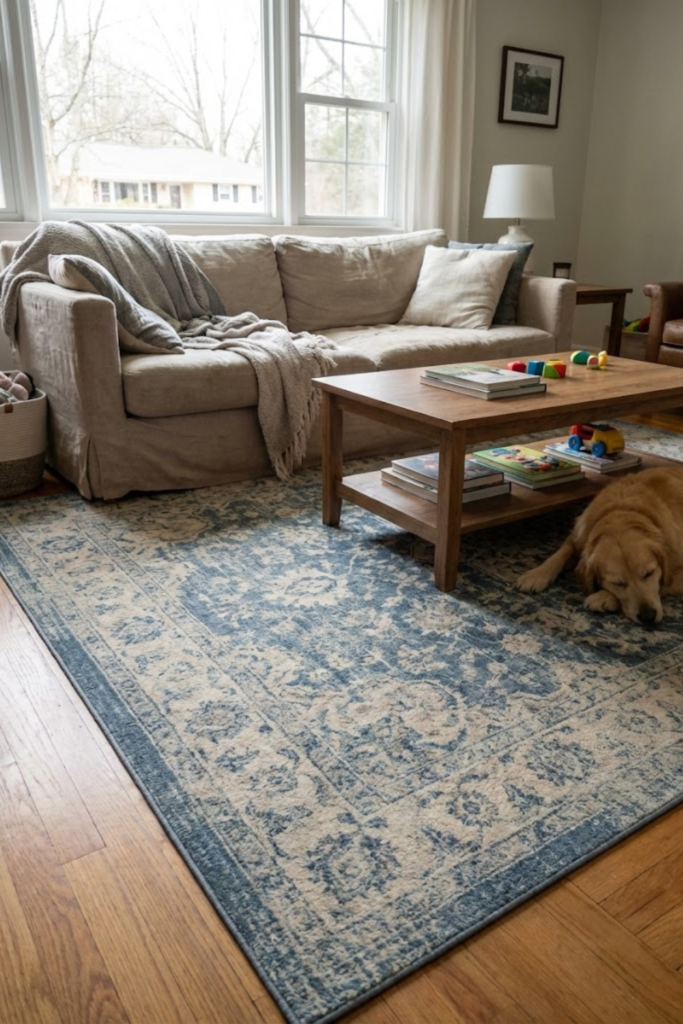
I have to tell you, for a long time, I was scared of having nice rugs because of my dog, Buster, and my two kids. It felt like every time I bought something pretty, someone would spill grape juice or Buster would come in with muddy paws. I used to think that “washable” meant it looked like a thin piece of plastic or a cheap towel. Boy, was I wrong. These days, one of the smartest living room rug design ideas is just buying a rug you can throw in the washing machine. It sounds too good to be true, but it has saved my sanity. I actually have a washable rug in my own den now, and when it gets dirty, I just peel it off the pad and wash it like a pair of jeans. It comes out looking brand new every single time.
Why Washable Rugs Are a Game Changer
The best thing about these rugs is that they are very thin but still look like real rugs. They usually come in two pieces: a rug pad that stays on the floor and a “cover” that is the actual rug. This is great for areas where people are always walking or kids are playing on the floor. In the past, if you spilled coffee, you had to scrub the floor for an hour and maybe even pay a professional to clean it. Now, you just pick it up and let the machine do the work. It makes having a beautiful home feel much less stressful. You don’t have to yell at the kids for eating snacks on the couch anymore!
Choosing Patterns That Hide the Mess
Even though you can wash these, you still want a rug that looks good between cleanings. I always suggest picking a pattern that has a “distressed” or faded look. If a rug already looks a little bit worn out, a tiny stain won’t even show up. Blue and gray patterns are very good for hiding pet hair or dust. If you pick a solid white rug, you’ll be washing it every day, and nobody has time for that. I like the ones with small floral prints or oriental designs because the busy patterns hide everything.
Tips for Making Them Look Expensive
Sometimes people worry that a thin rug looks cheap. To fix this, I suggest getting a slightly thicker rug pad to put underneath it. It gives your feet a little more cushion and makes the rug feel more like a luxury item. Also, make sure you get the right size. If you get a rug that is too small for your furniture, it will look like a mat instead of a real design choice. I always say, go as big as your room allows. When the rug goes under the front legs of your sofa, it anchors the room and makes your “washable” rug look like a high-end designer piece.
4. Embracing Earthy Tones and Organic Shapes
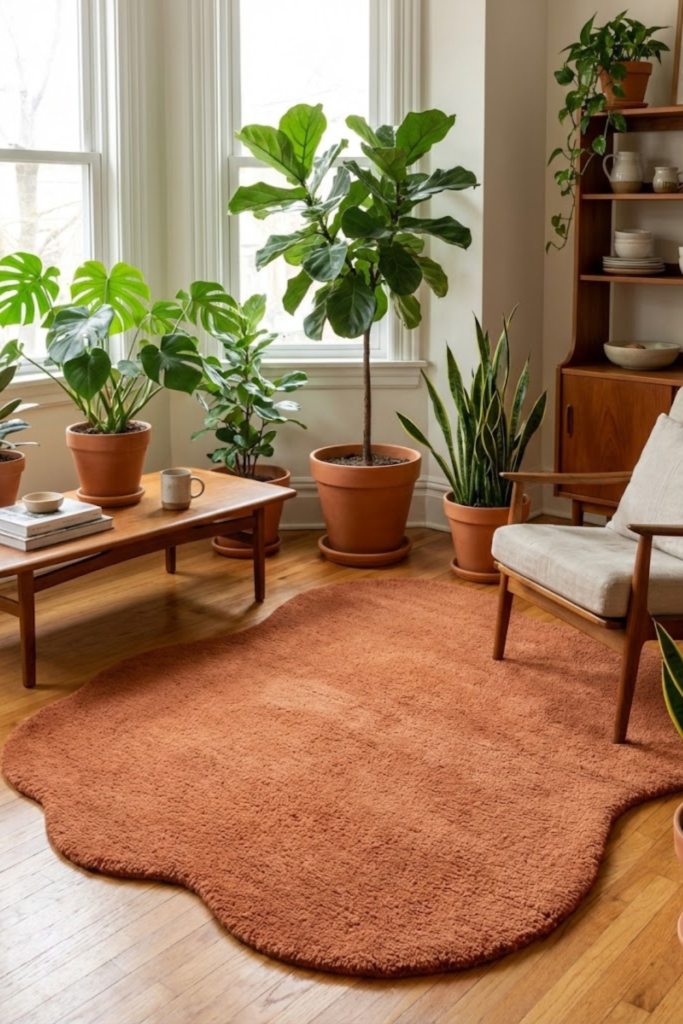
For a long time, I thought rugs only came in two styles: rectangles and circles. It was like I was stuck in a geometry class from twenty years ago. But lately, I’ve been seeing these “organic” shapes that look more like a soft puddle or a cloud, and I have to say, they are a breath of fresh air. I remember working on a small living room once that felt very stiff because every piece of furniture was a square. It felt like a box inside a box! We swapped out the old rug for one with soft, wavy edges in a warm terracotta color. The whole mood of the room changed from “office” to “garden” almost instantly. It felt natural and relaxing, which is exactly how a home should feel.
Breaking the “Box” with Organic Shapes
Most of our homes are full of straight lines. Think about it—your walls, your windows, your TV, and your bookshelf are all basically boxes. If you add a rectangular rug on top of all that, the room can feel a bit rigid or cold. Using a rug with an irregular or “blob” shape breaks those lines and makes the space feel much softer. It is like a visual break for your eyes. These shapes are great for smaller spaces because they don’t “cut off” the floor as much as a sharp corner does. I always tell my friends that if a room feels too “tight,” they should try a rug that doesn’t have straight edges. It makes the floor space feel like it flows.
The Power of Earthy Colors
Colors have a huge impact on how you feel when you finally sit down after a long day. Right now, I am really leaning into earthy tones like sage green, warm ochre, and rusty terracotta. These aren’t just “boring” browns; they are colors that remind you of the outdoors. I once tried a bright neon rug when I was younger, and I couldn’t sit in that room for ten minutes without getting a headache! Earthy tones are much easier to live with. They make a space feel grounded and stable. Plus, these colors are actually pretty good at hiding a little bit of dust, which is always a win in my book.
How to Style an Irregular Rug
You might wonder how to put furniture on a rug that isn’t a standard shape. It is actually simpler than you think. You don’t have to put all the legs of the sofa on the rug. Just tucking one wavy edge under the front of the couch is enough to make it look like you meant to do it. I like to pair these organic rugs with wooden furniture and maybe a few tall potted plants. This creates a “nature-inspired” look that feels very modern but also very cozy. It is all about making the room feel like a place where you can actually breathe and relax. Don’t worry about being perfect; just let the shape do the talking.
5. Plush Textures: The Comeback of Shag
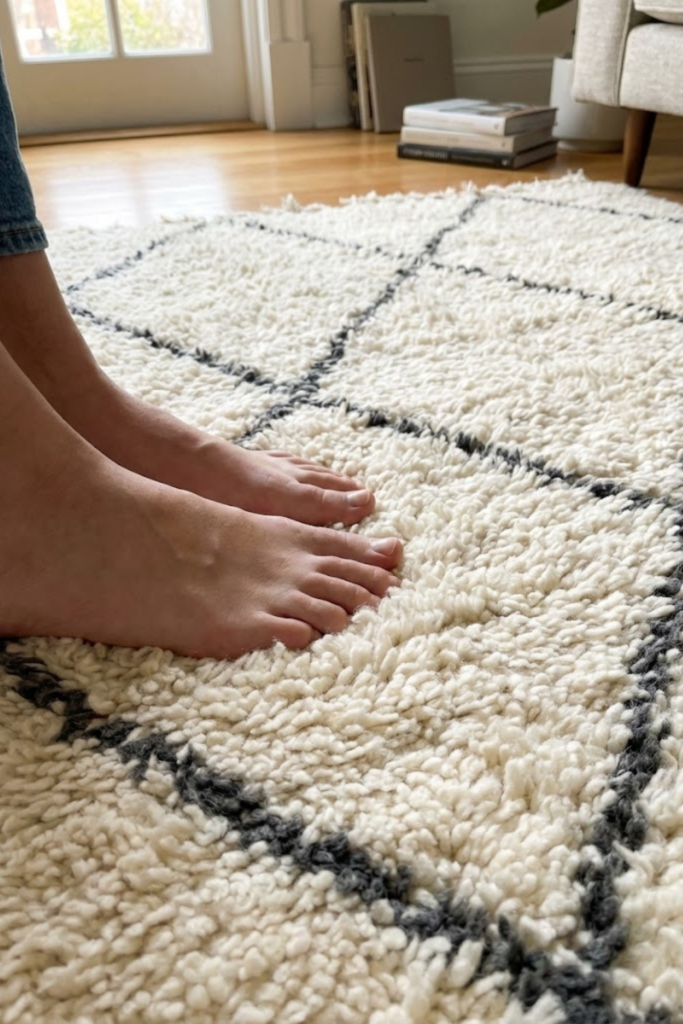
I know what you are thinking. Shag rugs? Didn’t those die out back in the 1970s? I used to think the same thing. My grandmother had a bright orange shag rug that looked like it belonged on a movie set for a disco party. It was hard to clean and it felt a bit scratchy. But I am here to tell you that these rugs have made a huge comeback in the last few years. Today’s plush living room rug design ideas are much softer and way more stylish than the ones from the past. I finally bought one for my guest room last year, and now I want one in my main living room too. It makes the floor feel like a soft pillow instead of a hard surface.
The Modern Moroccan Style
Most of the trendy shag rugs you see now are based on traditional Moroccan designs. They usually have a creamy white or off-white background with very simple, dark gray or black diamond lines. It is a very clean look that does not feel messy or dated at all. Unlike those old rugs from decades ago, these new versions use better materials that do not trap quite as much dirt. I love how they look in a space with a leather sofa. The mix of the smooth leather and the fuzzy rug creates a really cool contrast. It is a simple way to make your house look like you know exactly what you are doing with your decor.
The Barefoot Test for Comfort
When I help people pick out rugs, I always ask them to do the “barefoot test.” You should take your shoes off and stand on it if you can. If you have a spot in your living room where you sit a lot, like in front of the TV or a fireplace, you want something that feels amazing on your toes. Shag rugs are the winners here. They provide a lot of warmth in the winter, which is great if you have cold hardwood or tile floors. They also help soak up sound. If your living room is echoey, a thick shag rug will make it much quieter and more private for your family.
How to Keep it Fluffy
A lot of people worry that these rugs are a nightmare to keep clean. I tell my students that you just need to know a few tricks. You should not use a regular vacuum with the “beater bar” spinning, or you might pull the fibers out. Instead, use the suction-only setting. Every once in a while, I take mine outside and give it a good shake. It is also a good idea to rotate the rug every few months so you do not wear down the same spot where you walk the most. If you treat it right, it will stay fluffy for a long time. It is a small price to pay for having the softest floor in the neighborhood.
6. Sustainable Fibers for the Eco-Conscious Home
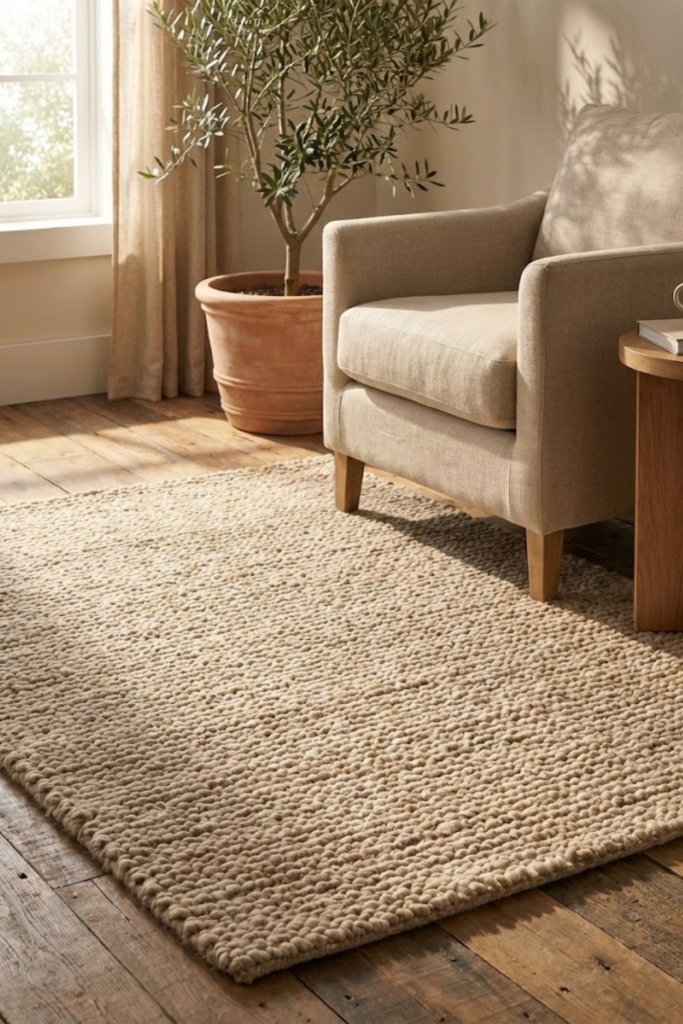
I’ve been thinking a lot lately about where our stuff actually comes from. A few years back, I bought a cheap rug for my porch, and after just one summer, it started falling apart into tiny plastic bits. It was a mess! It made me realize that picking out living room rug design ideas isn’t just about what looks pretty on social media. It’s also about what stays out of the landfill. I’ve started looking for rugs made from things like recycled bottles or organic wool. It feels good to know that my home isn’t hurting the planet, and honestly, these “green” rugs often look way better than the cheap factory ones anyway. They have a soul to them that plastic just can’t copy.
Looking at Recycled and Organic Materials
You might be surprised at what people can make rugs out of these days. There is this material called R-PET, which is basically just recycled plastic bottles. They turn the plastic into a soft yarn that feels almost like wool. I have one in my hallway, and you would never know it used to be a soda bottle! Then there is organic wool. Wool is great because it’s a natural resource that grows back every year. It doesn’t need a bunch of harsh chemicals to be made. Plus, wool is naturally tough. It lasts for a really long time, which is exactly what you want if you have a busy house like mine. It’s a win for you and a win for the sheep!
The Toughness of Hemp and Seagrass
If you want something that can really take a beating, you should look at hemp or seagrass. These are plant fibers that are super strong. I used a seagrass rug in my dining area because I was tired of the chairs scratching the wood floor. It’s a bit rougher than wool, so it might not be the best for a nursery where babies are crawling, but for a high-traffic living room, it’s perfect. It has this cool, beachy look that makes the room feel light and airy. These plants grow really fast and don’t need much water, so they are a very smart choice for anyone trying to be a bit more careful with the environment.
Buying for the Long Haul
One of the biggest problems today is what I call “fast decor.” People buy something cheap, use it for a year, and then throw it away when it gets a little dirty. I try to teach my students that buying one good rug that lasts ten years is much better than buying five cheap rugs that end up in the trash. When you pick a sustainable rug, you are usually getting something that was made with more care. It might cost a few more dollars at the start, but it saves you money later because you don’t have to keep replacing it every spring. It’s a simple way to make your home feel more solid and less like a temporary hotel room.
7. Defining Open Spaces with Zoned Rugs
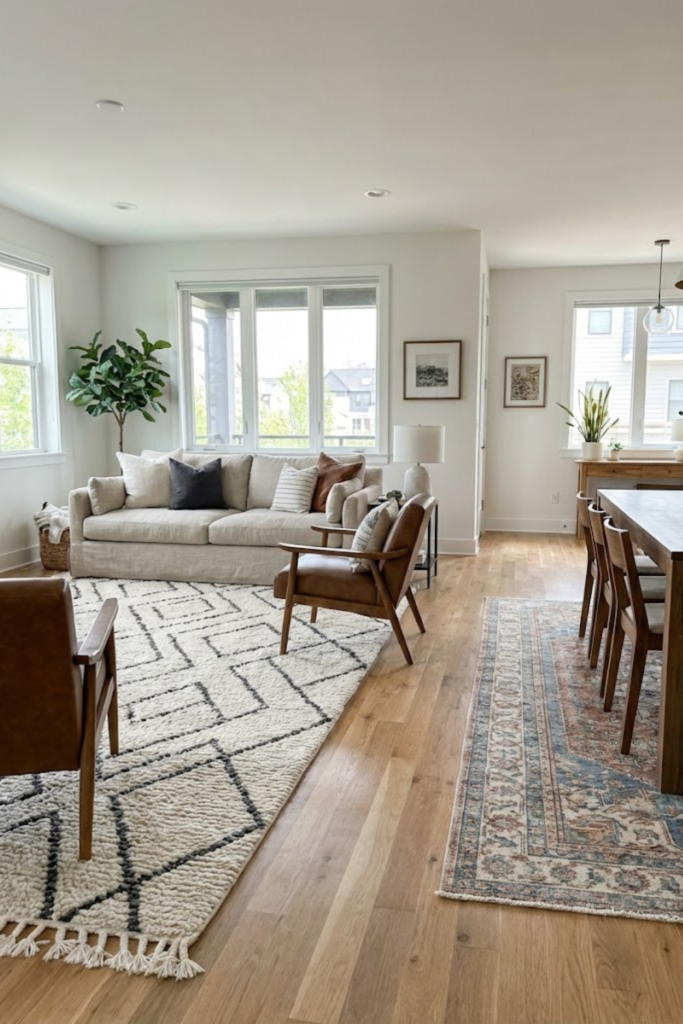
I remember my first house had this huge open floor plan. On paper, it looked great because it felt so big and airy. In real life, it felt like I was living in a giant empty warehouse. I would put my sofa in one spot, but it just felt like it was floating in space. That is where these living room rug design ideas for “zoning” really come in handy. You use rugs to create little islands of furniture. It tells people, “this is where we sit and talk,” and “this is where we eat dinner.” Without these rugs, your furniture just looks like it is waiting to be moved somewhere else. It is a simple trick, but it makes a massive house feel like a cozy home.
Creating Walls Without the Wood
Think of your rugs as invisible walls. In a big room, you usually do not want to build a real wall because it blocks the light and makes the house feel small. Instead, you lay down a large rug for the seating area. All your chairs and the sofa should at least have their front legs touching that rug. This creates a clear zone. When you step onto the rug, your brain says, “Okay, I am in the living room now.” Even if there isn’t a physical wall in sight, the rug sets the boundary. I usually tell my students to leave a little bit of bare floor—like a walking path—between the living area and the dining area. This helps the zones stay separate.
Coordinating Without Clashing
One question I get all the time is: “Do my rugs have to match?” The answer is no! In fact, if they match perfectly, it looks a bit like a hotel lobby. You want them to be like cousins, not twins. Maybe both rugs have a little bit of the same blue in them, or maybe they are both made of a similar natural material. I like to use a patterned rug for the living area and a simpler, solid color for the dining area. This keeps things interesting and makes sure the room doesn’t look boring. If you pick colors that are in the same family, the whole room will feel like it was put together by a professional.
Sizing for Open Floor Plans
Size is everything when you are trying to define a space. If the rugs are too small, the “zones” won’t work and the room will look messy. You want the rug to be big enough so that the furniture feels anchored. In the dining area, the rug should be big enough so that when you pull the chairs out to sit down, they are still on the rug. If the chair legs fall off the edge every time you move, the rug is too small. Keeping about two feet of floor visible between the different rugs is a good rule of thumb. It makes the “hallways” of your house clear so people know where to walk.
Conclusion
Finding the right living room rug design ideas is like finding the perfect pair of shoes for an outfit—it just makes everything click. Whether you are layering a vintage find over jute, going bold with patterns, or picking a washable rug for your messy (but cute) pets, the right choice makes your home a better place to be. Don’t be afraid to go big or try a texture you’ve never used before. Your floor deserves a little love!
If you found these ideas helpful, please save this guide to your Pinterest board and share the inspiration with your friends!
.