Have you ever looked at your living room and thought, “It’s nice, but it’s missing… something?” It drives you crazy! I’ve been there. You buy the matching furniture set, you paint the walls a safe color, and yet, the room feels like a doctor’s waiting room. It lacks soul. But here is the secret I’ve learned after years of tweaking my own home: it’s not about spending a fortune on new furniture. It’s all in the styling. As we settle into 2026, the trend is moving away from “showroom perfect” and toward “perfectly lived-in.” If you are ready to stop staring at blank corners and start loving your space, these 7 room styling ideas are exactly what you need to take your home from “meh” to magnificent.
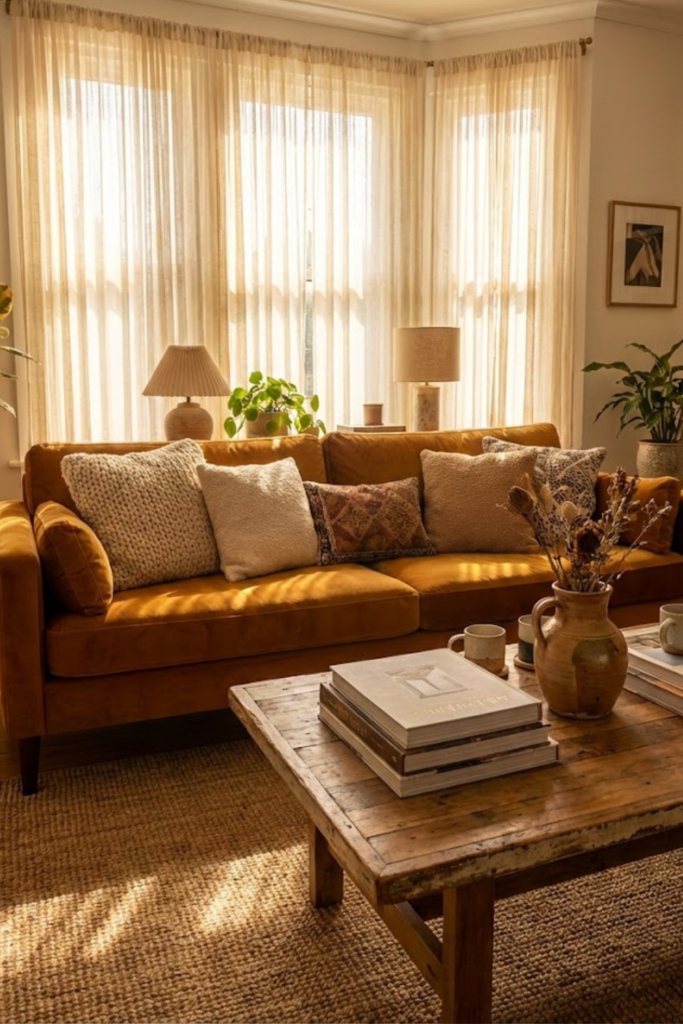
1. Master the Art of Texture Layering for Depth
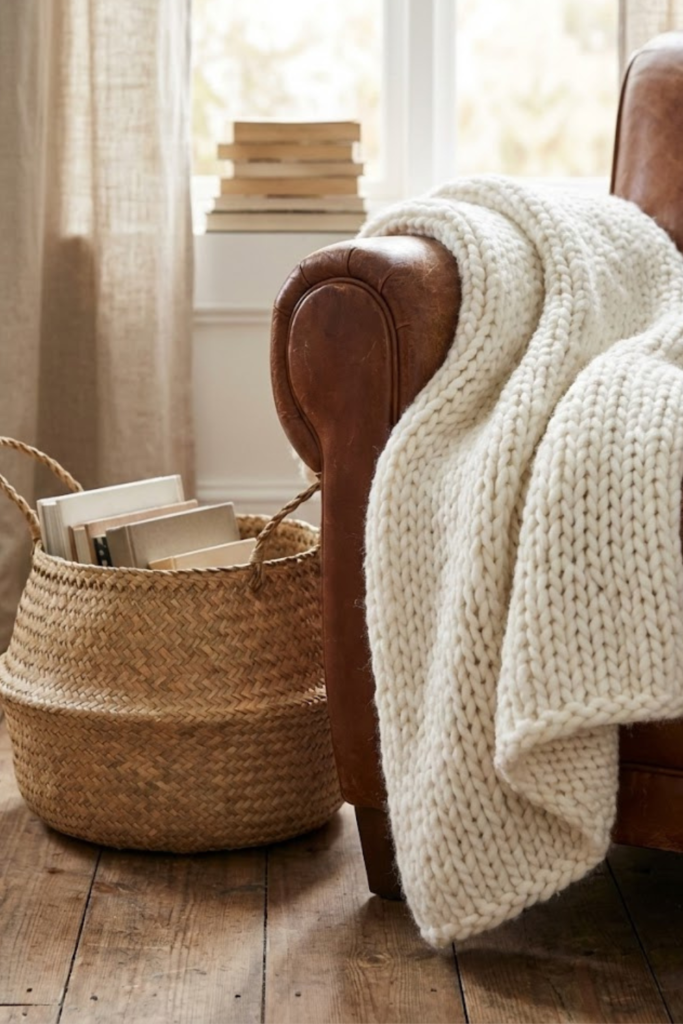
I have to confess something. When I rented my first apartment, I thought “matching” meant “good design.” I had a smooth leather sofa, a glass coffee table, and sleek blinds. I was so proud of it until I sat down one evening and realized the room felt cold. Like, physically cold. It wasn’t the temperature; it was the lack of texture. I didn’t know what I was doing wrong!
That is a mistake I see people make constantly. We get so caught up in color schemes that we forget about how a room feels to the touch.
If your room looks flat or boring, I bet you a coffee that you have too many smooth surfaces sitting next to each other. The fix is actually pretty fun, and you don’t need to be a pro to pull it off.
Why “Flat” Happens
A room without texture is like a cake without frosting—technically it’s a cake, but are you excited to eat it? Probably not. When light hits a room where everything is smooth (wood, metal, glass), it just bounces right off. There are no shadows, no depth. It just looks one-dimensional.
The “Rough meets Smooth” Trick
Here is the rule I use now: Opposites attract. If you have a sleek, modern leather chair, do not put a silky pillow on it. Throw a chunky, knitted wool blanket over the arm instead. The roughness of the wool makes the smoothness of the leather pop. It creates what designers call “visual weight.”
Try this simple formula:
- Base: Smooth flooring or sofa.
- Layer 1: A jute or high-pile rug (something rough or fluffy).
- Layer 2: Velvet or linen cushions (soft but textured).
- Layer 3: A wicker basket or ceramic vase (hard but matte).
My “Aha!” Moment
I remember bringing home this beat-up, rustic wooden stool I found at a flea market. My husband looked at me like I was nuts because we had this very modern, clean living room. But the second I placed that rough, imperfect wood next to our white wall? The whole corner woke up. It added grit. It added history.
Don’t be afraid to mix materials that don’t seem to “go” together. Velvet against metal? Yes. Linen against brass? Absolutely. It’s those clashes that make a room feel cozy and expensive.
2. Embrace Biophilic Design with Statement Greenery
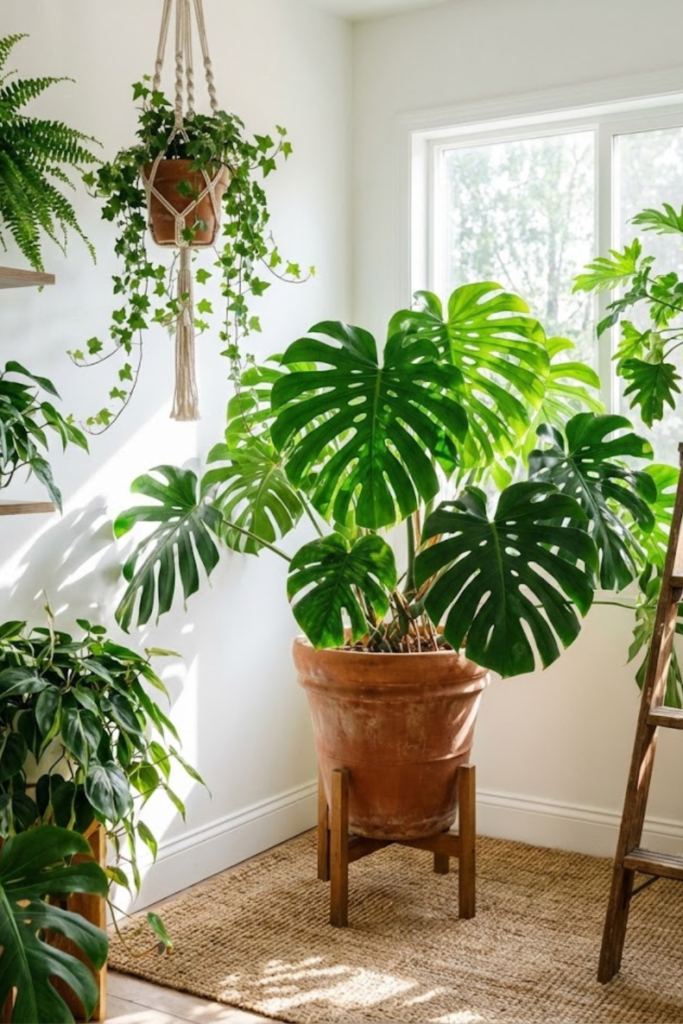
I used to be a total plant killer. I mean, serious black thumb here—even the unkillable succulents would give up on me. For the longest time, I just avoided real plants because I didn’t want the hassle. But my house felt… well, a bit dead. It was clean and tidy, but it didn’t breathe.
Then I learned about “biophilic design.” It sounds like a big fancy science word, but it just means humans like being near nature. It makes us feel good.
If you want your home to look styled and not just furnished, you have to bring the outdoors in. But here is the mistake I see a lot of people make: they buy ten tiny little plants and line them up on a windowsill. It ends up looking like a cluttered science project.
Go Big or Go Home
Instead of clutter, you need a “statement” plant. Think of a plant as a piece of furniture. You wouldn’t put ten tiny chairs in a corner, right? You’d put one nice armchair. It’s the same with greenery.
I finally bit the bullet and bought a large Monstera (the one with the swiss-cheese holes in the leaves). I put it in an empty corner that I didn’t know what to do with. Instantly, the room felt fresher. The green pops against neutral walls like you wouldn’t believe.
Styling Tips That Work:
- Vary the Height: Don’t put everything on the floor. Hang a Pothos from a high shelf so the vines trail down. It draws the eye up and makes your ceilings feel taller.
- Mix the Pots: Don’t use the ugly plastic grow pots they come in. Pop them inside a wicker basket or a ceramic pot. The texture (remember step 1?) adds to the look.
- Fake it ’til you Make it: Look, if you really can’t keep them alive, the fake plants in 2026 are amazing. I have a fake olive tree in my hallway and nobody knows the truth but me.
3. Utilize Lighting as Sculptural Decor
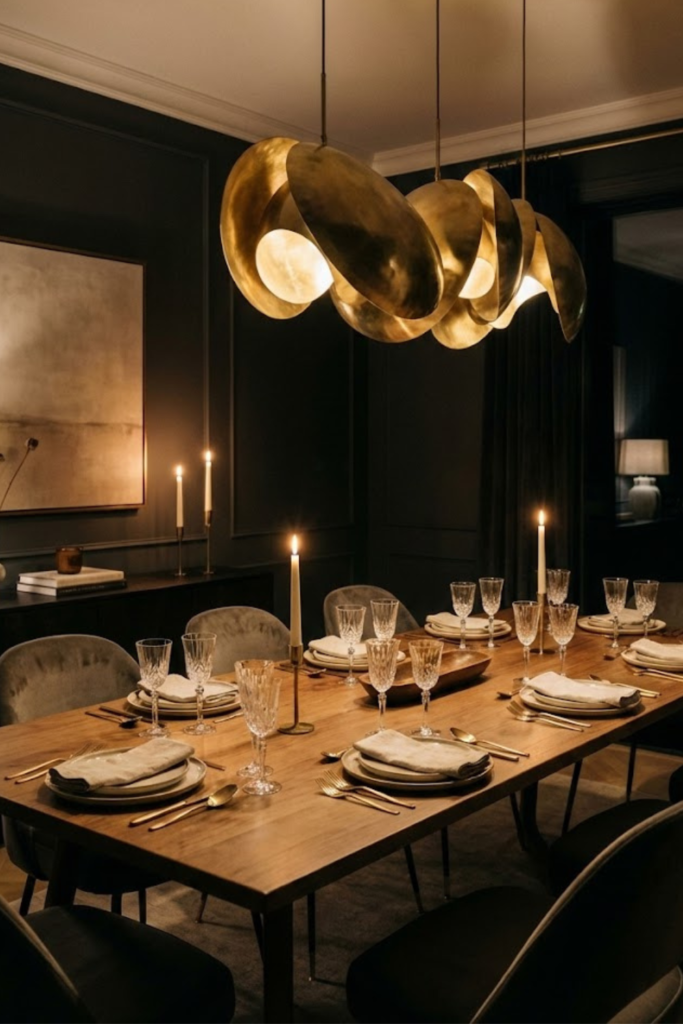
Okay, we need to talk about the “boob light.” You know the one I mean—that flush-mount glass dome that comes standard in almost every rental or builder-grade home. I lived with those for years because I was terrified of electricity. I thought if I touched a wire, I’d blow up the house. So, I just suffered under this harsh, interrogation-room lighting every night.
It wasn’t until I finally swapped one out that I realized lighting isn’t just about seeing in the dark. It is the jewelry of the room.
If you have a boring room, look up. Is your light fixture adding anything to the style, or is it just sitting there?
Stop Using the “Big Light”
There is a running joke on the internet about how we all hate the “big light” (the main overhead one), and honestly, it’s true. Overhead lighting can be unflattering and cold. To make a room feel styled, you have to treat lighting as a sculptural object that looks good even when it’s turned off.
The “Three Layers” Rule
I use this rule to make sure my room doesn’t feel flat at night:
- The General Light: This is your overhead fixture. Swap that boring dome for a pendant or a chandelier. It becomes a focal point.
- The Task Light: This is for doing stuff. A reading lamp by the chair or a directed lamp on a desk.
- The Mood Light: This is my favorite. Table lamps with cool bases (ceramic, stone, glass). Put them on side tables or shelves.
My Best Tip: If you can’t swap the ceiling fixture because you rent, or you’re just not handy, ignore it! Buy two really cool floor lamps or table lamps and use those instead. A lamp with a weird, sculptural shape acts like a piece of art. It serves a purpose, but it also looks pretty cool sitting there.
4. Curate a Storytelling Gallery Wall
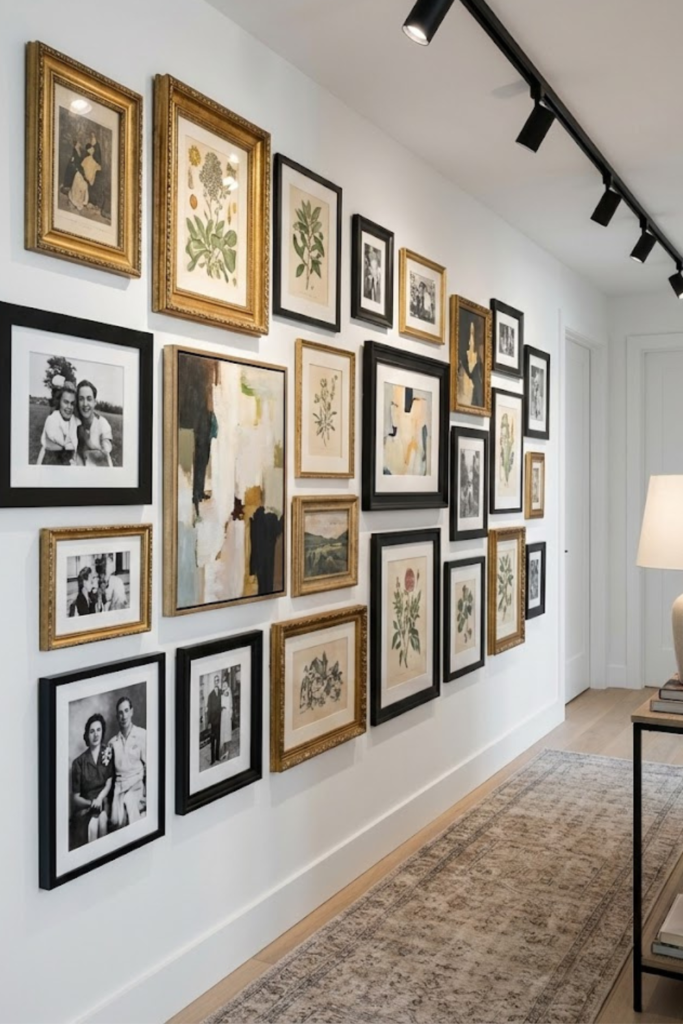
For years, I had this huge, empty wall behind my sofa. It scared me. I didn’t want to mess it up, so I just left it blank. When I finally decided to decorate it, I made a classic mistake: I went to a big box store and bought three matching canvas prints of flowers.
They matched the rug, sure. But did they mean anything to me? No. I got bored of them in a month.
A home shouldn’t look like a catalog. It should look like you live there. The best way to do this is with a gallery wall, but not the kind that looks perfect. You want one that tells a story.
Ditch the “Matching” Rule
Please, do not feel like all your frames need to be black or all your art needs to be the same size. It actually looks better if it’s a bit messy. I mix old black-and-white family photos with cool postcards I found on vacation. I even framed a recipe card my grandmother wrote.
Add “Non-Art” Items
This is a game-changer. Don’t just hang flat pictures. I hung a small round mirror and a woven hat right in the middle of my photo arrangement. It adds that 3D pop we talked about earlier.
The “Floor First” Trick
Do not—I repeat, do not—start hammering nails into the wall immediately. You will end up with a wall that looks like Swiss cheese (I learned this the hard way).
- Clear a space on your floor.
- Lay out all your frames and objects there.
- Move them around until you like the puzzle.
- Snap a picture with your phone so you remember the layout.
- Then put them on the wall.
It takes the pressure off, and it makes the whole process kind of fun instead of stressful.
5. Experiment with Bold Color Drenching
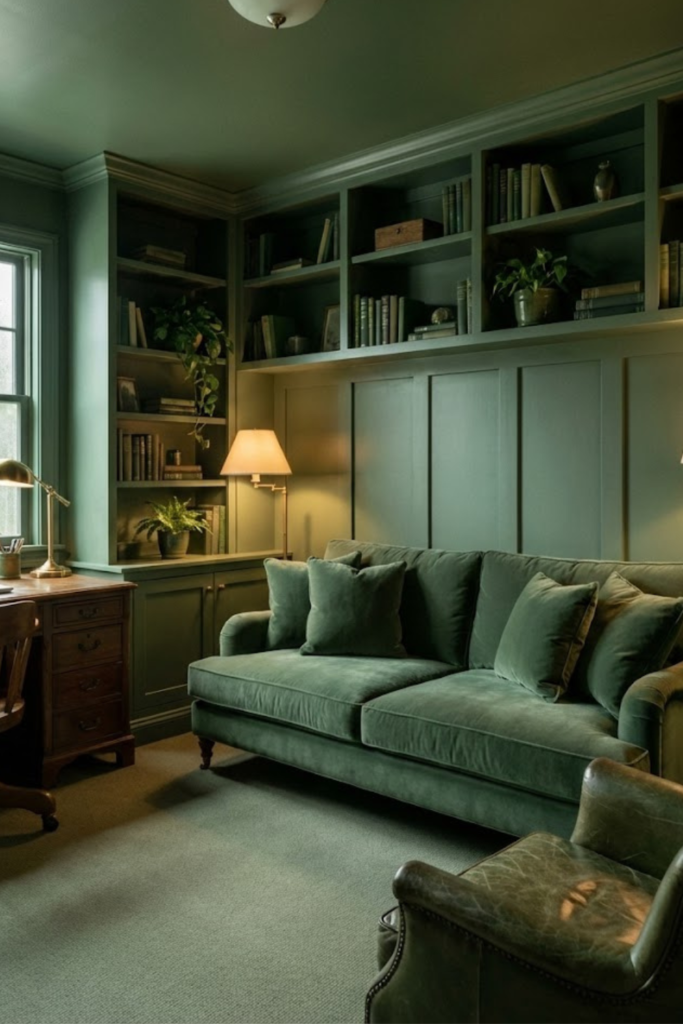
I grew up thinking that if you wanted a room to feel big, you had to paint it white. Stark white. So for years, my house looked a little bit like a hospital. I was terrified of dark colors. I thought they would make my rooms feel like caves.
Then I discovered “Color Drenching.” It is a funny name, but the idea is simple: you paint everything the same color. I mean everything. The walls, the baseboards, the door frames, and even the ceiling.
It sounds scary, right? But here is why it works.
The “Blur” Effect
When you have white trim and blue walls, your eye stops at the line where the colors meet. It outlines the room and shows exactly how small it is. But when you paint the trim and the ceiling the same color as the wall, those lines disappear. Your eye doesn’t know where the wall ends and the ceiling begins.
It actually makes small rooms feel bigger and endless.
My “Jewelry Box” Bathroom
I tried this for the first time in my tiny downstairs bathroom (the powder room). I picked a deep, moody sage green. I was sweating while I painted the ceiling, thinking, “Samah, you have ruined this house.”
But when I put the brush down? It felt like a hug. It felt cozy and expensive, like a little jewelry box.
Start Small
If you are nervous, don’t do this in your main living room first. Try it in a small space, like a home office or a hallway. Pick a color you love, not just what is trendy in 2026. If you love navy blue, go for it. If you love warm terracotta, do that.
Just remember to get the paint mixed in different sheens. I use “flat” or “matte” for the walls and ceiling, and “satin” or “semi-gloss” for the trim. It’s the same color, but the trim will shine a little bit. It looks fancy without trying too hard.
6. Mix Vintage Finds with Modern Staples
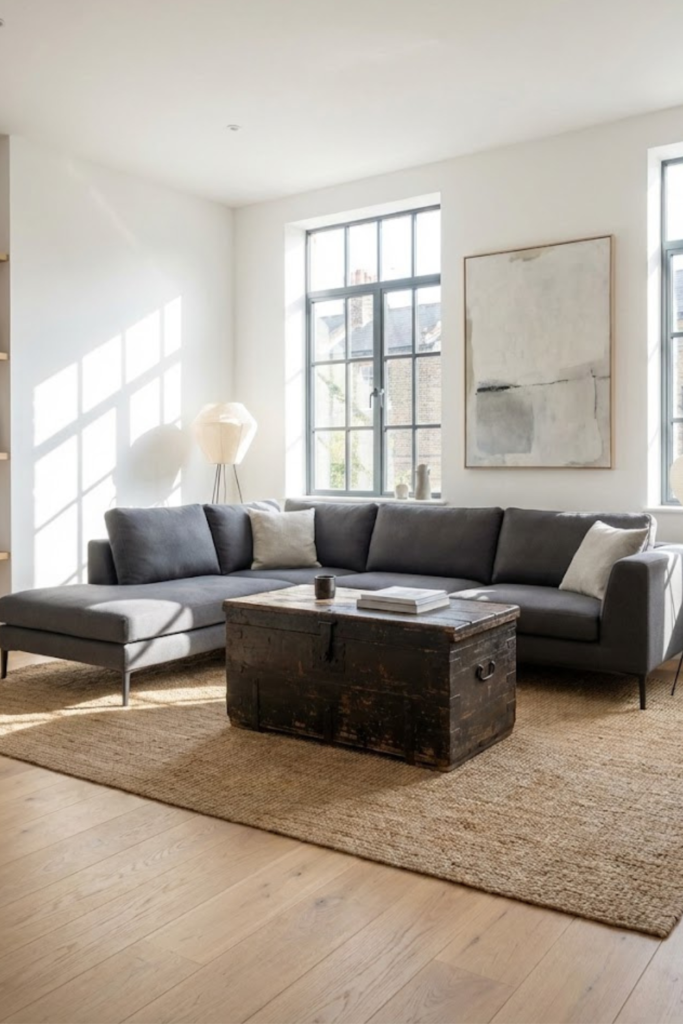
I used to walk into those big furniture stores and want to buy the whole display room. It seemed so easy. Just get the couch, the matching chair, and the matching coffee table. Done, right?
Wrong. I did that once, and my living room looked like a page from a catalog. It was pretty, but it had no personality. It felt stiff.
The best homes I have ever visited are the ones that mix things up. They don’t have everything brand new. They have a mix of old and new stuff.
The “High-Low” Mix
You don’t need to be an antique dealer to do this. I certainly am not. But I learned that if you have a sleek, modern sofa (that’s the “modern staple”), you shouldn’t put a sleek, modern table next to it. It’s too much of the same.
Instead, go to a thrift store or a flea market. Look for something wood, maybe something that looks a little beat up. A vintage wooden stool or an old brass lamp.
Why It Works
When you put that scratched-up old table next to your crisp, clean sofa, magic happens. The old item makes the new item look cleaner. The new item makes the old item look like a cool treasure, not just junk.
My Rule of Thumb:
- Buy New: Soft things (sofas, mattresses, rugs). You want those clean and fresh.
- Buy Used: Hard things (tables, mirrors, frames, lamps). These are easy to clean and often built better than the new stuff anyway.
It stops your house from looking like everyone else’s. Plus, hunting for that one special old thing is way more fun than just clicking “add to cart.”
7. Style Surfaces with the Rule of Three
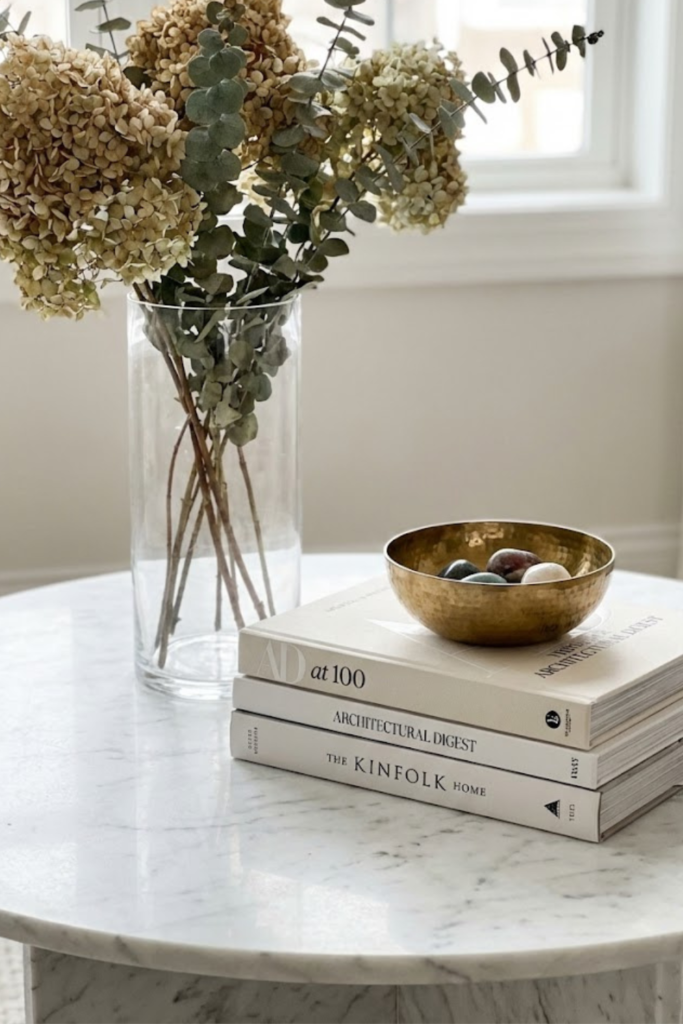
This is the secret sauce. If you take only one thing away from this whole article, make it this one.
Have you ever put stuff on a shelf or a coffee table and it just looked… messy? I used to do that. I would line up all my candles in a row like soldiers. Or I would just scatter things around hoping they landed in a cute spot.
Then I learned the “Rule of Three.” It is an old design trick that says things look better to the human eye when they are in groups of three (or odd numbers). It’s weird, but it works.
The Formula
You don’t just grab three random things. You need to balance them. When I style my coffee table, I use this exact recipe:
- Something Tall: Like a vase with flowers or a tall candlestick.
- Something Flat: Like a stack of two or three books.
- Something Bridging: A small object that connects them, like a round bowl, a candle, or a little brass paperweight.
Why It Works
It creates a triangle shape. Your eye knows exactly where to look. If you have a long shelf, just make a few of these “clusters” of three. Leave some empty space between the clusters. That empty space is just as important as the stuff.
So, go look at your bookshelf right now. If it looks cluttered, take everything off. Put things back in groups of three. It is wildly satisfying.
Conclusion
So there you have it! Those are my 7 room styling ideas that I swear by.
Remember, making a home doesn’t happen overnight. It took me years to get my place to feel right. Don’t stress if you can’t do all of these at once. Start with the “Rule of Three” on your coffee table today. Then maybe next weekend, hunt for a cool lamp.
Styling is supposed to be fun, not a chore. It’s about playing around until you smile when you walk into the room. Your home should tell your story, not the story of a furniture store catalog.
Did you find these tips helpful? If you did, please Pin this article to your Home Decor board on Pinterest so you can save it for your next rainy day project!