Let’s be real: who doesn’t love a good transformation story? There’s something so incredibly satisfying about watching a cluttered, “millennial gray” cave turn into a sun-drenched sanctuary. I’ve spent countless hours scrolling through home reveals, and let me tell you, 2026 is the year we finally stop decorating for “the algorithm” and start decorating for our souls! Did you know that searches for personalized decor have skyrocketed by over 313% recently? People are officially over the cookie-cutter look. We want homes that feel like a “warm hug” and reflect who we actually are. Whether you’re dealing with a cramped kitchen or a bedroom that’s seen better days, these 7 room ideas before and after will show you that your dream home is just one weekend project away. Let’s dive in!
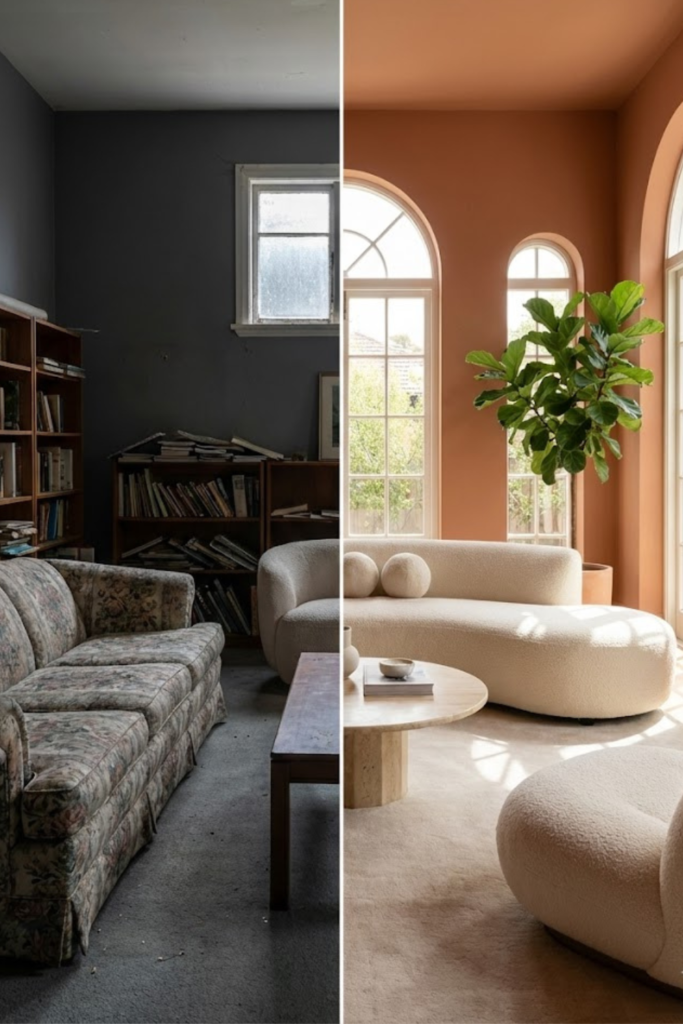
1. From Stark Minimalist to “Warm Minimalism” Lounge
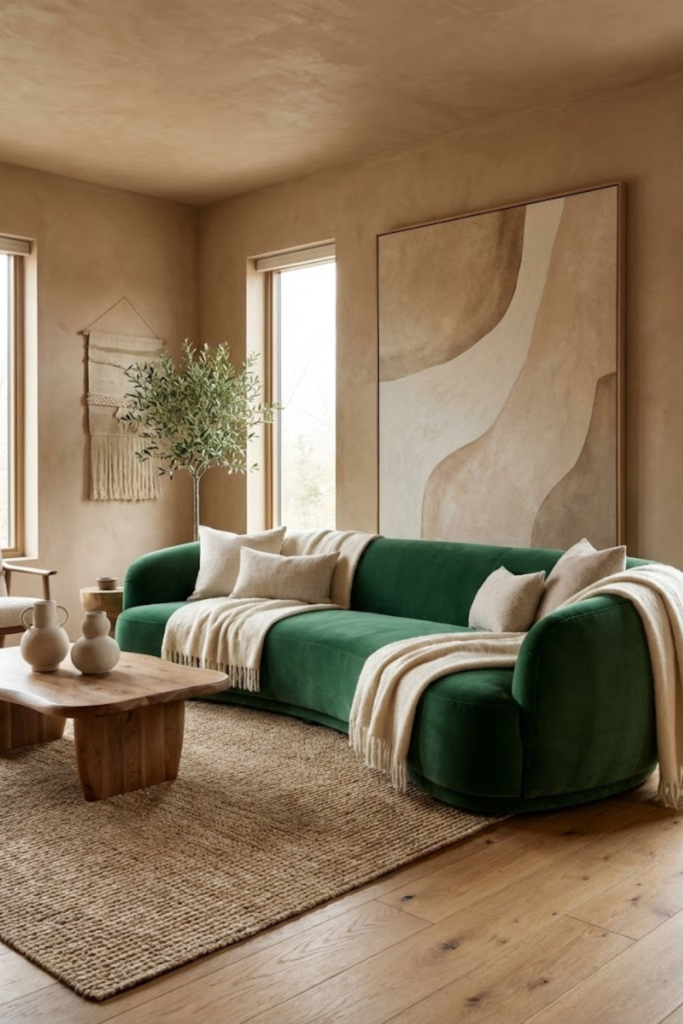
I remember when I first moved into my own place. I thought that to be a “real adult,” everything had to be white and gray to look modern. My living room ended up looking like a dentist’s office! It was so cold that I would actually feel a bit lonely just sitting there. That is the big problem with stark minimalism—it looks clean in pictures, but it feels empty when you are actually trying to live your life. I learned the hard way that a home needs to feel like a home, not a museum or a science lab. Switching to “warm minimalism” was the best thing I ever did for my house. It is still tidy, but now it feels like a place where you can actually take a nap without feeling like you are messing up the art.
Picking Colors That Feel Like a Hug
The first thing I did was get rid of the “Hospital White” paint. I picked a color that looked like toasted bread or warm clay. You don’t have to go super dark to make a room feel cozy. You just need to stay away from colors that have blue or cold gray undertones because they make the light look harsh. I went with a sandy taupe on the walls and it changed the whole mood instantly. It made the room feel a bit smaller, but in a good way—like the walls were giving me a giant hug every time I walked in.
Choosing Furniture with Soft Edges
I used to have this glass coffee table with sharp corners. It looked cool, but I was always worried about bumping my shins on it. I traded it for a round wooden table. Adding curves is a huge part of making a room feel more human. My new sofa has rounded arms instead of those sharp, blocky ones. It makes the lounge look more natural and way less like a math project. When you use soft shapes, the eyes can just glide across the room instead of getting stuck on sharp points.
Why Layering Textures is the Final Step
The secret to this look is “layering.” In my old room, I had one flat rug and that was it. Now, I put a big natural rug down and then a smaller, fuzzy one right on top of it. I also threw some wool blankets and linen pillows on the couch. Before, the room was too quiet and felt flat. Now, there is a lot to touch and feel. It doesn’t just look better; it feels better on your skin too. You don’t need a lot of stuff to make this work, you just need the right stuff that feels good to hold. It’s a simple way to fix a boring room without spending a ton of money.
2. The Kitchen Glow-Up: Closed Cabinetry & Light Quartz
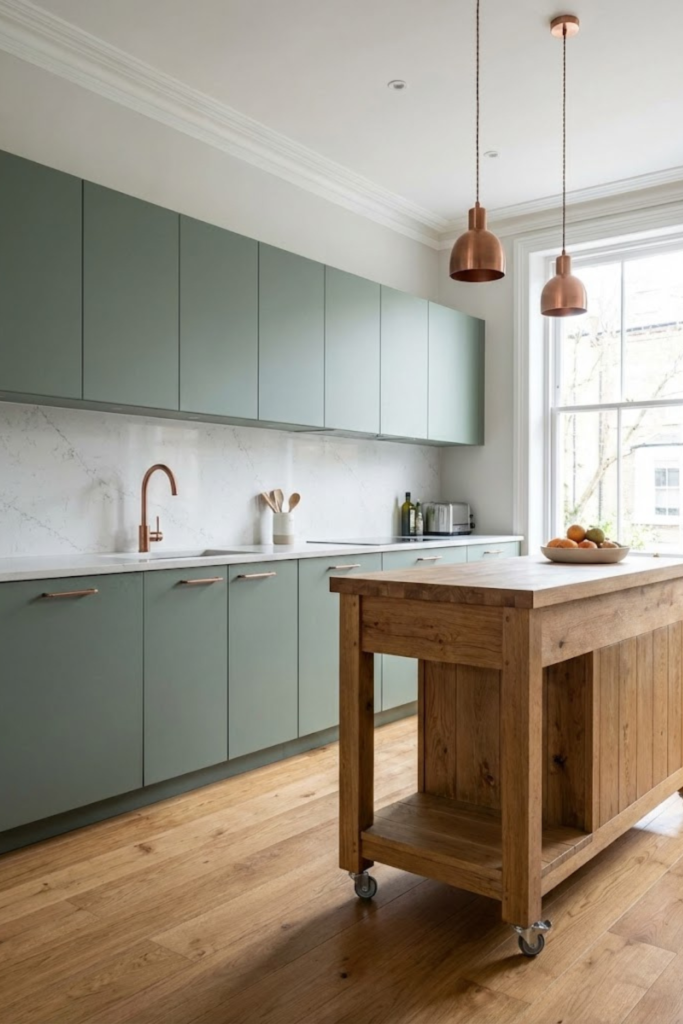
I’ll tell you what, I used to love those photos of kitchens with open shelves. You know the ones—where every jar is perfectly labeled and all the plates are matching white. So, a few years ago, I took down my top cabinet doors to try it out. It was a total disaster! My kitchen just looked like a giant mess all the time, and I spent way too much time dusting my bowls before I could even eat cereal. This year, I decided to do a real glow-up and go back to closed cabinetry. It is funny how much more peaceful a kitchen feels when you can just shut the door on your clutter.
Why I Finally Quit Open Shelving
The “before” version of my kitchen felt like it was yelling at me. Every time I walked in, I saw all the mismatched mugs and the half-empty boxes of crackers. It made me feel like I was failing at being organized. By putting back solid cabinet doors, I got my sanity back. I chose a nice soft green color for the wood, which makes the room feel fresh. If you are struggling with a kitchen that feels messy, believe me, hiding the stuff is the fastest way to fix the vibe. You do not need to be a professional organizer; you just need a door to hide the chaos.
The Magic of Light Quartz Countertops
The biggest change, though, was the counters. I used to have these dark, speckled granite tops that showed every single crumb and water spot. I switched them out for a light quartz that has just a tiny bit of gray veining. It is a total game-changer. Quartz is so much better than marble because it does not stain when you spill a little coffee or lemon juice. The light color reflects the sun from the window and makes the whole kitchen feel twice as big as it really is. It is durable and stays looking clean with just a quick wipe.
Adding Character with “Unfitted” Elements
I did not want the kitchen to look too much like a cold showroom, so I left a little space for a freestanding wooden hutch I found at a yard sale. This is what people call an “unfitted kitchen” design. It adds so much character! Instead of everything being perfectly matched, that one piece of old furniture makes the room feel cozy and real. It is a great way to show off a few favorite things without making the whole room look cluttered again. This kitchen makeover was not just about looking good; it was about making a space that actually works for a busy life. If you want a kitchen that feels bright and easy to live in, this is the way to go.
3. Bedroom Retreat: The “Cocooning” Master Suite
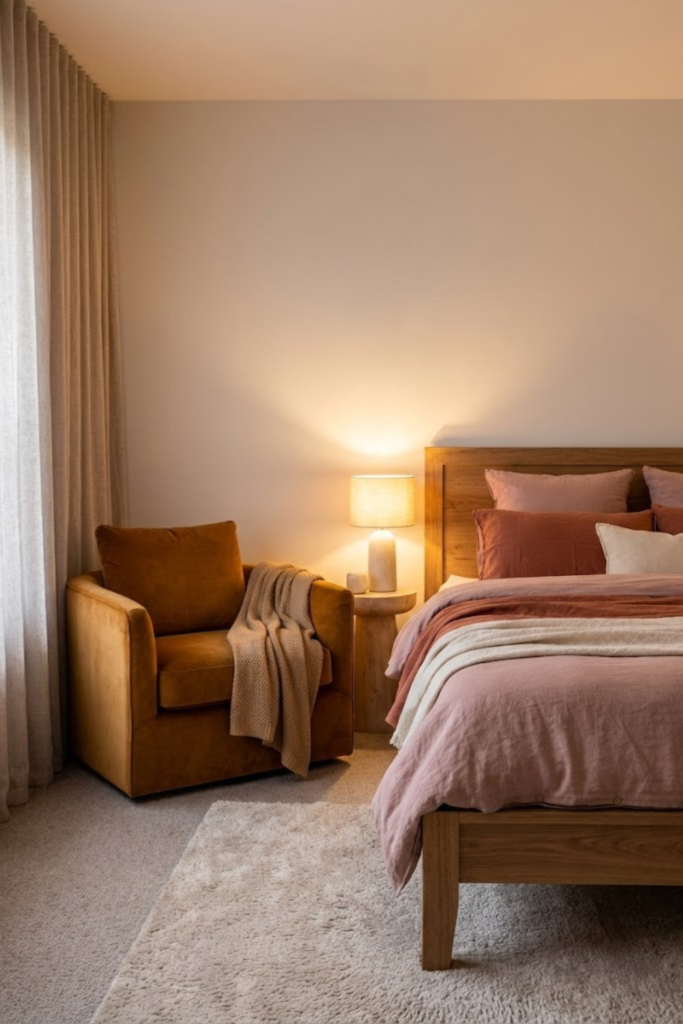
For a long time, my bedroom was basically a glorified storage unit. I had laundry piles in the corner and my old desk from college shoved against the wall. It was not a place where I felt relaxed. I used to think a bedroom was just a spot to sleep, so why bother fixing it up? But I was wrong. I started reading about “slow living” and realized that our brains need a place to shut down that doesn’t feel like a messy office. I decided to turn my room into a “cocoon,” which is just a fancy way of saying a space that feels soft, quiet, and safe from the rest of the world.
Finding the Right Colors for Rest
The first step in my “before and after” was changing the wall color. I used to have a very bright white that felt like a flashlight was on even when the lights were low. I switched to a beautiful dusty pink. Now, don’t laugh—it doesn’t look like a little kid’s room! It is a very earthy, soft pink that looks almost like a sunset. Some people prefer a mellow blue, and that works great too. These colors are much better than cold grays because they help your mind stop racing after a long day. I noticed I started falling asleep much faster once the walls stopped feeling so “loud.”
Why a Real Wood Bed Frame Matters
I used to have one of those cheap metal bed frames that squeaked every time I moved. It felt flimsy and temporary. I saved up and bought a solid timber bed frame, and let me tell you, it changed everything. There is something about the weight of real wood that makes a room feel grounded. It feels sturdy and natural, which is exactly what you want when you are trying to relax. I also added one piece of large wall art above the headboard instead of a bunch of tiny pictures. It gives the eyes one nice thing to look at instead of a cluttered wall.
Making Space for Slow Living
The biggest change wasn’t just the furniture; it was getting rid of the “digital noise.” I moved my TV out of the room and stopped bringing my phone to bed. By adding some deep-seated comfort—like a big velvet chair in the corner and some heavy linen curtains—the room became a true retreat. Now, my bedroom is the one place where I don’t feel like I have to be productive. It’s just for resting. If your bedroom feels like a “to-do list” in room form, try focusing on these soft textures and natural materials. It makes a huge difference in how you feel when you wake up in the morning.
4. Home Office Evolution: Ergonomics Meets Artistry
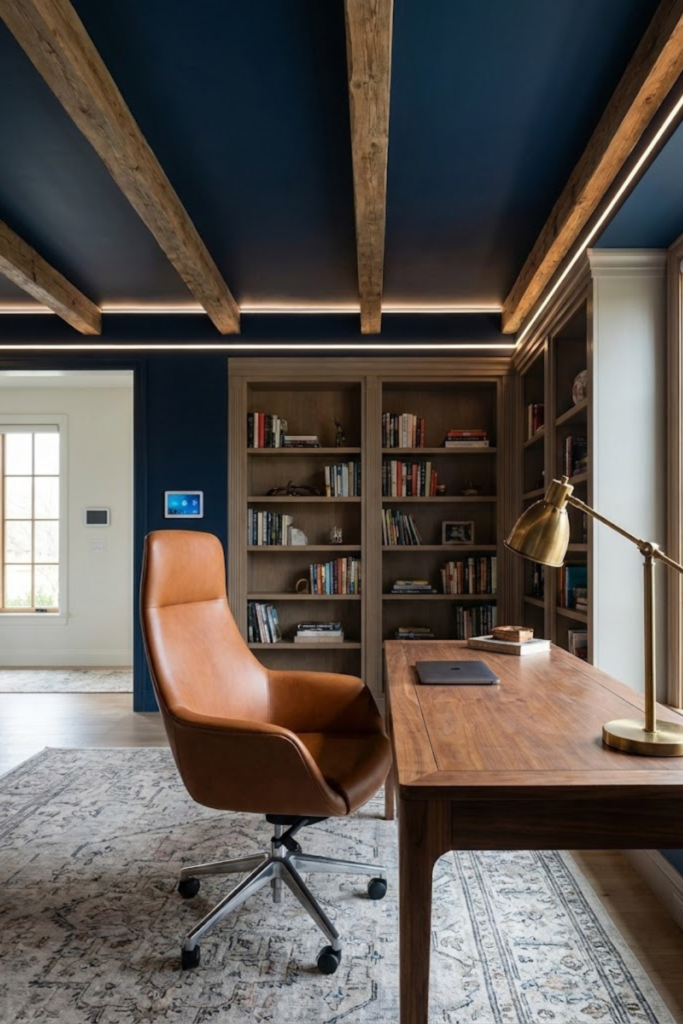
I’ll be honest, for a long time, my “office” was just my laptop perched on a pile of books at the kitchen table. My back was always screaming at me by three o’clock every single day. I thought I was being productive, but I was really just making myself tired and grumpy. Last year, I finally decided that if I’m going to spend eight hours a day working, I should probably do it in a room that doesn’t feel like a temporary storage closet. This change from a messy corner to a real professional office was a huge lift for my mood and my work. It is amazing how much more you can get done when your body isn’t in pain.
Why a Good Chair is the Best Investment
The chair was the most important part of the whole transformation. I used to think any chair with wheels was fine, but I learned about something called algorithmic ergonomics. It sounds a bit fancy, but it basically just means a chair that is built to support your spine in all the right places. I found one that fits my body perfectly and supports my lower back. It isn’t just a piece of furniture; it is a tool that helps me stay focused on my tasks. I also got a desk that lets me sit or stand. This simple change fixed my posture and stopped those afternoon headaches I used to get all the time.
Don’t Forget the “Fifth Wall”
One thing people always forget about is the ceiling. My designer friend calls it the “fifth wall,” and she is totally right. In my old office, the ceiling was just flat, boring white. In the “after” version, I added some simple wooden beams and painted the space between them a soft, deep color. It makes the room feel much more finished and professional. It is like the room is finally complete. Adding some built-in cabinetry also helped hide all the ugly wires and printer paper that used to be everywhere. Now, when I walk in, I see art and wood instead of a mess of tangled electronics.
Lighting That Works with Your Brain
I also started using smart lighting that changes throughout the day. This helps with something called circadian rhythms, which is just a big word for your body’s internal clock. In the morning, the light is bright and blue to wake my brain up, and in the evening, it turns warm and orange. It keeps me from feeling like a zombie by the time I finish work. Creating a space that is both smart and pretty makes a huge difference. You do not have to choose between a room that works and a room that looks good. Having a space that feels like “me” makes the workday go by so much faster.
5. The Hallway Refresh: Soft Geometry & Statement Mirrors
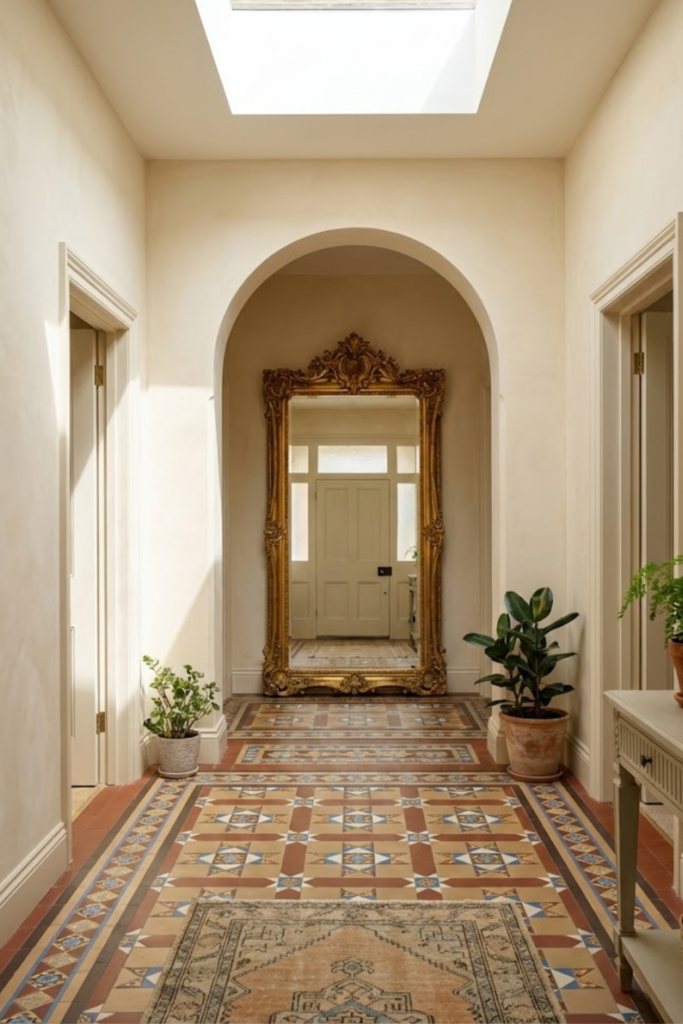
I used to think hallways were just “pipes” that led you from one room to another. My old hallway was narrow, dark, and painted a very sad shade of gray. It felt like I was walking through a submarine every time I went to get a glass of water at night! Most people just ignore their hallways, but it’s actually the first thing you see when you come home. If the hallway feels cramped, the whole house feels cramped. I decided to stop treating it like a “transition zone” and started treating it like a real room. This change made my entire house feel more open and friendly.
Softening the Lines with Arches
The biggest change I made was softening the sharp corners. My old hallway was full of hard rectangles and sharp edges. I added an arched doorway at the end of the hall, and it changed the energy of the space instantly. This is what designers call “soft geometry.” Instead of everything looking like a box, the curves make the space feel like it is flowing. It is a lot more relaxing to look at. If you cannot build a real arch, you can even paint an arch shape on the wall to get a similar feeling. It makes the hallway feel less like a dark tunnel and more like a planned part of the home.
Using Big Mirrors to Create Space
Since my hallway is pretty tight, I knew I needed to trick the eye. I bought a massive “statement mirror” with a thick, vintage-style frame. Mirrors are basically magic windows. They bounce the light around and make it look like there is a whole other room on the other side of the wall. Before, the hall felt like it was closing in on me. Now, with the mirror and some soft “limewash” paint on the walls, it feels bright and airy. Limewash is great because it has a little bit of texture, so the walls do not look flat and boring like they did before.
Trading Gray for Artisan Tiles
I finally ripped up that old gray carpet and put down some beautiful artisan tiles. I picked a pattern that has some nice earthy colors. It adds a bit of “soul” to the house that was missing. Wood is also a great choice if you want something warmer under your feet. The point is to move away from those cold, industrial materials. Your hallway should be a “warm hello” when you walk through the door. It is a small space, so you can often afford to use some nicer materials because you don’t need a huge amount of them. This was a small project that had a giant impact on how I feel about my home.
6. Dining Room Revival: Deep Hues & Vintage Finds
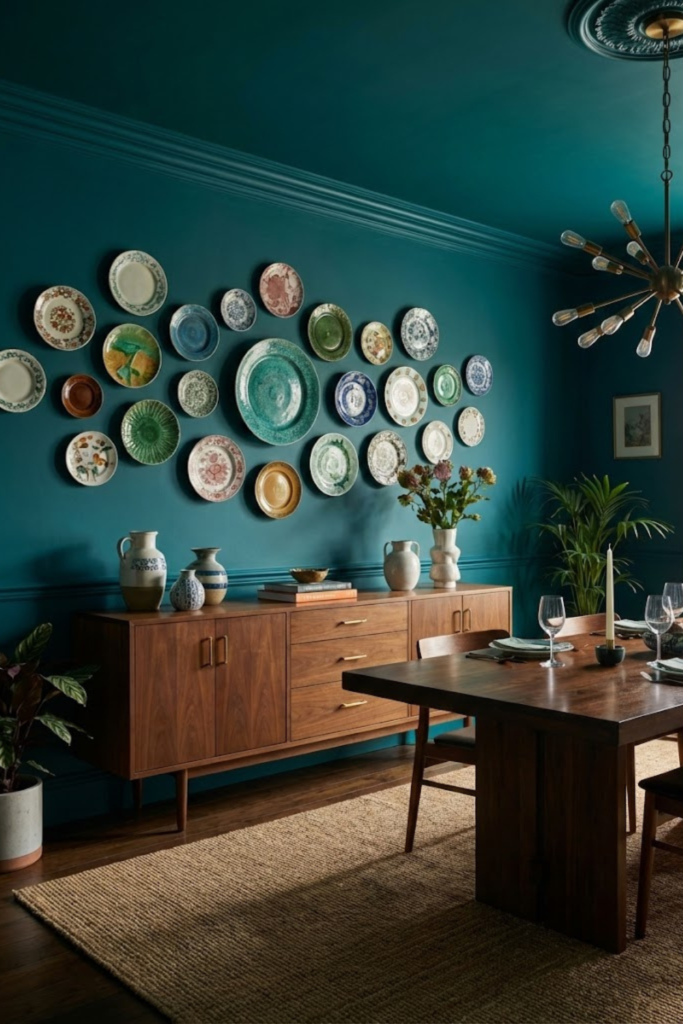
I used to have this dining room that was painted a very safe, boring beige. It looked fine, I guess, but we only really used it twice a year for big holidays. It felt like a “room for guests” rather than a room for our family. Every time I walked past it, the space just felt stiff and a bit cold. I decided that life is too short for boring rooms that nobody sits in! I wanted a space that felt dramatic and cozy at the same time—a place where people would actually want to stay and talk long after the food was gone. So, I stopped being scared of dark paint and gave the whole room a total makeover.
The Power of a Bold Monochrome Look
The biggest change was the color. I went with what people call “monochrome color drenching.” I picked a deep, moody teal and painted everything—the walls, the trim, and even the bookshelf. Some people told me it would make the room look tiny, but it actually did the opposite. It made the walls feel like they were disappearing into the shadows. This “Transformative Teal” vibe makes the room feel very high-end without me having to buy a bunch of expensive new stuff. It turned the dining room into a “mood” rather than just a place with a table and chairs. If you want to make a big impact fast, a dark color is the way to go.
Adding Soul with Vintage and Retro Finds
To keep the room from feeling too heavy, I started hunting for old furniture. I found this beautiful mid-century sideboard at a local thrift shop. It has some scratches and the wood is a bit faded, but that is what I love about it. Adding “vintage and retro revival” pieces gives the room a history. It makes the space feel like it has been there forever. I mixed my grandmother’s old wooden chairs with a more modern table, and the contrast looks amazing. It doesn’t look like a page from a catalog; it looks like a collection of things I actually love.
Celebrating the Beauty of Imperfection
I also learned that a dining room doesn’t have to be perfect to be beautiful. I started hanging old ceramic plates on the walls as art. They aren’t expensive, and some have little cracks, but they add so much character. This “joy-first” way of decorating is all about celebrating imperfection. Instead of worrying about everything matching perfectly, I just focused on making it feel soulful. Now, this is the room where everyone wants to hang out. It went from being a wasted space to being the heart of the house just by adding some deep colors and a few old treasures.
7. Outdoor Sanctuary: The Sophisticated Social Kitchen
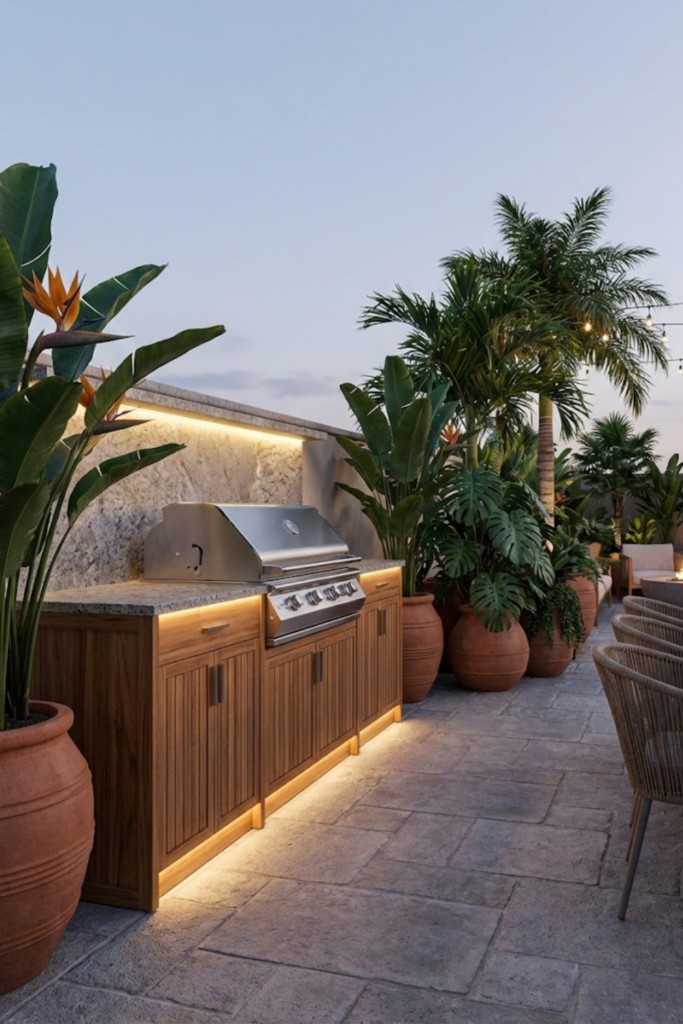
My backyard used to be just a square of grass that I had to mow every Saturday. We had one of those cheap little grills that wobbled, and that was about it. We never really spent any time out there because it felt like a chore to set everything up. Then I started seeing these amazing “outdoor kitchens” and I realized I was wasting a huge part of my home. By treating the yard like an actual room instead of just “outside,” the whole house feels bigger. It is like we added a whole new wing to the house without having to actually build a new roof!
Making the Yard a Second Living Room
I wanted this space to feel just as comfy as my indoor lounge. We put in a solid floor area and brought in furniture that actually has cushions. It is not just about cooking; it is about having a place to sit and talk while the food is getting ready. This is what people mean by a “social kitchen.” It makes hosting so much easier because I am not stuck inside the house while everyone else is outside laughing. Now, we stay out there late into the evening because it feels like a cozy tropical villa right in our own neighborhood. It is amazing how much a few chairs and a table can change the way you use your property.
Using Tough Materials That Look Great
When you are building outside, you have to pick things that can handle the rain and the hot sun. I stayed away from cheap plastic and went with stone and solid wood. These “craftsmanship materials” look better as they get older, which is a nice bonus. We used a lot of natural textures to help the kitchen blend in with the trees and the garden plants. It makes the space feel grounded and high-quality. Plus, adding a real kitchen setup out there—with a small sink and some counter space—actually helps with the resale value of the house. It is a smart move for the future and for right now.
Smart Tech for Better Vibes
The final touch was adding some smart tech. I put in some weather-proof lights that I can dim with my phone. Lighting is so important! If the light is too bright, it feels like a parking lot. If it’s too dark, you can’t see what you’re eating. Having lights that change to a warm orange glow at sunset makes the whole yard feel magical. We even added a small sound system hidden in the plants. It’s these little things that make it feel like a professional retreat. If you have a boring patch of grass, don’t ignore it. It’s probably the best room in your house; you just haven’t built it yet!
Conclusion: Your Home, Your Story
Well, there you have it! Those are the seven transformations that can really change how you feel about your space in 2026. Whether you are painting your dining room a deep teal or finally getting that ergonomic chair for your office, the goal is always the same: make your home a place that makes you happy. Don’t worry about what is “perfect” or what everyone else is doing on social media. Focus on the colors and textures that make you feel relaxed and at peace.
Decorating is a journey, and it’s okay to take your time and do one room at a time. I hope these “before and after” ideas gave you a little spark of inspiration to start your own project this weekend. Remember, a home is never really “finished”—it grows and changes just like we do. If you liked these ideas, please save your favorite one to your Pinterest board and share this with your friends! I’d love to see what kind of magic you create in your own home.