“Neutral doesn’t mean boring; it means the perfect canvas for your life.” I’ve said this a thousand times to clients, but in 2026, it rings truer than ever. Gone are the days of sterile “hospital white” living rooms that feel cold enough to store meat in!
This year, I’ve noticed a massive shift toward what designers are calling “rich neutrals”—spaces that feel hugged by warmth rather than stripped of color. It’s about texture. It’s about depth! Whether you’re looking to update a tired beige corner or overhaul your entire living space, the trends for 2026 are all about organic comfort and “honest essentials”.
In this guide, I’ll walk you through seven transformative ideas that blend sustainability with style, proving that a neutral palette can actually be the boldest choice you make. Ready to find your calm? Let’s dive in.
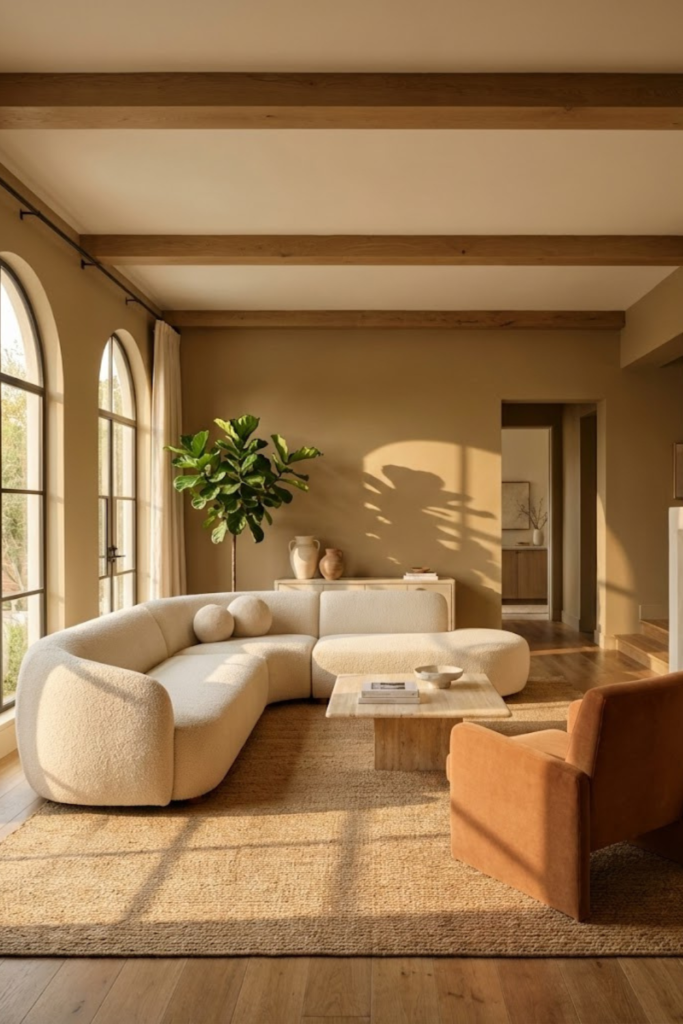
1. Embrace “Universal Khaki” and Sandy Hues

If you had asked me five years ago to paint a room khaki, I probably would have laughed. For the longest time, we all thought of khaki as that dull color of school uniform pants. But listen, things have changed. In 2026, “Universal Khaki” and warm sandy hues are taking over, and honestly, I am here for it. This isn’t the muddy brown of the past; it’s a soft, warm neutral that makes a room feel like a hug.
Why We Are Ditching the Gray
For years, everyone I knew was painting their walls “agreeable gray” or some version of cool white. It looked clean, sure, but sometimes it felt a bit chilly, didn’t it? Especially in the winter. The shift to sandy hues is all about bringing warmth back into our homes. I recently repainted my own living area with a sandy tone, and the difference was instant. The room didn’t just look different; it felt warmer. These colors mimic natural elements like sand, dried grass, and linen, which helps ground us when the world outside feels chaotic.
How to Pick the Right Shade
Picking a paint color can be tricky. You don’t want a color that looks too yellow or too pink. The secret to the new “Universal Khaki” look is finding a beige with a green or gray undertone. This keeps it neutral.
- Test it first: Don’t just trust the chip in the store. Buy a sample pot and paint a big square on your wall. Watch how it changes from morning to night.
- Check your lighting: If you have north-facing windows, the light will be cooler, so a warmer sand color helps balance that out.
Texture Makes the Difference
Here is the trick to making these colors look expensive and not boring. You have to mix up your textures. If you have sandy walls, don’t just buy a beige sofa and call it a day. That looks flat. Instead, think about layering.
Picture this: a matte khaki wall, a rough linen curtain in a slightly lighter shade, and a wool rug that feels soft under your feet. When you mix materials—like wood, stone, fabric, and paint—in similar tones, you create depth. It stops the room from looking like a plain box and turns it into a space that feels designed and intentional. It’s an easy fix that makes a huge impact.
2. Layer “Rich Neutrals” Like Brown and Burgundy

For the longest time, I was scared of dark colors. I thought they would make my house look small or gloomy. But recently, I’ve realized that deep colors like chocolate brown and muted burgundy actually act just like neutrals. They don’t scream for attention; they just sit there and make everything else look better. In 2026, we are calling these “rich neutrals.” They add a sense of history and calmness that you just can’t get with plain white paint.
Rethinking What “Neutral” Means
We need to stop thinking that neutral only means beige, white, or gray. Think about nature. The dirt is dark brown, the tree bark is deep and textured, and dried leaves can be a deep reddish-color. These are natural tones. When you bring them inside, they ground the space.
I remember helping a friend who had a completely beige living room. It felt like a waiting room. We added a deep, chocolate brown velvet armchair in the corner, and suddenly, the whole room felt cozy. It gave the eye a place to rest. Brown brings a warmth that gray just doesn’t have. If you are worried about it looking too dark, start with wood. Swap out a white painted table for a dark walnut or mahogany one. It adds instant character.
How to Use Burgundy Without It Looking Like Christmas
I know what you are thinking. “Red? In a neutral room?” But hear me out. We aren’t talking about fire engine red or bright candy apple red. We are talking about “oxblood” or a deep, brownish-burgundy.
When used correctly, this color fades into the background. It feels regal. I like to use it in small doses first. Maybe try a throw pillow on your sofa or a patterned rug that has bits of deep red woven into it. It pairs perfectly with the sandy hues we talked about earlier. The sand color calms the red down, and the red wakes the sand up. It’s a partnership.
Keeping the Balance
The trick to pulling this off without making your home look like a cave is balance. You want to mix these heavy, rich colors with lighter touches.
- The 60-30-10 Rule: Try using your lighter sand or cream color for 60% of the room (walls, big rugs). Use the chocolate brown for 30% (sofa, coffee table). Then use the burgundy for just 10% (accents, art).
- Watch the Lighting: These rich colors swallow light, they don’t reflect it. So, make sure you have good lamps. A dark corner can look beautiful with a warm lamp glowing next to it, turning a shadowy spot into a reading nook.
By layering these deeper tones, you create a space that feels expensive and comforting, rather than just “safe” and plain. It’s a bold move, but one that pays off.
3. Prioritize Biophilic Textures and Raw Materials
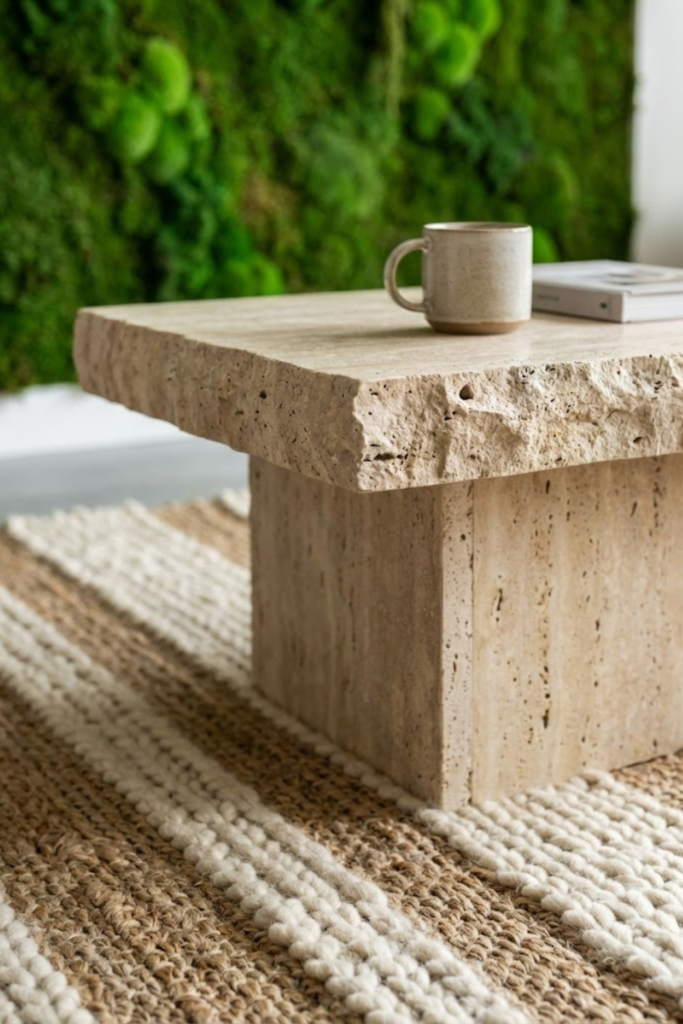
I used to think “biophilic design” just meant buying a bunch of house plants and hoping I didn’t kill them. I’m a teacher, not a gardener, so that was always a bit of a struggle for me! But in 2026, this idea has grown up. It is not just about having green leaves in the corner anymore. It is about bringing the actual feel of nature inside your home using raw, honest materials.
Why Your Brain Loves “Imperfect” Things
Have you ever run your hand over a smooth plastic table? It feels… cold. It feels dead. Now, think about touching a rough stone wall or a wooden table that still has knots and cracks in it. It feels different, right? It feels real.
Designers are using a fancy word for this now: “neuroarchitecture.” It sounds complicated, but it basically means that our brains actually relax when we are around natural textures. We spend so much time staring at smooth, flat glass screens on our phones and computers. Our eyes and hands are tired of it. We are craving texture. Using materials like unpolished stone, clay, or raw wood helps lower our stress levels. It acts like a reset button. It’s like taking a quiet walk in the woods without ever leaving your living room.
How to Mix the Rough with the Smooth
You don’t want your house to look like a cave or a construction site, though. The trick to making this look good is mixing opposites. If you have a soft, squishy sofa, try putting a rough stone coffee table in front of it. The contrast is what makes it work.
I recently swapped out a shiny metal lamp base for one made of clay with a plaster finish. It has these little bumps and imperfections all over it. At first, I thought it looked a bit messy, but now I love it. It catches the afternoon light in a really interesting way that a smooth lamp never did.
Here are a few easy ways to try this:
- Limewash Paint: This is a huge trend right now. It gives your walls a cloudy, textured look instead of a flat, boring color. It looks almost like suede.
- Rug Layering: I love doing this in the winter. Put a big, scratchy jute rug down first to cover the floor. Then, throw a smaller, soft wool rug on top of it. It looks cozy and adds two different natural textures at once.
Embracing the Flaws
This is my favorite part about this trend. Raw materials are not supposed to be perfect. Stone has cracks. Wood has weird grain patterns. Clay might be uneven or lumpy. And that is okay! In fact, it is better.
We spend way too much time trying to be perfect in our daily lives. Your home shouldn’t stress you out with fragile things you are afraid to touch or scratch. Raw materials are tough. They can take a beating and still look good. So, don’t worry if your wooden table gets a dent. It just adds to the story and makes the room feel lived-in and comfortable.
4. Curate Soft, Organic Shapes
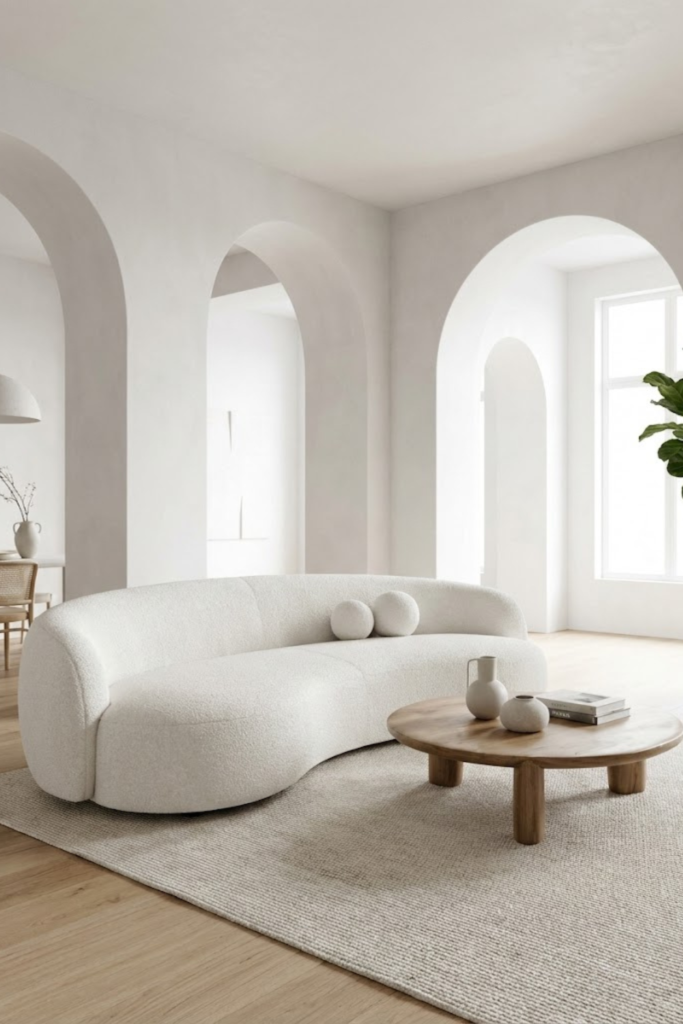
You know how schools and offices are full of sharp corners and straight lines? My classroom is basically a giant concrete box filled with smaller wooden boxes (the desks). It is efficient for fitting thirty kids in a room, but it isn’t exactly relaxing. When I get home, I want my space to feel soft. I want it to flow. That is why I am loving the shift in 2026 toward what designers call “organic shapes.” We are finally letting go of the rigid, boxy look.
Why Sharp Corners Are Out
There is actually a reason why we like curves, and it goes back to how our brains work. We are hardwired to be a little bit wary of sharp objects. Think about it—in nature, sharp things usually mean thorns, rocks, or teeth. Rounded shapes, on the other hand, signal safety. They feel welcoming.
When you walk into a room full of curves, your shoulders drop a little. You relax. A rectangular room with a rectangular rug and a rectangular sofa can feel stiff. It feels like you have to sit up straight and behave. But introduce a few curves, and suddenly the room feels like it is breathing. It encourages you to move through the space more easily without worrying about banging your hip on a sharp table edge (which I have done way too many times).
The Rise of the “Squircle”
Have you heard this word yet? “Squircle.” It sounds funny, but it is everywhere right now. It is basically a square with rounded corners. It gives you the practicality of a square shape but without the harsh edges.
You see it in dining tables, coffee tables, and even pillows. If you aren’t ready to buy a kidney-bean-shaped sofa (which are huge this year, by the way), start small. Look for a coffee table that is oval or round. It breaks up all the straight lines of your walls and windows. It creates a path for your eye to travel that feels smooth rather than jumpy.
Softening the Edges with Decor
You don’t need to buy expensive new furniture to get this look. You can cheat a little with your accessories.
- Mirrors: Swap out a square mirror for an arched one or a round one. It instantly softens a wall and makes a room look taller.
- Lighting: Look for table lamps with round, ceramic bases or pendant lights that look like melted glass or organic blobs.
- Rugs: A round rug under a chair creates a cozy little island.
It is all about balance. You still need some straight lines to give the room structure so it doesn’t look like a funhouse, but adding these organic, fluid shapes makes the neutral palette feel less boring. It makes the room feel human.
5. Mix Metals with Patina
I remember when I bought my first place, I was obsessed with making sure everything matched. If the kitchen faucet was brushed nickel, then the cabinet handles, the light fixture, and even the toaster had to be brushed nickel. I thought that was the “rule.” But looking back, that kitchen looked a little flat. It felt like a showroom, not a home. In 2026, we are breaking that rule. We are mixing metals, and more importantly, we are choosing metals that look old.
The Charm of “Living” Finishes
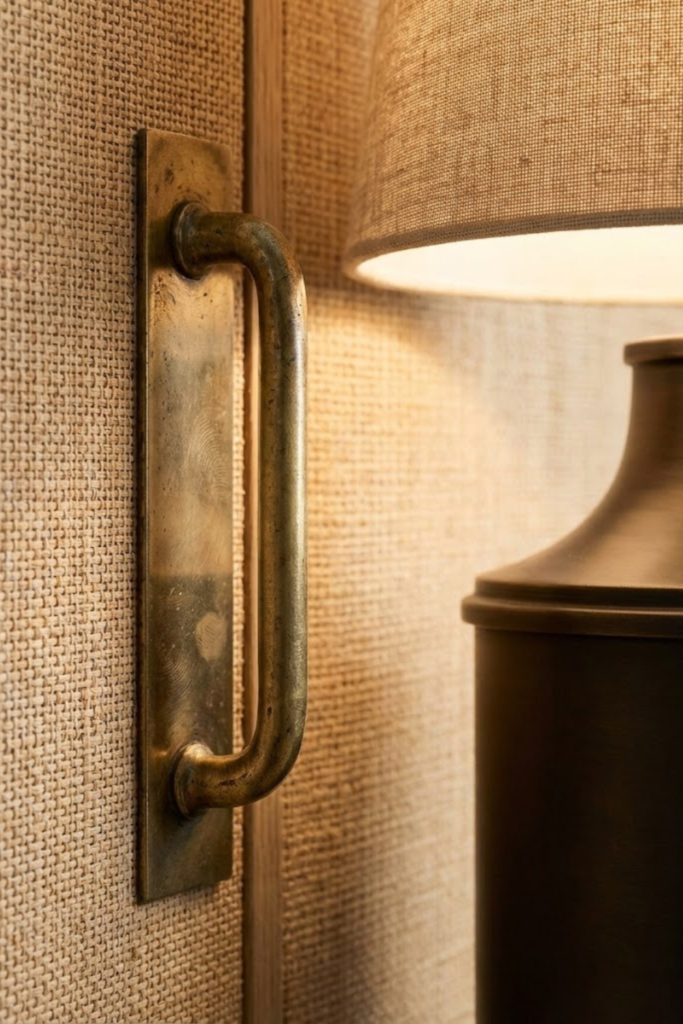
For a long time, we wanted metals that stayed shiny and perfect forever. We bought things coated in lacquer so they wouldn’t change. But now, the big trend is “living finishes.” This mostly refers to unlacquered brass.
When you first buy unlacquered brass, it looks bright and gold. But as you use it—when you touch the door handle or turn the faucet—the oils from your hand react with the metal. Over time, it gets darker in some spots and stays shiny in others. This is called patina. It sounds fancy, but it really just means the metal is showing its age.
I swapped out the knobs on my dresser for unlacquered brass ones last year. At first, I was worried they looked dirty. But after a few months, they developed this beautiful, warm, brownish-gold color that you just can’t fake with paint. It gives the room a sense of history, like the furniture has been there for fifty years instead of five.
Mixing Warm and Cool Tones
This is the part that scares people. Can you mix silver and gold? Yes, you can. In fact, you should. If you have a neutral room with a lot of beige and sand tones, sticking to just one metal can look boring.
Think of hardware as jewelry for your room. You might wear a gold wedding band but a silver watch. It creates a nice contrast. In a living room, try this:
- The Base: Use a warm metal like aged brass or bronze for the main things, like your curtain rods or a big light fixture.
- The Accent: Add a touch of cool metal, like a blackened steel side table or a polished nickel lamp.
The cool metal keeps the warm metal from feeling too heavy. It adds a little spark.
Bronze is the New Black
If you are tired of matte black hardware (which was everywhere a few years ago), look at oil-rubbed bronze. It is dark, almost black, but it has warmth to it. It often has little peeks of copper showing through on the edges.
I love using bronze light fixtures in a neutral room. Against a pale, sandy wall, a dark bronze sconce acts like a punctuation mark. It draws your eye and gives the room structure. It feels grounded and solid, which fits perfectly with the other earthy trends we are seeing this year. Don’t be afraid to let your metals look a little worn; perfection is overrated.
6. Sustainable “Honest” Materials
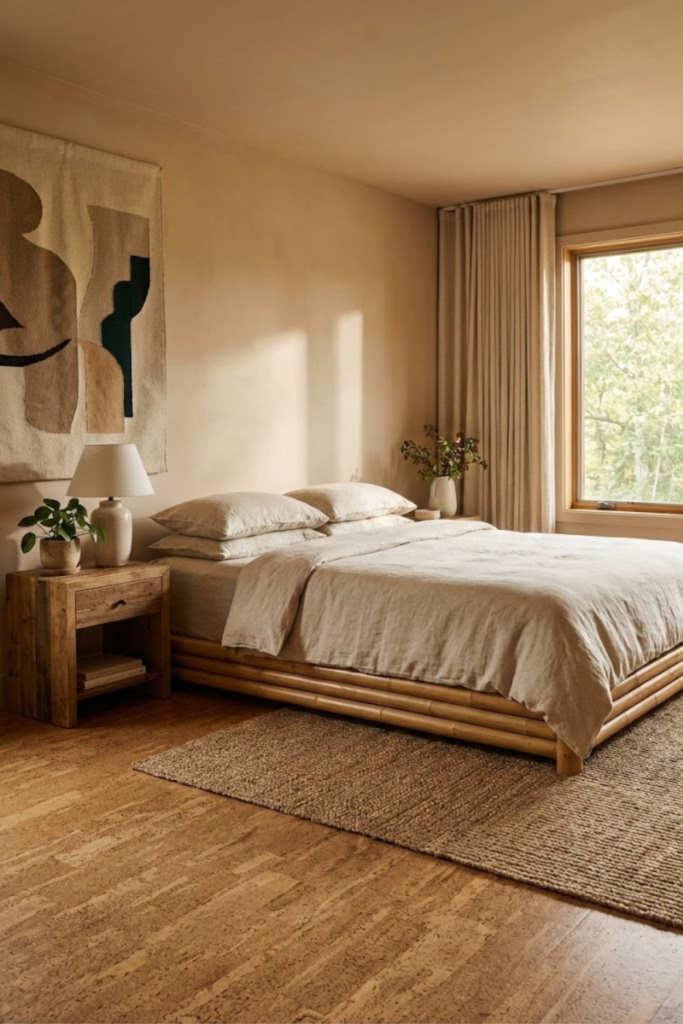
My students are actually the ones who got me thinking about this. They ask questions about where things come from and where they go when we throw them away. It really made me look at my own furniture differently. In 2026, sustainability isn’t just a nice bonus; it is basically a requirement for good design. We are seeing a trend called “honest materials.”
No More Fakes
What does “honest” mean in decor? It means materials should look like what they are. For a long time, we saw vinyl flooring painted to look like wood, or plastic laminates printed to look like marble. That feels a little “dishonest” to the eye.
The new neutral room is all about materials that are proud of what they are. If you have a concrete floor, let it be concrete. Polish it, seal it, but don’t cover it up. If you have wood, let the grain show. This connects back to that calm feeling we want. There is something grounding about being surrounded by real, natural things rather than synthetic imitations.
The Bamboo Upgrade
If you hear “bamboo furniture” and think of those squeaky, round chairs from the 70s or a college dorm room, you need to look again. Bamboo has grown up.
It is one of the most sustainable plants because it grows back so fast. Designers are now using it to make sleek, sharp-edged furniture that looks very modern. It has a beautiful, pale blonde color that fits perfectly into a neutral color scheme. I recently bought a bamboo bench for my entryway. It is smooth, solid, and brings a nice light wood tone that breaks up the white walls.
Why I Love Cork Now
Here is another material making a huge comeback: cork. Yes, like the bulletin boards in my classroom. But now, people are using it for flooring and even wall coverings.
From a design perspective, cork has a lovely, warm, mottled brown color. From a living perspective, it is amazing. It is soft to walk on (which my feet appreciate after standing all day teaching), and it absorbs sound. If you have a room that echoes, adding cork can make it sound quieter and feel cozier instantly. It is sustainable because they just harvest the bark without cutting down the tree.
The “Slow Furniture” Mindset
Finally, the most sustainable thing you can do is buy less. We are moving away from “fast furniture”—that cheap stuff that wobbles after a month and breaks in a year.
The trend now is “slow furniture.” It means saving up to buy one really good, solid wood dresser that will last for thirty years, rather than buying a cheap one every five years. Or, it means buying vintage. A second-hand solid oak table has more character than a brand new particle-board one, and it keeps things out of the landfill. It adds a soul to the room that you just can’t buy in a big box store.
7. Maximizing “Warm Minimalism”
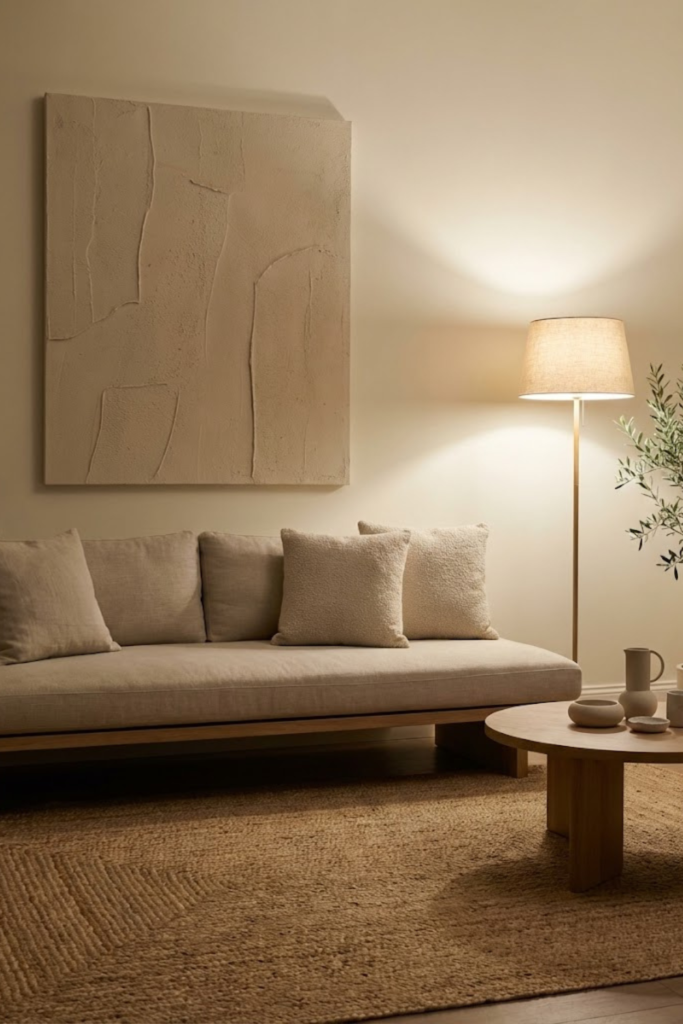
“Minimalism” usually makes people think of those super stark, empty houses you see in magazines where it looks like nobody actually lives there. You know the ones—white couch, glass table, and absolutely zero stuff. That is not realistic for me. I have papers to grade and a life to live.
But in 2026, the trend has shifted to “Warm Minimalism.” It is the best of both worlds. It is clean and organized, but it still feels like a home. It’s not about owning nothing; it’s about making sure the things you do own give you a sense of calm.
Hiding the “Life” Stuff
I love a tidy room, but I also have clutter. We all do. The secret isn’t getting rid of everything; it is finding better hiding spots. Designers are focusing on furniture that does double duty.
I bought a coffee table recently that lifts up. Inside? Magazines, remotes, and my grading pens. When it is closed, the room looks perfect. When it is open, it is a mess. That is the trick. Look for ottomans with storage inside or cabinets with solid doors instead of glass ones. If you can’t see the clutter, your brain doesn’t stress about it. It allows you to keep that clean, neutral look without having to become a person who owns only three shirts.
Lighting Sets the Mood
This is the biggest mistake I see people make. They paint a room a beautiful warm beige, buy the right furniture, and then put in a light bulb that is bright blue-white. It ruins everything. It makes the room feel like a dentist’s office.
You want “warm white” bulbs. If you look at the box, it should say 2700K or 3000K. This yellow-tinted light makes neutral walls glow. It makes the space feel cozy. Also, stop using the big overhead light! I hardly ever turn mine on. Instead, use a few lamps scattered around the room. It creates little pools of light that make the empty spaces feel intentional and relaxing.
The Art of “Negative Space”
This is a fancy art teacher term, but it just means “empty space.” We often feel like we have to fill every single wall. If there is a blank spot, we think, “I need a picture there.”
Warm minimalism says: leave it alone. Let the wall just be a wall. When you leave some empty space, it gives your eyes a place to rest. It makes the room feel bigger and airier. Instead of a “gallery wall” with ten small picture frames that are hard to dust, try hanging just one large piece of art. It looks cleaner and makes a bigger statement. It is about doing less, but making what you do count more.
Conclusion
We have covered a lot of ground here, haven’t we? From painting your walls that perfect shade of warm “Universal Khaki” to hunting down a vintage lamp with a little bit of rust on it, the trends for 2026 are all about making your home feel like you. And honestly, that is the best trend of all.
Creating Your Personal Sanctuary
As a teacher, my days are loud. There are bells ringing, kids shouting, and a constant buzz of activity. When I come home, I don’t want my house to feel “busy.” I want it to feel like a deep breath. That is what these neutral room ideas are really about. They aren’t just about following a fashion rule book or impressing your neighbors. They are about creating a space that lowers your heart rate the minute you walk through the door.
When you layer those rich browns and burgundies, or when you walk on a soft cork floor, you are building a sanctuary. You are creating a backdrop for your life that feels supportive and calm. It is a place where you can just be.
It’s Okay to Take Your Time
If you are looking around your living room right now and feeling a little overwhelmed, please stop. You do not need to run out and buy a kidney-bean-shaped sofa tomorrow. You don’t need to repaint your whole house this weekend. Real homes—the kind that feel good to be in—are built slowly.
Start with one thing. Maybe swap out those cool white light bulbs for warm ones. See how that changes the mood. Then, maybe find a textured throw pillow or a piece of unpolished stone decor. Let the room evolve. It is okay to have a mix of old and new. In fact, as we discussed with the “honest materials” trend, that mix is exactly what gives a room its soul. Don’t rush the process. Enjoy the hunt for the perfect piece.
Join the Community
I would love to see how you are using these ideas in your own space. Are you brave enough to try the dark chocolate velvet? Did you find a piece of bamboo furniture that looks sleek and modern?
One of my favorite things is seeing how different people take these ideas and twist them to fit their own style. Your home is your story. So, go ahead and start writing the next chapter.
If you found these ideas helpful, please save this article to your “Home Decor 2026” board on Pinterest! It helps other people find us and helps me keep sharing these tips with you.