Did you know that the average child spends over 10,000 hours in their bedroom before they turn 18? That is a lot of time staring at four walls! I remember when I tried to redecorate my daughter’s room last year; I was overwhelmed by choices and ended up with paint in my hair and a half-assembled bed. But here is the thing: creating a space that nurtures their creativity doesn’t have to be a nightmare. In fact, it can be one of the most rewarding projects you tackle this year! In this guide, I’m going to walk you through 7 kids room ideas that are practical, stylish, and totally kid-approved. Let’s dive in!
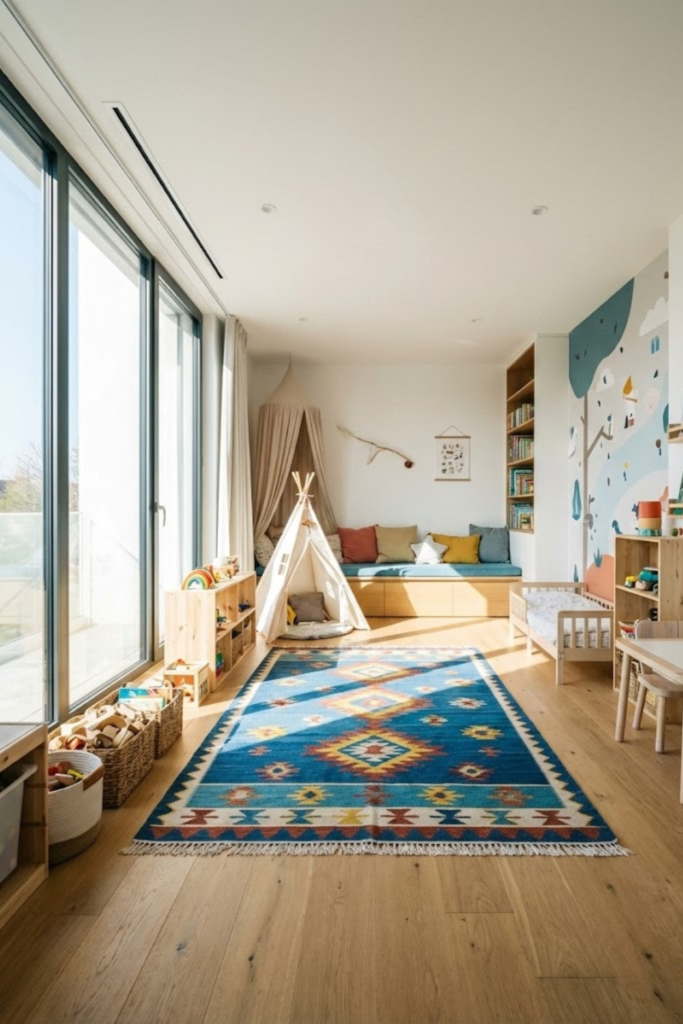
1. Maximize Play with Vertical Storage Solutions

I’m not gonna lie, there was a time when walking into my son’s room felt like navigating a minefield. You know that feeling, right? It’s 2 AM, you are checking on them, and suddenly—BAM—you step on a rogue Lego brick. It is a pain that I wouldn’t wish on my worst enemy! That was my reality for years until I finally realized that vertical storage solutions were the answer to my prayers. We were so focused on floor bins that we completely ignored the four walls around us.
The Problem with the “Black Hole” Toy Box
For the longest time, I thought the solution to playroom organization was just buying bigger boxes. I bought this massive wooden chest, thinking it would hide all the clutter. Big mistake. It turned into a black hole where toys went to die. The kids would dump the entire thing out just to find one specific action figure, leaving the floor covered in a sea of plastic.
It was frustrating to watch, and even more annoying to clean up every single night. I learned the hard way that if kids can’t see their toys, they don’t play with them—or worse, they make a huge mess trying to find them. That is when I decided to look up.
Going Up the Walls
Me and my partner decided to tackle the walls one weekend. We started with simple floating shelves for books and those special collectibles they refuse to throw away. But the real game-changer was installing a pegboard. Small kids room hacks often focus on under-bed storage, but a pegboard is genius because it’s interactive.
We painted ours a bright yellow to match the room. Now, my son hangs his Nerf guns and headphones right on the hooks. It looks cool, almost like a display in a store, and it keeps the floor clear for actual playing. Plus, floating shelves for toys allow you to rotate what is on display, which keeps the toys feeling “new” without spending a dime.
Safety and Practicality
Now, a quick word of advice from a mom who worries too much: you have to anchor everything. When we first put up a tall bookshelf, I didn’t secure it properly, and it wobbled every time the cat jumped on it. Scary stuff.
Make sure you find the studs in the wall. Heavy-duty anchors are a must if you are putting up anything that a kid might be tempted to climb on. Also, keep the things they use daily at their eye level. We put the toy storage solutions they need help with—like the messy art supplies—on the top shelves where they can’t reach without asking.
Using vertical space has honestly saved my sanity. It opens up the floor for building forts or sprawling out with a puzzle, and it teaches the kids that everything has a specific place. It’s not perfect, and sometimes the shelves get messy, but at least I’m not stepping on Legos in the dark anymore!
2. Design a Gender-Neutral Nature Sanctuary
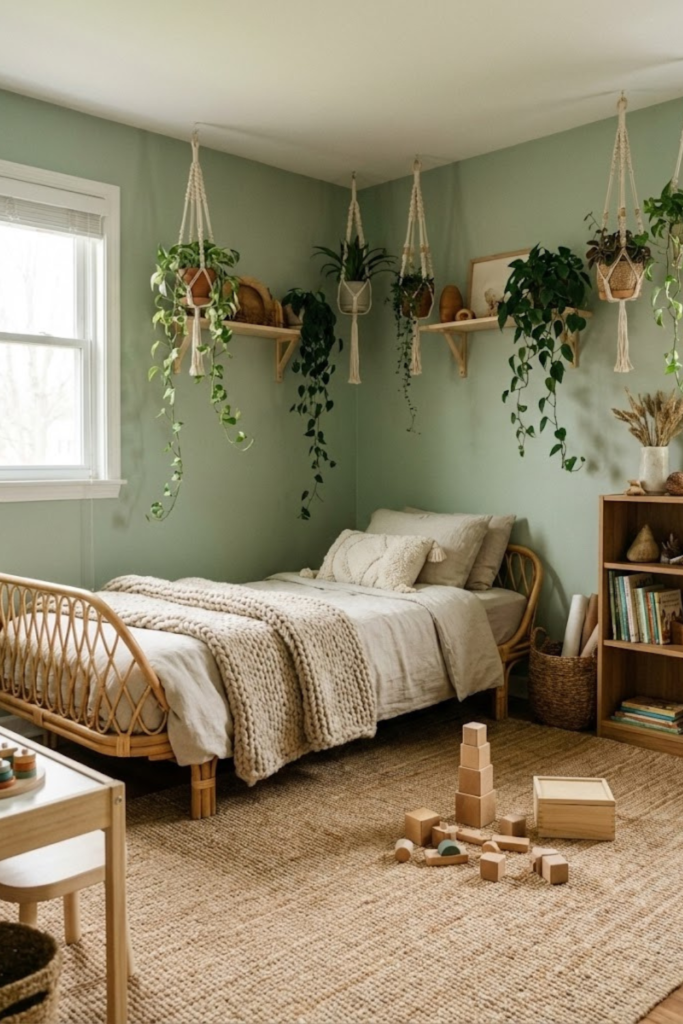
When we were getting ready for our second child, we decided not to find out the gender. This drove my mother absolutely crazy, but I was determined to create a gender-neutral nursery. My first attempt with my oldest was… well, let’s just call it a learning experience. I painted the room a bright, aggressive yellow because I read somewhere that it was a “happy” color.
Big mistake. Huge.
That room was so bright it felt like looking directly into the sun. My poor kid couldn’t settle down for naps because the walls were practically screaming at him. I realized pretty quickly that I needed to dial it way down. That is when I stumbled upon the magic of nature-inspired design.
Bringing the Outdoors In
I ditched the neon yellow and went for a soft, earthy palette. I’m talking sage green, warm terracotta, and sandy beige. The difference was night and day. There is something about earthy tones that just lowers your blood pressure the second you walk in.
It’s not just about looks, either. Using a biophilic design approach—which basically means bringing nature indoors—helps with calming active children. Since we switched the vibe to a “nature sanctuary,” bedtime has become less of a battle. The room feels like a deep breath. We even added some hanging plants (high up, so they don’t get eaten!) and it freshened up the air in there, too.
Texture Over Color
One thing I struggled with at first was thinking that “neutral” meant “boring.” I was worried the room would look like a doctor’s waiting room. The trick I learned is to swap out bright colors for rich textures.
Instead of a loud rug, we got a super soft, high-pile sheepskin rug. We swapped the plastic bins for rattan furniture and woven baskets. These natural materials add so much warmth. Plus, wooden toys just look better scattered on the floor than plastic ones, let’s be honest. A nice wooden play gym or a wicker chair gives the room a timeless feel that doesn’t scream “baby,” so it works even as they get older.
Future-Proofing the Room
The best part about this style is that it grows with them. When you commit to a specific “boy” or “girl” theme, like race cars or princesses, you are basically setting a timer for when you have to redecorate. Kids change their minds every five minutes!
By sticking to a nature theme, the “bones” of the room stay the same. You don’t have to repaint the walls just because they suddenly hate dinosaurs. You can just swap out the sheets or the throw pillows. It saves so much money and effort in the long run. Honestly, creating a nature sanctuary was the best move for my sanity and my wallet.
3. Create a Dedicated “Imagination Station” Nook
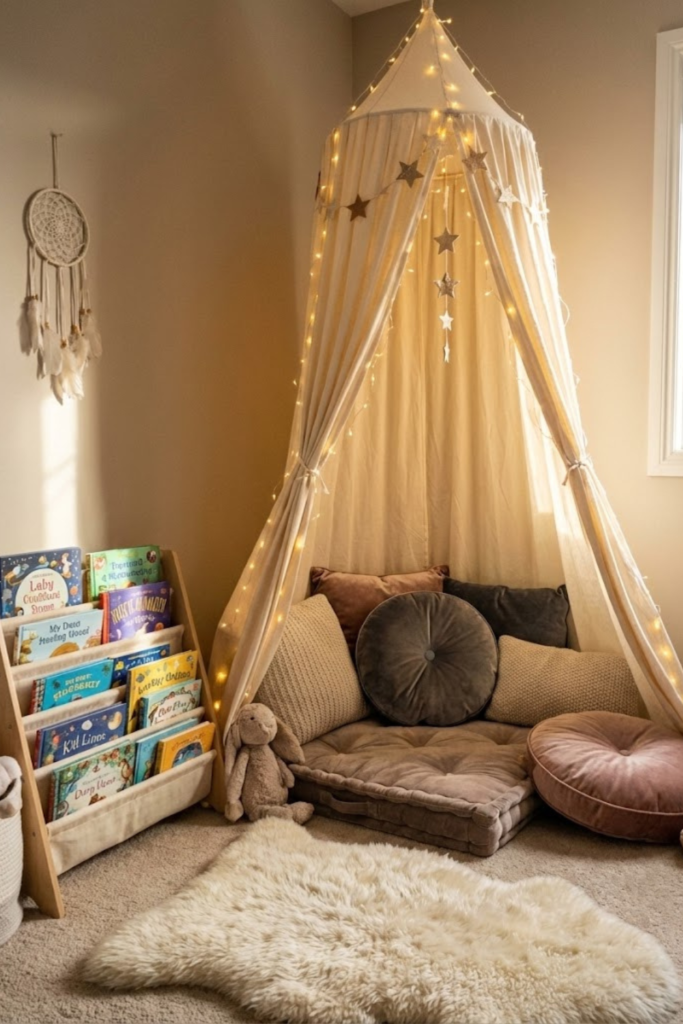
I used to think that letting my kids draw at the kitchen table was a good idea. It seemed easy enough—I could cook while they colored. That was until we were finding glitter in our pasta for three weeks straight. I kid you not, I even found a crayon melted into the radiator. That was the breaking point. I realized they needed their own spot, a place where the mess was allowed (mostly) and where they could get lost in their own little worlds. That is how the “Imagination Station” was born.
Defining the Zone
You don’t need a massive playroom to make this work. In fact, some of the best kids reading nook setups I’ve seen are just a cozy corner in a bedroom. For my daughter, we set up a small canvas teepee. It’s simple, but she loves it because it feels like a hideout. We threw in some oversized pillows and a soft blanket, and suddenly, reading wasn’t a chore anymore. It was an adventure.
If your kid is more of a builder or an artist, a small desk is better. But don’t just shove a desk against the wall. Make it special. We put up a corkboard right in front of my son’s desk so he can pin up his drawings. It makes him feel proud of his work, and it keeps the papers off the floor. It’s a win-win.
Light It Up Right
One thing I learned as a teacher is that lighting changes everything. If a corner is dark and gloomy, kids won’t want to hang out there. You have to make sure the lighting is good, especially if they are reading or drawing.
We clipped a flexible reading light onto the side of the desk. It’s way better than just relying on the big ceiling light, which never seems to reach the corners anyway. For the teepee, we strung up some battery-operated fairy lights. It looks magical at night, and it makes the space feel safe and warm. Creative lighting for kids doesn’t have to be expensive; even a cool lamp can make the space feel inviting.
Containing the Creative Chaos
Okay, let’s be real about the mess. An imagination station can quickly turn into a disaster zone if you aren’t careful. The rule in our house is simple: if you take it out, it has to have a home to go back to.
We use clear plastic bins for the art supplies. I used to use cute opaque baskets, but the kids would dump them out because they couldn’t remember what was inside. Clear bins fixed that. We also keep a “recycle bin” right under the desk for paper scraps. It stops the trash from piling up on the desk surface. It took a few weeks of nagging—I mean, reminding—but now they actually clean up after themselves most of the time.
4. Install Interactive Walls for Active Play
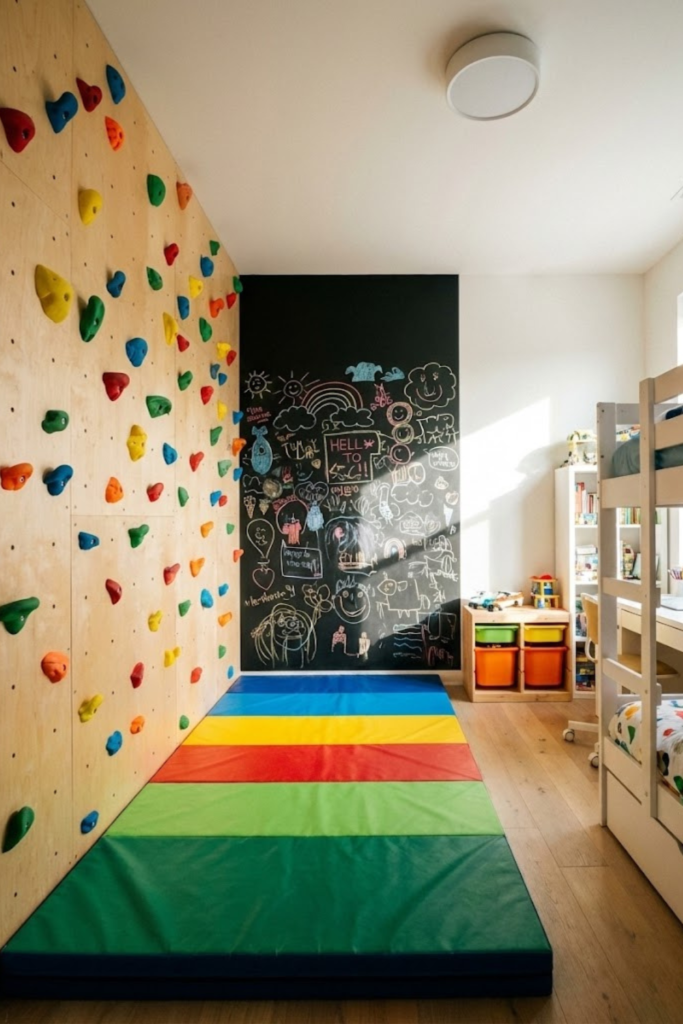
I used to dread the words “it’s raining” on a Saturday morning. You know exactly why. It means the kids are stuck inside, bouncing off the walls—literally. My couch cushions became trampolines, and I was constantly yelling at them to stop jumping. I realized that if I couldn’t stop them from moving, I had to give them a place to do it safely. That is when we decided to turn one of their bedroom walls into an indoor climbing wall.
The Rainy Day Savior
It sounds intense, I know. I thought it would be super expensive or hard to do, but it was actually a fun weekend project. We bought some colorful climbing holds online and mounted them to a sturdy piece of plywood. We screwed that into the wall studs (this is super important!) and bam—instant playground.
Now, when the weather is bad, they climb up and down that wall for hours. It helps burn off all that crazy energy before dinner. It’s also great for building their strength and coordination. Seeing them figure out a new path up the wall is really cool to watch. Just make sure you put a thick gym mat or an old mattress on the floor underneath. Gravity is real, and falls happen!
Not Just for Climbing
If heights make you nervous, or if you have younger toddlers, you don’t have to go the climbing route. We also tried a chalkboard wall in the hallway. It is literally just paint. You buy a can of chalkboard paint, roll it on like normal wall paint, and let it dry.
Suddenly, drawing on the walls isn’t a crime; it is encouraged! My kids use it to practice their spelling words or just doodle monsters. It wipes clean with a damp rag. Another cool idea I’ve seen is sticking Lego baseplates to the wall. It turns building into a vertical activity, which is great for their fine motor skills.
Saving Floor Space
The best part about interactive walls is that they take up zero floor space. In a small room, you don’t always have room for a big playset or a train table. By moving the play to the walls, you keep the floor open for other things.
It turns the room into more than just a place to sleep; it becomes a place to do stuff. My son even challenges his friends to time trials on his climbing wall. It keeps them entertained without screens, which is a huge win in my book. Just remember to check the bolts on those climbing holds every once in a while to make sure they are tight.
5. Upgrade to Multifunctional Bunk Beds

Living in a city apartment for the first few years of my kids’ lives taught me one very important lesson: floor space is precious currency. We had two kids in a room the size of a postage stamp. It was chaos. You couldn’t open the closet door without hitting the bed, and forget about playing on the floor. It was just a path from the door to the mattress. That is when we decided to ditch the twin beds and upgrade to multifunctional bunk beds.
More Than Just Sleep
If you think bunk beds are just for sleeping, you are missing out. The new designs out there are incredible. We went with a loft bed with desk setup for my oldest. Suddenly, he had his own private office right under his bed. It freed up so much room that we actually had space for a rug and a bean bag chair.
For smaller rooms, looking for space saving furniture is the only way to survive. Some beds come with wardrobes built right into the stairs or drawers underneath the bottom bunk. It’s like a Swiss Army knife of furniture. It hides the clutter and gives everything a place.
Solving the Sibling Rivalry
When my kids shared a room, they fought constantly about “personal space.” It drove me up the wall. Bunk beds actually helped with this. When one is up high and the other is down low, they can’t see each other. It gives them a little bit of privacy in a shared space.
We let them pick their own bedding and clip-on reading lights. It made their bunks feel like their own little apartments. If you are dealing with shared bedroom ideas, getting them off the same level is a game changer for keeping the peace.
The Real Talk on Maintenance
Now, I have to be honest with you about the downsides. Changing the sheets on the top bunk is a workout. I’m serious, I break a sweat every time. You have to climb up there, wrestle with the mattress, and try not to fall off. It is not fun.
Also, make sure you measure the ceiling height. We almost bought a bed that was too tall, and my poor kid would have banged his head every morning. You need at least two feet of clearance. But despite the sheet struggle, gaining all that floor space back was totally worth it. It transformed the room from a cramped dormitory into a place they actually wanted to hang out in.
6. Layer Lighting to Set the Mood
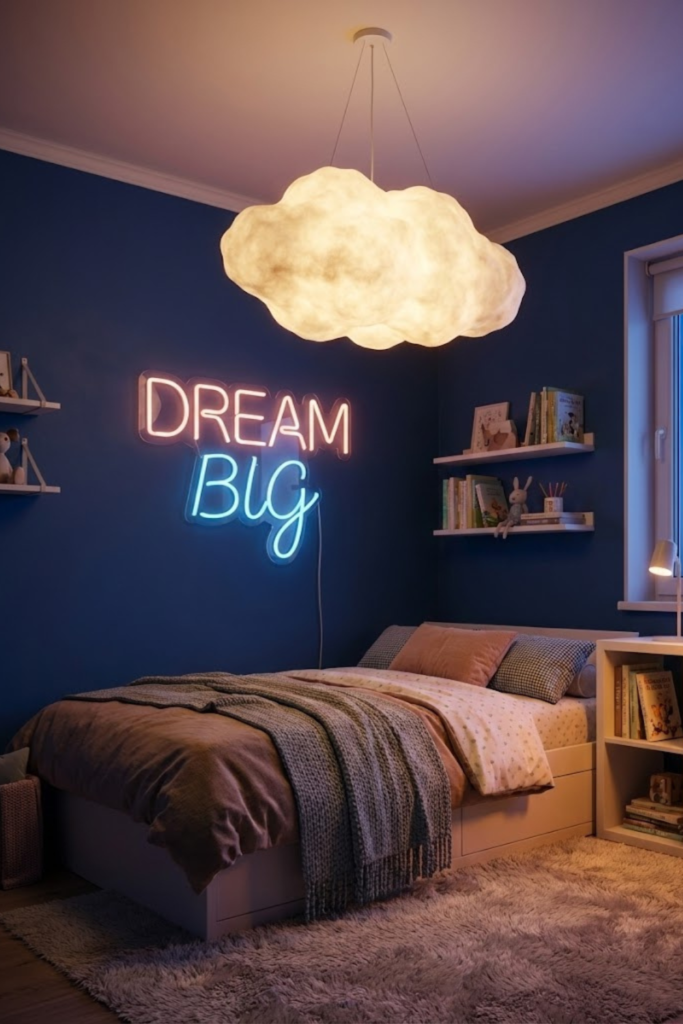
I used to think a bedroom just needed one big light in the center of the ceiling. You flip the switch, the room lights up, job done. But then I noticed something. When it was time for bed, that “big light” was like a jolt of caffeine for my kids. It was so bright and harsh that it actually woke them up right when they were supposed to be getting sleepy. And then, once we turned it off, the room was pitch black, and the “monster under the bed” fears kicked in.
I realized I was doing it all wrong. Lighting isn’t just about seeing where you are walking; it is about how the room feels. To fix this, you have to think in layers.
The Three Layers You Need
In my classroom, I use different lights for different activities, and I brought that same idea home. You need three types: ambient, task, and accent.
Ambient lighting is your main source, like the ceiling fixture. But please, swap out those cold, blue-white bulbs for warm white ones. It makes a huge difference.
Task lighting is for specific jobs. My daughter has a clip-on lamp for her headboard because she loves to read before sleep. Without it, she was squinting in the dark or keeping the big light on way too long. If your kid has a desk, they need a good lamp there too so they don’t strain their eyes doing homework.
Accent lighting is the fun part. This is where you add the personality. We got a neon sign that says “Chill” in pink for my teen, and she is obsessed with it. For the little ones, a cool nightlight or a star projector can make the dark feel less scary.
The Magic of Dimmers
If you do only one thing from this list, install a dimmer switch. It is the best twenty bucks I ever spent. About an hour before bedtime, we dim the lights down low. It signals to their brains that the day is over. It creates a calm vibe that helps them wind down naturally.
Before we had dimmers, the transition from “playtime” to “bedtime” was abrupt and usually involved tears. Now, we lower the lights, put on some quiet music, and the energy in the room just drops.
Whimsical Fixtures
Since it is a kid’s room, you can get away with stuff that would look crazy in a living room. We found a pendant light shaped like a fluffy cloud for the nursery. It glows softly and looks adorable. I’ve seen lights shaped like balloons, airplanes, and even gummy bears.
Don’t be afraid to let them pick something funky. My son picked a lava lamp. I thought they went out of style in the 90s, but apparently, they are cool again. It provides a nice, low light that is perfect for chilling out without being too bright to sleep with. Just make sure whatever you choose doesn’t get too hot to the touch!
7. Incorporate Sensory-Rich Textures and Rugs
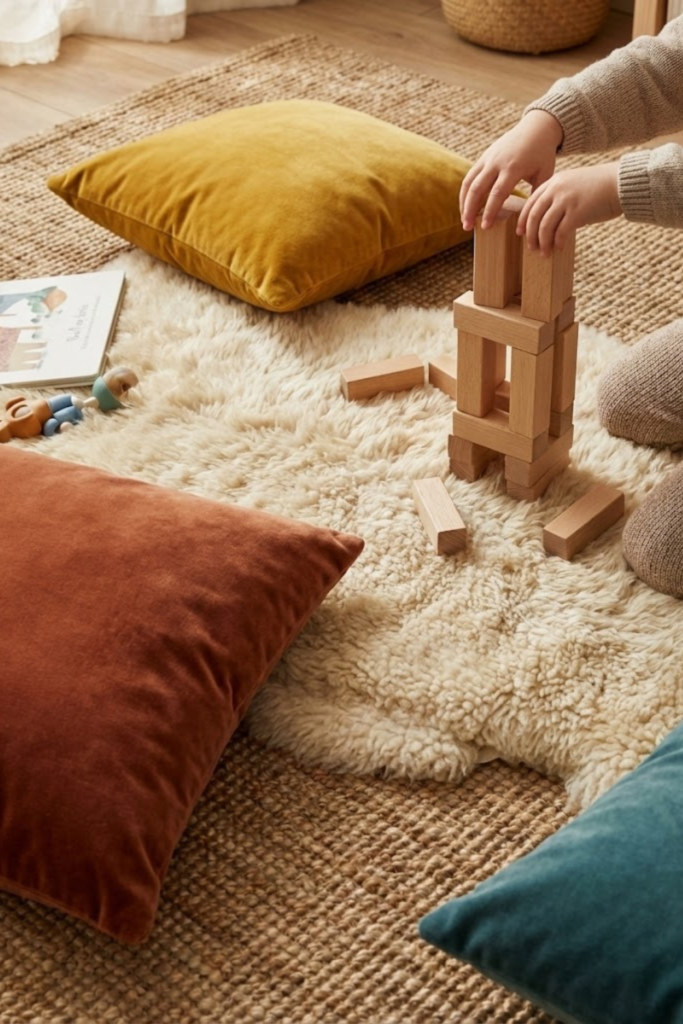
I learned a hard lesson when my first baby started crawling. We had these beautiful, sleek hardwood floors throughout the house. They looked great in photos, but they were cold and hard on little knees—including mine! I remember getting down on the floor to build a block tower and thinking, “Ouch, how do they do this all day?” That is when I realized that for a kid’s room, comfort really has to start from the ground up.
Why Texture Matters
Kids are super sensitive to how things feel. Have you ever noticed how they will rub a soft blanket against their cheek or run their hands over a bumpy surface? That is because exploring textures is a huge part of how they learn about their surroundings. It is often called sensory play, but you don’t need fancy toys to do it. You just need the right decor choices.
We started adding different fabrics to the room, like velvet cushions and chunky knit throws. It immediately made the room feel cozy and safe. I added a faux sheepskin throw on the reading chair, and suddenly, it became the most popular seat in the house. It is about creating a space that feels like a warm hug when they walk in.
The Magic of Washable Rugs
Now, let’s talk about the mess. Kids are messy. There is no way around it. I used to be terrified of putting a nice rug in the playroom because of juice spills and marker accidents. Then I discovered washable rugs. These things are a total lifesaver.
When my son spilled his grape juice (why is it always grape?), I didn’t have to panic or scrub for hours. I just rolled it up and threw it in the washing machine. It came out looking brand new. If you are setting up a kid’s space, do yourself a favor and get a rug that can handle real life. It saves you so much stress and keeps the room smelling fresh.
Layering for the Look
I used to think you could only have one rug per room. But then I saw a picture online where they layered them, and I decided to give it a shot. I put a large, flat-weave rug down to cover the cold floor, and then I put a smaller, fluffy rug on top of it near the bed.
It looks really stylish, almost like something a designer would do, but it is actually super practical. The flat rug is easy to vacuum for Lego cleanup, and the fluffy one is perfect for those first steps out of bed on a chilly morning. It adds depth to the room and makes it feel finished. Just make sure you use a non-slip pad underneath so nobody goes sliding into the wall!
Conclusion
Well, we made it to the end! Designing a room for your kids is honestly a labor of love. I remember sitting on the floor of my daughter’s room after we finished installing that climbing wall, just watching her play. It wasn’t perfect—there was still a paint smudge on the trim that drives me crazy if I look at it too long—but she was happy. And really, that is what counts.
You don’t have to do all seven of these things at once. That would be exhausting (and expensive!). Just pick the one that solves a problem you have right now. Maybe you are sick of stepping on toys, so you try the vertical storage. or maybe you just want bedtime to be easier, so you get some warmer lights.
I hope these ideas gave you a little spark of inspiration to get started. It doesn’t have to be magazine-perfect to be a great room for your kid. If you found this helpful, I’d be super grateful if you could pin this article to your “Kids Room Decor” board on Pinterest. It helps other parents find these tips, and it means the world to me. Good luck with your project—you got this!