Did you know that studies show a visually “quiet” home can actually help lower your stress levels significantly? For the longest time, I thought “neutral” was just a polite word for boring, and I even made the mistake of painting my first apartment a stark, hospital white that felt freezing cold! But things have changed in 2026; modern neutral living room designs are now all about layering warmth and texture rather than just having empty space. I’ve learned that the secret isn’t in the lack of color, but in the richness of the materials you choose. We are going to explore how to master this subtle look so your home feels sophisticated yet comfortable enough to nap in. If you are ready to calm the chaos in your house, these ideas are exactly what you need. Let’s jump in!
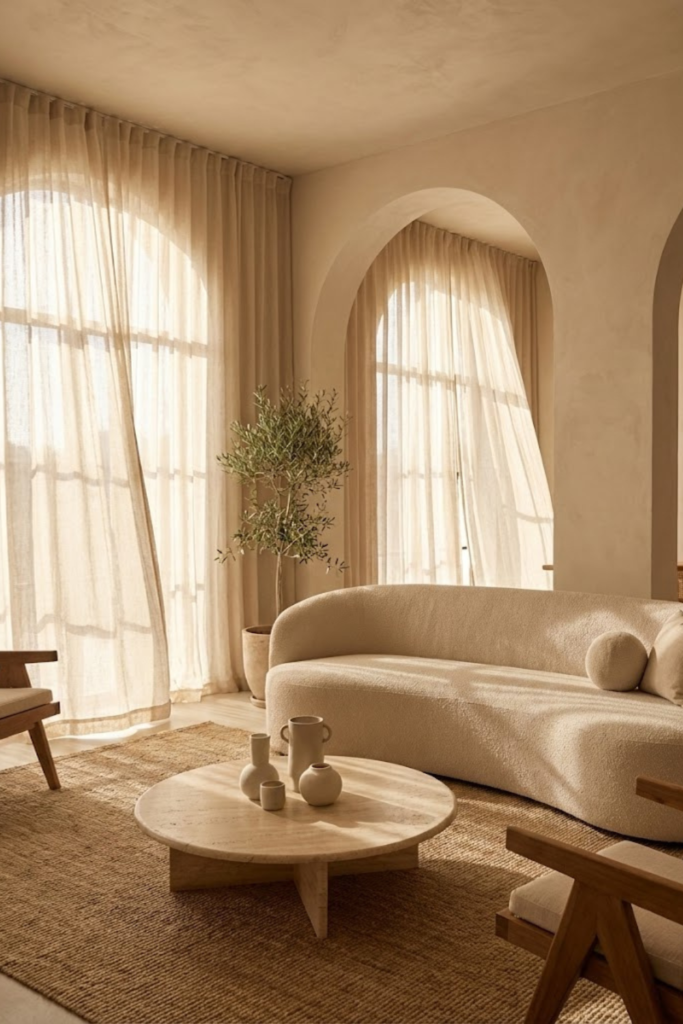
1. The “Warm Minimalism” Evolution
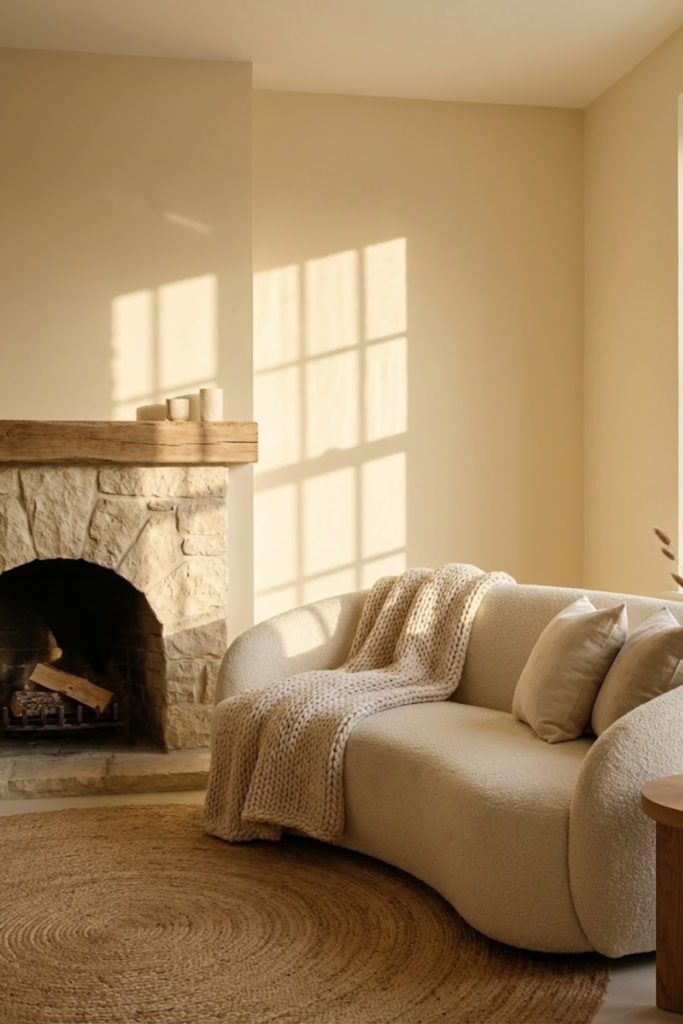
I have a confession to make. Back in the early 20s, I went through a phase where I thought “modern neutral living room designs” meant painting everything a blinding shade of white. I’m talking dentist office white. It was bad, y’all. I remember inviting my sister over, and she actually asked if she needed to take her shoes off and put on a hazmat suit. It felt cold, impersonal, and honestly, it stressed me out more than the clutter did. But here we are in 2026, and thank goodness the trends have shifted. We’ve finally moved past that sterile look into something way more livable called Warm Minimalism.
It’s All About the Buttercream
If you’re still holding onto that can of stark white paint, put it down. The biggest shift I’ve seen this year is the move toward “buttercream” and rich “greige” tones. It’s not yellow, but it’s definitely not white. It’s that perfect in-between shade that catches the afternoon sun and makes the whole room glow.
I recently repainted my own living space with a shade that reminds me of unbleached linen. It instantly made the room feel five degrees warmer without touching the thermostat. The goal is to maximize light, sure, but not at the expense of your retinas. You want a backdrop that feels like a hug, not a hospital visit.
Texture is the Secret Sauce
Here is where I messed up before. I relied on flat, shiny surfaces. Now, I’ve learned that if you strip away color, you gotta add texture or your room will look flat as a pancake. I swapped my glossy white coffee table for a chunky travertine piece recently. It’s heavy, it’s got little pits and imperfections, and it totally anchors the room.
Limestone is another massive player in 2026 interiors. It brings in that earthy element that stark plastic just can’t compete with. When you touch the surfaces in your home, they should feel interesting. If everything is smooth and cold, you lose that cozy factor we are all craving.
The “Curated Mess”
Warm minimalism isn’t about hiding your personality in a cupboard. It’s about “lived-in” decluttering. I leave a stack of books on the side table now, and I don’t stress if they aren’t perfectly aligned. I have a throw blanket that is draped over the arm of the sofa, not folded with military precision.
It’s okay to see signs of life! That’s what makes a house a home, right? You want your modern neutral living room designs to serve you, not the other way around. Keep the surfaces fairly clear, but let the textures and a few cherished items do the talking. It’s softer, it’s kinder, and it’s way easier to maintain than that showroom perfection I used to chase.
2. Japandi Fusion: Where Scandi Meets Zen
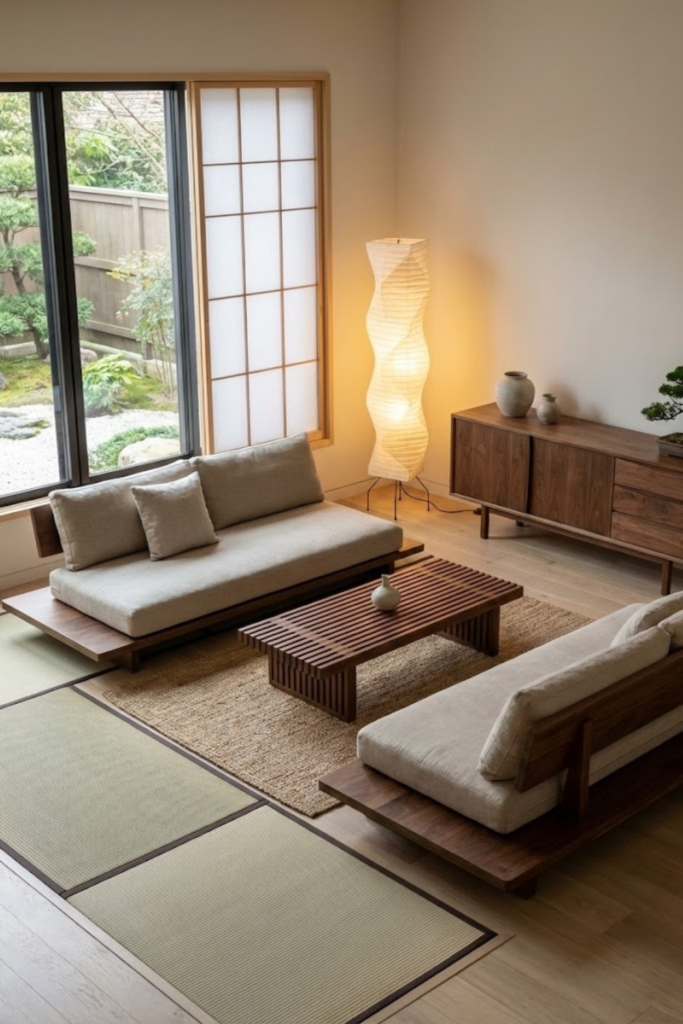
If you had told me five years ago that I would be obsessed with mixing Japanese and Scandinavian styles, I would have looked at you like you were crazy. I honestly thought Scandinavian design just meant buying flat-pack furniture that was impossible to put together, and I didn’t know much about Japanese interiors beyond tatami mats. But Japandi? This style is a total game-changer. It takes the cozy “hygge” feeling from the Nordic side and blends it with the “wabi-sabi” (finding beauty in imperfection) from the Japanese side. It is the most calming thing I have ever done to my house.
Getting Low to the Ground
The first big change I made when trying this look was rethinking my furniture height. In classic American homes, we love big, puffy furniture that sits high up. Japandi is different. It sits lower. I swapped my bulky recliner for a low-profile armchair with clean lines, and it was weird at first. I felt like I was sitting on the floor!
But here is the thing: low furniture makes your ceilings look way higher. It opens up the vertical space so the room feels airy, not stuffed. I chose pieces made of darker timber, like walnut, which was a scary choice for me since I usually stick to light oak. But that dark wood against my pale, off-white walls? It created this beautiful contrast that looked expensive and grounded, not washed out.
Lighting That Actually Glows
Let’s talk about lighting because this is where I see people mess up the most. You cannot have harsh, bright white bulbs in a Japandi room. It ruins the whole vibe. I learned this the hard way after installing a super bright LED fixture that made my living room look like a cafeteria.
I switched it out for a large, paper lantern pendant light. You know, the Noguchi-style ones that look like big paper moons? It diffuses the light so softly. Now, instead of a spotlight, the whole room just kind of glows in the evening. It’s incredibly forgiving on the eyes (and wrinkles, just saying). If you can’t change your ceiling light, even a couple of rice paper floor lamps can fix the mood instantly.
Finding Balance in the Empty Space
This was the hardest part for me as a teacher who loves keeping piles of papers and books everywhere. Japandi demands a little bit of discipline. It’s not about being empty; it’s about “intentional” space. I had to clear off my coffee table. Instead of a tray full of remotes and coasters and random junk, I just have one ceramic bowl now.
It felt naked at first. I kept wanting to put things back. But after a week, I realized how much calmer I felt walking into the room. It’s structured but serene. It’s not stiff like a museum; it just feels like every object has room to breathe. If you are someone who gets overwhelmed by visual clutter, this fusion style is honestly the best medicine.
3. Texture Over Color: The Monochrome Masterclass
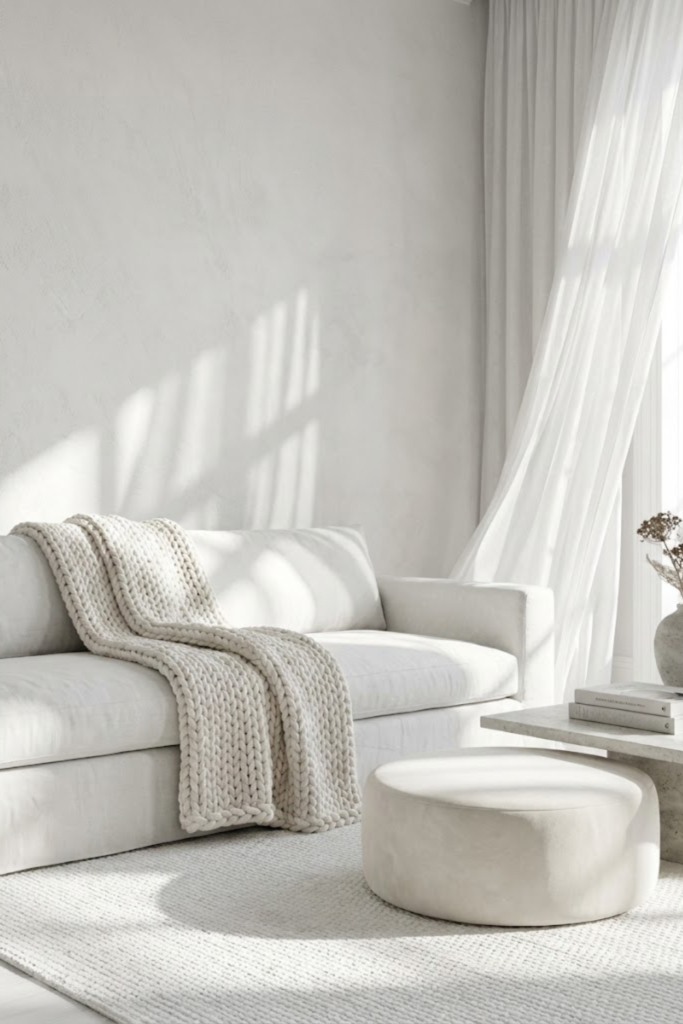
I used to think that doing a monochrome room—you know, where everything is basically the same color—was the easy way out. I figured, “Hey, if I just buy everything in ‘Ivory,’ it has to match, right?” Wrong. I tried this in my den a few years ago, and let me tell you, it looked like a marshmallow exploded in there. It was flat, boring, and honestly, it hurt my eyes a little bit because there was no definition. I learned the hard way that when you take away color, you have to work double-time on texture.
The “Touch Test” Rule
Now, whenever I am shopping for a neutral room, I use what I call the “touch test.” If everything feels the same, put it back. You cannot have a linen sofa, linen curtains, and a linen rug all in the exact same shade. It looks dead.
In my current living room, I kept the color palette strictly “oatmeal,” but I went wild with the materials. I have a rough wool rug that feels scratchy (in a good way) under my feet. I paired that with a velvet ottoman that catches the light differently than the matte cotton drapes. Even though they are all technically the same color, your eye sees five different shades because of how the light hits the nubs and weaves. It creates depth without needing a single drop of bright paint.
Walls That Aren’t Just Painted
Another big lesson for me was realized that standard flat paint is the enemy of a monochrome room. If your furniture is light and your walls are just… flat light paint, the room feels like a box. I finally got brave enough to try a limewash treatment on my walls last month.
If you haven’t seen limewash, it kind of looks like cloudy, old-world plaster. It adds this subtle movement to the walls. It’s not a pattern, really, but it gives your eye something to rest on. It stops the room from looking like a sterile hospital waiting room. It was a bit of a workout to apply (my arms were sore for days!), but it completely changed the vibe.
Art is About Shadows, Not Pigment
Finally, I had to rethink my art. I used to look for colorful paintings to “pop” against the neutral walls. But that actually broke the calm vibe I wanted. Now, I look for 3D art. I have a large piece that is essentially just white plaster on canvas, but it has ridges and bumps.
When the sun moves across the room in the afternoon, the shadows change on the art piece. It’s quiet, but it’s interesting. It creates drama using shadow rather than bright colors. It is a sophisticated trick that makes the room feel expensive, even if you made the art yourself (which I totally did).
4. Organic Modern: Embracing the Curve
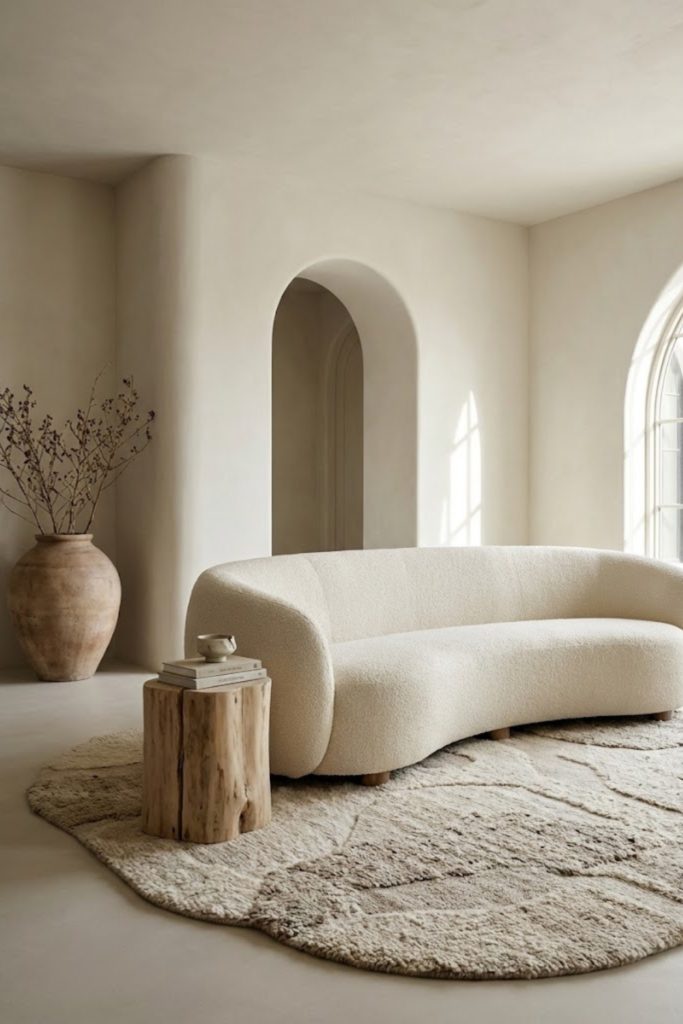
I used to be a huge fan of squares. My old living room was basically a collection of rectangles: rectangular rug, rectangular sofa, rectangular coffee table, rectangular art. It felt organized, which my teacher brain liked, but after a while, I realized it felt a little bit stiff. It didn’t invite you to sit down; it felt like a geometry test. That is why the “Organic Modern” trend taking over in 2026 has been such a relief for me. We are finally softening those hard edges and letting our homes breathe a little.
The Great Sofa Switch
The biggest leap I took was selling my sharp, boxy sectional and getting a curved sofa. I was nervous. I thought it might look like something from a futuristic movie set. But once I got it in the room, the whole energy changed.
A curved sofa or a kidney-bean-shaped coffee table creates a “flow.” You don’t have to walk around sharp corners anymore; you just kind of glide through the room. It feels softer and safer, especially if you have clumsy family members like I do who are always bumping into things. If you aren’t ready to buy a new couch, start small. I added a round ottoman and a circular mirror to my square room first, and even that small change broke up the rigidity and made the space feel more welcoming.
Wood in its Birthday Suit
Another huge part of this style is using wood that looks… well, like wood. For years, I bought furniture that was sanded, stained, and varnished until it looked like plastic. Organic Modern is about raw beauty. I brought in a side table that is basically just a preserved tree stump. It’s rough, it has cracks, and it isn’t perfectly level.
And you know what? It is the most complimented thing in my house. These raw, unfinished elements (like driftwood or reclaimed oak) bring nature inside. They ground the room. When you have a lot of neutral colors, having that natural wood grain adds a layer of warmth that a painted surface just can’t give you.
Imperfection is the Point
This was a hard lesson for me because I like things to be perfect. But with Organic Modern, wobbly is actually good. I stopped buying mass-produced vases from the big box stores and started looking for hand-sculpted pottery. I have a few bowls on my shelf that are definitely not perfect circles. They have thumbprints in the clay; they are a little lopsided.
But that irregularity is what makes them special. It adds a human touch to the room. When everything is machine-made and perfect, a room can feel cold. Adding these organic, imperfect shapes makes the space feel lived-in and comfortable. It tells people, “Relax, nothing here is too precious to touch.” It’s a very forgiving way to decorate, and honestly, it takes the pressure off keeping everything looking showroom ready.
5. High-Contrast Neutrals: Black is a Neutral
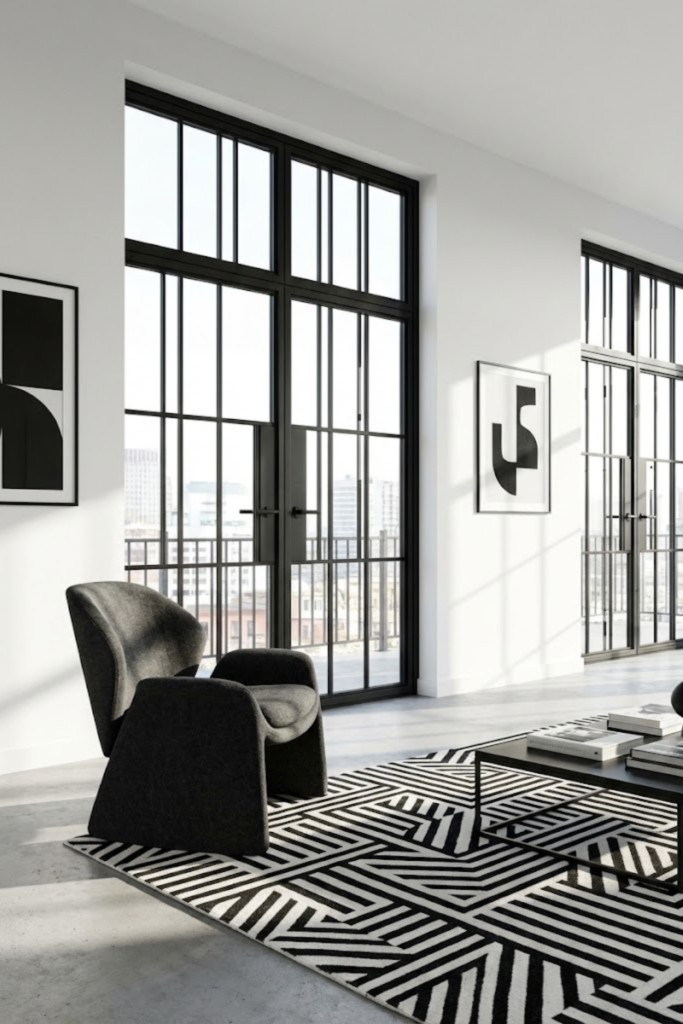
I know what you are thinking because I thought the exact same thing. “Youssef, if I put black in my living room, won’t it look like a teenager’s bedroom or a vampire’s castle?” I was terrified of black paint. For years, I avoided it like the plague because I wanted my home to feel light and airy. I thought black was the opposite of “neutral.” But I was totally wrong. In 2026, we are finally realizing that black is a neutral. In fact, without it, a room can look kind of blurry.
The Eyeliner Effect
Think of your living room like a face. If you have pale skin and no makeup on, your features kind of disappear. But if you add a little bit of black eyeliner? suddenly your eyes pop. The same rule applies to your house.
I tried this experiment last year. My living room was a sea of beige—beige walls, beige sofa, beige rug. It looked okay, but it felt a little “mushy.” There was nowhere for my eye to land. So, I took a deep breath and painted my window frames a matte black. It was a messy weekend project, and I got paint on my nose, but the result was instant. The view outside looked brighter, and the beige walls suddenly looked crisp instead of muddy. It gave the room a definition I didn’t know it was missing.
Don’t Let the Furniture Float
Another issue I had with my all-light room was that the furniture felt like it was floating away. It felt weightless, but not in a good way. It felt ungrounded. To fix this, you need what designers call an “anchor.”
I brought in a charcoal accent chair. It isn’t jet black, but it’s dark enough to have some visual weight. Placing that dark chair in the corner stopped the room from feeling like a cloud. It pulled everything down to earth. If you are too scared to buy a dark chair, try a rug with a high-contrast pattern. I swapped my plain cream rug for one with a simple black geometric line. It grabs your attention and makes the lighter furniture pop against it.
Matte vs. Shiny Matters
Here is a pro tip I learned from a friend who actually does this for a living: finish is everything. If you use shiny, glossy black, it can look cheap or like it belongs in a 1980s bachelor pad. We don’t want that.
You want to stick to matte finishes. I swapped out my silver cabinet handles and light fixtures for matte black metal. It feels modern and sleek. It doesn’t reflect light; it absorbs it, which looks much more sophisticated. It’s a small change—literally just swapping out some hardware—but it makes the room feel “finished.” It’s the difference between wearing a tuxedo and wearing a cheap suit. The contrast brings the drama, but the matte finish keeps it humble and cozy.
6. Soft Industrial: Concrete & Comfort
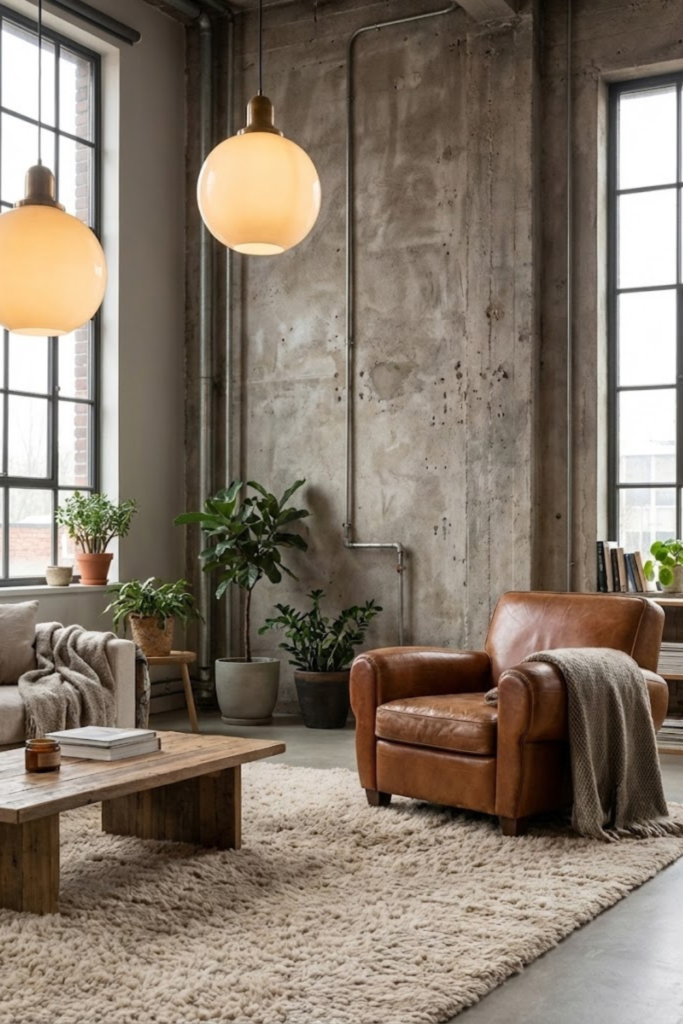
I used to think that “Industrial” design was just for cool kids living in converted factories in the city. I looked at those magazines with exposed pipes and concrete floors and thought, “That looks freezing.” I like to be warm, you know? But this “Soft Industrial” look that is big in 2026 has totally changed my mind. It takes those raw, tough materials and wraps them in a big, cozy blanket. It’s about balance. You get the cool, edgy look without feeling like you are living in a garage.
The Concrete Floor Dilemma
If you have concrete floors or even just grey tiles that look like concrete, you know the struggle. They look sleek, but they are hard on your knees and cold on your toes. The trick I learned is that you can’t just put a tiny postage-stamp rug in the middle of the room. It looks sad.
You have to go big. I mean, huge. In my basement den, which has a polished concrete floor, I put down a massive, high-pile wool rug. It covers almost the whole seating area. Now, when you look at the room, you see that cool grey border around the edge, so you get the “vibe,” but your feet are happy. It creates this floating island of softness. It stops the room from echoing, too, which is a lifesaver if you have a loud TV or loud kids.
Cognac is the Bridge
Here is a color secret I wish I knew sooner: Cognac leather is the best friend of grey concrete. When I first tried to warm up my industrial-style room, I tried adding colorful pillows, but it looked messy. Then I bought a cognac leather armchair. That warm, reddish-brown tone instantly woke up the grey.
Leather is technically a natural material, right? So it acts like a bridge. It connects the cold, man-made concrete with the soft, woven fabrics on your sofa. It adds this earthy warmth that makes the metal and stone feel intentional, not just unfinished. Plus, worn-in leather looks better the older it gets, which is perfect for a house that actually gets used.
Metal Needs Warmth
I love a good black metal shelf. They are sturdy and they hold a ton of books. But a wall full of metal shelving can look a little bit like a warehouse store if you aren’t careful. The fix is all in the lighting.
Do not, and I repeat, do not use cool-toned white bulbs near metal. It makes everything look surgical. You need warm, amber-tinted bulbs. I clipped a few small, warm lamps onto my metal shelves, and it changed everything. The light reflects off the metal and turns it from cold and hard to shiny and warm. It turns a “storage rack” into a display case. It’s a cheap fix, but it makes the industrial look feel cozy enough for a Sunday nap.
7. The “New Earth” Palette
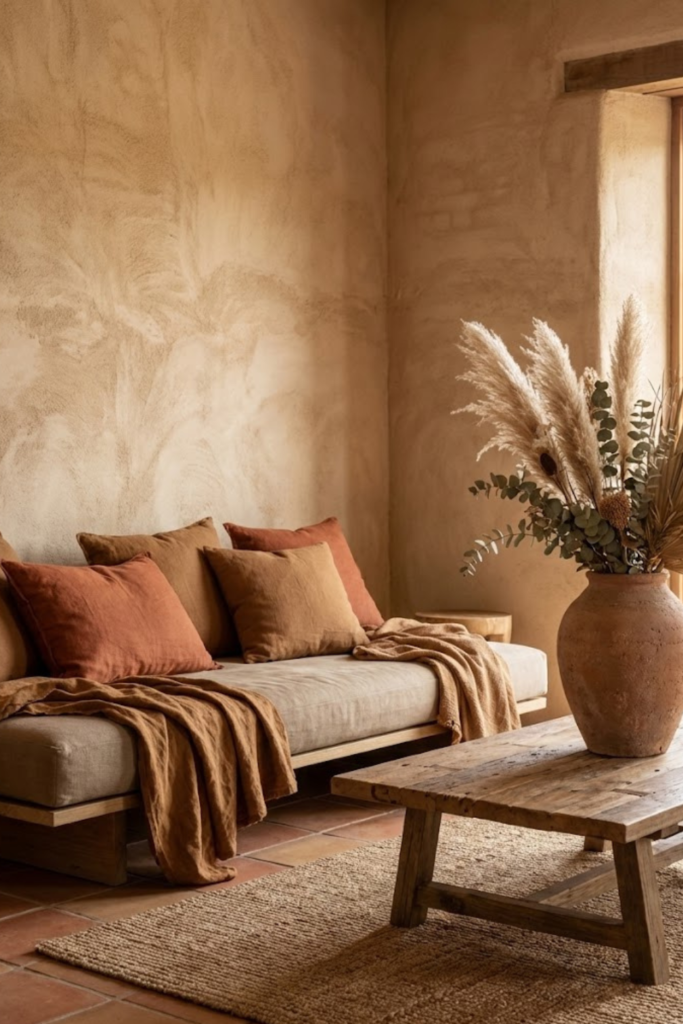
I have to be honest with you, when I first heard people talking about “earth tones” making a comeback, I panicked. I immediately thought of my grandmother’s living room in 1978. You know the look: shaggy brown carpet, orange sofas, and wood paneling that made the room feel like a cigar box. I swore I would never go there. But the “New Earth” palette in 2026 is totally different. It isn’t dark and heavy. It’s light, sandy, and breathable. It’s less about mimicking the 70s and more about bringing the actual dirt and stone from outside into your living room, but in a clean way.
The Rust Revival
The biggest surprise for me was falling in love with rust. Not the metal kind, but the color. I used to stick to safe grays, but they started feeling a little chilly. I tried adding some terracotta throw pillows to my gray couch, and wow, what a difference.
It’s a muted, dusty reddish-brown that feels incredibly warm. It doesn’t scream at you like bright red does. It just sits there and makes the room feel grounded. I even painted a small powder room in a “baked clay” color recently. It feels like being inside a warm pottery bowl. If you are tired of white walls but scared of “real” color, these clay and sand tones are the perfect middle ground. They have personality, but they are still technically neutrals because they come straight from the ground.
Stone Underfoot
We usually think of wood floors as the standard, right? But I’ve been seeing—and loving—natural stone flooring in living areas. I’m talking about large slate tiles or light flagstone.
I know, it sounds cold. But if you get a stone that has those warm, sandy swirls in it, it actually feels very cozy. It connects the indoors to the outdoors. I laid down a large jute rug over my stone floors to keep things soft for my feet. The contrast between the rough, natural stone and the woven rug is chef’s kiss. It feels durable, like a house that can handle muddy shoes and dogs running around without getting ruined. It’s practical, and as a teacher with a busy life, practical is my favorite word.
The “I Can’t Kill This” Plant Strategy
Here is my favorite part of this trend: dried botanicals. I try very hard to be a plant mom, but I have a “black thumb.” I kill everything. The New Earth style embraces dried nature. I swapped out my dying ferns for a big vase of pampas grass and dried palm leaves.
They are beige, fluffy, and sculptural. And the best part? You don’t have to water them! They add that feathery texture that softens the room, and they fit perfectly with the sand and clay color palette. It gives you that biophilic design—which is just a fancy way of saying “nature stuff”—without the stress of keeping something alive. It adds height and drama to the corner of a room, and it costs almost nothing if you forage the branches yourself.
Conclusion
So, there you have it. We made it through all seven modern neutral living room designs for 2026. If you are anything like me, your head might be spinning a little bit with ideas about limestone and boucle fabric right now. That is totally normal! Remember, you don’t have to change your whole house overnight. My own living room is still a work in progress, and that is okay.
The biggest thing I hope you take away from this is that “neutral” doesn’t have to mean “boring.” Whether you decide to paint a wall that warm buttercream color or you just buy a couple of dried palm leaves for a vase, these changes are about making your home feel like a sanctuary. We all need a soft place to land at the end of a long day, and creating a space that feels calm and quiet is the best gift you can give yourself.
Did you find these ideas helpful? Please save this article! Pin the image below to your “Dream Home 2026” board on Pinterest so you can easily find it when you are ready to start your next project.