Honesty time: I once tried to decorate my living room based on a magazine cover I saw at the dentist’s office. It was stark white, full of sharp angles, and honestly? It felt like living in a refrigerator. I hated it! But that failure taught me something huge. Your home shouldn’t just look “cool”—it needs to feel like you.
That’s what 2026 is all about. We are moving away from that cold, perfect showroom look. Finally! Now, it’s about warmth, personality, and spaces that actually hug you back when you walk in the door. Whether you’re renting a tiny studio or refreshing a family home, the vibes this year are unmatched. We’re seeing a massive shift towards “coffee hues,” sustainable textures, and layouts that prioritize talking over texting.
I’m going to walk you through 7 room decor ideas that are absolutely exploding right now. These aren’t just trends that will fade next month; they are practical ways to make your home happier. Let’s dive in!
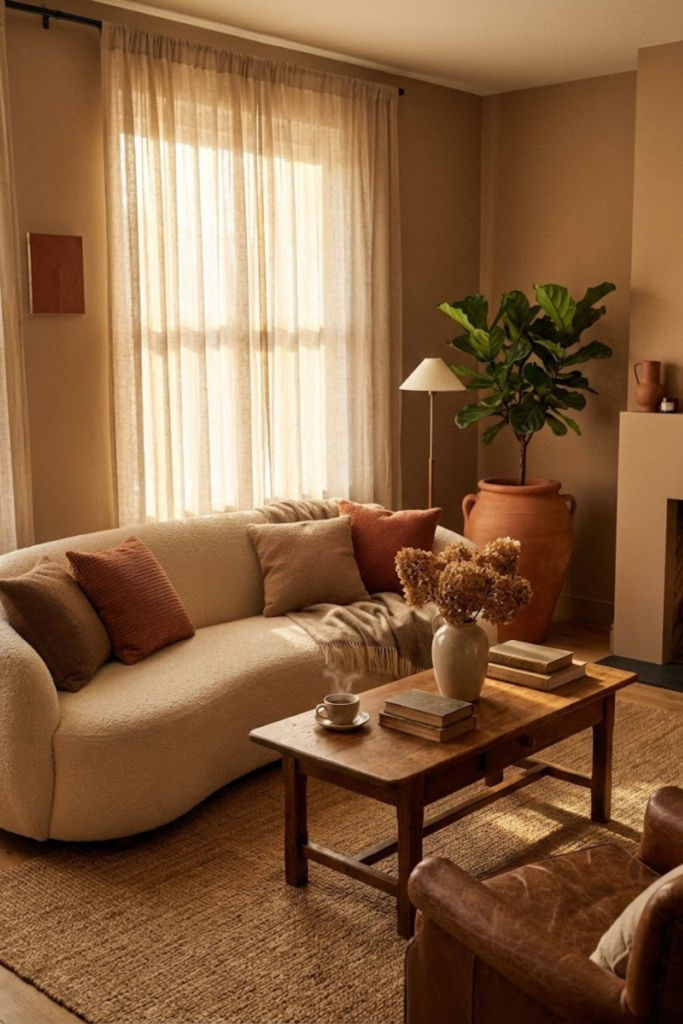
1. Color Drenching with Coffee Hues
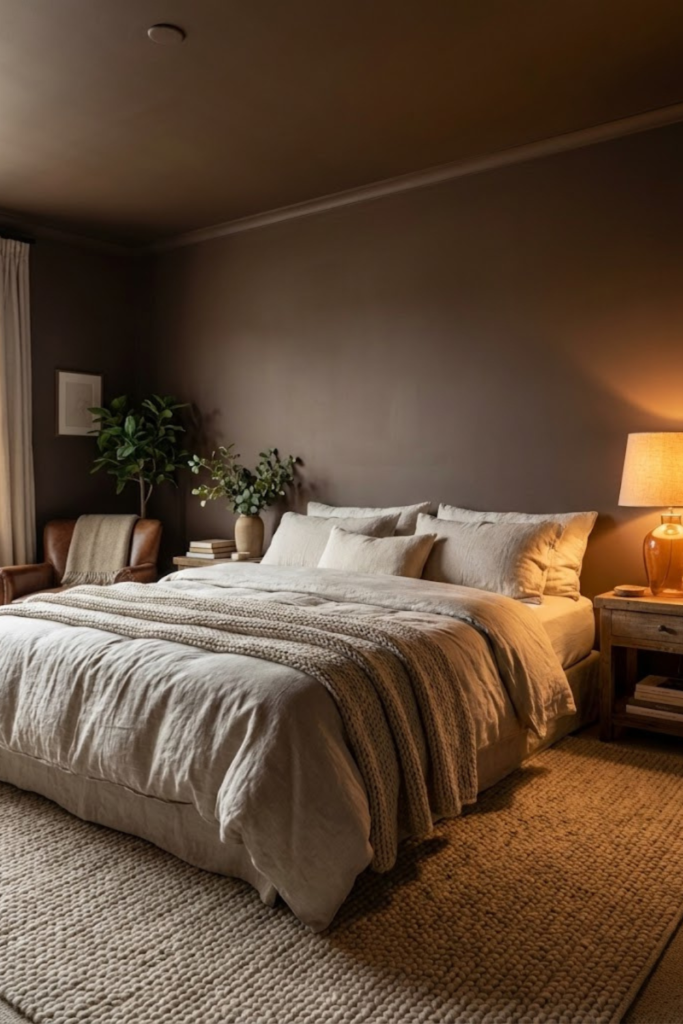
I’ll never forget the first time I decided to paint a room dark. It was my tiny downstairs powder room, and I had picked out a color that can only be described as “melted chocolate bar.” My best friend told me I was crazy. She said, “It’s going to look like a dungeon in there!” I almost chickened out and went back to the hardware store for Safe Beige.
But I didn’t. I committed. And let me tell you, that “dungeon” is now the most complimented room in my entire house.
That experience taught me that we’ve been lied to about dark colors shrinking spaces. In 2026, we are embracing color drenching, and specifically, we are obsessed with coffee hues. If you haven’t heard of color drenching yet, it’s a total vibe shift. Instead of painting just the walls and leaving the trim white, you paint everything—baseboards, crown molding, doors, and yes, even the ceiling—in the same rich color.
Why the “Coffee” Palette Works
For a long time, gray was the king of neutrals. But gray can feel cold, can’t it? The shift to coffee hues paint—think warm lattes, deep mochas, and spicy terracottas—is all about bringing warmth back.
When I color drenched my home office in a deep espresso shade, something magical happened. Because there were no white lines breaking up the wall and ceiling, the corners just sort of disappeared. The room didn’t feel smaller; it felt infinite. It was like being wrapped in a warm hug. Plus, my cheap IKEA shelving unit looked instantly expensive once it was painted to match the wall.
Practical Tips for Not Messing It Up
Now, I’ve made mistakes so you don’t have to. The first time I tried this, I used the wrong sheen, and it looked like a plastic box.
- Mix up your finishes: Use a flat or matte finish for the ceiling and walls to hide imperfections (my walls are lumpy, so this is a lifesaver). Use a satin or semi-gloss finish in the exact same color for the trim and doors. This adds a subtle texture difference that looks super high-end.
- Lighting is everything: These dark mocha interior trends eat light. You absolutely need to add warm lamps. I put a small brass lamp in the corner of my dark room, and the amber glow against the brown walls is chef’s kiss.
- Don’t fear the ceiling: Painting the ceiling sounds scary. My neck hurt for three days after I did mine. But if you leave it white, you lose the “cozy box” effect. Just go for it.
If you are renting or just nervous, start small. A hallway or a small bathroom is the perfect place to test this. You might hate it while you’re rolling the first coat (it always looks bad wet), but trust the process. Once it dries and you put your furniture back, you’ll wonder why you lived with white walls for so long.
2. Biophilic Design 2.0: More Than Just Plants
I have a confession to make: back in 2020, I went completely overboard with houseplants. I’m talking about a jungle. I had vines hanging into my coffee, a fiddle leaf fig that hated me, and a constant cloud of fungus gnats in the kitchen. It was stressful, which is ironic because plants are supposed to relax you, right?
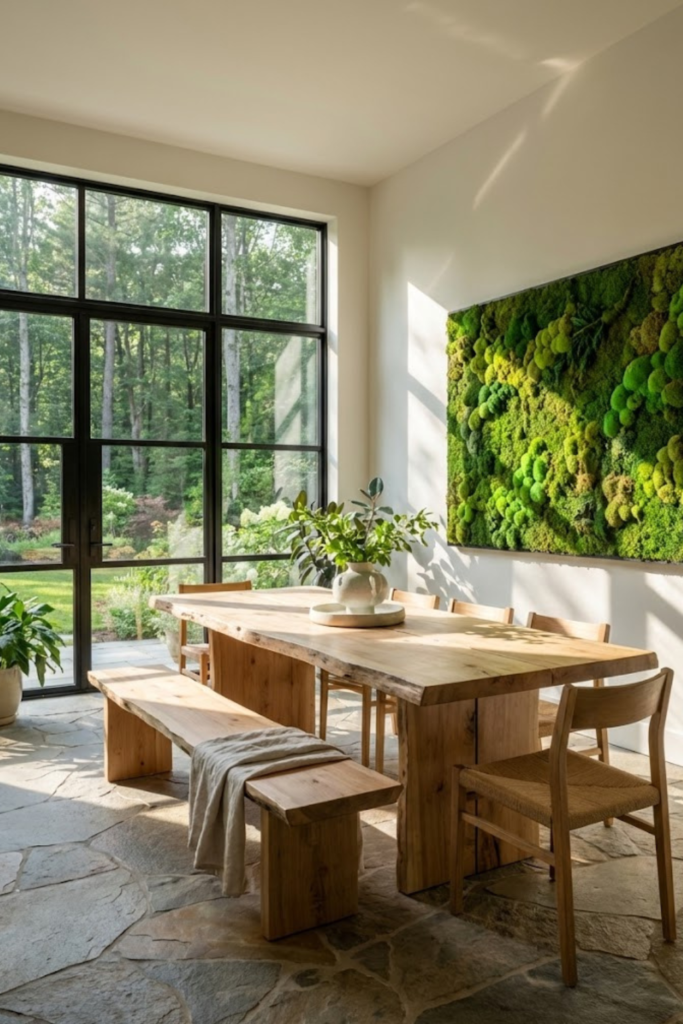
That’s why I am so relieved that the biophilic design home trend in 2026 has evolved. It’s no longer just about cramming as many pots as possible onto a windowsill. It’s about mimicking nature in the actual bones of your room. It is about how the space feels, not just how green it looks.
Let There Be (Natural) Light
My biggest mistake in my old living room was blocking the only good window with a massive TV cabinet. I didn’t realize it, but I was basically cutting off my serotonin supply. When I finally rearranged the layout for natural light maximization, the energy in the room completely flipped.
If you can’t move walls, cheat. I hung a giant mirror opposite my window, and it essentially doubled the sunlight. It sounds like a basic trick, but it works wonders. You want to track where the sun hits your floor and put your favorite chair right there. We are basically just sophisticated house cats, after all.
Texture Over Clutter
Another lesson I learned the hard way: plastic feels like garbage. I used to buy cheap, shiny furniture because it was easy to clean. But sitting on a plastic chair for an hour? Miserable.
Now, I focus on raw wood accents and natural stone. Biophilic design is about touching things that feel “real.”
- Swap the synthetic: If you have a polyester rug, try swapping it for jute or wool. Your feet will know the difference immediately.
- Living art: Instead of high-maintenance potted plants, I installed a small framed piece of preserved moss. It gives that lush, green texture of living wall art but requires zero watering. Zero. It’s a total game changer for black thumbs like me.
- Imperfection is key: I stopped trying to fix the scratches on my wooden coffee table. In nature, nothing is perfect. Those marks tell a story.
This approach to eco-friendly decor isn’t just about saving the planet (though that’s a huge plus). It’s about creating a home sanctuary where your blood pressure actually drops the second you walk through the door. It feels grounded, earthy, and way less chaotic than my old indoor jungle ever did.
3. Curated Maximalism: Tell Your Story
I used to think being a “maximalist” just meant I was bad at throwing things away. For years, my living room looked like a flea market had exploded inside a library. I had stacks of magazines, random figurines I bought because they were “cute,” and pillows that didn’t match anything. It wasn’t stylish; it was chaotic. My husband gently suggested that our house gave him a headache. Ouch.
That stung, but he was right. I was hoarding, not decorating.
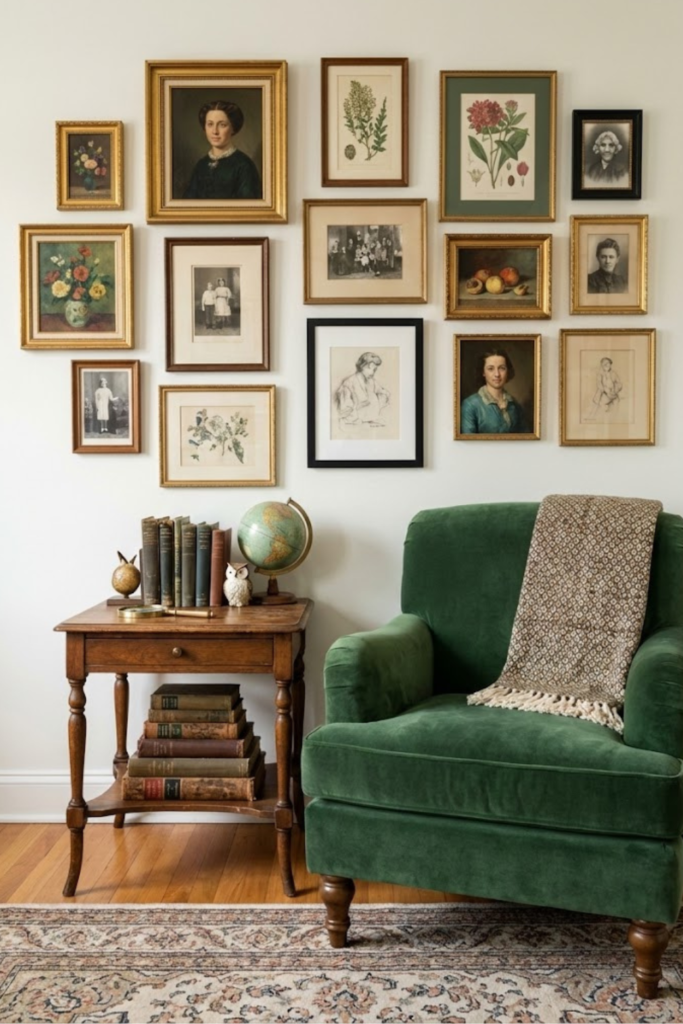
In 2026, we are seeing the rise of curated maximalism. It is the perfect middle ground for people who hate empty rooms but also don’t want to live in a mess. This trend gives you permission to own stuff, but it asks you to be smart about it. It is about storytelling design rather than just filling space.
The Art of the Group Huddle
Here is the biggest lesson I learned: one weird ceramic frog is clutter. Three weird ceramic frogs are a collection.
When I spread my trinkets all over the room, they looked like junk. But when I grouped them together on a single shelf? Suddenly, it looked intentional. It became an eclectic home style moment.
- Cluster by color: I have a lot of random books. Arranging them by color (yes, the rainbow method) actually calmed the visual noise down.
- Give it breathing room: This was hard for me. You need negative space. If every inch of a shelf is covered, your eye has nowhere to rest. I had to force myself to leave gaps.
Mixing Eras Like a DJ
The coolest rooms I’ve ever been in don’t look like they were bought from a single catalog page. They look collected over time. I used to be afraid to mix styles. I thought, “I have a mid-century sofa, so everything else must be mid-century.” Boring!
Now, I mix it up. I put a sleek, modern lamp on a battered vintage home decor side table I found on the curb. The contrast is electric. It makes the old thing look older and the new thing look newer. This mix of old and new is the secret sauce to timeless interior design. If you buy everything from one store in one year, your house will look dated in three years. Guaranteed.
The Gallery Wall Trap
Oh, the gallery wall. I have cried actual tears over gallery walls. My first attempt looked like a bulletin board in a dorm room. It was too high, too spread out, and the frames were all cheap plastic.
Here is the trick I swear by now for gallery wall ideas: floor first, wall second.
- Lay everything out on the floor.
- Mix high and low. I framed a greeting card my mom sent me right next to a “real” art print.
- Keep a tight palette. Even if the art is different, try to have a consistent color running through them. It ties the chaos together.
Personal home decor should be weird. It should be specific to you. If you love 1980s sci-fi movies, put up a poster. But frame it nicely! Curated maximalism is about honoring the things you love by displaying them with respect, not just piling them up. It took me a long time to learn that editing is just as important as collecting.
4. “Fat” Furniture and Soft Curves
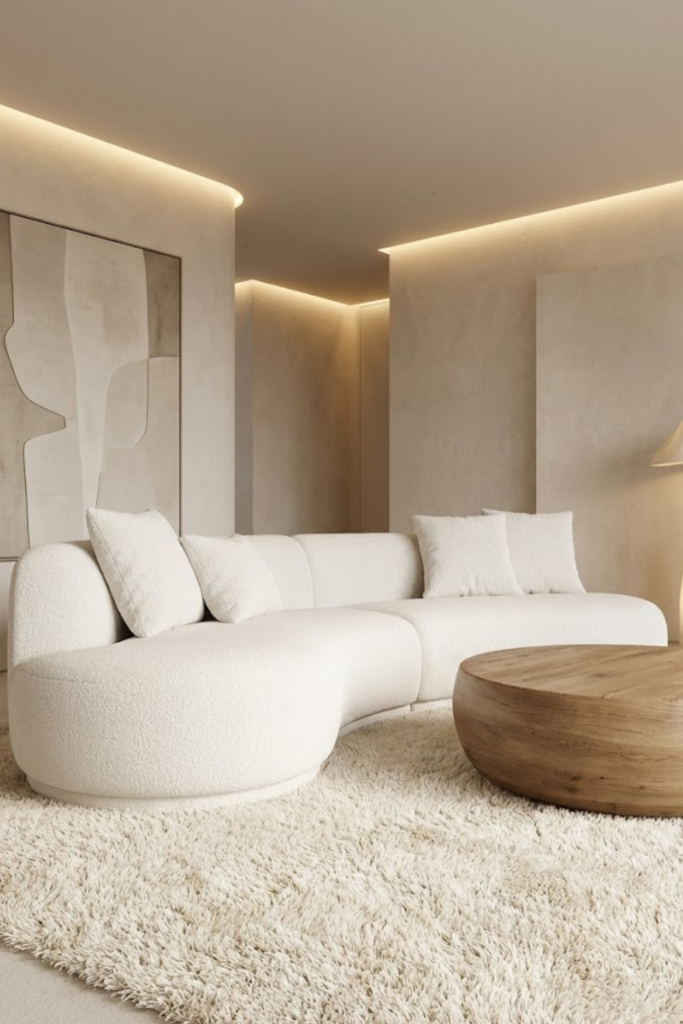
I have a permanent dent in my left shin. It’s a souvenir from 2018, courtesy of a painfully sharp, glass-top coffee table I bought because it looked “sleek” on Instagram. I lived in fear of that table. Every time I walked past it in the dark, I braced for impact.
That is exactly why I am cheering for the death of sharp angles in 2026. We are finally done with furniture that hurts you. The biggest shift I’ve seen lately is the move toward curved furniture and what designers are affectionately calling “fat furniture.”
Why “Fat” is Where It’s At
If you look at the top interior design feeds right now, everything looks like it has been inflated with air. We are talking about chunky armchairs that sit low to the ground and sofas that look like big marshmallows.
I recently swapped my rigid, mid-century modern sofa for a kidney-bean-shaped sectional. My husband was skeptical. He said it looked like a spaceship. But the first night we sat on it, we both fell asleep within 20 minutes. There is something psychological about organic shapes decor. It signals to your brain that it’s safe to relax because there are no hard edges coming to get you. It softens the entire room.
The Fabric Trap (Don’t Do What I Did)
These chubby shapes almost always come in textured fabrics, specifically bouclé. It’s that nubby, teddy-bear fabric. Here is where I messed up: I bought a white bouclé fabric furniture piece… and I own a black dog.
Huge mistake.
Bouclé grabs onto everything. If you eat a cracker within five feet of it, the crumbs are part of the chair forever.
- Go darker: If you have pets or kids, get your soft sofa designs in a darker color like rust, olive, or that coffee hue we talked about earlier.
- Tight weave: If you love the textured look but hate the mess, look for performance velvets or tighter weaves that won’t trap dog hair.
How to Style Curves Without Looking Like a 70s Lounge
You don’t have to replace everything to get this look. If you have a boxy room (which most of us do), adding just one round element changes the flow.
- The Coffee Table Swap: This is the easiest fix. Swap a square table for a round or oval one. It immediately improves traffic flow, so you stop banging your knees.
- Lighting: Even a round lamp base or a circular mirror helps break up all the straight lines of windows and doors.
This trend is honestly a relief. It’s the first time in a while that “high fashion” home decor is actually comfortable to sit on. Just maybe avoid the white teddy bear fabric if you plan on ever eating chocolate again.
5. Layered Lighting (The “Big Light” is Out!)

I have a strict rule in my house after 7 PM: The “big light” stays off. You know the one—the overhead ceiling fixture that blasts the entire room with the intensity of a police interrogation. For years, I relied on that single switch because I was too lazy to walk around turning on lamps. My living room felt flat, harsh, and honestly, it made everyone look tired.
If you want your home to look expensive without spending a fortune, the secret is layered lighting tips. It is the difference between a school cafeteria and a cozy boutique hotel.
The “Hospital” Mistake
My biggest lighting disaster happened when I replaced all the bulbs in my kitchen. I bought a bulk pack of “Daylight” LED bulbs because I thought, “Hey, daylight is good, right?”
Wrong.
My kitchen glowed blue. It looked like a sterile operating room. It was awful. I learned the hard way that Color Temperature (Kelvin) matters more than anything else.
- The Golden Number: You want warm white bulbs. Look for the numbers 2700K to 3000K on the box.
- The Danger Zone: Anything over 4000K is going to feel cold and clinical. Unless you are performing surgery, leave those on the shelf.
creating “Pools” of Light
So, how do you actually layer? It’s about creating pockets of light at different heights so the room feels interesting.
- Floor Lamps for Corners: Dark corners make a room feel small. I stuck a tall lamp behind my sofa, and suddenly the room felt five feet wider.
- Table Lamps Everywhere: And I mean everywhere. I put a small lamp on my kitchen counter, and now I never turn the overheads on when I’m making tea at night. It adds instant mood lighting.
- Lamp as Art: In 2026, we are seeing a lot of sculptural lamps. Even when they are turned off, they look like a cool statue. I have one with a weird ceramic base that is my favorite thing in the room.
It takes an extra thirty seconds to walk around and click on three lamps instead of flipping one switch on the wall. I get it, it’s a pain sometimes. But the payoff is a home that feels warm, inviting, and relaxing. Just promise me you’ll check the Kelvin rating before you buy your next box of bulbs.
6. Textural Walls: Limewash and Clay

I have a love-hate relationship with drywall. For years, I lived in a builder-grade house where the walls were perfectly smooth and perfectly boring. I tried to spice things up once by painting an accent wall in a flat navy blue. It was a disaster. Because the paint was so flat, the light hit every single nail pop and seam tape bump. It looked like a topographic map of a mountain range.
That failure led me to the holy grail of 2026 interiors: texture. We are moving away from that plastic-smooth look and embracing walls that have a little bit of grit and soul.
The Limewash Revelation
If you have been on social media lately, you have definitely seen limewash walls. It looks like old-world plaster or suede. When I finally painted over my disastrous navy wall with a sandy limewash, I was shocked. The texture actually hid the bad drywall!
But here is the thing nobody tells you: limewash walls look terrifying when they are wet.
- Trust the process: When I first brushed it on, it looked like dark, muddy splotches. I thought I had ruined the room. But as it dries, the minerals calcify and turn into that soft, cloudy look. It dries about 50% lighter than it looks in the bucket.
- The technique matters: You can’t just roll this stuff on. You have to use a big block brush and paint in random “X” shapes. It is actually really fun, like finger painting for adults.
Roman Clay for the Brave
If you want something thicker than paint, roman clay walls are the next level up. It is like frosting a cake, but the cake is your living room. I tried this in a small powder room. It was a workout for my arms, but the result feels like stone. It adds instant age and character to a brand new house.
Alternatives for Renters (or the Lazy)
Okay, maybe you don’t want to spend your weekend sweating with a trowel. I get it. You can still get the look of textured wall paint without the physical labor.
- Grasscloth Wallpaper: I used a peel-and-stick faux grasscloth in my hallway. It adds warmth and texture, but I can rip it down if I move.
- Beadboard and Paneling: Adding vertical wood slats is a quick DIY home refresh that covers up ugly walls instantly.
The best part about this trend is the concept of a wabi-sabi interior. This is a Japanese idea that finds beauty in imperfection. If your brushstrokes aren’t perfect, or the color varies a bit? That is the point! It makes your home feel handmade and human, rather than like a factory-made box. So put down the sanding block and embrace the bumps.
7. The “Anti-Tech” Living Room
I have to be honest: for about ten years, my living room was basically a shrine to Netflix. I arranged my sofa, the armchairs, and even the dog’s bed to face the television. We were like moths staring at a giant, glowing blue light. It was efficient for binge-watching, but terrible for our relationship. Me and my husband would sit there for hours, totally silent, scrolling on our phones while the TV played in the background.
It was depressing.
That is why the tech-free living room trend of 2026 hits so close to home for me. We are finally realizing that our homes should be for connecting with people, not just consuming content. It’s about reclaiming your space.
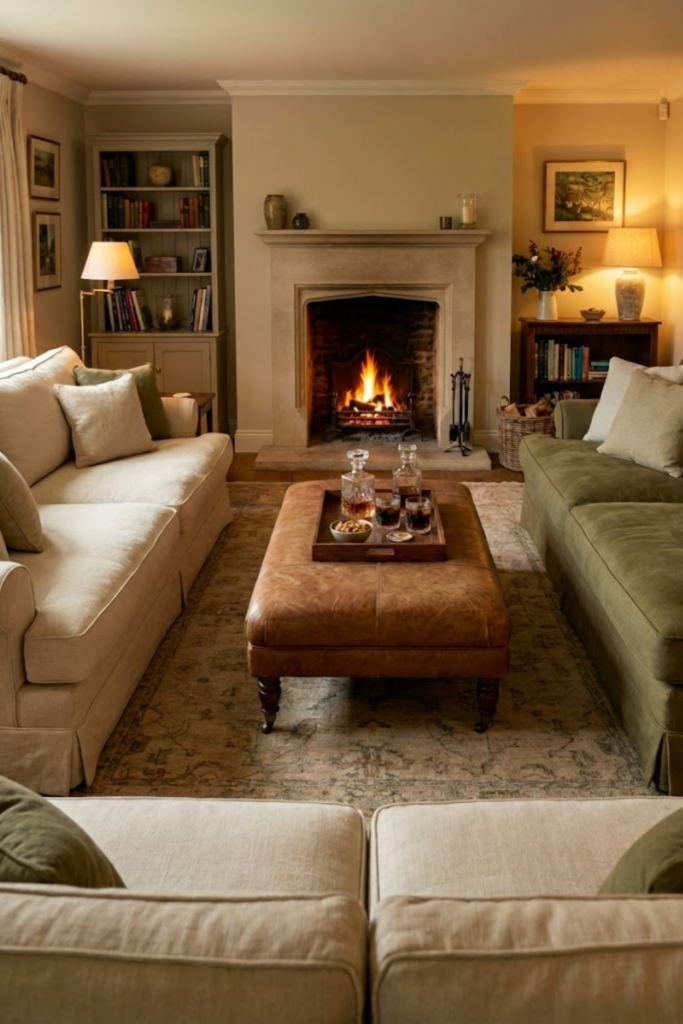
The “Conversation Pit” Revival
You don’t need to dig a hole in your floor to get the vibe of a 70s conversation pit. You just need to fix your living room layout.
- Stop the “Bus Seating”: I used to have my armchairs right next to the sofa, all facing the same wall. It looked like a waiting room.
- Face Each Other: I pulled the chairs away from the wall and placed them opposite the sofa. Suddenly, we were looking at each other. It forces you to engage.
- The Central Hub: Put a big ottoman or coffee table right in the middle. It invites you to put down a tray of drinks or a board game rather than just kicking your feet up to watch a movie.
Hiding the Black Mirror
This was the hardest part for me. I love my shows. I didn’t want to throw the TV away, but I didn’t want it to be the boss of the room anymore. The solution? A hidden TV cabinet.
There are so many cool DIY hacks for this now. I found an old armoire at a thrift store and repurposed it. When the doors are closed, it just looks like a beautiful piece of furniture. When they are open, it’s movie night.
- Out of Sight, Out of Mind: It is simple psychology. If the screen is hidden, you don’t automatically turn it on when you walk in the room.
- The “Frame” Hack: If you can’t do a cabinet, display digital art on your screen when it’s off. It stops the room from feeling like a media center.
Creating New “Zones”
Once the TV wasn’t the center of the universe, I had to figure out what to do with the corners of the room. I set up a dedicated music corner with a record player and a comfy chair. It became a social atmosphere magnet. When friends come over now, they gravitate toward the music or the books, not the remote control.
It felt weird at first, like we had forgotten how to just hang out. But after a week, the energy in the house shifted. It became a true home sanctuary where we actually talked about our day. It’s a small change, but it makes your home feel human again.
Conclusion: It’s About Feeling, Not Just Looking
So, where do we go from here? If you are anything like me, you might be looking around your living room right now and feeling a little overwhelmed. We just talked about everything from painting your ceiling chocolate brown to hiding your TV in a cupboard. It’s a lot.
But here is the truth I want you to walk away with: You do not need to do all seven of these things. In fact, please don’t. If you try to color drench your walls while simultaneously plastering them with roman clay and buying a new curved sofa, you will lose your mind. And probably your savings account.
Start Small, Dream Big
The best advice I can give you is to pick the one idea that made your heart beat a little faster.
- Did the idea of layered lighting make you realize why you hate being in your kitchen at night? Start there. Buy one lamp.
- Did the biophilic design section make you crave a little nature? Go buy a wooden bowl or open your curtains.
I’m still working on my own home. I still have that one ugly chair I can’t afford to replace yet, and my gallery wall is still missing a few frames. And that is okay. The goal of these 2026 trends isn’t to create a perfect showroom. It is to create a home sanctuary that actually serves you.
The Shift to “Timeless”
What I love most about this year’s shift is that it feels sustainable. We aren’t chasing fast fashion for our houses anymore. We are looking for timeless interior design—pieces that feel good to touch, colors that make us feel warm, and layouts that help us connect with our families.
Whether you are planning a massive DIY home refresh or just looking for some affordable decor updates, remember that your home should tell your story. Not the story of a magazine editor, and definitely not the story of an algorithm.
If you add a little texture, warm up your light bulbs, and maybe hide the remote control for a few hours, you are already winning. It’s about creating those cozy home vibes that make you exhale the moment you walk through the door.
Let’s Keep the Inspiration Going!
I would love to see how you interpret these ideas. Are you brave enough to try the dark ceiling? Are you team “conversation pit”?
If you found these tips helpful (or if you just want to save that coffee color palette for later), please save this pin to your “Home Decor 2026” board on Pinterest! It helps other people find these ideas, and it helps me keep writing about them.
Happy decorating, and good luck with those paint samples!