Did you know that by 2026, the average teenager will spend nearly 60% of their time at home in their bedroom? It’s not just for sleep anymore; it’s a recording studio, a gaming arena, and a sanctuary. I remember when my own bedroom was just a bed and a messy desk, but times have changed! Teens today want a space that screams personality while staying functional. This year, we are moving away from those boring, cookie-cutter layouts. We’re looking at bold colors, smart tech, and sustainable materials that actually mean something. Let’s dive into these 7 teen bedroom ideas to help you create a room that isn’t just a place to crash, but a place to thrive!
1. The Gamer “Cloffice” and Integrated Tech Hub
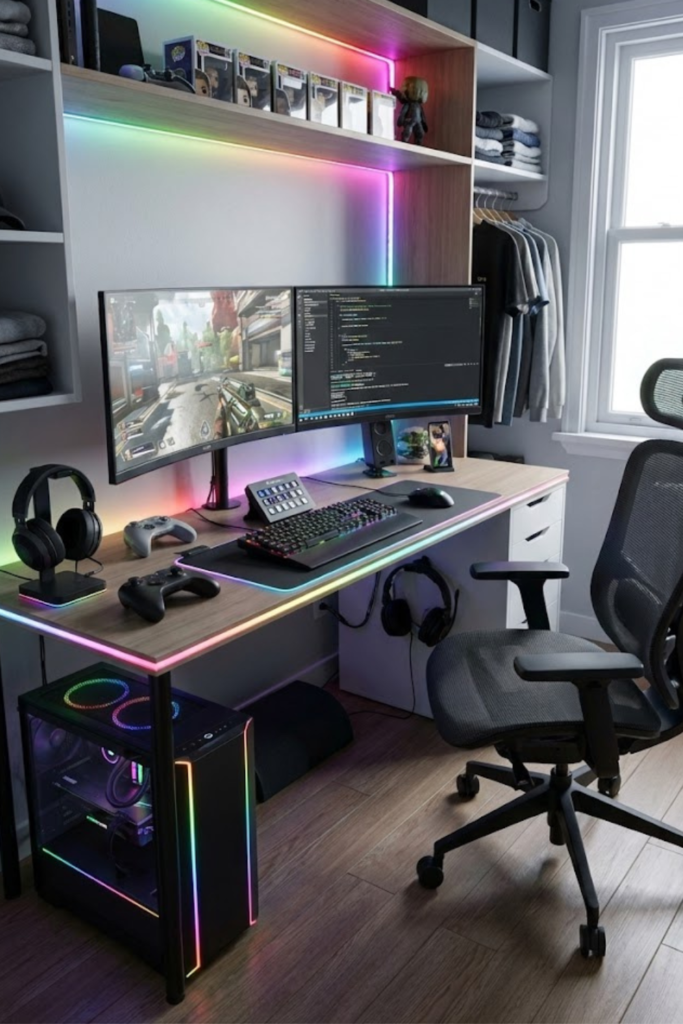
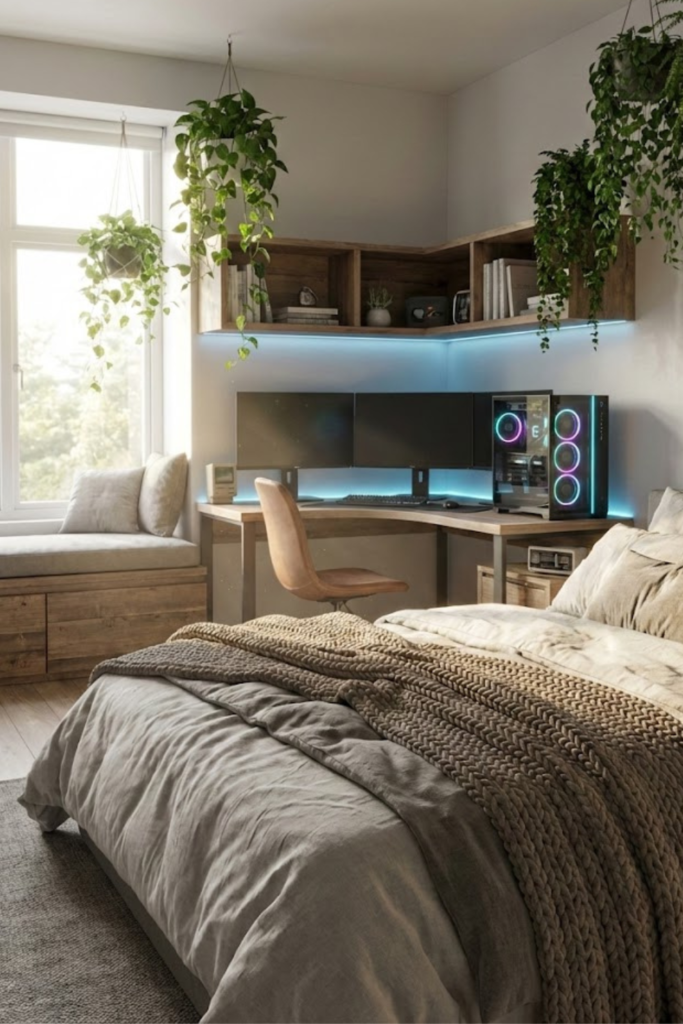
I’ve seen a lot of parents struggle with where to put all those bulky gaming monitors and messy wires. Last summer, I helped a friend turn a messy spare closet into what kids are calling a “cloffice.” Honestly, it is the smartest way to keep the gaming noise and clutter out of the main part of the room. You start by taking the doors off the closet. Then, you find a desk that fits right inside the frame. It is a tight squeeze sometimes, but it makes the room feel so much bigger because the desk isn’t sticking out into the middle of the floor.
For the tech part, you really need to think about the lights. We used these LED strips that stick right to the back of the monitor. It gives the whole wall a cool glow, and you can change the colors with a phone app or a remote. My favorite trick is using those cheap plastic cord organizers. If you don’t do this, the floor looks like a bowl of spaghetti made of black wires. It is a mess and it’s actually a bit of a trip hazard. Dealing with these wires early makes the whole project look much better.
The chair is the most important piece of furniture you will buy. Don’t just get a pretty chair; get one that actually supports their back. Teens spend hours sitting there, so a good ergonomic chair is worth the extra money. We chose one in a dark metallic grey to match the modern vibe. We also painted the inside of the closet a deep navy blue. It makes the screen pop and feels like a professional studio.
If you have a small room, this is definitely the way to go. It keeps the work and play in one spot and the bed stays for sleeping. It is helpful to have everything in one little hub so they don’t lose their schoolwork or their headset. Plus, when they are done for the night, they can just scoot the chair in and the room looks tidy again. I really think this setup helps them focus more because they feel like they have their own little private office. Just make sure you have enough power outlets nearby before you move the heavy desk in!
2. Sustainable and Nature-Inspired Biophilic Retreats

I’ve noticed lately that my students seem way less stressed when they have a bit of nature around them. A few years ago, every teen wanted neon plastic everywhere, but now it is all about what we call “biophilic” design. That’s just a fancy way of saying we are bringing the outside into the bedroom. I helped my niece redo her room last spring and we stayed away from those cheap particle board desks. Instead, we looked for things made of real pine and even some cork boards for her walls. It smells better and just feels more solid than the fake stuff.
One thing you have to get right is the plants. You don’t need a whole jungle, but a few succulents on the windowsill or a hanging fern makes a huge difference in how the air feels. My niece actually started taking better care of her space because she had living things to look after. We also swapped her old polyester blankets for organic cotton. It is a bit more expensive, but it lasts longer and feels way softer on the skin. It’s funny how a few green leaves and some wood can make a teenager actually want to keep their room clean.
If you are trying this, look for colors that you would see on a hike. Think of mossy greens and soft browns. We even found some bamboo blinds that let the light in but still give plenty of privacy. It’s a very “Scandi” look that isn’t going out of style anytime soon. Plus, it is better for the planet which is something most teens actually care about these days. You don’t have to spend a fortune; sometimes just a wooden crate used as a nightstand does the trick perfectly.
I really believe that having a calm, green space helps them sleep better too. When the room feels like a quiet park instead of a bright toy store, it’s much easier for their brains to switch off at night. Just make sure they remember to water the plants, or you’ll end up with a bunch of brown sticks instead of a retreat! Try starting with one or two easy plants like a snake plant or a pothos. They are hard to kill and look great on a shelf.
3. Moody and Immersive “Wallpaper Box” Designs
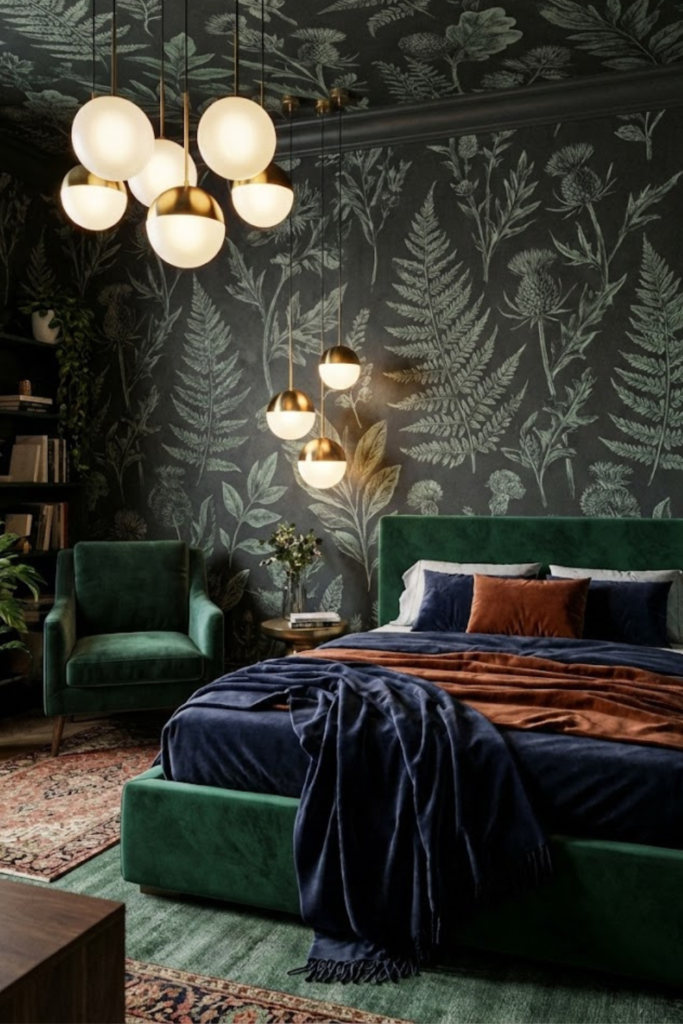
I’ve always liked rooms that feel like a big hug, and this “wallpaper box” trend is exactly that. You basically wrap the whole room, including the ceiling, in one single pattern or color. I know it sounds a bit scary to put wallpaper on a ceiling, but it really makes the space feel like a private cocoon. One of my neighbors did this for her son using a dark charcoal color, and honestly, it’s one of the coolest rooms I’ve ever stepped into. It feels very quiet and safe, which is great for kids who get overwhelmed easily.
If you’re going to try this, don’t pick a pattern that’s too busy or bright. I think those sketched botanical prints or simple tonal stripes work best. You want something that flows from the wall to the ceiling without a big break. For the colors, I’d stick with deep blues, dark greys, or even a moody purple. These dark shades make the walls feel like they are further away, which is a neat trick. Just make sure you have good lighting so it doesn’t get too gloomy. I suggest using a few different lamps instead of one big overhead light.
Round orb fixtures or those modern paper lanterns look really good with this style. They add a bit of soft light that bounces off the dark walls in a nice way. This setup is perfect for a teen who wants a space that feels grown-up and a bit dramatic. It’s also a great way to hide a ceiling that might have a few bumps or cracks in it! Just take your time with the wallpaper glue, because gravity is not your friend when you’re working on the ceiling. It’s definitely a two-person job, but the result is worth the extra effort.
I’ve noticed that kids who have these “immersive” rooms tend to spend more time reading or just relaxing away from their screens. There’s something about being surrounded by one color that just calms the brain down. If you’re worried about it being too dark, you can always use a lighter rug or some white bedding to balance things out. It’s all about finding that middle ground where the room feels cozy but still bright enough to see your homework.
4. Personal Maximalism and Curated Gallery Walls
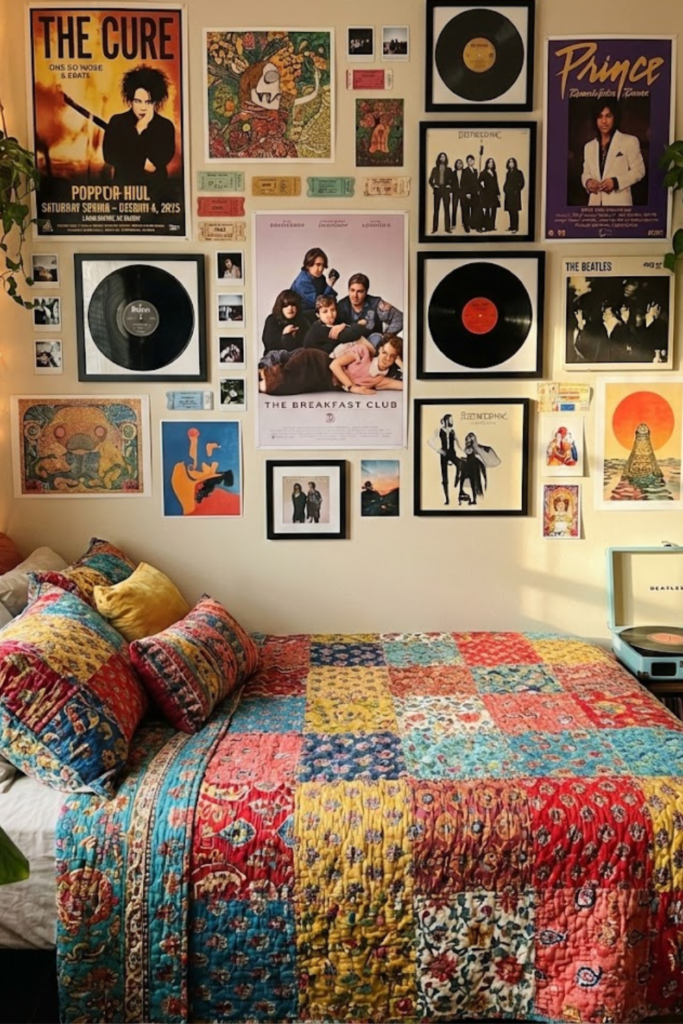
I remember when I was a kid, my parents hated when I taped things to the walls. They were always worried about the paint peeling off or the tape leaving greasy marks. But nowadays, teens have so much stuff they want to show off—posters, concert tickets, and photos with friends. This style is called “maximalism.” It’s basically the opposite of keeping everything empty and white. I tell my students that their room should look like their brain! If they love music, put the records on the wall. If they like art, hang up their own drawings.
One trick I found that really helps is using peel-and-stick murals or fabric memo boards. It gives them a huge space to pin things without making a hundred tiny holes in the drywall. I helped a student last month who had a massive collection of vintage hats. We didn’t hide them in a box; we hung them up on a wire grid. It turned a boring wall into a piece of art that people actually want to look at. You can also mix in some colorful cushions and patterned quilts on the bed. It doesn’t have to match perfectly. In fact, it often looks better when the colors just “vibe” together rather than being a perfect set.
If you are putting together a gallery wall, start with the biggest piece in the middle and work your way out. You don’t need to spend a lot of money on expensive frames either. Sometimes just using colorful washi tape to border the pictures looks even cooler and more modern. It makes the room feel full of life and stories. It is a great way for them to show who they are without saying a word. Just try to keep a little bit of space between the items so it doesn’t just look like a pile of paper on the wall!
I think this style is great because it can change as they grow. If they stop liking a certain band or a hobby, they can just swap the poster for something else in five minutes. It makes the room feel like it’s growing with them instead of being stuck in one look. Don’t be afraid of the “clutter”—if it has a home on the wall, it’s not a mess, it’s a curated collection. It really gives the room a soul.
5. Multifunctional Zoning for Sleep, Work, and Chill
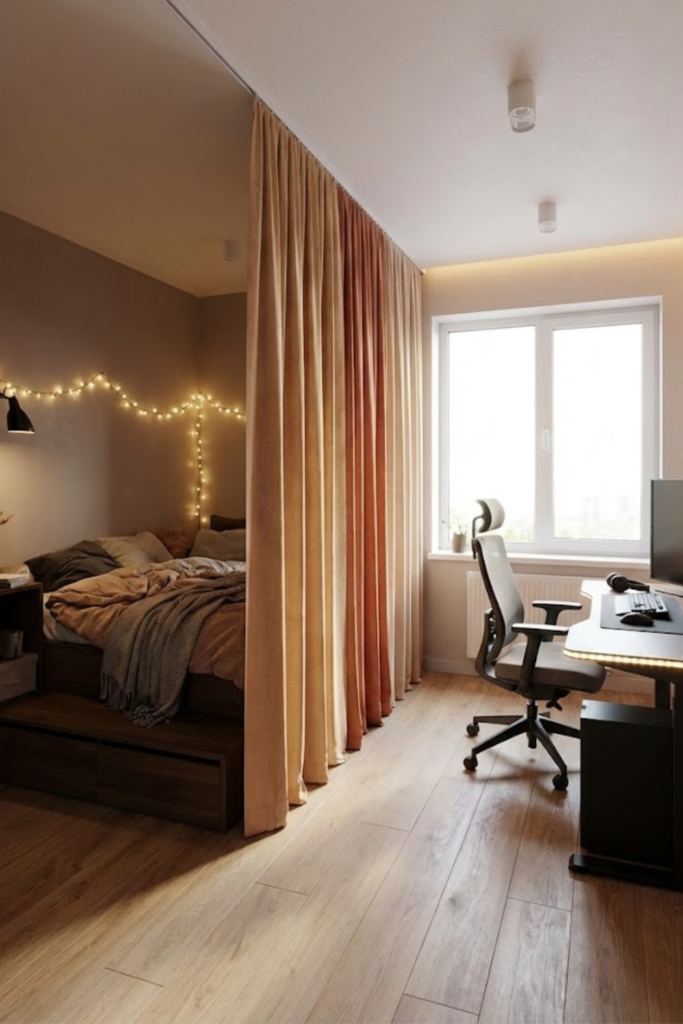
I’ve seen so many kids try to do their math homework while laying on their bed. It never works out well because they either fall asleep or end up with a messy pile of papers in their sheets. That is why I really like the idea of “zoning” a room. It’s like turning one bedroom into three tiny rooms—one for sleeping, one for schoolwork, and one for just hanging out with friends. Even in a small space, you can do this if you are smart about where you put the furniture.
One thing I did with a student’s room was use a big area rug to mark the “chill zone.” We put a small bean bag and a floor lamp there. It felt like a completely different spot from the desk area. I also think you should look into room dividers. You don’t need a heavy wall. Sometimes just a tall bookshelf or even some hanging beads can act as a border. This helps the brain know when it’s time to work and when it’s time to relax. If you can’t see your messy desk from your bed, you will probably sleep much better.
Another great trick is using a daybed instead of a regular bed frame. During the day, you can pile some big cushions against the wall and it looks like a sofa. This is perfect for when friends come over to watch a movie or play games. It makes the room feel less like a bedroom and more like a little studio apartment. It’s a great way to give teens some independence. They feel like they have their own place to host people without being in the living room with the rest of the family.
Just remember to keep the lighting different in each zone. Use a bright lamp for the desk so they can actually see what they are writing. Then, use softer, warmer lights near the bed. It’s a simple change, but it really makes the room work better for everything they do. If the space is really tiny, you can even use different colors of paint on the walls to show where one zone ends and the next one starts. It’s all about making the most of every square inch you have.
6. Earthy and Warm Terracotta Palettes
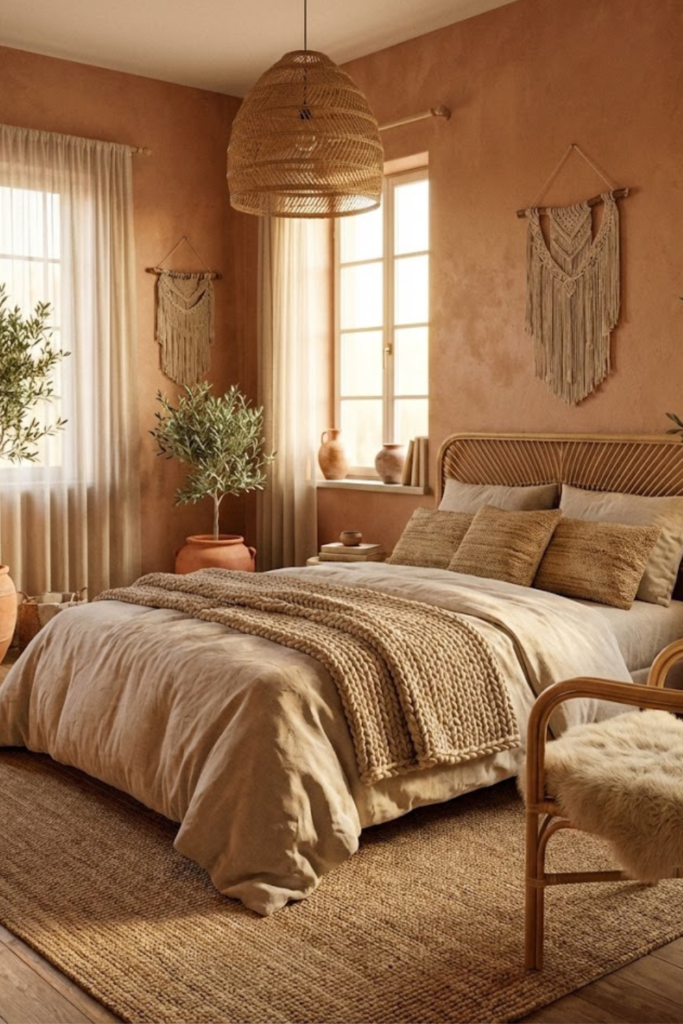
I’ve spent a lot of time in classrooms with bright white walls and fluorescent lights. It can feel pretty cold and sterile after a while. That is why I am so happy to see more teens choosing these warm, earthy colors like terracotta. It’s a very grounding color. I remember helping a student pick out paint for her bedroom last year. She wanted something that felt cozy but not too dark. We ended up choosing a shade called “Reddened Earth.” It was like the color of a clay pot or a desert sunset. It instantly made the whole room feel ten times more inviting.
If you are worried about the room looking too orange, you can mix it with sandy neutrals or a nice “Universal Khaki.” This keeps things balanced so the color isn’t overwhelming. I really think these earthy tones are better for a teen’s mood than those bright, neon colors we used to see everywhere. It feels more mature. To make the room look even better, try to add different textures. We used some woven rattan baskets for storage and a small iron bed frame. The mix of the warm paint and the natural materials makes the space feel very solid and real. It’s also a great way to make the space feel like a sanctuary.
One thing I’ve noticed is that kids who have these warmer rooms seem to feel a bit more relaxed when they are doing their homework. There is something about the color of the earth that just calms the brain down. You can even find some bedding in a soft cream or a sage green to go with the terracotta. It creates a very natural, organic look. I also suggest getting a few clay pots for their plants. It ties the whole theme together without spending much money. You don’t have to paint all four walls either. Even just one accent wall in a deep clay color can change the whole vibe of the room.
Don’t be afraid to try these richer colors. For a long time, people thought small rooms had to be white to look big, but that’s not really true. A warm color can make a room feel like a big hug. Just make sure you test the paint on a small patch first. Colors can look different depending on the light in your house. But once you find that perfect shade of clay or terracotta, I think you’ll see why it’s becoming so popular again. It is a great way to make a bedroom feel like a home instead of just a box.
7. Free-Standing Vintage and Retro Accents
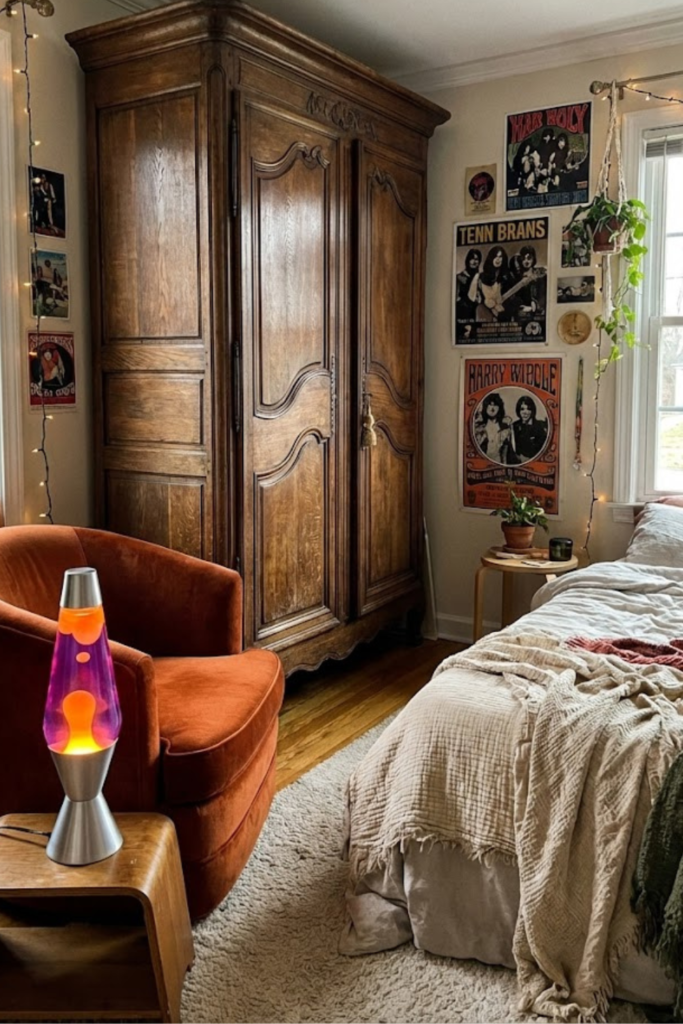
I’ve been seeing more kids getting tired of everything looking brand new and plastic. They want stuff with a bit of a story. I call this the “retro revival.” I found an old wooden armoire at a yard sale for twenty dollars last summer and helped a student paint it a bright teal. It became the coolest thing in his room. Instead of those built-in closets that look like every other house, these free-standing pieces have so much more personality. It makes the room feel like a space for a real person, not just a boring showroom.
You can find some great retro stuff if you look in the right places. I’m talking about lava lamps, record players, or those funky 90s-style posters. My own kids are obsessed with things that look like they came from the year I was born! You can also look for chairs that have a bit of a curve to them. Most modern furniture is just straight lines and boxes. A round velvet chair or a weirdly shaped lamp breaks that up and makes the room look way more interesting. It gives the space a bit of soul.
One of the best parts about having free-standing furniture is that you can move it around whenever you want. If your teen gets bored with their layout on a rainy Saturday, they can just scoot the dresser to a different wall. You can’t do that with built-ins! It gives them a way to change their environment without you having to buy anything new. We even found an old iron-work shelf that we used for shoes. It looks much better than those plastic bins you get at the big box stores and it stays sturdy for years.
Don’t worry if the pieces don’t match perfectly. That’s the whole point. You want it to look like it was collected over time. I think you should look for one “hero” piece, like a vintage desk or a cool old trunk at the foot of the bed for extra blankets. It gives the room a sense of history. It is also a great way to save money and keep old things out of the trash. Your teen will love having something that none of their friends have. Plus, it just feels a lot more high-end without the high-end price tag. Just check for any loose screws before you bring those old finds inside!
Conclusion
I really hope these ideas gave you a head start on your teen’s room project. I’ve found that the best part of redoing a bedroom isn’t just the new paint or the fancy desk—it’s the time you spend talking with your kid about what they actually like. It’s a great way to get to know them better during those years when they might not want to talk as much. Whether you decide to build a “cloffice” or just add a few plants to a windowsill, remember that the room will probably change again in a few years, and that is totally okay!
If you found this helpful, I’d love for you to share it with other parents who are staring at a messy bedroom and wondering where to start. Pin your favorite idea to Pinterest so you can find it later when you’re at the hardware store! I’m always looking for new ways to make homes feel more personal, so let me know how your project turns out. Happy decorating!