Stop bumping your shins on the coffee table! I know the struggle of living in a shoebox apartment all too well. It can feel like the walls are slowly closing in on you, right? But here is a little secret: limited square footage doesn’t mean limited style. In fact, some of the most stunning homes I’ve seen are under 500 square feet! A recent design survey noted that clever layout changes can make a room feel 30% larger. Ready to transform your cozy nook? Let’s dive into 7 small room ideas that will change the way you see your space forever.
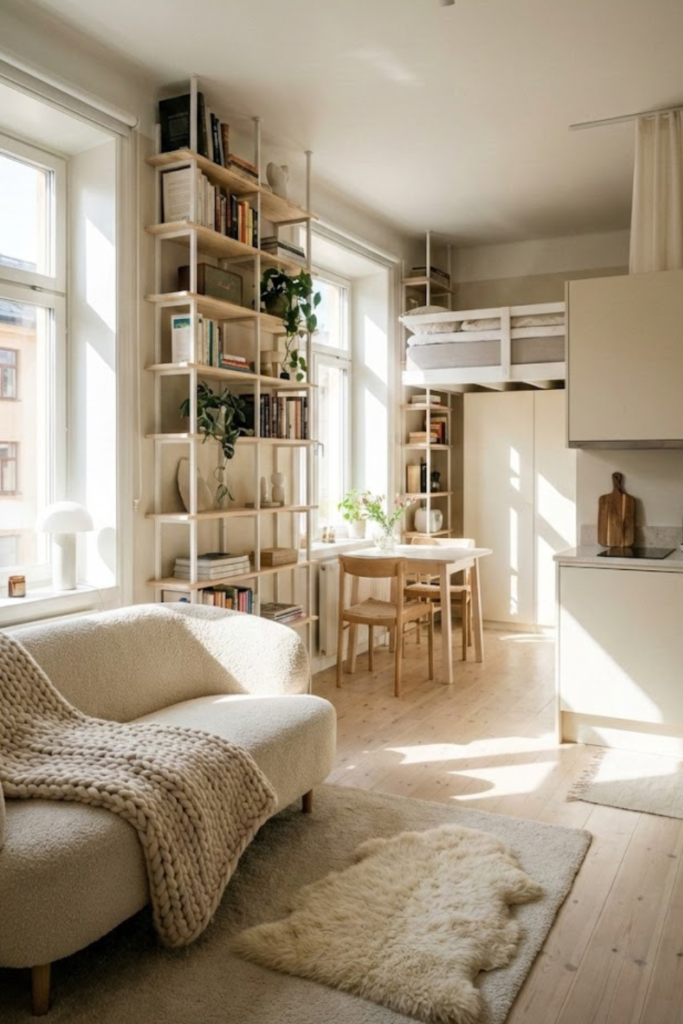
1.Scale the Walls with Floor-to-Ceiling Shelving
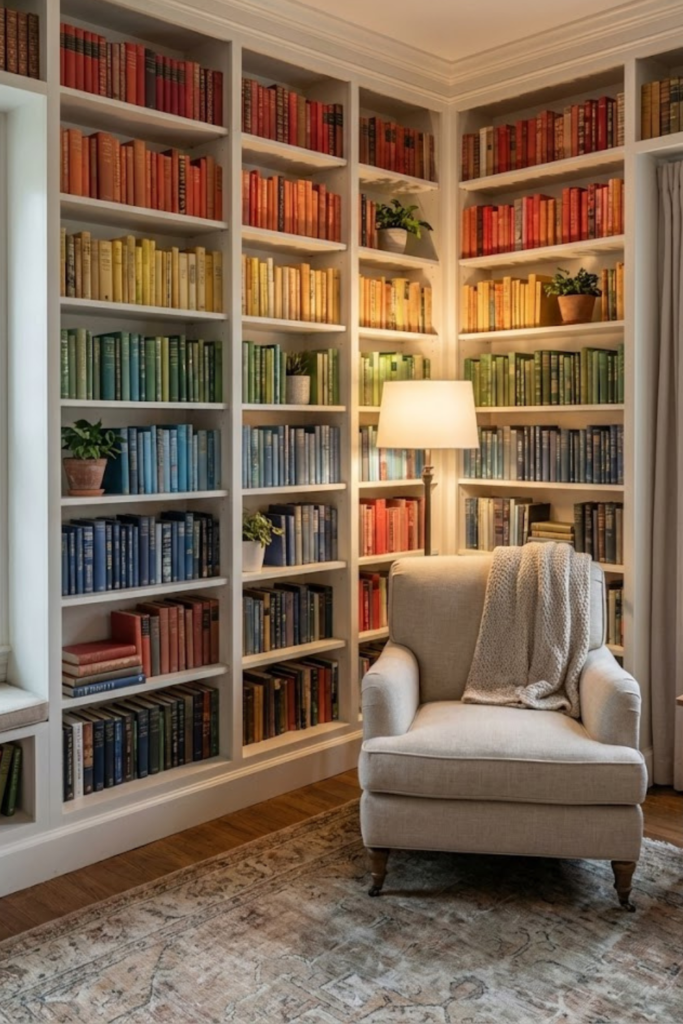
I used to think my apartment was just too small for all my stuff. Seriously, I spent years stepping over piles of books and shoving winter coats into an already exploding closet. It wasn’t until I visited a friend’s tiny studio in the city that it hit me. I looked around and realized her place felt huge compared to mine, even though the square footage was actually less. The secret? She was using the walls. Like, really using them.
It was a total “aha” moment for me. I had been ignoring all that prime real estate right above my head! So, I went home and decided to tackle my own vertical storage issues.
Don’t Let Dead Space Go to Waste
Most of us stop decorating or organizing at eye level. It’s a huge mistake. The space between the top of your door frame and the ceiling is usually just gathering dust, but it’s actually a goldmine for small apartment living room ideas. I started by installing a shelf right above the doorway in my bedroom.
It was a bit of a pain to put up, honestly. I dropped the screwdriver on my toe twice. But once it was up, I had the perfect spot for those seasonal items I only need once a year. Now, my snowboard boots live up there instead of tripping me in the hallway. By drawing the eye upward with high shelving, you trick your brain into thinking the ceiling is higher than it is. It’s one of those visual tricks to make room bigger that actually works.
My DIY Nightmare and Redemption
Okay, let’s talk about getting this look without spending a fortune. I tried to build my own custom built-ins from scratch once. Bad idea. Wood is expensive, and my carpentry skills are… let’s just say, lacking. The shelves ended up slanted, and I’m pretty sure they were a safety hazard.+1
Save yourself the headache and go for a “faux built-in” look. I grabbed a couple of basic tall bookcases—you know the cheap ones from the big blue and yellow store—and anchored them side-by-side. To make them look custom, I added some simple trim molding to cover the gaps where the cases met. A coat of paint that matched my walls made them blend in perfectly. It looks like I paid a contractor thousands, but it cost me maybe $200 bucks.
Styling: The Rule of Three
Now, shoving everything you own onto shelves will just look messy. I learned this the hard way when my living room started looking like a chaotic used bookstore. You gotta curate. I use the “rule of three” for vertical storage solutions. Group items in odd numbers; it’s just more pleasing to the eye for some reason.
Also, leave some breathing room! I used to jam books cover-to-cover, but now I mix in plants and picture frames. It breaks up the heaviness. If you have ugly stuff to hide, like cables or paperwork, use matching baskets on the lower shelves. It keeps the visual clutter down while still giving you tons of storage. Trust me, getting your stuff off the floor change the whole vibe of your home. It feels airier, cleaner, and way more “you.”
2.Invest in Double-Duty Multi-Functional Furniture
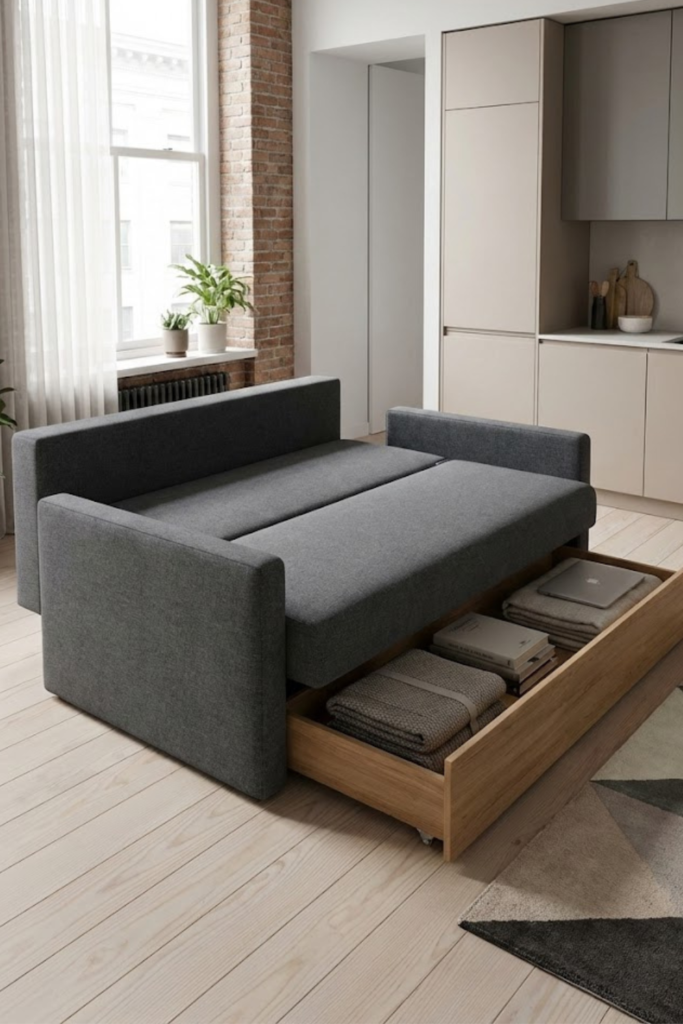
When you live in a small house, you can’t have lazy furniture. Seriously, if a chair is just a chair, it’s fired. I learned this pretty quick when I moved into my current place. It was tiny, and I had absolutely nowhere to put my extra winter blankets or the stack of magazines I swore I was going to read. The place looked messy just because I didn’t have anywhere to hide stuff. That is when I started looking into multi functional furniture for small spaces.
The Magic of Storage Ottomans
The first thing I bought was a game changer. It was a simple storage ottoman. It sounds fancy, but it is basically a comfy footrest that opens up like a treasure chest. I found a gray one on sale, and it swallowed up all those blankets that were cluttering my sofa.
Now, it sits in the middle of the room. I put a tray on it to hold my coffee, I put my feet on it when I’m watching TV, and when friends come over, it’s an extra seat. It’s one piece of furniture doing three jobs. If you are looking for hidden storage ideas, this is the easiest place to start.
Beds That Disappear
We also need to talk about where you sleep. In a studio, your bed takes up like 80% of the room. It’s annoying. I used to think Murphy bed designs were just for those old comedy movies where the guy gets stuck in the wall. But honestly? They are amazing now.
I saw a setup recently where the bed folds up and turns into a desk during the day. It was brilliant. If you can’t install a Murphy bed, you should look at modern sofa beds for small spaces. I’m not talking about those old ones with the metal bar that digs into your back. The new ones are actually comfortable. It lets you have a bedroom at night and a living room during the day.
Dining Tables That Don’t Dominate
I love having people over for dinner, but I didn’t want a giant table taking up my whole walking path. My solution was a drop-leaf table. Most of the week, I keep the sides folded down. It looks like a skinny console table pushed against the wall, and I just throw my keys and mail on it.
But when it is pizza night? I pop up the sides, and boom—drop leaf dining tables transform into a dining spot for four people. It saves so much floor space. Another trick is using nesting tables instead of one big coffee table. You can spread them out when you need them and stack them away when you need room to do yoga (or just room to walk). Make your furniture work for its rent!
3.Use Mirrors to Double Your Visual Square Footage

I remember my first apartment had this tiny hallway that felt like a cave. It was dark, narrow, and honestly a little depressing. I didn’t can’t knock down walls because I was renting, so I had to get creative. That’s when I discovered the oldest trick in the book: mirrors.
It sounds almost too simple to work, but it really does. I hung a medium-sized mirror at the end of that hall, and suddenly, the space looked twice as long. It was like magic. If you are struggling with a cramped room, this is one of the best visual tricks to make room bigger.
Location is Everything
You can’t just slap a mirror anywhere and expect miracles. You have to think about what it is reflecting. I used to have a mirror facing a messy bookshelf, and guess what? It just made the room look twice as messy.
The best spot for mirror placement for small rooms is directly across from a window. I tried this in my living room. The mirror catches the natural light coming in and bounces it back into the shadowy corners. It’s like adding a second window for free. The whole room felt brighter instantly, and I didn’t even have to turn on a lamp.
Go Big or Go Home
For a long time, I was scared to buy big decor pieces for my small house. I thought they would overwhelm the space. I was wrong. A tiny mirror on a big wall just looks sad and makes the wall feel huge and empty.
I finally saved up for one of those oversized leaning mirrors. I didn’t even hang it up; I just leaned it against the wall. It draws the eye up and creates a sense of depth that wasn’t there before. Plus, since I didn’t have to drill holes, my landlord was happy.
Furniture That Disappears
If you don’t have wall space, you can try mirrored furniture. I swapped out my heavy wooden nightstand for a mirrored one. Because it reflects the floor and the rug, it kind of disappears visually. It doesn’t look “heavy” like the old one did.
You can also make a gallery wall. Instead of just pictures, I mixed in a few small, interesting mirrors. It breaks up the art and adds a little sparkle to the wall. It’s a fun way to trick the eye and add some personality without making the room feel closed in.
4.Master the Art of Lighting Zones

I used to rely on that one single light fixture in the center of my ceiling. You know the one—it usually looks like a glass bowl stuck to the roof. My students would probably call it “basic,” and they would be right. When I turned it on, it blasted the middle of the room with harsh light and left all the corners in dark shadows. It actually made my small room feel even smaller, like a spotlight on a stage.
Lighting is one of those things we forget about, but fixing it is cheaper than buying new furniture. If you want lighting for small rooms that actually works, you have to stop using just “the big light.”
Layer Your Light
Think of lighting like dressing for winter layers. You wouldn’t just wear one giant coat; you wear a shirt, a sweater, and maybe a scarf. It’s the same for your house. You need three types: ambient (the main light), task (for reading or working), and accent (just to look pretty).
I added a couple of table lamps and suddenly the room felt cozy instead of cold. By lighting up the corners, you push the visual boundaries of the room out. The space feels wider because you can actually see the edges clearly.
Save Space with Wall Sconces
Here is my favorite trick: wall sconces. But wait, I know what you are thinking. “I can’t hire an electrician to tear up my walls!” Neither can I. I rent, and my landlord would have a fit.
I found plug-in wall sconces online. You just screw them into the wall and plug the cord into an outlet. It took me ten minutes to put them up on either side of my bed. This was huge because it meant I didn’t need bulky lamps on my nightstands. Now I have clear space for my book and my glasses. It is a perfect hack for maximize small bedroom space without spending a ton of money.
The Slim Floor Lamp Trick
In my living room, I didn’t have room for end tables. So, I bought a really skinny floor lamp and tucked it right behind the sofa. You can barely see the base, but the light arches over my shoulder perfectly when I’m grading papers.
If you pick light vs dark colors for small rooms, remember that dark walls soak up light. You will need more lamps if you love dark paint. But with the right mix of floor lamps and sconces, even a tiny, dark room can feel like a warm, inviting den.
5.Embrace the “Floating” Furniture Trend

I used to have this massive oak desk I picked up at a yard sale. I thought it made my home office look “professional.” But honestly? It was a beast. It had drawers that went all the way to the floor, and it looked like a giant block of cement sitting in my tiny corner. It ate up all the air in the room.
Then I learned about “visual weight.” It’s a fancy way of saying that if your furniture looks heavy, your room feels smaller. I decided to try something different, and it completely changed the feel of my apartment.
Let the Floor Show
The trick is pretty simple: you need to see the floor. If you can see the rug or the hardwood continuing under a piece of furniture, your brain thinks the room is bigger than it actually is.
So, I got rid of the blocky desk. I swapped my sofa for a new one with tall, wooden legs. Just seeing those six inches of open space underneath made the living room feel less stuffy. Avoid skirts on sofas or chairs that go all the way down. You want leggy furniture designs that look like they are tiptoeing, not squatting.
The Magic of Wall-Mounted Desks
Since I still needed a place to grade papers, I installed a floating desk. It is basically just a sturdy shelf attached directly to the wall studs. It has no legs at all!
It was a little scary to put up (I was worried it would fall on my knees), but it’s been solid for years. Because there are no legs getting in the way, I can stretch out, and the floor space looks uninterrupted. It is one of the best wall mounted desks solutions if you are tight on space. You can even do this for your TV stand. A floating media console looks sleek and hides all those ugly cords.
Furniture That Is Barely There
I took it a step further with my chair. I bought what they call a “ghost chair.” It is made of clear acrylic. Because it is see-through, it takes up zero visual space.
My friends laughed at it first, asking if it was Wonder Woman’s invisible chair. But it works! It’s sturdy enough for me to sit on for hours, but when you look at the room, your eye goes right through it. Using acrylic furniture or glass tables is a smart move because they don’t block your view of the rest of the room.
6.Zone Your Space with Rugs

I used to think that if I had a small room, I should buy a small rug. It makes sense, right? Small room, small rug. So, I bought this little 5×7 rug for my living room because it was on sale. I put it down, and honestly, it looked like a postage stamp floating in the middle of the ocean. It made the room feel choppy and disjointed, like the furniture was just floating away.
I learned the hard way that this is actually the opposite of what you should do. A tiny rug shrinks the space visually. It breaks up the floor too much.
The Size Rule: Bigger is Better
It sounds crazy, but you need a big rug in a small room. I swapped that postage stamp for a large 8×10 that went almost to the walls. Suddenly, the room felt huge.
The rule I follow now is simple: the rug should be big enough that at least the front legs of your sofa and chairs sit on it. This ties all your furniture together into one group. It tricks your eye into thinking the whole area is one big, connected space. When you are looking for rugs for small living rooms, don’t be afraid to go big. It unifies everything.
Creating “Rooms” Without Walls
When I lived in a studio, my bedroom was also my living room and my kitchen. It was a lot. I felt like I was sleeping in my kitchen. The best way to fix this without building walls is to use rugs to define the space.
I put a soft, fluffy rug under my bed to say, “This is the sleeping zone.” Then, I put a durable, flat rug under my little dining table. Even though there were no walls, my brain just kinda understood that they were separate areas. It’s a super easy way of defining areas in an open plan.
Texture and Color Strategy
You gotta be practical, though. I once put a shag rug under my dining table. Big mistake. Trying to get crumbs out of that thing was a nightmare. For eating areas or places where you move chairs around, stick to flat-weave rugs. The chairs slide easier, and you won’t trip over the edges.
Also, think about color. Dark floors are cool, but they can eat up the light. I threw down a light cream rug, and it brightened up the whole apartment. It acts like a reflector for your lamps. If you want to brighten dark rooms, a light-colored rug covers up the dark floor and instantly lifts the mood.
7.Curate with Ruthless De-cluttering

I admit it, I used to be a bit of a pack rat. I had drawers full of stuff I “might need someday” and shelves packed with knick-knacks that just collected dust. “But Aunt Brenda gave me that figurine!” I would say. The truth is, in a small room, you don’t have the luxury of keeping everything. Clutter makes a small space feel claustrophobic, like the walls are closing in.
I finally had to get real with myself. I spent a whole weekend going through my stuff. If I hadn’t used it or looked at it with love in the last year, it had to go.
Edit Your Belongings
It is hard to let go, but you have to prioritize quality over quantity. Instead of ten cheap vases from the dollar store, I kept one really nice one that I actually loved. When you have less stuff, the things you do keep really shine.
This is a huge part of decluttering small spaces. It’s not just about throwing things away; it’s about making space for the things that matter. My room felt instantly lighter, and honestly, so did I. It is easier to breathe when you aren’t surrounded by piles of junk.
Hide the Ugly Stuff
Nothing ruins a peaceful room faster than a tangle of black wires. It looks chaotic. I used to have a rat’s nest of cables behind my TV, and it made the whole corner look messy.
I bought a simple cable management box (it’s just a white plastic box with holes in it) and stuffed a power strip inside. I also used zip ties to bundle cords together behind the legs of my desk. It took maybe twenty minutes, but it made the room look polished. Hidden cord management is a small detail that makes a huge difference.
Let the Eye Rest
I used to think every blank wall needed a picture and every surface needed a decoration. But in a small room, empty space is your friend. Designers call it “negative space.”
I cleared off the top of my dresser and left it completely empty except for a small tray for my jewelry. It looks so clean and calm now. You don’t need to fill every inch. Also, try seasonal rotation. I don’t keep all my throw pillows out all year. I keep the velvet ones for winter and swap them for linen ones in summer. It keeps the decor fresh without adding clutter.
Conclusion
Living small doesn’t mean you have to give up on having a beautiful home. It just means you have to be a little smarter about it. I used to hate my tiny apartment, but now I see it as a cozy little nest. By using these tricks—like building up the walls with vertical storage solutions, fixing your lighting for small rooms, and choosing furniture that does double duty—you can turn any cramped corner into a place you actually want to hang out in.
Remember, it’s not about how much space you have, but how you use it! Which of these 7 small room ideas are you going to try first? If you found this helpful, please pin this article to your “Home Decor” board on Pinterest so you can save these tips for later!