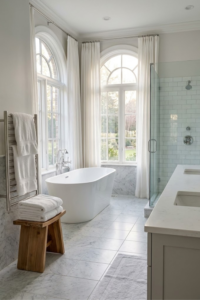
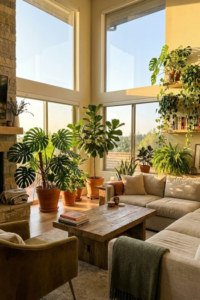
I love that quote, but let’s be honest—sometimes that story feels a bit stuck on a blank page. I’ve stood in my own living room staring at boring walls, feeling totally paralyzed by the endless options online. If you are feeling that same design rut, you aren’t alone!
In this article, I’m sharing 7 room ideas that are defining interior design trends in 2026. From bold biophilic accents to cozy, moody lighting, these are practical tips to help you refresh your home without the headache. Let’s get inspired!
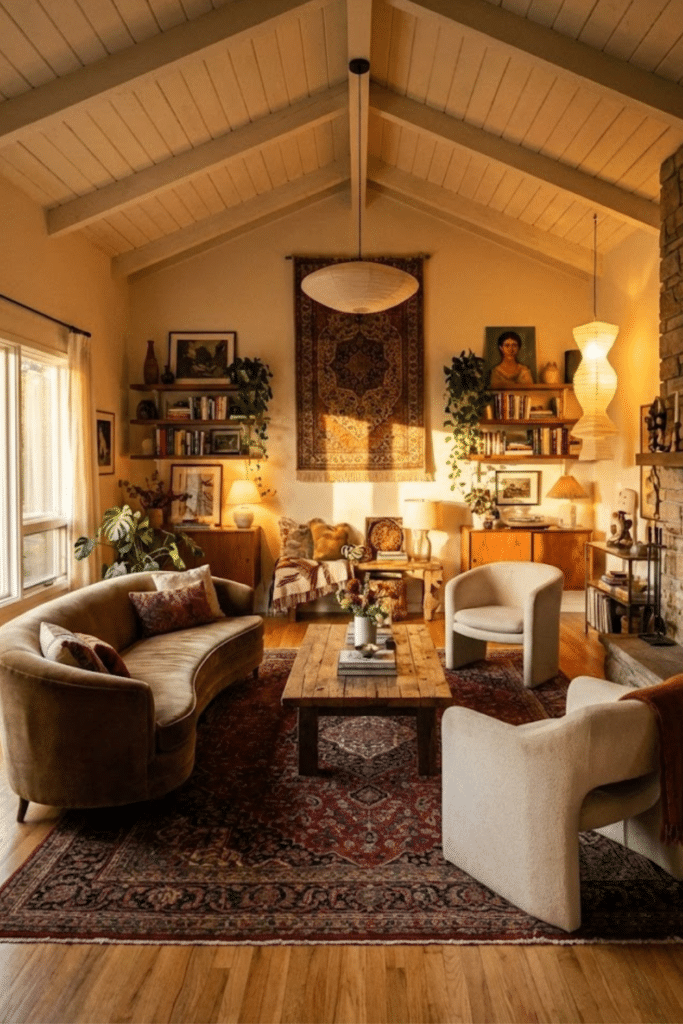
1. Embrace Biophilic Design: Bring the Outdoors In
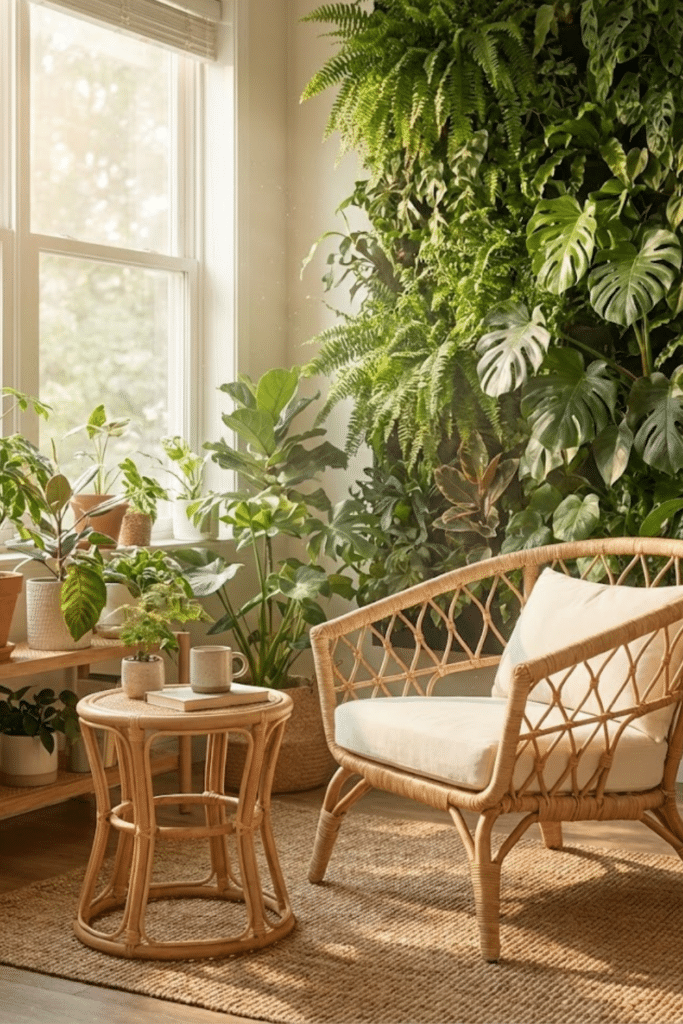
I have a confession to make. A few years ago, I bought this gorgeous, expensive Fiddle Leaf Fig. I named him “Figgy,” placed him in a dark corner of my living room because he looked “cute” there, and proceeded to watch him drop every single leaf within a month. I was crushed.
For a long time, I thought I just had a black thumb. But here is the thing I learned the hard way: Biophilic design isn’t just about dragging a bunch of greenery inside and hoping for the best. It’s actually about creating a connection between your home and nature that actually makes sense for your lifestyle.
And trust me, if I can turn my “plant graveyard” of a living room into a green sanctuary, you can too.
It’s Not Just About Plants (But They Help)
When I first heard the term “biophilic design,” I thought it was just fancy designer talk for “buy more plants.” And while indoor plant styling is a huge part of it, it goes deeper. It’s about how the room feels.
We spend so much time looking at screens (guilty!) that our brains crave organic textures.
I started small. I swapped out my cold, metal coffee table for a raw wood one. The difference was instant. The warmth of natural wood textures softens a room in a way that paint just can’t. If you are on a budget, even adding a jute rug or some rattan baskets can bring that earthy vibe without breaking the bank.
Stop Killing Your Greenery
Okay, back to the plants. The biggest mistake I see people make (and the one I made with poor Figgy) is ignoring light. You have to be realistic about your lighting conditions.
If you have a room that feels like a cave, don’t buy a plant that needs 8 hours of direct sun. It won’t work.
- For low light: Get a Snake Plant or a ZZ Plant. I literally forget to water mine for weeks, and they still look amazing. They are basically unkillable.
- For bright spots: A Monstera or that Fiddle Leaf Fig (if you are brave) will love it.
Also, vertical gardens are a total game-changer for small spaces. I didn’t have floor space in my home office, so I installed simple wall shelves and let trailing Pothos vines hang down. It looks like a jungle waterfall, and it clears the air. Literally. The air quality improvement is a nice bonus.
The “Ahhh” Factor
The goal here is to create a space where your shoulders drop the minute you walk in. That’s the psychological power of nature.
I remember coming home after a really stressful week at work. I sat in my lounge chair, surrounded by my mix of nature-inspired decor—the wood accents, the green leaves, the natural light filtering through sheer curtains—and I just felt… calm.
It wasn’t perfect. There was a pile of laundry on the chair next to me. But the room itself felt grounded.
So, start simple. Go to a local nursery, not a big box store if you can help it, and ask them for advice. Pick one corner. Add a plant, maybe a wooden frame, or open the blinds. Let the sunshine do the heavy lifting. Your home (and your mood) will thank you.
2. The Multifunctional Home Office Nook
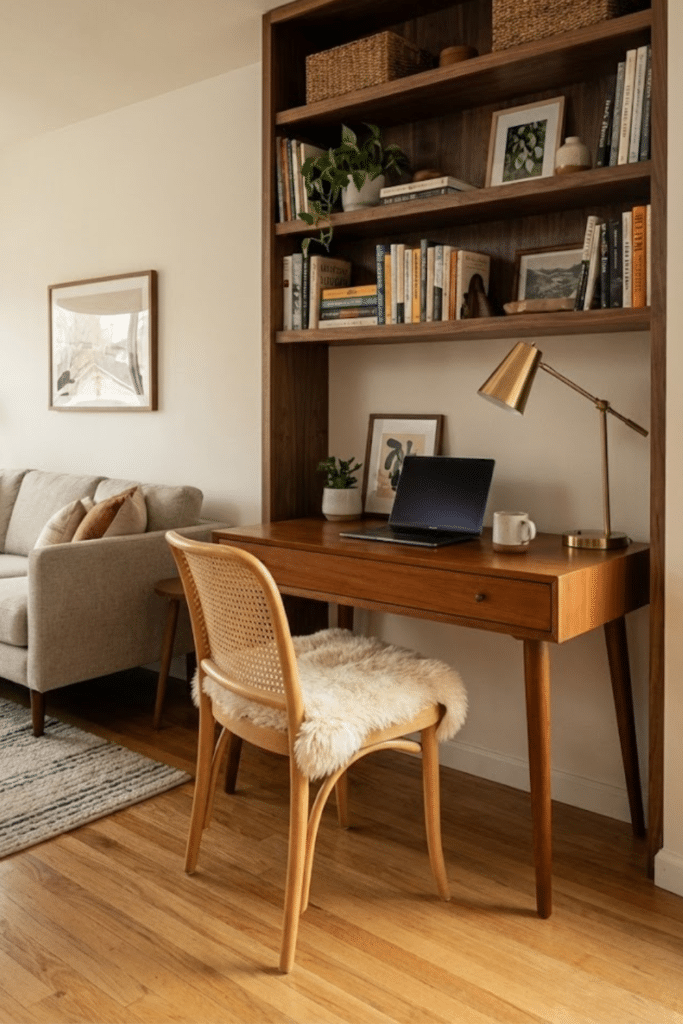
Let me tell you about the year I tried to work from my dining room table. It was a disaster.
I convinced myself that I didn’t need a “real” desk because I had a laptop. “I can work anywhere!” I told my friends. Fast forward three months, and my dining table was buried under a mountain of sticky notes, charging cables, and coffee mugs. Every time I sat down to eat dinner, I was staring at my to-do list. It was impossible to switch off. My work life was bleeding into my home life, and honestly, my back was killing me.
If remote work has taught us anything by 2026, it’s that we need boundaries. But what do you do when you don’t have an extra room to spare?
You create a multifunctional home office nook. And no, you don’t need a massive budget or a contractor to do it.
Stop Working From the Couch
The biggest lesson I learned is that separation is mental as much as it is physical. When I finally decided to carve out a specific spot for work, everything changed.
I found this awkward, empty corner in my living room—maybe 4 feet wide—and decided that was going to be my “office.”
I bought a simple, wall-mounted floating desk. This is a huge small space solution because it keeps the floor clear, making the room look bigger. When I’m done for the day, I can tuck my chair in, and the visual clutter is gone. If you are really tight on space, look for a “secretary desk” or a fold-away desk. Being able to physically close your workspace when you clock out is weirdly satisfying.
Zoning Without Walls
You might be thinking, “But it’s still in my living room.” I get it. That’s where zoning comes in.
I used a small, round rug to define the area. It sounds silly, but putting a rug under your desk chair visually separates that square footage from the rest of the room. It signals to your brain: This is where work happens.
Another trick I used was lighting. I stopped relying on the overhead living room lights, which are terrible for video calls anyway. I added a focused task lamp with a warmer bulb. Now, when I turn that lamp off at 5 PM, the workday is officially over.
Hide the Ugly Stuff
Let’s be real—tech is ugly. Cords are ugly. Printers are the worst.
In a multifunctional space, you can’t have wires going everywhere. It ruins the vibe of the room. I spent a Saturday afternoon zip-tying cables behind the desk legs and buying a decorative basket to hide my surge protector. It’s a small detail, but it makes the space feel like part of the home decor, not a messy cubicle.
If you are squeezing a workspace into a guest room or a bedroom, consider a room divider or a bookshelf. I used an open-shelf bookcase filled with books and plants (remember those biophilic design tips?) to create a barrier. It blocks my view of the bed while I’m working, so I’m not tempted to take a nap at 2 PM.
Creating a home office design that works with your life, not against it, is the goal. You don’t need a corner office with a view; you just need a corner that works for you.
3. Moody Color Drenching for Cozy Vibes
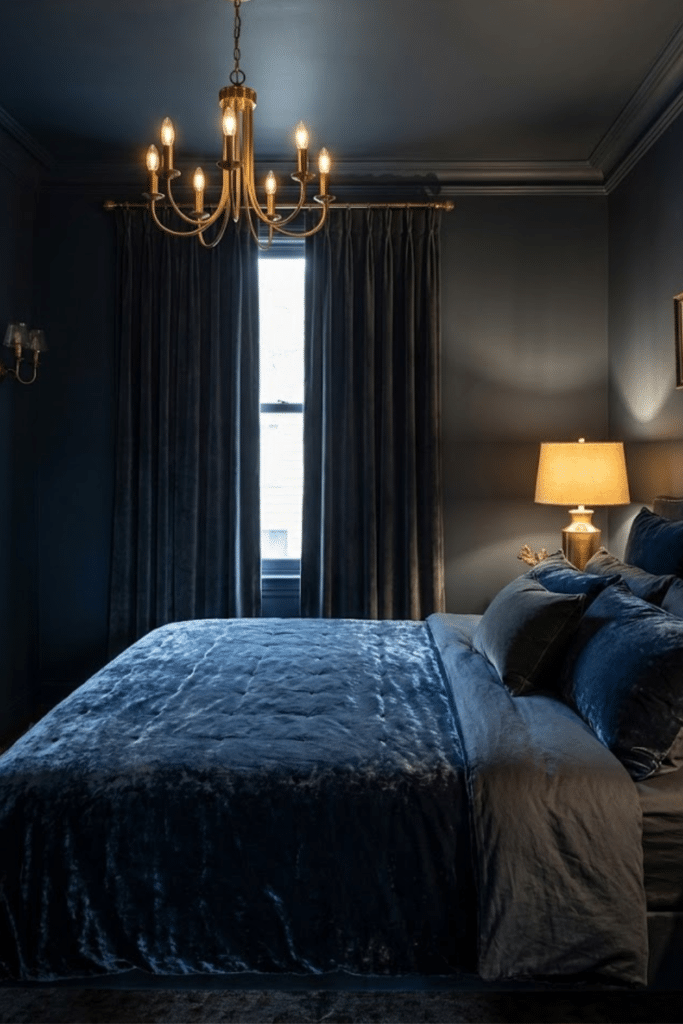
I used to be absolutely terrified of dark paint.
I bought into that old myth that says, “Light colors make a room look big, and dark colors make it look like a cave.” So, naturally, I painted my entire first house a stark, bright white. And you know what? It didn’t look airy or expensive. It felt like I was living inside a hospital waiting room. It was cold, sterile, and totally uninviting.
Then I discovered the concept of color drenching.
If you haven’t heard of this yet, get ready, because it is everywhere in the interior design trends 2026 forecast. It sounds fancy, but it’s actually super simple. It just means painting everything—the walls, the baseboards, the window trim, the doors, and yes, even the ceiling—the exact same color.
Why My Mom Thought I Was Crazy
I decided to try this in my small guest bedroom. I picked a deep, dramatic shade of forest green.
When I opened the paint can, my mom looked at me like I had lost my mind. “You’re going to paint the ceiling green?” she asked. I almost chickened out. But I grabbed the roller and went for it.
The result was magic.
Instead of shrinking the room, the single color actually blurred the lines of the space. Because there were no white breaks at the ceiling line or baseboards, your eye didn’t know where the wall ended and the ceiling began. It made the room feel infinite, rather than small. It felt like a warm hug.
How to Get the Finish Right
Here is the one technical thing you need to know so you don’t mess this up. While the color is the same, the sheen should be different.
If you use high-gloss paint on your walls, every single bump and nail pop will show up. It looks messy.
- For Walls and Ceiling: Use a flat or matte finish. This absorbs light and hides imperfections, giving you that velvety, high-end look.
- For Trim and Doors: Use a satin or semi-gloss finish in the exact same color code.
This subtle contrast adds texture without breaking the visual flow. It’s a small detail, but it makes the difference between a professional-looking job and a DIY disaster.
Start Small if You’re Scared
You don’t have to paint your main living room black tomorrow. That’s a big leap.
I always tell people to test this out in a powder room, a hallway, or a bedroom. These are spaces where you want to feel enclosed and cozy anyway. Moody bedroom ideas are perfect for this technique because darker colors, like deep navy or warm terracotta, naturally signal to your brain that it’s time to wind down and sleep.
So, put down the “Builder Beige” swatch. Be brave with your brush! The “white box” era is over, and I promise, once you go moody, you won’t want to go back.
4. Statement Ceilings: The Fifth Wall
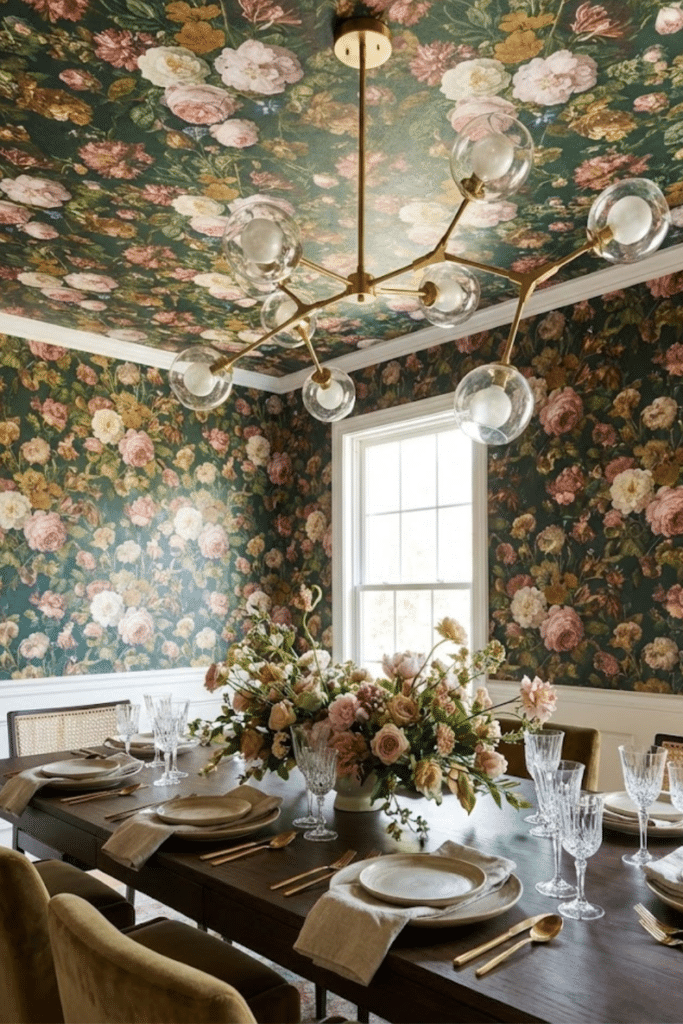
I want you to do something for me right now. Look up.
What do you see? If you are like 99% of people, you are probably staring at a plain, flat, white surface. For years, I treated my ceilings like they were invisible. I spent weeks agonizing over rug patterns and throw pillow textures, but I just slapped a coat of standard “Ceiling White” overhead and called it a day.
It wasn’t until I visited a boutique hotel in 2024 that I realized what I was missing. The room was tiny, but the ceiling was covered in this incredible, moody floral wallpaper. It didn’t feel cramped; it felt like a jewelry box.
That was my lightbulb moment: The ceiling is the “fifth wall,” and ignoring it is a huge wasted opportunity in interior design trends 2026.
The White Paint Default
We are programmed to think ceilings have to be white to reflect light. That’s just not true anymore.
I decided to start small in my dining room. The walls were a soft beige, and the room felt a little… safe. Boring, honestly. I grabbed a gallon of charcoal grey paint—leftover from another project—and painted just the ceiling.
The change was instant. The darker color visually lowered the ceiling just a smidge, making the dinner table feel intimate and grounded. It added this layer of drama that no amount of expensive art on the walls could have achieved. If you have high ceilings that make a room feel cold or echoey, this is the cheapest home renovation idea you can try.
Wallpaper: A Pain in the Neck (Literally)
Okay, I have to be real with you about wallpapering a ceiling. It looks stunning, but the process? It’s a workout.
I tried to wallpaper my powder room ceiling by myself. Big mistake. I spent three hours with my neck craned back, glue dripping into my hair, trying to match a geometric pattern while standing on a toilet. I cried twice.
But every time a guest walks into that bathroom now, they gasp. “Wow, look at that ceiling!” It’s the ultimate conversation starter.
If you are going to try wallpaper ideas on the ceiling:
- Get a buddy: Do not do this alone. You need one person to hold the paper and one to smooth it.
- Pick a non-directional print: If you are a beginner, don’t choose stripes. Trying to keep straight lines straight on a ceiling will make you lose your mind. Go for an abstract or floral print where mistakes aren’t obvious.
Fake It ‘Til You Make It
If paint or paper feels too risky, think about texture.
I’ve always loved the modern farmhouse decor look with those rustic wooden beams, but my house is a standard 90s build. I don’t have historic timber hiding behind my drywall. So, I bought faux wood beams made of high-density foam.
They weigh practically nothing, you just glue and screw them up, and from the ground, they look like solid oak. It instantly added those architectural details that make a house feel custom.
So, stop ignoring that big blank space above your head. Whether it’s a bold color or some faux timber, giving your ceiling some love is the quickest way to make your home look designed, not just decorated.
5. Sustainable Vintage Mixing
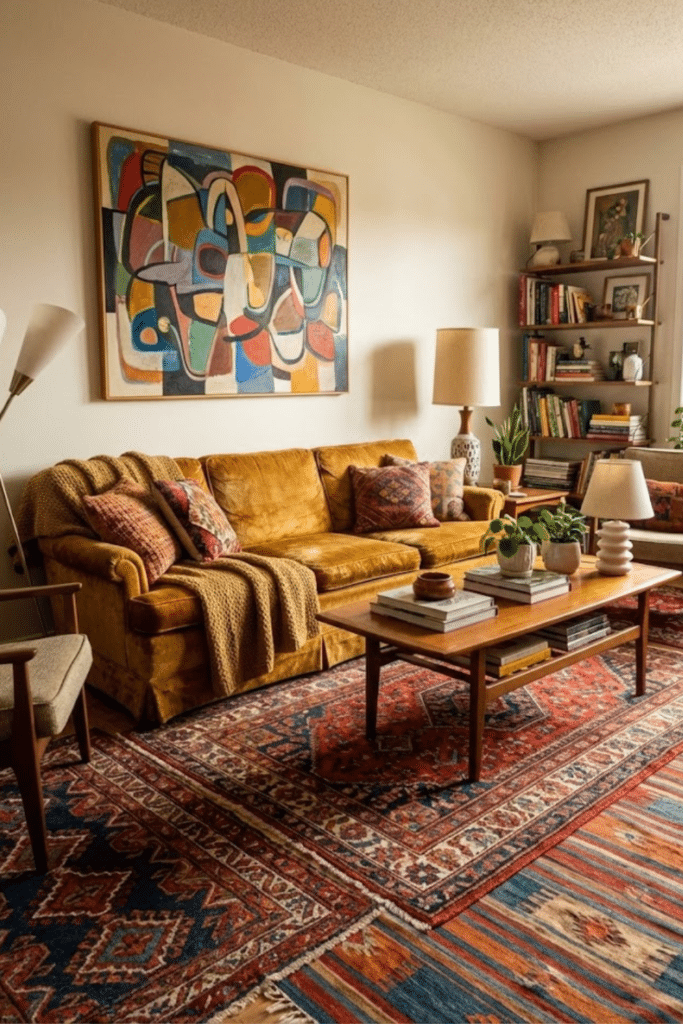
I went through a phase a few years ago where I wanted my house to look exactly like a page out of a catalog.
I went to one of those big box stores and bought the matching set: the bed frame, the nightstands, and the dresser. I dragged it all home, set it up, and stepped back. It looked… fine. But it also looked exactly like my neighbor’s house. And my dentist’s waiting room. It had zero personality. It felt flat.
Plus, six months later, the drawer front fell off that particleboard dresser. I was so frustrated.
That was the moment I swore off “fast furniture” and started diving into sustainable home decor. But I was scared. I didn’t want my house to look like a messy garage sale or smell like a dusty attic.
The 80/20 Rule
Here is the secret sauce I learned after a lot of trial and error: You have to mix it up. The style is often called “Eclectic Grandpa” or Grandmillennial, but I just call it balance.
My rule is 80% new (or modern) and 20% vintage.
If you fill a room with only old stuff, it looks like a museum. If you fill it with only new stuff, it looks like a showroom. The magic happens in the middle.
For example, in my living room, I have a sleek, modern grey sofa (the 80%). But right next to it, I placed a chunky, solid wood side table I found at an estate sale for twenty bucks (the 20%). The contrast is what makes it work. The scratches on the wood tell a story that the brand-new sofa just can’t.
Don’t Be Afraid of a Little DIY
You don’t have to be a carpenter to pull this off.
I found this gorgeous dining chair at a thrift store, but the fabric was a horrific shade of mustard yellow with a stain on it. Gross. But the bones were solid oak.
I watched a five-minute YouTube video, bought a staple gun, and recovered the seat with a modern, geometric fabric. It took me an afternoon. Now, it looks like a high-end piece of upcycled furniture that would cost hundreds online.
Where to Look (and What to Avoid)
Finding good thrift store finds is a skill you build.
- Facebook Marketplace: This is my go-to for heavy items like dressers. Tip: Search for generic terms like “wood dresser” instead of brand names. You find better deals from people who don’t know what they have.
- Estate Sales: Go on the last day. They usually slash prices by 50% just to get rid of stuff.
A quick warning though: Always check for bugs. It sounds gross, but it’s real. I always leave upholstered vintage items in the garage for a few days before bringing them inside, just to be safe.
Mixing vintage furniture styling into your home isn’t just about saving money (though that’s awesome). It’s about creating a home that looks like you. Nobody else will have that weird, cool lamp you found. And that is pretty special.
6. Textured Walls and Limewash Finishes
I have a love-hate relationship with drywall.
On one hand, it’s clean. On the other hand, it’s just so flat. For the longest time, I tried to fix this by hanging art everywhere. I turned my hallway into a gallery wall that was so crowded it looked like a clutter bomb went off. I was trying to add interest, but I was just adding noise.
It took me a while to realize that the wall itself could be the art.
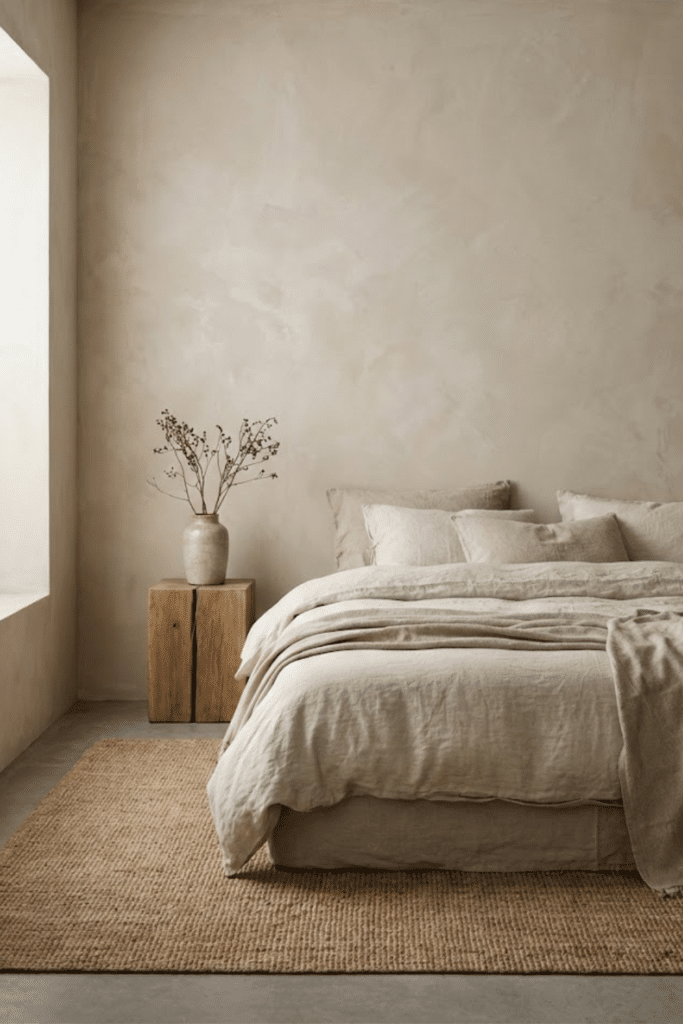
That is where texture comes in. In 2026, we are seeing a huge shift away from perfect, smooth surfaces toward things that feel a bit more organic and “lived-in.” If you are into minimalist interior design but feel like your house is too cold, this is the answer.
The Limewash Panic
Let’s talk about limewash wall paint. It is everywhere on social media right now, looking all cloudy and dreamy.
So, I decided to try it in my bedroom. I bought a can of this beautiful, sandy beige color. I dipped my brush in, slapped it on the wall, and immediately wanted to cry.
When limewash is wet, it looks terrifying. It looked about ten shades darker than the swatch, and it was patchy. I thought I had ruined my walls with expensive mud. I called my sister in a panic. “I’ve destroyed the house,” I told her.
She told me to calm down and let it dry.
And she was right (don’t tell her that). As it dries, the minerals react with the air, and it lightens up into this soft, velvety texture that looks like an old Italian villa. It’s gorgeous. It gives the room this wabi-sabi aesthetic—perfectly imperfect.
Ditch the Roller
If you are going to try this, put the paint roller away. Seriously, don’t even look at it.
To get that cloudy look, you have to use a large block brush. You paint in big “X” shapes, crossing over your strokes. It is actually way more fun than regular painting because you don’t have to be perfect. The messier your strokes, the better the texture looks.
It is a workout for your arm, but it is so worth it.
Other Ways to Add Depth
If painting sounds like too much drama, I get it. You can still get that textured look with textured wall panels.
I had this weird, empty space behind my TV that just felt unfinished. I didn’t want to paint it, so I bought some fluted wood panels—those ones with the vertical slats. I used construction adhesive to stick them up (lazy DIY for the win).
It instantly warmed up the room. The shadows between the slats add depth that flat paint just can’t compete with.
Whether you go for the old-world look of limewash or the modern vibe of wood slats, adding texture is the best way to make a room feel finished. It stops the room from looking like a white box and starts making it feel like a home.
7. Smart Lighting Layers
I need to ask you a serious question: Are you a “Big Light” person?
You know what I mean. You walk into the living room in the evening, flip the one switch on the wall, and suddenly the overhead flush mount blasts the room with 100 watts of brightness. It’s practical, sure. You can see where you put your keys. But it also kills the mood instantly.
For years, my husband and I fought over this. He wanted to see; I wanted the room to feel cozy. I used to think lighting was just about buying a pretty lamp. I was so wrong.
It wasn’t until I learned about smart home lighting and the concept of layering that I realized why my living room always felt like a cafeteria at night.
The Three-Layer Rule
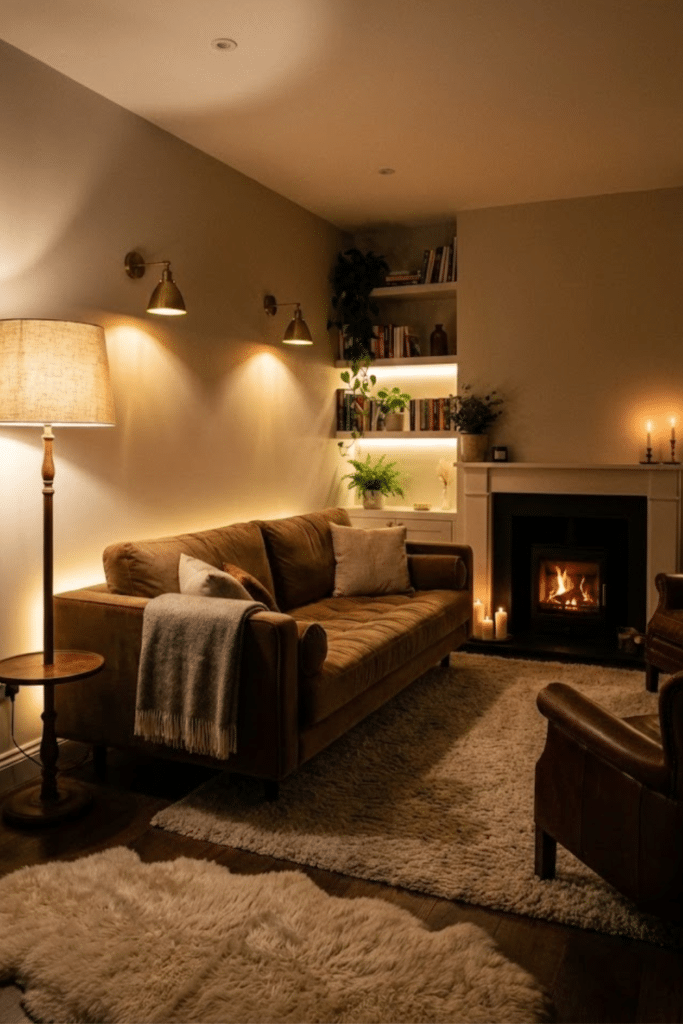
If you take one thing away from this, let it be this: A room needs three sources of light.
- Ambient: This is your general light (the overhead one).
- Task: This is for doing stuff, like a reading lamp next to your armchair or under-cabinet lights in the kitchen.
- Accent: This is the fun stuff. Think LED strips behind the TV or a small light highlighting a plant.
When I finally added a floor lamp and a table lamp to my living room, the space completely transformed. I stopped using the “Big Light” altogether. Now, when we watch movies, I just have the mood lighting ideas going—a soft glow from the corner and a backlight behind the screen. It feels like a totally different house.
The Tech That Saved My Sleep
In 2026, we are lucky because technology has actually made this easier, not harder.
I used to think smart bulbs were for tech geeks or lazy people who didn’t want to get off the couch. But then I bought a starter pack of smart bulbs, and it changed my life.
I set them up to follow my circadian rhythm. In the morning, they are bright and cool-toned to help me wake up. But as the sun goes down, they automatically dim and shift to a warm, golden amber color. It happens without me touching a button.
It sounds like a small detail, but my sleep has improved so much. I’m not blasting my eyes with blue light right before bed anymore.
Don’t Make My “Blue” Mistake
Speaking of light color, I have to tell you about the time I accidentally turned my bathroom into a hospital.
I went to the hardware store and bought “Daylight” bulbs because I thought, “Hey, daylight is good, right?”
Wrong. “Daylight” bulbs usually have a Kelvin rating of 5000K or higher. It is incredibly blue and harsh. I looked in the mirror and saw every single pore and wrinkle in high definition. It was terrifying.
For a cozy, welcoming vibe, you want to stick to warm white bulbs, usually around 2700K to 3000K. Check the box before you buy!
Getting your lighting right is one of the most underrated home renovation ideas. You can buy the most expensive sofa in the world, but if you light it poorly, it will look cheap. Fix your layers, dim the lights, and watch the magic happen.
Conclusion
Updating your space doesn’t have to be overwhelming. Whether you decide to paint your ceiling a daring color or simply add some lush plants for a biophilic touch, these 7 room ideas are all about creating a home that makes you happy. I hope you found some inspiration to start your 2026 renovation journey!
Did you love these ideas? Pin this article to your Home Decor board on Pinterest so you can save it for later!