I used to think that painting a room “safe” meant sticking to different shades of eggshell white. Boy, was I wrong! I remember walking into a friend’s living room last week—she had just painted it a deep, velvety “Universal Khaki”—and it felt like a warm hug. Did you know that color psychologists believe the right shade can actually lower your blood pressure and boost your mood? It’s true!
In 2026, we are saying goodbye to sterile grays and hello to colors that feel alive. Whether you are craving the restorative vibes of nature-inspired greens or the sophistication of moody burgundies, this year is all about “honest essentials” and grounding tones. I’ve made plenty of mistakes trying to match swatches to furniture (turns out, lighting is everything!), but I’ve learned a ton along the way. Let’s dive into these fresh ideas that will make your home the envy of the neighborhood!
1. The New Neutral: Universal Khaki & Sandy Shades

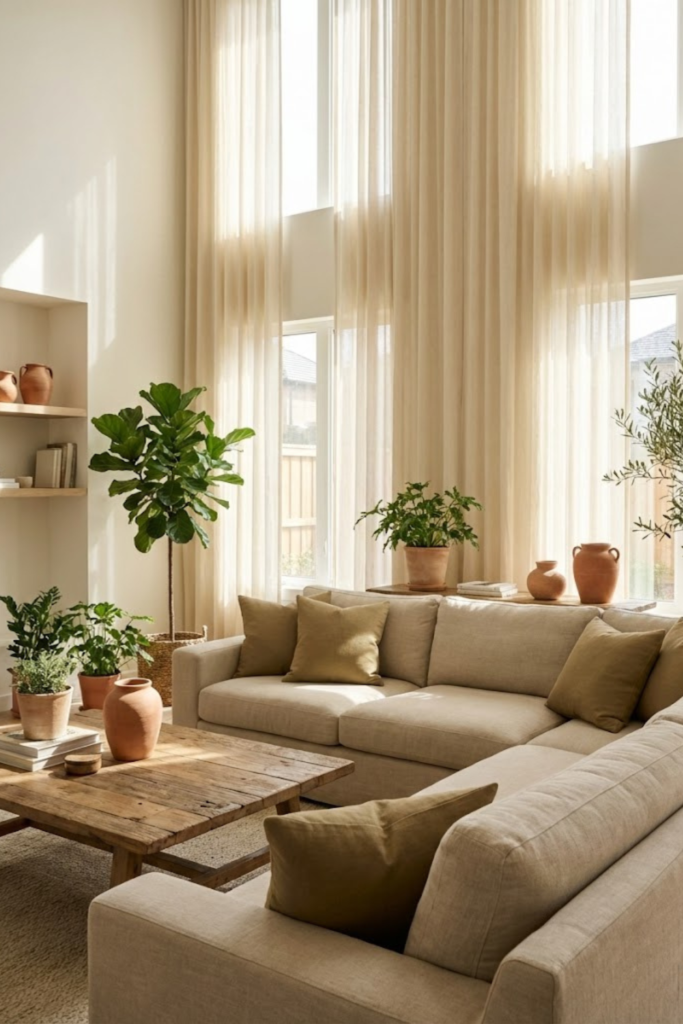
I have to be honest with you—I used to be terrified of beige. Growing up, every apartment my parents rented was slapped with this cheap, yellowish “builder beige” that just looked dingy. So, for the last ten years, I’ve been painting everything cool gray. I thought I was so modern! But recently, I walked into my living room and realized it felt cold. Like, “dentist waiting room” cold. That’s when I started looking into Universal Khaki and these new sandy shades everyone is talking about for 2026.
I decided to take the plunge and repaint my living room last month, and let me tell you, I learned a few things the hard way. It’s not just about slapping tan paint on the wall and calling it a day.
Getting Over My “Beige” Trauma
The first mistake I made was picking a swatch that looked great in the store but turned orange in my house. Lighting is everything here. I grabbed a gallon of what I thought was a perfect sandy neutral, put it on the wall, and when the evening sun hit it? It looked like a pumpkin exploded. I was so frustrated I almost cried right there on the drop cloth.
The trick I learned is to look for “Universal Khaki” tones that have a slight green or gray undertone. This keeps the color grounded and stops it from looking too yellow. It acts as a new neutral, warming up the space without hitting you over the head with color. It feels like a warm hug instead of a sterile box.
Lighting Makes or Breaks It
Here is a practical tip that saved my project: check your lightbulbs. I had cool daylight bulbs (5000K) in my lamps, and they clashed horribly with the warm walls. It made the sandy shades look muddy and gross.
I switched everything to warm white LEDs (around 2700K or 3000K), and suddenly, the room sang. The walls glowed. It felt cozy and expensive, even though my couch is ten years old. If you are going for this earthy look, you have to get the lighting right, or you’re going to hate it.
Texture is Your Best Friend
Another thing I realized is that if you paint a room khaki and have flat furniture, it looks boring. My space looked flat until I added some texture. I threw in a nubby wool throw blanket and some wooden picture frames.
The Universal Khaki paint needs that contrast. It loves natural wood, stone, and linen. I swapped out my shiny metal side table for a rustic wooden one I found at a flea market, and it made the whole room pop. It’s about creating layers so the room doesn’t look one-dimensional.
So, if you are scared of beige like I was, don’t be. Just test your swatches, watch your lighting, and don’t be afraid to make a mess. It’s just paint, right? You can always paint over it (though I really hope I don’t have to do that again anytime soon).
2. Restorative Greens: Warm Eucalyptus & Sage Slate
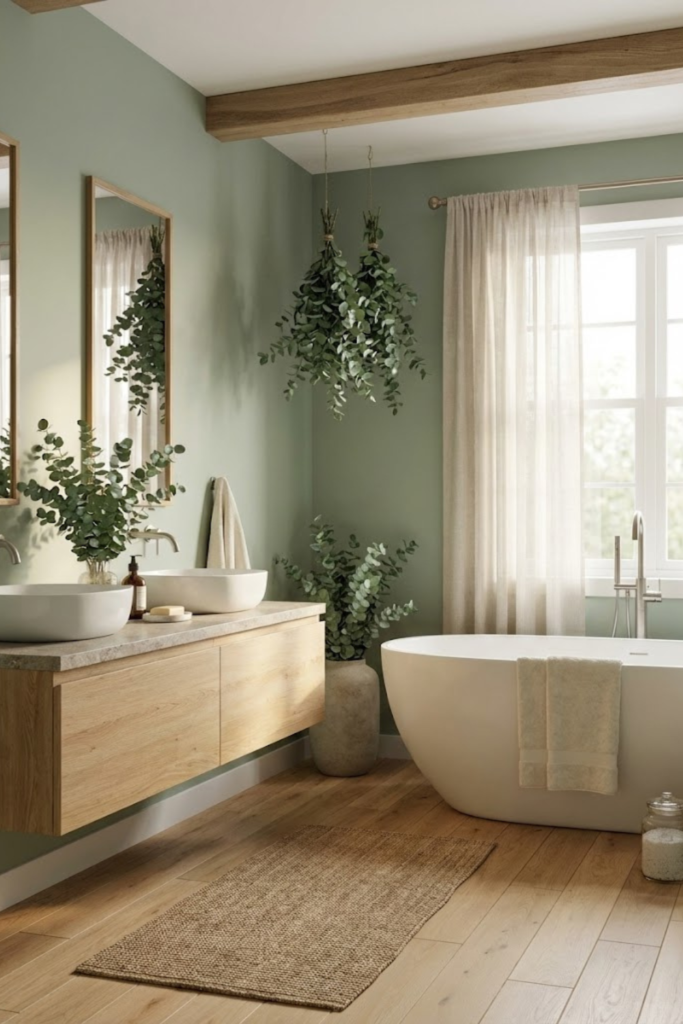
I have to admit, for the longest time, I avoided painting anything green. I had this distinct memory of my elementary school cafeteria being painted this weird, shiny “hospital green” that just made everyone look a little sickly. So, I stuck to my safe whites and grays. But lately, with everything moving so fast and life feeling so busy, I found myself really craving something that felt like… well, like taking a deep breath. That is exactly what these new restorative greens like Warm Eucalyptus are all about.
It wasn’t until I visited a local greenhouse that it clicked. I felt so calm surrounded by all those leaves. I thought, “Why can’t my house feel like this?” So, I decided to try it in my guest bedroom, which had become a bit of a junk room.
Avoiding the “Slime” Effect
When I first started looking for the perfect green, I made a classic rookie mistake. I picked a swatch that looked fresh and bright in the store. It was called something like “Spring Meadow.” I brought it home, painted one wall, and yikes. It didn’t look like a meadow; it looked like radioactive slime. It was way too yellow and energetic.
I learned that for a room to feel restorative, you need a green that has a lot of gray or blue in it. That’s why Warm Eucalyptus and Sage Slate work so well. They are “muddy” colors in the best way possible. They don’t scream at you. When you put them on the wall, they recede and make the space feel quiet. I ended up painting over that bright green with a muted sage, and the difference was instant. The room went from chaotic to peaceful.
Where These Colors Actually Belong
I used to think you could put any color anywhere, but I’ve learned that these greens have a specific job. They are perfect for spaces where you want to slow down. I wouldn’t put this in a playroom or a kitchen where I want high energy.
I put Sage Slate in my bathroom recently, and it changed the whole vibe. I swapped out the silver towel rack for a wooden one, and suddenly, it felt like a little spa. I actually want to hang out in there now (which is maybe weird to say about a bathroom, but it’s true!). It works really well in bedrooms too because it’s dark enough to be cozy but light enough to wake up to.
Pairing It Without Looking Like Christmas
The tricky part with green is styling it so it doesn’t look like holiday decor. My instinct was to pair it with red or crisp white, but that felt too sharp. I found that these earthy greens really need other “dirty” colors to look their best.
I started mixing in deep browns and charcoal grays. In the guest room, I added a dark walnut side table and some slate-gray throw pillows. The combination bridges the gap between the ground and the sky, just like outside. It feels grounded. If you use Warm Eucalyptus, try avoiding bright primary colors nearby. Stick to natural wood tones, leather, or even a soft rust color. It keeps the room feeling like a cohesive slice of nature rather than a box of crayons.
3. The Rhythm of Blues: Indigo & Icy Tones
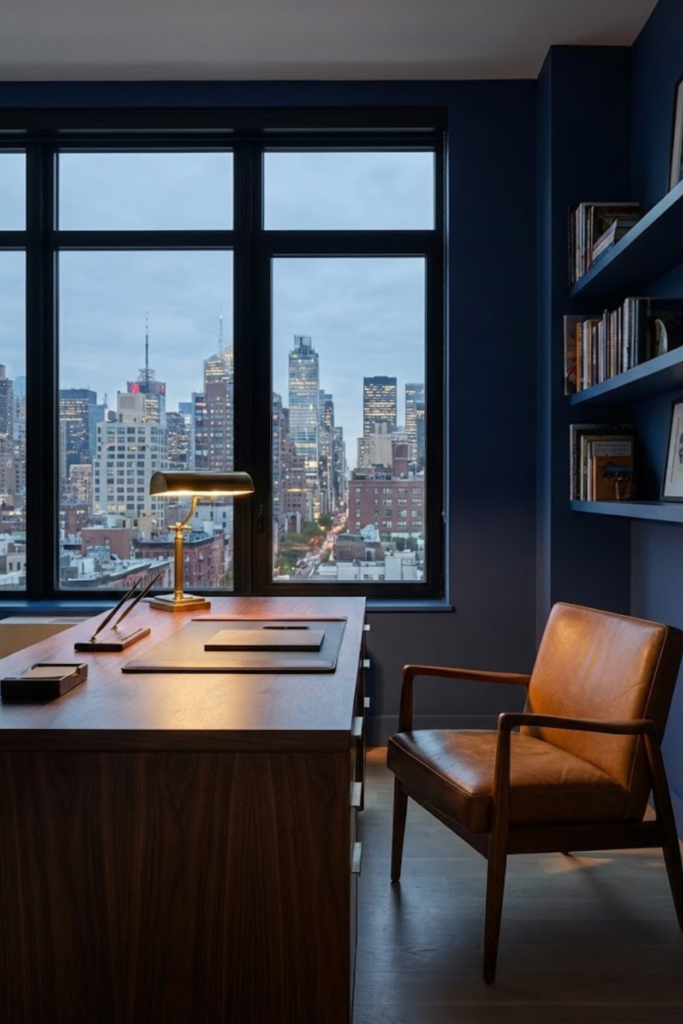
Blue has always been my “safe” color, but for years I was using it wrong. I would just slap a navy blue on a wall and wonder why the room felt like a cave. I always heard that blue was calming, but my office felt more depressing than peaceful. I figured it was just the lighting, but after reading about Dulux’s 2026 trends and trying out a few things myself, I realized I was missing the nuance. The new blues, like Indigo and those crisp Icy Tones, are totally different from the flat navy I was used to.
I decided to re-do my home office because, honestly, I couldn’t focus in there. I wanted that “fly free” feeling everyone talks about, but I didn’t want it to look like a baby boy’s nursery.
Don’t Fear the Dark Side
My biggest fear was that painting a room dark blue would make it feel tiny. I have a small office, and the old advice was always “light colors make rooms look bigger.” Well, I broke that rule. I painted the walls a deep, moody Indigo—something close to what they call “Slow Swing.”
Here is the weird thing: it actually made the walls disappear. Because the corners were so dark, you couldn’t tell where the room ended. It felt infinite, like the night sky. But—and this is a big but—you can’t just leave it dark. I learned you have to balance it. I added a brass lamp and a light-colored rug. Without those lighter touches, it would have felt like a dungeon. Now, when I sit down to work, the dark walls help me zone in. It’s like the rest of the house fades away.
The “Ice” Mistake
On the flip side, I tried to use a pale Ice Blue in my hallway to brighten it up. I thought it would look crisp and clean. Instead, it looked… cold. Like, walk-in freezer cold. It clashed with my warm wood floors and just felt uninviting.
I realized that these icy tones need warmth to work. They are great “palate cleansers,” but they can’t stand alone if your house has a lot of warm tones. I fixed it by adding some artwork with warm oranges and reds. The contrast warmed up the blue and stopped it from feeling sterile. It’s a balancing act. If you go for “Mellow Flow” or an icy shade, make sure you have some wood or warm fabrics nearby to keep the life in the room.
It’s All About Stability
Color psychology is a real thing. Since painting my office indigo, I actually feel calmer when I’m in there. It feels stable. In a world that feels pretty crazy sometimes, having a room that feels solid and grounded is a game changer.
Just remember, blue is tricky. It changes a lot throughout the day. My indigo walls look almost black at night but a rich, deep blue in the morning. Test your paint on different walls and look at it at different times of day before you commit. I wish I had done that sooner instead of panicking the first night I saw it! But now, it’s easily my favorite room in the house.
4. Sophisticated Drama: Burgundy & Oxblood

I have a confession: for years, I banned red from my house. I had this disastrous experience in my twenties where I painted my kitchen a bright, fire-engine red because I read somewhere that it stimulates appetite. Well, it stimulated something alright—a headache. It looked like a fast-food joint, and I couldn’t wait to paint over it. So, when I started seeing deep burgundy and “oxblood” trending for 2026, I was skeptical. I thought, “Here we go again.”
But then I saw a photo of a dining room painted in a shade called “Divine Damson,” and it stopped me in my tracks. It didn’t look aggressive or loud. It looked rich. It looked like a glass of expensive wine. I realized that my mistake wasn’t the color family; it was picking a red that had no depth.
It’s Not Actually Red
The biggest lesson I learned here is that these sophisticated shades aren’t really “red” in the way we usually think of them. They are heavy on brown and violet undertones. Colors like “Carriage Door” or Oxblood feel much more like earth tones than primary colors.
I decided to test this out in my powder room (the tiny bathroom guests use). I figured if I hated it, it was a small room to repaint. I went with a deep, moody burgundy. As soon as it went on the walls, the room felt instantly older—in a good way. It gave my generic builder-grade house a sense of history. These colors don’t shout; they wrap around you. They feel “grounded,” which is exactly what I needed after years of living with stark white walls.
Small Spaces Love Drama
People always tell you to paint small rooms white to make them look bigger. I am here to tell you that is bad advice. If a room is small, painting it white just makes it look like a small, boring box.
When I painted that powder room dark burgundy, it didn’t feel smaller. It felt like a jewel box. It became a “moment.” I added a vintage gold mirror and some warm lighting, and suddenly, this tiny closet of a room was the most interesting spot in the house. If you are scared to go dark, start with a space you don’t spend hours in, like an entryway or a dining room. It creates an atmosphere that lighter colors just can’t touch.
The Weird Combo That Works
Now, if you want to get really fancy, let me tell you about a pairing I saw that blew my mind: Oxblood and Icy Blue. I know, it sounds like a bruise, right? But trust me.
I have a friend who is much braver than me, and she painted her walls deep oxblood but used icy blue velvet curtains. The contrast was incredible. The cool blue cut through the warmth of the red and made the whole room feel high-end and avant-garde. It’s a bold move, and maybe not for everyone, but it proved to me that these deep reds are surprisingly versatile. You don’t have to pair them with gold or cream. You can mix it up. Just don’t make my mistake and buy the bright “ketchup” red. Stick to the moody, brownish tones, and you can’t go wrong.
5. Golden Hour: Deep Ochre & Lemon Chiffon
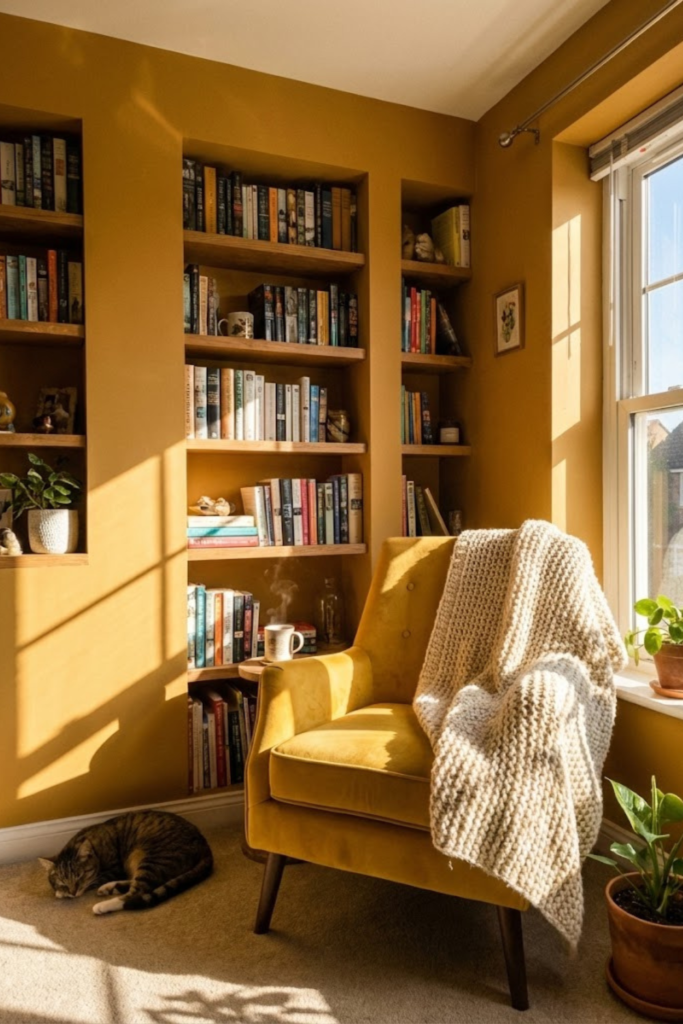
I’ll be real with you—yellow has always made me nervous. For the longest time, I associated yellow walls with anxiety. I had a classroom once that was painted this bright, screaming lemon color, and I swear the kids were rowdier in there than anywhere else. So, I swore I would never put yellow in my own house. I didn’t want my living room to feel like a school bus. But as I’ve been looking at the trends for 2026, I realized I was judging the wrong shade. The new yellows, like Deep Ochre, aren’t about being loud; they are about feeling like 5:00 PM on a summer day.
I decided to try this out in my small reading nook. It’s a tiny space that doesn’t get a ton of light, so I stopped fighting the darkness and leaned into the “Golden Hour” vibe.
The Yellow I Actually Like
The trick I learned is that you have to find the “dirty” yellows. If you pick a clean, bright yellow, it looks cheap. But Deep Ochre? It has a lot of brown in it. It looks like dried leaves or spicy turmeric. When I painted the nook this color, it didn’t feel energetic; it felt warm. It was like wrapping the room in a heavy wool blanket.
I was worried it would look outdated, like something from the 70s, but it actually feels really classic. It’s moody without being sad. If you are going to try this, don’t just paint one wall. I found that painting the whole room, including the trim, makes it feel like a cozy little box. If you just do one wall, it looks like you ran out of paint.
Look Up: The Ceiling Trick
Here is a tip that I think is pretty clever. If Ochre feels too dark for you, try using Lemon Chiffon on the ceiling. I did this in my hallway, which has white walls. I painted just the ceiling this very pale, buttery yellow.
Most people ignore the ceiling—designers call it the “fifth wall”—but painting it a soft yellow changes the light in the room. Even on a cloudy day, my hallway feels like it has sunlight streaming in. It’s a subtle trick, but it makes people smile when they walk in, even if they can’t figure out why the room feels so happy. Just make sure the yellow is very pale; if it’s too dark, it will make the ceiling feel low and heavy, like it’s caving in.
Pairing it with Dark Wood
The reason my reading nook works is because I paired the Ochre walls with dark furniture. I have this old, scratched-up walnut bookshelf that looked kind of beat up against white walls. But against the gold walls? It looks rich.
Yellow and dark wood are best friends. If you have light, modern furniture (like that white IKEA stuff), deep yellow might look a bit weird. It needs that contrast with something dark to ground it. I added a navy blue cushion to my chair, and the combo of gold, dark wood, and blue is just chef’s kiss. It feels scholarly, like a library in an old movie. So, don’t be scared of yellow. Just pick the shade that looks like it’s been baking in the sun for a while, and you’ll be fine.
6. Moody Luxury: Chocolate Brown & Silhouette
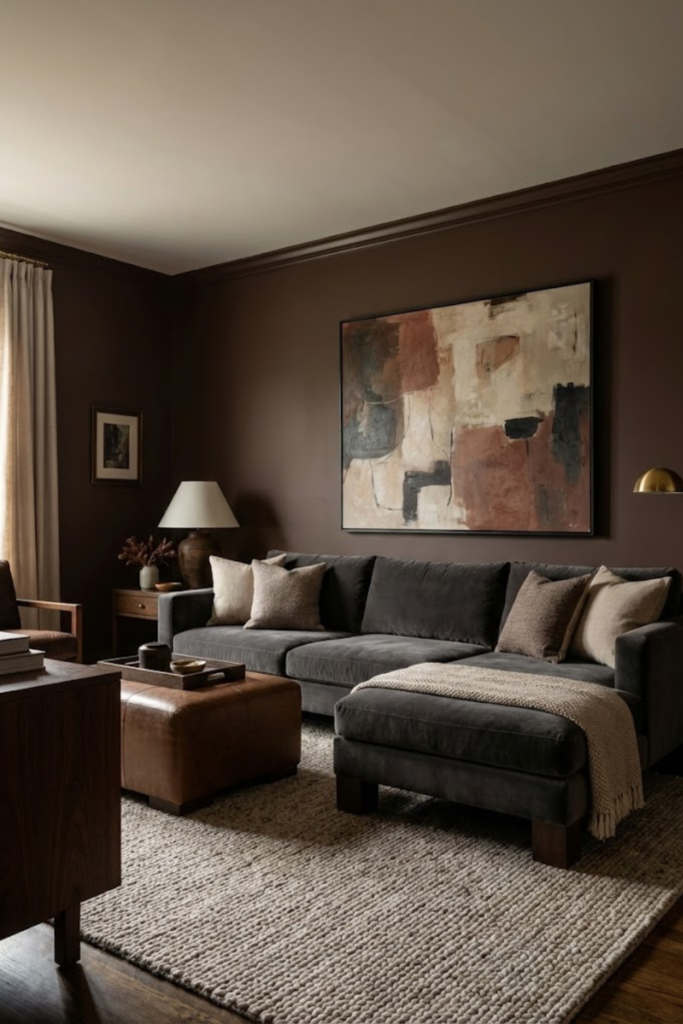
I used to look at brown paint and think “yuck.” It reminded me of my grandmother’s house—lots of dark paneling and dusty shag carpet that hadn’t been changed since the 70s. So, for the last ten years, I avoided it like the plague. I painted everything black or charcoal grey because I thought that was what “modern” looked like. But recently, I saw a living room painted in this deep, dark chocolate color called Silhouette, and I had to eat my words. It didn’t look outdated. It looked incredibly rich and expensive.
It turns out, brown is the new black. Black can feel a little cold and harsh, kind of like a nightclub. But this deep brown feels warm. It has this subtle red undertone that makes the whole room glow when the lamps are on, and it changes the whole feel of the house.
Creating a “Cocoon” Space
I decided to paint my den this color because I wanted a space that felt like a “cocoon.” We hear that word a lot in design magazines, but I didn’t get it until now. I wanted a room where I could sit and read and just shut out the noise of the rest of the house.
When I first rolled the paint on, I panicked a little. It looked very dark. But once I finished all four walls, something magic happened. The corners of the room basically disappeared. Instead of feeling small and cramped, the room felt cozy and endless, like being wrapped in a warm blanket. It’s perfect for a movie room or a living area where you want to relax at night. It just lowers your blood pressure immediately.
The Furniture Problem
I did make one big mistake, though. I have a dark leather couch, and when I pushed it back against the new dark brown wall, it completely vanished. It just looked like a big, dark blob in the shadows.
I realized pretty quickly that you need contrast to make this look luxurious. You can’t do brown-on-brown unless you really know what you are doing. I had to bring in a cream-colored rug and some light beige throw pillows to break it up. As soon as I added those lighter touches, the chocolate brown walls popped. It made the cream colors look brighter and the walls look deeper.
Texture is Everything
Another lesson I learned is that this color hates shiny things. I had a glossy white side table, and it looked cheap and plasticky against the matte brown walls. This color craves texture. It wants velvet, wool, wood, and stone.
I swapped the shiny table for a rough wooden stump table (I know, it sounds weird, but it works!), and the room instantly felt high-end. The mix of the smooth dark paint and the rough wood texture is what gives it that look everyone is chasing. So, if you try this, ditch the shiny plastic and go for things that feel good to touch. It makes all the difference.
7. Soft Serenity: Lavender & Dusty Rose
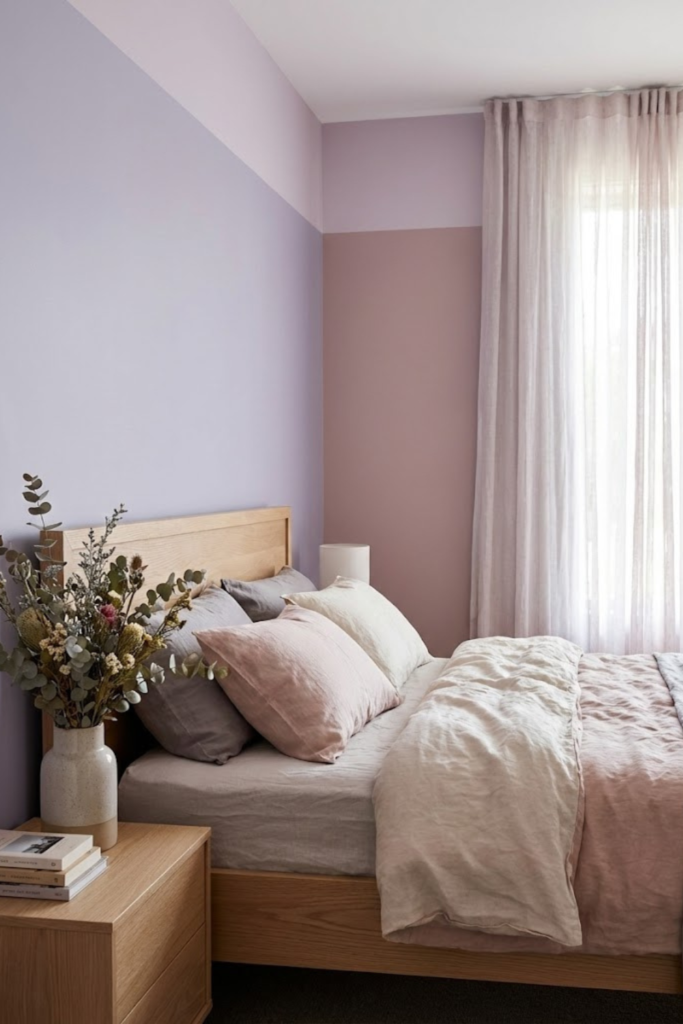
I have to be real with you—if you had told me two years ago that I would be painting my master bedroom purple, I would have laughed in your face. In my mind, lavender and pink were colors strictly for a baby girl’s nursery or maybe a dollhouse. I thought they were childish and frankly, a little tacky for a grown adult’s house. But recently, I kept seeing these “dusty” versions of pastels popping up in magazines, and they didn’t look sweet or sugary. They looked sophisticated. So, I decided to give Soft Lavender and Dusty Rose a fair shot.
I was looking for a change in my bedroom because the gray walls I had for years were starting to feel really depressing, especially in the winter. I wanted something that felt like a “fresh start,” and these colors promised that.
It’s Not About Being “Pretty”
The first thing I learned is that you have to be very careful with the shade you pick. I made the mistake of grabbing a sample that looked nice on the card, but when I put it on the wall, it looked like a bottle of stomach medicine. It was way too bright and saturated.
The trick is to find shades that have a lot of gray in them. That’s why they call them “dusty.” When I found the right Dusty Rose, it almost looked like a warm beige until the light hit it. It acts as a colorful neutral. It doesn’t scream “PINK!” It just whispers. It adds warmth and personality without taking over the room. It’s perfect if you are tired of white walls but are too scared to go dark.
Avoiding the Dollhouse Look
The biggest challenge was styling the room so it didn’t look like I was trying to relive my childhood. My instinct was to use white bedding and white furniture, but I stopped myself. I realized that white plus pastel equals “nursery.”
Instead, I paired the Soft Lavender walls with warmer tones. I brought in some furniture with natural wood finishes—oak and walnut. The wood grounded the pastel color and made it feel earthy. I also tried a trick I saw online: pairing lavender with Universal Khaki (that color from earlier!). The combo of the purple and the sandy khaki is surprisingly grown-up. It feels organic, like a field of wildflowers, rather than a candy shop.
The Morning Vibe
Since painting the room, the biggest change has been how I feel when I wake up. I know that sounds cheesy, but it’s true. Dark colors are great for sleeping, but sometimes they make it hard to get out of bed in the morning.
These soft, serene colors reflect the light beautifully. When the sun comes in, the room glows. It feels airy and optimistic. It’s a really nice way to start the day, feeling calm but awake. If you are stressed out by work or life, turning your bedroom into a soft, pastel sanctuary might actually help. Just remember: keep it dusty, keep it gray, and keep the furniture earthy. Do that, and you won’t feel like you’re sleeping in a dollhouse.
Conclusion: Your Home, Your Rules
Phew, we made it through all seven ideas! I know that was a lot of information to take in. If your head is spinning a little bit right now, don’t worry—that is totally normal. I remember when I first started looking into repainting my house, I had about fifty tabs open on my computer and a stack of paint chips so high it kept falling over. It feels like a huge decision because, let’s be honest, painting is a lot of work. Nobody wants to spend their whole weekend taping and rolling just to hate the color on Monday morning.
But here is the thing I want you to walk away with: it is just paint. It’s not a tattoo. It’s not structural damage. If you put a color up and decide in six months that it’s not working for you, you can change it. Realizing that gave me the freedom to actually experiment and have fun with it.
It’s About How You Feel
We talked a lot about trends—Universal Khaki, those moody browns, the restorative greens. But the most important trend in 2026 isn’t a specific color; it’s about making your home feel the way you need it to feel.
Maybe you have a crazy stressful job and you need that “Warm Eucalyptus” bathroom to calm you down. or maybe your house feels a little boring and you need that “Divine Damson” dining room to spice things up. Don’t pick a color just because a magazine said it was cool. Pick it because when you look at it, it makes you happy. I used to worry so much about “resale value” that I lived in a boring beige box for years. Don’t do that. Live in the house you have right now.
Don’t Rush the Process
If I can give you one final piece of “teacher” advice, it is this: take your time with the samples. I know you just want to get it done, but please, buy the little sample pots.
Paint a big square on the wall—not just a tiny little spot. Watch it for a few days. Look at it when you drink your coffee in the morning and look at it when you are watching TV at night. Colors are tricky. They change like chameleons depending on the light. That “perfect” blue might look gray in the rain. Giving yourself a few days to live with the swatch can save you a ton of money and headache later.
Ready to Start?
I really hope these ideas sparked something for you. Whether you are going to tackle a whole room or just paint your front door, I am rooting for you! It is amazing how a fresh coat of paint can make you fall in love with your home all over again.
If you found these ideas helpful (or if you just want to save that chocolate brown living room idea for later), please pin this article to your “Home Decor 2026” board on Pinterest. It helps other people find these tips, and it helps me keep sharing my painting adventures with you. Happy painting!