Did you know we spend roughly one-third of our lives in bed? Yet, for so many of us, the master bedroom becomes the “junk drawer” of the house—the place where laundry piles up and style goes to die! I’ve been there, staring at a blank beige wall and wondering why my room didn’t feel like the relaxing retreat I pinned on Pinterest. But here’s the thing: 2026 is the year of the “cocoon.” We are moving away from stark, clinical white boxes and embracing spaces that feel like a warm hug. It’s about “soft minimalism,” deep earth tones, and spaces that prioritize your mental well-being just as much as your aesthetic. Whether you’re a fan of vintage charm or high-tech sleeping solutions, these ideas will help you curate a space that is authentically you. Let’s dive into the trends that are reshaping how we sleep!
1. The “Cocoon” Palette: Embracing Deep Earth Tones
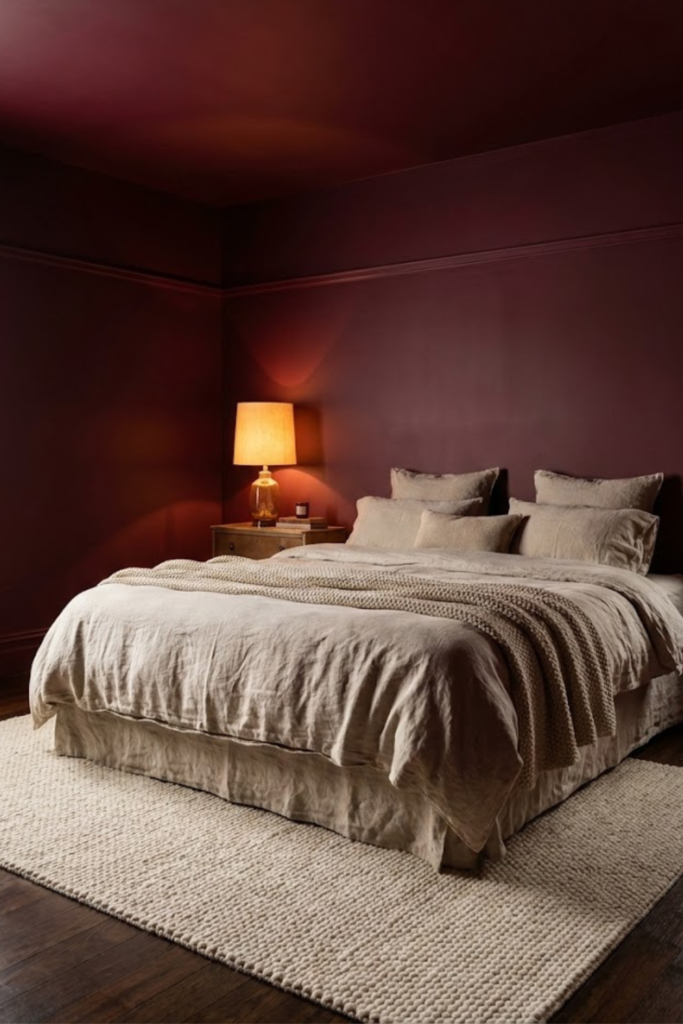
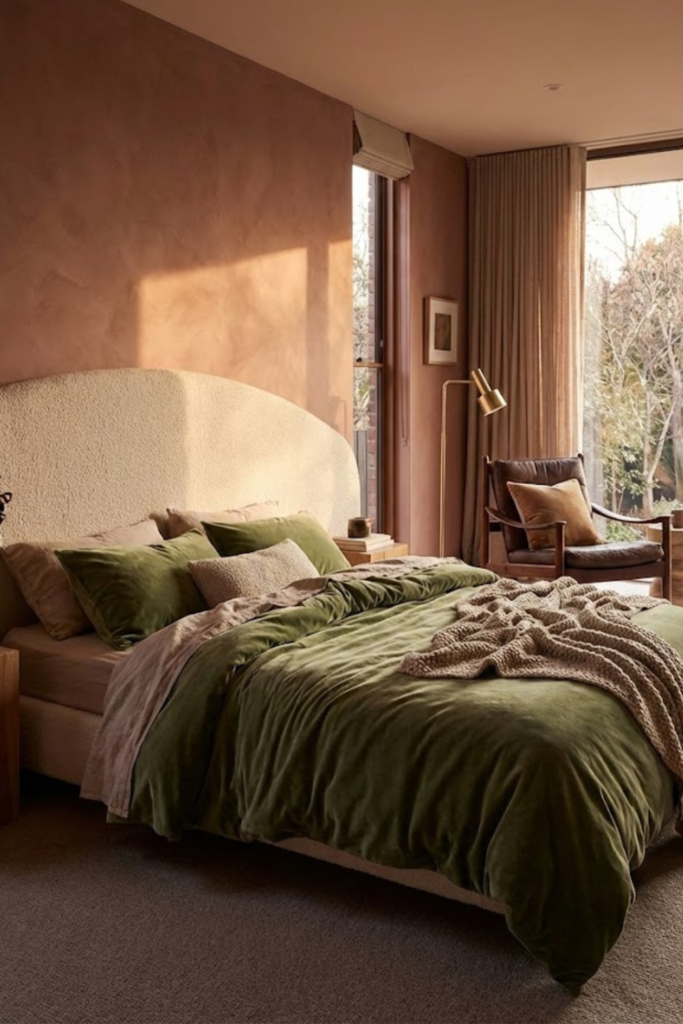
You know, for the longest time, I thought “clean” meant white walls. Like, really white. But honestly? It just felt cold. Like I was sleeping in a hospital waiting room. That is why I love this new shift to what they call the “Cocoon” palette. It is all about deep, earthy colors that make you feel safe.
Color Drenching is a Game Changer
If you haven’t heard of color drenching, you need to try it. Basically, you take one color—say, a rich terracotta or a moody sage green—and you paint everything. The walls, the trim, the door, and yes, even the ceiling. I know, painting the ceiling sounds scary! But when you do it, the harsh lines disappear. The room feels like it is wrapping its arms around you.
Colors That Actually Help You Sleep
It’s not just about style. These darker colors, like chocolate browns or deep burgundies, actually signal your brain that it is time to rest. I read somewhere that these “brown-pink” neutrals can lower stress levels. It makes sense. Bright white wakes you up; deep earth tones calm you down.
Don’t Forget the Texture
One thing I learned the hard way: dark colors can look flat if you aren’t careful. Instead of standard paint, try a lime wash or something with a matte finish. It gives the walls this soft, cloudy look that feels almost velvety. It stops the room from feeling like a dark cave and makes it feel more like a cozy den.
2. Biophilic 2.0: Living Textures & Mineral Surfaces
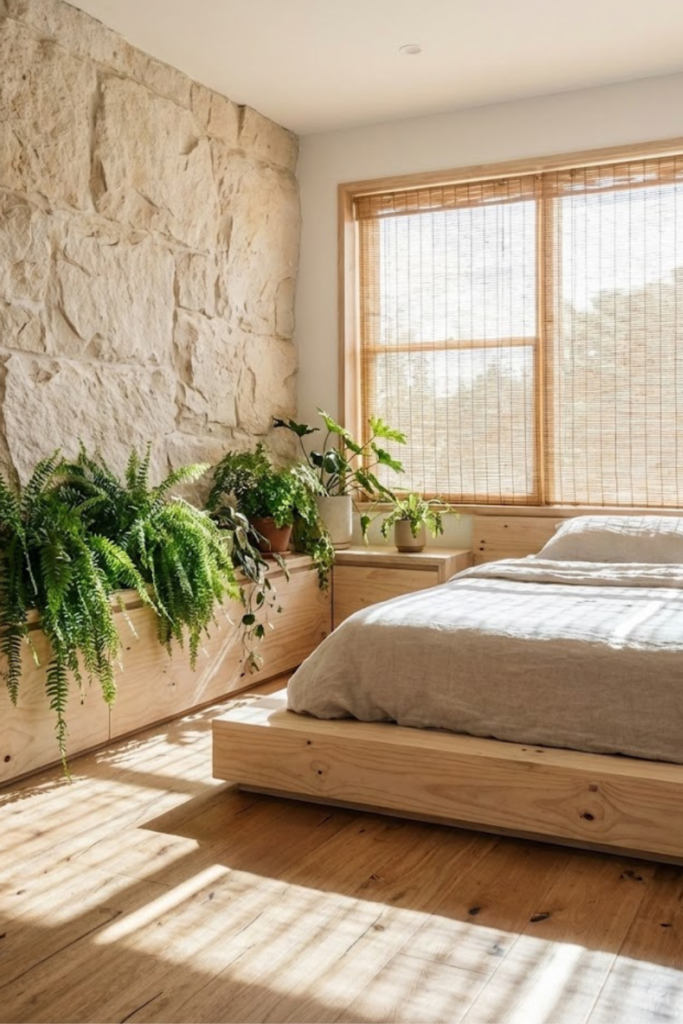
I used to think “biophilic design” just meant buying a spider plant and putting it on a shelf. But honestly, keeping a dozen plants alive can be a lot of work! This year, the trend is shifting to something deeper. It is about bringing the feel of nature inside, not just the greenery.
Walls That Feel Real
Have you ever touched a wall in a modern house? It’s usually just cold, flat paint. Boring, right? Now, we are seeing walls that actually have texture. Think of raw plaster that looks a bit unfinished, or even stone features behind the bed. I love the idea of using cork or raw pine for furniture. It brings this warmth to the room that you just can’t get with regular drywall. It makes the space feel alive and grounded.
Built-in Nature
If you do have a green thumb (I’m still working on mine), try integrating the plants into the furniture. Instead of a pot sitting on the floor, look for shelves with built-in planter boxes or deep window sills. I saw a setup recently where the headboard had a ledge specifically for trailing vines. It’s genius because it keeps the clutter off the floor. Plus, having that greenery right by your head helps the air feel fresher when you wake up.
Why It Works
It is simple: we relax better in nature. By using materials that look like they came from the forest or the earth, you trick your brain into thinking you are outside. It stops the room from feeling like a sterile box and turns it into a place where you can actually breathe.
3. Soft Minimalism: Curves & “Squishy” Comfort

I have to admit, I used to love those super modern, sharp-edged furniture pieces. They looked so sleek in magazines. But in real life? I was constantly banging my shins on the corner of the bed frame. Ouch. That is why I am so happy that 2026 is all about curves. We are calling it “Soft Minimalism,” and it is honestly a relief.
Furniture That Hugs You
The biggest change is the shape of things. Bed frames, chairs, and even dressers are getting rounded edges. It stops the room from feeling so rigid. When you walk into a bedroom full of curves, your eyes just kind of glide over everything. It feels less chaotic. Plus, if you have kids or pets (or if you are clumsy like me), it is way safer. No more sharp corners to worry about in the middle of the night.
The “Teddy Bear” Trend
Have you seen those bumpy, soft fabrics lately? They call it bouclé, but I just call it “teddy bear” fabric. It is everywhere right now. Using a headboard covered in this stuff makes the whole bed look like a big cloud. I swapped out my old wooden chair for a squishy, rounded one in this fabric, and it instantly made the corner look cozy. It begs you to sit down and curl up.
Why Softness Matters
It is not just about looks. Sharp lines can make us feel alert and on edge. Soft, round shapes signal safety to our brains. When your bedroom feels soft and squishy, it is easier to let your guard down and actually fall asleep. It turns the room into a gentle place to land at the end of a hard day.
4. The Return of the Statement Headboard
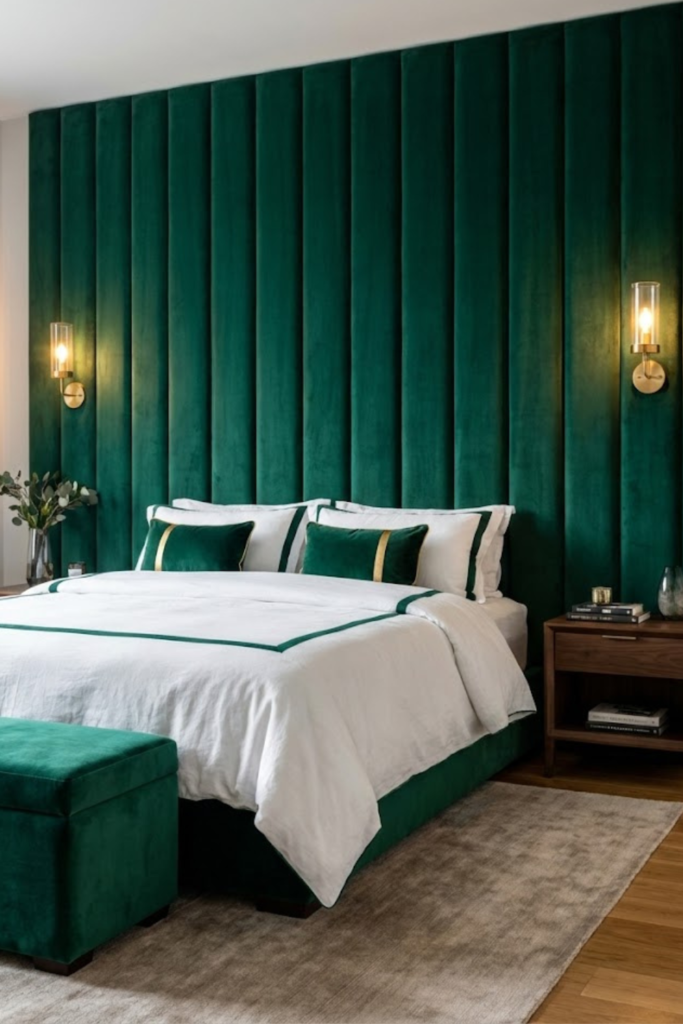
You know, for years I treated my headboard as an afterthought. I just had a simple metal frame that squeaked every time I turned over. But 2026 is changing that. The bed is the captain of the ship, and the headboard is the flag. We are seeing huge, dramatic headboards that act more like art than just furniture.
Wall-to-Wall Comfort
This is my favorite new look. Instead of a small square behind your pillows, imagine the headboard stretching across the entire wall. It goes right behind your nightstands too. It looks so high-end, like a fancy hotel. I love this because it makes the room feel wider. Plus, leaning back against a soft, velvet wall to read a book is way better than leaning against cold drywall.
Shapes That Are Actually Fun
We are finally done with boring rectangles. I am seeing headboards with waves, arches, and weird asymmetrical shapes. It adds so much personality. If you have a plain boxy room, adding a curvy, odd-shaped headboard instantly fixes the “boring” problem. It gives your eye something interesting to look at as soon as you walk in.
The New Canopy
I used to think canopy beds were just for princesses or old Victorian houses. But they are coming back in a cool, modern way. They aren’t heavy or dusty looking anymore. The new ones use thin metal frames or light, breezy fabrics. It creates a “room within a room.” I think this is great if you have high ceilings and feel a bit lost in the space; it makes your sleeping spot feel cozy and protected.
5. Smart “Circadian” Lighting Layers
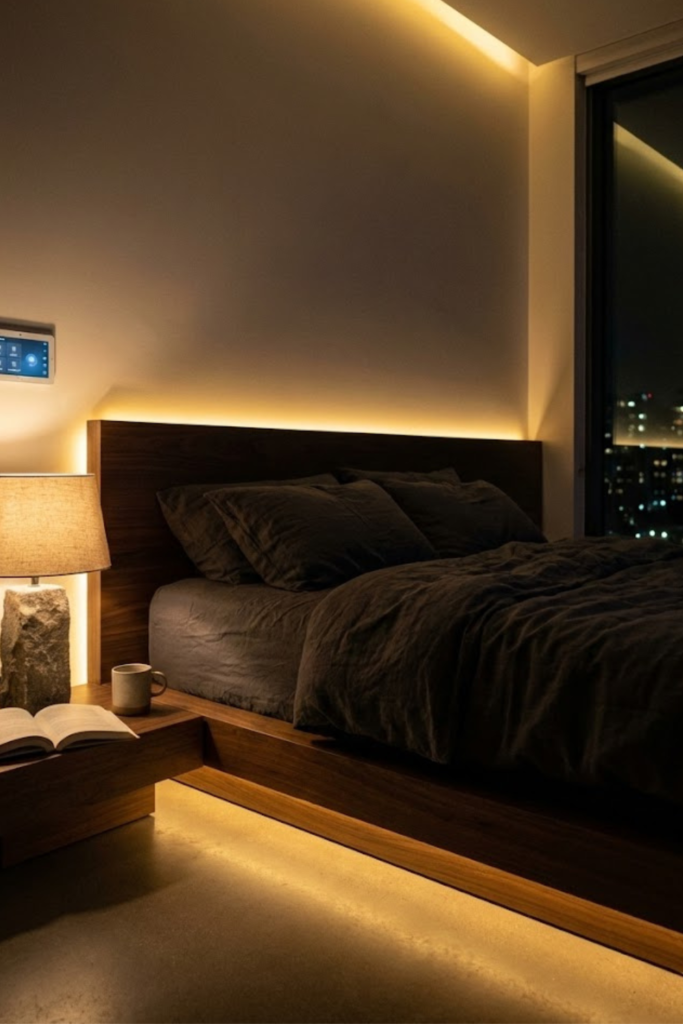
We need to talk about the “big light.” You know, the main ceiling fixture that you flip on and instantly feel like you are in an interrogation room? I stopped using mine years ago. 2026 is all about lighting that helps you sleep, not lighting that wakes you up. They call it “circadian” lighting, which sounds fancy, but it just means lights that copy the sun.
Faking the Sunset
I finally installed some simple LED strips behind my headboard, and it made a huge difference. In the morning, they are bright and white to help me wake up. But at night? They turn this deep, warm amber color. It feels like a sunset right in my room. It tells my brain, “Hey, the sun is down, time to get sleepy.” It is way better than staring at a blue phone screen before bed.
Lights for Your Feet
This is a small thing, but it is so helpful. I added these little motion-sensor lights down near the floor, right under the bed frame. When I have to get up in the middle of the night for a glass of water, they glow softly. They don’t blind me, and they don’t wake up my husband. It allows me to walk around without bumping into things, but I stay sleepy enough to go right back to bed.
Lamps That Look Like Art
Since I hardly use the ceiling light anymore, my lamps are super important. I have started buying lamps that look cool even when they are turned off. I found one made of rough stone that adds that “earthy” texture I was talking about earlier. It feels solid and permanent. Think of your lamps as little sculptures that also happen to glow.
6. The “Collected” Aesthetic: Vintage Meets Modern
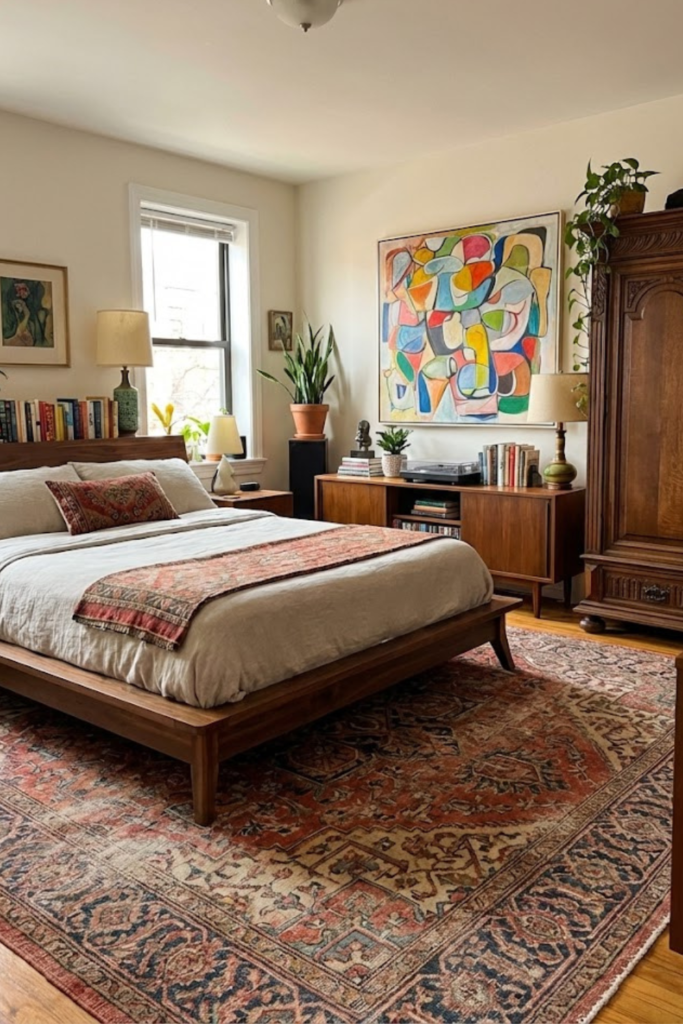
I used to think that to be “grown up,” all my furniture had to match perfectly. You know, the bed matches the nightstands, which match the dresser. But looking back, those rooms felt kind of stiff. They didn’t have any personality. Now, the trend is what they call the “Collected” look. It is about mixing things up so your room tells a story about who you are.
Stop Buying Sets
Seriously, try to avoid buying the whole page from the furniture catalog. It can look a bit boring! I love seeing a sleek, modern bed frame sitting next to a beat-up, antique wooden dresser. It creates a nice contrast. The shiny new stuff makes the old stuff look charming, and the old stuff makes the new stuff feel less cold. It shows you didn’t just buy everything in one day.
Add Your History
Your bedroom should look like you live there, not a robot. I have a little ceramic tray on my dresser that I found on a trip years ago. It isn’t perfect, but it makes me smile every morning. Putting out little things that have memories attached—like a framed photo from a family vacation or a souvenir—makes the space feel warm. It stops the room from looking like a generic showroom.
The Big Wardrobe
Built-in closets are practical, sure. But a big, free-standing wardrobe (an armoire) is beautiful. It feels like a real piece of furniture with a soul. I swapped my plastic storage bins for a heavy wooden armoire I found online, and it completely changed the vibe. It adds a sense of history and permanence to the room, even if you just bought it second-hand last week.
7. Functional Zoning: The “Wellness Corner”
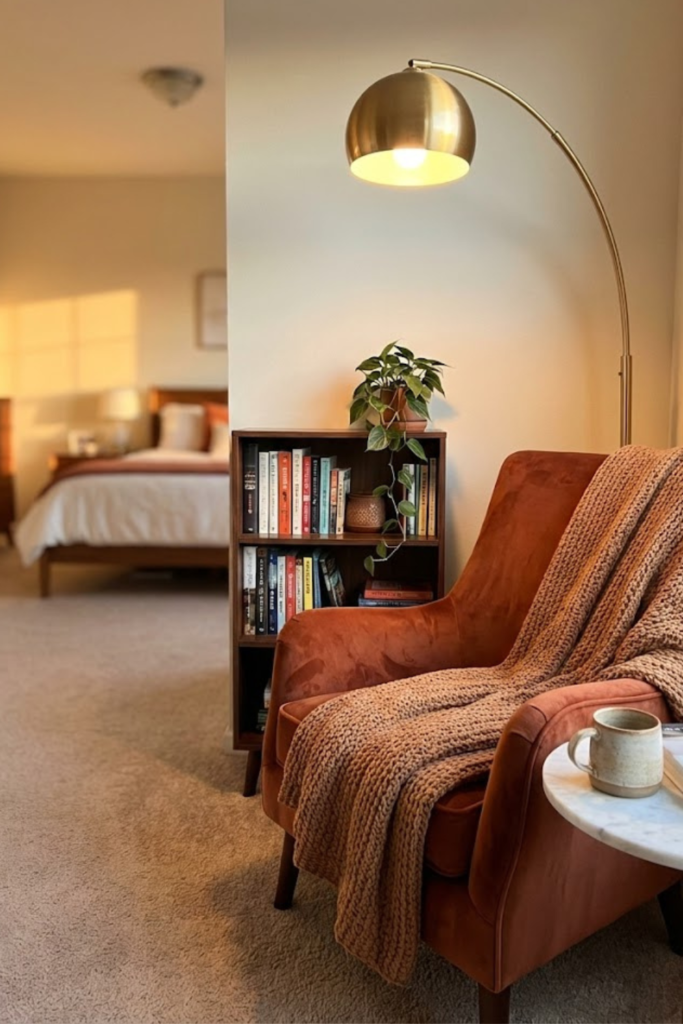
I used to treat my bedroom as just a place to crash at the end of the day. But lately, I realized I needed a spot to just breathe. That is where the “wellness corner” comes in. It is basically carving out a little zone that isn’t for sleeping, but for calming down before you try to sleep.
The Reading Chair
I moved an old armchair into the corner by the window, added a floor lamp, and it changed everything. Now, instead of scrolling through my phone in bed, I sit in that chair and read a few pages of a book. It creates a physical boundary. The bed is for sleep; the chair is for winding down. It helps my brain switch gears so I’m not wide awake when my head hits the pillow.
A Spot to Stretch
You don’t need a full yoga studio. I just keep a small basket with a yoga mat and a floor cushion in the corner. In the mornings, I can do a few stretches right there without having to walk out to the cold living room. It makes it way easier to start the day on a good note when you have a designated little spot for it.
Hiding the Tech
This was a hard one for me. I love watching TV in bed. But we decided to hide the TV in a cabinet so we aren’t staring at a black screen all the time. It makes the room feel quieter. If you can, try to keep your wellness corner totally tech-free. No chargers, no screens. Just a place to sit and be quiet for five minutes.
Conclusion
Changing up your master bedroom for 2026 isn’t about spending a fortune. It is really just about making the space feel right for you. Whether you go for those deep, moody colors or just add a soft, curvy chair, the goal is the same. You want a place that feels like a hug when you walk in. Don’t be afraid to mix old stuff with new stuff, or to paint a wall a color that scares you a little bit. It’s your sanctuary, so make it work for your real life.
Ready to get started? Go ahead and pin this article to your “Dream Home” board on Pinterest so you don’t lose these ideas!