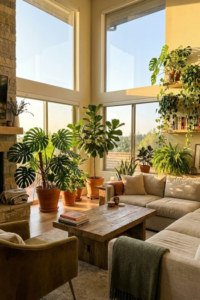
Believe it or not, 72% of interior designers say that layout, not furniture, is the biggest factor in a home’s comfort! As we move into 2026, the “showroom” look is out and genuine, lived-in connection is in; so if you are tired of staring at your sofa and wondering why your room feels “off,” you are not alone. In this guide, I’m sharing the 7 most effective furniture arrangements that balance traffic flow with cozy aesthetics, helping you finally crack the code to a home that feels as good as it looks!
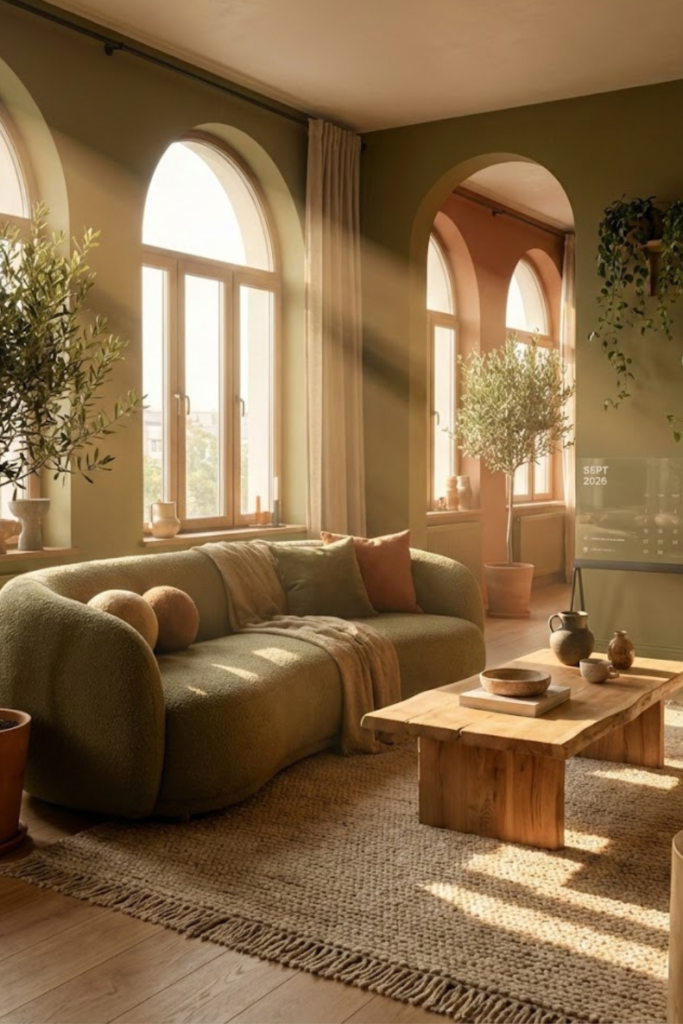
1. The “Conversationalist” Symmetry

I have to confess something embarrassing about my first apartment. When I first moved in, I did what I thought everyone was supposed to do with a living room layout. I shoved my sofa against one wall and my two armchairs against the opposite wall, creating this massive, empty dance floor in the middle.
I thought I was being smart by “opening up the space.” Spoiler alert: I wasn’t.
The first time I had friends over, it was a disaster. We were basically shouting across the room just to hear each other over the music. It felt like we were in a waiting room, not a home. That’s when I learned my lesson about the “Conversationalist” Symmetry. This setup is a total game-changer if you actually want people to talk to each other.
Why Symmetry Saves the Vibe
The idea is simple. You take two matching sofas—or a sofa and two chairs—and face them directly opposite each other. It sounds fancy, but it’s really just about creating a mirror image. This furniture arrangement instantly pulls the focus inward.
Instead of staring at a TV or a blank wall, your guests are looking at each other. It forces connection.
My living room felt instantly cozier once I pulled the furniture off the walls. I stopped worrying about the empty corners and realized the room finally had a heartbeat. It’s a classic move for a reason.
Don’t Forget the Coffee Table
Here is a specific tip I learned the hard way. When you set this up, your coffee table becomes the anchor. You need to make sure it’s reachable from both sides.
I used to have mine too far away, and my poor guests had to do an awkward lunge just to set down their drinks.
Ideally, keep the table about 14 to 18 inches from the edge of the seats. It’s close enough to put your feet up (we all do it) but far enough to walk through without banging your shins. Proper spacing is key for good traffic flow.
Creating a Focal Point
This layout works best if you center it around something, like a fireplace or a large window. It gives the room a sense of purpose.
If you don’t have a fireplace, don’t sweat it. I’ve used a large piece of art as my focal point, and it worked just as well. The symmetry frames the view perfectly.
Just remember, this layout is meant for chatting. If your family is big on movie nights, you might need to tweak the angle slightly so everyone doesn’t get a crick in their neck trying to see the screen. But for pure social vibes, this living room layout is unbeaten. It turns a cold room into a warm gathering spot instantly.
2. The L-Shaped Lounger

For the longest time, I avoided sectionals. I thought, “My living room is way too small for a giant L-shaped sofa.” I assumed it would make the room feel cramped and heavy.
But honestly? It did the exact opposite.
When I finally swapped my mix of random chairs for one decent L-shaped sectional, the whole room calmed down. It is perfect for living room zoning. You shove that bad boy into a corner, and it opens up the rest of the floor for the kids or just for walking around without tripping over an ottoman.
Why It Works for Families
If you have kids or pets, or just like to nap, this is the layout for you. The L-shape gives you that cozy corner spot that everyone fights over.
It creates a dedicated lounging zone. You don’t need to worry about lining up chairs perfectly. The sofa is the room. It anchors everything.
Plus, it seats way more people than you think. We squeezed six people on ours for the Super Bowl last year. It was tight, but it worked!
Placement is Everything
You have two main options here. You can push it against the walls in the corner, which is what I did to maximize space. This is great for small living room ideas.
Or, if you have a bigger open space, you can float it. Put the back of the sofa facing the dining area to create a clear border. It acts like a wall without blocking the light.
Just be careful with the size. I learned this the hard way: measure your doorway before you buy. Trying to pivot a giant sofa through a small front door is not as funny in real life as it is on TV. Also, double-check that the “L” is on the right side for your room—left-facing versus right-facing matters big time!
3. The Floating Island Flow

This one scares people. I know because it scared me. It feels wrong to have space behind your sofa, right? Like you’re wasting room. But if you have a larger living room or an open floor plan, pushing everything against the walls is actually the worst thing you can do.
I call it the “Bowling Alley Effect.” You end up with this huge, empty runway in the middle of the room. It feels cold.
Bringing It In
The trick is to float your furniture in the middle of the room. Create an island.
When I first tried this, I felt like I was breaking a rule. I pulled my sofa and chairs in about three feet from the walls. Suddenly, the room felt cozy again. The conversation didn’t feel like shouting across a canyon.
It creates a pathway around the outside of the seating area. This is huge for traffic flow. You want people walking around your conversation, not cutting through it.
The Rug is Key
You can’t just leave the furniture floating there on a bare floor, though. It looks like you’re about to move out. You need a big area rug to anchor it.
The rug acts like a magnet holding the island together. All the front legs of your furniture should sit on the rug. If the rug is too small, the island looks sad and tiny.
This living room layout makes the room feel airy and sophisticated. It separates the walking areas from the sitting areas. Just trust me on this one—give your walls a break and pull that sofa in. It transforms the whole vibe.
4. The Multi-Zone Divider

I used to live in this tiny studio apartment where my kitchen, living room, and bedroom were basically all the same room. It was a nightmare keeping things organized. I’d be trying to relax and watch a movie, but all I could see was the dirty dishes in the sink.
That’s when I learned about zoning. You don’t need to build actual walls to separate your life. You can use your furniture to do the heavy lifting.
This layout is a lifesaver for anyone in an open floor plan or a studio. The trick is to turn your furniture away from the other zones.
The Sofa as a Wall
The easiest way to do this is with your sofa. Instead of pushing it against a wall, place it so the back of the sofa faces your dining table or kitchen.
It creates a clear visual barrier. When you sit down, your back is to the mess in the kitchen. You are effectively “closing the door” on that part of the house without actually having a door.
It signals to your brain that this space is for relaxing, and that space is for eating. It sounds simple, but it changes how the room feels completely.
The Console Table Trick
Here is a pro tip I picked up: the back of a sofa can look kind of ugly. It’s just a big wall of fabric.
To fix this, I put a skinny console table right up against the back of the sofa. I put a couple of lamps and some books on it. Now, it looks intentional. It bridges the gap between the living area and the dining area.
Rugs Define the Space
If you really want to master living room zoning, you need to look at the floor. Rugs are your best friend here.
Use one large rug for your seating area and a different one for your dining table. The rug creates an invisible border. If the furniture is on the rug, it belongs to the living room. If it’s off the rug, it’s in the “hallway” or the dining zone.
It stops the furniture from looking like it’s just floating around in space. It gives everything a home.
5. The Focal Point Hybrid (Fireplace + TV)
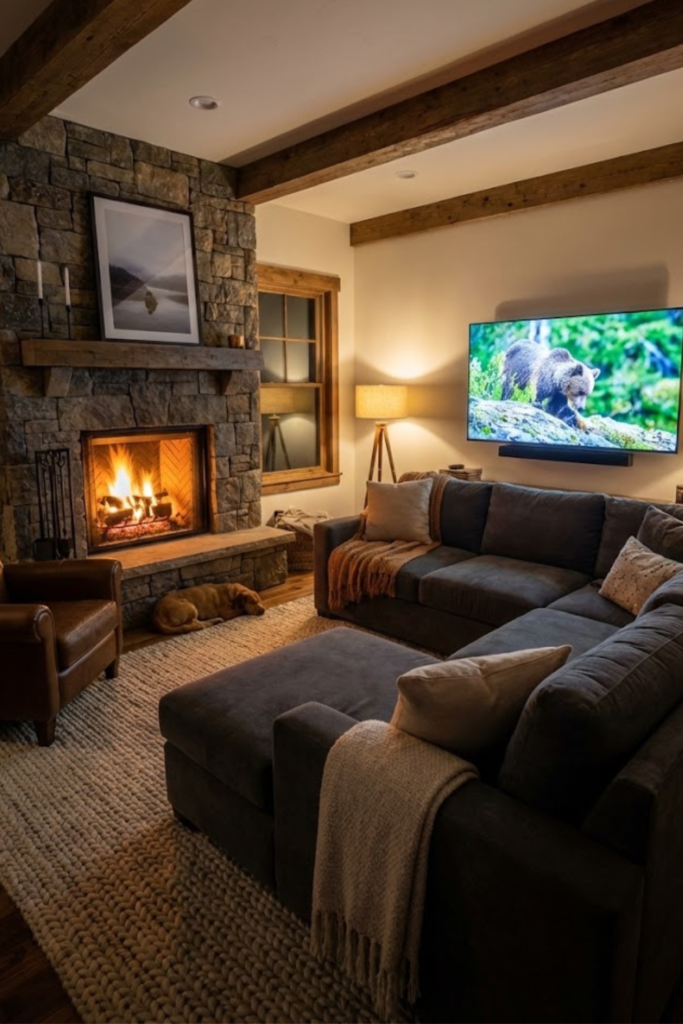
I remember moving into a house years ago that had this gorgeous brick fireplace. It was the main reason I bought the place. But then Saturday came, and I realized… where on earth do I put the TV?
If I put it above the fireplace, I felt like I was in a sports bar, straining my neck to look up. If I put it on the opposite wall, I’d have to turn my back on the fire. It was a real dilemma.
The “Hybrid” layout is the fix. You have to stop thinking there can only be one star of the show.
The Two-Wall Strategy
The best way I found to handle this is the L-shape arrangement again, but focused on two walls.
Put the TV on the wall next to the fireplace, not above it. Then, you angle your furniture so it faces the corner between them.
This way, you can look at the fire and the game without moving your sofa. It balances the room. You aren’t choosing one over the other. It keeps the focal point design feeling natural.
The ‘TV Too High’ Crime
Please, I am begging you, don’t mount your TV five feet in the air above the mantel unless you have one of those special mounts that pulls it down.
I did this once. After a week, my neck was so stiff I couldn’t turn my head to check my blind spot in the car.
Ideally, the center of your TV should be at eye level when you are sitting down. If you have to put it next to the fireplace on a low cabinet, do that. It looks better than you think.
The Furniture Swivel
If you have swivel chairs, this is their time to shine.
I bought two swivel armchairs for my living room, and they are lifesavers. You can spin to watch the movie, then spin back to face the sofa for conversation.
It makes the living room layout flexible. It solves the issue of having a static room that only works for one thing.
6. The Narrow Tunnel Breaker
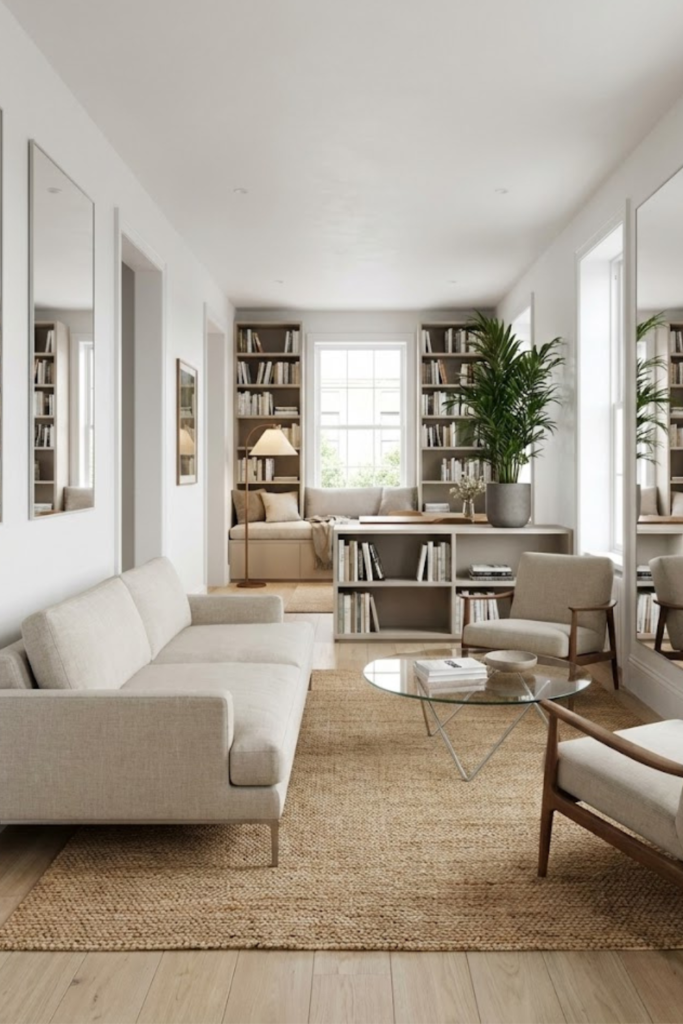
I grew up in an old townhouse that was charming but had a living room shaped like a bowling alley. It was long and skinny. For the first few months, we arranged the furniture the only way that seemed logical: sofa on one long wall, TV on the other.
It was terrible. It felt like we were sitting in a hallway. We had created a tunnel where you just wanted to walk fast to get to the other side.
If you have a narrow living room, you have to fight the urge to line everything up. You have to break the tunnel.
Create a ‘Speed Bump’
The trick is to stop the eye from shooting straight to the back of the room. You need to create little pauses.
We fixed our room by pulling the sofa away from the wall and floating it perpendicular to the long walls. It cut the room in half.
I know it sounds crazy to block the path, but as long as you leave about 3 feet of walking space on one side, it works. It stops the room from feeling like a runway. It creates a cozy little square in the middle of a long rectangle.
The “Micro-Zone” Strategy
Since you have all that extra length, use it. Don’t try to make one giant seating area that stretches twenty feet.
Split the room. We used the main area for the TV and couch. Then, behind the couch, we had this awkward empty space. I put a small desk and a chair there. Boom—instant home office.
You could also put two small chairs and a bookshelf to make a reading nook. By giving that extra space a job, you stop it from feeling like wasted dead space.
The Walkway Rule
In a narrow room, you have to pick a lane.
Decide which side of the room is for walking. Keep that path clear. Don’t make people weave in and out of furniture like an obstacle course. If the traffic flows on the left, keep all the ottomans and tables tucked to the right.
Keeping a straight, clear path on just one side makes the room feel wider than it actually is. It is a simple trick, but it saves your shins from getting bruised on the coffee table.
7. The Diagonal Twist

I’m going to be honest with you—this one felt weird the first time I tried it. I had a very standard, boxy living room that just felt… blah. No matter what fancy pillows I bought, it still looked like a boring square.
Then I read about the diagonal layout. Basically, instead of lining your sofa up with the wall like a soldier, you turn the whole arrangement at an angle.
I thought it would waste space. But when I actually rotated my rug and sofa about 45 degrees, the room suddenly woke up. It felt dynamic. It’s a bold move, but sometimes you have to shake things up to get results.
Widening the Box
If you have a small, square room, this layout is a secret weapon. When you place furniture parallel to the walls, your eyes stop right at the wall. You see the limits of the room immediately.
But when you angle it, your eye gets drawn to the corners. It tricks your brain into thinking the space is bigger than it really is.
It creates this flow that leads people into the room, rather than just blocking them. It breaks up the rigid lines. My boring box room suddenly felt interesting without me buying a single new thing.
Watch Your Corners
There is a catch, though. When you tilt your furniture, you create these little triangular dead spaces behind the sofa or chairs.
Don’t just leave them empty, or they will collect dust bunnies like crazy. I stuck a tall floor lamp in one corner and a big leafy plant in the other. It filled the gap perfectly.
You have to be careful not to block the traffic path, though. Make sure you aren’t angling a chair right into the doorway. I did that once and stubbed my toe three times before I finally moved it back.
Conclusion
Look, I know moving furniture is heavy work. I’ve dragged enough sofas across hardwood floors to know it’s not exactly a fun Saturday afternoon. But figuring out the right living room layout is the single best thing you can do for your home. It costs zero dollars, but it pays off every single day when you can actually walk through your room without bumping your hip.
Whether you go for the cozy “L-Shaped Lounger” or try something wild like the “Diagonal Twist,” the goal is to make your home work for you. Don’t worry about what the magazines say. If it feels good to sit in, you did it right.
Pin this for later! Did you find a layout here that might save your living room? Share this guide on Pinterest so you don’t lose these ideas when you’re ready to start moving furniture!