Do you ever walk into your living room, look around, and feel like your space is just… stuck in the past? I know I do! It’s crazy how quickly “trendy” turns to “tired,” isn’t it? Well, buckle up, because the design forecast for 2026 is officially here, and it is absolutely stunning! We are moving away from sterile showrooms and diving headfirst into spaces that feel like a warm hug. In 2026, it’s not just about how a room looks; it’s about how it feels—grounded, personal, and deeply connected to nature.
I was reading recently that “luxury in 2026 will move away from spectacle and towards sensibility,” and honestly, that gave me goosebumps! We’re talking about “Midimalism” (yes, that’s a thing now!), rich coffee tones that replace the endless grays, and layouts that actually encourage conversation rather than just staring at a TV. Whether you are planning a full renovation or just want to swap out a few pillows, these 7 living room designs will give you the roadmap you need to future-proof your home. Let’s dive in!
1. The Rise of “Midimalism”
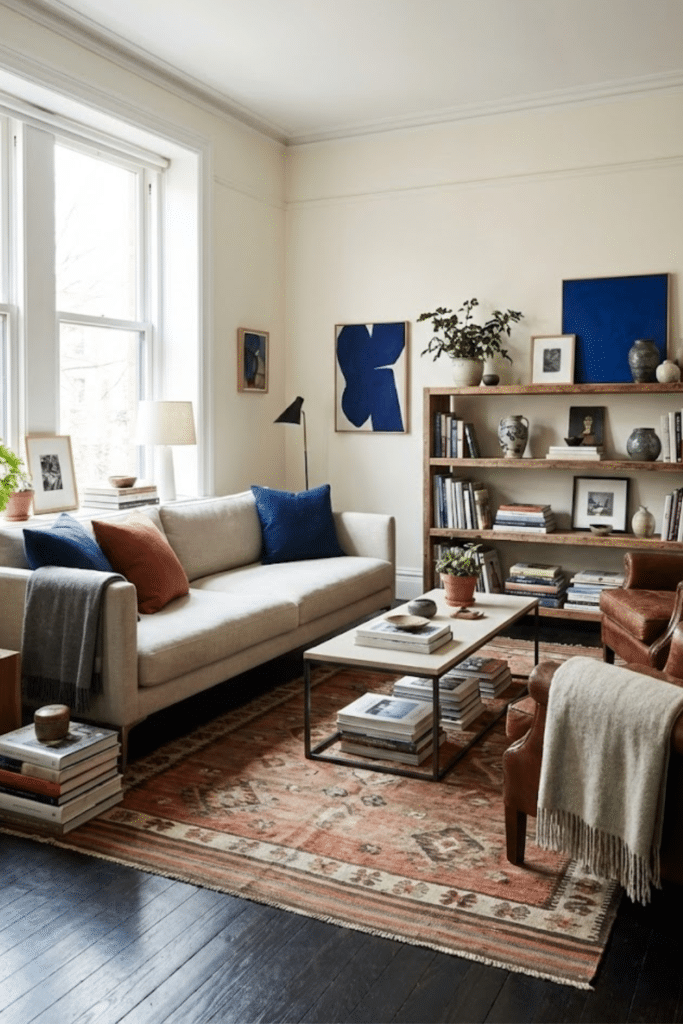
Honestly, I have to confess something embarrassing. A few years ago, I fell hard for that super stark, ultra-minimalist trend. You know the one? Where your house looks like an Apple store and you’re terrified to set down a coffee mug? Yeah, that one. I threw out way too much stuff. I remember sitting on my beige sofa, looking at my empty white walls, and feeling… absolutely nothing. It was cold. It wasn’t me.
But then, I swung the other way and filled every corner with junk from the thrift store. That was a dusting nightmare! It was a total hot mess.
That is exactly why I am obsessed with Midimalism. It is hands down my favorite shift in living room trends 2026. It is the Goldilocks zone—not too little, not too much. It’s just right. Midimalism saves you from living in a museum, but it also stops you from ending up on an episode of Hoarders.
Finding Your “Goldilocks” Zone
So, what is it exactly? Midimalism interior design is about finding that sweet spot between clean lines and cozy chaos. It’s allowing your personality to shine without cluttering up the place.
Here is a mistake I made that you can learn from: I thought “curating” meant buying expensive art. Nope. It just means being picky. When I started fixing my living room last month, I kept the weird ceramic vase my daughter made in third grade, but I finally donated those generic throw pillows I bought just because they were on sale.
The goal isn’t to have a perfect house. It is to have a happy house.
Practical Steps to Get the Look
If you are looking to nail this balanced decor style, start small. You don’t need to renovate.
- The “One In, One Out” Rule: This is a classic for a reason. If you buy a new lamp, an old one has to go. This keeps the clutter monster away.
- Mix Eras Like a Pro: I put a sleek, modern coffee table right next to my grandmother’s beat-up leather armchair. The contrast is what makes it cool. It gives the room soul.
- Color Breathing Room: Paint your walls a neutral tone (warm whites or creams work best), but go wild with your rug or curtains. The neutral walls give your eyes a place to rest.
A little tip I learned the hard way: Don’t rush it. A curated home takes time. I used to buy things just to fill empty spots on the shelf. Now? I leave the spot empty until I find something I actually love. It drove my husband crazy for a few weeks, but now he gets it.
Why This Matters Now
We are all tired of perfection. In 2026, nobody wants a showroom anymore. We want spaces that feel lived-in. Midimalism allows for a few messy blankets on the couch or a stack of books on the floor. It acknowledges that people actually live here.
My living room finally feels like me. It’s got my favorite plants (half of them are alive, at least), my comfy chair, and enough open space that I can breathe. It’s not perfect, but it’s real. And honestly? That is way better than perfect.
So, take a look at your living room. Is it too empty? Too full? Try to find that middle ground. You might be surprised at how much lighter you feel.
2. Coffee & Mocha “Color Drenching”
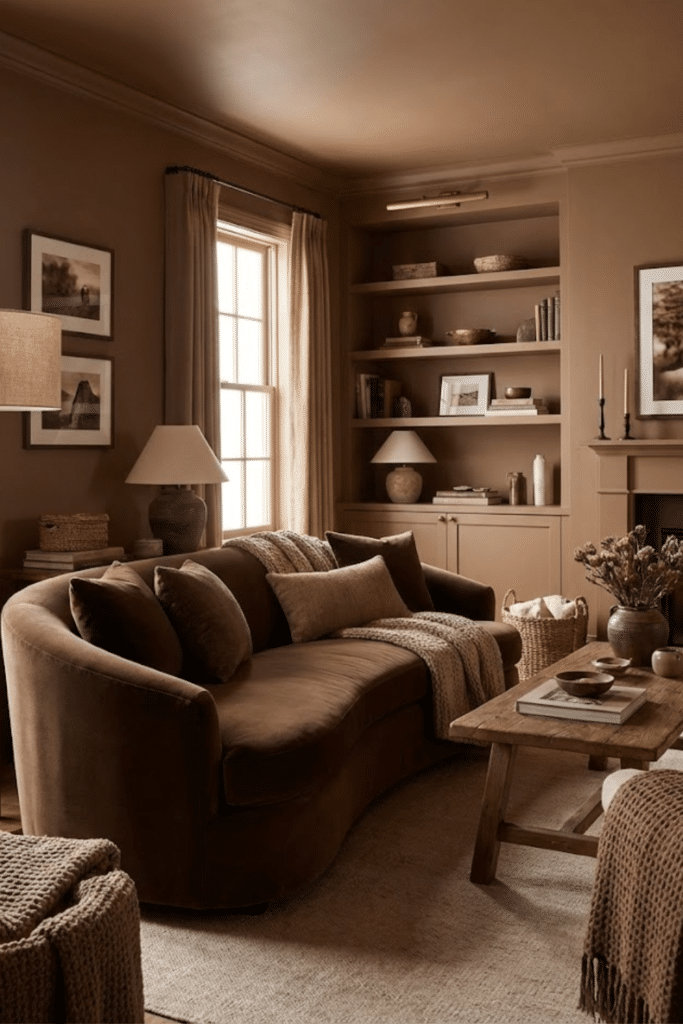
Okay, I need to make a confession. For about five years straight, I was the queen of “Millennial Gray.” My walls were gray, my couch was gray, even my cat was… well, okay, the cat was orange, but you get the picture. I thought it looked clean and modern. But looking back? It just felt cold. Like waiting in a dentist’s office.
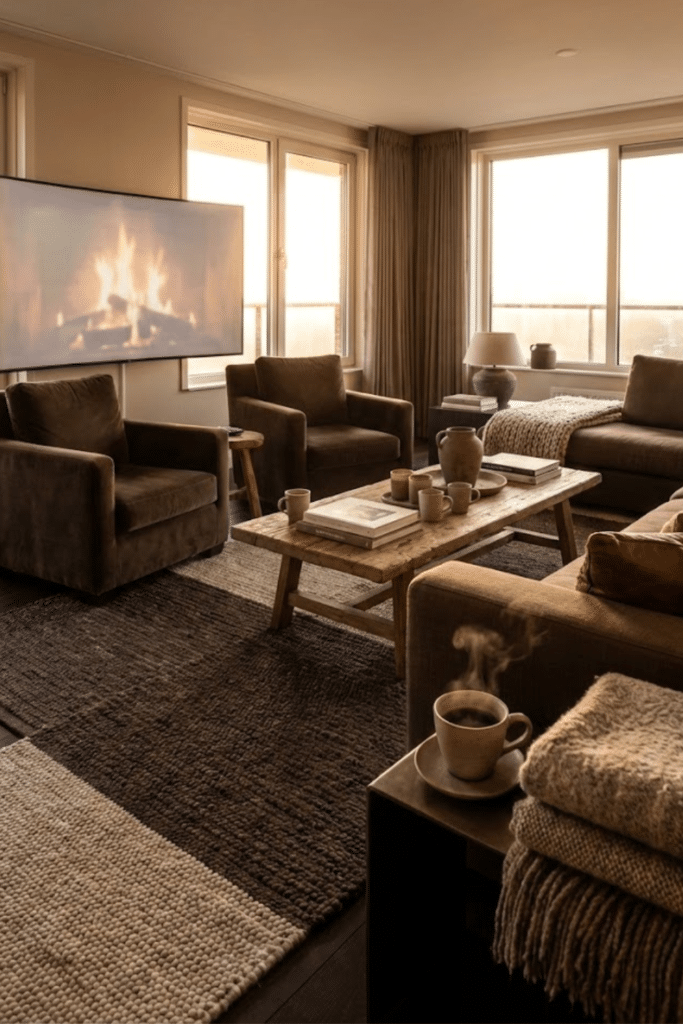
That is why I am absolutely vibrating with excitement about the shift to coffee and mocha tones in 2026. We are finally warming things up! It is essentially a rebellion against the sterility of the past decade.
Why I Ditched the Gray
I decided to try this trend on a whim last winter. I was feeling blah about my living room, so I bought a gallon of paint called “Espresso Bean.” My husband looked at me like I had lost my mind. “You’re painting the room brown?” he asked, horrified.
I was terrified too. I put the first stroke on the wall and thought, “Oh no, I’ve turned my living room into a mud pit.”
But here is where the magic happens. It’s called color drenching. This isn’t just painting one accent wall (which, let’s be honest, can look a bit dated). This is about painting the walls, the trim, the baseboards, and yes—even the ceiling—all the same rich color.
The “Chocolate Box” Effect
When I finished painting the ceiling to match the walls, something clicked. The room didn’t feel smaller; it felt infinite. It was like being wrapped in a warm blanket. The moody living room decor vibe instantly made the space feel expensive and cozy.
The best part? It hides mistakes! My baseboards are beaten up from the vacuum cleaner, but painted in that deep mocha, you can’t even see the scratches.
Tips for Going Dark
If you are scared to dive into the color drenching trends, here is my advice:
- Test Your Lighting: Dark colors change wildly throughout the day. My “Espresso Bean” looks like milk chocolate in the morning and nearly black at night. Put samples on every wall.
- Don’t Wimp Out on the Trim: If you paint the walls dark brown and leave the trim white, it kills the vibe. It breaks the visual line. Commit to the drench!
- Texture is Key: Since you don’t have color contrast, you need texture contrast. I added a nubby cream throw and a velvet ottoman. It keeps the room from looking flat.
I used to think dark walls were depressing. Now, I realize they are actually just dramatic and comforting. It’s like living inside a cappuccino. And really, who wouldn’t want that?
So, grab a brush. Don’t be afraid of the dark. You might just find it’s the brightest design decision you’ve ever made.
3. Heritage Maximalism
I have a confession to make. A few years back, my grandmother passed down this massive, floral wingback chair to me. At the time, I looked at it and thought, “Yikes.” It was loud, it was heavy, and it smelled faintly of lavender and old paper. I shoved it in the guest room and closed the door, praying nobody would see it. I was too busy trying to buy matching furniture sets from big-box stores because I thought that’s what “grown-ups” did.
Boy, was I wrong.
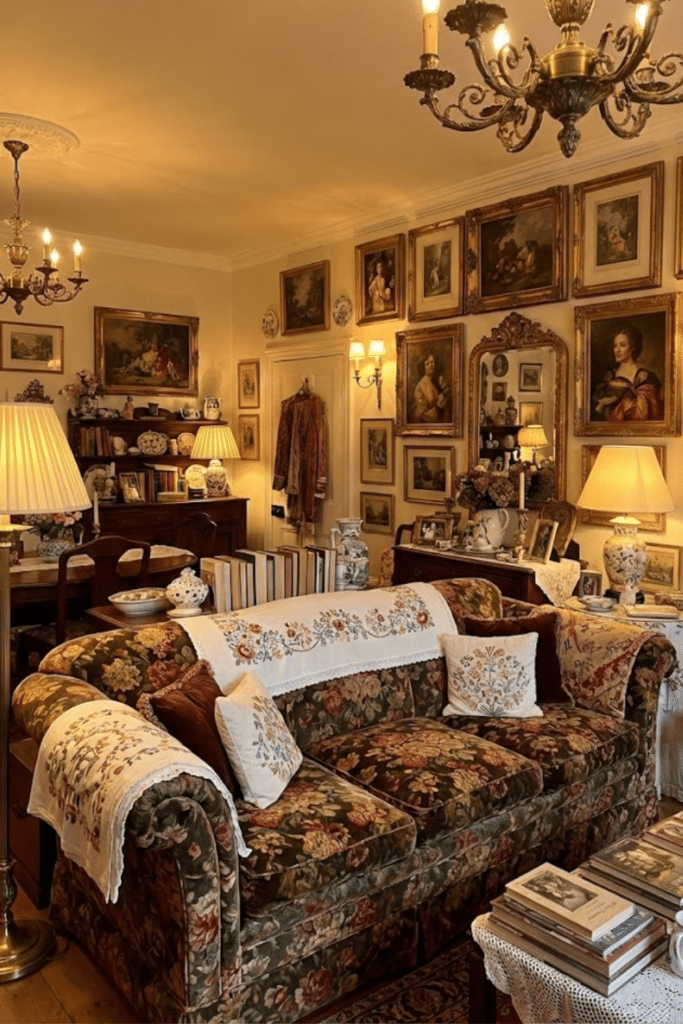
Fast forward to 2026, and that chair is literally the star of my living room. That is the heart of Heritage Maximalism. It’s not about buying a catalog look; it’s about mixing the old with the new to create a space that actually tells a story. We are saying goodbye to sterile, cookie-cutter rooms and hello to nostalgic warm atmosphere.
It’s Not Hoarding, It’s History
Now, don’t panic. I’m not telling you to fill your house with junk. There is a fine line between “curated chaos” and just… chaos. I learned this the hard way when I tried to display every single souvenir I’ve ever bought. My living room looked like a gift shop exploded.
Heritage Maximalism is different. It’s about taking those pieces with history—a chipped vase, a faded rug, or yes, a floral chair—and giving them a place of honor next to your modern stuff. It’s that “country home meets city apartment” vibe.
How to Mix Without the Mess
If you are wondering how to pull off antique furniture styling without your house looking like a flea market, here is what I’ve learned through trial and (lots of) error:
- Anchor with the New: If you have a crazy vintage sofa, keep the rug simple. I paired my grandma’s floral chair with a sleek, modern side table. The contrast calms everything down.
- Go Big on Patterns: Don’t be afraid of patterned upholstery. In 2026, we are seeing huge patterns on sofas. I used to be terrified of this, thinking it would look busy. But if you stick to a consistent color palette (like blues and creams), it actually looks super high-end.
- The “Weird” is Good: That weird brass lamp you found at a garage sale? Put it out. These items are conversation starters. I have a ceramic dog statue that is objectively ugly, but every person who visits asks about it.
Why You Need This Vibe
Honestly, looking around my living room now, I feel a sense of relief. It doesn’t look perfect. There is a scratch on the coffee table and the pillows don’t match. But it feels like home.
This trend is perfect if you are on a budget, too. You don’t need to buy everything new. Go raid your parents’ attic or hit up a thrift store. You are looking for things with soul. Vintage living room decor brings a warmth that brand-new furniture just can’t compete with.
So, go dig out those family heirlooms you’ve been hiding. Dust them off. Let your home be a little bit loud and a little bit messy. It’s way more fun than living in a showroom, I promise.
4. Biophilic Wellness Sanctuaries
I have to be real with you for a second. Living in the city, there are days when I feel like I haven’t taken a proper deep breath in weeks. You know that feeling? When you walk inside and the air just feels… stale? A couple of years ago, I tried to fix this by buying like, fifty house plants. I wanted a jungle.
Spoiler alert: I killed almost all of them. It was tragic. I had dead ferns shedding all over my carpet and I still felt stressed out.
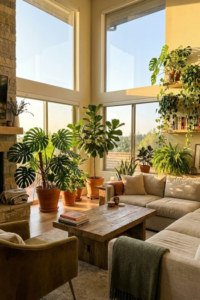
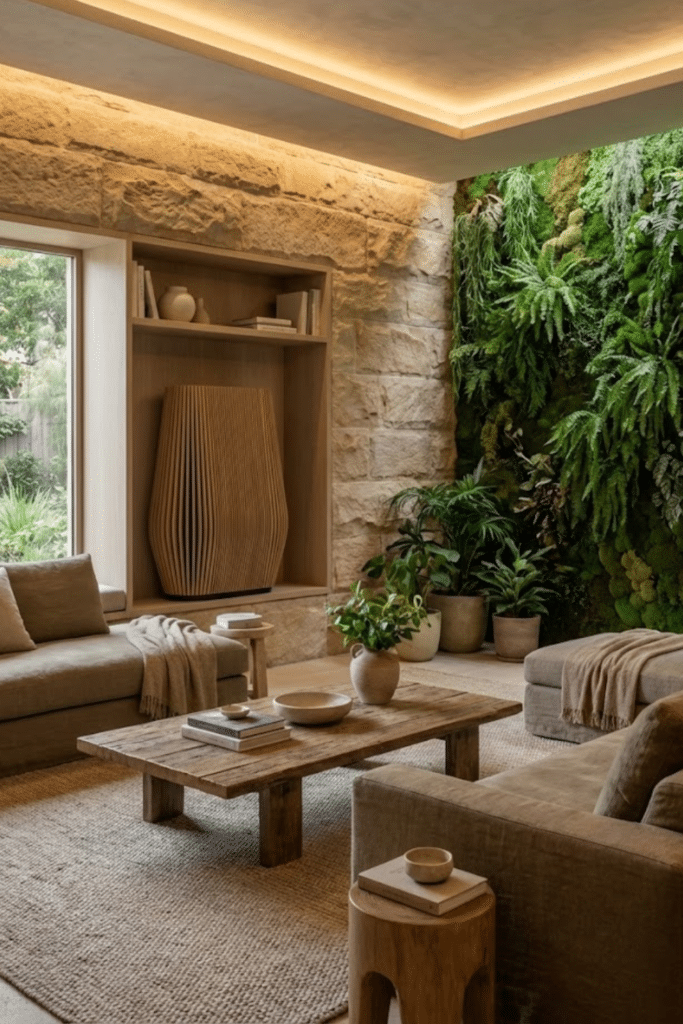
That was my wake-up call. I realized that biophilic design living room trends aren’t just about dragging a Fiddle Leaf Fig into the corner and hoping for the best. In 2026, it is way deeper than that. It is about turning your home into a literal life-support system. We are talking about wellness interior design that actually heals you after a long day.
The Air We Breathe
Here is something I learned the hard way: pretty furniture doesn’t matter if your head hurts from bad air. I finally invested in a serious air filtration system this year. I used to think these machines were ugly, clunky eyesores. But the new ones? They are practically invisible.
I found one that disguises itself as a side table (genius, right?). Now, my living room doesn’t just look good; it smells like rain on a pavement. If you are renovating, look into integrated systems. Air quality is the new luxury. It’s a game-changer for my allergies, let me tell you.
Lighting That Hugs You
Another mistake I made? Harsh lighting. I had these bright white LED downlights that made my living room feel like an interrogation room. My friends would come over and squint. It was bad.
The shift to indirect lighting ideas has saved my eyesight and my mood. I ripped out those bulbs and installed some soft cove lighting tucked into the ceiling. It washes the walls with light instead of blasting us from above. It mimics the softness of natural daylight. Now, when I sit down at night, my shoulders actually drop about two inches.
Nature Meets Tech
Since I have a “black thumb” (seriously, I can kill a cactus), I started looking into compact tech-driven gardens. These are cool little units that water themselves. I stuck one on my bookshelf with some basil and mint. It’s weirdly satisfying to see something green and alive that I haven’t managed to destroy yet.
We are also seeing a lot of raw materials like unpainted wood and rough stone. I swapped my shiny lacquer coffee table for a rough-hewn wooden one. It feels grounded. Touching natural textures just feels better than touching plastic, doesn’t it?
Why You Should Care
Look, the world outside is chaotic. Your living room needs to be your bunker. Your sanctuary. By focusing on natural elements and air purifying plants decor (even the fake ones if you have to!), you create a space that lowers your heart rate.
Start small. Change a lightbulb to a warmer tone. Buy an air purifier that doesn’t look like a spaceship. Get a stone coaster. It’s about creating a space where you can actually recharge, not just exist.
5. Conversational Layouts with Curvy Furniture
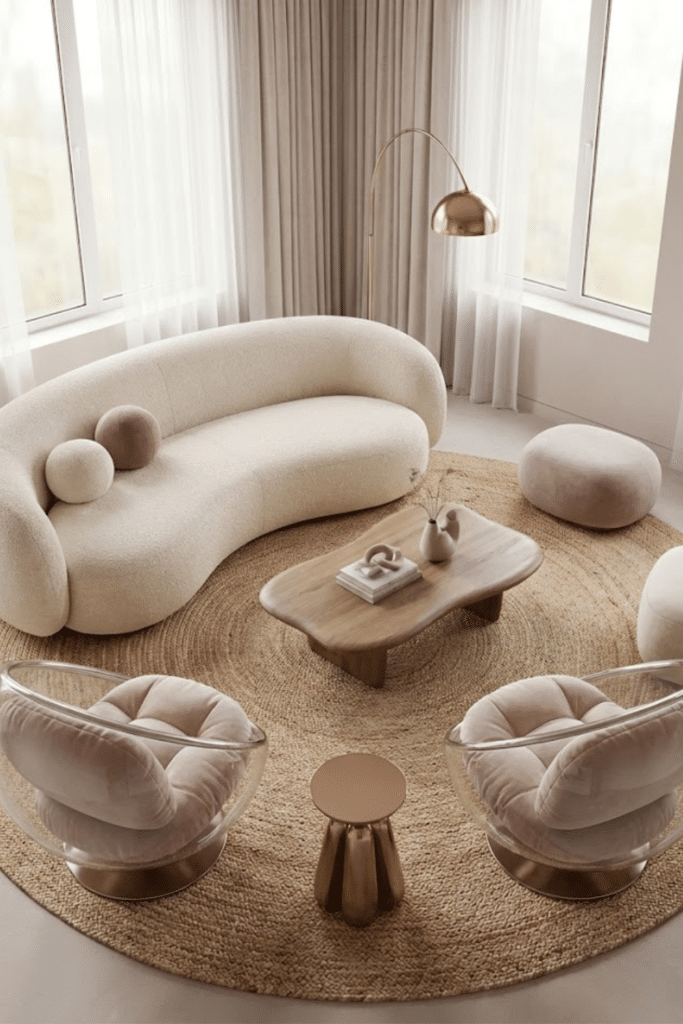
Let’s be real for a second. For the last decade, my living room was basically a shrine to my television. I had the big sectional, the armchair, and even the dog bed all pointed directly at that big black rectangle. It was like a movie theater, but with more laundry on the floor. When friends came over, we’d all sit in a line, staring forward. It was awkward. We weren’t really hanging out; we were just… parallel playing like toddlers.
That is why the shift toward conversational seating layouts in 2026 is my absolute favorite thing. We are finally taking the focus off the screen and putting it back on each other.
The Death of the “TV Shrine”
I decided to flip the script a few months ago. I was tired of shouting down the length of the sofa to talk to my husband. So, I did something drastic. I pulled the furniture away from the walls and floated it in the middle of the room. I turned the chairs to face the sofa.
At first, it felt wrong. My husband walked in and asked, “Where am I supposed to look?” But then, something cool happened. We actually started talking more. The living room remodeling ideas for 2026 are all about creating these little “lounges” where connection happens naturally.
Embracing the Curves
Now, let’s talk about the furniture itself. Straight lines are out. Curved sofa living room trends are in. I swapped my sharp, rectangular coffee table (the one that gave me a bruise on my shin every single week) for a round, soft ottoman.
I also fell in love with a kidney-bean shaped sofa. I know, it sounds retro, like something from a 70s sci-fi movie. But these organic furniture shapes soften the whole room. They guide you through the space rather than blocking you off.
How to Make It Work (Without Buying New Furniture)
You might be thinking, “I can’t afford a new bubble couch.” I get it. I didn’t buy everything new either. Here is how I hacked the look:
- The Angle Trick: Take your existing armchairs and angle them inward. Don’t square them off with the rug. Just that slight turn creates a welcoming vibe.
- Round It Out: If you have a boxy sofa, pile on round pillows. Throw a circular rug down. It tricks the eye.
- The “Floater”: Pull your furniture at least a few inches off the wall. It makes the room feel intimate rather than empty.
A Word of Warning
One mistake I made? I didn’t measure for the curves. Curvy furniture takes up space differently than square stuff. I bought a round chair that looked small in the store but ate up half my corner. Always measure!
This new layout has changed how we use the room. It’s softer, friendlier, and yes, we still watch TV—we just don’t worship it anymore. If you want a home that feels like a hug, try softening those edges.
6. Sustainable Eco-Luxe
I have a story that hurts my soul a little bit to tell. A few years ago, I bought this incredibly cheap coffee table online. It looked great in the picture—sleek, modern, totally my vibe. But when it arrived, it felt like it was made of cardboard and hope. Six months later, I put a heavy stack of books on it, and the leg literally snapped off. It collapsed in the middle of the night and terrified the dog.
That was the moment I broke up with “fast furniture.”
In 2026, we are seeing a huge shift towards Sustainable Eco-Luxe. And honestly? It is about time. We are done with buying things that are destined for a landfill in two years. We want things that last.
Quality Over Quantity (Finally!)
The term “Eco-Luxe” might sound intimidating, like you need to be a millionaire to afford it. But it’s really just a mindset shift. It means buying one really good thing instead of five cheap things.
I started saving up for pieces with traceable origins. I want to know where the wood came from. I want to know who made it. It’s a slower way to decorate, for sure. My guest room was empty for a year because I was saving for a proper bed frame. But now that it’s there? It feels solid. It doesn’t wobble. It’s conscious choices like this that make a home feel permanent.
The Return of Dark Woods
Here is another trend I didn’t see coming: the return of dark wood. For years, I only bought light oak or white furniture because I thought dark wood looked “heavy” or “old-fashioned.”
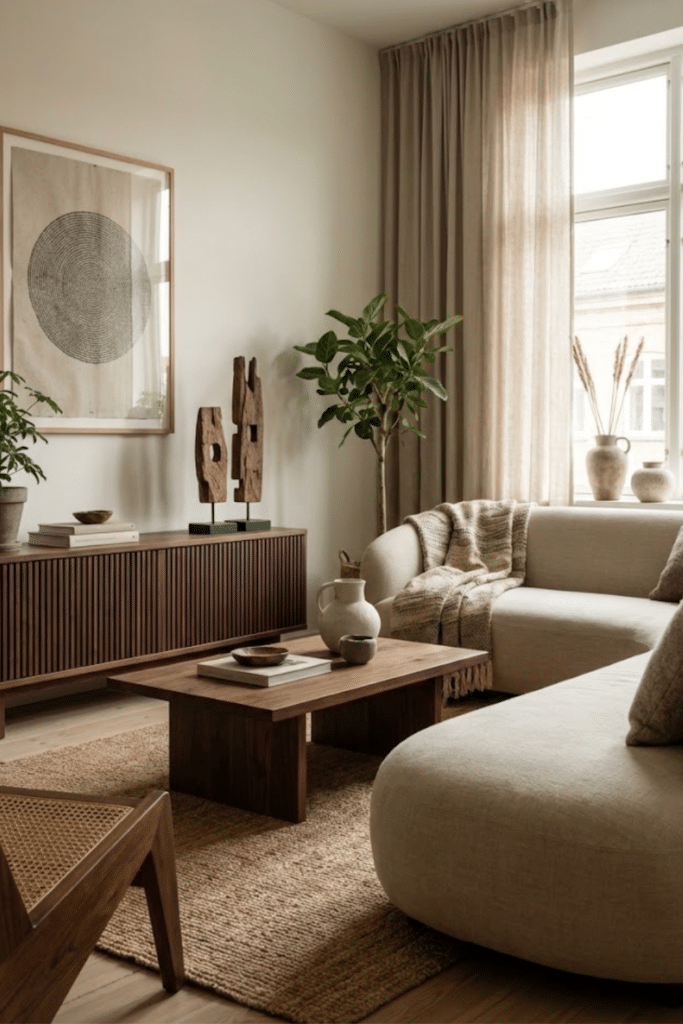
Boy, was I wrong. Dark walnut wood furniture and mahogany are back in a big way. I recently swapped my flimsy white entertainment center for a vintage walnut credenza I found at an estate sale. The difference is wild. The dark wood adds this incredible warmth and depth to the room. It feels grounded. Plus, it doesn’t show dirt nearly as much as the white stuff did (a huge win if you have kids or pets!).
Trash to Treasure, But Make It Art
Sustainability isn’t just about wood, though. It’s about art, too. I’ve been seeing these amazing jagged collages and mirrors framed in recycled materials. It’s taking something broken and making it beautiful.
I actually tried to DIY this. I took some old broken tiles and tried to make a mosaic tray. It didn’t turn out perfect—it’s a little lopsided—but it’s a conversation starter. It adds that handcrafted home accessories vibe that you just can’t get from a factory.
How to Shop Without Going Broke
If you are worried about the price tag of eco-luxe interiors, here is my advice:
- Buy Vintage: This is the most sustainable thing you can do. My “new” dining chairs are from 1980. They are built like tanks.
- Look for “Imperfection”: I bought a discounted rug because it had a small weaving error. It gives it character.
- Support Local: Find a local woodworker. Sometimes their prices are comparable to the high-end big box stores, but the quality is lightyears better.
Living sustainably feels good. It feels like you are building a home that will actually outlast you. So, stop buying the cheap stuff. Your wallet (and your dog) will thank you in the long run.
7. Tech-Integrated “Invisible” Smart Spaces
I have a confession: for the longest time, my living room looked like the clearance aisle at an electronics store. I had wires snaking everywhere. The router was blinking aggressively in the corner like a tiny disco. And don’t even get me started on the pile of five different remotes that nobody knew how to use. My “smart home” wasn’t smart; it was just annoying.
That is why I am all in on the 2026 trend of invisible smart spaces. We are finally moving past the gadget-obsessed phase. Now, technology is like a good butler—it’s there when you need it, and completely invisible when you don’t.
Hiding the ugly Stuff
The goal of hidden home tech is simple: you shouldn’t see the gear. I used to be proud of my massive speakers. Now? I want them gone.
I recently helped a friend install speakers that are literally inside the drywall. You paint over them, and the wall itself makes the sound. It blew my mind. But you don’t have to go that extreme.
Here is a mistake I made: I bought a huge, fancy smart TV and mounted it right over the fireplace. It looked like a black hole sucking the life out of the room. I finally swapped it for one of those “frame” TVs that displays art when it’s off. Now, it just looks like a gallery wall. It’s a total game-changer for smart home living room ideas.
Lighting That Actually Thinks
We need to talk about layered lighting tips. I used to just flip a switch and get blasted with light. But the new smart systems are wild. They follow the sun.
I installed a few smart bulbs that change temperature throughout the day. In the morning, it’s crisp and white to wake me up. By 8 PM, it automatically shifts to a warm, amber glow. It sounds small, but my sleep has never been better. It’s technology working for your biology, not against it.
The “Now You See It, Now You Don’t” Trick
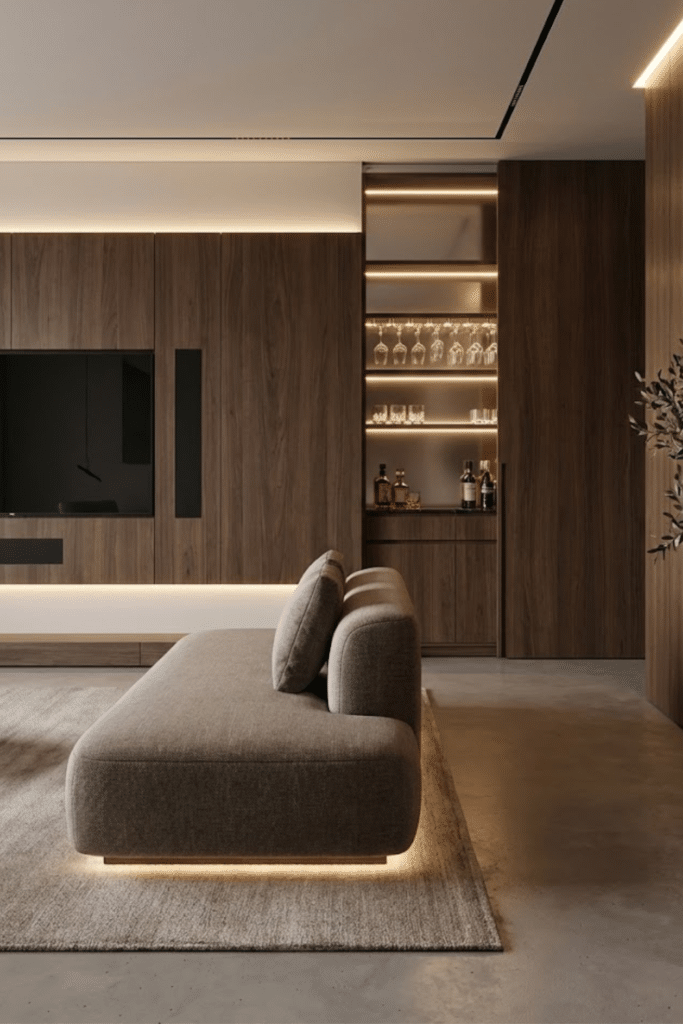
One of the coolest things popping up in 2026 is multifunctional living spaces with hidden surprises. I saw a design recently with a “tucked-away home bar.” It looked like a solid walnut cabinet during the day. But with a voice command, the panel slid up to reveal the drinks.
I tried to DIY a hidden charging station in a drawer last month. I drilled a hole in the back of my nightstand. I messed it up, and the wood splintered everywhere. But hey, now my phone charges out of sight, so I’m calling it a win.
Visualize Before You Buy
Another thing? We aren’t guessing anymore. Before I bought my last rug, I used an AI app to see exactly how it would look in my space. In the past, I would just buy stuff and pray it fit. I’ve returned so many sofas that the delivery guys know me by name. Using 3D visualization tools saves you from that “will it fit?” panic.
The best technology in 2026 is the kind you forget is even there. It creates a seamless experience. No more blinking router lights. No more ugly wires. just a home that works.
Conclusion
So, there you have it—the future of the living room is looking incredibly cozy, isn’t it? Whether you fall in love with the deep, moody vibes of coffee-drenched walls or the balanced harmony of Midimalism, 2026 is inviting us to create spaces that are authentically ours. It’s time to stop chasing fleeting trends and start building a home that supports your wellbeing and tells your story.
I am personally so excited to try moving my furniture into a “conversational layout” this weekend—goodbye, TV glare! Which one of these 7 living room designs are you itching to try? Let me know!
Pin this for later! (Don’t forget to save this to your “2026 Home Goals” board on Pinterest!)