Welcome to your future sanctuary! If you’ve been scrolling through Pinterest lately, you’ve probably noticed that the “Boho Chic” of 2026 has grown up. It’s no longer just about clutter and tapestries; it’s about intentionality, sustainable luxury, and a deep connection to nature. Did you know that incorporating natural elements like wood and plants into your bedroom can lower stress levels by up to 30%? That’s the power of modern bohemian design.
In this article, we’re going to explore how you can blend the free-spirited vibes of the past with the clean, calming aesthetics of 2026. Whether you are renting a small apartment or revamping a master suite, these ideas will help you curate a space that feels authentically you. We’re ditching the “fast fashion” decor for pieces that tell a story. Let’s dive into the textures, colors, and layouts that will define boho bedrooms this year!

1. Embrace the “Minimalist Boho” Aesthetic

Honestly, I used to be a total hoarder. You know the vibe—every inch of my bedroom walls covered in tapestries, dried flowers crumbling on every surface, and enough throw pillows to suffocate a small village. I thought that was “boho.” But looking back, it wasn’t a style; it was just a dust trap. I learned the hard way that true bohemian style isn’t about how much stuff you can cram into a room. It’s about the feeling of the space.
In 2026, the minimalist boho style is all about breathing room. It took me years to realize that “negative space” isn’t empty space—it’s a pause. It lets your eyes rest. When I finally cleared out half my junk, my bedroom didn’t feel empty. It felt expensive. It felt intentional. And let me tell you, waking up without looking at a pile of clutter? It changes your whole morning mood.
The “One In, Two Out” Rule
Here is a practical tip I swear by: for every new item you bring in, two old ones have to go. It sounds harsh, but it works. When you adopt a modern bohemian decor mindset, you stop buying mass-produced trinkets just to fill a shelf.
I remember finding this gorgeous, hand-carved wooden bowl at a flea market. It was pricey, and ten years ago, I would have bought five cheap plastic ones instead. But I bought that one bowl. I put it on my dresser with absolutely nothing else around it. It looked like art. That’s the secret. You want pieces that tell a story, not pieces that just take up space. If you’re holding onto a chipped vase just because it was $5, let it go. Trust me on this one.
Building a Calming Canvas
You can’t do minimalist boho without the right foundation. I made the mistake of painting my walls a dark teal once because I saw it in a magazine. Big mistake. It made the room feel like a cave.
For this look, you need a warm, neutral base. I’m talking about creamy whites or soft beiges. My go-to is Benjamin Moore’s “White Dove”—it has just enough warmth so it doesn’t feel like a hospital. When your walls are quiet, your textures can do the talking. Think of your room as a gallery; the walls are just there to highlight your cool, sustainable luxury finds.
Function Over Fluff
Here is the thing about decluttering: it doesn’t mean your room has to be boring. It just means everything needs a job. I used to have a chair in the corner that was purely for holding laundry (we’ve all been there). I swapped it for a sleek, low-profile wooden bench. Now it looks great, keeps the sightlines open, and I actually sit on it to put my shoes on.
If an item doesn’t serve a purpose or bring you serious joy, it’s just noise. Get rid of the noise. Your sleep quality will thank you.
2. Curate a Biophilic Sanctuary with Statement Plants
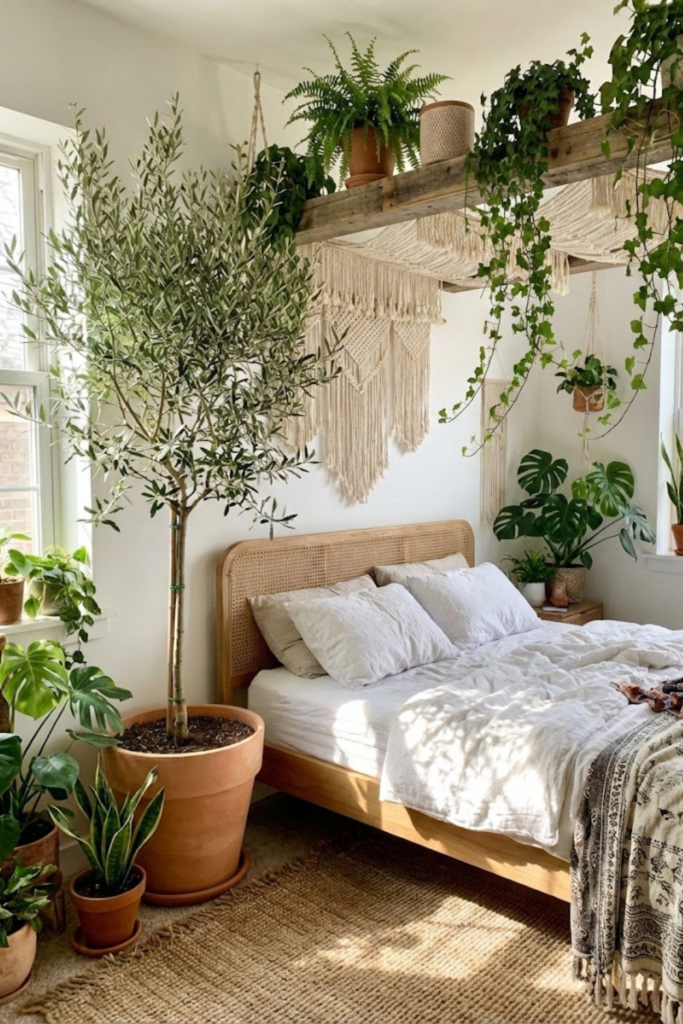
I used to think I had a “black thumb.” Seriously, I could look at a fern and it would turn brown out of spite. For the longest time, my bedroom was a plant-free zone because I was tired of throwing away dead leaves. But then I read about biophilic interior design, which is just a fancy way of saying humans need nature to feel calm. I decided to give it one more shot, but this time with a plan.
Bringing plants into the bedroom changed the whole vibe of my mornings. It’s not just about looks; waking up to fresh green leaves instead of a blank wall does something to your brain. It makes the air feel fresher, and honestly, taking care of something living helps you slow down. But you have to pick the right plants, or you’re just buying yourself a chore.
Stop Buying High-Maintenance Divas
Here is the biggest mistake I made early on: buying plants because they looked cool on Instagram, not because they fit my life. I once bought a Fiddle Leaf Fig. That tree was a total drama queen. If I moved it two inches to the left, it dropped three leaves.
For a relaxing bedroom sanctuary, you want plants that are tough. My absolute favorite is the Snake Plant. I put one in the corner of my room about three years ago, and I swear I forget to water it for weeks at a time. It doesn’t care. It just sits there looking sculptural and scrubbing the air. Peace Lilies are great too because they literally droop when they are thirsty—it’s like they are talking to you. If you want better sleep, start with these air-purifying workhorses.
Go Vertical When Floor Space is Tight
My bedroom isn’t exactly a palace. I didn’t want to trip over pots in the middle of the night. That’s when I discovered the magic of hanging planters. Using macramé hangers or wall-mounted pots draws your eye upward, making the ceilings feel taller.
I have a Pothos plant on a high shelf right now. Its vines trail down almost to my nightstand. It creates this lush, jungle feel without taking up a single square inch of floor space. Plus, Pothos are almost impossible to kill. If you see yellow leaves, you’re watering too much. Simple as that.
The “Big Tree” Energy
If you have a bit more room, one large plant makes a bigger impact than ten tiny ones. I swapped out a cluttery chair for a large Rubber Plant (Ficus Elastica). It has these dark, moody leaves that fit perfectly with the 2026 home decor trends. Unlike the Fiddle Leaf, the Rubber Plant is pretty chill.
Pairing these green giants with natural pots—like unglazed terracotta or a woven wicker basket—really grounds the space. It connects the indoors with the outdoors. Just remember to rotate your big plants every once in a while so they grow straight. It’s a small trick that makes a huge difference.
3. Layer Textures for “Chaos” & Comfort
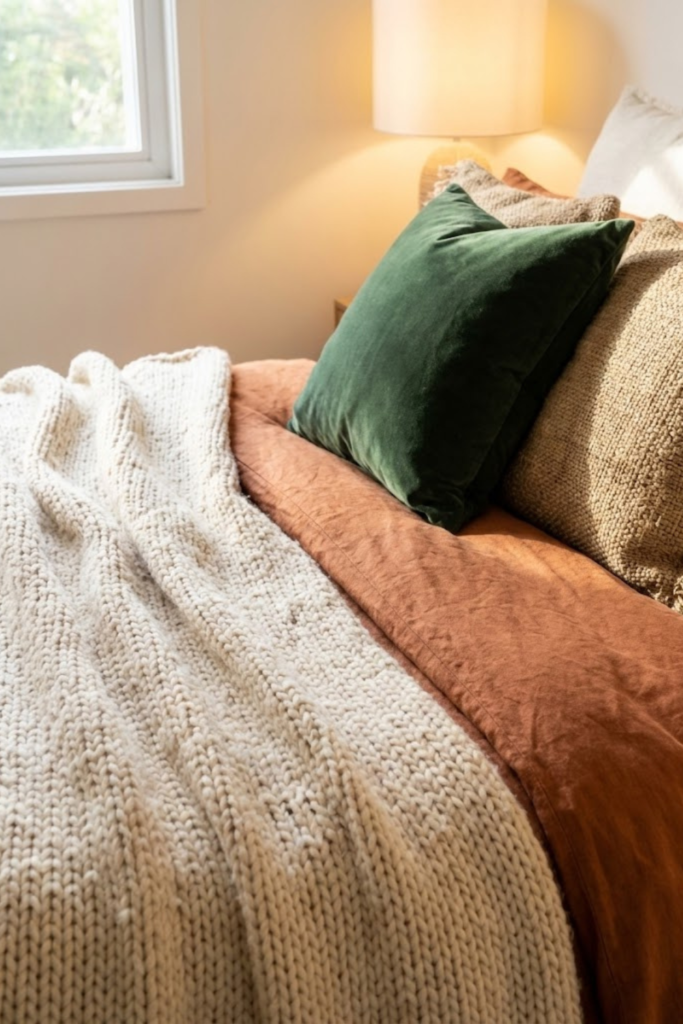
I have a confession: for years, I was addicted to those “bed-in-a-bag” sets. You know the ones—where the comforter matches the sheets, which match the pillowcases, and everything is made of the exact same shiny polyester material. I thought I was being an adult because everything coordinated. But my room felt… flat. It looked like a motel room, not a home. It wasn’t until I started messing things up on purpose that my bedroom actually started to feel cozy.
The “chaos” trend of 2026 isn’t about being messy; it’s about breaking the rules of matching. It is about engaging your sense of touch, not just your sight. When you walk into a room, you should want to reach out and grab a blanket. If everything is smooth and perfect, you’re afraid to sit down.
The Art of the Unmade Bed
We need to stop obsessed with ironing our bedsheets. Seriously, who has time for that? The best thing I ever did for my bedroom style was switching to linen bedding. Linen is supposed to look wrinkled. It has this relaxed, lived-in vibe that instantly makes you want to nap.
But don’t stop there. The trick to that fluffy, cloud-like look you see on Pinterest is layering different weights. I usually have my linen duvet, but then I throw a heavy, chunky knit wool blanket at the foot of the bed. Then, I add a couple of velvet throw pillows. The mix of the rough wool, the cool linen, and the soft velvet creates a depth that a matching set can never give you. It looks “messy” in a way that says, “I just woke up like this,” but stylishly.
Opposites Attract
When picking out decor, I always try to pair opposites. If I have a really soft, squishy armchair (bouclé fabric is huge right now and feels like a teddy bear), I’m not going to put a soft rug under it. That’s too much mush. Instead, I’ll pair it with a rough jute or sisal rug.
This contrast grounds the space. I learned this when I bought a sleek, modern velvet bench. It looked out of place until I threw a rough sheepskin over it. Suddenly, the friction between the sleek fabric and the wild fur made sense. It creates visual interest without needing bright colors.
Don’t Forget the Walls
Texture isn’t just for pillows. One of my favorite weekend projects was applying limewash paint to my wall behind the bed. Regular paint is flat, but limewash has this chalky, cloudy texture that catches the light differently throughout the day. It adds a subtle movement to the room. If painting sounds too hard, even hanging a large woven tapestry or a macramé piece can break up a boring flat wall. It stops the room from feeling like a shiny plastic box and gives it that old-world, earthy charm we are all chasing this year.
4. The “Literary Chic” Reading Nook
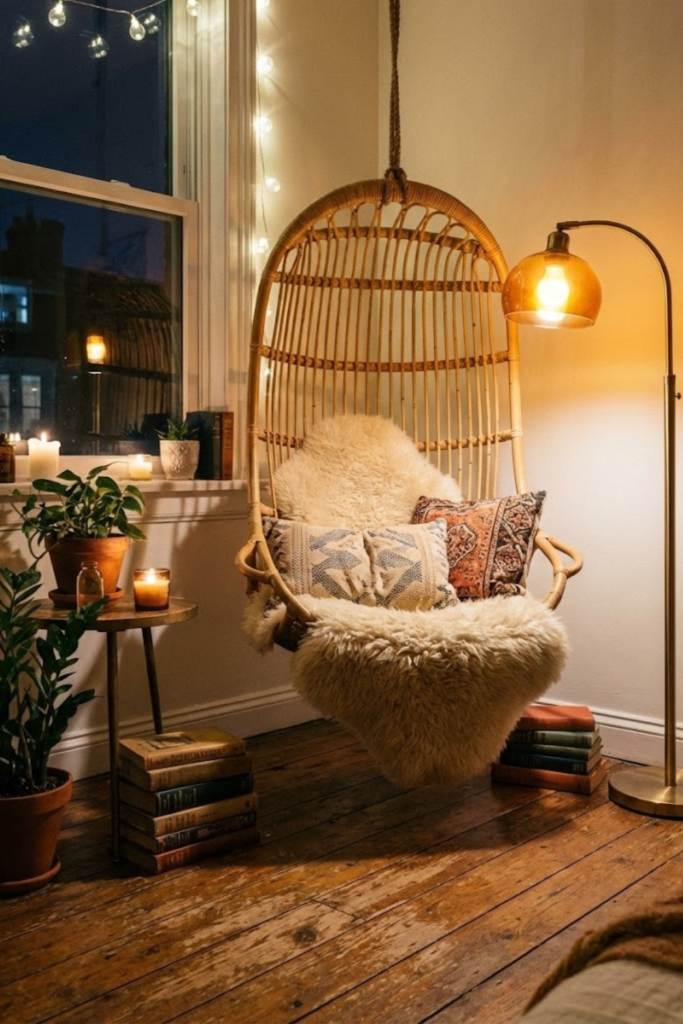
I’m an English teacher, so books are basically my life. But for the longest time, my “reading nook” was just me propped up on three pillows in bed, fighting to keep my eyes open. It didn’t work. I realized that if I wanted to actually read—and not just doom-scroll on my phone—I needed a spot dedicated just to that. No screens allowed.
The “Literary Chic” trend is huge in 2026 because we are all desperate to unplug. But you don’t need a massive library with a rolling ladder (though, dream big, right?). You just need a quiet corner and the right mindset.
The Floor is Your Friend
If you have a small bedroom like mine, you might think you don’t have space for a big armchair. That is where floor seating saves the day. I bought two oversized floor cushions—think big, squishy squares—and stacked them in the corner by the window. Instantly, that dead space became my favorite spot in the house.
There is something about sitting low to the ground that makes you feel grounded and calm. It’s casual. It’s unpretentious. If your knees aren’t fans of the floor, try a hanging hammock chair. I installed one last summer, and it was easier than I thought—just make sure you find a stud in the ceiling! It swings gently while you read, which is incredibly soothing. Plus, because it hangs, you can see the floor underneath it, which tricks your eye into thinking the room is bigger than it is.
Imperfect Shelving
Please, stop organizing your books by color. It looks pretty on Instagram, but it’s a pain when you actually want to find something. In a true boho space, books should look like they are being read, not just displayed. I installed some rough-cut wooden floating shelves, and I let them get a little messy.
I stack some books vertically and some horizontally. I stick a little trailing plant or a framed photo in the gaps. It looks “lived-in,” not staged. That slightly cluttered, intellectual vibe is what makes the space feel warm. It says, “People actually live here.” If you run out of shelf space, stacking books on the floor next to your cushions is totally acceptable. It adds to the charm.
Lighting the Page
You cannot read in the dark, but overhead lights are the enemy of relaxation. They are way too harsh for a cozy evening. I hunted down a vintage brass floor lamp at a yard sale for twenty bucks. It has a warm, yellow bulb that shines right over my shoulder.
This specific lighting creates a little bubble that separates me from the rest of the room. If you can’t find vintage, a simple rattan pendant light with a plug-in cord works wonders. Just hang it low to create that cozy, campfire feeling. You want the light to focus on your book, not flood the whole room.
5. Incorporate an Earthy & Moody 2026 Color Palette
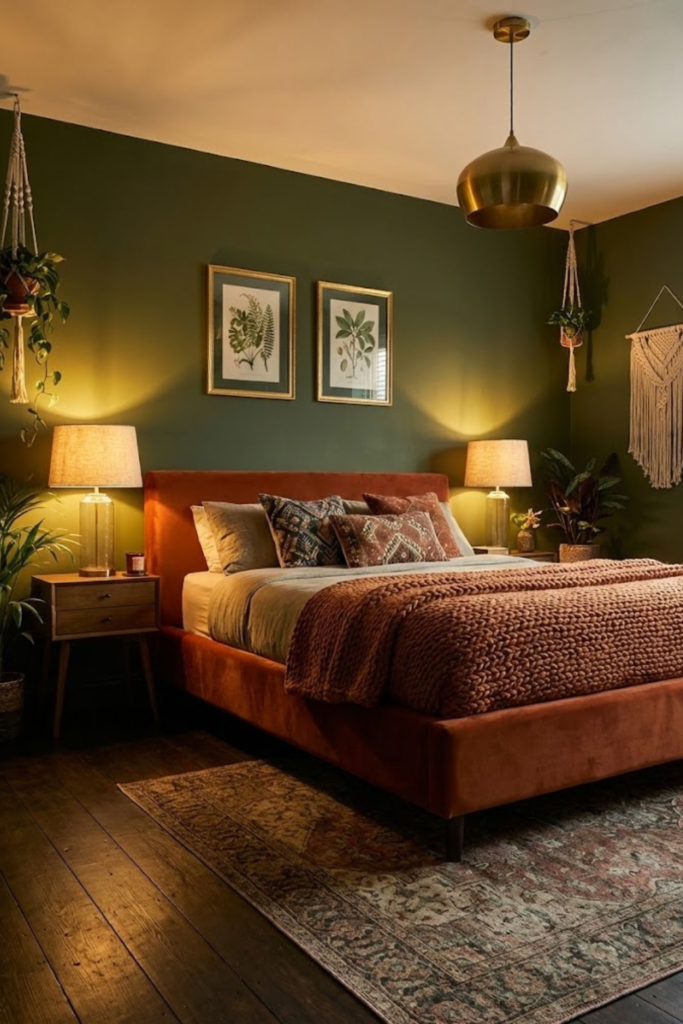
I used to be terrified of paint. For years, my walls were “Builder’s Beige.” It was safe, it was clean, and honestly, it was incredibly boring. I was afraid that if I picked a color, I’d hate it in a week. But living in a white box eventually started to feel cold. I realized that to make my bedroom feel like a real escape, I needed to embrace the dark side. Well, the moody side, at least.
In 2026, the trend has shifted way away from stark white. We are craving warmth. I finally took the plunge and painted my accent wall a deep, muddy color, and it completely changed how I sleep. It feels like a hug.
Beyond the Beige Box
If you are thinking of “color,” don’t panic. We aren’t talking about neon green here. The colors trending right now are ripped straight from nature. Think of a walk in the forest or a desert sunset. My current obsession is “Deep Olive.” It’s green, but it has enough gray in it that it acts like a neutral. It goes with everything.
“Mustard” and “Rust” are huge right now too. I know, “Rust” sounds like something you scrub off an old bike, but on a throw blanket or a pillow? It looks rich and expensive. These colors warm up a room instantly. If painting a whole wall scares you, start small. I bought a duvet cover in burnt orange, and it gave my room this golden hour glow even at noon.
Grounding with Dark Accents
Here is a trick I learned: if you use a lot of warm colors, you need something dark to stop it from looking like a pumpkin explosion. You need contrast. I added a charcoal gray rug and swapped my white picture frames for black ones.
Darker accents, like deep espresso wood or matte black metal, act like an anchor. They stop the room from floating away. It adds a bit of edge to the boho vibe, making it feel more grown-up and less like a dorm room.
The Math of Decorating (The 60-30-10 Rule)
Okay, I’m a teacher, so I have to sneak in a little math. But I promise this is easy. The best way to balance these moody colors is the 60-30-10 rule.
- 60% of your room is your main color (usually your walls or large rugs). For me, this is still a warm cream color on three walls.
- 30% is your secondary color (bedding, curtains). This is where I use that deep olive green.
- 10% is your accent color (pillows, lamps, art). This is where that pop of rust or mustard comes in.
Sticking to this ratio stops the room from looking chaotic. It gives you a roadmap so you don’t just buy random stuff and hope it matches. It helps you build a palette that feels intentional and cozy.
6. Sustainable & Upcycled Vintage Finds
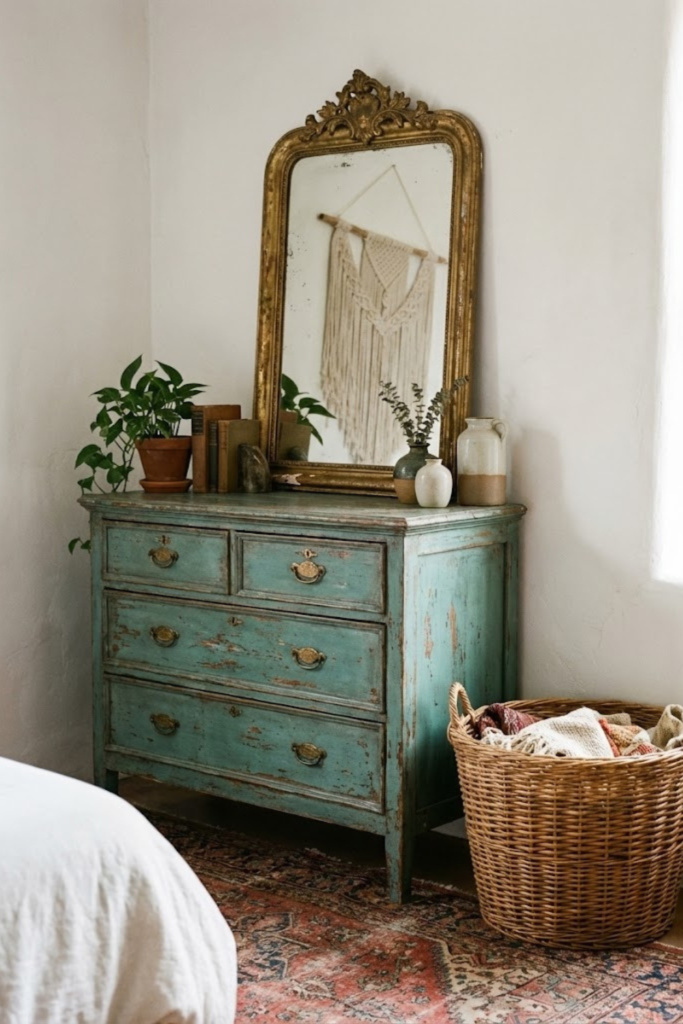
I used to be the queen of flat-pack furniture. You know exactly what I’m talking about—those heavy cardboard boxes that show up at your door, filled with sawdust and regret. I’d spend four hours fighting with a tiny Allen wrench, only for the drawer front to fall off six months later. It was wasteful, frustrating, and honestly, kind of cheap-looking.
When I started getting serious about my home decor, I realized that the most stylish homes aren’t full of brand-new stuff. They are full of old stuff. Switching to sustainable home decor wasn’t just an ethical choice for me; it was the only way to get that authentic, lived-in look that defines boho chic in 2026.
The Magic of the “Thrift Flip”
Don’t be scared of a little sandpaper. I remember finding this hideous, dark brown nightstand at a local charity shop. It smelled like my grandma’s attic and had a water ring on the top. But it was heavy. It was real wood, not particle board. I paid twenty bucks for it.
I spent a Saturday afternoon in the backyard stripping off the old, shiny varnish. It was messy, sure, but when I revealed the raw, light oak underneath? It was gorgeous. I just sealed it with a little wax, and now it looks like a piece that would cost hundreds of dollars at a boutique. Plus, there is a serious sense of pride when you look at something and think, “I saved that.”
Rattan Revival
If you want true boho vibes, you need some rattan or wicker. But have you seen the prices of new rattan furniture lately? It is wild. The good news is that the 1970s were full of this stuff, and a lot of it is still floating around in thrift stores and estate sales.
I found a vintage peacock chair—you know, the ones with the big, fan-like back—at a garage sale. It had a broken weave in one spot, but a little wood glue fixed it right up. These vintage pieces bring a warmth and texture that you just can’t get from metal or plastic. They make the room feel softer.
Why “Imperfect” is Better
The problem with buying everything new is that your room ends up looking like a catalogue page. It lacks soul. It feels sterile. When you mix in upcycled furniture, you add character.
My dresser has a few scratches on the side. I didn’t fix them. They tell a story. Maybe a kid played with toy cars on it forty years ago. Who knows? These little imperfections stop the room from feeling too precious. It invites you to actually live in the space, rather than just look at it. Plus, keeping old furniture out of the landfill is a huge win for the planet. It feels good to sleep in a room that reflects your values.
7. Ambient Lighting with Rattan and Fairy Lights

I have a strict rule in my house: after 8 PM, the “Big Light” stays off. You know the one—that main ceiling light that floods the room and makes everything look like a dentist’s office. For years, I didn’t understand why my bedroom felt stressful at night, even when it was clean. It was the lighting. I was blasting myself with bright, blue-white light right before bed. No wonder I couldn’t sleep.
Creating that dreamy boho chic aesthetic is basically impossible with bad lighting. You can have the coolest furniture in the world, but if the lighting is harsh, the room is going to feel cold. To get that cozy vibe, your room needs to glow, not shine.
The Magic of Layers
You can’t just rely on one lamp. That was my big mistake for a long time. I had one tiny lamp on my nightstand and nothing else. The room felt unbalanced and full of dark, scary corners. Now, I use what designers call “layered lighting,” but I just call it “mood lighting.”
I have a floor lamp in the reading corner, a small ceramic lamp on my dresser, and string lights near the window. When you turn them all on together, it creates these soft pools of light that make the room feel safe and warm. It hides the dust bunnies in the corners, too, which is a nice bonus. If you are renting and can’t rip out the ugly ceiling fixtures, just ignore them. Don’t turn them on. Use plug-in lamps instead to control the mood.
Woven Shadows
I finally swapped out my basic glass light fixture for a big, woven bamboo pendant last year. It wasn’t expensive, but it changed everything. When the light shines through the gaps in the bamboo, it casts these beautiful, intricate shadows on the walls. It is like instant wallpaper made of light.
These natural fiber fixtures—whether it’s rattan, seagrass, or bamboo—add texture to the ceiling, which is a spot we usually ignore. It makes the room feel organic. Just make sure to dust them occasionally with a feather duster; I learned that the hard way when a dust bunny fell right on my pillow.
Fairy Lights Are for Grown-Ups
I used to think fairy lights were just for college dorms or teenagers. I was wrong. I bought a cheap strand of copper wire lights and draped them loosely over my curtain rod. It adds this tiny, magical sparkle that makes me smile every time I walk in. It feels whimsical without looking childish.
The most important thing, though, is the color of the bulb. This is the hill I will die on: never, ever buy “Daylight” or “Cool White” bulbs for a bedroom. They are too blue and wake your brain up. You want “Warm White” bulbs (look for 2700K on the box). They mimic the color of a sunset or candlelight. It tells your brain it is time to wind down and rest.
Conclusion
So, there you have it. That is my whole playbook for getting that boho chic vibe without turning your room into a chaotic mess. It’s funny, looking back at where I started—with the cheap posters and the scratchy polyester sheets—I realize that building a home takes time. You can’t just snap your fingers or buy a “room in a box” and expect it to feel like you.
The biggest lesson I’ve learned is that your bedroom should be the one place where you can actually breathe. The world outside is loud and fast. Your room shouldn’t be. By clearing out the junk (seriously, do the “one in, two out” rule), bringing in some tough plants that won’t die on you, and focusing on warm, cozy lighting, you change how you feel every single day. It’s not just about how it looks for a photo; it’s about how you sleep and how you wake up.
Don’t feel like you have to do all of this this weekend. That is a recipe for burnout. Start small. Maybe this week you just hunt for a vintage lamp or paint one wall that deep olive color. Maybe you just strip the paint off an old nightstand you already have. The best rooms are the ones that are collected slowly over time. They have stories. They have chipped paint and weird little knick-knacks that only make sense to you. That is what makes it “boho.”
It took me a long time to realize that “style” isn’t about spending a fortune. Some of my favorite things in my room—like that beat-up wicker chair and my stack of second-hand books—cost almost nothing. It’s about being creative with what you have. It’s about looking at a boring corner and seeing a potential reading nook where you can hide away with a cup of tea.
And please, don’t stress about being perfect. If your rug is a little crooked or your books aren’t color-coded, who cares? Real life isn’t perfect. Your home is for living in, not for impressing strangers on the internet. Just focus on making it warm, inviting, and safe. That is what really matters in 2026.
Ready to start your bedroom transformation? Pin this article to your “Home Decor 2026” board on Pinterest to save these ideas for later!