Did you know that the average person spends about 26 years of their life sleeping? That’s a lot of time staring at your ceiling! If your bedroom feels more like a storage unit than a sanctuary, it’s time for a wake-up call. In 2026, bedroom design is ditching the sterile “showroom” look for spaces that prioritize deep rest, emotional connection, and personal joy. We aren’t just talking about a new coat of paint; we’re talking about “quiet luxury” that whispers relaxation and technology that works invisibly to help you sleep better. Whether you crave the grounding embrace of nature or the bold energy of “dopamine decor,” your bedroom should be the one place where you can truly exhale. Let’s dive into the trends that are redefining rest this year!
1. The Biophilic Sanctuary: “Pattern Drenching” with Nature

I have to be honest with you—I used to be a “plant killer.” A few years ago, I decided my bedroom needed to feel more like a forest and less like a sterile box. I went out and bought five fiddle leaf figs. Expensive ones. Within a month? All dead. Brown, crunchy leaves everywhere. It was honestly depressing to wake up to a graveyard of expensive houseplants every morning!
That is when I realized that biophilic design doesn’t always mean you have to be a master gardener. Sometimes, you just need to fake it ’til you make it.
My “Swamp Thing” Disaster
After the plant fiasco, I tried painting my walls a dark forest green. I thought it would be cozy. Instead, it looked like a swamp. The room felt small and dark, and I hated it. I wasted a whole weekend and two gallons of paint.
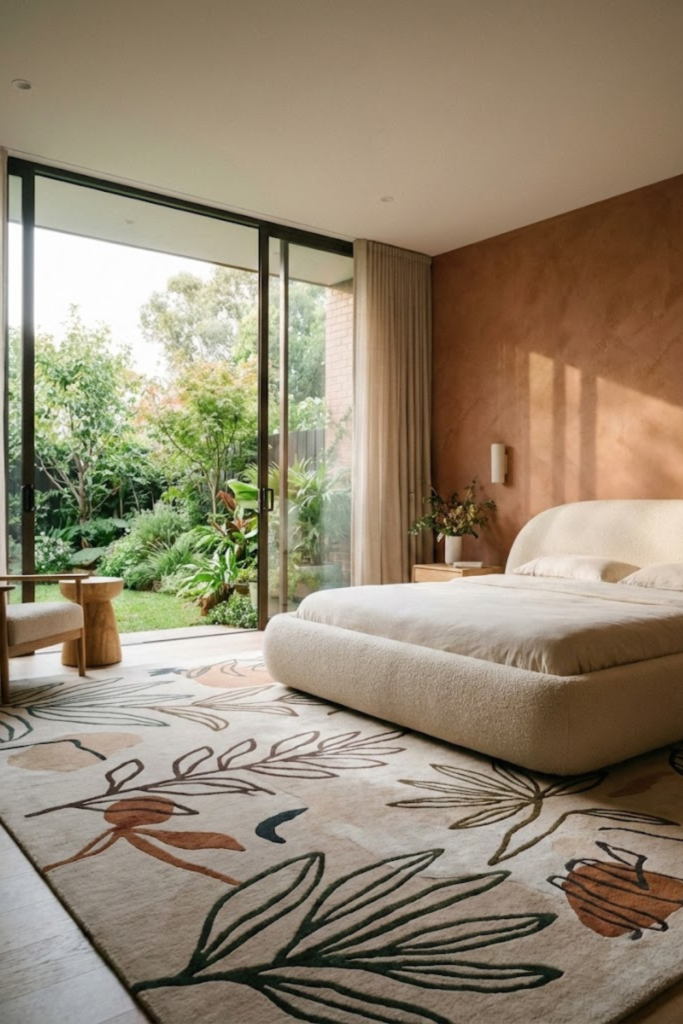
That failure led me to what is huge right now in 2026: pattern drenching. It sounds intense, right? But it’s actually a lifesaver. Instead of just painting a wall, you wrap the room in nature-inspired patterns. It gives you that calming, outdoor feeling without the pressure of watering anything.
Why You Should Try Drenching
Here is the deal. Pattern drenching is when you take a bold botanical wallpaper—think big ferns, mossy textures, or vintage florals—and apply it to all four walls. Some brave souls even do the ceiling!
I finally tried this in my own bedroom using a large-scale fern print. I was terrified it would look cluttered. But strangely, it did the opposite. It blurred the corners of the room and made the space feel expansive, kind of like being in a real forest. It’s a trick of the eye that works wonders.
Practical Tips I Learned the Hard Way
If you want to try this bedroom trend, learn from my mistakes so you don’t end up crying over wallpaper paste:
- Watch the Scale: If your room is small, avoid tiny, busy patterns. They can make you feel dizzy. Go for larger, sweeping leaves or flowers. It’s much easier on the eyes.
- The 60-30-10 Rule: Since the walls are loud, keep your furniture quiet. I used natural wood for my bed frame (about 30% of the room) and plain linen sheets. It balances the energy.
- Don’t Skimp on Paste: I tried to save money on cheap adhesive once. The paper started peeling off the corners in a week. Just buy the good stuff.
Research actually shows that seeing nature patterns can lower your heart rate, even if the nature isn’t “real.” So, if you want a sanctuary that hugs you back, pattern drenching is the way to go. Just measure your walls twice—I ordered one roll too few and had to wait two weeks for the rest to arrive. A total nightmare!
2. Invisible Tech & The “Smart Sleep” Ecosystem

I have to confess something embarrassing. A few years ago, my nightstand looked like a spaceship dashboard. I had a digital clock with bright red numbers, a phone charger that glowed green, and a humidifier with a blinking blue light that never turned off. I honestly don’t know how I slept at all. I was waking up tired every single day, and I blamed my mattress.
It turns out, the mattress wasn’t the problem. It was all that “visual noise.”
That is where this new idea of invisible tech comes in. It is huge for 2026. The goal is simple: technology should help you sleep, not distract you. It should be there, but you shouldn’t really see it.
The “Blinking Light” Nightmare
I decided to strip everything back. I used black electrical tape to cover every single LED light in my room. It looked tacky, but it worked. I slept better that first night than I had in years.
But obviously, tape isn’t a great long-term look. So, I started looking into smart home gadgets that don’t look like gadgets. I found out that the best tech for sleep is the kind that hides.
Waking Up With the Sun (Sort Of)
The biggest game-changer for me was switching to circadian lighting. That is a fancy way of saying “light bulbs that change color.”
I bought these smart bulbs that automatically shift from a bright, cool white in the morning to a warm, amber glow at sunset. It sounds like a small detail, but it tricks your brain. When the lights get warm and dim in the evening, my body actually starts to feel sleepy.
I also invested in smart blinds. I used to jolt awake to a loud alarm clock that made my heart race. Now, my blinds slowly roll up at 7:00 AM. Waking up to actual sunlight instead of a screaming buzzer changed my entire morning mood. I’m a lot nicer to my family before coffee now!
My Advice for Beginners
You don’t need to rewire your whole house to get this right. Here is what I tell my friends who want to try smart sleep tech:
- Start with the Bulbs: You can buy smart bulbs at the hardware store for like $15. Put them in your bedside lamps. Set them to turn warm/orange an hour before bed.
- Hide the Chargers: I drilled a hole in the back of my nightstand drawer and put my charging strip inside. Now, I plug my phone in and close the drawer. Out of sight, out of mind. No more scrolling at 2 AM.
- Ditch the Wearables: I stopped wearing my smartwatch to bed. It was stressing me out to see my “sleep score” every morning. Now I use a sensor mat that goes under the mattress. It tracks my sleep without me having to wear a chunky plastic bracelet.
If you are tired of feeling wired and tired, try hiding your tech. It might just be the best sleep medicine you can buy.
3. Soft Minimalism & Japandi 2.0
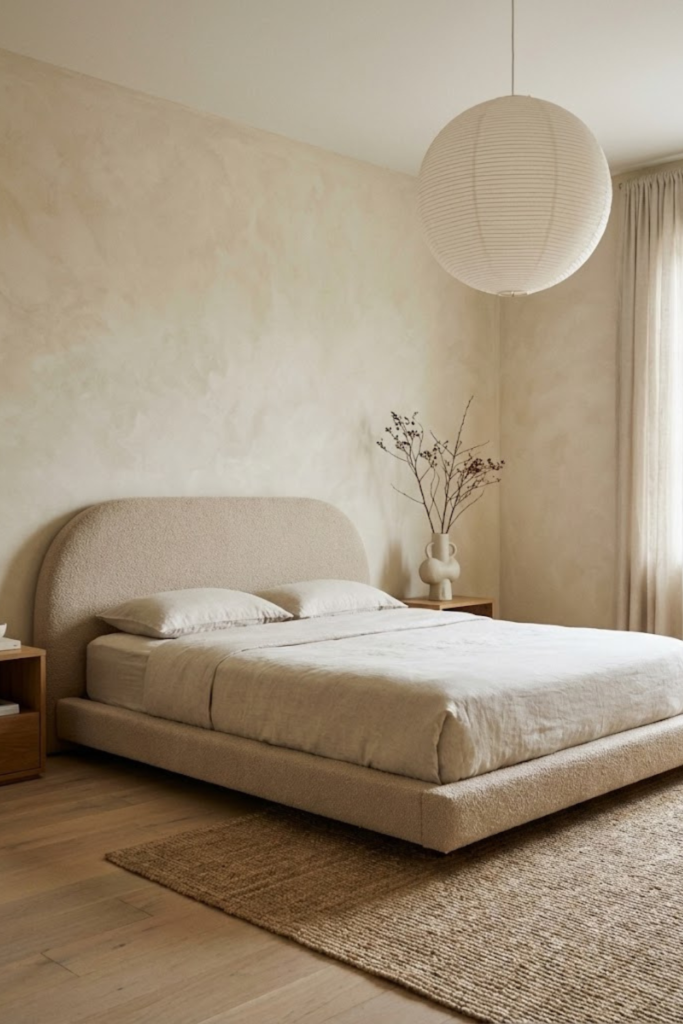
I remember when I first tried the whole “minimalism” thing about ten years ago. I got rid of everything. I painted my walls bright white, bought a white bedspread, and cleared off every surface. I thought it would make me feel calm. Instead, I felt like I was living in a hospital waiting room.
I was honestly afraid to sit on my own bed in my jeans because I didn’t want to get it dirty. It wasn’t relaxing; it was stressful. My friends would come over and stand awkwardly because the room felt so cold and serious.
That is why I am so relieved that Japandi style is changing in 2026. We are calling it “Soft Minimalism” or “Japandi 2.0,” and it fixes all those cold, sterile problems.
Why “Stark White” is Out
The old way was all about sharp edges, glass, and cool grays. It looked great in photos, but it felt terrible to live in. I realized that humans aren’t meant to live in boxes that look like ice cubes.
Soft minimalism keeps the clutter away—so you still get that clean, organized feeling—but it adds warmth back in. It mixes the functionality of Scandinavian design with the rustic simplicity of Japanese design. But the big update this year? We are swapping gray for beige, cream, and soft browns.
Curves are the New Sharp Edges
I recently swapped out my square, sharp-edged nightstands for round ones. It sounds like a tiny change, but it completely changed the flow of the room. I stopped banging my shins in the dark, which is a huge plus!
In 2026, furniture is getting curvy. You will see “boucle” everywhere—that’s that knobbly, nubby fabric that looks like a sheep’s coat. I bought a curved accent chair in this fabric, and it is the most popular seat in the house. It invites you to sit down, unlike my old stiff chair that looked like a modern art sculpture.
How to Warm Up Your Space
If your room feels a bit too chilly or empty, you don’t need to buy all new furniture. Here is what worked for me:
- Change the Bulbs: I cannot stress this enough. If your light bulbs are “daylight” or “cool white,” swap them for “soft white” or “warm white.” It instantly makes a white room feel creamy and cozy instead of harsh.
- Add Texture, Not Clutter: Instead of adding knick-knacks, add fabrics. I threw a heavy, chunky knit blanket on the end of my bed. It adds visual weight and softness without making the room look messy.
- Pick “Dirty” Colors: I know that sounds weird. But instead of bright primary colors, look for “muddy” versions. Don’t pick bright green; pick sage. Don’t pick orange; pick terracotta or rust. These earth tones ground the space.
This style is really about being kind to yourself. It’s about creating a space that feels like a warm hug, not a cold museum. You should be able to flop down on your bed without worrying about wrinkles.
4. Dopamine Decor: Bold Joy in the Bedroom
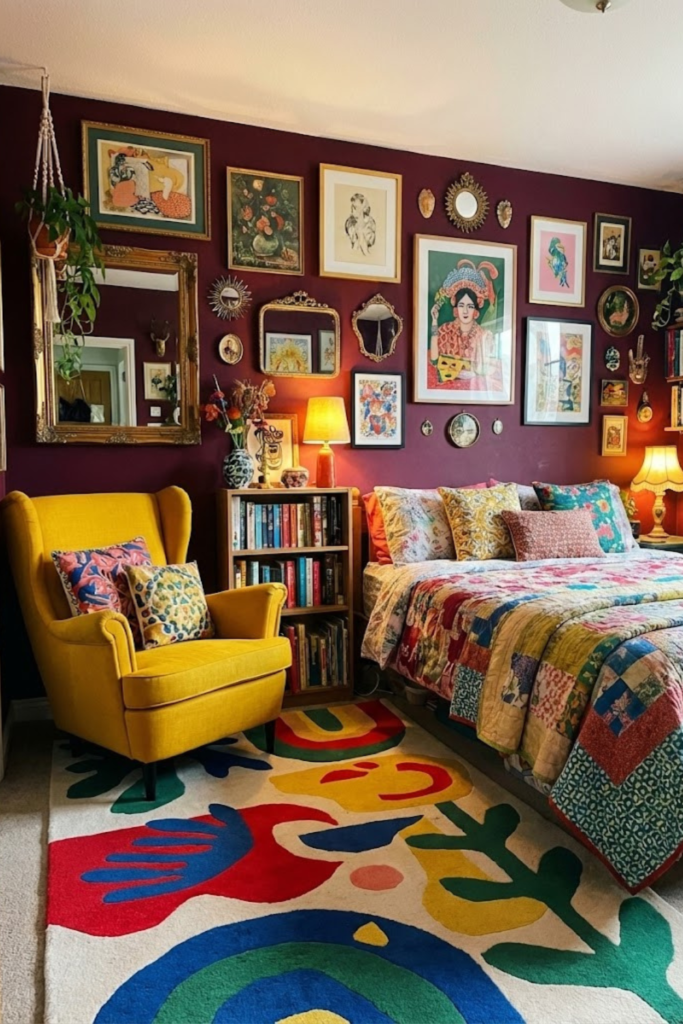
I spent years trying to make my house look like those catalogs. You know the ones—where everything is cream, oatmeal, or “greige.” I remember standing in my beige bedroom one Tuesday morning looking for a sock, and I just felt… sad. It was boring. There was no life in there. It felt like I was sleeping in a cardboard box.
That is why I absolutely love this new trend called Dopamine Decor. It is basically the opposite of “sad beige.” The whole point is to decorate your room in a way that actually triggers happiness chemicals in your brain.
Why I Finally Painted My Walls Teal
I was scared to use dark colors for the longest time. I thought it would make my room look like a cave. But last year, I took a leap of faith. I bought a can of paint called “Deep Teal” and just went for it.
I didn’t stop at the walls, either. I painted the baseboards and the window trim the exact same color. They call this color drenching. It sounds risky, but let me tell you, the result was amazing. Instead of a cave, it felt like a cozy jewelry box. When I walk in now, the rich color makes me feel hugged. It has so much energy and personality compared to the white walls I used to have.
It’s Not Just About Paint
You don’t have to paint your whole room to get this vibe. I added a bright mustard yellow velvet chair in the corner. It pops against the teal walls like crazy. Every time I see that yellow chair, I smile. That is the “dopamine” hit right there.
I also got rid of my plain gray rug. I swapped it for a weird, fun rug with abstract faces on it. My mom hates it. She says it looks like a cartoon. But I love it! That is the key—it has to make you happy, not your guests or your mom.
Start With Your “Happy Shelf”
If you are nervous about painting your whole room purple, just start with one shelf. I call it my “Happy Shelf.”
- Display your weird stuff: I have a collection of funny mugs from my travels and a weird ceramic cat I found at a thrift store.
- Mix colors: Put a bright blue book next to a pink vase.
- Don’t worry about matching: The best part of maximalist bedroom style is that it doesn’t have to be perfect. It just has to be you.
So, if you have a bright red lamp or a crazy quilt that you hid in the closet because it didn’t “match,” get it out. Your bedroom should be the happiest room in the house, not the most boring one.
5. The Eco-Conscious “Grandmillennial” Twist
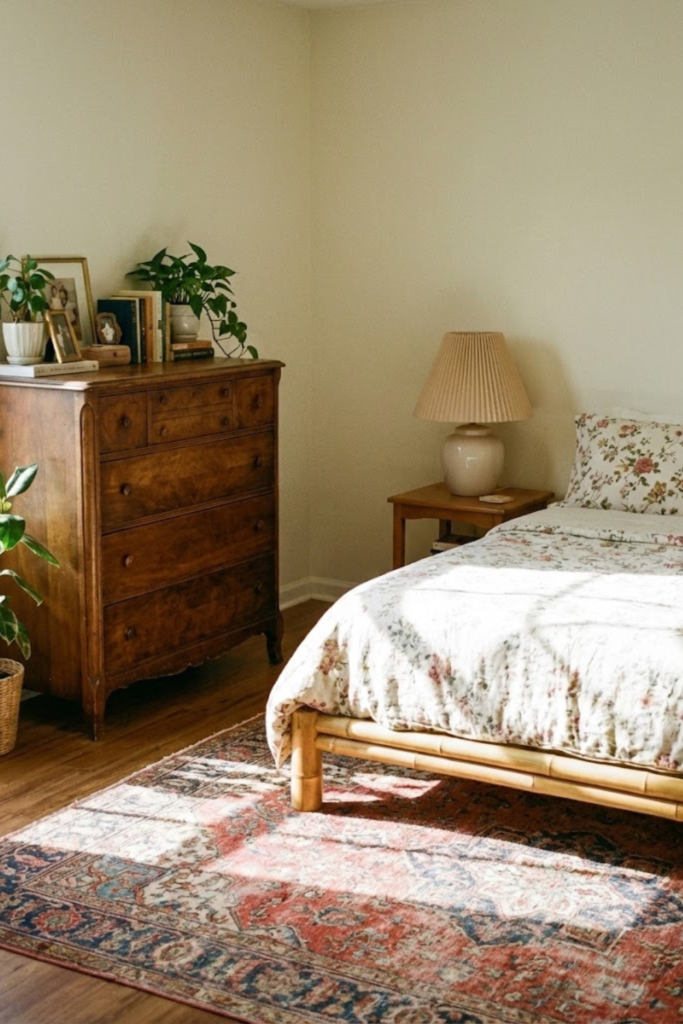
I have a confession to make: I used to be addicted to “fast furniture.” You know, that cheap stuff that comes in a flat cardboard box? I would spend hours sweating and cursing while trying to screw it together with a tiny allen wrench. And then, six months later, the drawers would start falling off the tracks. It was a waste of money, and honestly, it just felt wasteful.
That is why I am so excited about this shift toward what people are calling the “Grandmillennial” style. It’s a funny word, right? It basically means mixing your grandmother’s style with modern eco-friendly choices.
Why I Stopped Buying “Fast Furniture”
The turning point for me was when I inherited an old wooden dresser from my aunt. It was heavy. Like, really heavy. It had scratches and a water ring on the top, but the drawers slid perfectly. I realized that this piece of furniture had lasted 50 years, while my particle-board nightstand barely lasted two.
Now, instead of buying new stuff that ends up in a landfill, I hunt for vintage pieces. I went to a garage sale last summer and found a pair of old wooden lamps. I swapped out the old, dusty shades for new pleated ones. Suddenly, my room had so much character. It felt like a home, not a showroom.
Grandma Was Right About Style
This trend isn’t just about saving the planet; it’s about that cozy, nostalgic feeling. We are seeing a lot of:
- Floral prints: Not the tacky kind, but sweet, vintage flowers on curtains or throw pillows.
- Real wood: Dark, rich wood tones are back. They ground the room and make it feel warm.
- Quilts: I threw a handmade quilt over the foot of my bed, and it instantly made the room feel safer and softer.
Bamboo is the New Cotton
But here is the modern twist. We aren’t sleeping on scratchy old wool. The “eco-conscious” part of this trend is huge for bedding. I recently switched to bamboo sheets.
I was skeptical at first. I thought, “Bamboo? Like the hard sticks?” But no, the fabric is incredibly soft. It feels like silk but it breathes better than cotton. Plus, bamboo grows super fast and doesn’t need as much water as cotton, so it is way better for the environment.
How to Mix Old and New
You don’t want your room to look like an antique shop. The trick is balance.
- One Old Piece: Start with one vintage item, like a dresser or a rug.
- Keep it Fresh: Pair that old dresser with a modern mirror or some crisp white bamboo bedding.
- Don’t match everything: The charm comes from the mix.
So, go raid your parents’ attic or hit up a flea market. You might find a treasure that saves you money and adds some real soul to your bedroom.
6. Multifunctional Zoning: The “Hidden” Office
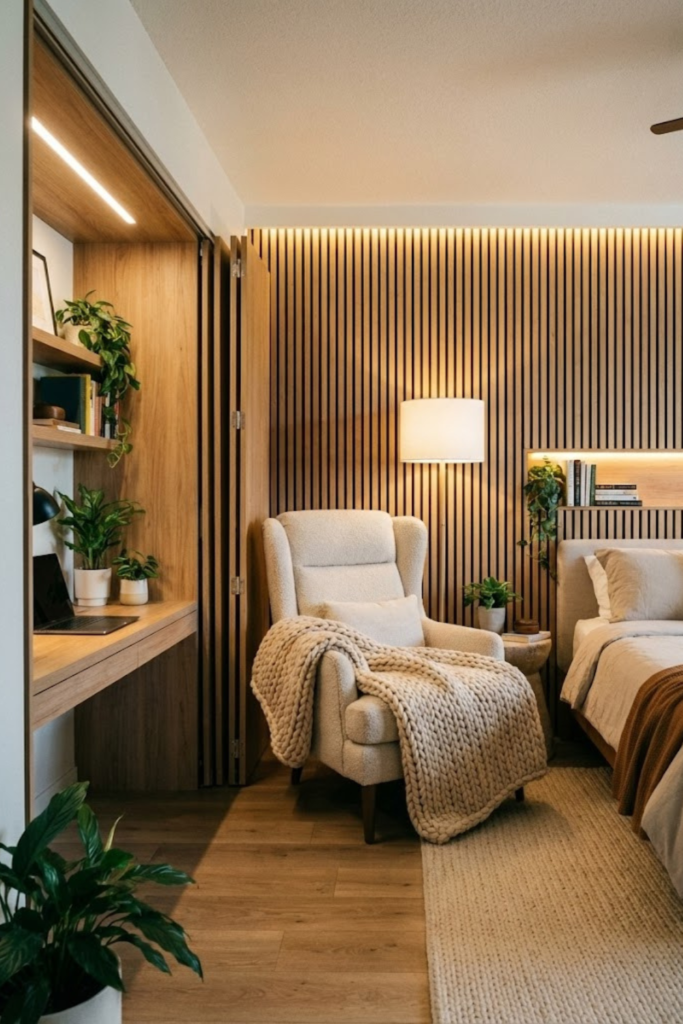
I used to have a terrible habit. I would sit in bed with my laptop, answering emails until my eyes were blurry. Then, I would close the computer, put it on my nightstand, and try to sleep. But I couldn’t. I just laid there staring at the little blinking light on the side of my laptop. It felt like my boss was standing in the corner of the room watching me sleep.
Since so many of us are working from home these days, our bedrooms have turned into offices. But here is the problem: if your brain thinks your bedroom is for work, it won’t let you relax. That is why multifunctional zoning is such a lifesaver in 2026.
The Magic of the “Clofi”
Have you heard of a “Clofi”? It sounds like a weird coffee drink, but it stands for Closet Office.
I live in a smaller house, so I didn’t have a spare room for a desk. I looked at my messy guest closet and had an idea. I took the door off, cleared out the junk, and painted the inside a cheerful yellow. I installed a simple shelf as a desk and added a lamp.
Now, here is the best part. I put a curtain rod up. When I am done working at 5:00 PM, I pull the curtain closed. My “office” disappears. I don’t see the papers, I don’t see the laptop, and I definitely don’t see that blinking light. It helps my brain switch from “work mode” to “rest mode” instantly.
Creating a “Soft” Zone
Even if you don’t work in your room, you need a spot that isn’t your bed. I call this my “decompression zone.”
I bought a big, squishy armchair—designers are calling this “voluptuous seating” right now—and put it in the corner. That chair is strictly for reading or listening to music. I never bring my phone there, and I never bring work there. It creates a mental boundary. When I sit there, my body knows it is time to slow down.
Quiet Down the Noise
Another thing that really helped was fixing the sound. My bedroom had wood floors and empty walls, so it echoed like a gymnasium. It made everything feel loud and stressful.
I found these acoustic wood slat panels online. They look like a fancy modern wall feature, just wooden strips over a black felt background. I glued them to the wall behind my desk area. Not only do they look amazing and warm, but they soak up the noise. The room sounds quieter now, almost like a library.
My Tips for Zoning
You don’t need a contractor to do this.
- Use a Rug: Put a small rug under your desk or reading chair. It visually separates that spot from the sleeping area.
- Hide the mess: If you can’t build a Clofi, get a folding screen or a room divider. Just putting a physical barrier between your pillow and your computer makes a huge difference.
- Light it right: Use a bright lamp for your work zone, but keep the rest of the room dim.
Your bedroom can do double duty, but you have to be smart about it. Make sure that when the workday is done, the work disappears.
7. The Spa-Suite Ensuite
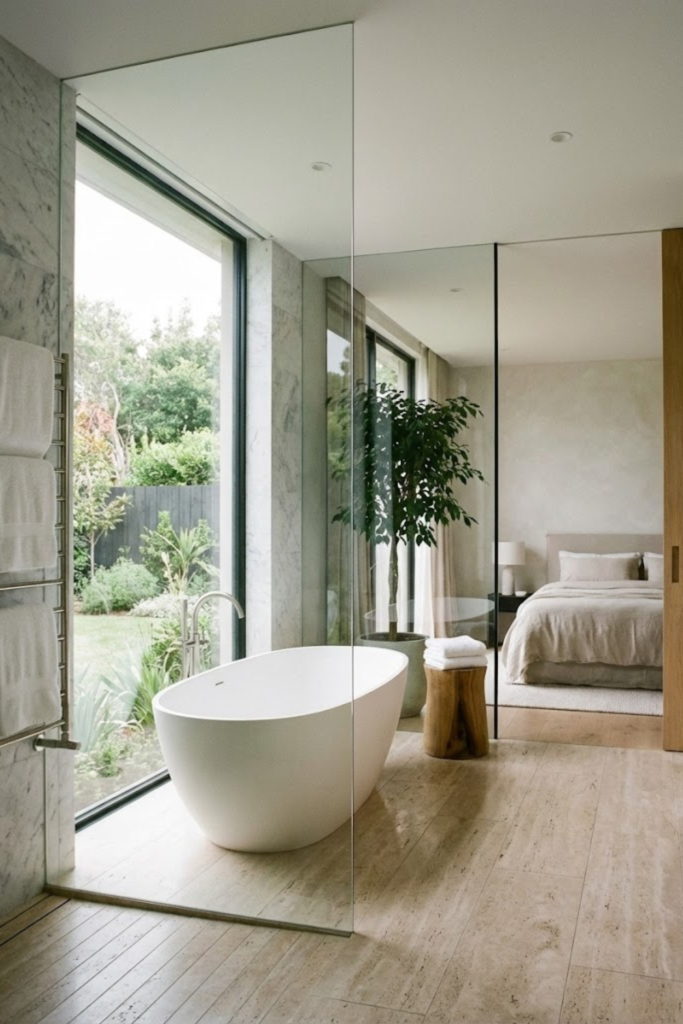
I remember the best vacation I ever took. It wasn’t about the destination; it was about the hotel room. I walked in, and there was this giant soaking tub right there in the open, separated from the bed by just a pane of glass. It felt so fancy and expensive. Then I came home to my cramped little bathroom with the flickering fluorescent light and felt instant regret.
We spend so much money on vacations to feel relaxed, but why don’t we do that for our everyday lives? That is the big idea behind the Spa-Suite Ensuite trend in 2026. It is about knocking down walls—literally—and making your bedroom and bathroom feel like one big, luxurious space.
Bringing the Bath into the Bedroom
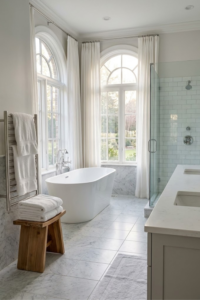
I know what you are thinking. “A bathtub in the bedroom? Isn’t that weird?” I thought so too. But then I saw a friend do it. She knocked out the wall between her master bedroom and the bathroom and put a freestanding tub right near the window.
It changed the whole vibe. The room felt twice as big because your eye didn’t stop at a wall. Now, she takes baths while looking out at her garden. It’s not just about getting clean anymore; it’s about “wellness.” It forces you to slow down.
Ditching the White Tile
Another thing I noticed is that the shiny white subway tile is disappearing. It feels a bit too “public pool” for a cozy bedroom suite.
Instead, I am seeing a lot of natural stone. Travertine is huge right now. It has those warm, sandy beige tones that look imperfect and earthy. I swapped out my cold ceramic floor tiles for a stone-look vinyl (because real stone is pricey!), and it instantly made the space feel warmer. Walking on it barefoot feels grounding, not freezing.
Practical Stuff You Can’t Ignore
Now, I have to be the practical teacher for a second. If you are going to open up your bathroom to your bedroom, you have to think about the unsexy stuff: moisture.
- Ventilation is Key: You don’t want your sheets to feel damp because you took a hot shower. You need a really good fan. I installed a whisper-quiet one so it doesn’t sound like a jet engine taking off while I’m trying to relax.
- Privacy Matters: If you share the room, you might not want the toilet right out in the open. A “water closet” (a tiny room just for the toilet) is a must if you are knocking down walls. Keep the tub open, but hide the rest.
- Soft Lighting: Nothing ruins a spa vibe like bright overhead lights. I added dimmer switches to everything. Candlelight is great, but dimmable LEDs are safer and easier.
Creating a spa suite is a bit of a project, but it is worth it. Waking up and walking straight into a beautiful, open space makes getting ready for work feel a little less painful.
Conclusion
So, there you have it. We have covered a lot of ground today, from painting your walls forest green to hiding your office in a closet.
If I have learned anything from my own decorating disasters (and successes), it is that your bedroom is the most personal space you have. It shouldn’t just look like a picture in a magazine. It should work for you.
Maybe you need that invisible tech to help you finally get eight hours of sleep. Or maybe you just need a bright yellow rug to make you smile when you wake up on a rainy Tuesday.
Don’t feel like you have to do all seven of these things. That would be crazy! Just pick one idea that speaks to you. Start small. Maybe buy that bamboo sheet set or move your reading chair to a quieter corner.
The goal isn’t perfection. The goal is to create a spot where you can take a deep breath, close the door on the world, and just rest. You deserve that.
found these ideas helpful? Pin this post to your “Bedroom Inspiration 2026” board on Pinterest so you can find it when you are ready to start decorating!