Did you know we spend nearly a third of our lives sleeping? That’s a huge chunk of time spent staring at the ceiling—so it better be a nice ceiling! Designing a bedroom isn’t just about picking a comforter; it’s about crafting a personal retreat that recharges your soul. In 2026, the vibe is shifting away from sterile showrooms to spaces that feel deeply human, “cocoon-like,” and authentically yours. Whether you are working with a tiny studio or a sprawling master suite, these trends are all about warmth and texture. I’ve made plenty of mistakes trying to force a look that just wasn’t comfortable (hello, scratchy wool blankets!), but the new wave of bedroom ideas focuses on livable luxury. Let’s dive into the top trends that will define our sanctuaries this year!
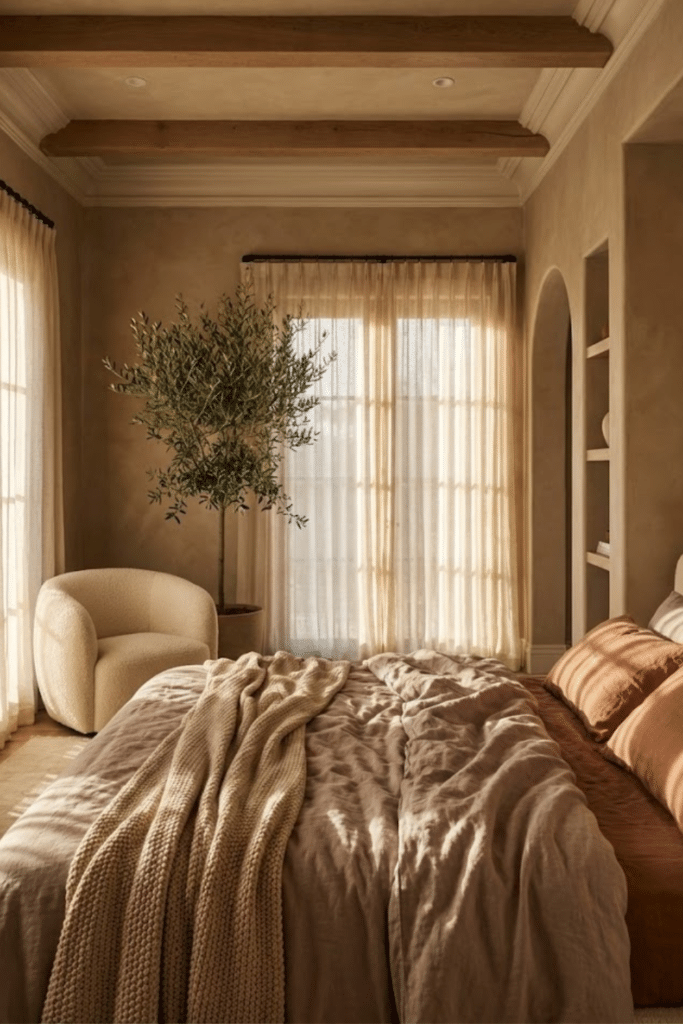
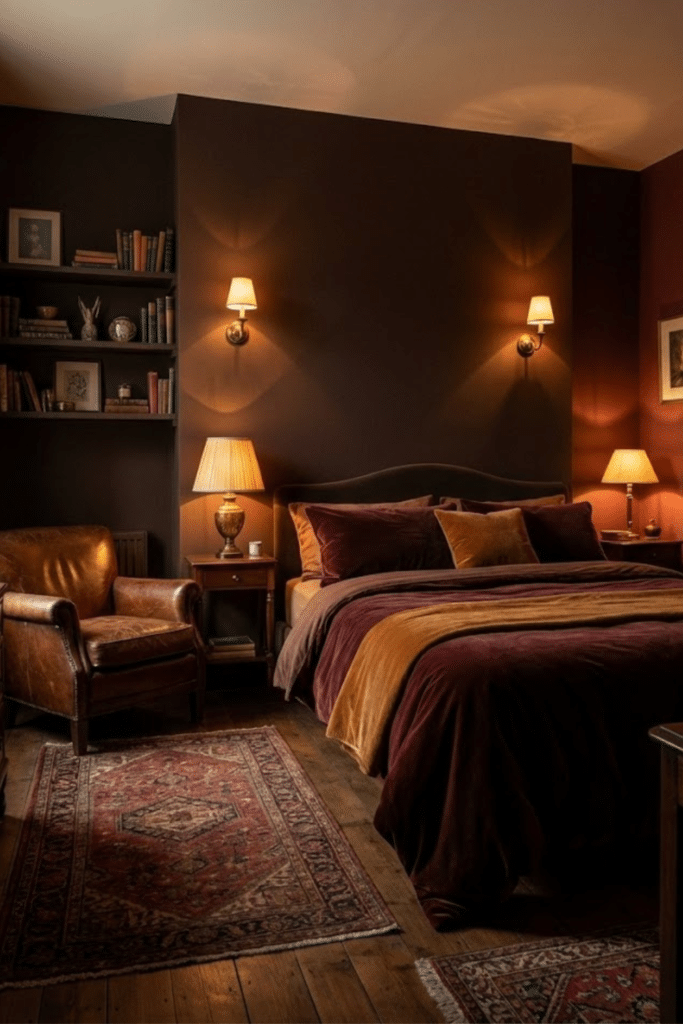
1. Embrace “Cocooning” with Deep, Nurturing Colors
I used to be terrified of dark paint. Seriously, I thought if I painted my room anything other than “Whisper White,” the walls would close in on me and I’d feel like I was sleeping in a shoe box. But let me tell you, I was so wrong. A couple of years ago, I took a leap of faith and painted my guest room a deep, moody charcoal. The first night I slept in there (my husband was snoring too loud in the master), I had the best sleep of my life. That’s when I finally understood the concept of “cocooning.”
In 2026, bedroom ideas are shifting away from those stark, bright white galleries we saw all over Instagram for a decade. We are craving comfort. We want spaces that feel like a warm hug at the end of a long, stressful day. Cocooning is all about using deep, nurturing colors to create a space that feels safe and grounded.
Why Your Brain Loves the Dark
Here is the thing I learned the hard way: bright white walls reflect light. Even the tiny streetlamp outside or the standby light on your TV bounces around the room. Darker colors absorb light. When you switch off the lamp, the room actually goes dark. It signals to your brain that it is time to shut down.
We aren’t talking about depressing greys here. Think warm, earthy tones.
- Chocolate Brown: It sounds 70s, but it’s back and it’s luxurious.
- Warm Burgundy or Merlot: Feels incredibly romantic and rich.
- Deep Taupe or Mushroom: A great stepping stone if you are scared of going too dark.
My “Glossy” Mistake
I have to share a disaster so you don’t repeat it. When I decided to try a dark navy blue a few years back, I didn’t pay attention to the paint finish. I bought a semi-gloss because I thought it would be easier to clean.
Big mistake. Huge.
The walls looked wet. Every time I turned on the lamp, the glare was blinding. It looked like a plastic locker room. If you are going for these deep bedroom ideas, you have to use a flat or matte finish. Matte paint soaks up the light and makes the color look velvety and soft. It hides imperfections in your drywall, too.
How to Pull It Off Without It Feeling Like a Cave
People always ask me, “Won’t it feel small?” Honestly, sometimes dark colors blur the corners of the room and actually make it feel bigger, or at least limitless. But you do need to balance it out.
If your walls are deep brown, keep your bedding light. Creamy linens, oatmeal-colored throws, or soft beige rugs break up the darkness. It creates this beautiful contrast that looks expensive but is actually just smart styling.
Also, lighting is a game-changer here. You can’t rely on a single overhead light (the “big light” is the enemy of ambiance, anyway). You need warm, low-level lighting. Think table lamps with fabric shades that cast a golden glow downwards.
Give It a Try
If you are renting or just nervous, start small. Maybe just paint the wall behind your bed. But I have a feeling once you see how cozy it feels, you’ll end up doing the whole room. It’s one of those bedroom ideas that feels risky but pays off with the best naps you’ll ever take. Just remember to grab the matte paint, okay?
2. Master the Art of Soft Minimalism
I used to think minimalism meant owning one fork and sleeping on a mattress on the floor. A few years ago, I got swept up in a “decluttering” frenzy and practically emptied my bedroom. I tossed my vintage rug, donated my extra pillows, and painted everything stark white. The result? My bedroom looked like a dentist’s waiting room. It was cold, echoy, and honestly, kind of depressing.
That’s where soft minimalism comes in to save the day (and your shins).
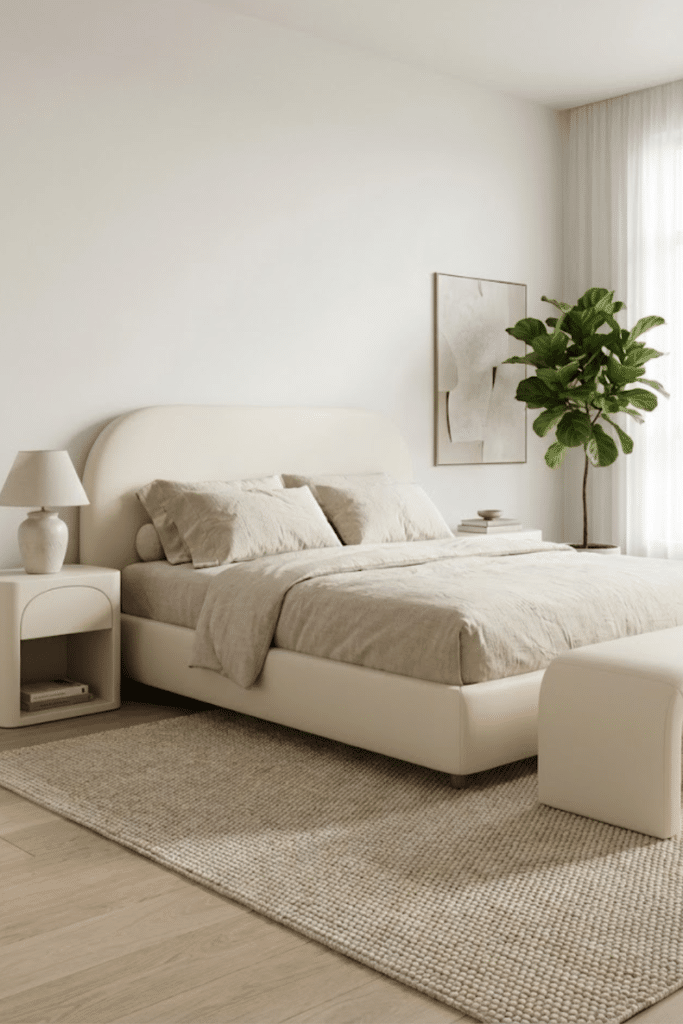
In 2026, we are leaving that sterile, “hospital-chic” look behind. Soft minimalism is easily one of my favorite bedroom ideas right now because it keeps the calm but adds the cozy. It’s about clearing the clutter without clearing out your personality.
The “Ouch” Factor
Here is a mistake I made so you don’t have to. When I did my “hard minimalism” phase, I bought these super sleek, sharp-edged nightstands. They looked great in photos. But in real life? I have the bruises to prove they were a bad idea.
Soft minimalism embraces curves. Think rounder headboards, circular mirrors, or nightstands with soft edges. These shapes are gentler on the eyes (and the body). If you are looking to update your space, swap out harsh rectangles for organic shapes. It instantly relaxes the vibe of the room.
Texture is Your Best Friend
Since you aren’t using a ton of colors or knick-knacks, you have to make the room interesting in other ways. If you don’t, it just looks unfinished. The secret sauce here is texture.
I remember staring at my boring white room feeling like something was missing. I finally caved and bought a chunky, cream-colored wool throw and a nubby bouclé bench. Boom. Instant warmth.
You want to mix materials that make you want to reach out and touch them.
- Matte Velvet: Absorbs light and feels luxurious.
- Raw Wood: Adds natural warmth and imperfection.
- Linen: Crinkly, soft, and feels lived-in.
The “Hidden Junk” Trick
Let’s be real—I’m a 40-year-old teacher; I have stuff. I have books, charging cables, and a stash of chocolate for emergencies. You can’t be a minimalist if you have clutter everywhere, but you also can’t live in an empty box.
The trick is hidden storage that blends in. My favorite purchase recently was a bed frame with drawers built right into the base. It holds all my winter sweaters, but from the outside, it just looks like a clean, simple platform bed.
Also, keep your surfaces clear. I try to stick to the “rule of three” on my dresser: a lamp, a tray for jewelry, and maybe one plant. Everything else goes in a drawer. It keeps the minimalist decor vibe without making the room feel barren.
Soft minimalism is really just about breathing room. It’s creating a space where your eyes can rest, but your body can still get cozy. It’s not about having less; it’s about making room for more peace.
3. Go Bold with “Color Drenching”
I have a confession to make: I absolutely despise using painter’s tape. You know the struggle—spending hours taping off baseboards and door frames, only to peel it off later and find the paint bled through anyway. It makes me want to scream. That is exactly why I fell in love with color drenching. It started out of laziness, to be honest, but it turned into one of the most sophisticated bedroom ideas I’ve ever stumbled upon.
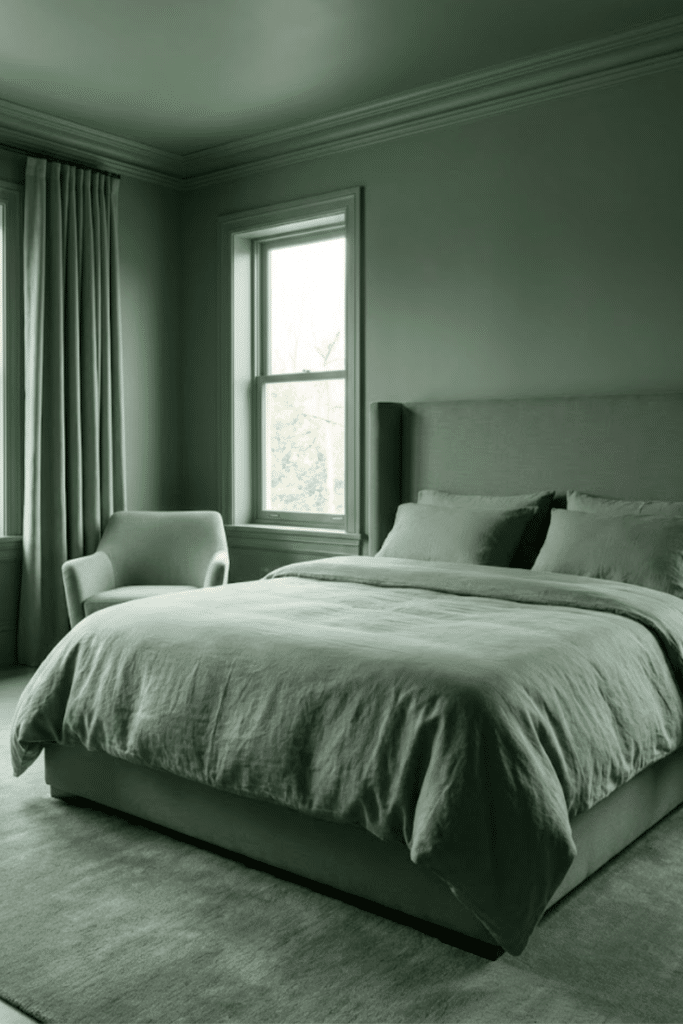
If you haven’t heard of it yet, color drenching is basically taking one color and painting everything with it. I’m talking walls, baseboards, window casings, doors, and yes, even the ceiling.
The “Banana” Incident
Okay, before you run to the hardware store, learn from my disaster. The first time I tried this, I got excited and picked a sunny yellow for a guest room. I thought it would be cheerful. Instead, walking into that room felt like stepping inside a radioactive banana. It was intense. The light bounced off every yellow surface and it actually gave me a headache.
The lesson? Color drenching works best with colors you actually want to live in, not just look at.
- Moody Blues or Greys: These recede and make walls feel further away.
- Sage Green: feels like being in a forest canopy.
- Terracotta: warm and enveloping, like a sunset.
Why It Works for Small Rooms
My current bedroom is, frankly, tiny. It’s barely big enough for a queen bed and a dresser. The old advice was to paint it white to “make it feel bigger.” But all that did was highlight the corners and the choppy lines where the walls met the ceiling.
When I drenched the room in a deep slate blue, the weirdest thing happened. The corners disappeared. Because there is no white line breaking up the wall and the ceiling, your eye doesn’t know where the room ends. It blurs the boundaries. My tiny box suddenly felt infinite. It’s a visual trick that feels like magic.
The Secret is in the Sheen
Here is the pro tip that took me a while to figure out. Even though you are using the same color paint, you shouldn’t necessarily use the same can of paint for everything.
If you paint the trim flat, it gets scuffed immediately. If you paint the walls semi-gloss, it looks wet (remember my navy room mistake?).
- Walls and Ceiling: Use a flat or matte finish to hide bumps and absorb light.
- Trim and Doors: Use a satin or semi-gloss finish in the exact same shade.
This subtle difference adds just enough contrast so the room doesn’t look flat, but it keeps that seamless, immersive vibe. It’s one of those bedroom ideas that looks incredibly high-end, but costs the same as a regular paint job. Plus, you save about three hours not taping off the ceiling. That’s a win in my book.
4. Integrate Biophilic Design 2.0
I went through a phase a few years ago where I thought the answer to all my life’s problems was “more plants.” I dragged home a massive Fiddle Leaf Fig, named him Figgy, and placed him in the dark corner of my bedroom. Within two weeks, Figgy was a brown, crunchy stick. I felt like a failure. I was trying so hard to force nature into my room that I forgot to actually look at how nature works.
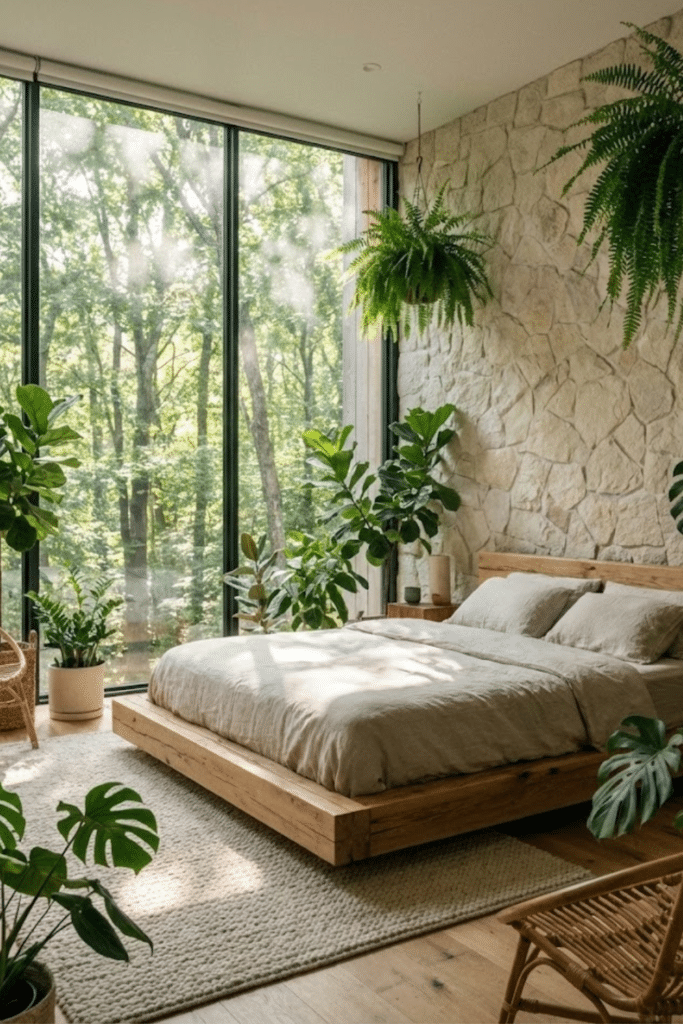
That is the shift we are seeing with Biophilic Design 2.0 in 2026. It’s not just about cluttering your nightstand with succulents you’ll probably forget to water. It’s about the architecture of the room and how it connects to the outside world.
Let the Light In (Really)
The biggest game-changer for me wasn’t a plant; it was my curtains. For years, I used heavy, “blackout” drapes because I thought I needed total darkness to sleep. But waking up in a pitch-black room at 7 AM felt jarring. I was groggy for hours.
I switched to a double-rod system: a sheer linen layer and a heavier layer. Now, I leave the heavy ones open a crack. Waking up to natural, filtered sunlight does wonders for your circadian rhythm. It signals your body that it’s actually morning, not the middle of the night. If you can’t change your windows, hang a mirror opposite the window. It bounces the natural light around and makes the whole room feel airier and more alive.
Touch Grass (Or Wood, Or Stone)
Another mistake I made was buying cheap, laminate furniture that looked like wood but felt like plastic. It had no soul. Biophilic design is about textures that ground you.
I swapped my shiny, synthetic headboard for a raw, white oak one. Is it perfect? No. It has knots and grain. But when I touch it, it feels warm and real. We are seeing a huge trend toward “living materials”—things that age and change over time.
- Unlacquered Brass: It develops a patina (a fancy word for tarnish) that looks beautiful and worn-in.
- Leather: Real leather gets softer and cooler the older it gets.
- Wool and Cotton: Ditch the polyester blends. Natural fibers breathe better, which means you sweat less at night.
Don’t Force It
You don’t need a vertical garden wall to nail this look. That’s too much maintenance for a busy teacher like me. Start small. Open your window for ten minutes every morning to let the stale air out. Get a small stone dish for your jewelry. Use a wooden stool instead of a metal one.
These bedroom ideas are about creating a space that lowers your blood pressure the second you walk in. It’s about feeling like a human being living on a planet, not a robot living in a box. So, RIP to Figgy, but my bedroom feels much more alive now without him.
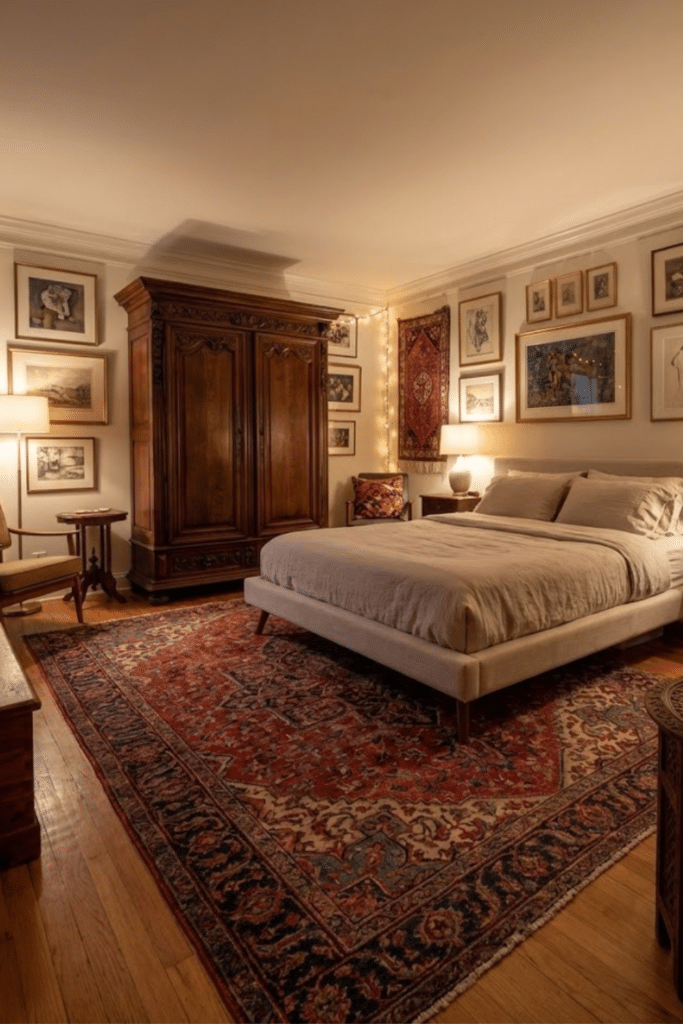
5. Revive Vintage Charm with Free-Standing Furniture
I have to admit, I went through a phase where I wanted everything in my house to be “custom.” I spent a small fortune building a wall-to-wall closet system in my master bedroom. It was white, shiny, and supposedly “space-saving.” But you know what? A year later, I hated it. It felt like I was sleeping inside a kitchen cabinet. It had zero personality.
That was the moment I realized why vintage bedroom trends are exploding in 2026. We are all a little tired of that cookie-cutter, “showroom” look where everything matches perfectly. We want pieces with a story.
The “Fast Furniture” Trap
For years, I bought cheap dressers that came in flat boxes. You know the ones—you spend four hours cursing at an Allen wrench, and six months later, the drawer front falls off. It’s frustrating and wasteful.
Free-standing furniture, like a solid wood armoire or a heavy oak chest of drawers, is built to last. I recently dragged a 1920s dresser home from a flea market. It weighs a ton and has scratches on the top. But when I pull the drawers out, they slide on wood runners that have been working for a hundred years. It adds a layer of soul to the room that a particle-board box just can’t touch.
How to Mix Without Looking Like a Museum
A lot of people tell me, “I don’t want my room to look like Grandma’s attic.” I get that. The trick isn’t to fill the room with only old stuff. You have to mix it up. This is essential for creating that “collected” look.
If you have a sleek, modern platform bed, pair it with a battered vintage trunk at the foot of the bed. If you have a brand new, fluffy rug, put an antique wooden chair in the corner.
- The 80/20 Rule: Try keeping 80% of the room modern and clean, and let the other 20% be vintage “character pieces.”
- Update the Hardware: If you find a cool dresser but hate the handles, swap them out for modern brass pulls. It instantly bridges the gap between old and new.
The Thrill of the Hunt (And a Warning)
Thrifting is my therapy, but I’ve learned some hard lessons. I once bought a gorgeous velvet chair online without seeing it in person. When it arrived, it smelled like… well, let’s just say it had lived a very interesting life with many cats.
When you are hunting for sustainable furniture, you have to use your senses.
- The Sniff Test: Seriously, smell the drawers. Musty smells are hard to get out.
- The Wobble Test: Lean on it. If it sways like a boat, leave it behind unless you are handy with wood glue.
- Check for Bugs: Always, always look in the crevices before bringing anything into your house.
Incorporating vintage pieces is one of the best bedroom ideas because it stops your room from looking like everyone else’s. Plus, it keeps old furniture out of the landfill. It’s a win for your style and the planet.
6. Create Smart, Multi-Functional Zones
I used to be one of those people who swore I would never, ever bring my laptop into the bedroom. The bedroom was for sleeping, period. Then, reality hit. I needed a quiet place to grade papers away from the chaos of the living room (and the TV). So, I started working from my bed.
Bad idea.
Within a month, my back was killing me, and I had associated my mattress with stress. I’d lay down to sleep and my brain would scream, “Wait! Where’s the red pen? Did we finish those grades?” It was a mess.
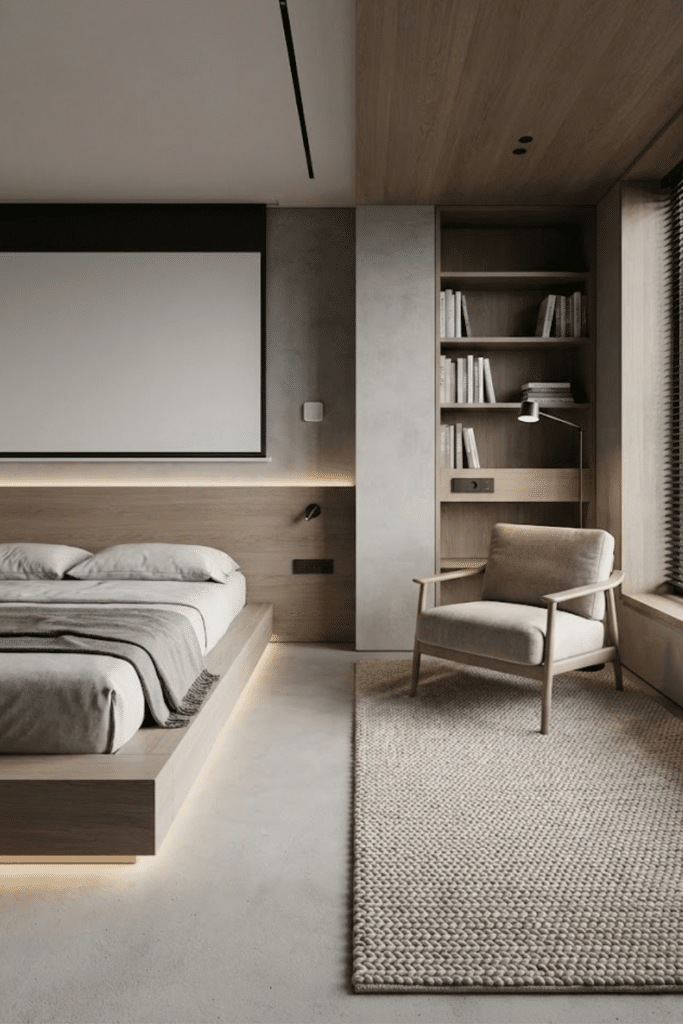
In 2026, homes haven’t magically gotten bigger, but our needs have. Maximizing space is the name of the game. We are seeing bedrooms that have to pull double duty as home offices, reading nooks, or yoga studios. The key isn’t to just shove a desk in the corner and call it a day; it’s about creating distinct “zones” so your brain knows when to switch off.
The Magic of the “Rug Divide”
Here is a trick that saved my sanity. I bought a small, round rug—totally different from the carpet in the rest of the room—and placed it under my little writing desk in the corner.
It sounds silly, but that rug acts like a physical boundary. When I step onto the rug, I’m at work. When I step off, I’m in my sleep sanctuary. Visual cues are powerful. If you are squeezed for space, try angling your chair away from the bed. Staring at your pillows while trying to focus is a recipe for an accidental nap (I’ve been there).
Smart Lighting That Actually Helps
I used to think “smart home” stuff was just for tech bros who wanted to turn on their disco lights with a voice command. But smart lighting has been a total game-changer for my sleep hygiene.
I installed these bulbs that change color temperature based on the time of day. In the morning, they are crisp and blue-white, which helps me wake up. But by 8 PM, they automatically shift to a warm, amber glow. It mimics the sunset.
It stops me from doom-scrolling or grading late into the night because the room literally gets “sleepier.” It’s a passive way to force yourself to relax, which I definitely need help with sometimes.
Taming the “Rat’s Nest”
Nothing ruins a relaxing vibe faster than a tangle of white and black cords snaking across your floor. I used to trip over my phone charger constantly. It was not a graceful look.
If you are setting up a multi-functional room, you have to hide the tech.
- Charging Drawers: I drilled a hole in the back of my nightstand (don’t tell my husband) and fed a power strip into the top drawer. Now, my phone and tablet charge inside the drawer, out of sight.
- Cable Clips: Stick these to the back of your furniture legs to guide cords down to the outlet invisibly.
Creating zones allows you to use your bedroom for more than just sleep without sacrificing the peace you need at the end of the day. It’s about being intentional with your interior design so you don’t feel like you are sleeping in your office.
7. Layer Textures for Ultimate Luxury
I used to wonder why my bed never looked like the ones in the magazines. I would buy the expensive sheets, smooth out the duvet until my arms hurt, and stand back to admire my work. But it always looked… flat. Like a sad, white pancake. It drove me crazy.
It took me an embarrassingly long time to realize that I was missing the most important ingredient: texture. I had cotton sheets, a cotton duvet, and cotton pillows. It was boring.
In 2026, bedroom ideas are less about flashy patterns and more about how a room feels when you touch it. We call it “quiet luxury,” but really, it’s just about creating depth so your room doesn’t look one-dimensional.
The “Touch Test”
Here is a rule I live by now: If I walk into a store and don’t immediately want to pet the furniture, I don’t buy it. My biggest design mistake was buying a sleek, shiny leather chair because it looked “modern.” In reality, it was cold in the winter, sticky in the summer, and I never sat in it.
Now, I mix opposites. This is the secret sauce.
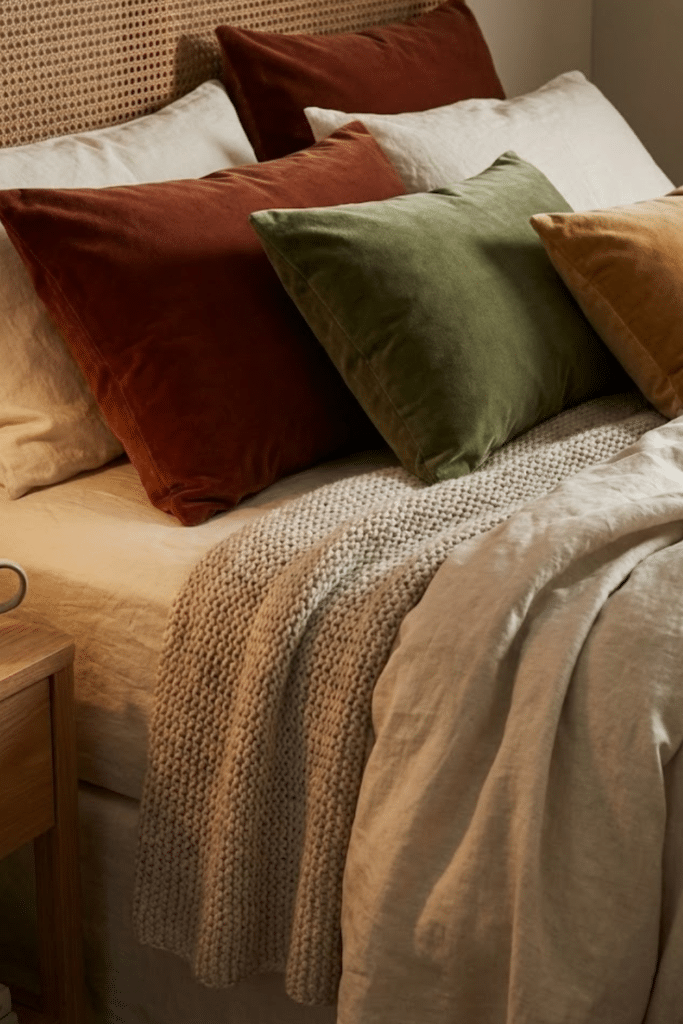
- Rough vs. Smooth: If you have smooth cotton sheets, throw a chunky, knobby knit blanket at the end of the bed.
- Matte vs. Shine: If your headboard is a matte velvet, get a silk or satin pillowcase.
The contrast catches the light differently and tricks your eye into thinking the space is richer and more expensive than it actually is.
The Bed is the Star
Since the bed takes up half the room, it has to do the heavy lifting. I used to just pull my comforter up to the pillows and call it a day. That’s a missed opportunity.
I started using linen bedding a few years ago, and I will never go back. It has this natural, crinkled look that says, “I didn’t try too hard, but I have great taste.” Plus, it gets softer every time you wash it. To get that fluffy, hotel look, I layer a quilt under my duvet. Then, I fold the duvet halfway down the bed. Finally, I toss a bouclé throw blanket on the corner. It adds three layers of height and texture instantly. It looks inviting, not stiff.
Art for the Floor
Don’t ignore the floor. Hardwood is beautiful, but it’s hard. I recently swapped my plain beige carpet for an “illustrated” rug—it has high and low piles carved into the design. It feels like a massage for your feet.
Rug placement matters here. Don’t just float a tiny rug in the middle of nowhere. Anchor it under the bottom two-thirds of your bed. It grounds the space and gives your feet something warm to land on when you wake up.
Layering textures is the difference between a house and a home. It adds warmth without adding clutter. And honestly, there is nothing better than diving into a bed that feels like a soft, textured cloud at the end of a hard week.
We’ve thrown a lot of terms at you, like “biophilic design” and “color drenching”. But remember, 2026 isn’t about perfection; it’s about creating a space that feels like a hug at the end of the day. Whether you embrace dark colors or keep it soft and minimalist, your bedroom should be your favorite place to recharge.
Don’t stress about doing it all at once. I’ve learned that the hard way! Just pick one idea to start with—maybe it’s just buying a new linen throw or moving a rug—and see how it changes the room’s energy.
Pin this for later: Don’t lose these tips! Click the Pinterest button below to save these 2026 trends to your “Home Decor” board so you have them handy when you’re ready to start your makeover!