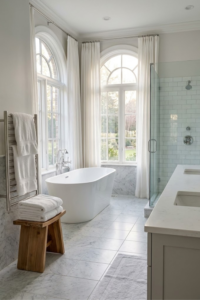
I still remember staring at my old, sterile white bathroom tiles last year and feeling… absolutely nothing. It felt cold, clinical, and completely uninspiring. If you’re nodding along, you aren’t alone! The global bathroom remodeling market is booming—projected to grow from nearly $400 billion in 2024 to over $570 billion by 2034—proving that we are all craving a change.
In 2026, the bathroom is no longer just a utility room; it’s a retreat. We are moving away from the “all-white” aesthetic and embracing warmth, nature, and smarter living. Whether you are planning a full gut renovation or just looking for a weekend refresh, these 7 bathroom decor ideas will help you create a space that feels less like a washroom and more like a sanctuary. Let’s dive into the top trends that will define homes this year!
1. Embrace Biophilic Design: Bring the Outdoors In
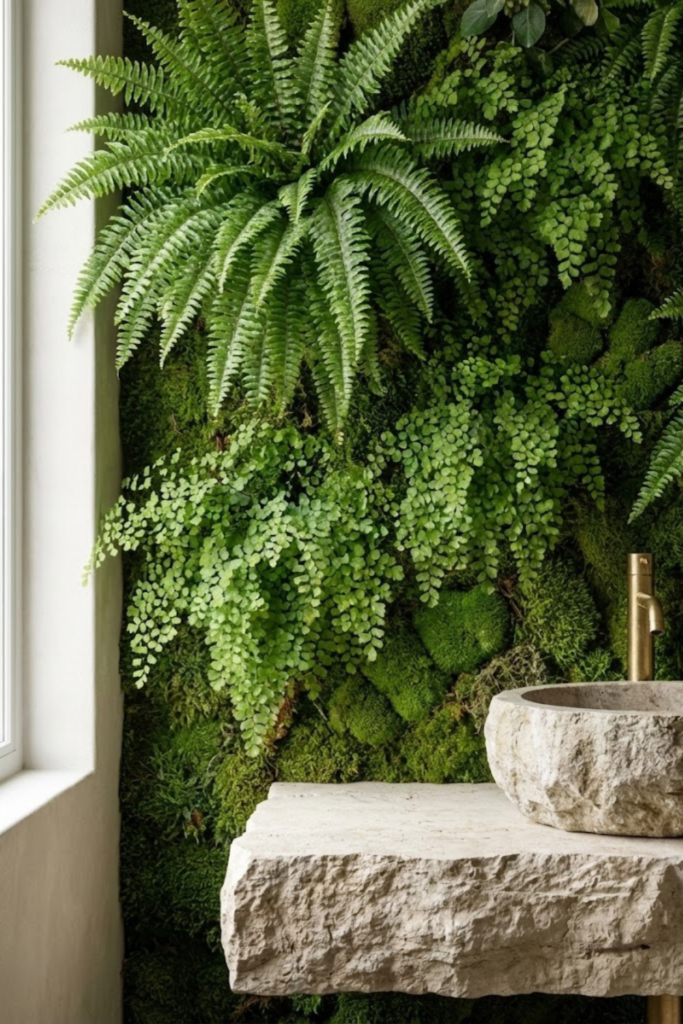
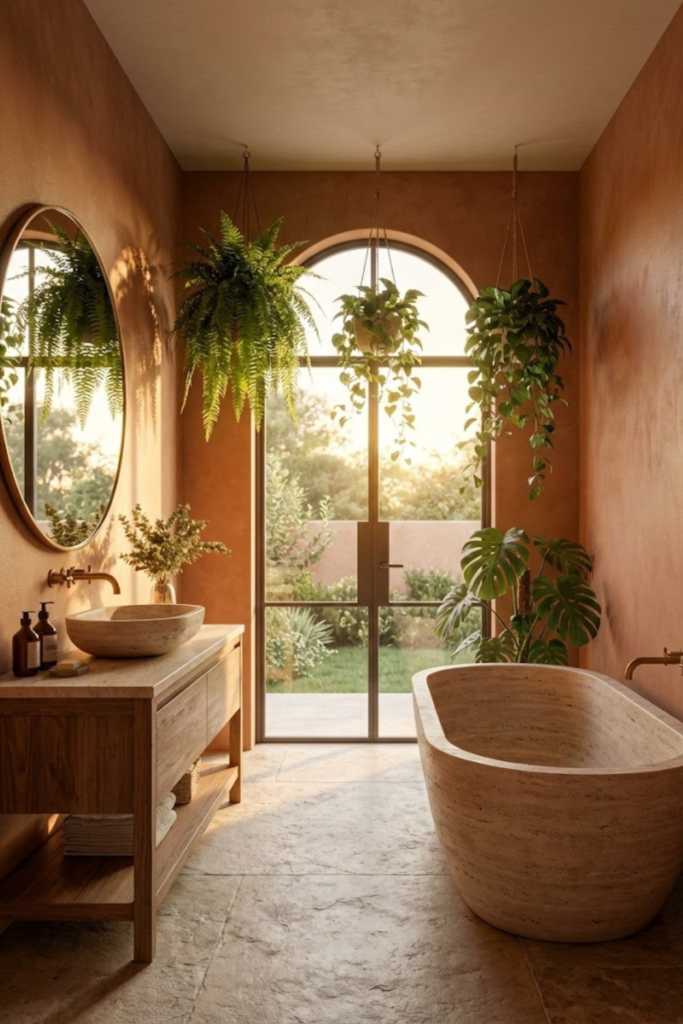
You know that feeling when you take a walk in the woods and your shoulders finally drop a few inches? That is exactly the vibe we are trying to get in the bathroom this year. It’s called “Biophilic Design,” which is just a fancy way of saying we want to connect our indoor spaces with nature. For a long time, my bathroom felt like a hospital room—all cold white tiles and shiny chrome. It was clean, sure, but it didn’t make me feel relaxed.
In 2026, the biggest shift I’m seeing is that we are done with sterile spaces. We want warmth. We want life. And the easiest way to do that is by bringing the outdoors in.
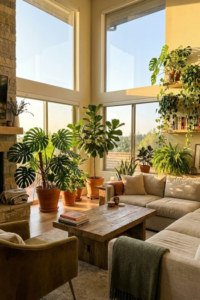
First, let’s talk about plants. I used to think I had a “black thumb” because I killed every houseplant I looked at. But the bathroom is actually the perfect place for greenery because of the humidity. I started small with a Snake Plant (Sansevieria) because honestly, you can forget to water it for three weeks and it still looks happy. If you have a window, hanging a Pothos plant is a game changer. The vines trail down and soften all those hard edges of the mirror and vanity. If you don’t have a window, don’t worry. There are great fake plants now that look real, or you can stick to low-light plants like ZZ plants. Just seeing that splash of green changes your mood before you even brush your teeth.
But biophilic design isn’t just about turning your shower into a greenhouse. It is also about the materials you use. Think about what you see on a hike—rough stones, wood, water. I swapped out my old plastic bath mat for a bamboo one, and it instantly felt more spa-like. If you are doing a bigger renovation, consider using materials that look unprocessed. A raw stone sink or slate tiles on the floor add this amazing texture that feels good under your feet. Even swapping out cabinet hardware for wooden knobs can make a difference.
Color is the final piece of the puzzle here. We are moving away from stark whites and grays. Look for earthy greens, browns, and warm beiges. I painted my vanity a deep forest green last month, and it looks incredible against the white sink. It feels grounded and calm.
Basically, you want to create a space that engages your senses. It’s not just about how it looks, but how it makes you feel. When you surround yourself with natural elements, your brain just relaxes. It is a simple upgrade, but it makes the time you spend getting ready in the morning feel a little less rushed and a little more peaceful.
2. Create a Spa-Like “Wet Room” Experience

If there is one thing I have learned after twenty years of teaching, it is that standing on your feet all day takes a toll. By Friday afternoon, my back hurts, my feet are throbbing, and all I want is a hot shower. For years, I dealt with a standard bathtub-shower combo. You know the kind—a high wall you have to step over and a shower curtain that always seems to get slimy at the bottom no matter how much you bleach it. It felt cramped and, honestly, a little dingy.
That is why this next idea is my absolute favorite for 2026: the “wet room” concept.
I know, “wet room” sounds a bit industrial, but it is actually just a fancy way of saying an open-concept shower. Instead of boxing your shower in with walls or curtains, you keep the space open. The floor is usually all one level, sloping slightly toward a drain, so you don’t have those awkward steps or curbs to trip over.
Why is everyone doing this now? First off, it makes a small bathroom look massive. My master bath is not huge—it’s pretty standard. But when you remove the visual barrier of a tub wall or a heavy curtain, your eye travels all the way to the back wall. It tricks your brain into thinking the room is twice as big as it actually is.
For me, the best part is the cleaning. I used to dread scrubbing the shower tracks and trying to get mold out of the corners. With a wet room setup, you usually just have a single pane of glass or sometimes no glass at all. You just spray it down, squeegee the glass, and you are done. It saves me so much time on weekends when I would rather be grading papers (okay, maybe not grading, but definitely resting).
To really get that spa vibe, you have to upgrade the hardware. Since you are saving money on a bathtub you might not use, put that budget into a rainfall showerhead. I got one that mounts right from the ceiling. Standing under it feels like a warm summer rain, not that stinging high-pressure spray from old showerheads.
Also, think about the steam. In a more open wet room, the steam tends to fill the space nicely, especially if you have floor-to-ceiling glass. It helps clear your sinuses during allergy season—a huge plus for us teachers who are constantly around sniffling kids.
If you are worried about water getting everywhere, don’t be. You just need to make sure the floor is tiled properly by a pro so it drains right. It is a bit of work to install, but the payoff is a bathroom that feels like a luxury hotel suite every single day.
3. Warm Up with Earth Tones and Terracotta
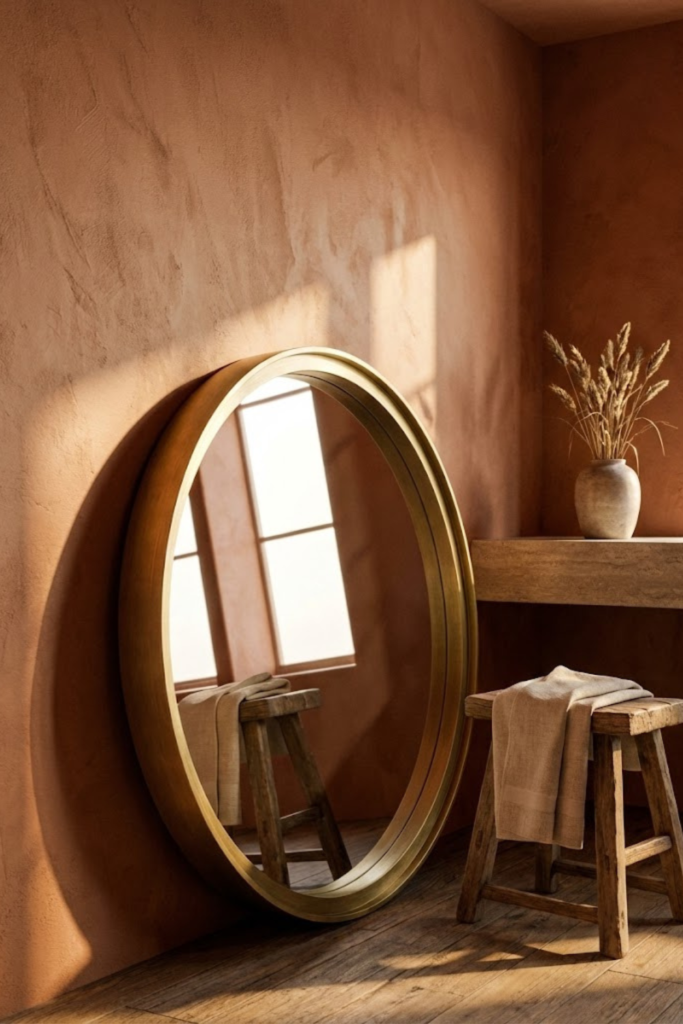
I remember painting my entire downstairs bathroom a cool, steel gray about ten years ago. At the time, I thought it looked so modern and crisp. But looking back? It was freezing! Every morning in the winter, that room felt like an icebox. It just lacked personality. That is exactly why I am so happy that 2026 is finally bringing warmth back into our homes.
We are officially saying goodbye to the “hospital sterile” look and those sad, cold grays. The new buzzword you need to know is “earth tones.” Think about the colors of dirt, dry clay, and dried leaves. It sounds a bit messy when you say it like that, but on a bathroom wall? It is absolutely beautiful.
The real star of the show right now is terracotta.
If you are like me, you might hear “terracotta” and immediately think of those cheap orange flower pots on the front porch. But in a bathroom, a deep, rusty orange or a warm clay color looks rich and inviting. Designers are calling this trend “cocooning.” It basically means creating a space that feels safe, cozy, and enclosed—like the room is giving you a hug.
You don’t have to go crazy and tile the whole room in orange (that might be a headache waiting to happen!). I just painted the single wall behind my vanity in a color called “baked clay,” and it completely changed the vibe. It went from a cold utility room to a warm retreat.
If orange scares you, or if you rent and can’t go too bold, try “greige.” It is exactly what it sounds like—a mix of gray and beige. It has the calmness of gray but the warmth of beige. It is the perfect neutral backdrop because it matches almost anything.
Now, what do you put with these warm colors? Please, I beg you, don’t use shiny silver chrome. It just clashes. You want metals that bring the heat too. I switched my faucet to a brushed brass finish—it looks kind of like a dull, vintage gold. It pops beautifully against the warm walls. Matte black also looks tough and cool if you want something a bit more modern and defined.
You also don’t need to do a full renovation to try this out. Last week, I just bought a stack of rust-colored towels and a woven rug. It cost me maybe fifty bucks at the home goods store, but it warmed up the bathroom right away. It is a low-risk way to see if you like the trend before you commit to painting.
So, go ahead and embrace the warmth. Your morning shower shouldn’t feel like a polar plunge. A little bit of earth tone goes a long way to making your bathroom a place where you can actually relax and breathe.
4. Install Floating Vanities for an Airy Look

I have spent way too many Saturday mornings on my hands and knees trying to dig dust bunnies out from under my old bathroom sink cabinet. You know that tiny gap I’m talking about—it is just small enough that a broom won’t fit, but big enough to collect every lost hair tie, dust speck, and toilet paper roll cardboard. It was driving me crazy.
That is exactly why I am obsessed with floating vanities right now.
If you haven’t seen one yet, a floating vanity is basically a cabinet that bolts directly to the wall and “hovers” above the floor. It has no legs. It looks like it is floating in mid-air. It gives the room such a modern, clean vibe, but for me, the practical benefits are the real winner.
The biggest win is the illusion of space. In my downstairs half-bath, which is basically the size of a coat closet, swapping the bulky old cabinet for a floating one made a huge difference. Because you can see the floor extend all the way to the back wall, your brain gets tricked into thinking the room is much bigger than it actually is. It opens everything up.
And the cleaning? It is a total breeze now. I can just run my Swiffer or mop right underneath it in two seconds. No more yoga poses or straining my back to reach the dark back corners. It keeps the bathroom feeling fresh and sanitary with almost zero effort.
I know what some of you are thinking: “But where do I put my stuff?” People often worry that losing the bottom few inches of the cabinet means losing storage. But honestly, the new designs have really deep, smart drawers. I actually fit more in there now because I am not digging past awkward plumbing pipes in a dark cupboard. I keep my extra towels, cleaning supplies, and toiletries organized in little bins, and everything has its place.
Another cool trick is the height. Since it mounts to the wall, you can pick exactly how high it goes. My husband is over six feet tall, so we hung ours a few inches higher than the standard height. He doesn’t have to hunch over to wash his face anymore, which saves his back.
To keep it looking warm (since we talked about avoiding cold styles earlier), I picked a wood finish with a nice grain. It looks like a piece of nice furniture rather than just a bathroom fixture. It feels lighter, looks cleaner, and makes the whole room feel less cluttered. If you want a bathroom update that actually makes your life easier, this is the one to pick.
5. Add Texture with Fluted and Ribbed Surfaces
I spend my entire work day staring at flat, smooth surfaces. Whiteboards, laminated desks, stacks of printer paper. It is all very practical, but it is also incredibly boring. My old bathroom was the same way. High-gloss white cabinets and a plain mirror. I thought it looked clean, but honestly? It showed every single fingerprint. If my kids went in there with slightly sticky hands, I would know immediately. It felt like I was constantly Windexing everything just to keep it looking decent.
That is why this trend for 2026 has been a total lifesaver for me: Texture. Specifically, we are seeing a huge boom in “fluted” and “ribbed” surfaces.
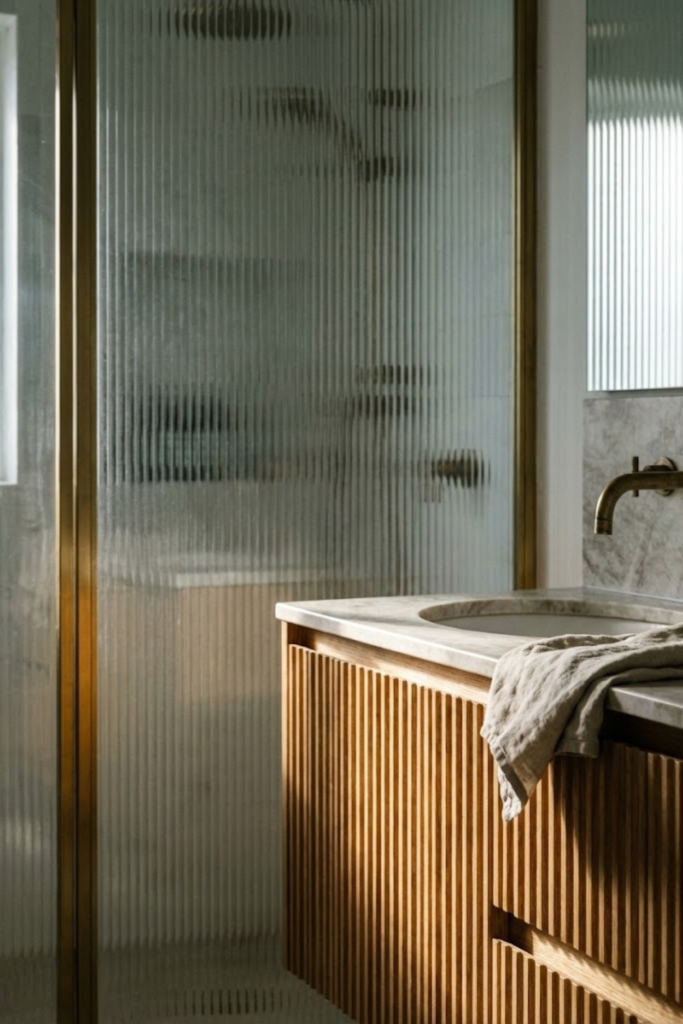
If you aren’t sure what “fluted” means, just picture a Greek column with those vertical grooves running up and down. Now, imagine that detail on the front of your bathroom vanity or on the side of a bathtub. It adds this amazing layer of detail that flat wood just can’t compete with.
I recently swapped out my master bath vanity for one with a fluted oak front. The difference is night and day. First of all, it looks way more expensive than it actually was. The ridges catch the light and create these little shadows that change throughout the day. It makes the furniture pop. But the teacher in me loves the practical side even more: you can hardly see the smudges! The texture hides the dust and fingerprints that used to drive me up the wall.
Another way I love seeing this used is with ribbed glass (sometimes called reeded glass). I used to have a clear glass shower door. It looked nice for about five minutes after I cleaned it. Then the water spots would show up, or the soap scum would start to build at the bottom. It was a losing battle.
Ribbed glass has these vertical waves in it. It distorts the view just enough to give you a little privacy—which is great if you have a chaotic house like mine where people forget to knock. But more importantly, those ribs hide the water spots. I don’t feel the need to squeegee it every single time I shower because the texture disguises the mess.
You can also bring texture in with tiles. Have you seen “Zellige” tiles? They are these handmade-looking tiles where no two pieces are exactly the same. They have bumps and dips, and they reflect the light in a shimmering, watery way. I put them as a backsplash behind the sink, and it makes the whole room feel softer and less industrial.
Adding texture is one of those tricks that makes a room feel finished. It stops the bathroom from looking like a sterile box and makes it feel like a thoughtfully designed space. Plus, anything that reduces my cleaning time is a winner in my book.
6. Upgrade to Smart Bathroom Technology
I have to admit, I used to roll my eyes at “smart home” stuff. I barely know how to work the TV remote half the time. I thought tech in the bathroom was just for people with too much money and time. But then, I stayed at my sister’s house over the holidays, and she had this high-tech toilet. I sat down, and the seat was warm. In the middle of winter.
I am not kidding when I say it changed my life.
For 2026, technology in the bathroom isn’t about looking futuristic or having robots brush your teeth. It is about comfort. It is about making the little annoying parts of your day disappear.
Let’s start with the toilet. If you have never used a bidet, you might think it is weird. I did too. But once you try it, you can’t go back. The newer “smart toilets” have heated seats (which is amazing for those early mornings before school starts), automatic lid openers, and bidet functions built right in. You don’t even have to buy a whole new toilet; you can just buy the seat attachment. It is surprisingly affordable now, and it makes your bathroom feel incredibly fancy.
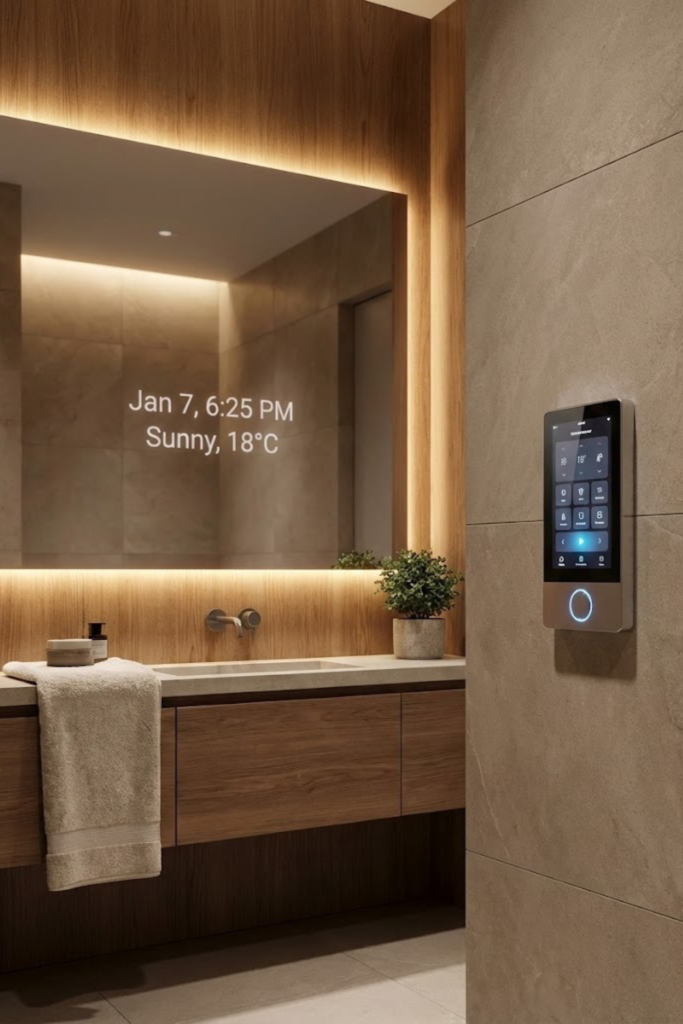
Then there are the mirrors. Teachers have to be up early. Usually, it is still pitch black outside when I am getting ready. My old bathroom lighting was awful—it cast these weird shadows that made me look tired even after a full night of sleep. I switched to a smart mirror with built-in LED lights. I can adjust the brightness and the “temperature” of the light. If I want it to look like daylight so I don’t accidentally put on way too much blush, I can do that. Some of them even show the weather or your calendar right on the glass. It helps me know if I need a coat for recess duty without checking my phone.
Another big upgrade is the digital shower. You know the dance you do every morning? You turn the knob, stick your hand in, wait, adjust it a tiny bit, wait again, and hope you don’t freeze or burn. Digital showers fix that. You can set your perfect temperature on a little screen. You press a button, and the water comes out at exactly 102 degrees (or whatever you like). It saves water because you aren’t running it for five minutes trying to get it right.
It sounds like a lot, but you don’t have to do it all at once. Just picking one smart upgrade can make your morning routine so much smoother. For me, just the heated seat was enough to make me a believer.
7. Prioritize Sustainability and Eco-Friendly Materials
As a teacher, I look at the kids in my classroom and wonder what kind of world they are going to inherit. It sounds a bit cheesy, I know, but it is something I think about. Plus, on a teacher’s salary, I am always looking for ways to lower my monthly bills. That is why this last trend for 2026 is so important to me: making our bathrooms eco-friendly.
A few years ago, “eco-friendly” meant low-flow showerheads that barely trickled water and scratchy recycled toilet paper. It was awful. But things have changed big time. You can now have a bathroom that saves the planet and saves you money without feeling like you are sacrificing comfort.
The first place to start is the water. I nearly had a heart attack looking at my water bill last summer after my nieces stayed with us for a week. Teenagers take long showers. I decided to swap out my faucet aerators and the showerhead for newer, high-efficiency models. I was worried the water pressure would be weak, but honestly? I can’t even tell the difference. The new technology mixes air with the water, so the spray feels strong, but you are using way less water. My bill dropped by about twenty bucks a month, which adds up fast.
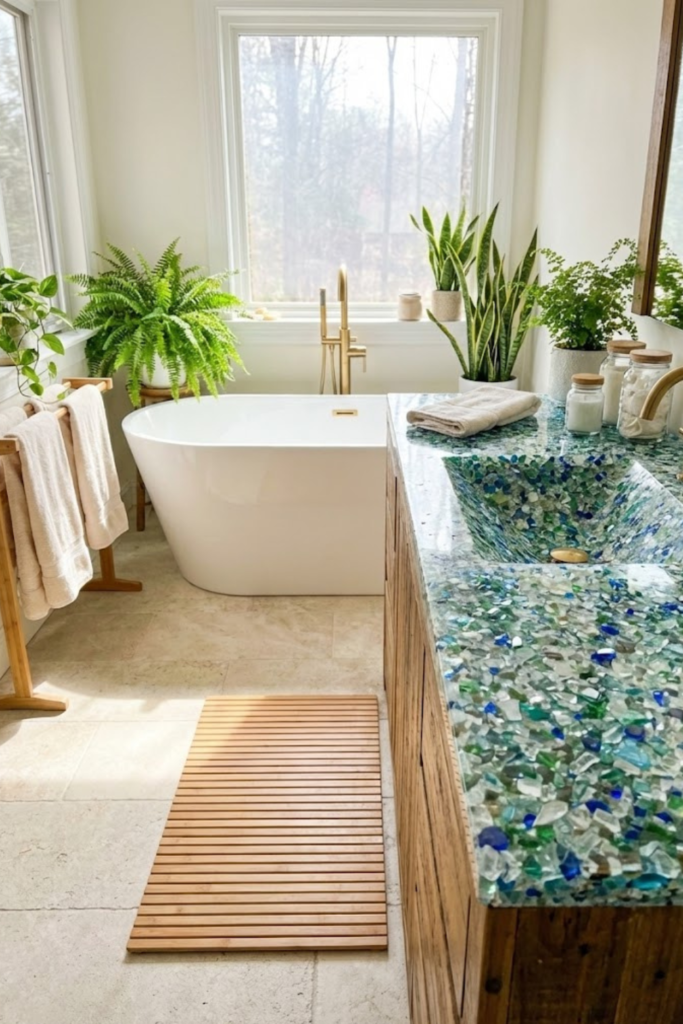
Next, look at what you are building with. When we redid the guest bath, I found this incredible countertop made from recycled glass. It looks like terrazzo—kind of speckled and colorful—and it is super durable. It felt good knowing that glass didn’t end up in a landfill. Reclaimed wood is another great option. If you have an old dresser or some barn wood, you can turn it into a vanity. It adds so much character and history to the room, and it is way better than buying some cheap particle board cabinet that will fall apart in three years.
Lighting is the easiest fix. If you still have old lightbulbs in your vanity lights, switch them to LEDs right now. They use a fraction of the electricity and last for years. I haven’t had to get the stepladder out to change a bulb in that bathroom since I don’t know when.
Finally, think about longevity. The most eco-friendly thing you can do is buy stuff that lasts. My grandma had the same cast-iron tub for fifty years. Today, we treat everything like it is disposable. When you are buying fixtures, spend a little extra for the solid metal ones instead of the plastic ones coated to look like metal. They won’t crack or peel, and you won’t have to throw them away in a few years. It is about “buy nice or buy twice,” as my dad used to say.
Making these changes feels good. You get a lower utility bill, a beautiful bathroom, and the peace of mind knowing you are doing your part. It is a win-win-win.
Conclusion
So, there you have it. We made it through the big list. I know looking at all these 2026 bathroom decor trends might feel a little overwhelming at first. When I first started planning my own bathroom updates, I stared at a paint swatch for three days straight just trying to decide between “Warm Clay” and “Spiced Latte.” It is easy to get stuck thinking you have to do everything right now.
But here is the thing: you don’t.
You don’t need to rip out your plumbing or spend your life savings to make a change. Maybe this month you just buy a couple of new fluffy towels and a fern. Maybe next summer you save up for that floating vanity or the smart toilet seat. Renovation—even just decorating—is a marathon, not a sprint. And honestly, on a teacher’s schedule, I can only handle one project at a time anyway.
The most important thing I have learned is that your bathroom is the first place you see in the morning and the last place you see before bed. It shouldn’t be a source of stress. It shouldn’t be a cold, white box that feels like a hospital. It should be your little escape. Whether that means a “wet room” shower or just better lighting so you don’t squint while flossing, it matters.
I hope these ideas gave you a little spark of inspiration. If you are planning a refresh, good luck! Take your time, pick the things that actually make your life easier, and don’t worry about being perfect.
Ready to get started? If you found this helpful, do me a huge favor and pin these ideas to your “Dream Bathroom” board on Pinterest. It helps other people find these tips (and it helps me out, too!). And hey, if you have a friend who is constantly complaining about their ugly master bath, go ahead and send this article their way.
Happy decorating!